
SALVADOR & DIANNE’S MSINDISI MONTHLY
NUMBER: 140 Sept 2016
PO BOX 1481
VRYHEID 3100
KWAZULU NATAL
SOUTH AFRICA
+27 (0) 728311008
+27 (0) 815836288
Email: msindisi@gmail.com ,
salv.di@gmail.com
KwaZulu Mission Website: http://www.kwazulumission.com
Hi all
Due to the last 2 hectic months, we are sorry we skipped writing the last newsletters.
We are still waiting the outcome of the appeal that was submitted for Sal on the 5 July for the extension of his visitors visa. We were told that the process and outcome could take up to 8-10 weeks, that takes us to the end of August. If this visa is declined we would need to leave South Africa in 10 days of receiving the letter.

Spring time
Keeping this in mind,we have been looking at the procedure, needed for Salv to become a permanent resident in NZ. This would take several months of paper work due to the fact that he would need police checks from Portugal, SA and the UK. Salv may have to return to the Uk first and apply from there while Di returns to NZ.
If the appeal application for his visa is approved then this would give us time to complete and submit the required information for a NZ residents visa. Once this was secured we would return to NZ when Di’s visa expired in 2018 and apply for a workers visa to re-enter SA in the future, working for 5 years in SA we would then apply for permanent residents in the country.

Rainbow which speaks of God’s promise and grace
While the visa situation has been going on, running along side, has been the leading of the Lord to move on. Let us explain some of the process that has brought us to this. I think over 3 years ago we were asked to pray about moving to the east coast to help with a fellowship. We both felt no leading of God’s will to go there at that time. Over this last year we have felt that out time in our local area may have been coming to an end in the future but we were not sure when. Salv thought that if we were granted the visa for the next three years it would be our last in the area. Salv had completed his vision that every homestead would hear the gospel in the surrounding areas of Eastmine. This was completed last year before he started the DVD project of the documentary on the 4 lives of those who had turned from contacting the dead after hearing the gospel.
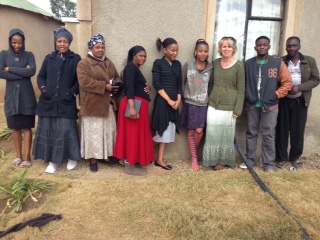
The Zulu Church. Hard to say goodbye.
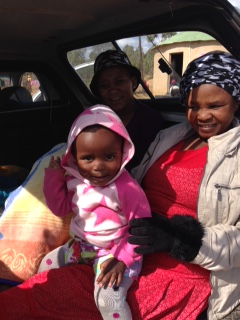
Going home after church meeting.
So when Salv’s application for extending his visa was rejected, we knew something new maybe in the wind, he put in an appeal but then we also started to seek the Lord for his further direction in our lives. Three options were placed before us, which we took time out, to really think and pray through.
We believe the Lord is leading us away from the area to a fellowship on the east coast who had approached us over 3 years ago. In saying that we also know we will be able to visit our local area and still support the Zulu fellowship. The timing of us leaving our area has been confirmed by various believers both in our local area and around the country.

On the way to the East Coast of South Africa
Within the Zulu fellowship, participation has been encouraged for people to share and men to bring teachings. We believe if we stay around we will be in the Lord’s way. Salv has been bringing teaching to the church concerning the early church in Acts of meeting together, sharing a meal ( however basic) prayer, communion, teaching. The body has been encouraged to become activity involved. They have had teachers from other areas and been encouraged to re- invite them.
Our home is in the transition stage with boxes packed and some in storage. When we leave the area Phumulani and S’phiwe with their 3 children will make it their new home.

Beautiful Aloe
We praise the Lord for His work in the lives of some of the people in the area. One of our neighbours visited the church and shared some of her story. She is a student in a University in Pretoria and had been attending a mega church pastored by a false teacher. She had many questions which we were able to answer. We have given her the contact details of a house church in Pretoria. Salv also had another neighbor called Thobani contact him with questions regarding the Word of God. He shared his testimony that while at school a fellow pupil had shared the Gospel and that message had never left him. He works near Ladysmith and upon visiting home met up with Salvador. He had a testimony of salvation but had not been baptized. We took him to the river, seeking a long way for water. The river has dried up with the drought but we found a slimey, algae infested pool that was deep enough to baptize him. Through whatsapp communication, he since has had the truth confirmed in his heart that he can only trust in Jesus and no ancestors or the path of his old life can help or save him.

One of our neighbor’s . The home of the student in Pretoria
We are picking up our Bakkie from Newcastle tomorrow as it was being repaired after hitting the donkey a few months back. We have been so thankful for all those people who so kindly loaned us their vehicle over this whole time that the Bakkie has been out of action.
Sal has been distributing to all the actors and those who helped in the making of the documentary a free copy of the DVD over the last few weeks. We have been burning dvd’s, sourcing cases and printing covers. A huge thank you to Judy Balcombe who was instrumental in this. We encourage people to burn these DVD and give them out for free. In the future “Bread of Life” will be selling master copies in Zulu, English and Africans.
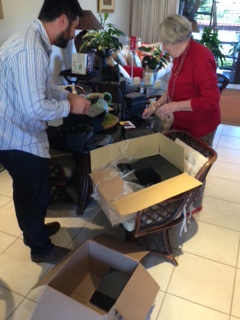
Judy was a trooper in helping with the thank you DVDs
We will keep you posted once we know the final outcome of the visa. Until then we are in transit between the east coast and Vryheid and our local area. To all those people who are opening their homes to us over this time. We thank you so very much.
As things have been a little hectic there is no teaching in this edition of the newsletter. We hope to resume as usual should we receive the Visa Appeal.
Shalom
Salvi and Di
Pray needs:
The visa outcome after the appeal
Distributing freely of the DVD and the work of the HS for those viewing it
Our Future direction, concerning visa’s and the paperwork involved
Thankful for good health
The transition for all those involved with us, cell group, Zulu fellowship, friends.
Thankfulness for the faithfulness of our Lord and the generosity of His people
SALVADOR & DIANNE’S MSINDISI MONTHLY
NUMBER: 139 June 2016
PO BOX 1481
VRYHEID 3100
KWAZULU NATAL
SOUTH AFRICA
+27 (0) 728311008
+27 (0) 815836288
Email: msindisi@gmail.com ,
salv.di@gmail.com
KwaZulu Mission Website: http://www.kwazulumission.com
Hi all
It’s times like now, I wish we could do an audio newsletter. I am not sure how to put into words the events of the last month? So much has gone on and yet I don’t want to bore you with every little detail.
So here goes, writing with broad strokes…….
End of May, we showed the premiere of the DVD in Vryheid ( the documentary we made of four people lives and how they turned away from following the dead) you can view this by downloading it from:
We then prepared the Auction yard ,where Sal, Caleb and Sophie lived when they first moved into the area (this is situated not far from our homestead), for the next viewing of the documentary, which was to be in Zulu.
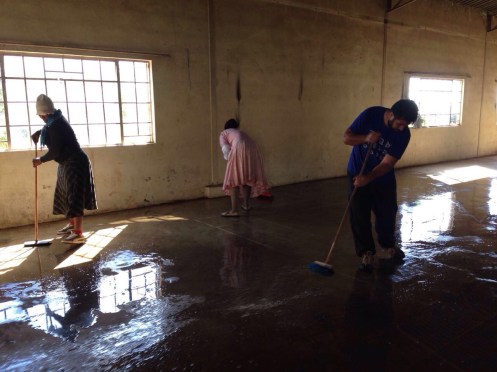
Getting the Auction yard prepared for the Zulu Screening
The afternoon arrived with fetching people from far away who had no transport. We had a mixed response from the viewing some were encouraged and others were disturbed. The people in the area have heard this teaching time and time again so we pray that they will not harden their hearts to what the Lord is showing them again.
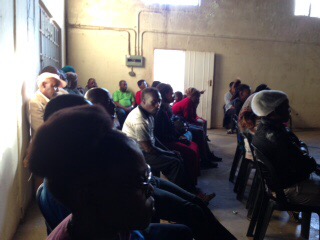
People watching the Zulu Screening at the Auction Yard
After clearing up the hall, transporting people home and taking the chairs back to where we had borrowed them, we headed for home. It was around 6pm so the sun had gone down, as we drove up over the rise of a hill, we ran into a small group of donkeys. There was an oncoming taxi so we couldn’t try to miss the donkeys by going to the other side of the road so we hit one of the donkeys.

The extent of the damage to the car
The next day we were supposed to be heading off around the country to screen the DVD in various places. The force of the impact crunched the bonnet and pushed the radiator into the fan blades which sliced through it. Our friends from cell group were quick to come to our assistance.
The next day after towing the truck into town and sorting insurance issues, we headed off to Secunda, thanks to the generous lending of our friend’s car.
The plan was to take the DVD around to certain locations in South Africa. Starting with our area then onto Secunda, Boksburg, Bloemfontein onto the Cape then back to Sedgefield, Port Elizabeth, Kostad, Pietermaritzburg ending in Ballito and Stanger. In Secunda Salvador got the opportunity to share and answer questions a couple of ladies had who watched the film. While in Boksburg, Salvador went and shared the word at a fellowship called Truth Ministries, which apparently confirmed the word that a former member, Kirk, had shared with them. We praise the Lord for speaking through this meeting. We also screened the film in Zulu in a local township, where the pastor Dumisani Madi was keen to use the film to help his congregation. One attendant who asked a question later gave his life to the Lord that day and a lady who made some kind of decision for the Lord a year ago was challenged to get rid of some Sangoma things she had kept in her home. Dumisani said wants to resolve some other issues with her first so that when she burns her stuff she will be completely free without any hook to take her back to her former Sangoma ways.
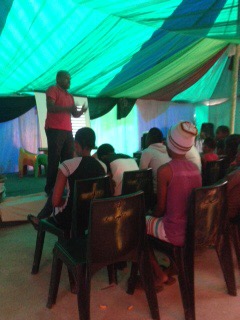
Dumisani Addressing the people who watched the Allegiance film in Zulu
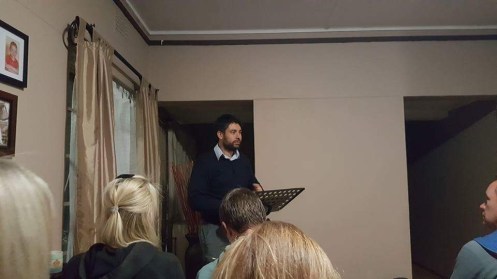
Salvador sharing at Truth Ministries
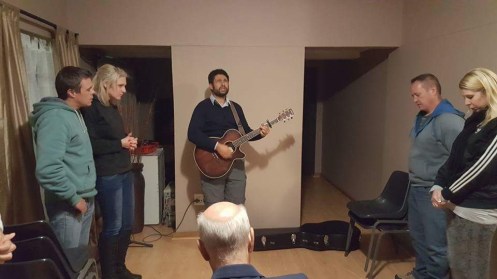
Time of worship at Truth Ministries
Mujuru and company at the Screening of Allegiance at Bread of Life Ministires
However once we got to Bloemfontein we were stopped due to car troubles (leaking petrol tank) which forced us to cancel all the viewings until Pietermaritzburg.

On the way to Bloemfontein
While we were in Bloemfontein we got to spend some time with our friend Pam Mott from Australia whom Sue Wells kindly brought down to us. Sal did some teaching in the fellowship there on 1st Peter and another on being “filled in the spirit and full of the spirit”. He also shared a teaching on Shabbat where we all enjoyed a evening together. Chris and Linda De Wet kindly hosted us till we left by bus for Pietermaritzburg, as we saw the car was going to take longer to fix than expected. From there our friends from Ballito kindly came and fetched us.
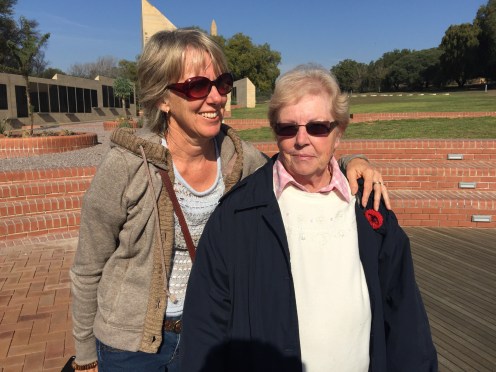
Di and Pam at the Women’s Memorial and War Museum
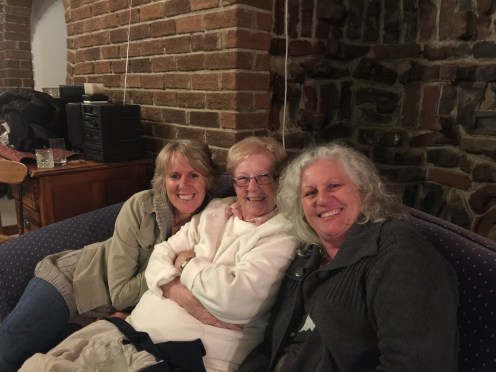
Di, Pam and Sue at the Bloemfontein Church group
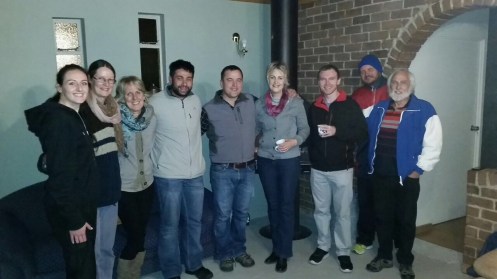
The Bloemfontein Church Group
Once we knew the Car was still not ready by the weekend we needed to be on the East Coast we got a bus to Pietermaritzburg and showed the film there at Bisley Park Assembly. Our hosts, Neville and Anne Le Roux were lovely and gave a royal and welcoming reception.
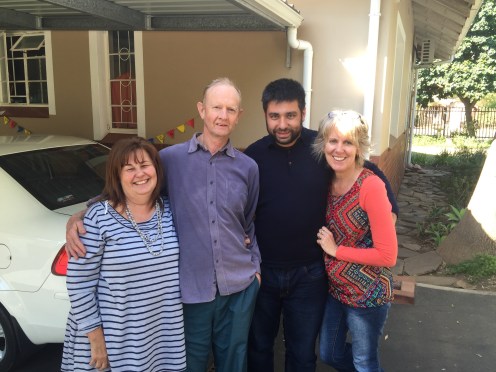
With Neville and Anne Le Roux
The last viewings of the dvd were in Stanger and Ballito. After we have viewed the DVD at the different locations around we found the responses where positive. Some have learnt to appreciate the difficulties of people leaving such things, some have been challenged and convicted, others encouraged. Many are eager to get it out realizing its a world wide issue and it’s not only pertaining to South Africa. Today personal spirit guides, horoscope reading etc are common practice. May the Lord use it for His kingdom.

Salvador Speaking at the Ballito Screening
Along the way on our travels and challenges we have many testimonies of the Lords personal encouragement, provision, and faithfulness. The hospitality and generosity of his people have been a blessing to us. He works all things together for good for those who love Him and are called according to His purposes.
We ended the trip in Ballito, as Sal was due to pick up the answer for his application for the renewal of his visa. Friends once again kindly lent us their car so we could fetch it. The visa renewal was rejected. The response being they want to see his qualifications for the job. In all the 10 years of applying these have never been asked for when applying for the renewal of a voluntary workers/visitors permit. Sal has the qualifications but they have not been SAQA approved. This is something we will do in the future as time is limited now.
This meant we needed to get back home to Vryheid to collect the qualifications and have them certified, so we can submit them on Tuesday. We have been given 10 days to appeal to the rejection. Over those 10 days Sal has applied for his Portuguese passport which he hopes to collect at the same time as the results from the appeal which takes 14 days to be processed. We returned to Bloemfontein to collect the car and will return it to our friends on Tuesday when we return to Vryheid to prepare to leave the country in case the appeal for the visa is declined. Until we leave Ballito Sal will be meeting up with people this side, leading worship on Sunday at “Coming King Ministries” and organizing where people can purchase a hard copy of the DVD if downloading isn’t an option for some people. All these details will be on the website page.

Graeme, the Executive Director of Allegiance, was a huge help and we praise the Lord for him.
So If the appeal for the visa is declined Sal will need to leave the country almost immediately. He is thinking he will go to Australia, as it was planned that later this year, in September we would be going for a itinerary tour. Di however has another year in which she can remain. We are not running ahead but we are also preparing to leave if the appeal is declined. Interesting times ahead. We keep it all in pray and have the peace of our Father.
We thank the Lord for His hand over our lives, and commit all our ways to Him.
Thank you once again for your on going love and support.
Shalom
Salvi and Di
Pray needs:
The visa outcome after the appeal
The truck being repaired
Distributing freely of the DVD and the work of the HS for those viewing it
Our Future direction, our friends from cell group and also farming friend’s who recently were robbed.
Thankfulness for the faithfulness of our Lord and the generosity of His people
Up coming teachers and elders for the Zulu fellowship
We are now endeavoring to replace the typed teachings with Short Video Teachings. You can either watch the video below or click on the Youtube link.
Shalom.
https://www.youtube.com/watch?v=xM6Gvix66Rg
SALVADOR & DIANNE’S MSINDISI MONTHLY
NUMBER: 138 May 2016
PO BOX 1481
VRYHEID 3100
KWAZULU NATAL
SOUTH AFRICA
+27 (0) 728311008
+27 (0) 815836288
Email: msindisi@gmail.com ,
salv.di@gmail.com
KwaZulu Mission Website: http://www.kwazulumission.com
Film: http://www.allegiancethemovie.co.za
http://www.facebook.com/allegiancethemovie
Greetings
Another month closer to the viewing of the DVD. Slowly but surely the recordings for dubbing and the editing have been going on over the month. Also Alistair Gordon for setting up the web page. We have been checking with variates people for locations, dates and times for viewing the dvd over the month of June around South Africa. There are still a few to finalize but the response has been good. Sal is still editing but the bulk of the DVD is complete. A special special thanks to Graeme Duane for his huge input into editing.
Those who would like to see the trailer can do so at the following link:
We had 3 weeks at home before heading back to Ballito, so we were able to visit the kids at Carebear Pre-school who we have been missing and also Victory school for teaching and singing.
Sadly this month we saw another farm murder take place just outside of Vryheid. The farmer was shot and has left behind his wife and two children and his father in law was also shot. So many lives are tragically lost due to farm murders here in South Africa. As Johnny is a farmer from our friday night cell group, we always see first hand the effect these murders have on those who are vulnerable in the community.

The latest Farm attack near Vryheid. Please pray for this country.
We have had some bakkie problems this month with the gear shift being very difficult to move. This has meant we have been in town while it is being seen to. But the Lord has been so gracious in providing all our needs through His body. Sal finished his teaching on the Holy Spirit at the last meeting of the month for cell group on Friday. This month he is wanting to work through a series of practical teaching on the Jewish festivals. We started this Friday with Shabbat.

Kim’s painting of Jonah. Kim attends our cell group.
Near the end of the month Di came down with strep throat, her glands were way up and she was very sick with it but she is back to normal now. Thanks for your prayers. We are also grateful to Bruce and Moyra who had us to stay over the last few weeks of the month in Ballito. We got to spend a lovely morning at Shefield beach which Di said far outweighs antibiotics. Sal submitted his visa application in Durban, so we now wait for the outcome, end of June we will return to pick up the results.

Getting some us time in Ballito.
The month ended with the meeting together of like minded fellowships at the midlands retreat. This was the fellowships second gathering, Phumlani attended last year with us and this year we were so blessed as Mesuli was able to attend. It was lovely to meet new people from other fellowships that had been invited and to see many young people there. We also would like to thank Mandla for bringing a teaching to our local fellowship while we were away.

Golden Harvest where we had the retreat.

Mesuli, Di and Leonie at the retreat.
Mesuli when he was young and attending the kids club Salvador taught back in 2004.
The start of May is already proving to be a full one as we head up to Joberg on Tuesday for more organizing concerning the DVD.

Thabi came to stay with us one weekend. Her mother is a widow with four children.
Prayer needs
– the organising for viewing the DVD
– the protection of the files holding all the DVD material
– the viewing of the DVD in Vryheid at the end of this month 27th May
– the viewing of the DVD here by us in Zulu on the 28th May
– the viewing of the DVD in Secunda on the 30th
– people’s lives to be touched in the viewings
– we desperately need rain in our local area, we are dry dry !!
– safe travels and good health
- South African farmers
EIGHTEEN
FINAL GREETINGS AND PRAYERS
ROMANS 16
Now Paul has finished his treatise on justification by faith (with its implications for the Jewish people); and he had also given his instructions in order to promote the obedience of faith among all the Gentiles. The Gospel message promises power unto salvation for the believer, which the Law of Moses was ineffectual to accomplish. The Law of Moses was legal but the law of Christ, which is the realization of the new covenant in Jeremiah 31: 31 ff, is a relational covenant. One law is to do with physical descent but the other is to do with the power of a spiritual life. Because this new covenant, which was made with Israel, is not based on a physical birth but on a spiritual birth, the way is therefore open for both Jew and Gentile to be saved and treated as equals in that salvation. Paul was convinced that the Church in Rome was full of goodness, filled with knowledge and able to admonish one another. (Rom 15: 14). Therefore, the things that Paul has addressed concerning the fellowship of Jew and Gentile, especially in Romans 14 and 15, should have been evidenced in the life of this Roman church.
VERSES 1 – 16:
JEWS AND GENTILES TOGETHER IN THE CHURCH
The letter to the Romans has the longest list of farewell greetings of all the epistles. The reason for this will be evident as we go through. In fact this part of the Roman epistle has been under scrutiny in past years, with certain people believing that it was originally a letter for the Ephesians. There are a few reasons why people have said this.
- Firstly, Paul is sending greetings to 26 individuals; so much more than he sends to any other church. So the question arises, would Paul have sent so many greetings to a Church he had never visited?
- Secondly, Paul sent greetings to Aquila and Priscilla and to the church in their house. However when we look at 1 Corinthians 16: 19 and Acts 18: 26, these verses seem to show that Aquila and Priscilla had been living in Asia Minor and more specifically Ephesus.
- And thirdly, Epaenetus is sent a greeting, who is the first convert to Christ from Asia which was the area that Ephesus was located in and not Rome.
These arguments, though somewhat convincing, do not prove that Paul was writing to the Ephesians. In verse 26, Paul expresses the same desire he wrote of in the first chapter, which is to see the obedience of faith in connection with all nations. The fact that there is a long list of names should not trouble us in the slightest. The fact that Paul had never visited this Church would give a substantial reason as to why this list of names should be so long. Paul is showing them that he is well known and these people would have been able to attest to his ministry. In Dave Hunt’s message ‘Christ betrayed by friends’, he showed how people can get a platform in many churches, even though they teach error, simply because they were recommended by a well known church leader such as Billy Graham. This would also work in a positive sense. A biblically based church would be more likely to try out a message by some unknown guy that Bill Randles recommends than some unknown guy that is recommended by Ray Macaulay. So these people that Paul lists would be able to defend Paul’s apostleship and that would encourage the Roman believers to fulfill Paul’s requests for prayer, to help Paul on his way to Spain and to watch out for those who cause hindrances. For this reason we would say that these people must have been in fellowship with the rest of the Church in Rome.
The fact that Prisca and Aquila had a home, and a house church, in Ephesus should not make us think that this salutation was not directed to Rome. Originally Aquila and Priscilla were from Rome as we see in Acts 18: 1 – 2. Although verse 26 of Acts 18 would show that they resided in Ephesus, verses 1 – 2 rather indicate that they lived in Corinth. There is no reason why this couple could not have had a house in all three places. Just because they had to leave Rome, under the decree by Claudius, did not mean that they lost their property in Rome. FF Bruce argues that they could have left stewards over their property. Rome was the ancestor of western civilization and culture. The Romans created sewage works and revolutionized travel through the construction of bridges and a network of roads. Thus it was possible to get around, especially if you were a Roman citizen. Trade always had an element of travel involved whether it is local transportation of goods or international.
As for Epaenetus being the first fruits of Christ from Asia does not imply that he necessarily had to spend the rest of his life there anymore than the fact that I was saved in the UK means that I must be a missionary to the British. So these arguments, intended to cause us to doubt the sincerity of those who handed down and copied the Greek manuscripts, should not cause us to doubt God’s preserving hand on His Word. But let us next look at the list of names and see what we can draw from there.
THE LIST OF NAMES
The first thing that we note is that Paul commends a lady called Phoebe and asks the Roman believers to help her in any way she had need of them. For this reason some people believe that she is the one who bore this letter to the Roman believers. But Paul commends this lady to them as a servant of the Church, which is at Cenchrea. The word servant in the Greek is the word ‘Diakonos’. This may imply she was a deaconess; but before we move on to that point I want to draw out the fact that Phoebe is a living example of what Paul has commanded us to do in Romans 12 – 16. Paul urged us to present our bodies as a living sacrifice, which is our spiritual or reasonable worship or service. Phoebe was a servant, in that she obviously did present her body as a living and holy sacrifice.
Now some people argue that even though the word servant is the same word for deaconess, it does not necessarily mean that Phoebe was a deaconess in the official sense of the word. They would say that the bible does not allow for women to be officially regarded as deacons because leadership is male in the church. However when we look at 1 Timothy 3 verses 8 – 13 we see that there are some criteria for women in the role of a deacon. These same people say that this does not refer to a female deacon but the wife of a deacon. For it claims that deacons must be husbands of one wife but not that deaconesses are to be the wife of one husband.
We must strive for a biblical view of the roles of males and females in the church, and not one that is dictated by our own personal, culturally accepted norms. (Whether that be oppression of women or liberation of women.) The Bible stands above culture and is the slave of none. My own culture is one that stresses the rights of women. At my high school we looked at authors who praised the virtues of the women who freed themselves from the constraints of society. However, the scripture, in antithesis to a view that women are to perform the same functions as men, says in 1 Timothy 2: 11 – 12 that women are to receive instruction quietly with entire submissiveness. Paul did not permit a woman to teach or have authority over a man. Therefore, should it not be argued that, with deaconship being an integral ministry in the church, it is a male ministry?
I do not agree with the assertion that the deaconship criteria for women, relates only to the wives of deacons for the following reasons.
- Firstly deaconship is not a position of doctrinal authority in the church, though deacons should be doctrinally sound. The first deacons that were appointed were to be men but their function as deacons was not the ministry of the word but to distribute the support of widows in a way that no widow was neglected. (Acts 6: 1 – 6). These first deacons were specifically to be males but it does not necessarily follow that what Paul writes in 1 Timothy does not refer to a female deacon but only the wife of a deacon. In Acts we are dealing with a specific situation where a small number of deacons were appointed.
- Secondly the criteria for an elder, or bishop, have 15 points, but there are only 12 points under the section of a deacon. Why are the criteria sterner for an elder? Because the elder must maintain the doctrinal integrity of a flock. The doctrinal sets the foundation and the base from which the practical should flow. Hence, for the first 11 chapters of Romans, Paul expounds the theology before moving onto the practical outworking in Romans 12 onwards. If the criteria for the elder are sterner and if the criteria for women in deaconship refer only to the wives of deacons then why are there not any criteria for the wives of elders? If the eldership role is more foundational than the role of a deacon then why have implications for the wives of deacons and not for the wives of elders?
I do not believe that Paul is simply referring to the wives of deacons. I believe there is a precedent for female deacons. I do not believe that deacons are a source of doctrinal authority or else why is there a criterion to be able to teach for elders and none for deacons. You have to be able to teach if you are going to be an elder but not necessarily if you are a deacon. Therefore, it makes sense why there is no criterion for women under the role of an elder, because there is no such thing, biblically, as a female elder or a female pastor. A woman is not allowed to teach or have authority over a man but is to receive teaching quietly and in full submission. And, if I am correct, then you would expect someone like Phoebe to be a deaconess because of the way Paul commends her as someone who has helped many and that she is to be helped in any way needed.
Secondly, we see that even though the Church was predominantly Gentile, as Romans 1: 13, 11: 13 and 15: 15 and 16 all indicate, there were a sizeable amount of Jews that were a part of the Church. This would make sense of how Paul, in part of the epistle, can speak to his readers as if they were from a Jewish background and in other places refer to them as Gentile according to the flesh. Prisca and Aquila were both Jewish. Mary is a Jewish name. Andronicus and Junias, although they are Gentile names, are both referred to as Paul’s kinsmen and thus, must have been Jewish. Apelles is a name that, according to FF Bruce, was common among the Jews at Rome. Herodian is also Paul’s kinsmen and suggests a link to the family of Herod, which was part Jewish through intermarriage with the Hasmonean family, descendants of Maccabeus’ father. And then there was Rufus. Mark writing his gospel to the Romans says in 15: 21 that Simon of Cyrene was the father of Alexander and Rufus. Because Mark names them without any further explanation we must assume that the Romans knew to whom Mark was referring. Thus, when Paul calls Rufus’ mother his own, he must have referred to her as being a mother in the Lord and not his mother by birth.
In fact Simon of Cyrene was an African and we can see that there were blacks in church leadership in Acts 13: 1. One such man was called Simon Niger. Niger means black and his name is pitted with the African Lucius also from Cyrene. So if this is the same Simon as the Simon from Cyrene then we can see how Paul regarded Rufus’ mother as his own because they were well acquainted. Rufus could have been an African Jew because Simon of Cyrene visited Jerusalem either as a Jew or a Proselyte. Simon, or Simeon, is a Jewish name. So many of the names on this list are definitely Jewish and there are others that are Gentile. Thus, the Roman church was a living epistle of what Paul was writing concerning the fellowship between Jew and Gentile being one in Christ. No wonder Paul urges the readers to give one another a holy kiss. It is a Mediterranean practice to kiss one another on the cheeks. If such love is given in the world how much more is it to exist in the church? Paul wishes that the unity that is in Christ would in no way be jeopardized. Thus Paul next gives his readers a warning in verses 17 – 20.
VERSES 17 – 20:
MAINTAINING THE UNITY IN CHRIST
Keep your eye on people who cause dissensions. Now this phrase, standing on its own, should cause us to put down any desire to cause division in the body of Christ. We should never desire to stir up strife or division and if we are indulging in such a desire we need to repent. However, what if we stand up for truth and thereby see a church split? Are we guilty of disobeying what Paul writes here? People say that the Word is a sword and we should be careful how we use swords because we could cause some damage! However, if we stand for fundamental truth and see a church split over it that is not disobeying what Paul says here for he writes that we are to keep an eye on those who cause dissensions and hindrances CONTRARY TO THE TEACHING WHICH WE LEARNED! In other words, if we are standing for biblical truth, it is not us who are causing the division. Look at the description that is given of those who cause division. They are slaves of their own appetite. They are good talkers who twist the word to satisfy their own fleshly lusts. More money, more food, more pleasure and they misuse the word with smooth and flattering speech to gain what they want. Paul does not want to see the quality of this Roman church’s fellowship lost to a bunch of deceivers. We are not to let deceivers simply slide by and get away with it but we are to keep a watchful eye on those people.
VERSES 21 – 27:
ESTABLISHED IN THE MESSIAH
There is a reason why it was important for the quality of fellowship to be preserved between the believers in Rome. This group of Christians would under go a test a few years after this letter was written. In AD 64 Nero would unleash a massive persecution against the Christians, blaming them for the fire in Rome. Their fellowship would be tested, but as Paul says in verse 20, the God of peace would soon crush Satan under their feet. From man’s perspective this is a lie. The Church in Rome was overtaken by a great whore centuries later and still in the 21st Century we are still waiting for Jesus to crush Satan under our feet. But from God’s perspective, Jesus is coming back soon. When Jesus returns, His judgment will be swift and His rewards eternal. We need to be established in this truth and this vision. As we saw with the Mosaic Law, we cannot do this in the flesh. We need God’s help and that is why Paul writes in verse 25 that God is able to establish us. He is able to keep us and strengthen us but this work of God does not happen in a void.
God establishes us according to the Gospel that Paul preached. Therefore, we repeat that the Gospel is not something that belongs to the conversion experience and then is forgotten about. Romans 1: 16 – 17 tells us ever so loudly, that the Gospel is that dynamic power of God unto salvation to them that believe. When we speak of salvation we are speaking of full salvation. We have it by faith, but whatever is by faith still has to be realized. We do not simply get saved or justified by faith but the righteous man, (that is the man that has been declared righteous based on the finished work of Christ on the cross) shall live (present tense) by faith. This is not a new invention by Paul but is something that was attested to all the way through the Old Testament and is so powerful that it actually has an effect in our lives. It causes us to live a life of obedience. It brings us to see the living reality of God’s predestination over the lives of those who believe. This predestination being that we are not only saved to be servants but God’s intention is to elevate us to the position of Sonship. This Sonship is something that is a reality by faith but one day we will receive in at the resurrection. Thus, when Christ returns we will share in the inheritance that He gained when He rose from the dead. To do this we must become Christ-like. For us to become Christ-like we must be obedient. And for us to be obedient we must believe, because it is all by faith. We must take this message seriously and acknowledge the wisdom of God in His foreseeing and planning of the whole plan of salvation. We must cry out to the Lord for His grace and thank Him for what Jesus has done. We must accept salvation by faith and let that knowledge and the Spirit’s guidance lead us to new heights of appreciation, worship, knowledge, obedience and revelation of the hope that we have and the fellowship we are to share in. All this is to be done till Jesus comes back. And when He does He will reveal to us the fullness of everything we ever hoped for concerning His Word. Amen.
SALVADOR & DIANNE’S MSINDISI MONTHLY
NUMBER: 137 April 2016
PO BOX 1481
VRYHEID 3100
KWAZULU NATAL
SOUTH AFRICA
+27 (0) 728311008
+27 (0) 723843786
Email: msindisi@gmail.com ,
salv.di@gmail.com
KwaZulu Mission Website: http://www.kwazulumission.com
KwaZulu Mission Facebook page: www.facebook.com/kwazulumission
Allegiance Facebook Page: http://www.facebook.com/allegiancethemovie
Hi all
We having a great day today as the weather has suddenly changed !!!! It’s much cooler and we have had some rain. With the celebration of Phumulani and Siphwe wedding the supply of water was halved so we all are grateful for the tanks to be topped up.
Let’s start with their wedding. The month was busy with preparations, cleaning up the kraal, collecting food and going for fittings etc. The night before was spent peeling sacks of butternut, potatoes, beetroot. The cows had been slaughtered the day before that for her family and for food for the wedding. No ancestral worship took place. In the middle of these proceedings we got a call that a young boy had been involved in a fight and needed to be taken to the local clinic, after we arrived, still no ambulance was available so we ended up taking him into Vryheid to the hospital. He had a fractured skull and was in alot of pain.
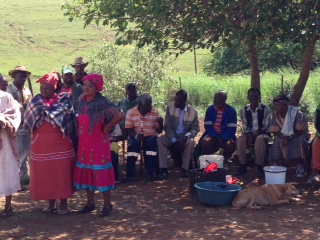
Guests attending the wedding
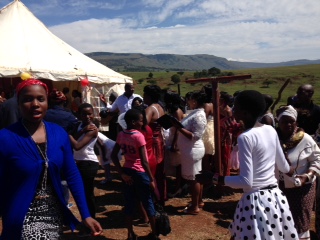
Wedding guests
Phumlani and S’phiwe decided to do their official marriage at home affairs early on in the week and then have the community celebration on the 26th. Sal was asked to bring the teaching, while Celani was MC. The day arrived with clear skies and many people coming to share in the celebration. I have to say at this point that the Zulu women are incredible, hard working ladies; the preparation for the food alone is huge as they cater for anybody who decides they will come. No invitations go out, it is open for all. Take away containers are used for plates for those travelling but otherwise everyone brings their dishes and plates from home from within the family to help serve. The wedding was extended over 2 days as on the day of the wedding the bride’s family said they were tired after celebrating the night before and they wanted to stay over and continue to celebrate the next day as well. There was much dancing, singing, eating into the small hours of the morning for several days. By the Monday people were starting to leave and go back to their homes. We also hit the road on the Monday for Ballito.

Cutting the Cake
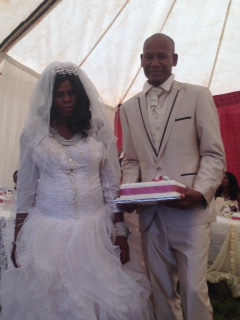
Phumlani and S’phiwe

The Married Couple
We drove down in convoy with a friend to help her find her way to a course she was attending in Umlanga. Then returned back up to Ballito. As you can imagine that night we both had no problem sleeping.
The time we had in Ballito was mixed with some Rest and Relaxation. Sal met up with Graeme again and went over what he had completed concerning the editing of the DVD. We are so grateful for his input and now things have moved into another gear. . We have been approaching people to see if they are interested in showing it at their local fellowship or in there community. The Facebook page is now showing the introduction of the 4 people and their stories. You can find it on www.facebook.com/allegiancethemovie
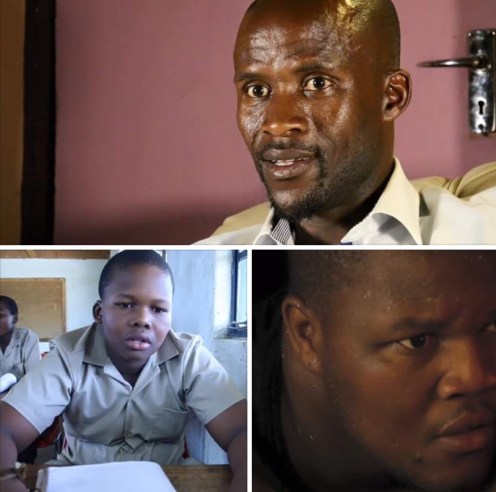
Hamilton Buthelezi is a Zulu who was raised outside Jozini in KwaZulu Natal. His grandmother was a sangoma and his grandfather and father were Inyangas. Hamilton felt sure he was destined to become a sangoma. All the signs were there and he showed amazing aptitude in ancestral things. He would even dream of things before they happened. Deeply entrenched in ancestral beliefs, Hamilton was challenged by a dream that was to change the whole course and direction of his life. Today Hamilton pastors the Swedish Evangelical Church in Louwsburg, KwaZulu Natal. Hamilton is played by Banele Mavuso and Mthobisi Buthelezi. Banele is a student at Inkanezi Yesizwe Combined School and Mthobisi is currently working part time and seeking full time work opportunities. This is their acting debut.

Karabo Lotsholo became a born again Christian about 6-7 years ago. He grew up in a Tswana family outside Pretoria in a township called Ga-Rankuwa. Raised single-handedly by his mother he was raised to follow ancestral traditions. After a great emotional conflict of seeing the failings of ancestral traditions he became convinced that Jesus is the only way to God while working at BMW Rosslyn, where he still works today. Karabo is played by himself. This is Karabo’s acting debut.
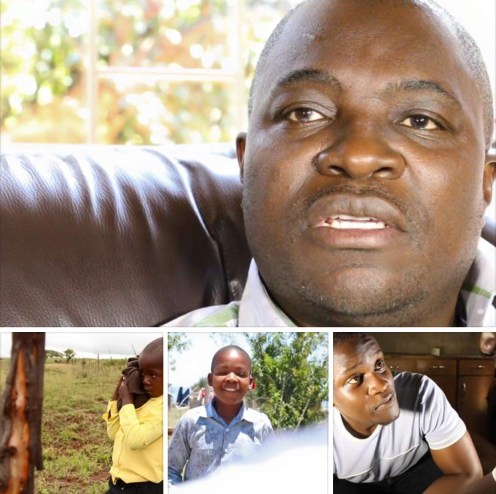
Munyuradzi Mujuru is a Shona who grew up in and around Harare in Zimbabwe. He has Batchelors, Masters and PhD in Chemistry. He currently is a lecturer at the University of Limpopo. Mujuru’s family has been deeply entrenched in ancestral traditions. His family is also well known for its connection to the instrument called ‘Mbira’ (African Piano) which can be played either for ancestral ceremonies or in a popular style with no connection to ancestors. His father, uncles and aunts were mediums who would be channels through which the spirits would manifest. This story explains his background and how he gave his life radically to Jesus while at boarding school and the grace and strength he received from the Lord to remain true to Him. Mujuru is played by Mthandeni Dlamini, Sabelo Dlamini and Mesuli Mhlongo. Mthandeni and Sabelo are brothers and they are currently students at Inkanyezi Yesizwe Combined School in the rural area, Alpha Village, near Vryheid, in Northern KwaZulu Natal. Mesuli Mhlongo is currently studying a Batchelor of Pharmacy at Rhodes University in Grahamstown and is also from a rural area outside Vryheid. This is first acting debut.

Jean’s actual name and identity has been concealed for security reasons. She has gone to be a missionary in Moslem lands. This recent move is a testimony to the Lord’s hand on her life. Coming from a childhood where she was continually fearful of her father, she reached out for help to the spiritual world where she believed she was in contact with spirit guides and spirits of the dead. She got deeper into the occult until she came to experience the power and the peace of God to which she was drawn at a time when she fought tooth and nail against the idea of becoming a Christian. It was in the knowledge of God’s great power and love for her that she bowed her knee to Him and it was in the abandonment of herself and her focus on Jesus that she found her freedom from fear. Jean is played by Lindy Els and Nicole Els. Lindy and Nicole are sisters. Lindy is at a primary school in Vryheid and Nicole is studying a Batchelor of Social Work at the University of Pretoria. This is their acting debut.
We want to thank all those who have helped in so many ways so far, it truly is a work of the Lords. We praise and thank Him for you all.
Running along side the wedding and DVD has been the on going routine of ministry. Sal continues to bring the word to the fellowship on Sunday’s now, as Phumlani has stepped down, bible studies on fri afternoon, Tuesday afternoon and Sunday afternoon. The Friday cell group is meeting whenever possible also. Due to school holidays last month we did not teach at Care bear preschool or Victory school but will do so this month.
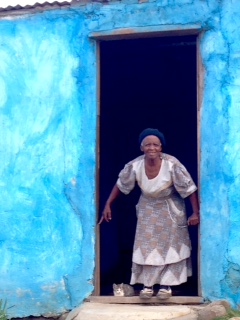
Home where we do the evangelistic Bible study on Sundays
Sal is getting ready for his visa renewal application which is due to be submitted at the end of April. So it’s the usual paperwork requirements of police clearance, doctor certificate, x-ray reports etc. This will be submitted when we return to Ballito at the end of the month.
Di has started to help Khethwie with driving lessons. She has had 2 so far. Learning to drive will help her and the family plus the community. Celani shop is now plastered on the inside. She will be plastering the exterior and painting both in and outside.
Phew … Think that’s all for now. Even though our lives are busy our eyes are fixed solidly on the person of Christ to whom we labour. It is Him and Him alone who enables and directs our path.
1 Timothy 4v 10. For to this end we toil and strive, because we have our hope set on the living God, who is the Saviour of all people, especially of those who believe.
Prayer Needs
– We still ask for your prayers concerning people who are called to join the work.
– gratitude for the rain and the Lords grace with Phumulani and Siphwe wedding.
– the visa application for Sal’s renewal
– DVD editing and future viewings
– the up and coming fellowship of fellowships meeting that is at the end of the month
– Persecuted believers
Do pray you are all well, we love receiving your news also. If we can be of any encouragement or if you have any specific prayer needs please let us know.
God bless
SEVENTEEN
THE SACRIFICIAL LIFE IN ACCEPTANCE
ROMANS 15
Romans 15 is really a concluding chapter to the whole epistle. God is good and made everything good but we messed it up. When I preach the Gospel in public I often bring up the question, ‘how can a good God allow evil to exist in the world?’ This is a question many people ask. However, what they do not even recognize when they ask this, is that most of the evil that we read of in the newspapers is not a product of natural disasters but is caused by people. If God is good we would have to measure everything against Him. And that includes our morality. Therefore, because God is good, then everything He does is good and everything He says is good also. God gave our ancestors, Adam and Eve, a commandment. God gave the Jewish people a law. If God is good then that law must also have been good. So when we decide to go against that good law are we therefore performing good? When we go against that which is good we create evil. Our ancestor, Adam, brought evil into the world and we have accelerated its growth. When someone stabs you in the back, mocks you, cheats on you and ridicules you; should that person expect to suddenly become your best friend? But that is what we are like with God! We live the way we want, in defiance of His law, and then we expect Him to turn round and say, ‘It is OK, I forgive you anyway!’ Sin separates. It separates us from God and it separates us from one another.
That is why God separated the Jewish people from the other nations and made them special. He did it that He may give them His law and then He could have communion with them through the Tabernacle and the sacrifices, which were all a picture of Messiah. He was the fulfillment of everything that God required in order that the gap might be bridged. Not only did Jesus reconcile the believing Jews to the Father but Jesus also brings reconciliation between them and we who are physically Gentiles. We are not only reconciled to God but we are also reconciled to Israel, who under the dispensations of the Patriarchs and Moses had been made separate to us. In the last chapter, Paul showed us how the unity between Jew and Gentile, was to be experienced in Church life when sensibilities between their practices were difficult to over come. And that is what Paul builds on in verses 1 – 13. Then in verses 14 – 21 Paul explains his reason for writing this letter. Lastly from verses 22 – 33 Paul deals with his desire to see Rome and the obstacles that had been and would be in the way.
VERSES 1 – 13:
JEW AND GENTILE: ONE IN MESSIAH
Paul is building on the whole argument that not all are strong in faith. Paul looks at the perspective of those Jews who had come to accept Yeshua as their Messiah but still carried a legalistic mindset and, thus, he summarizes the whole of the last chapter in the first verse of this one. We who are strong, meaning strong in faith, (as opposed to those weak in faith (Romans 14: 1)), are to bear the weaknesses of those without strength. This is not only a ‘bearing with’ or a putting up with the weaknesses but it means to actually bear those weaknesses also. If we turn to Galatians 6: 1 – 2 we can see that Paul is dealing with people who are caught in sin.
“1 Brethren, even if anyone is caught in any trespass, you who are spiritual, restore such a one in a spirit of gentleness; each one looking to yourself, so that you too will not be tempted. 2 Bear one another’s burdens, and thereby fulfill the law of Christ.”
What is our immediate reaction to be when people are caught in serious sin? I am not talking about people who are sinning, as many people sin secretly, but I am talking about those caught red-handed. Perhaps these people have been sinning for some time. What is a Church to do when someone is caught red-handed? Is it simply to ex-communicate them? Do they purge them out of the congregation? A Church must do something because sin cannot be allowed to continue. A little leaven leavens the whole lump. We do not simply kick such a person out but we help that person. Who is supposed to deal with it? Is the whole Church to get involved? No, not the whole Church but, as Paul says, those who are spiritual. When you go into battle, who do you put out there in the thick of it? Do you commission a novice with no training? Would you put a novice in charge of a delicate operation? Would you put a private in charge of other men and put their lives in his hands? No, of course you would not! So when someone is caught in a sin, you do not get a new convert to deal with it. A new convert has so much to learn, to grow in and to experience as a believer. He or she has to grow in spiritual wisdom. It is an exciting journey of spiritual discovery. But the work of restoration is a work for those who have grown strong in faith. As Paul says in Romans 15: 1 ‘We who are strong are to bear the weaknesses of those without strength.’ Those who are spiritual are to restore such a person, in a spirit of gentleness. This is what Paul means in the Galatians 6: 2, when he says ‘Bear one another’s burdens and thereby fulfill the law of Christ.’ Bearing their burdens with them is an act of love and sacrifice. Love is the heart of Romans 12 – 16. Truth and love are not mutually exclusive. We are not only speaking of love as something that conveys our sentiments to another, but as Romans 12: 1 – 2 shows us, love is only made possible when we live sacrificely. What is it that we are laying on the altar? Not just ambition, not just pride, but here Paul tells us we are not just to please ourselves.
We are to put self interest on the altar as part of our living sacrifice. Denial of self seems so unnecessary when I have to refrain from something that is not evil in itself. What if I have the freedom, in Christ, to do what for someone else may be a cause of stumbling? Am I always to bend over backwards for other people’s weaknesses? It does not seem theological or doctrinal anymore but more of a matter of personal sensibilities. But this is what Paul is dealing with. It is wholly theological because living to please oneself is letting self rule instead of God. Thus, even if I have no problem with something, at some point I must forego it for the benefit of someone else. I need to consciously lay self interest on the altar as part of presenting my body as a living sacrifice. Remember when we looked at Romans 12: 3 – 8. The whole point of living a sacrificial life in ministry is seen from Ephesians 4: 11 – 14 in that we are building each other up into the image of Christ and we are being fitted together by what every joint supplies. As 1 Corinthians 3: 10 – 16 shows us, we are a temple of the living God and we have to build each other up on the right foundation, which is Christ.
That is what Paul has done in this letter. He has given us a doctrinal foundation of the Truth. Then, from Romans 12, onwards he is encouraging his readers to build each other up according to the foundation and according to Truth. That is why Paul tells us, in verse 2, that we are to please our neighbour to his good, to his edification. We are not to please our neighbour simply for pleasing’s sake. We are not to fall for every whim a person would have us to comply to, simply because we are Christians.
In the UK there are people who prey on unsuspecting and naïve young people. They may give that youth a story about how they need to go back down south for a job interview but they have no money for the coach or the train. I fell for this trickery once when I was 17 and gave the guy ₤40. But that money did not help the guy out because it offered no conviction and kept him thinking he could continue to travel this path of dishonesty. We are to please each other for our good and edification. We are to promote godliness and to lay aside our freedoms in order to promote that godliness. This is what Paul is saying. This undoubtedly will bring suffering into our lives. When we lay our rights down, it is a real sacrifice. Think of Moses; do you think it was easy for him to lay aside the riches of Egypt in order to identify with God’s people? God’s people are ridiculed by the world and yet we have to limit our freedom and be identified with what the world would only deem, ‘nut jobs’. Because of love we bear reproach for the sake of Christ. Look at verse 3.
3 For even Christ did not please Himself; but as it is written, “THE REPROACHES OF THOSE WHO REPROACHED YOU FELL ON ME.”
Here Paul quotes from Psalm 69: 9. David, who prophetically speaks of Christ, shows how he was alienated from those close to him and was mocked. But what was the cause of this reproach? ‘For zeal for your house has consumed me?’ Jesus sufferings, in terms of his passion week, came into effect after Jesus cleansed the temple because zeal for God’s house consumed him. Because Paul championed the Gentile cause, concerning their inclusion into the Body without circumcision, other Jews rejected him and persecuted him. Why was he rejected? It was because zeal for God’s house had consumed him. We often think that suffering for Christ is a personal affair. When I read Hebrews 12 in 2001 I was agonizing over the fact that I am called to suffer. But here is what I did not realize studying this chapter of Romans. Our suffering is also connected to our love for the Body of Christ. When zeal for God’s house consumes us, then we will bear reproach or suffer for it. You do the right thing for Christ’s sake and for the sake of your fellow believers, and unbelievers reproach you. You may get little thanks and you may feel alienated from the rest of the world. Being alienated from people becomes a very lonely affair. Therefore, if we are made more separate to the world, we need to hold some things in mind.
Verses 4 – 6. 4 For whatever was written in earlier times was written for our instruction, so that through perseverance and the encouragement of the Scriptures we might have hope. 5 Now may the God who gives perseverance and encouragement grant you to be of the same mind with one another according to Christ Jesus, 6 so that with one accord you may with one voice glorify the God and Father of our Lord Jesus Christ.
Firstly we need the input of the scriptures. These things in the Old Testament were written for our instruction. Paul has already demonstrated that when he looked at Abraham’s example, of being justified by faith while uncircumcised, in Romans 4. The scripture gives us hope and we looked at this hope in Romans 8. But it is not only scripture that we need but we also need one another. The more alienated we become to the world the closer we need to draw to one another. We need to be part of a family, of community. We were made by a relational God who created marriage. And God told the couple he made to form a big family, hence the formation of a society. We worship a God of fellowship and therefore, when we are more estranged from the world, we need to be more familiar with each other. The way to do this is not simply to open up with each other about everything or to manufacture a relationship through our own devices but we are to be of the same mind. Being of the same mind is a gift from God and He must grant it to us. It is God’s work in us through the Holy Spirit that brings unity between us. And the Spirit does that through the administration of the Truth. As Jesus prayed, in John 17: 20 – 21, unity would come to those who would believe through the Apostles’ teaching. Is it any wonder why Paul chooses to pray for the unity of the Roman believers in Romans 15? Paul has already set out the fundamentals of our faith and explained the Gospel as a basis for our unity and fellowship with one another. In our agreeing with Paul’s doctrine we come into a unity and fellowship with God Himself and with one another. Thus Paul may pray that God would grant them to be of the same mind because they all have a basis for that unity.
Our salvation is based on what God has done, not what we do. Our Christian living is a response to what He has done. We saw this in the very first chapter of this book. We looked at the mystery of godliness. And here Paul continues in saying that we are to accept one another, with all our flaws, idiosyncrasies and weaknesses because Christ accepted us. It does not mean that we accept and tolerate sin but instead of simply pointing the finger, we are to help those who are in these situations. Jew has to accept Gentile and Gentile has to accept Jew. The reason that Paul gives for the salvation of the Jew is to confirm God’s promises to Abraham, Isaac, and Jacob. The salvation of Jew does not serve the same purpose as salvation for the Gentile. There is distinction between the two groups in this regard. The reason Paul gives for the salvation of the Gentile is to glorify God for His mercy. From verses 9 – 12 Paul quotes from Psalm 18: 49, Deuteronomy 32: 43, Psalm 117: 1 and Isaiah 11: 10. In the first quote David is speaking about the time when he ran away from Saul. He was rejected by his own people but then he was made captain over Gentiles; they submitted to him and therefore David would praise God among the Gentiles. But is that not a living example of Paul’s teaching in Romans 11? He says that because of Israel’s rejection, salvation has come to the Gentiles. But, as we read in that chapter, this does not mean that the church has replaced Israel and so Paul’s second quote says that the Gentiles are to rejoice with God’s people. They are not to rejoice in place of God’s people. It is neither a replacement of God’s people as a nation, nor a replacement in terms of God’s purposes for Israel, but the salvation of Gentiles is a fulfillment of those purposes. This Paul demonstrates in his third quote from Psalm 117.
“1 Praise the LORD, all nations; Laud him, all peoples! 2 For His lovingkindness is great toward us, And the truth of the LORD is everlasting. Praise the LORD!”
Here the psalmist speaks to the Gentiles as a separate entity from himself. He does not tell the Gentiles ‘Let us praise the Lord’, but he says, ‘Praise the Lord all YOU Gentiles’. But the reason the psalmist gives for (YOU) Gentiles to praise God is because God’s Truth is Everlasting and His kindness is great to US. With the distinction between YOU and US we can well interpret this as meaning that the Gentiles are to praise God because God’s kindness to Israel has been great. Why should Gentiles want to thank God for being kind to a totally different people group to themselves? They are to praise God because of Romans 15: 8.
8 For I say that Christ has become a servant to the circumcision on behalf of the truth of God to confirm the promises given to the fathers,
The promises in verse 8 no doubt refer to the covenant made with Abraham, that he would have many descendants, that he would inherit the land of the Canaanites and that through his seed all nations would be blessed. This is fulfilled in Messiah. Therefore, we Gentiles are to praise God for preserving Israel and keeping His promises to Israel because out of that comes our blessing of salvation in the Messiah. We Gentiles can, therefore, be saved.
VERSES 14 – 21:
PAUL’S REASON FOR WRITING
And now Paul has gone full swing back to the first chapter. The Roman believers were an example of how Jew and Gentile may be one in Christ, despite their history and despite all the obstacles that would come their way through Jews observing Moses. Paul was convinced that this group of believers were such an example as we read in verse 14. Paul was not glib when he said that he was convinced that they were full of goodness, filled with all knowledge and able to admonish one another. Paul did not use flattery in order to get a desired response from Believers but Paul would have known all about them because he knew people that they knew. So if these people were such an example of what a good Christian church should be then why did Paul have to send such a lengthy and detailed letter to them? They were filled with all knowledge and were able to admonish one another; so why did Paul have to interfere? We already claimed that we do not know the specific reason as to what drove Paul to write the letter but there are some reasons that he tells us himself in the text.
-
Firstly, he says in verse 15, he wrote boldly on some points so as to remind them. We already said in the first chapter of this book that we need reminding. We get saved by faith, in response to what Christ did on the cross. We move on and then we sometimes forget the foundational principles of our faith. No longer is it about responding to what God says in obedience but now it is about what you and I can do to bring God’s Kingdom about. It is about us taking dominion. Thus, we become the initiators to whom God must respond. Or, we can take a commandment in the New Testament scriptures and we start to impose it in a way that the person must keep it whether they have the faith or not. And suddenly we have gone off track. The just shall live by faith. As Paul said to the Galatians, ‘Having begun by the Spirit, are you now being perfected in the flesh?’ There are some things in scripture that demand drastic measures, such as unrepentant immorality, and we can read about that clearly in 1 Corinthians. But many other issues demand our patience, our help, time and prayers. We must not only get saved by faith but we must also live by faith. And maybe you have left behind your first love, where God was everything to you and you believed in His leading and care. But then the tribulation that you have experienced as a Christian has hardened you to that experience of the Lord. The good news is that it does not require our works or sacrifices to come back to God. We keep coming back to God on the basis of the finished work of Christ. We come to Him with the empty hands of faith in full reliance of God like we did on the day we got saved.
-
Secondly, as Paul writes in verses 15 and 16, he had written to them boldly because of the grace that was given to him. This goes back to Romans 1: 5 which says that he had received grace and apostleship to bring about the obedience of faith from among the Gentiles for Christ’s name’s sake. God had given Paul the authority to speak into these believers’ situation and to lay that doctrinal foundation down afresh. For Paul, this was not a matter of position or status but about obedience. God initiates and we are supposed to respond.
-
Thirdly, in verse 16, Paul’s perspective of his own ministry is that of a priest making offerings to God. These are not the same sacrifices as on the Day of Atonement (Yom Kippur), or for sin. They are not sacrifices of lambs or bulls but they are sacrifices of people. He is offering the Gentiles to God as his offering. This, no doubt, relates to Romans 12: 1 – 2 which tells us that we are to present our bodies as living sacrifices. This is the outworking of a life of faith and thus it can only be a product of the sanctifying work of the Spirit. It is not in the power of the flesh that we are able to do this, but because of a spiritual birth (as we saw in Romans 9). It is because of the spiritual power of the Gospel which is brought about through the indwelling of the Holy Spirit. Paul knew better than to rely on his flesh. He would not operate outside the bounds of the Spirit’s enabling in his life. Thus it is just like he taught us to do in Romans 12: 3 – 8 concerning serving according to the faith that we have.
In verse 18, Paul writes that he will not speak of anything except what Christ has accomplished through him. This was not Paul speaking in false humility but the factual confession that he had no power in himself. It was not merely a boast of inadequacy, making him out to be of lowest regard, but rather it was a true realization of the situation that he was in. When Paul bemoaned the flesh, at the end of Romans 7, you cannot say that Paul was being over sensitive or embellishing the situation but we read a very genuine account of the struggle he had to deal with. Paul was under no illusion. Without the empowerment of the Holy Spirit he could do nothing. He could not even fulfill the ministry that God had set him apart for, which was to preach the Gospel fully to the Gentiles in places where Christ Jesus had not even been named. We could learn from that too. Why do we labor in our flesh? Why do we forget the fact that we are not capable by ourselves to perform His will? Why do we then make a verbal admission that we believe we need God’s empowerment, in order to convince others that we believe the right doctrine? We need not to merely confess our need for Christ’s empowerment but rather we need to have a true and real awareness of our powerlessness without His Spirit.
VERSES 22 – 33:
PAUL’S DESIRE TO VISIT ROME
Remember the mystery of godliness. We submit ourselves to Christ as servants and wait on God to elevate us. He initiates our vindication. He initiates our salvation. He initiates our ministry. He initiates our glorification. He initiates and our part is to respond. Paul desired to go to Rome and Paul would have had every possibility to go there. He was a Roman citizen, he was well travelled, he was a tent maker by profession and so to go to Rome would have been no big deal were it not for one factor… the will of God. Because Paul’s ministry was to preach the Gospel where Christ had not been named, and because Rome had already received the Gospel, though Paul could have gone to Rome he would have been doing it outside the will of God. Paul had to prove himself faithful in the duties God had given him before he would be moved onto the next thing. Now Paul was seeing that he was getting nearer to the end of spreading the Gospel round Asia Minor. Thus his eyes were looking further a field, to Spain. Therefore, going to Rome on the way to Spain would be perfectly legitimate because Rome could be a key player in his support to get over to Spain. But there was one thing that Paul had to do before he could move on and that is found in verses 25 – 26.
25 but now, I am going to Jerusalem serving the saints. 26 For Macedonia and Achaia have been pleased to make a contribution for the poor among the saints in Jerusalem.
We also read about it in Acts 19: 21. In Galatians 2: 10 Paul states that the Apostles requested him to remember the poor, the very thing that Paul was eager to do. Paul was eager to help the poor in Jerusalem. This meant one of 2 things. Either it meant the Jewish sect of believers called the ‘Ebionites’, which comes from the Hebrew word ‘Ebyown’ meaning poor or one who is needy. Or it referred to those Jewish believers who had been made destitute because of their commitment to Christ. If it referred to the Jewish sect then we know that, though this group of believers may have started out as sound, they went astray later because they denied Christ’s deity and compelled Gentiles to be circumcised. It is more likely that it was simply a group of Jewish believers who were made destitute because they believed in Yeshua as Messiah. But why should we Gentiles support Jewish believers financially? Why are the Jews so special? Has Christ not abolished the distinction between Jew and Gentile in Christ?
The answer lies in this; that we are indebted to the Jewish people for our salvation because salvation is from the Jews. Even though in Christ we are equal, outside of Christ we are not and, therefore, we recognize the unique position that Israel holds. We are also thankful for the way God used them to be a blessing to us. But Paul is taking this gift to Jerusalem and he knows the danger that awaits him. Agabus in Acts 21: 11 prophesied of the danger and persecution that awaited Paul in Jerusalem and yet Paul said that he was willing even to die for Christ. Now here is the telling thing. Just because Paul was willing to die for Christ, did not make Paul stupid. He does not pray for martyrdom, but rather (in verse 31) he asks the Romans to pray for God’s protection from those who are disobedient to the Lord. He knows what awaits him so if he is going to face such opposition from Jerusalem how will he fulfill his desire of seeing Rome? Through their prayers he expected to be delivered to them by the will of God. God would be the one to open the doors. God is the one who is to open our doors. Our part is only to hear and obey; trusting that in His time God will open the door.
SALVADOR & DIANNE’S MSINDISI MONTHLY
NUMBER: 136 March 2016
PO BOX 1481
VRYHEID 3100
KWAZULU NATAL
SOUTH AFRICA
+27 (0) 728311008
+27 (0) 815836288
Email: msindisi@gmail.com ,
salv.di@gmail.com
KwaZulu Mission Website: http://www.kwazulumission.com
Hi all
I, Di, am writing this after a day of washing….. There was so much in fact that I had to hand wash at least 4 loads, then spin them in the machine, then use the machine for the other 4 = 8 loads. My back is really sore, from hanging it out , bringing it in, folding it …… and I could just sit and stare into space. Warning never leave your washing that long before you do it !!!!
Its newsletter time and It must go out ….. So today is that day.
Just got up to look for my calendar but it’s not here. Left it at home. This should be interesting now, having to go off my memory. All the omega 3 doesn’t seem to help. I have trouble remembering what happened last week let alone a month ago. Bear with me as I think …………
I do know we have stopped filming now, think that was last week that we stopped. Now Sal is 100% tuned into editing it. However, sadly on top of this he has had to step up in ministry as Phum is getting married in 2 weeks and is stepping down from ministry. We see this now as a good opportunity to address some areas that we see as vitally important for growth in the church and our lives. We are asking for prayer concerning labourers as the work and the DVD project added together is rather large.
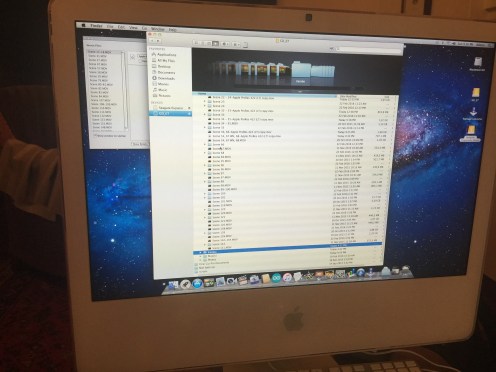
Sal organising files for editing.
We filmed all of Hamilton’s scenes and a few weeks ago went to Ballito to film a dream sequence. Lee Pauls, who made our model Ark said it looked like we would not be able to film as there was high probability of rain and storm. He had a cordless drill to use. Salvador said, “The Lord’s held back cloud and blown away mist for this film so he can hold back the rain.” Everybody was skeptical and we were praying that the Lord would be merciful. Well the rain was held back till the following day. We also did not have someone to play the Noah Character in the dream but last minute found someone by the side of the road who was willing.

Thank the Lord for the much needed rain
We came back and got straight into helping a visiting evangelist, Cecil Peasley, with outreaches. Salvador interpreted into Zulu for him. We were also blessed no challenged by his messages at Bethany Baptist Church. It was after we got back we received the news from Phumlani of his future plans.
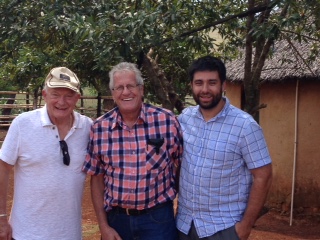
Cecil Peasley, Jannie Viljoen (Pastor of Bethany Baptist) and Salvador
For the last segment of filming we travelled back to Ballito to film movement sequences with Isabella Pauls and Connor. We were supposed to have a professional dancer, who is a big guy but sadly his grandmother passed away so Connor stepped in last minute and was the only person to answer the call. He is a young 17 year old . The time frame was very tight but we are grateful it went well. Lorna Pauls was amazing and went the extra 50 miles for us. Organising Connor last minute, getting the dance studio booked for us, doing make up, driving etc. Many many thanks Lorna. While there in Ballito Sal was asked to to a teaching at Coming King Ministries as they are planning on doing a Shabbat once a month for the fellowship. This happening on the Friday night after filming. Come Saturday we literally crashed and both needed a day of rest so we relaxed, chilled, went down to the sea. While away, a friend of ours called Mandla, came and did a teaching at our Zulu church.


Isabella getting her hair done for shoot and Connor and Isabella in bottom right corner.
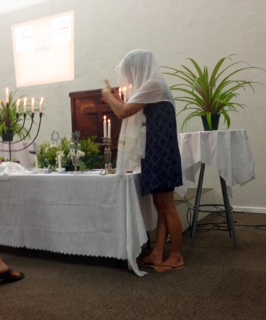
Di, lighting the Shabbat candles
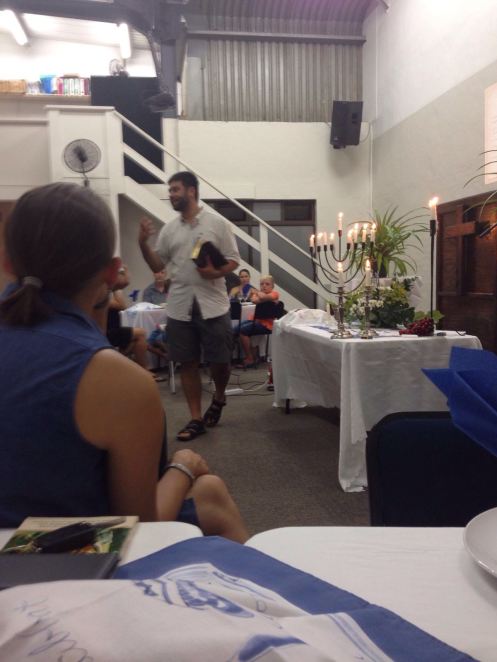
Sal, teaching the Shabbat


Chilling by the sea
While we were away Celani got started on the building of her second hand clothing shop. It’s all very exciting and once again we thank those who are giving clothing and other things for the community.
Pause …… Trying to think again.
Salvador went to Alpha on Tuesday and is challenging the brethren to keep their eyes on the Lord and keep praying and fellowshipping with one another. There is one testimony that I recall which blessed me greatly. On Friday afternoon we went to kwaBhekephi where a bible study takes place with 3 lovely ladies. This week only 2 could make it. Near the end of the study they said they have news which they wanted to share. Earlier in the year someone had given cash to help with education in their area. These ladies been running a crèche in a mud hut but a storm flattened the crèche building. The money was given to help with rebuilding the crèche. On Wednesday this week they went to town to start buying the cement but they said the Lord told them to wait and they felt Him say so again so they put the money in the bank. The following day the mayor visited their area and said their application for a new crèche building was approved and they need to get quotations from contract companies. They glorified the Lord with joy.
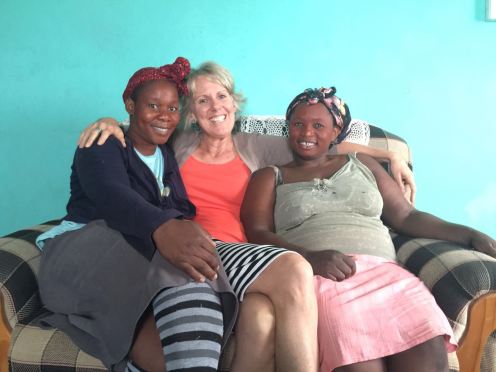
Di with the sisters who run the creche
This month Salvador is busy editing the film with a computer and software on loan. He is picking up the extra responsibilities with the Church. There are no gospel outreaching now for the time being. He is also getting documents together so he can apply for another three year extension on his visitors permit, and this is his tenth year of being in South Africa on a Visitor’s permit. Please pray. We need Zulu speaking workers for the vineyard, but people with a calling and that are not looking for a job opportunity.
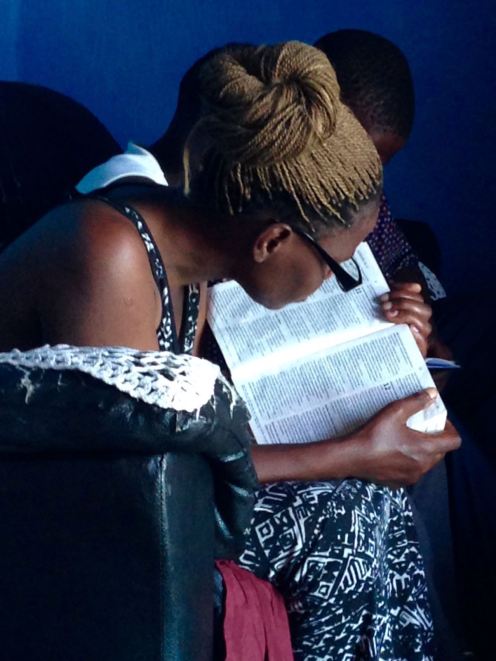
Miss Khumalo studying the Bible at the gospel study at Esihlengeni
I guess you could sum the month up with many words, shock, discouragement, overwhelming, enlightening, dependence, hope, joy, anticipation.
We praise the Lord that He knows the beginning to the end
We trust Him daily for His grace and spirit to fill our lives
We know He works all things together for good for those that love the Lord
We thank Him for His unfailing love, that He never leaves or forsakes us
We serve an amazing God who reveals himself to us daily through his word and the body of Christ.
We ask for your on going prayer support as we labour together.
We thank you for all your prayers and giving.
Prayer needs :
Khethiwe as she runs the New kids club.
Thank the Lord for the help of so many people concerning the DVD project
Phumlani’s new marriage and family life.
The Lords strength, wisdom and protection.
Thankful for His mercy for the rain that has arrived, was badly needed, but need more
SIXTEEN
THE SACRIFICIAL LIFE IN TOLERANCE
ROMANS 14
I would like you to contemplate the following paragraph and see if you can discern the error in it.
If we turn to verse 22 of Romans 14 it tells us that we are to have our faith as our own conviction and that we are happy if we do not condemn ourselves in what we approve. In 1 Corinthians Paul says that an idol is nothing in itself and, in having knowledge of that, there is no problem eating meat sacrificed to idols if we buy it in a market place without asking questions. Now here is the issue: What if I do not condemn myself in eating those meats in a pagan temple? What if I do not condemn myself in getting drunk on a weekend? What if I do not condemn myself in sleeping around? What if I do not condemn myself in going around and getting into fights? Etc. Paul says it is my own conviction and I am happy if I do not condemn myself in what I approve. It is my conviction and it is personal. What we are dealing with in Romans 14 is tolerating each other when we have differing sensibilities. Paul actually tells us in verse 10 not to judge our brother. So when someone denies the trinity, should we just accept them as part of the fellowship, because after all that is their own conviction and we are not to judge our brother?
When we take a verse away from its context we can use it to advocate something that the bible is fundamentally against. It is true that this chapter advocates tolerating one another in our differences of sensibilities but there is a fundamental mistake made here. The above paragraph fails to differentiate between what is black and white and what is grey. There are definite verses in the bible that speak against drunkenness such as 1 Corinthians 6: 10, which says that drunkards will not inherit the kingdom of God. In 1 Corinthians 5: 11 it tells us that we are not to associate with any so-called brother if he is an immoral person, or covetous, or an idolater, or a reviler, or a drunkard, or a swindler – not even to eat with such a one. So there are black and white issues in the bible. But in Romans 14 we are dealing with grey issues. Though the Bible is against drunkenness it speaks favorably concerning the consumption of wine and strong drink. Let us read the first thirteen verses which I will entitle, ‘Do not judge’. Then we will look at verses 14 – 23 which I entitle, ‘Do not cause offense or stumbling.’
VERSES 1 – 13:
DO NOT JUDGE!
In this passage we are dealing with the living reality and the temporal outworking of the doctrine set forth concerning Jew and Gentile that was presented in Romans 11. You will remember that when we started the epistle we saw that Jew and Gentile are equally sinners. As Romans 3: 23 says, ‘all have sinned and fall short of the glory of God.’ But then again Paul also said that there is much advantage in being Jewish and in being circumcised. There is one thing that we must never forget when we read Romans and the epistle to the Hebrews. Just because believing Jews are not under the Law of Moses anymore does not mean that they are to stop practicing aspects of the Mosaic covenant. We cannot turn round and say that it is wrong for a Jew to circumcise their baby boys or to keep the Jewish feasts because they are not under Moses but under Christ. Early Church Fathers such as Tertullian would say that the Holy Spirit rebuked the Jews for their holy days. This is not the truth. The reason that the Holy Spirit hated their worship was not because they kept Shabbat and the Jewish feasts. He could not have been angry at those things because God was the one who commanded the Jews to observe those feasts. Rather the Holy Spirit was grieved because they drew near to the Lord with their lips but their hearts were far away from the Lord. God did not hate circumcision but He was appalled at the fact that their physical circumcision lacked the internal reality of having the circumcision of heart. If it is wrong for Jews who believe in Yeshua to obey the writings of the Old Testament, then the Apostle Paul was wrong to keep the nazirite vow and then have his hair cut. (Acts 18: 18) It was wrong for him to go into the Temple and purify himself to show that he did not speak against the Law of Moses. (Acts 21: 26). It was wrong for Paul to do those things if that was the case.
JEW AND GENTILE, ONE IN MESSIAH
So here is the crux of the matter. If believing Jews who follow Yeshua still maintain observance of Moses, and as we read in Romans 11, that we Gentiles, according to the flesh, are grafted into Israel’s olive tree, then how can we have complete fellowship? Believing Jews will still eat Kosher, I do not. Some believing Jews will have issues about stuff that I do not have an issue with concerning certain observances. How can we meet together? You only have to read Acts 10 to see how radical an idea it was for Jews to eat with Gentiles. Well maybe the answer is that we separate the believers into two different fellowships. In one fellowship the Jews can maintain their culture and in the other we can maintain ours. But is this how they did it in the times of the apostles? If you read acts 15 we see that the Apostles loosed us Gentile believers from everything in the Mosaic Law apart from 4 things. These four things go back to Noah, and the covenant God made with all of humanity. These things are to abstain from blood, not to eat meats strangled, from fornication and things offered to idols. James, under the inspiration of the Holy Spirit, set these laws in place for us so that fellowship between physical Gentiles and physical Jews may take place. But Paul goes even further than this.
DO NOT JUDGE!
The first philosophy Paul expounds is non-judgmentalism. If you are Jewish and have been laid hold of by your Messiah and follow Him, you are saved by faith and not by works of the Law. So why should you be upset if your Gentile brethren or even your Jewish brethren fail to keep Shabbat or one of the feasts? These things do not procure salvation or make us more spiritual. In fact we are sometimes prone to think that someone is spiritual because they keep religious observance, they can preach a good sermon, and they have a good knowledge of scripture. These things are necessary but you can do all this without being spiritual. Such was the case with the Corinthian church. They had all the knowledge and they were praised by Paul in the first chapter of 1 Corinthians for their knowledge but knowledge does not make us spiritual. There is not a dichotomy where you can be totally fleshly and totally spiritual. Remember in Romans 12: 1 – 2, Paul said that what we do in our bodies is spiritual. The back bone of the spiritual life is our old friend ‘faith’. Our justification is by faith and not by works of the Mosaic Law. Our sanctification is also by faith and our activity for the Lord must also be by faith. The problem is a little complex because you have two paths that hold out a promise of justification. You have the path of faith and the path of the Law of Moses. The path of faith is totally different to Moses and yet it is not totally different. Now that sounds a contradiction but we are dealing with two different perspectives. Remember the analogy of the two diagrams.
Diagram # 1 Diagram # 2
Righteous: Power of Spirit:
Law of Moses & Law of Christ
Law of Christ
__________________ _________________
Unrighteous: Power of Flesh:
Law of Sin Law of Moses
& Law of Sin
From the perspective of righteousness they are not so different in that the righteous requirement is the same. It is the same God who gave both laws and in essence they embody the same law, which is Love. Love for God first and then love for one another. But from the perspective of spiritual power, Christ is superior to Moses in that His law is kept in the power of the Spirit. It is brought into effect by a spiritual birth but the Mosaic Law is kept only in the power of the flesh. The two laws are also different in properties. The Law of Moses is contained in outward ordinances but the law of Christ is one of faith and the renewal of our heart and mind. Therefore when a Jew gets saved, it is not like he has to leave all his Jewish practices behind as if it was an awful pagan religion. God instituted it. Paul does not regard the path of Moses as something dirty and wicked. Paul’s argument is that the path of Moses is good BUT it does not work because it requires 100% obedience. We must go back, once again to Romans 1: 16 – 17.
16 For I am not ashamed of the gospel, for it is the power of God for salvation to everyone who believes, to the Jew first and also to the Greek. 17 For in it the righteousness of God is revealed from faith to faith; as it is written, “BUT THE RIGHTEOUS man SHALL LIVE BY FAITH.””
The path of faith works. It brings about justification, sanctification, assurance of salvation, hope, and a huge inheritance. As Jeremiah 31: 31ff shows us, this covenant is relational and not merely legal ‘For they shall all know me.’ Though our religion has rules, it is not merely a legalistic religion. But the heart of everything we do must be faith; our obedience must be a product of faith. Some Jews did not fully grasp this it seems, and so what do we do with them? Do we write them off? Not at all! Paul says that we are to accept the one who is weak in faith with out using it as an opportunity to pass judgment, or to wrangle, over his opinions. Just because someone feels they must keep Shabbat, so long as they do not make it a salvation issue and enforce it on everybody else, do not try to wrangle over it and debate the issue. We are entitled to have our own opinion on these issues. Paul presents to us a few issues where someone may be weak in faith. Let us look briefly at each one.
TO EAT MEAT OR NOT TO EAT
According to verses 2 – 3, one person has the faith to eat all things but one who is weak in faith eats vegetables only. Now this has a two-fold application. For one, it can refer to people who abstain from meat because they may not believe it is Kosher. Maybe it is not slaughtered to let the blood drain out. Maybe it is because of the mixture of dairy produce with the meat. Some people who believe do not have the faith to eat non kosher food. Now that person is to be accepted without regarding the guy with contempt. But the one who cannot find it within himself to break kosher should not judge the one who will eat all meats. It is not a justifying issue.
More probably it has to do with the fact that in various cities in the Roman Empire meat was sacrificed to Idols. Now we were already told in Acts 15 that we were to stay away from things sacrificed to idols. Paul even reiterated that in 1 Corinthians 10: 21 – 22. But here is the issue, the meat that was sacrificed to idols was often mixed with non-sacrificed meat and sold together in the market. You could never be sure that the meat that you were buying was not sacrificed to idols. Some people would have seen all the meat as being contaminated by virtue of the fact that there was some meat sacrificed to idols being sold there. Other Christians thought there is no such thing as an idol anyway, they were not seeking for anything sacrificed to idols and they wanted some meat. But Paul has taught that a person may buy it without asking any questions. But if the person selling meat says, ‘Nice bit of meat here just sacrificed to the gods, extra lucky.’ Refuse it for the sake of that person’s conscience. If he does not tell you, feel free to buy the meat there. But other Christians might object saying that that person might be bringing in cursed meat and allowing a demonic influence into their home.
People say these things today. You must not celebrate Christmas, (though I do not personally care about celebrating December 25th). They say you must not read secular literature or go to a pub or to the movies or to any other such place. If you tell them that you are not involving yourself in immorality or drunkenness or even pagan fertility rites they sometimes say that nevertheless you might open a doorway for a demonic spirit to come in and then you will be in trouble. What would Paul have to say to that argument?
Verse 4 Who are you to judge the servant of another? To his own master he stands or falls; and he will stand, for the Lord is able to make him stand.
Who are you to judge the servant of another master? They are not your servant, but God’s. Just because the meat they have bought may or may not have been sacrificed to an idol does not necessarily mean that that person will fall. He will stand for the Lord is able to make him stand.
SHOULD WE KEEP THE SABBATH?
There is the aspect of Shabbat which we have looked at already. We cannot say that Jewish believers must not keep Shabbat and neither can Jewish believers say that we, Gentiles, must keep it. The key that Paul gives us here in verse 6 is that if we observe the day we must observe it for the Lord. And if we do not observe it we do so for the Lord. Either way the motive has to be to honour the Lord. However there are some in the church who say that although Shabbat has been done away with, we must keep the Lord’s Day, which they call the ‘Christian Sabbath’, as a day of rest. What they say is that this was something that was instituted in the early church. Therefore, to fail to observe this on a Sunday is a sin. Now I have nothing against meeting on a Sunday and using that day as a day of rest. I think it is a great day to meet on and it is a special day in the Bible, being termed the Lord’s Day. But neither do I regard Sunday as a Sabbath. But to reject another church because they might meet on a Saturday would be something that I would have a problem with. There are Christian churches in Israel that meet on a Friday night or a Saturday. There is nothing wrong with this.
But people will protest by saying, that there are scriptures in the New Testament that teach us that Sunday was the day that the Church set aside to meet on. Rev 1: 10 is used to say that Sunday is the Lord’s Day and as such it is the day of meeting. But this verse does not specify that John was actually meeting with other believers on the Sunday. It only says that John was in the Spirit on the Lord’s Day. What about 1 Corinthians 16: 2? Does this mean that Sunday is the day that Believers are supposed to rest on? It tells the readers to lay aside some of their income, on the Lord’s Day. Does this prove that Sunday is a ‘Christian Sabbath’? No it does not. The saving up of income in the text is shown to be individual and not in the context of a collection. Each person is to store up as they prosper so that no collection would have to be made in the meeting when Paul came. This verse is not saying that Sunday was to be a day of rest.
I am not saying believers did not meet on the Lord’s Day, because they did. In the churches of Gentile lands it seems that Sunday afternoon or night was when they met. I am only speaking against the imposition of it as a Sabbath for all believers and then applying Old Testament scriptures such as ‘Remember to keep the Sabbath holy’, and Isaiah 58: 13 and other such scriptures to prove it. In fact we know that people did meet on Sunday because of Acts 20: 7 which talks about the believers meeting and breaking bread when Paul was in town on the Lord’s Day. In the early Church it was called the Lord’s Day because Jesus rose from the dead on the Sunday. But there is no indication in the New Testament that this day was set aside exclusively as a day of rest, especially when we look at the fact that Paul in 1 Corinthians 11: 20 – 33 alludes to the fact that slaves had to work. Therefore, they could only arrive late for the breaking of bread, whether that would have been on a Sunday or any other day of the week.
In fact the precedent set in Jerusalem by the early Church was of meeting, not only on a Sunday, but every single day. They met in the Temple and were breaking bread from house to house. You cannot appeal to the writings of pre-Nicene Church Fathers to back up Sunday being a Christian Sabbath because the Scripture is the sole authority for all matters of faith and morals. To appeal to Tertullian or to Origen as doctrinal authority is doing what we accuse the Roman Catholics of doing, which is to treat Church tradition as equal with the scripture. We are doing what Jesus said, in that we are teaching the inventions of men as doctrines of God. Therefore, we should not argue over these issues amongst ourselves. Each person is to have his own conviction. Only the scripture says ‘do not forsake the assembling of yourselves together’, whenever that might be. Some people will come up with many excuses not to meet with a church. I am not talking about people who do not have the opportunity to meet at particular times, due to work commitments or because there is no biblical church that they can get to. I am speaking of people who would rather not meet together and would rather stay at home.
If I go to a messianic fellowship I am not to criticize them for meeting together on a Friday night and observing the Sabbath day. And they are not to judge me for not observing the day. I may choose that I would honour God more by meeting on Sundays, especially amongst a society of westerners, where Sunday has traditionally been regarded as special. In fact amongst some people groups it would be a very bad witness not to meet on a Sunday morning.
WE WILL ALL GIVE ACCOUNT TO GOD
If my decisions on these issues are down to my own conviction, what is it that stops us going off the rails with having a Christianity of our own personal invention? Verse 12 says that we must give an account of ourselves to God. Paul is not referring to God as an abstract idea which differs from person to person. God is not a belief that is relative to each person but is the God of the Bible. The same God, who gave the Sabbath as a day for His Jewish people, is the same God who gave us the perfect Sabbath which is in the Messiah. On these issues of food, drink and special days, let us not judge one another in terms of our freedoms. But there is another principle that Paul exhorts us to maintain.
VERSES 13 – 23:
DO NOT CAUSE OFFENCE OR STUMBLING
In Christ we have freedom. I am not bound to Moses, apart from maintaining the four things of Acts 15 that preceded Moses. I am free to eat anything sold in the market place without asking questions. I am free to drink wine. I am free to forego the observance of Shabbat and I do not have to attend the Jewish feasts. No Jewish believer can judge me for this and when I am on my own, there is no problem. However as we saw in Romans 12: 3 – 8, Christianity is not only individualistic but it is also corporal. We need time alone but we also need time together. What happens when Jewish believers and physically Gentile believers meet together to eat and to worship? This Church in Rome would have had to deal with these issues because it was composed of both Jew and Gentile. Paul has already laid down the doctrinal foundation, but how does one experience that in the practical realm? While we have freedom and may use that freedom, we must follow Christ’s example of restricting that freedom at certain times. It is not a law in stone, but the law of love in the heart that is worked out in various ways and in various contexts.
Because of love we are not to cause our brethren to sin and fall away from the faith. Do not put an obstacle or stumbling block before someone in regards to their faith in Christ because the whole point of Romans 12 – 16 is the bringing about of the obedience of faith. We are being made Christ like and so if using our freedom will cause someone to fall away or stumble in the pursuit of being more Christ like, we are to restrict that freedom for their sake. The obvious example of this is found in verse 21. It is good not to drink wine if it causes someone to stumble. I like a good glass of red wine and I can drink it without indulgance. I can limit my consumption in a way that it is respectable to drink. However, if I am in the company of someone who has just overcome a drinking problem, I injure that person if I drink around him. By restraining from drinking I am not saying to him that I think alcohol is wrong, but I do not want to cause his being enslaved to alcohol again. It is the same with food. Paul said that he is convinced there is nothing unclean in and of itself. A saved Jewish person might not keep Kosher but other Jewish people might have a problem with it. Now the one weaker in faith is not to judge the other Jewish believer for not eating kosher in his own home. But the one who has no problem with having bacon sandwiches is to restrict himself for the one who has the problem. When he is around the guy with the problem he is to refrain, if it causes offense. This does not mean that he must agree with the person that one should only eat kosher. If he is pulled up for eating unkosher, the one stronger in faith may defend his position. But here we are dealing with living in tolerance of things that scripture clearly shows are not to be debated or divided over.
Do not destroy that guy with your eating. An example of overcoming this issue was in a different context when I was growing up. We were friends with a certain family in Church, and this family was a loving family that really befriended us. They were vegetarian and sometimes when we ate together they made vegetarian food and we ate it together. We did not despise them for being vegetarians and they did not judge us for being meat eaters. We must have tolerance on the issues the Bible teaches us to be tolerant on. It is wrong to force someone to eat meat that does not have the faith to eat meat. Neither is it right to force someone who only eats kosher to eat unkosher. At the end of the day wine is not important. Food does not matter. What do I care if I eat vegetarian lasagna or a steak? It is food at the end of the day; it goes into the mouth and out the other end. Our focus is not to be the food. Eating food is important but there is something more important than that. It is more important to maintain a good testimony. Paul said in verse 16 that we should not cause someone to speak evil of something that is good for us, by causing someone else to stumble with that good thing. I should not cause someone who has a problem with drink to drink and therefore bring a bad reputation on drinking. Our focus should be verse 17. Peace, righteousness and joy. Our decisions and our freedom must be shaped by our faith and not merely by a set of rules.
SALVADOR & DIANNE’S MSINDISI MONTHLY
NUMBER: 135 Feb 2016
PO BOX 1481
VRYHEID 3100
KWAZULU NATAL
SOUTH AFRICA
+27 (0) 728311008
+27 (0) 815836288
Email: msindisi@gmail.com ,
salv.di@gmail.com
KwaZulu Mission Website: http://www.kwazulumission.com
Hi all
This month I am going to give an overview with broad strokes of the last couple of months as we missed Dec newsletter. Sorry about that.
We arrived back from Joburg on the 3 rd of Dec.
Much of the month was organising for filming and then actually filming for the DVD along with activities that rounded off the end of the year. Meetings were set up to meet people who would be willing to play a role in the DVD, costumes needed to be sourced, Victory school had their prize giving, last kids club, shared meal with Celani and family etc. It was a busy time and a very hot time as temps rise to the 37- 38 so mid month we were so grateful to house sit in Vryheid for some friends, especially as they had a pool.
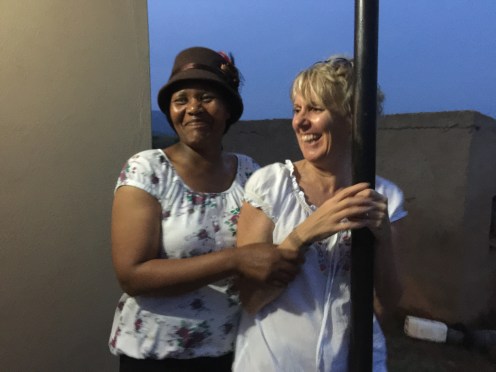
Celani with Di
Celani’s family come for a Braai
We we also went to visit Asimbonge and Ncedo in Newcastle. They are both well and Asimbonge got a couple of school awards.

Di with Asimbonge and Ncedo
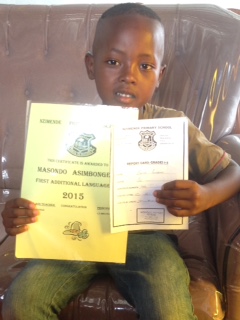
Asimbonge and his school awards
We managed to grab a few days of rest while in town as we were both feeling rather tired by this stage. January started before we knew it. From the 4th we were filming scenes everyday. Many of the scenes of Jean (who shares her story on the Documentary) were re-enacted along with Murjuru’s story scenes. You can check out some of the progress on Facebook…. http://www.facebook.com/allegiancethemovie/ . We have many amazing stories that have happened along the way. The hand of God has really been with us and everyday He has led us.
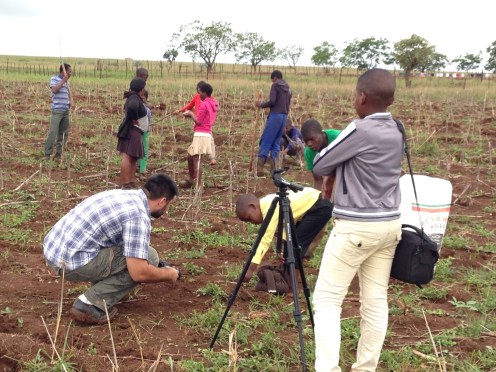
Getting ready to shoot one of the Mujuru scenes

Talking actors through Varsity scene
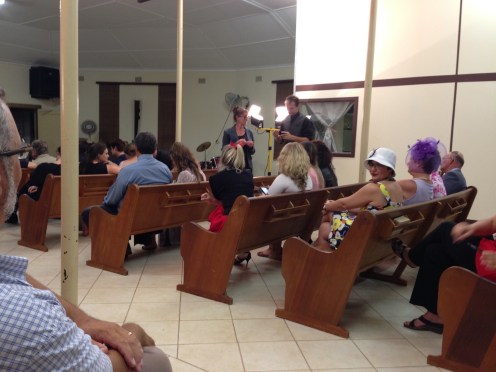
Church meeting scene
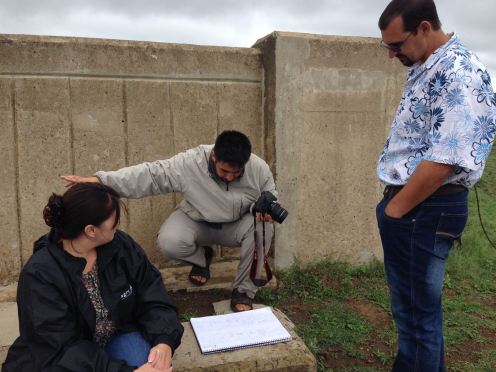
Talking through the storyboard with Neil and AnneMarie Uys
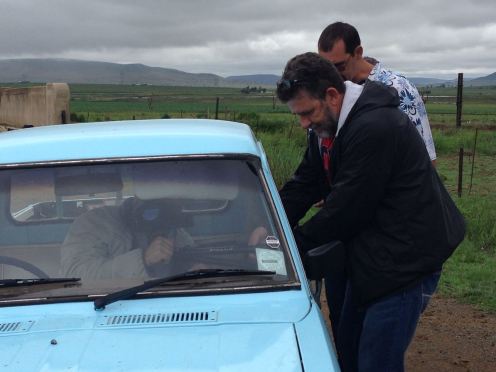
Craig helping to assemble the camera car mount internally
Middle of January Di started at the Carebear Pre- school. Every year she helps them out with the new enrolments. Starting at 6 am and finishing up around midday.. while she was there Sal was carrying on with filming, story boarding, mock-editing, organising meetings with people. At the end of the week the cell group got together to celebrate Sal’s achievement of his honours in a degree in theology by sharing a meal out.

Kids arriving at Care Bear pre-school
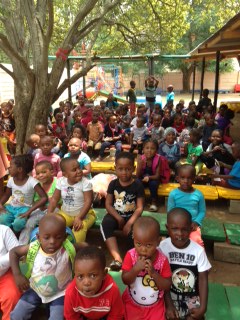
Kids at Care Bear pre-school
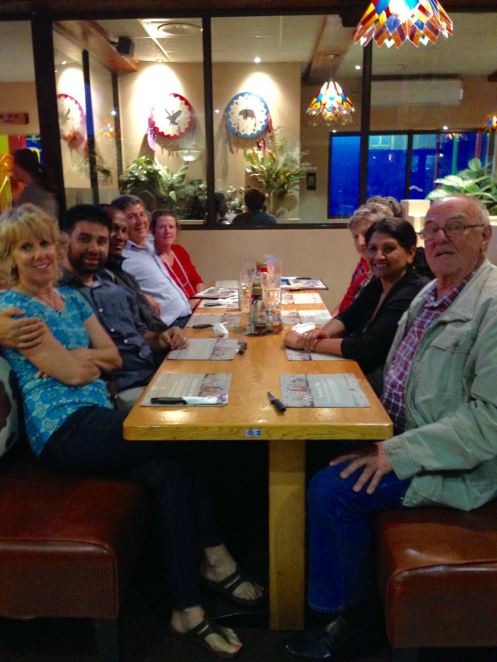
Meal out to celebrate the degree
After being away for over a month again we returned home. We will be here for another week then head off again beginning of Feb. While home we had a lovely visit from our friends Lee and Lorna Pauls and their 3 girls from Ballito. They had come through to discuss and work through some building requirements that are needed in the filming. On Sunday they attended the Zulu fellowship and after lunch headed on their way. At the same time Salvador was able to do another bible study in Esihlengeni. Then Saturday morn before they arrived we went to Alpha to help with Khethiwe and Tholakele who have started a kid’s club that side to teach the little ones. This will enable the kids from the area to have their own kids club and not have to wait until we can pick them up each sat morning to take them to the kids club by us at Eastmine. Please keep both the ladies and kids in your prayers. Many thanks.
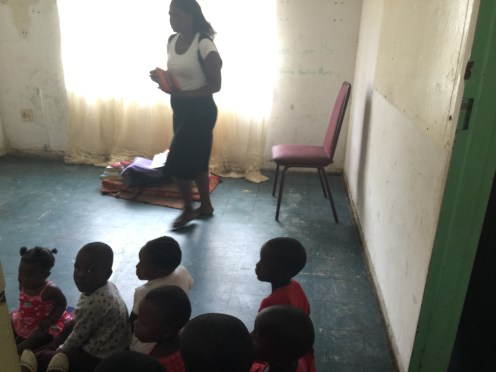
Khethiwe teaches kids club
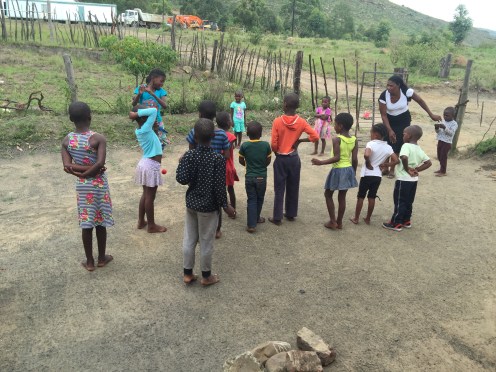
Kids playing after Kid’s Club
This week, late one evening, we had a call from a teenage single mother, Mbali whose baby was not well Salvador took them through to the hospital. We found out that the baby had a type of flu and fortunately the hospital were able to help. We later found out that another baby in the local community had the same symptoms and had died. That baby has left a twin sister. Please pray for the mother who is distraught and inconsolable.

Vryheid hospital at night
The rest of this month, need I say, is more of the same planning, filming etc. We are now starting the story of Hamilton. We will have two of the actors who are playing roles staying with us till the end of the month then we head to Pretoria again. The DVD will be dubbed into all the South African languages. We have a team led by Phumlani working on the Zulu translation. Hendrik and Belinda Els have translated into Afrikaans and those parts have been recorded. Dave Royle has also found a willing soul who is translating it into the Zimbabwean language, Shona.
On another note, we are very sad to report that Phumlani’s wife, Thabi, has just passed away. She had AIDS and, due to issues in their marriage, she ran away and abandoned the marriage a couple of years back. By the grace of God Phumlani has been spared from the same fate making this one of two occassions where God has miraculously spared his life, the other occassion being when he was shot in the head by a bullet which entered and exited his scalp without so much as leaving a fracture. Though they were still legally married, they lived separate lives, Thabi living with her mother. Phumlani will be visiting the family tomorrow to discuss the funeral arrangements. Please keep him and Thabi’s family in prayer.
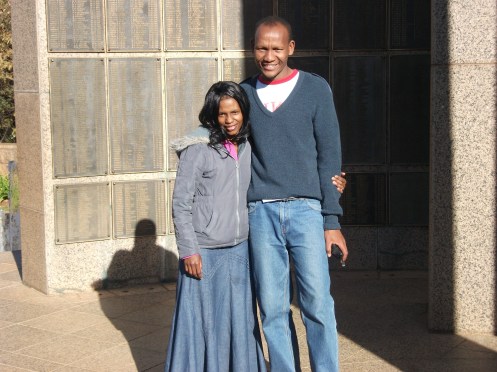
Phumlani with Thabi
We want to thank you all for your prayers, support, opening of your homes to us. To all the people who have contributed in so many ways from acting to setting up scenes and equipment, translation work, phoning around. It has been a huge help to us. We are amatures but with the help of you all we are getting excited about it all coming together. We hope to take the finished DVD around South Africa after there has been a showing in Vryheid in English and Zulu and in our local area. Please continue to keep us in your prayers
Much love
Shalom
Prayer needs :
New kids club for the teachers and children
Thank the Lord for the help of so many people concerning the DVD project
Phumlani as he faithfully continues discipling and teaching
The Lords strength, wisdom and protection.
Thankful for His mercy for the rain that arrived was badly needed
Sorry there is no teaching this month. It has been so hectic that Salvador has not had the time to do one. Hopefully there will be one next month.
SALVADOR & DIANNE’S MSINDISI MONTHLY
NUMBER: 134. Dec 2015
PO BOX 1481
VRYHEID 3100
KWAZULU NATAL
SOUTH AFRICA
+27 (0) 728311008
Email: msindisi@gmail.com ,
salv.di@gmail.com
KwaZulu Mission Website: http://www.kwazulumission.com
It’s very hard to know where to start this newsletter. We have been traveling since the start of the month with about 8 days at home. Our truck has become our mobile home.
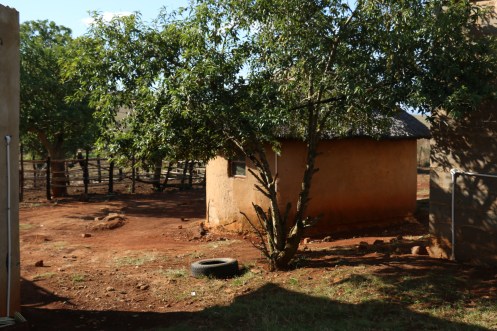
Our homestead, where we stayed for 8 days this month.
We returned to Joberg at the start of the month as a little of the previous filming needed to be shot again as the sound quality wasn’t so good in a few of the frames. We hit the road after filming Phumlani that morning.
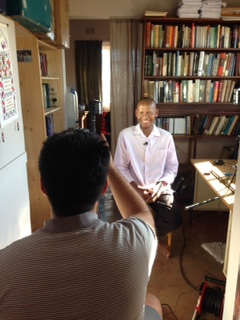
Phumlani being Interviewed
When the filming was completed in Joberg we headed to the “Union Bible College” in Hilton to interview and film the principal for the DVD project. As Salvador had finished his B.Th (Hons), published a journal article and in view of his experience of Bible teaching internationally, he had been asked earlier to prepare a lecture on Ephesians 5 for the college students. Before the lecture began we were able to attend the graduation assembly for the 2015 group. This was a wonderful time of giving thanks to lecturers, staff and the principal. Many had started the 3 year course in faith and were giving praise and thanks for the way the Lord had supplied for them. The college is mainly attended by African students, large percent being men but a small number of woman also. We were really encouraged by the students and enjoyed meeting them after Sal had shared his lecture.

The Union Bible Institute, not far from Pietermaritzburg
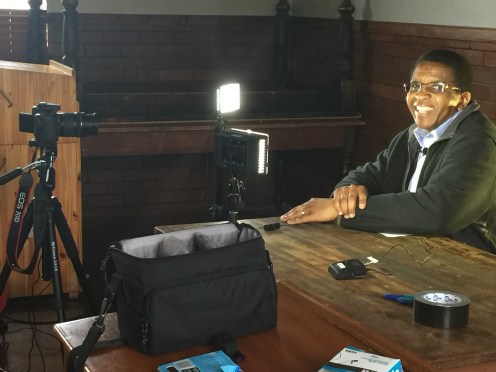
Interviewing George Mnisi, principal of Union Bible Institute
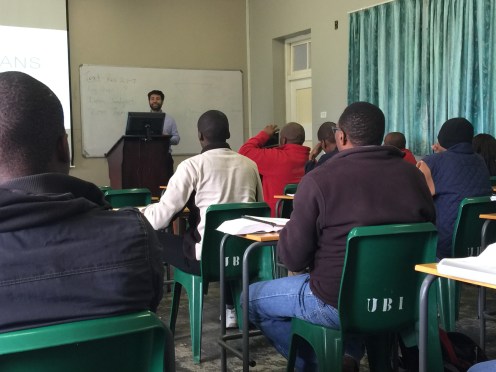
Sal Lecturing on Ephesians 5 at the Union Bible Institute
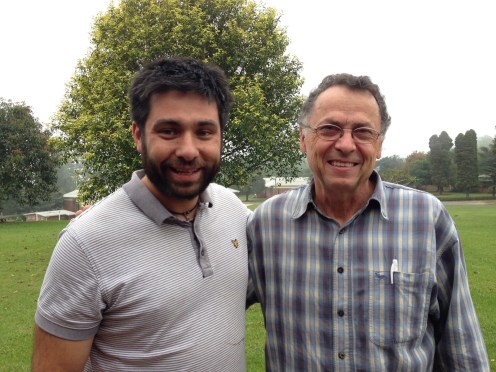
Salvador with Richard Murray from Union Bible Institute
After leaving the college we traveled to Pietermaritzburg to interview a Xhosa man, Thadikhaya Manciya, for the DVD then traveled onto Balito , as we had to return the wireless microphone which Graeme had kindly lent to us for a limited time. We are very grateful for the loan of the microphone kit, which to buy would cost R12,000. While there we visited Calvin and the Indian fellowship on the Sunday as we hadn’t seen them all for a long time. We also got to share a meal with Mark and Vanessa from “Coming King Ministries ” and catch up quickly with Leslie Crickmay.
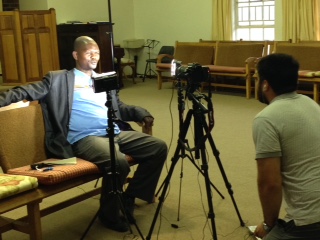
Interviewing Thandikhaya in Pietermaritzburg
We returned back home on Sal birthday. We had 8 days before we were due to head off again. Those 8 days entailed washing, haircuts, visiting Neighbours, teaching kids club and catching up with the cell group on the Friday night at Johnny and Kim’s. The last 2 days we had the care bear graduation where Sal shared the word and we sang with the kids.
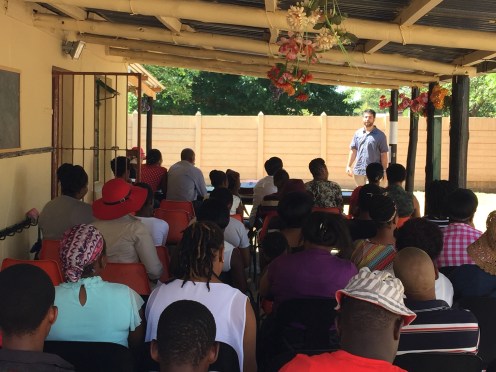
Sal preaching at Care Bear creche

Kids Singing at Care Bear
Straight after we drove to Pretoria for the wedding of our friends son. Sal had been asked to share a message and to take the vows. The wedding was lovely and it really was great to be able share in it with Riaan, Sonet and family and friends. We pray they continue to grow together as a married couple and grow together in the Lord.

Riaan and Sonet’s wedding
After the wedding on the Friday we we headed to Springs. Sal was asked to take the service on the Sunday by a dear brother called Dumisani. His fellowship is in an informal settlement outside of Springs called Putfontein. We where able to stay with Allen and Sue over the weekend. We got to meet Dumisani when our friend Anna had taken us to the township to introduced us to him in our last visit.
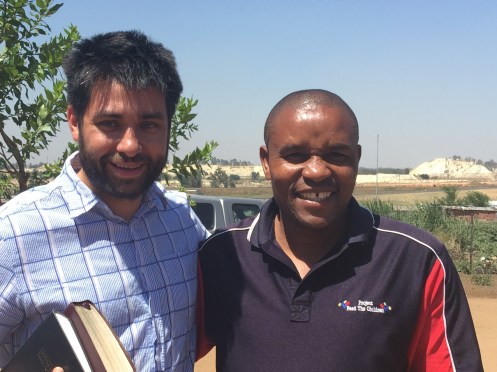
Dumisani Madi who is a missionary in the informal settlement just outside Springs

Shacks in the informal settlement, just outside Springs

More Shacks
The last few days of the month was taken up with us beginning the filming of the re-enactments of Karabo’s story. Sal had story boarded the scenes that were to be shot and the angles and footage that he wanted. It was incredible hot in Pretoria but we were pleased with the scenes that were shot. Karabo did a fantastic job in acting out his story and we both feel that Hollywood is just around the corner for him. We were encouraged to see the footage and story line taking shape. On a more serious note, there is much to do with trying to get the script translated into all the various languages. At present we have the Afrikaans done and the Zulu, Venda, Tswana and Tsonga languages are under way. This still leaves us Xhosa, Pedi, Venda, Ndebele and Swazi to do. In late february we plan to record some of the languages in audio to dub over the final edit of the film later on in the year. There is a lot of preparation taking place in casting and finding suitable locations but it is amazing to see who the Lord is bringing across our paths. While in Joberg we were also fortunate to catch a coffee and meal with Tony and Maria Verlaan from New Tribe Missions before they head to Australia for 6 months. We are so grateful for the many people who opened their homes to us and let us stay over our travels. Sadly we are unable to catch up with everybody on each trip as time is limited. Nevertheless we thank those whom we stayed with for their warm hospitality and friendship.
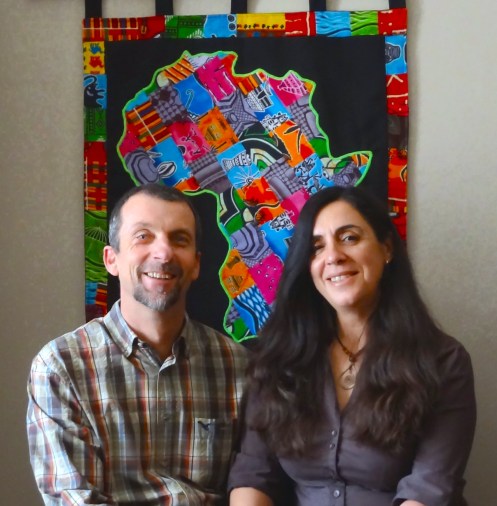
Tony and Maria Verlaan from New Tribes Mission
Along our travels we have been able to collect more clothes and other things for Celani to be able to sell in the local community. She has saved enough cash to purchase blocks to start the building for her small shop that she will build on her property. We thank those who have contributed to this project with all the clothes. It is a wonderful way to help her and her family and the community. We are always continuing to collect clothes in various areas, so please let us know if you have any that you want collected and we will put our Afrikaans thinking caps on, for as they say, “’N Boer maak ‘n plan” (An Afrikaner -literally farmer- makes a plan).
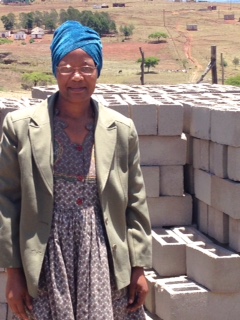
Celani with the blocks for her shop
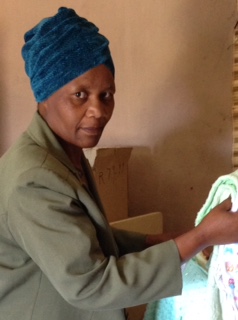
Celani sorting through some clothes
Our truck has been doing a huge amount of mileage. It has needed to have a few things sorted but we are so grateful for it. Especially the air con and all the room. Dec we will be staying put in Vryheid as Jan will be another busy month. Thank you for your prayers and support. Thanks for the many friends who have embraced this project with us and are helping in so many ways. The last days are upon us and we really desire to get this DVD out as quickly as possible. We appreciate your prayers.
Please pray for:
Tony and Maria from NTM, they get some rest time while in Australia
The on going filming that is ahead. The translation of the DVD audio from English into the African languages. Wisdom, strength,and skills for the filming and coordinating actors and locations.
Safe travels on the road
Thankfulness for the many people who have opened their homes and shown us hospitality
The faithful walk of Phumlani and the Zulu fellowship
FIFTEEN
THE SACRIFICIAL LIFE IN SUBMISSION
ROMANS 13
In the last two chapters we have looked at the sacrificial life from the perspective of our ministries and our fellowship together as believers. In Romans 13, Paul switches to our conduct in the secular world; for if God is the God of reality, He is not only the God of the religious domain but He must also be the God over the secular domain too. Hence He is entitled to make certain judgments on the secular world. These chapters are all part of Paul’s ministry in trying to bring about the obedience of faith from among the Gentiles. From Romans 12 onwards the whole flavor of the epistle has changed. It ceased to be a heavy doctrinal thesis, majoring on certain spiritual truths, and has become very practical. And this is the thing with God. God is theological and God is practical. God is the God of orthodoxy and he is the God of orthopraxy. If you want to delve into the issue of the relationship between doctrine and life, I would highly recommend Francis Schaeffer’s book ‘True Spirituality’ since he explores the themes in a very searching and honest way. But it is important that we realize that everything that we are looking at in these chapters is not disconnected to the first eleven chapters but rather is the natural outflow of Paul’s theological treatise. The theology creates a base, an understanding and a motivation for the practice of love, submission and obedience. If we do not have this theological base, it changes everything about our Christianity. This is not merely about semantics but about the whole reason of why we do what we do. This is not only important but it is totally fundamental to everything about us. We can not simply brush away the theology for the sake of being practical. The scripture has said explicitly that we are saved by grace, through faith. The just shall live by faith and Paul is seeking to bring about the obedience of faith. Therefore, if we do not work from the basis of Christ’s finished work on the cross and from the basis of God’s revelation through His word, through the illumination from the Holy Spirit, then no matter how much of these chapters we implement into our lives, it will all be fundamentally false and wrong.
VERSES 1 – 14:
OUR CONDUCT IN SECULAR SOCIETY
It is all well and good loving one another in our meetings and being a Christian in the company of other Christians. But what about being a Christian in the middle of a relativistic, pluralistic society that has no reverence for the creator God? What about a society where blatant immorality and idolatry is the norm of life? How do you uphold godly standards when the whole of the system gravitates away from it? How do you conduct yourself in reverence and fear when the government that runs the country is anti-christ? Should the government be opposed for its godlessness? Should the church rise up and take over? We have had a strange phenomenon in church history that was never a factor in the early church. That is, from about 365AD onwards, certain churches have been political entities, wielding worldly power and governing whole nations. We think that the church can, at times, join hands and help to make the world a better place. Some of us may think that if the present government is ungodly, then some Christians in the church can take up arms towards the overthrowing of the present rulers. But when you read the New Testament and Eusebius’ history of the Church, you get the impression that this was not the mind set of the early Church. Rome was cruel and it ruled with a heavy hand. The Emperor demanded worship. The followers of Christ in Rome had already endured persecution from their unbelieving Jewish brethren and there had already been an expulsion of Jews from Rome. How far should a Christian be supportive of their own government before the government should be overthrown? At the time of Paul, Christianity still enjoyed the privilege of being a legal religion because, being Jewish in its inception, it was merely seen as a sect within Judaism. But the time would come when it would lose that status and many, many Christians would become food for the lions.
OUR INHERITENCE
Back in Romans 8 we saw that we are living in the hope of receiving the adoption as sons. We are receiving an inheritance. This inheritance includes certain things. Firstly, as Romans 8: 23 teaches it includes a resurrection body. If we look at Psalm 2: 7 – 9 we read a messianic promise that the Messiah will receive the nations as an inheritance over which He will rule and reign. And yet, in Revelation 2: 26 – 27 we read that this promise, that was specifically made about Christ, is also promised to those who overcome in Christ. In other words, Jesus gains the inheritance through His efforts alone and yet He shares His inheritance with those who would believe in Him. We live in the hope of a new world order brought in by the return of Christ. In the Church, we are to judge minor disputes between people; and the decisions made by the church are binding. Therefore, the power of discipline is given unto the Church over its members. 1 Corinthians 6: 1 – 6.
“1 Does any of you, when he has a case against his neighbor, dare to go to law before the unrighteous and not before the saints? 2 Or do you not know that the saints will judge the world? If the world is judged by you, are you not competent to constitute the smallest law courts? 3 Do you not know that we will judge angels? How much more matters of this life? 4 So if you have law courts dealing with matters of this life, do you appoint them as judges who are of no account in the church? 5 I say this to your shame. Is it so, that, there is not among you one wise man who will be able to decide between his brethren, 6 but brother goes to law with brother, and that before unbelievers?”
There is a reason that this aspect of ruling authority within the Church is supposed to be a present reality. This is because although it is a future reality that will be realized with the return of Christ, the future kingdom is already present on earth when the body of Christ comes together. We will even judge angels, Paul says. So if this authority is already present in the Church, and if the world is supposed to be subject to the people of God, then what should our attitude be in the contemporary social and political arena? Is the Church to overthrow governments? Is the Church to be the answer to all the world’s problems? It is too simplistic to say that the Church should not have any influence upon the society in which it lives because the early Church had a very real presence. In the late Roman period historians wrote about the believers’ conduct and their charitable deeds. Jesus Himself said that His followers were to let their lights shine so that others may see their good works and glorify their Father in heaven. It is true that Jesus said this to His disciples that lived amongst the Jewish nation; a nation in covenant with the creator God. Yet the principle still stands among other nations. We are to do what is good and right to all men. So how far should the Church interfere with matters of the state and should the Church ever be involved in the upheaval of a government? What does Paul say in the opening couple of verses?
DO WE ACCEPT OUR GOVERMENTS UNQUESTIONABLY?
One thing Paul is not saying is that we should never speak against the acts of a government. He does not mean that we should always accept what the state does unquestionably, or else Paul himself would be guilty of breaking those rules that he is commanding us. Paul preached against immorality and against idolatry. What Paul is saying is that we should not oppose the authority that these rulers have. Rome was imperial, heavy handed and yet Paul said that their authority was from God. If we oppose the government that God has placed over us then we are opposing God Himself. But how does this hold when these rulers use that authority to oppress and to persecute God’s people? Surely they have forfeited the authority that God has given them and, therefore, we can take up arms and put an end to their regime! No, we may not take up arms in this situation, unless our own governing authority, which is over us, commands us to. Before proceeding on with this counter argument it is important that we do not think that this means we believe in a God who teaches non-resistance as an end in itself. God commanded the Israelites to wipe out the Canaanite tribes and to take over their land. The same God who commanded this invasion and judgment is the same God who said to turn the other cheek. It is not that God is against the use of force and arms, though God is never a promoter of violence, (these things being done out of necessity). Rather the reason God has told us not to take arms is because God has set aside a time where His Messiah will ride into battle and bring judgment to the world system. Jesus said, ‘My Kingdom is not of this world. If My Kingdom were of this world, then My servants would be fighting’! The age which we live in is called by some theologians, ‘The dispensation of Grace’. It was not that God was ungracious before and it is not that God has refrained from all forms of judgment. Rather it is that God is showing great patience to the people of all nations in order to see as many of them saved before venting out His wrath.
DOES GOD GIVE AUTHORITY TO THOSE WHO ABUSE IT?
So the question still remains; why has God given authority for these rulers to oppress His people? Look at Isaiah 10: 5 – 11.
“5 Woe to Assyria, the rod of My anger, And the staff in whose hands is My indignation! 6 I send it against a godless nation, And commission it against the people of My fury To capture booty and to seize plunder, And to trample them down like mud in the streets. 7 Yet it does not so intend, Nor does it plan so in its heart, But rather it is its purpose to destroy, And to cut off many nations. 8 For it says, “Are not my princes all kings? 9 Is not Calno like Carchemish? Or Hamath like Arpad? Or Samaria like Damascus? 10 As my hand has reached the kingdoms of the idols, Whose graven images were greater than those of Jerusalem and Samaria, 11 Shall I not do to Jerusalem and her images Just as I have done to Samaria and her idols?””
God is saying to Assyria that He has chosen them as an instrument of judgment to deal with His own people. God gave Assyria authority to come against His own people. But did God want Assyria to massacre and annihilate? Zechariah 1: 15 says that God was only a little angry with His people but the nations furthered the disaster. They went too far. God had given them the authority to come against Israel but they misused that authority and went too far. If a nation or a kingdom goes too far God will bring judgment on that nation. Now what about Rome? The time that this letter was written was less than ten years before Nero would blame the Christians for the fire in Rome and unleash a massive persecution against the Church. What did the early Church do? Did they oppose Nero and seek to oust him out while striving to set up their own kingdom? No, they went to their deaths as martyrs. When believers were thrown to the lions for their refusal to worship Caesar, did they condemn the state for unjustly sentencing them to death? No they went willingly to their deaths because their allegiance was to God, first and foremost, and yet they knew that the law of the land was to be obeyed. They died as witnesses to Christ. They respected the authority Caesar had, though Caesar could and would abuse it. God is the one in whom they trusted for avenging their blood as martyrs and in Revelation 6: 10 we see martyrs crying to the Lord for justice. God will definitely do so.
WHY DOES GOD SET THESE LEADERS IN GOVERNMENT?
So if these rulers can misuse their authority in such a gross manner, why does God give such authority to men? Why does God set fallible people in government? The reason for this is found in verses 3 and 4.
3 For rulers are not a cause of fear for good behavior, but for evil. Do you want to have no fear of authority? Do what is good and you will have praise from the same; 4 for it is a minister of God to you for good. But if you do what is evil, be afraid; for it does not bear the sword for nothing; for it is a minister of God, an avenger who brings wrath on the one who practices evil.
The rulers are placed in their positions because law and order must be maintained. What is Paul telling us? Be good citizens and we do not have to worry about authority. If we do what is right and we are helpful and beneficial to society, we will have praise from the authorities. Think about the suffering Church in China and Christians who were imprisoned. They won the hearts of their prison guards because they were loving and helpful people who did not do anything wrong. One guard, I saw on a DVD, turned round and said, ‘I think everybody should be Christians, because if everyone were Christians we would not have anybody in jail.’ No one ever went to jail for helping someone in their time of need. No one ever paid a fine for keeping the speed limit. No one ever went to court for saving a child’s life. People may have gone to jail under the charge of aiding and abetting a criminal but not simply for being charitable.
SHOULD WE EVADE TAXES?
Paul also says that we are to pay taxes to the governing authorities. Tax evasion is a very touchy issue in some circles. It is argued that if our government will spend tax money on promoting evolution, abortion or something else that is ungodly, then as Christians we may and even should evade paying taxes. However, a look at verses 6 – 7 shows us that this argument is not valid. Paul said to these believers that they must pay taxes to their government which was Rome. In fact, for them, it was simply a fact of life. They were already paying taxes and that is why Paul is not commanding them to start paying taxes. He was explaining to them why, biblically speaking, they were to pay them. And who was their governing authority? It was Rome; a system that was antichrist, cruel, pluralistic and immoral. The bible teaches that we should pay taxes but why does it tell us to pay them? Matthew 17: 24 – 27.
“24 When they came to Capernaum, those who collected the two-drachma tax came to Peter and said, “Does your teacher not pay the two-drachma tax?” 25 He said, “Yes.” And when he came into the house, Jesus spoke to him first, saying, “What do you think, Simon? From whom do the kings of the earth collect customs or poll-tax, from their sons or from strangers?” 26 When Peter said, “From strangers,” Jesus said to him, “Then the sons are exempt. 27 However, so that we do not offend them, go to the sea and throw in a hook, and take the first fish that comes up; and when you open its mouth, you shall find a shekel. Take that and give it to them for you and Me.”
The two-drachma tax was something paid towards the service of the temple. This tax was voluntary and yet there was peer pressure for people to pay it. Now here is the question? Was Simon-Peter obliged to pay it? The answer is no. The temple was Jesus’ Father’s house and because we are adopted children there is an exemption for us. And yet Jesus said that his disciples should pay it in order not to offend. If that is the case with the Kingdom that we belong to, then it makes sense that Jesus commanded us to pay taxes to secular government. As Jesus said, it belongs to Caesar anyway. It was his head and inscription that was on the Roman coins and therefore it all belonged to him. Render unto Caesar what is Caesars.
And this is the issue throughout this chapter. We are kings and priests and judges being prepared to take responsibility in a kingdom that has not yet been fully realized. We experience it in the sphere of all things that have been redeemed, (i.e. the Church) but not all things have yet been fully redeemed. That kingdom is in our midst, amongst those who are saved, but it has not yet come as a world power. But just because we are still waiting for the return of Christ to establish His kingdom, does not mean that we can live lawless lives in the face of present governments, no matter how anti-God they are. We are to live in the light of the future in the experience of today. Thus, instead of breaking the law, Paul tells us in verses 8 – 10, that we are to love, which is the embodiment of the Law. But this is the thing. Though these governments are bad, some much worse than others, there are a couple of pointers that we must bear in mind before we think about revolt.
PRAYER INSTEAD OF REVOLT
Firstly, read 1 Timothy 2: 1 – 6.
“1 First of all, then, I urge that entreaties and prayers, petitions and thanksgivings, be made on behalf of all men, 2 for kings and all who are in authority, so that we may lead a tranquil and quiet life in all godliness and dignity. 3 This is good and acceptable in the sight of God our Savior, 4 who desires all men to be saved and to come to the knowledge of the truth. 5 For there is one God, and one mediator also between God and men, the man Christ Jesus, 6 who gave Himself as a ransom for all, the testimony given at the proper time.”
Instead of opposing the government and taking arms against them, we are to pray for our leaders in order to live a quiet and peaceable life in all godliness and dignity. Why does Paul say this? Is it because he would love for us to have it easy in this life? No, but rather he explains the reason in the next few verses. The reason is that the Gospel may go out because God wants to see people saved. This is essential because there is only one way to heaven and that is through Jesus. It may be true that revival is the biggest in countries where there is great persecution but on the other side of the coin; you try to go to North Korea and buy a bible! In a free country the publication of scripture and the promotion of the Gospel, is possible in a more widespread and open way. In South Africa I can go out and preach in the open air while smiling as the police walk past. You try and do that in China and they will arrest you. There is a saying that goes, ‘let us make hay while the sun shines.’ In other words, Paul is telling Timothy to take opportunities to share the Gospel and to pray that God will keep the window of opportunity open. Take the opportunity to witness while you can. Because in the future that opportunity might get taken away.
SUBMISSION IN THE LIGHT OF JESUS’ RETURN
But secondly, as Paul argues in verses 11 – 14, the day is near. Jesus is coming back and He is going to establish His kingdom. God does not want us to wait until the last minute, but He wants us to prepare ourselves now! We must not think, ‘well this kingdom is going down the drain, I am not going to respect its authority!’ We must not think it is okay to live a live of sensuality and then, just before we die, we may get ourselves straightened out. Rather, our position and responsibility in the Millennial reign is linked to our faithfulness in this life.
Micah 4: 1 – 2. “1 And it will come about in the last days, That the mountain of the house of the LORD Will be established as the chief of the mountains. It will be raised above the hills, And the peoples will stream to it. 2 Many nations will come and say, “Come and let us go up to the mountain of the LORD, And to the house of the God of Jacob, That He may teach us about his ways And that we may walk in His paths.” For from Zion will go forth the law, Even the word of the LORD from Jerusalem;”
Why will people stream to Jerusalem? Because they will want to learn God’s ways so they may walk in it. Why do they need to learn God’s ways? Because the nations have been walking in their own ways throughout time, as Paul taught in chapter 3 of Romans. So when Jesus establishes His Kingdom, people will realize that they do not even know God’s ways. Now here is the thing. The scripture says that we will judge the world. We will rule and reign with Him. And, therefore, God will be using us for ministerial functions in the millennial reign. Jesus taught that, when He gives his riches to His servants, he will give them according to their faithfulness. The parable of the talents shows this to be the case. He who is faithful with little, will have more added to Him. Often we are like fish in polluted waters. We see the way the world works and we think, that is the way it is. What we are doing is spiritually falling asleep because we have forgotten that salvation is nearer to us now then when we first believed. Do we really believe that Jesus is returning? Do we realize that we will rule and reign on this earth in the millennial reign? If so, we must learn to submit to the authorities that govern this world. We must walk according to the light, in a dark world. We must live according to our future hope in the day to day experience of this life.
SALVADOR & DIANNE’S MSINDISI MONTHLY
NUMBER: 133. Nov 2015
PO BOX 1481
VRYHEID 3100
KWAZULU NATAL
SOUTH AFRICA
+27 (0) 728311008
+27 (0) 815836288
Email: msindisi@gmail.com ,
salv.di@gmail.com
KwaZulu Mission Website: http://www.kwazulumission.com
KwaZulu Mission Facebook Page: https://www.facebook.com/kwazulumission/
It’s with thankful hearts we write this month’s letter.
The second-hand clothing shop, that Celani has started running, has proved to be very successful so far. We thank all the people who have donated clothes and hangers etc. this month she has managed to raise over a 1000,00 rand which will go towards supplies for the building of the shop.

Our Local Church

People at Church praying
Phumlani was blessed with a financial gift to help with his truck which he was very grateful for.

Khethiwe teaches the older kids at kid’s club
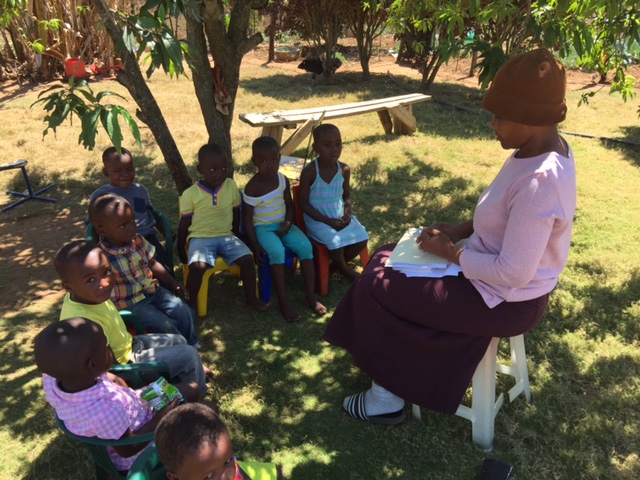
Celani teaches the younger kids at kids club
Di recovered in time for the traveling that we needed to do for the filming of the DVD.
We are grateful for your prayers as we have now started filming the interviews for the documentary. It’s been intense, sound and lighting are so important, with this in mind we have had to do several re-recordings and filming to get it to a standard we are happy with. We have just come back to Gauteng to do some more re-filming. This is a wonderfully educational experience. We value your prayers.
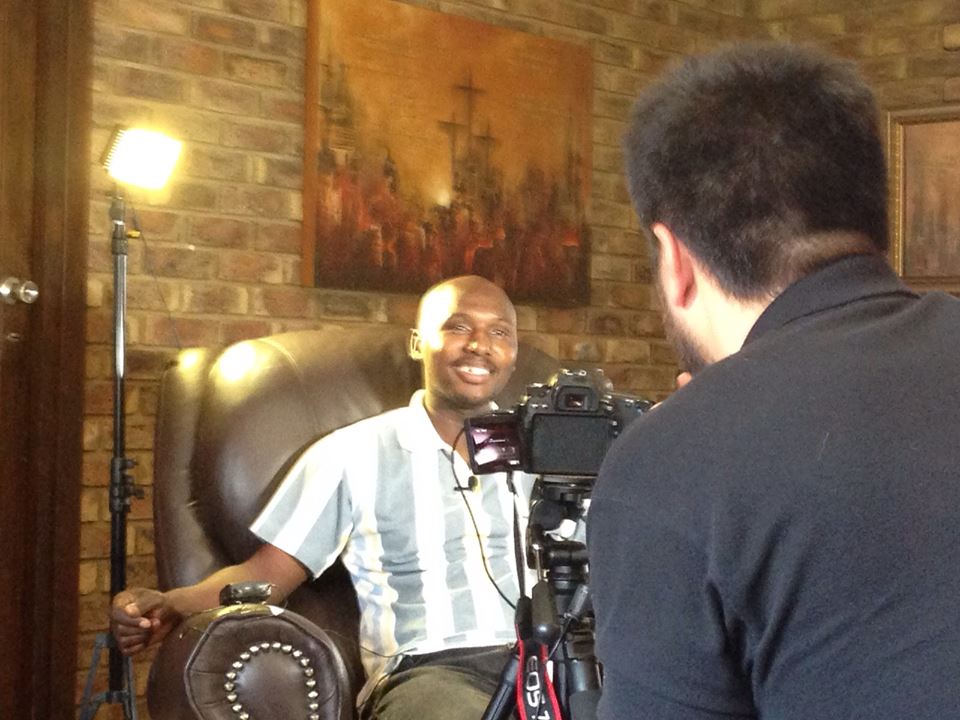
Karabo being interviewed
Let’s go back to the start of the month. Early in the month we headed down to Ballito to set up a time to meet with Graeme, who was giving Sal was filming tips as he has produced many documentaries for national geographic. He has also lent a professional quality wireless microphone which we have needed for the interviews. We arrived on the Saturday, taking some time to purchase supplies needed before staying with Matt and Marilize. Sunday, Sal shared on psalm 118 at ” Coming King Ministries”. We got to visit our dear friend Judy who was in hospital at the time. While sharing with Les about the project concerning the DVD, Sal mentioned we still needed to get lighting to which Les replied that they had lighting upstairs that not been used. They had bought it awhile ago for filming purposes but had not gotten to use it so it was lent to us for the duration of the filming process. We saw the hand of God at work.

Local Cow
While we were down that side we were able to catch up with Calvin and Gracie and other members of the fellowship of their church. We had 2 nights at home before heading of again to Joberg, friday night was cell group then Saturday was the usual kids club. We travelled after church on Sunday to Secunda and stayed over with our dear friends Jozua and Veronica. Our last trip we had to cancel as the wheel bearings on the truck had gone however this time we arrived with no hick ups. Our first stop in Joburg was with Alan and Sue Wells, Di stayed over with them while Sal went on to Roodepoort and stayed with Mark and Paula Hibberd to begin filming the first interview with Jean. She is going to the mission field next year in Muslim lands so we cannot reveal her face or true identity. He returned for a night then we moved on to other friends, Morné and Doret Lombard who had us for 2 nights while we travelled to Pretoria in the day for filming the second interview. We then went from there to David and Jackie Nathan for a couple of nights. On Saturday Sal interviewed Mujuru and in the evening we attended Mujuru and Karabo’s house fellowship.
That evening we went with Mujuru to Limpopo to shoot some footage at the university of Limpopo. As the student strikes were still on we were not able to get the footage we wanted but were thankful for what we could get. Then we went back to Pretoria and stayed with our friends’ Riaan and Debbie Roux. Their son, Riaan Jr is planning on getting married at the end of November and has asked Salvador to lead the ceremony and preach. So we went to talk through some issues with him.

Johannesburg

Johannesburg

Johannesburg

Johannesburg

Johannesburg
We came back to Vryheid and taught at Care Bear Crèche. In Vryheid Salvador was able to visit a couple of people to organize locations and someone else to find people to act in the reenactments. The first lot of reenactments are scheduled for January next year. At the end of the week, Salvador filmed an interview with a guy called Hamilton who was saved out of ancestral traditions. On Sunday we visited Hamilton’s congregation in Louwsburg and shot some footage. He did a sound message on the blood of Jesus, confession of sin and holiness. So that is all the testimonies filmed. Unfortunately the sound in sections of Mujuru’s and Jean’s filings had some white noise (interfering background sounds that detract from the people speaking) which was too loud. So this is why we went up to Gauteng. Before we left this morning we filmed Phumlani to bring in Biblical commentary that will be inserted into the DVD. Di visited a crèche and gave toys and costumes donated. This crèche used to meet in a mud hut but now, thanks to government registration and funding, they have had a building built for them. Di also dropped more clothes off by Celani’s place.
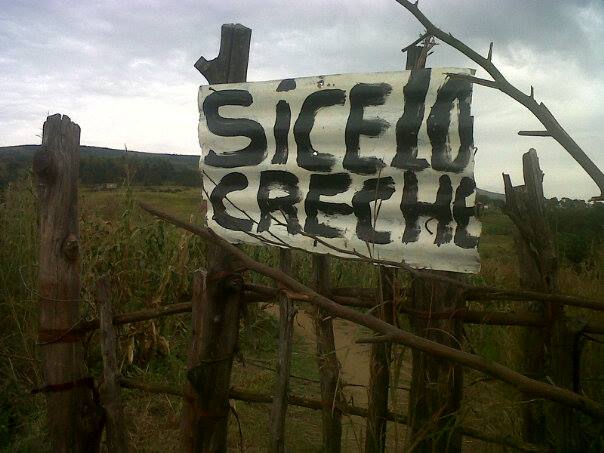
The sign speaks for itself
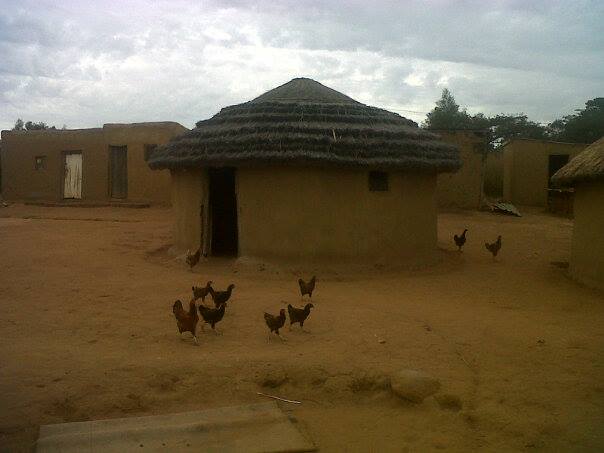
Where Sicelo Creche used to be situated
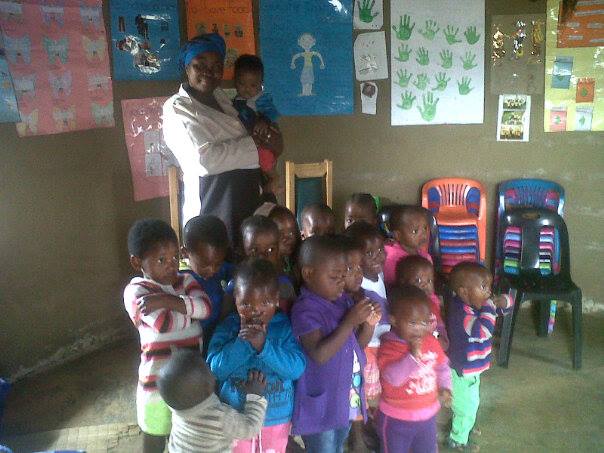
Sicelo creche as it was

Outside Sicelo creche as it is today
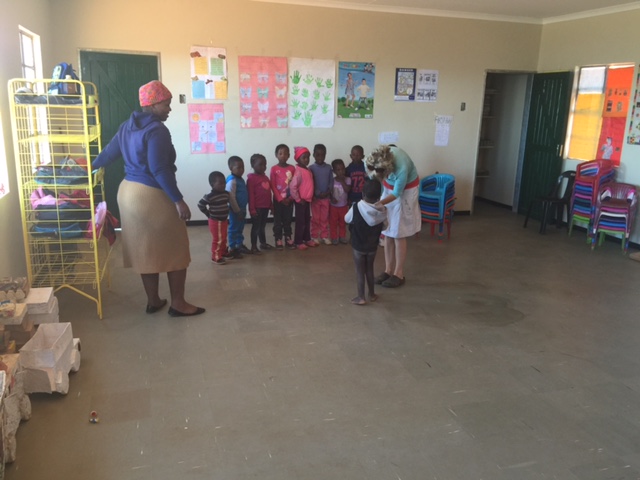
Inside Sicelo Creche today
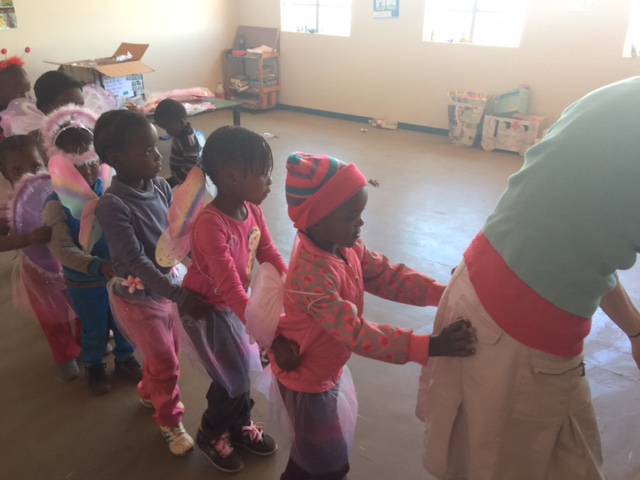
Di leads kids at Sicelo creche with costumes
Di leading kids at Sicelo Creche:
https://www.youtube.com/watch?v=-YPZZihDz4M&feature=youtu.be
We have come to Jo’burg early because we need to replace a battery for one of the filming lights that refuses to recharge and that ran dead during the interview with Hamilton. On Saturday, we will, God willing, redo some sections with Mujuru and then with Jean next Wednesday, as that is when she is available. The good thing about the extra days here is that Salvador is going to complete his research for a lecture he will give to the students of the Union Bible Institute degree course in Hilton next week when we visit for him to interview the Bible college principal for commentary for the DVD. There is also another bible teacher we hope to interview We will then return to Ballito to return the microphone back to Graeme. While there we will visit Calvin Josiah’s church and visit brethren.

Cows on way back from Hamilton’s Church

Shop on our dirt road, now vacated.
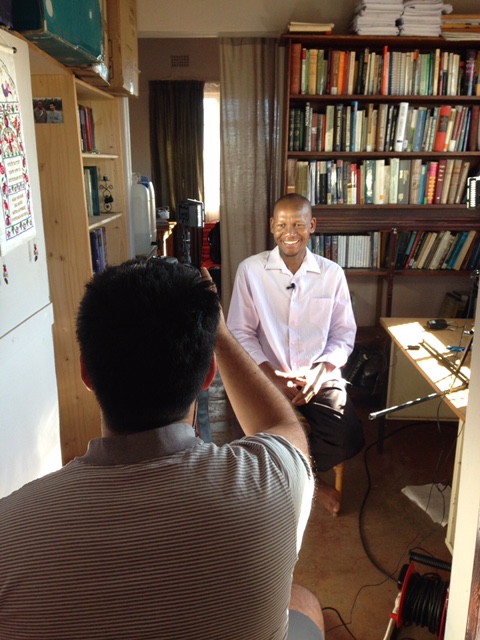
Filming Phumlani
Salvador, has just had an academic journal he has authored peer reviewed and published. The journal with his article can be purchased and read at the following website: http://www.evangelicalreview.com/ter_vol_3_contents_2015.html
Prayers requests:
For the small business of Tholakele
The second hand clothes project
Phumulani for other work
Travelling mercy on the road
DVD documentary on ancestral traditions
Disciples to continue to grow in the love and knowledge of the Lord
Persecuted believers all over the world
God bless always for your love and support.
FOURTEEN
THE SACRIFICIAL LIFE IN LOVE
ROMANS 12: 9 – 21
In the last chapter we looked at the call to live a sacrificial life and how that is to be manifested in our individual ministries in the church. The first 2 verses of Romans 12 are the basis for everything that follows. If we do not understand what Paul is calling us to do, and the basis of that calling, then we lose the motivation to implement what we are going to learn in the next few chapters. We may lose perspective of why we are doing what we do and our sanctification may become a salvation by works, rather than a process that happens as a result of a ‘real justification’. The Christian life should be an outworking of a real and powerful faith. The Gospel is the key here, it is central, and so by maintaining an ongoing belief in this Gospel we will start to see real changes in our lives. The whole thesis to this epistle is found in Romans 1: 16 – 17. The Gospel is the power of God to salvation for those who believe. In the Gospel, God’s righteousness is manifested from faith to faith. And this faith is not only worked out in our salvation but also in our various ministries.
We all have different ministries and giftings for the benefit of the body. There is an individual element and a corporal element. If we miss the individual element, we will lose the diversity within the body and degrade the value of each individual member. If we lose sight of the individual and lose respect for him as a single person, regardless of his gifting, then we will become another form of communism, where only the collective counts. People will then become mere pawns for the building up of a man made empire. Then when people stop being profitable for the group they are pushed to one side and rejected. However, if we lose sight of the corporate life then we will be selfish with our gifts, our ministries and will not employ them for the building up of the body. There will be little commitment and sense of community and the Church will be dead! We need a corporate life and we need an individual life. Thus we need to lay pride and ambition on the altar. But, in this chapter, we are going to look at the sacrificial life in community and love.
VERSES 9 – 21:
OUR PRACTICE OF LOVE
In our church life we are not only to work together in ministry but we are also to live with each other. It is not only about what we do together but how we are together that Paul wants to talk about. This is where it gets hot under the collar because we encounter problems in terms of how we treat one another and we do not match up to the ideal. If it is any consolation, the Corinthian church also had a hard time of it but Paul did not give up on them. So God has not given up on us and we should not give up on one another. Nevertheless, Paul never compromises the ideal nor does he say that it matters little if we miss the target. One thing we must be careful of is that we do not use a half truth to justify our sinful behaviors, or attitudes, towards others within the body.
TRUTH AND LOVE
There are about 20 or so different commandments in this one short passage of scripture. So we are going to quickly peruse each one and then we will conclude. As we summarize each one, remember that love is the principle thing. The two most fundamental elements to our Christian walk are Truth and Love. Truth defines love but Truth must also necessitate love. Without love we are not walking according to God’s because Love is the fulfillment of the Law. Love is not about making people feel good about themselves. There is definitely affection in love, and even an emotional expression of love, but principally, Godly love is commitment to to a neighbour’s good in the way that God defines ‘good’. Love does no wrong to a neighbour, therefore love is the fulfillment of the Law.
We need to have a rock solid view of love. Love is not pink coloured. It is not soft and it does not pander to a person’s every whim. Love is resilient and enduring for it will only do a person good, no matter what that person has done and failed to do. Love has certain attributes which include patience and kindness but these are not the only attributes of love. Love also does not rejoice in evil but rejoices with the Truth and love endures all things. Love is rock solid. This chapter shows us how love is to be manifested in different ways. Just as the list of ministries, in the last chapter, was by no means exhaustive, so this list of commandments is by no means exhaustive either. However, if we start to implement these things in our lives, by the empowerment of the Holy Spirit, then we will start to find new ways to demonstrate our love for each other.
LOVE WITHOUT HYPOCRISY
Paul tells his readers, let love be without hypocrisy. When we love it has to be without pretense. This tells us that motive is an essential factor in love. Love is not only about what we do for others but it is also about sincerity in doing those things which are beneficial for another person. Paul writes in 1 Corinthians 13: 3, ‘if I give all I posses to feed the poor and surrender my body to be burned but have not love I am nothing.’ What are we saying here? We are saying that love manifests itself in these acts and yet, these very acts that evidence love, can also be done in a way that there is no love present at all. What you are left with is a horrible, ugly shell, lacking any real concern or reality in itself. The selling of possessions is not there to meet genuine need anymore but it merely becomes a vehicle through which we can use those who are helped as a trophy to promote our own goodness. Our motive, therefore, becomes to gain a higher status than others. The motive behind the act is what determines whether that act is an act of love or is simply an avenue of self promotion. A number of commentators see the similarity between this verse in Romans 12:9 and what John says in 1 John 3:18. There he says, ‘Let us not love with word or with tongue but in deed and truth.’ Notice that it is not only about deed but also about truth. The heart of love is obedience. If we are genuinely obedient to God, then we genuinely love one another. Our love is not our initiative but a response to God’s love for us. Remember back in Romans 5:8 that God demonstrated His love for us in dying for us, while we were yet sinners. God’s love is not only shared verbally but it is a love that is demonstrated. God demonstrates His own love for us. Therefore, we should demonstrate our love for each other.
ABHORING EVIL
& CLINGING TO GOOD
Secondly, we are told to abhor what is evil and cling to what is good. The word ‘evil’ here does not simply mean a moral evil. Rather, it means that which is hurtful, malicious or vicious. The word ‘abhor’ has a connotation of hating something away. It is a strong word that incorporates, not only a negative emotion towards unkindness to others, but also the positive action of turning away from it. Note this ‘evil’ is not the same as when God chastises us or when we are reproved for our own wrong thoughts, words and deeds. God chastises those whom He loves and we are reproved for things that we are supposed to be reproved for. But this type of ‘evil’ is specifically there to cause that person harm. But on the upside of this coin we are told to cling to what is good. The word cling means to be glued, as in a marriage. We are to be inseparable from that which is beneficial to another person in its effect. Without pretense, we are to think about what is beneficial to another person (as God defines what beneficial is). If we learn to do this, without any ulterior motive on our part, then I believe that what we will seek to do for others will be somewhere along the lines of what follows in this chapter.
DEVOTED TO EACH OTHER IN BROTHERLY LOVE
Paul says in verse 10 that we are to be devoted to one another in brotherly love. This word ‘devoted’ is ‘philostorgos’. Now many people know that the first part of this word, ‘philo’ means fondness. ‘Philodelphia’ means fondness of brothers or brotherly love. But this fondness is of something called ‘storge’. And ‘storge’ means a ‘mutual love that exists between parents and their children’ and that love exhibits itself in tenderness. In other words Paul is saying, if you look at the tenderness that exists between a parent and its child, (child for parent and parent for child), have that with each other but with a love that regards each other as brothers.
SHOWING PREFERENCE TO ONE ANOTHER IN HONOR
But Paul goes further than this in saying that we are to give preference to one another in honour. Now the word for ‘showing preference’ here literally means to ‘go before in going before’. It means to ‘go before’ as a leader. Therefore what Paul is saying is that every one of us should try to take the lead in esteeming each other. We are to treat each other as valuable, not for what that person contributes to the group but, because of what Christ did. There are places where specific people are to be shown honour; such as parents (Eph 6: 2), widows that are widows indeed (1 Tim 5: 3), elders that rule well (1 Tim 5: 17) to name a few. But, here, every single person is to be shown honour. Why? For the same reason that Peter exhorts husbands to honour their wives in 2 Peter 3: 7, because they are fellow heirs. We are to try to take the lead in being examples to one another. We are to outdo one another in showing honour. But remember, our actions must be for no other agenda except genuine love. We must not act to for self promotion, or self adulation, but rather because of obedience on the basis of what God has already done for us. I stress what God has done for us because when we are compelled to outdo one another, that sense of competition often acts as a ‘welcome home’ sign for our old friend Mr. Pride to come back up off the altar.
However the command for mutual affection is one thing, because at least that is mutual. If I give out affection, and if it is mutual, I know I will be given affection in return. But to esteem others above myself is something completely different. How can I keep esteeming other people above myself when it is not reciprocal? This is a great blow to my own self importance and concept of what I think I deserve. How
HOW CAN I LOVE WHEN IT IS NOT RECIPROCAL?
We must recognize that this is part of presenting our bodies as a living sacrifice to God. It is a living sacrifice. As soon as I start showing honour to others, I am going to feel a conflict between God’s work in me and the flesh. Something is going to kick against it and I will be tempted to complain and fail in my inner life. It is a sacrifice that is living. It does not want to lie down but get up and say, ‘What about my turn? How about a little honour for me?’ But Paul also gives us 3 pointers in verse 11.
Firstly, do not drag your feet about it. Do not be slow in showing diligence in care and attention in business, industry or labor. In other words, make it your ambition to show preference just like a work project where you are the manager; do not be slack about your project. But how is the act of honoring each other like a work project? We may consider it a project because it is in the context of building up the body. 1 Corinthians 3: 12 – 15.
“12 Now if any man builds on the foundation with gold, silver, precious stones, wood, hay, straw, 13 each man’s work will become evident; for the day will show it because it is to be revealed with fire, and the fire itself will test the quality of each man’s work. 14 If any man’s work which he has built on it remains, he will receive a reward. 15 If any man’s work is burned up, he will suffer loss; but he himself will be saved, yet so as through fire.”
If we apply this picture of the building up of a church to the book of Romans we can see that, from Romans 1–11, Paul laid the foundation which is Christ. Because his readers would have been in agreement concerning all that Paul wrote, therefore, they would all have been building on the same foundation. Romans 12–16 is about producing the obedience of faith in the context of edifying the body. Our sanctification is somewhat linked to our fellowship with other believers. It is not that our salvation is bound up in a church, as in the Roman Catholic doctrine. They teach that, as someone baptised and confirmed in the Church of Rome, if you leave them to go to an evangelical Church, you will lose your salvation. If our salvation is bound up in being a member of a church, then what about Christians like Richard Wurmbrand who spent time in solitary confinement? Even so, God’s plan for us includes fellowship, and fellowship is God’s ordained means of making us more Christ like. Firstly, we are speaking of fellowship with God but we are also speaking of fellowship with each other. Every man must be careful how he builds into the fellowship. In this case we are looking at how he builds in regards to his work of showing honour to others. When we work at showing honour to each other, and that work stands the test of God’s consuming fire, we will receive a reward for that work.
Secondly, we are to be fervent in spirit. Literally, we are to be ‘boiling hot’ about this issue. When water in a kettle boils, the liquid turns into gas and expands. Not only does it expand but it also rises. Therefore, whenever you have a loose lid on the kettle and the spout is plugged up, the air will push the lid open with force. Our spirits should be fervent so that we will not be able to do otherwise than to show honour to one another. This speaks to me of cultivating our relationship with the Lord and letting Him have His way in our lives. We are to do this to an extent that our hidden life will be manifested in some way in our outer life.
Thirdly, we are to be serving the Lord. How can we keep esteeming others higher than ourselves in the cases when those people do not show that same sense of honour to us? Why should we even bother when those people do not even care about the way we are esteeming them? It is because we are not primarily serving them but first and foremost we are serving the Lord. In Romans 5:6 Paul said that, at the right time, Christ died for the ungodly. What Christ did for us was not motivated by how we made Him feel. We can be thankful to God that Jesus did not act according to how we made Him feel or He would not have gone to the cross at all! In the garden, in His humanity, Jesus did not feel like taking the cup of suffering. Instead He sought His father if there could have been any other way; but He knew that there was not any other way. So what made Him resign Himself to taking the cup in that situation? Did He say, ‘Nevertheless, not what I will but for the love of these little ones?’ Did he say ‘Nevertheless, I am so overcome by my deep seated love for them that I would go to the cross 100 times if it meant I could have them?’ No, He said, ‘Nevertheless, not what I will but Your will be done.’ What brought Jesus to that place of crucifixion in His moment of struggle was not so much to do with us, but it was to do with the will of God. He was serving the Lord.
REJOICING IN HOPE
Another motivation, to live this servant life amongst each other, is the fact that we have hope. We are commanded to rejoice in hope. What hope is Paul referring to? Paul has already explained what this hope is in Romans 8.
-
Firstly we live in the hope that we will get new resurrection bodies and we will be able to say goodbye to this flesh nature.
-
Secondly, with that resurrection, we will receive the adoption as sons which we now have by faith. We are children of God by faith now and yet, because it is through faith, it still needs to be realized in actuality. We will receive our inheritance which, even though naturally belonging to the Jewish nation, has become ours through faith.
-
Thirdly, we will be totally conformed to Christ’s image and as such we will be without any blemish. I once listened to a conversation between a couple where the wife said that she hopes that she will live together with her husband in heaven for eternity. Her husband said that must really mean something if after their years of living together she still wanted to live with him for eternity. But she quickly replied, ‘But then you will be perfect!’
-
Lastly, we live in a hope of a security that if we are in Christ, as a present continuous state, (not only being in but also remaining in) we know that no created thing can pluck us out of His hand or separate us from His love.
REJOICING IN TRIBULATION
As we work on our relationships, though we are prone to forget it, let us remember the wealth of redemption that is laid up in store for us and rejoice in that. Let us rejoice in the midst of tribulation and be devoted to prayer. Suffering is part of the Christian life. Christianity is not a rose coloured religion. God’s love is not a rose coloured love. God’s love is not a romantic love, though we know from the Song of Solomon that romantic love teaches us something about God’s love for His people. God’s love is sometimes a hard thing. The song ‘Oh the deep, deep love of Jesus’ likens Jesus’ love to a mighty ocean. This picture is not of something tranquil and pretty but something turbulent that will over power you, drag you under and take to somewhere you might not necessarily want to go to. But remember what Paul said in Romans 8: 18. The sufferings of this present time are not worthy to be compared with the glory that is to be revealed to us.
There are two extremes in regards to living the Christian life and these extremes are two forms of Gnosticism. One extreme is ‘antinomianism’ which says that you can do what ever you like because it does not affect your salvation. The other is ‘acetism’ where you must not do anything that stimulates physical pleasure. God’s path is on neither of these routes but right down the middle. We must not travel the path that leads to pleasure and we must not travel the path that merely leads to suffering, but we must travel the path that God would lead us on. And His path is paved with suffering but contains godly joy and pleasure along with it. Pleasure should not be our target but neither should pain. Christ Himself should be our end. It is a path that incorporates both suffering and joy. In other words it is a path that incorporates the whole experience of what it means to be a human who is redeemed. And this smashes any entertainment of the illusion of temporal satisfaction and security.
CONTRIBUTING TO THE NEEDS OF THE SAINTS
We are also to contribute to the needs of the saints and practice hospitality. What are the needs of the saints? They are not luxuries. As Paul said in 1 Timothy 6: 8; ‘If we have food and clothing, we shall be content.’ When money was raised for other believers, it was for the suffering, poor saints in Jerusalem. But here is the thing. This understanding of need (being only food or clothing) is often a great excuse for us not to be active when people beg and ask for help. Because we do not see a need for food or clothing we, therefore, do not help. Or when people desire for more than food and clothing, we are not obliged to help. But what about believers who have real need? Are we then willing to help them in whatever way we can, regardless of their social and racial background, or will we hold back all help from those in the Church who need it? The word for ‘contributing’ in the Greek is ‘koinoneo’ and it means to fellowship, to share, to associate oneself with someone or something else. It does not mean that I am responsible for every problem that someone has but that I can partake in and, according to my needs, contribute something of what I have to the alleviation of that person’s need. Sometimes we think ‘I cannot help that person, I do not have the means’, but we are not called to solve all their problems but only to contribute. It does not matter if what you share is not sufficient to provide everything that person needs. You are not that person’s provider, God is. You are not required to give above your means. Give according to how you prosper and be sensitive to how God would want you to do so. Give in a way that glorifies him and does not show you to be the answer to everyone’s problems. Contributing is sharing.
SHOWING HOSPITALITY
The Greek word for hospitality is ‘philoxenia’, which means to love foreigners, people who are strangers, people who do not belong. As the writer of Hebrews says, we do not know if we might be showing hospitality to an angel. I would say that anyone who holds meetings in their home, that does so willingly and sincerely, fulfils this criteria for the simple reason that people may be invited who are new to the group. Thus, there are strangers entering our home and with that there is always an element of risk. But the Bible commends hospitality.
ASSOCIATING WITH THE LOWLY
Verse 16 says to be of the same mind toward each other. Do not be high in mind but associate with the lowly. The word for associate is ‘sunapago’ and it means to be carried away with someone; to allow yourself to be overcome by a force, or circumstance that has overcome someone else. Barnes notes put it like this, “Enter into each other’s circumstances, in order to see how you would yourself feel.” Now think about this. If you are from a wealthier background, you may be prone to give hospitality but not to take hospitality from others. However, if we are willing to associate with someone, really associate so that we would take hospitality from someone from a lower economic background and give hospitality in like manner, then something that is unequal in the world becomes equal. How is this so? If I am invited to receive hospitality from someone poor, I can go and eat with them. I may bring a contribution to the meal, and I partake of their hospitality. I am sharing in their circumstances without thinking that I have to be their saviour. Then I may invite them to share in my hospitality without trying to make them feel their hospitality is deficient. Suddenly there is equality in our relationship. We are in a horizontal relationship where they do not become my dependent. Though, in the world’s eyes, I may be in a higher wage bracket, in each other’s eyes, we are equals and our material wealth should not come into it. It necessitates me not going in bragging about how much I have got but sharing in their poverty. Sharing is what fellowship is about and that is why Paul stated in verse 15 that we are to share in each others joys and in each others griefs.
MAN WILL LET US DOWN
Living out such self sacrifice, would make us think that everything is going to be beautiful and pleasant. We think that if we love all these people, they will be so grateful to us and we can generate a beautiful community spirit. Remember that God’s love is not rose coloured. People will back stab us and will fail us. You will fail others and others will fail you. That is life. That is why Paul tells us that we are to bless and not curse. We are not to pay back evil with evil but to do what is right regardless of what others do to us. We are to do as much as is in our power in order to live at peace with all men, even if it is not possible. Remember the mystery of godliness that we looked at in the first chapter. God will repay our wrongs. God will vindicate us but we have to follow him and call out to Him. We are not to pamper to everything our enemies say. That is weak and pathetic. But in their utmost need, when no one would be willing to help them we are to give him a glass of water. We are to give them a meal if they are hungry. Our enemy will either get saved and be changed by it, or he will be condemned by it. Paul likens it to heaping burning coals on his head. When God tells us not to take our own revenge, He is not telling us that we are to pretend as if everything is ok. Neither does this mean that we do not turn to the law when there is criminal activity or breach of conduct. It means that, when there is no legal recourse to justice, we are not to take matters into our own hands. We are to bring our grievances to the Lord so that He may bring about justice. It also means that we are not to entertain our enemy’s fancies but at a time when our enemy is down and out, we are to shown compassion and mercy and let God deal out the judgment. This is life. This is the reality but it is part of this journey of experiencing the obedience of faith, to lay our lives on the altar and to be living sacrifices for God’s sake.
SALVADOR & DIANNE’S MSINDISI MONTHLY
NUMBER: 132. Oct 2015
PO BOX 1481
VRYHEID 3100
KWAZULU NATAL
SOUTH AFRICA
+27 (0) 728311008
+27 (0) 723843786
Email: msindisi@gmail.com ,
salv.di@gmail.com
KwaZulu Mission Website: http://www.kwazulumission.com
Hi all, after returning from Joburg last month we both returned with the flu. September weather changes very quickly from temps of 31+ down to 15 in a matter of a day. Recently it has been very warm with high 30 temps.

Di with Asimbonge
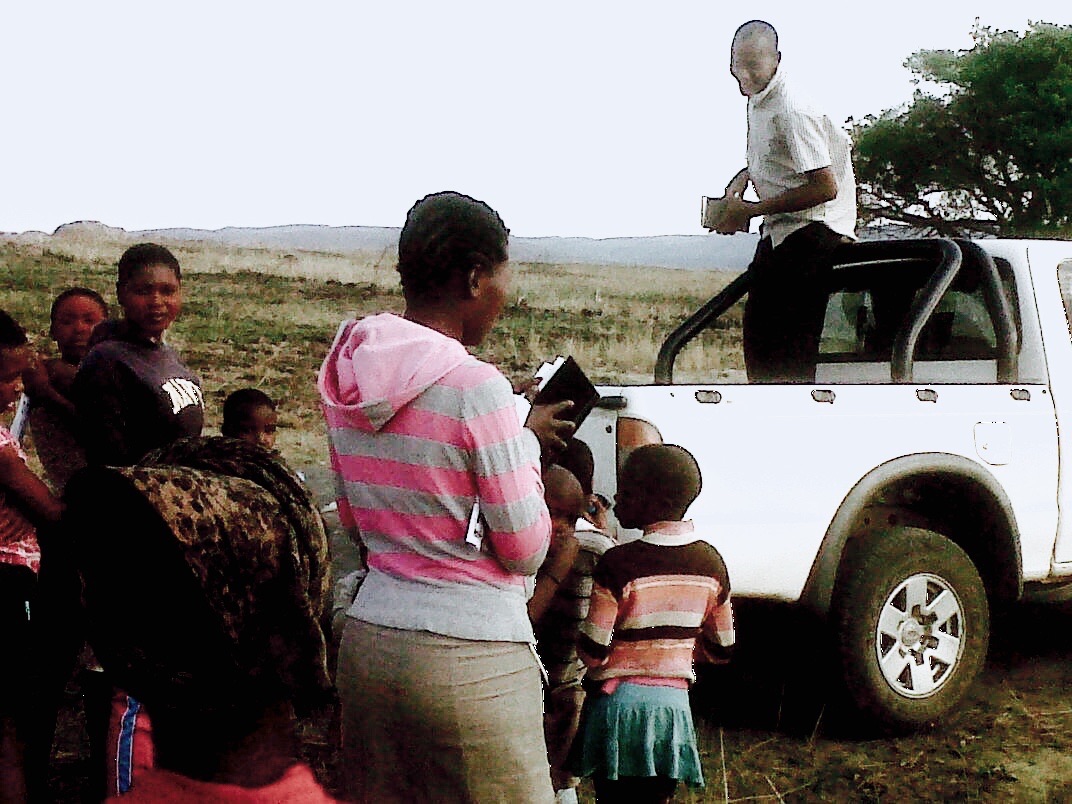
An Old Picture of Phumlani Preaching.
On Saturday after kids club we invited Tholakele and her family back for lunch to share some time together. She is a single mum with 5 children and now has a grandchild. Her walk has been very difficult and at times she has fallen hard but her heart of repentance is there. Di has offered to help teach her oldest daughter how to sew so she maybe able to make a very small income from the local community with repairs and orders. While there she would also help to teach her second to youngest with English. Tholakele is currently in the very early stages of setting up a small business to sell chicken packs to people in her local area. We ask you keep this in prayer also.
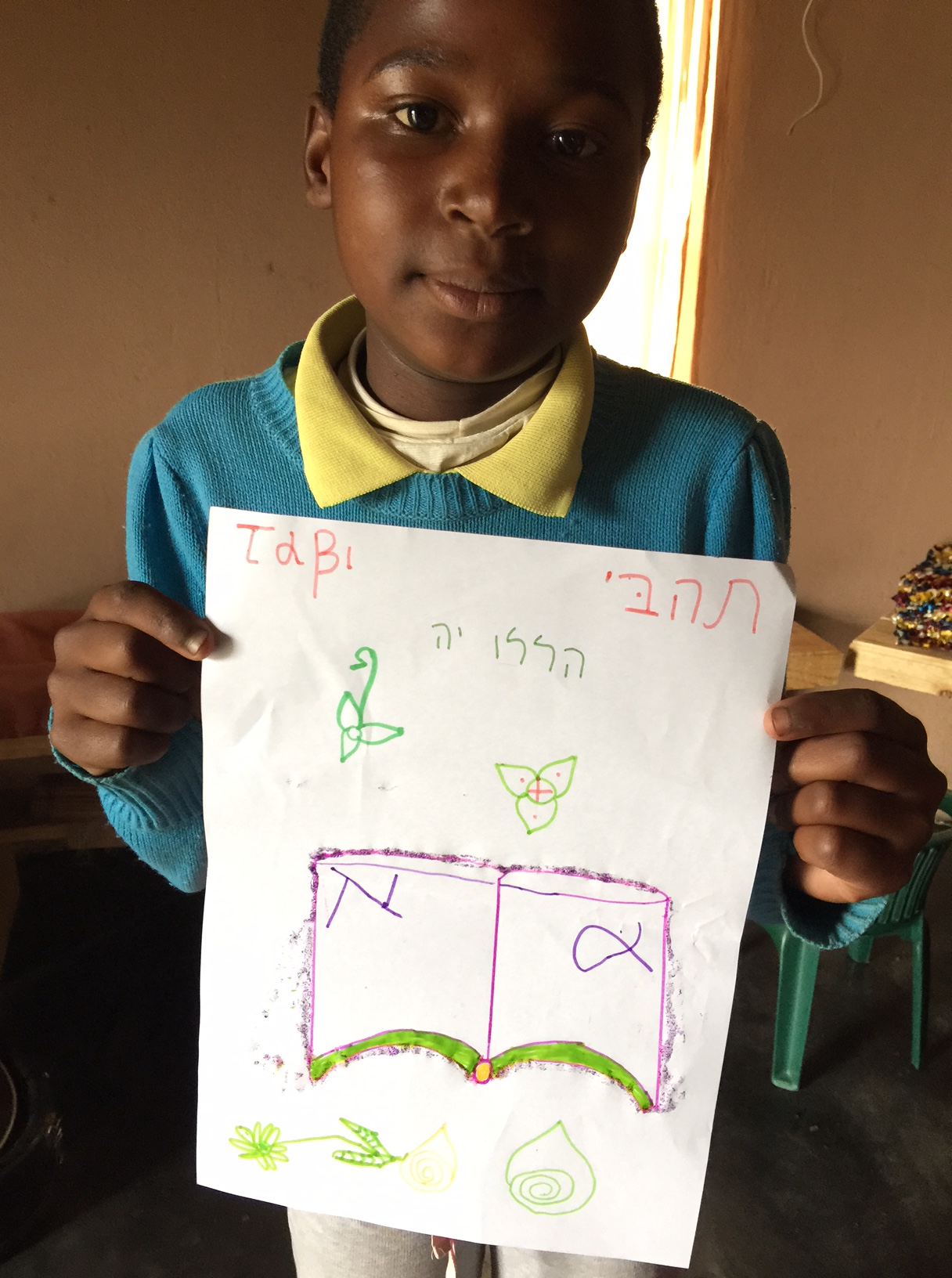
The Kids drew a picture of the Bible with their names in Hebrew and Greek letters to learn that the Bible was not written in Zulu or English. Here is Thabi with her picture.
Due to the lack of job opportunity for many people this side, Di has it on her heart to open a second hand clothing shop where clothes that have been donated could be sold for a small price to help generate a small income. This would be built on the property of Celani Sibiya where we meet for the church meeting. Celani has 3 girls who are not currently working so this would become their project. Washing the clothes, sorting, pricing and then selling. A secure 5 by 6 metre hut with 2 barred windows and solid locking door would be required. Many people donate clothes and other things to the ministry. If for whatever reason we ever have to leave SA, good relationships have been formed with others who would continue to help supplying. Please can we ask you keep this in your prayers.
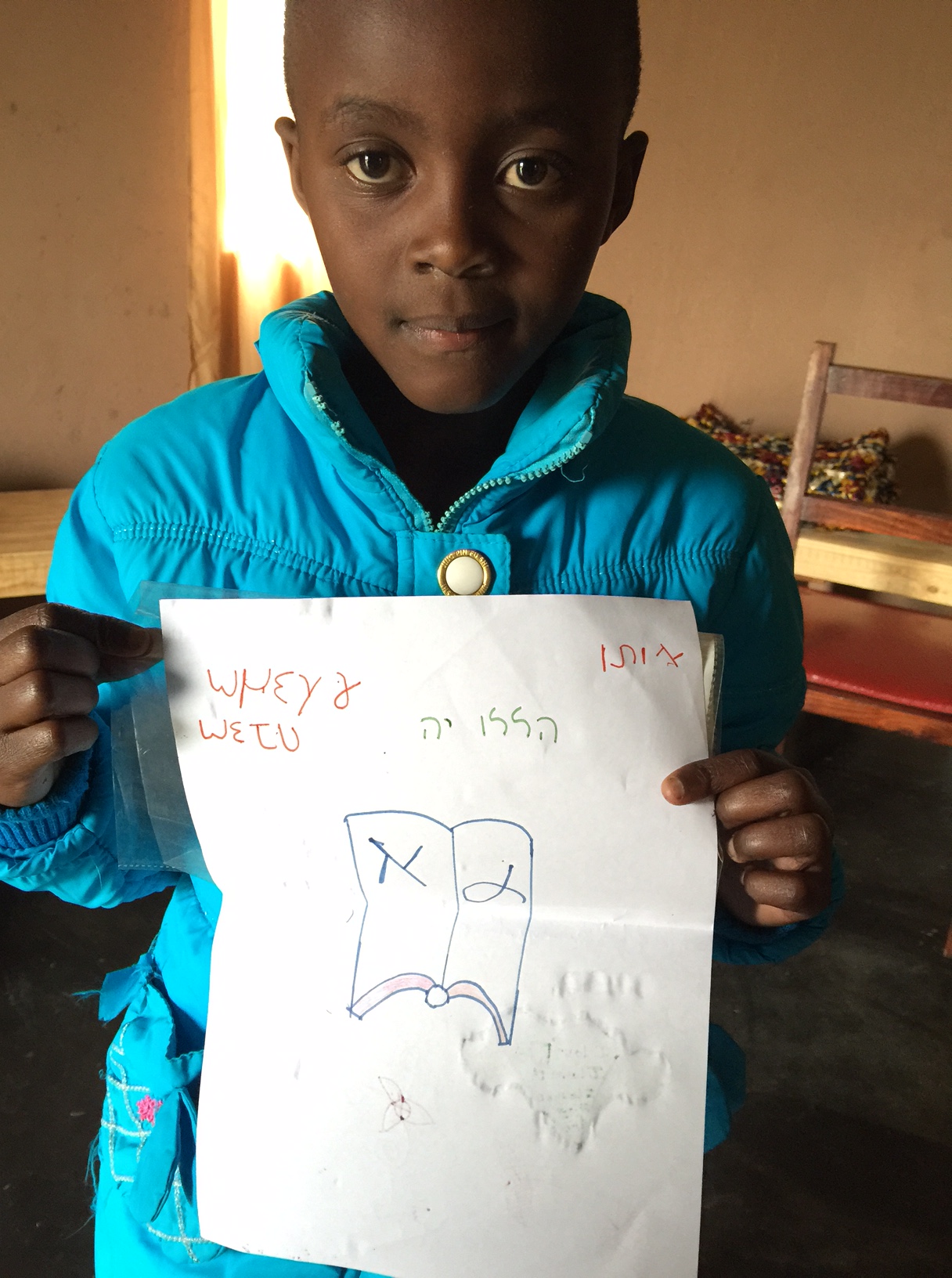
Owethu with her Hebrew and Greek work
Sal is currently very busy with his project to reach out to people stuck in ancestral traditions. He is planning and organizing filming interviews with four people over South Africa for the production of a DVD documentary on “Allegiance: walking with the dead” . This is a huge project which will take sometime but we both feel strongly that it is needed for South Africa. This project is something that is being planned over and above all the other ministry requirements so time is stretched. Next week we go to Ballito where Salvador will be teaching at Coming King Ministries, visiting a cell group from Calvin Josiah’s congregation and spending some time with a brother in the Lord called Graeme who makes documentaries for a living. Graeme is acting in an advisory capacity. A week after that we will be going to Gauteng and start filming the interviews. We have a limited time frame with one of the ladies being interviewed, as she is about to head overseas at the end of the year for mission work so hence the urgent need to have this part completed has increased. The end of the year is busy with creche gradations in November so the next couple of months will be very busy.
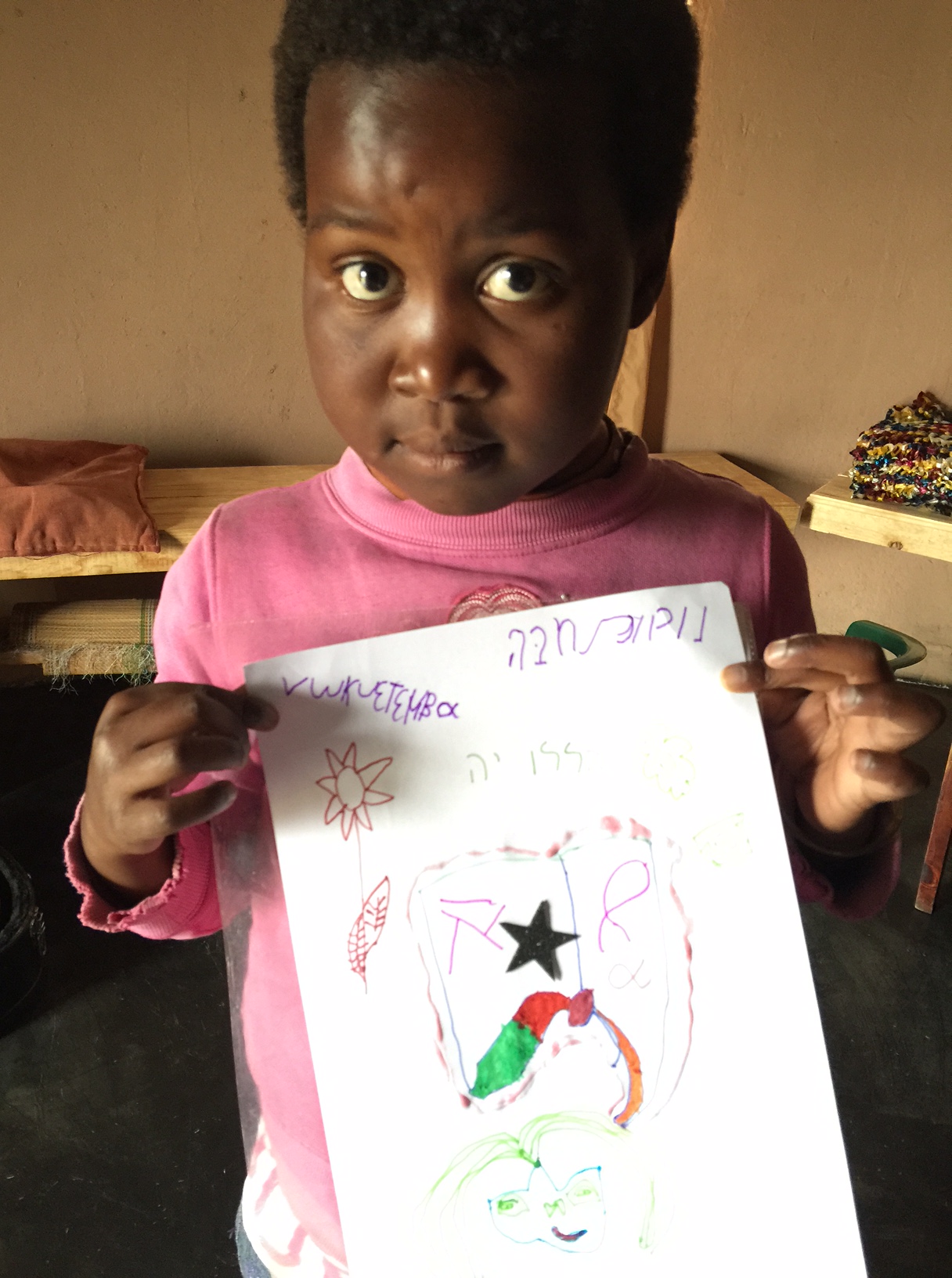
Mo with her Hebrew and Greek work
We are currently having computer hassles which thankfully are being sorted, and the Lord has graciously undertaken for equipment that was needed. We are on the road traveling a lot so ask please can you keep us in prayer and the project. This project has the potential to reach thousands of South Africans all over the country. We plan on completing it by the middle of 2016.
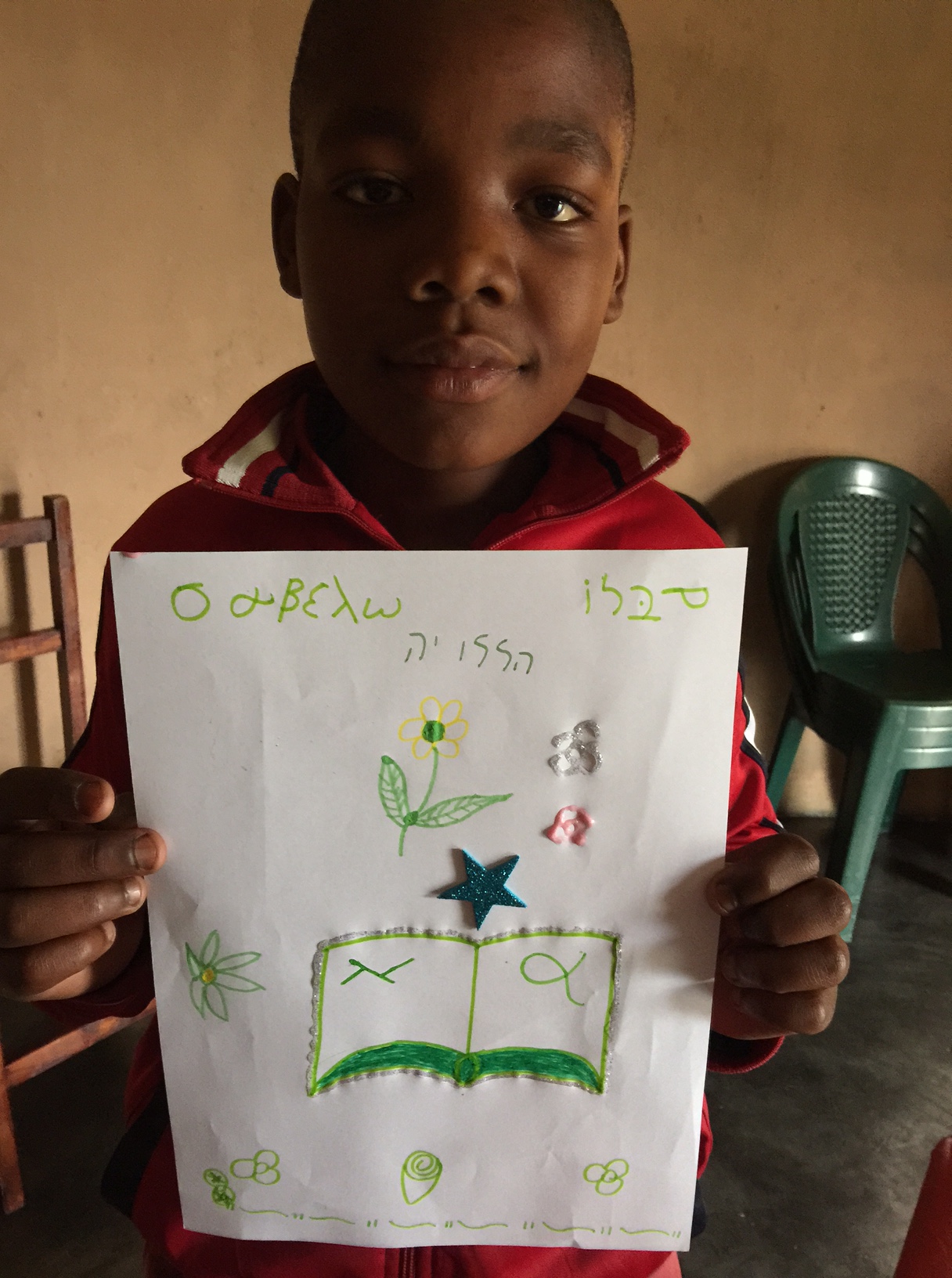
Sabelo with his Hebrew and Greek word
It has been a difficult month for Di health wise as after the flu from Joburg she managed to crack her rib and her muscles in her right shoulder and neck have cramped badly. This has made it very hard for her to maneuver easily and she has been in a lot of pain. Please can you keep her in prayer.

Di teaching the kids
This month we visited the crèche of Joyland, Care Bear and the school of Victory to sing and share the word. We are going using and adapting the New Tribes Mission material with the kids and they are really enjoying it as it builds on itself and we recap each month. We continue with Friday cell from house to house. Discipling, kids club, evangelism. Wednesday evening is prayer and bible study at the baptist church in town. Di continues to visit the old age home and cut hair when necessary on the Wednesday.
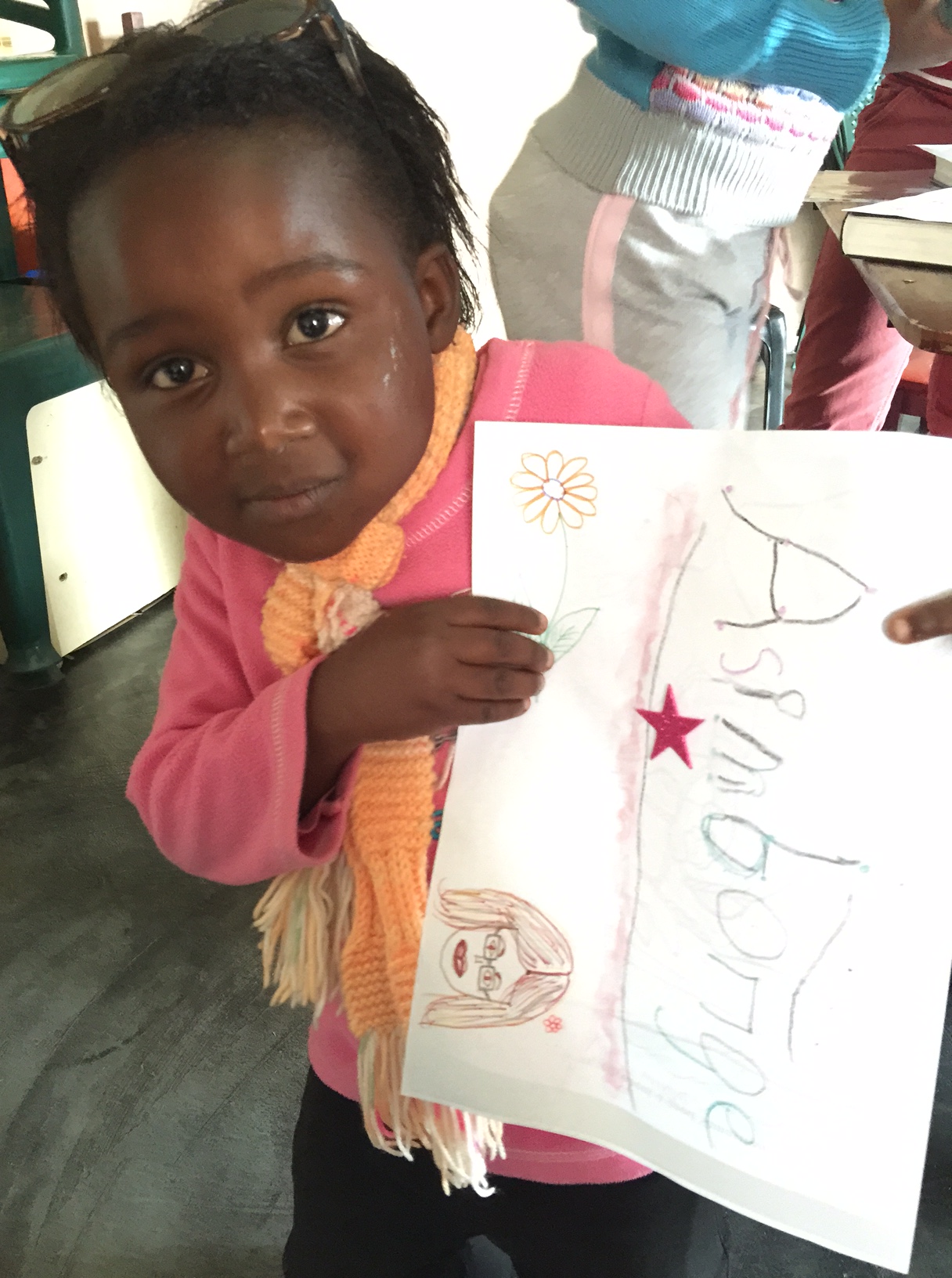
Asimbonge with her picture
With the economical situation in South Africa, Phumlani’s small business of buying and selling mealie is no longer viable for him. He is wanting to find part time work so please can you keep him in prayer. His truck is also starting to cost him extra cash that he doesn’t have.

Salvador and Dianne
In all these matters we trust the Lord. He is faithful and true and we praise him in good times and difficult.
Prayers requests:
- For the small business of Tholakele
- The second hand clothes project
- Phumlani for other work
- Travelling mercies on the road
- God’s wisdom for the DVD project
- Disciples to continue to grow in the love and knowledge of the Lord
- Di’s health
- Persecuted believers all over the world
We know that the increase of evil will abound. 2 Tim 3 v 2.
May our Lord give us the grace to endure and reach out in love sharing the gospel of peace and truth. He desires that no man should perish as He clearly says He will not tolerate evil and when He comes again it will be with His judgement. No man can stand on that day unless they are found in Christ’s righteous for our good deeds are like fithly rags before him. Without Christ we are lost ……….. What a gift He gives, may many hear, understand and believe.
God bless always for your love and support.
Salvador and Di
THIRTEEN
THE CALL TO PRESENT OUR BODIES AS LIVING SACRIFICES TO GOD AND IN MINISTRY
ROMANS 12: 1 – 8
Paul has demonstrated a wealth of insight concerning God’s salvation plan. Paul knows all about the gospel, he knows all about the condemnation of mankind, he knows all about the Law and about grace, he knows the typology of the two covenants in the Old Testament scriptures, he knows all about the promises of God to Israel and how they are to be fulfilled, he knows all about the use of the Gentiles’ salvation to provoke Israel to jealousy, he knows all about the restoration of Israel in the future, he knows all this and much, much more. Peter said of Paul’s writings that they are difficult and hard to understand. Paul’s insight is deep, his writings complex, and his knowledge exhaustive and yet what does Paul say in verse 33 of Romans 11. He says in effect, “I know all of this but I cannot figure it all out. I know all this but my knowledge is nothing. I cannot search it out. I cannot fathom God’s ways. I do not understand how or why God does stuff the way He does.” God alone is wise and verse 36 shows that He is the focus of everything. He is the originator of all things, He is the means of all things and He is the purpose of all things and therefore He alone is to be praised.
Now this should impact us on an emotional level and have a sobering effect on us. It should cause us to evaluate our lives and our attitudes. The bible is not merely a collection of intellectual statements claiming to be true. Though the bible is intellectual or at the least intellectually stimulating, it is not only intellectual. It touches every area of life. Therefore, the Gospel is not merely a verbal message to be believed and professed but, as Romans 1: 16 – 17 show us, it is a message that has God’s righteousness manifested in it as we believe from faith to faith. We are to become righteous. And it does not mean that we are to be righteous only on a Sunday morning or a Wednesday night. It is to be righteous when we clock in at work, when we play sports at the local sports club, when we are with our families. In other words we are to be righteous in every sphere of life. Hence from Romans 12 onwards Paul becomes very practical. It is just as J. Gresham Machen said of the Epistle to the Ephesians. “The Church can never, therefore, dispense with old-fashioned, patient study. Such study is quite insufficient if it is not applied in daily life; but on the other hand the best of application is useless if there is nothing to apply.”
And Francis Schaeffer said in His book, ‘True Spirituality’,
“Doctrine is important, but it is not an end in itself. There is to be an experiential reality, moment by moment. And the glory of the experiential reality of the Christian, as opposed to the bare existential experience, or the religious experiences of the East, is that we can do it with all the intellectual doors and windows open.”
In this we are going to spend a lot of time looking at the first two verses of Romans 12. I want to use this chapter as an introduction to the rest of the epistle. The reason for this is that the rest of this epistle hangs on these two verses. If we can grasp and remember the truths contained in these two verses then we will have a foundation and an impetus to implement the rest of the epistle.
VERSES 1 – 2:
THE SACRIFICIAL LIFE UNTO GOD
Paul commences this chapter with the word ‘therefore’. As has been said oft times before, by various people, ‘therefore’ is a term of conclusion. This word is built on what has been said before. What was said before was a declaration of God’s wisdom in His whole plan of salvation. That declaration was a conclusion to the whole 11 chapters that we have looked at. On the basis of all that we have looked at Paul compels us to do something. He compels us to present our bodies as a living and holy sacrifice. This one verse is full of meaning that we cannot exhaust it but we will try to highlight several points.
OUR BODIES AS LIVING SACRIFICES
Firstly Paul urges the readers, by the mercies of God, to present their bodies. His urges his readers by means of the mercies of God. In other words our servitude, love and commitment to the Lord are based on what He has already done for us. It is reasonable, rational and based on content. There are choruses sung in churches where love and a desire to worship are expressed. But the song supplies no reasoning for that praise. Like the song ‘I will worship, I will worship, with all of my heart. I will praise You; I will praise You, with all of my strength… You alone I long to worship. You alone are worthy of my praise’. And sometimes the reasons for worshiping supplied in the songs we sing are superficial. Compare that song with Revelation 4 which says that God is worthy of honour and glory and power. It does not stop with that statement but goes on to say why God is worthy. He is worthy because He created all things, and all things were made for His pleasure. We owe Him our very existence. All things were made by Him and for Him. Thus, the praise in Revelation 4 is reasonable. The reason Paul gives for our servitude is the mercies of God which we have received. If we are not reminded about these mercies, it will be easy for us to become ungrateful like the children of Israel in the desert. Think of all the spiritual benefits we partake in, which unbelieving Jews have been cut off from. We are not simply servants but we are adopted children who have a great inheritance waiting for us. There is a hymn that says ‘Count your blessings’. If we would count out blessings more often then we would be encouraged to live a life of obedience.
Secondly Paul urges his readers to present their bodies as a sacrifice. The term ‘to present’ denotes a deliberate act of the will, something specifically placed on the altar for the use of someone else. It must be done willingly as when the early Church set aside money to helping suffering Christians in Jerusalem. Paul said in 2 Corinthians 9: 7, that a person must give as he has purposed in his heart. Not begrudgingly or under compulsion. Why? It is because God loves a cheerful giver. Everything that we do must be done in faith, not merely because it is expected of us. Romans 14: 23 says ‘what ever is not of faith is sin’. And the reason that faith is so important is because Romans 1: 17 says that the just shall live by faith. The same means of our justification is also the means of our sanctification. Our sacrifice is something that we must give and is not taken away from us. But what are we to present?
Thirdly we are presenting our bodies. To avoid ambiguity here Paul has given us the word in its plural form. If Paul had said that we are to present the body or our body, such a statement could possibly have been taken to apply to the Church. But he does not give the word in its singular form but plural. That is, it applies to the physical body. There were some Christians who would reinterpret Paul’s theology in light of their own form of Gnosticism. They believed the body was inherently evil but the body would die anyway. The spirit would be saved and the spirit cannot be tainted by anything physical. So the antinomians (against any form of rule) said ‘go ahead and sin. Sleep around, get high, and get drunk! Did Paul not say we are not under law? Did Paul not say that where sin abounds grace abounds even more? Then why not go ahead and do what you want?’ But Paul says, ‘No, real Christianity is not just a matter of the spirit and the soul but is also a matter of the body.’ Just because we will get a new resurrected body, it does not mean that our actions do not affect the soul because we do not will, to do the things we do, with the body. Our decisions are made with the will which lies in the soul. But what kind of sacrifice are we to present our bodies as?
Fourthly the sacrifice is to be living and holy. When you read through the book of Leviticus every single animal sacrificed was killed. The only animal that was not to be killed was the scapegoat that was to be sent out into the wilderness. Leviticus 16: 10 “But the goat on which the lot for the scapegoat fell shall be presented alive before the LORD, to make atonement upon it, to send it into the wilderness as the scapegoat.” Every other animal given for atonement was killed. But what does Paul say concerning our bodies? We are to present our bodies as a living sacrifice. Why is it that you and I battle with the same sins or the laying down of the same desires again and again and again? We die to these things. We put them on the altar and submit these things to the Lord. We get temporary release from the hold of those sins and those desires. But then the temptations come back with power and force. We are presenting a living sacrifice. You put a dead goat on an altar; is it going to move? But if you put a live goat on an altar will it stay there? It might for a time but then it will get off especially if it is a wild goat.
But the sacrifice is not only to be living but also is to be holy. In other words, there should be a difference between the way I conduct my life and the way the people in the world conduct theirs. The word ‘holy’ in Hebrew is the word ‘Qodesh’, or ‘Kadosh’. It means something consecrated, set apart, sacred. It is not for common use and not profane. In the Old Testament, all the things and the people that were in the temple were classed as ‘holy’. So in the new temple, being the body of Christ, all its members are holy and therefore holiness should mark our meetings, or fellowship, our relationships, our ministry and activity. 1 Corinthians 3l: 17 says that we as the temple are holy. 1 Corinthians 6: 19 says that Children of a believing parent are considered holy. 2 Corinthians 6: 6 says that the Spirit we have received from God is Holy. Ephesians 1: 4 says that we have been chosen in Christ before the foundation of the world to be holy. We are even to give one another a holy kiss in 1 Corinthians 16: 20, which according to Ryrie, was restricted to ones own gender. Holiness covers everything in our lives as believers. But the reality is that sometimes we cannot even see the difference in our lives and the lives of people in the world. And, even worse, people in the world look at us and see no difference.
But remember what we looked at in Romans 8. God has given us salvation by faith. This is not a faith that is a one off act of repentance, but it is a living faith. But whatever is there by faith is not final. It has to be realized and brought into our own experience. Faith is the evidence of things not seen but what is not seen will one day become seen. Therefore, God sees us as righteous now and he is making us into the image that he sees us to be. Jesus will present His church to Himself without spot or wrinkle.
But there is another application of this word ‘holy’ in the context of sacrifice. Deut 15: 19 – 21.
“19 You shall consecrate to the LORD your God all the firstborn males that are born of your herd and of your flock; you shall not work with the firstborn of your herd, nor shear the firstborn of your flock. 20 You and your household shall eat it every year before the LORD your God in the place which the LORD chooses. 21 But if it has any defect, such as lameness or blindness, or any serious defect, you shall not sacrifice it to the LORD your God.”
We see in the offering of the firstborn as a sacrifice, there was not to be any serious defect. In sacrifices to God, the animal had to be without blemish; it had to be holy. Think of when Cain and Abel brought their offerings to the Lord. Cain just brought an offering from the ground. But Abel brought of the firstlings of the flock and of their fat portions. In other words he brought his best. It was a holy sacrifice. It makes me wonder, what am I offering to the Lord with my life? Am I offering God my best or only the left-overs? As Barnes says in his notes, “In like manner we are to consecrate to God our best faculties; the rigour of our minds, and talents, and time. Not the feebleness of sickness merely; not old age alone; not time which we cannot otherwise employ; but the first rigour and energies of the mind and body—our youth, and health, and strength. Our sacrifice to God is to be not divided, separate; but it is to be entire and complete.” Think of it in terms of our time with the Lord, our study of His word, our prayer life, our family life and our church life. We are always to give our best because it is to be a ‘holy’ sacrifice.
Fifthly the sacrifice is acceptable to God. In other words He is the one who determines whether our offering is worthy or not worthy. He is the one who draws up the criteria for acceptability. Therefore, we are to have Him as the focus of our lives and of our living sacrifices. Remember that Paul is not urging us to present our bodies as living sacrifices on the basis of our love for one another. That comes later. He urges us by the mercies of God. It is on the basis of what God has done for us and what He has given to us. Our obedience and love for God is a response to God. Therefore, we desire to please Him because of His love for us. We are not to try to earn His love. We must never lose sight of what God did, because once we do that then our Christianity becomes a false Christianity and our Gospel becomes a false Gospel.
But sixthly, when we do all this, then we are really worshiping. Paul says that this is our spiritual worship. I play guitar and I love music. I have written over 155 songs. I used to have a fair collection of Vinyl records and CDs. I have been in Church music groups since I was about 12. I have no problem with music. But saying all that, the early church knew absolutely nothing of the contemporary worship scene. There were no organized worship events as we picture worship. There were no worship groups in any kind of lime light. The book of Acts does not record any worship leaders such as Patrick the Pan piper going round Galatia, Pamphylia and Bythinia holding a primitive worship festival, or promoting “Peter and the Apostles” as the most happening, hip hop artistic group ever to shake the world scene of worship music paving the way for the future of Byzantine chants. Why did you not see any of that? The reason there is a difference between worship of today and of the time of the Apostles is because our modern definition of worship is different to the bible’s definition. Our modern view of worship is hymns and choruses. Paul’s definition is a surrendered and obedient life. Paul’s definition is what we do in our bodies. In Revelation 11: 16 – 17 the twenty-four elders fell on their faces and worshiped God. Did they suddenly burst out singing Handel’s Messiah? No, the scripture says that they were saying, ‘We give you thanks, O Lord God’. My worship is what I do in my house at night. My worship is how I do my work, the way I run my household, and the way I treat other believers. My worship is my life. Remember what Jesus said to the lady at the well in John 4 when she asked Jesus about where a person should worship.
“21 Jesus said to her, “Woman, believe Me, an hour is coming when neither in this mountain nor in Jerusalem will you worship the Father. 22 You worship what you do not know; we worship what we know, for salvation is from the Jews. 23 But an hour is coming, and now is, when the true worshipers will worship the Father in spirit and truth; for such people the Father seeks to be his worshipers. 24 God is spirit, and those who worship Him must worship in spirit and truth.”
Worship is not about a geographical location. We all accept this and yet how often do we look at worship as something that we do at a particular place? ‘I worship at Lime Grove Baptist Church’. It is not about the place any more but it is about the Spirit and the Truth.
THE RENEWAL OF THE MIND
But let us move onto verse 2. “And do not be conformed to this world, but be transformed by the renewing of your mind, so that you may prove what the will of God is, that which is good and acceptable and perfect.”
Do not be conformed to this world but be transformed. The word for conformed in the Greek is ‘suschmatizo’ and it means to fashion something according to something else. The word for transform however is ‘metamorfoo’ and that means to ‘change into another form’. It is to be transfigured, as Christ was on the mountain. In other words, do not copy the world and put yourself into the world’s mold, but have yourself changed into another form than the one you are currently in. There is a great truth in this one phrase and that is this. We are separate from the world, in that Paul compels us not to copy the world and fashion our lives according to the world. But we are not yet separate in the fact that we need to be changed from our current form into another form. Remember in Romans 6: 11 that Paul urges the readers to consider themselves dead to sin but alive to God in Christ Jesus. We have been set free from the servitude to sin and yet when we do not walk according to the spirit we still fulfill the lusts of the flesh. We still carry a sin nature and, as such, we have to be continually transformed from faith to faith.
In Romans 3 Paul showed us that outside of Jesus men are lost sinners. There is no one righteous. In Romans 5 he taught that through Adam, sin came into the world. We were born children of wrath. We still carry about that sin nature in our bodies though we belong to God now. We are disciples of Jesus. We have started a whole new life with Christ. We cannot live two lives. We cannot live our own autonomous life and Christ’s life at the same time. We have to accept one and reject the other. Therefore, if we are committed to Christ’s life, and agree that the old life is on the cross with Christ, then where should we take our cues from? Should we walk according to the pattern of the world? Psalm 1 says ‘happy is the man who does not walk according to the advice of the morally wrong.’ We must allow ourselves to be changed from the image of the world that still remains in our lives into the image of Jesus. The image of Jesus is our future glory and what we were predestined for as Romans 8: 29 tells us. And how are we to be transformed? We are to be transformed by the renewing or the complete changing of the mind. Paul also writes this in Ephesians 4: 23, which is linked to laying aside the old self. In Titus 3: 5, Paul classes renewal as a work of the Holy Spirit. How? Christ likeness is the fruit of the Holy Spirit. What we are looking at is a partnership between us and the Holy Spirit. As we delve deeper into the Word of God and the Word goes deeper into us, the Holy Spirit ministers the change. But this is not only a work of the Holy Spirit. We too are exhorted to set our minds on things above, not on the things below. The Christian life is not simply God determining and everything coming to pass, like He did at creation. The Christian life is a relationship with God and all relationships must contain a two way communication or interaction.
Verse one dealt with our bodies and verse 2 deals with our minds. There is a link between our thought lives and the actions that we do in our bodies. These two things are fundamental to the implementation of the commandments that Paul writes in the following chapters. We must act like Christ and we must think like Christ. This is not initiated by ourselves but is based on the finished work of Christ on the cross and upon His earthly example. At the heart of it is a mind set of submission and servitude to the Lord. We need not worry about our rights. If we humble ourselves before the Lord, and keep His ways, He will exalt us in due time. Being reminded of all this; let us look at the next section of Romans 12.
VERSES 3 – 8:
THE SACRIFICIAL LIFE IN MINISTRY
We have to continually sacrifice our pride. We must not think thoughts that really are too high for us to think. In 1 Timothy 3: 6 Paul tells Timothy that whoever he puts into the ministry of an elder, or bishop must not be a new convert because he will become conceited and fall into the condemnation incurred by the devil. What happened with the Devil is the same as what will happen to a new convert who becomes a leader in the church. Being puffed up with pride he will go ‘I will ascend above the other elders. I will place my bishop’s throne above the members of the oversight.’ Suddenly you have a pope figure who is worshiped in the sense that he becomes the focus and the figurehead. In verse 3 Paul tells his readers “through the grace given to Me I say to everyone among you not to think more highly of himself than he ought to think”. Now what ‘grace’ is Paul taking about? To answer this, we have to go right back to the beginning of the epistle. In Romans 1: 5 we see that Paul received grace and apostleship to bring about the obedience of faith among all the gentiles. From Romans 1 – 11 he sets down the doctrinal basis, smashing down all the counter arguments that claim Paul’s Gospel is unbiblical. Therefore, if what Paul has taught is true, that the Gospel is the power of God to salvation, then we would want to see the reality of that power lest it be an empty claim. Paul does not stop at Romans 11 and congratulate himself on such a fine exposition of the Gospel, but he carries on into where it personally matters, our day to day lives.
Through that grace, to bring about the obedience of faith, Paul tells us that we should not think too high thoughts but we should think so as to be sober minded; or as my translation puts it, so as to have sound judgment. In your drinking days, if you ever had them, did you ever go to a party where there was so much noise and mindless activity? The best part of that for me was when I walked out of the house into the cool and tranquil night air. Clear-headedness is a gift. Let us not be confused and caught up with all the excitement of what WE can do in ministry but let us catch the sobering wind of the Spirit of God and the truth of God’s word. Put ambition on the altar and think clearly about our place in ministry. Paul has already given a few reasons why we cannot think too highly of ourselves.
- Firstly Romans 3:23 says that all have sinned and fall short of the glory of God. In Romans 11 we are told that we stand by our faith. If God did not spare the Jews who did not believe, He will not spare us either. This reminds me of Baruch in Jeremiah 45: 5. “5 ‘But you, are you seeking great things for yourself? Do no seek them; for behold, I am going to bring disaster on all flesh,’ declares the LORD, ‘but I will give your life to you as booty in all the places where you may go.” Are we seeking great things for ourselves? Rather we should look at the salvation that we have. Being saved from hell is a greater reward than being the president of any ministry. Rather our service in ministry should be a token of our gratitude to the Lord.
- But, secondly, Paul continues to say that we have each been allotted a portion of faith. Why do we each get a portion and not the whole lot? Because Paul continues in saying that we are a body. Faith is the principle thing here.
BODY MINISTRY ENABLES US TO BECOME MORE LIKE CHRIST
The righteousness of God is manifested in the Gospel from faith to faith. Therefore, our becoming righteous is something that grows as we believe from faith to faith. Now here is the thing. We cannot become more Christ like if we are on our own, doing our own thing. We may think that we can become more Christ like and we may think that we are more Christ like when we are on our own. But the truth is that I am just as Christ like when I am in a group as I am when I am on my own. It is simply that when I am on my own I have not been put to the test in certain areas in order to see my own deficiencies. Intimate fellowship has a way of exposing our weaknesses as we are caught up in the dynamics of relationship. Any married person will understand what I am saying. Also, fellowship is God’s ordained way for us to attain to Christlikeness. Ephesians 4: 11 – 16. “11 And He gave some as apostles; and some as prophets, and some as evangelists, and some as pastors and teachers, 12 for the equipping of the saints for the work of service, to the building up of the body of Christ; 13 until we all attain to the unity of the faith, and of the knowledge of the Son of God, to a mature man, to the measure of the stature which belongs to the fullness of Christ. 14 As a result, we are no longer to be children, tossed here and there by waves and carried about by every wind of doctrine, by the trickery of men, by craftiness in deceitful scheming; 15 but speaking the truth in love, we are to grow up in all aspects into Him who is the head, even Christ, 16 from whom the whole body, being fitted and held together by what every joint supplies, according to the proper working of each individual part, causes the growth of the body for the building up of itself in love.”
We are to do acts of service for the building up of the body until we attain to the unity of the faith and of the knowledge of the Son of God. But look at verse 6. The whole body is being fit together by what every joint supplies, according to the proper working of each part. That concerns you and me. By faith, we are to know what God wants of us individually and do it for His glory. Christianity is both an individual faith and it is also a corporate faith. When we sacrifice one or the other we end up in trouble. If it is all simply corporate then we lose our diversity. We have individual callings and ministries. But if we are only individual then we will never do anything for the sake of the body and, therefore, we lack that dynamic of being built up into the image of Christ and that unity of the body. ‘Do not think too highly that you can do everything yourself, but work according to your portion of faith that God has given you’. We need each other.
Look at the glory of this membership. In Romans 6: 6 Paul speaks of the body of sin being done away with, and in the Greek it is THE body of sin, as opposed to OUR body of sin in the NASB. FF Bruce took this to refer to the community of people under Adam in antithesis to the body of Christ. Christ intends to break the community of Adam down and also its hold on our lives. Therefore, because of Christ’s sacrifice and our identification with His death; because we have died with Christ, we have ceased to be part of this community. We have ceased to be a member of the Body of death. And what is death? Death is alienation from God. Life is to know God and death is not to know God. But the fall not only alienated us from God, it also alienated us from each other. But through dying with Christ we have been liberated from the Body of death and we have been brought into the Body of Christ. This is a community where each individual has value, but not to the destruction or the devaluing of the whole. This whole aspect of fellowship and community is an undoing of the effects of the fall. And this is to happen in our present experience before glory. The goal of it is Christ likeness, to be free from sin, to know Christ more.
We are one body but we are all individually members of that body. Notice who we belong to in verse 5. It says that we do not only belong to Christ but we also belong to one another. Therefore, our activity, though primarily directed to God, is not only directed to God alone but also to each other. There is no competition. There is no comparison. There is only God’s grace manifested in each of us for His purpose and glory and for the benefit of one another. We are to exercise the gifts according to God’s provision. On my Acting degree we looked at the role of an actor and an actor was said to be like a sponge in that he can only give out what he has taken in personally. As an actor you bring yourself into the role and, therefore, if you cannot relate to certain aspects of the character, you cannot play them. In a different way the sponge analogy fits in here. We are to render to God a spiritual service of worship. But as Paul said in Romans 7: 14 ‘I am of flesh sold in bondage to sin’. How can I be spiritual when I am so bent on the flesh? It can only be through the grace of Christ. Therefore, I must be as a sponge. I can only give out in service, that which I have received. If I soak in the muddy waters of the flesh, that is what I am going to give out. But if the Spirit is working God’s riches into my life, then I have something else that I can present to Him.
VARIOUS MINISTRIES IN THE BODY OF CHRIST
Look at the various ministries; firstly prophecy. Prophecy is the declaration of God’s specific message into a specific situation in order to give instruction of what that person or those people should do. Maybe it will warn us of something yet to come but usually, in the Old Testament, prophecy was to call people back to repentance. Prophecy will also have something bigger to say than a simple application for the present time. You think of Agabus in Acts 21: 11 where he took Paul’s belt and said “This is what the Holy Spirit says: ‘In this way the Jews at Jerusalem will bind the man who owns this belt and deliver him into the hands of the Gentiles.’” The belt in our spiritual apparel is Truth. There is a spiritual application of these words of being bound up by the belt and handed over to the Gentiles. These words were exactly true about Jesus and they were true of Paul, they were true of believers in Communist lands where fellow “believers” betrayed them and they will be true in the Great Tribulation. We will be bound up by the truth of what we preach and handed over to the Gentiles. Prophecy, God’s specific proclamation into a situation, also speaks of something greater spiritually. But it must be given according to the proportion of someone’s faith. Faith is taking God at His word, knowing what God is saying and accepting it.
Then you have service. The word here is the same as deacon and means attending on people, or ministering. Considering the fact that all these giftings, in these verses, are various ministries, we must take ‘service’ to represent a specific ministry. But as to what it is, is not clear. But whether it is the ministry of Deaconship, attending to the physical needs of believers, or something more spiritual like pastorally attending the spiritual needs of the church, Paul is simply saying ‘serve within the sphere of the ministry you have received and do not covet another man’s ministry’.
In teaching we are to teach according to the teaching we have received. That is why study is the most vital part in doing a message. I have a message by an independent Baptist preacher called ‘Lessons of life from the eagle’, and he claims that one of the things an eagle does when it gets meat for its young is it chews it up. This preacher said ‘God told me it would do good for you to chew up some of your messages before you unleash them onto these little ones.’
Exhortation is the next ministry on this list and the word for this in the Greek is very descriptive. The word in Greek is ‘Parakaleo’ which means to call to ones side. The picture that comes to mind is of those people we have known in our Christian walk, who, when they see something is up, put their arm round us and say ‘Come here, tell me what’s up’. They do not ask you how you are but they warmly and openly offer you comfort. Paul talked about his ministry of exhortation in 2 Corinthians 1. And in that passage of scripture we see that in order to be a source of comfort to others, Paul had to go through suffering himself in order to receive God’s comfort so that he may comfort others. Do not be surprised, if God has this ministry for you, that you go through hardship in your life. Your ministry is a glorious ministry and an essential ministry. We need exhorters. We need people to come along side us and to spur us on in our walk.
Giving is the next ministry, and this is to be done with liberality or as the King James puts it, with simplicity. This means we are to give without pretense. We must give freely. Maybe God has materially blessed you and given you the faith to give. Maybe God has not given you a lot materially but He has given you the faith to give even in your lack. Which ever way you look at it, it is to be done without pretense but genuinely, sincerely and with an open hand. The more cheerfulness there is in giving, the less stingy that giving will be. Whether that giving is of money or time or abilities and skills; it is all giving.
Leading comes next and that word to lead means ‘to stand before’. He is the one who goes before, faces the dangers and shows us the way. God is our ultimate leader but here we see there is also a ministry of leadership. A pastor fits in this category. Someone who stands at the front, to take people through a meeting, fits this category. But how should we lead? With diligence. Not being slothful, not careless or dragging our feet but enthusiastically and with attention.
What about showing mercy? This is also a ministry for the body. This word for mercy is the word ‘Eleo’ and speaks of a demonstrative compassion. It is to see someone in suffering and pain and to actually do something about it. It is not simply to say ‘Ah, there, there; Everything will be alright.’ It is to bring help to the wretched. If this is our ministry we are to do it cheerfully. The word for ‘cheerfully’ in Greek is the word ‘hilarotes’ where we get the English word hilarity from. It does not mean nonsensical laughter but to be joyous and prompt to do anything.
We all have a part to play. We all have a role in building each other up into Christ likeness. Ministry is not about status but about obedience and every ministry is just as important as the other. There is no need for competition. The issue comes down to two questions.
- Firstly what does God want me to do?
- And secondly to what capacity has God given me the grace and faith to do this ministry?
If I have less faith I should not pretend that I have more faith. But in accepting the position I am in, without thinking that that is where God wants me to finish, I can then grow. Paul was given the grace to bring about the obedience of faith and through faith he speaks to us in this word. We are to present our bodies as a living sacrifice. Not only a sacrifice in terms of serving God; but also a living sacrifice in serving other believers.
SALVADOR AND DIANNE’S MSINDISI MONTHLY
Number: 131 Sep 2015
P. O. Box 1481
Vryheid 3100
KwaZulu Natal
South Africa
+27 (0) 72 8311008
+27 (0) 72 3843786
Email: msindisi@gmail.com, salv.di@gmail.com
KwaZulu Mission Website: www.kwazulumission.com
KwaZulu Mission Facebook Page: www.facebook.com/kwazulumission
Time has flown and it hardly seems like yesterday since we wrote our last newsletter. Our lives are in God’s hands who holds the times and seasons. True certainty only lies in Him and not in the shifting sands of this life. This month we were concerned to hear that Di’s father was taken to hospital after experiencing, what we were told was, a silent stroke. He has been improving but with some memory loss. We asked many to pray for his healing and for God’s intervention in his life. We thank the Lord for his improvement and we continue to pray for him. On the same day that Di’s father was taken to hospital we received a call from Celani. Zanele, a 19 year old girl, who just gave her life to the Lord recently, had collapsed after severe headaches. We rushed her to the hospital and they ran some tests on her. The hospital staff at Vryheid Hospital were very helpful. She was diagnosed with migraines but with no cause discerned. After she was discharged she still continued to suffer painful migraines. She was taken to another hospital who gave her more injections and she has since seen a reduction in migraine attacks. Phumlani has stood the trial with making a stand concerning the ancestral tradition with his family concerning the rituals that his family wanted to do for his dead mother. Instead his family went to the grave site and “told her” that they would have to do the ritual at their home as Phumlani would not allow them to do so in his home. They said that they understood that Phumlani follows the Bible. The issue of church discipline is still in process. Salvador has been following up and offering advice to the church member who we are desiring to restore.
Zanele in Hospital
For a couple of months Di has been visiting an old age home in Vryheid on Wednesday. Through getting to know one of the ladies staying there, who has family in New Zealand. Di has had a little opportunity to share the word with her and we trust that she will gain more opportunities in the future. Early in the month we had 15 young adults/teens visit us from Lyndhurst Baptist Church, Gauteng. They desired to get involved with as much activities as possible over a week end. They taught kids club and distributed food parcels, while others helped Mkhulu dig up his sweet potatoes. The Saturday evening we all went to Johnny and Kim’s place for cell group. On Sunday we all attended the church meeting, after which some went to Mkhulu’s place to continue digging up sweet potatoes. Other young people waited at our place to teach some of the local children but, despite our invitation, none of them turned up. So they went to deliver more parcels in the local community. One of the places the young people visited was a local crèche, called Sicelo crèche, which used to be housed in a mud hut but since they have had a proper building built for them. It is wonderful to see the enthusiasm of Khanyisile, the young lady who started the crèche. Such passion is rarely exhibited in our local community. Some other of the young people went with Salvador to catch the tail end of the funeral of the local chief. Salvador had visited the chief’s family to pay his respects the previous week. The local chief, BM Zulu had welcomed Salvador into the community when he first arrived with Caleb and Sophie Massey in 2002. The news of his death had come as a shock, especially after learning that he had died in hospital after having some kind of serious illness. At the funeral, Salvador and the young people with him saw Chief Mangosuthu (Gatsha) Buthulezi sat at the head table. He was supposed to give a speech, but because they did not address him with the correct honorary title in the program of events, he refused to give a speech. Apparently, young people today are supposed to know how to use a computer, therefore there was no excuse for them making such mistakes in today’s day and age. After the funeral they went to fetch Siphamandla and did the evangelistic bible study (using New Tribes Mission material) in the area of Esihlengeni with MaKhumalo. Salvador has been doing the study at the truck because the family have not allowed us to meet inside the homestead. But the father of MaKhumalo’s children, Thanda Mtshali, came through today, after having drunk much alcohol and convinced his family to allow us to do the study in the home stead. Instead of continuing with the lesson we ended up dealing with relationship issues. Thanda and MaKhumalo are not married and he needs to pay the bridal price before they are entitled to get married (according to the culture). Salvador challenged him concerning his drinking and to start joining the bible study by which he will learn the truth that will set him free. Please pray for Thanda. We do not know whether he will take up the invitation.
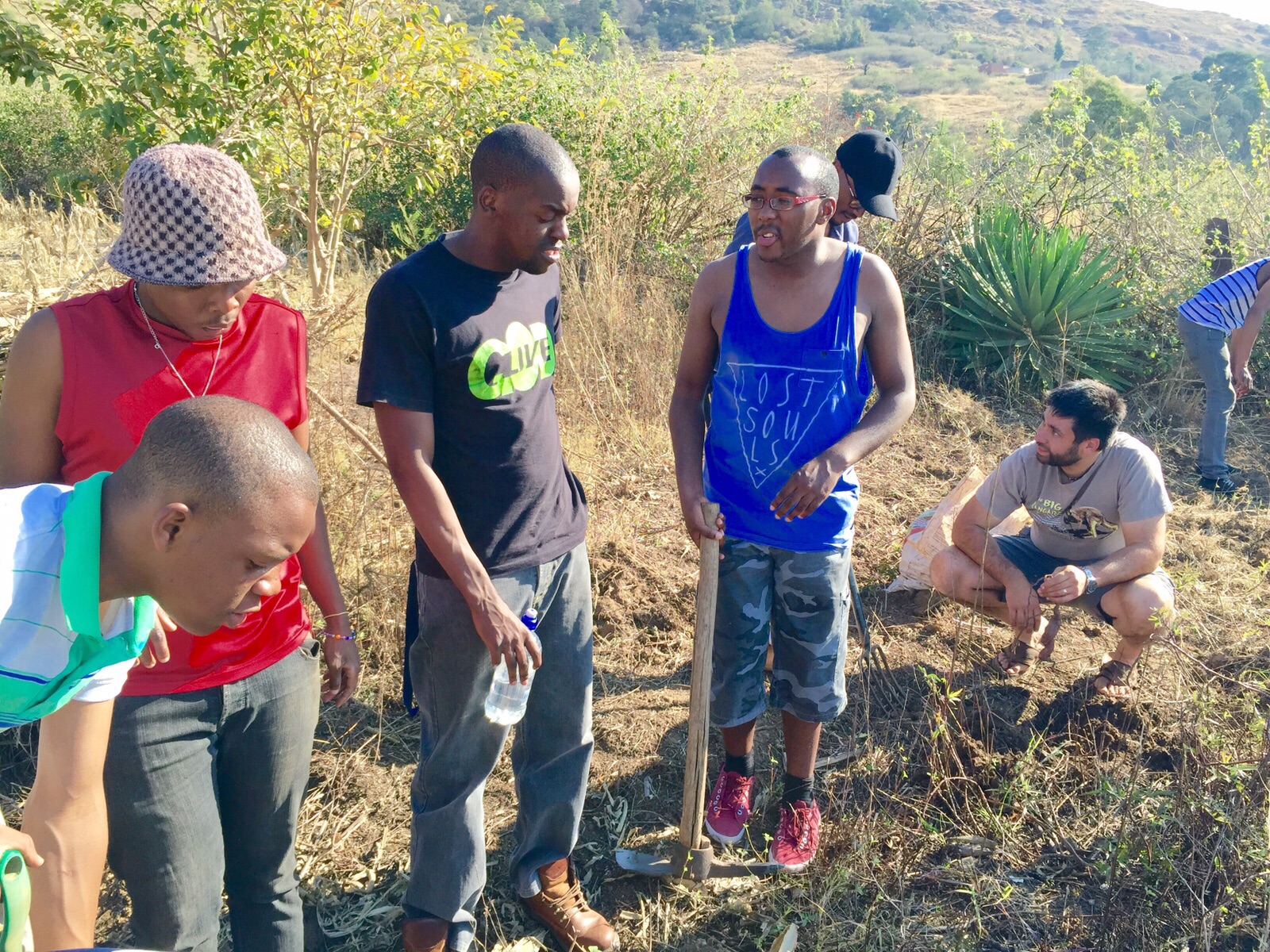
Helping Mkhulu dig sweet potatoes
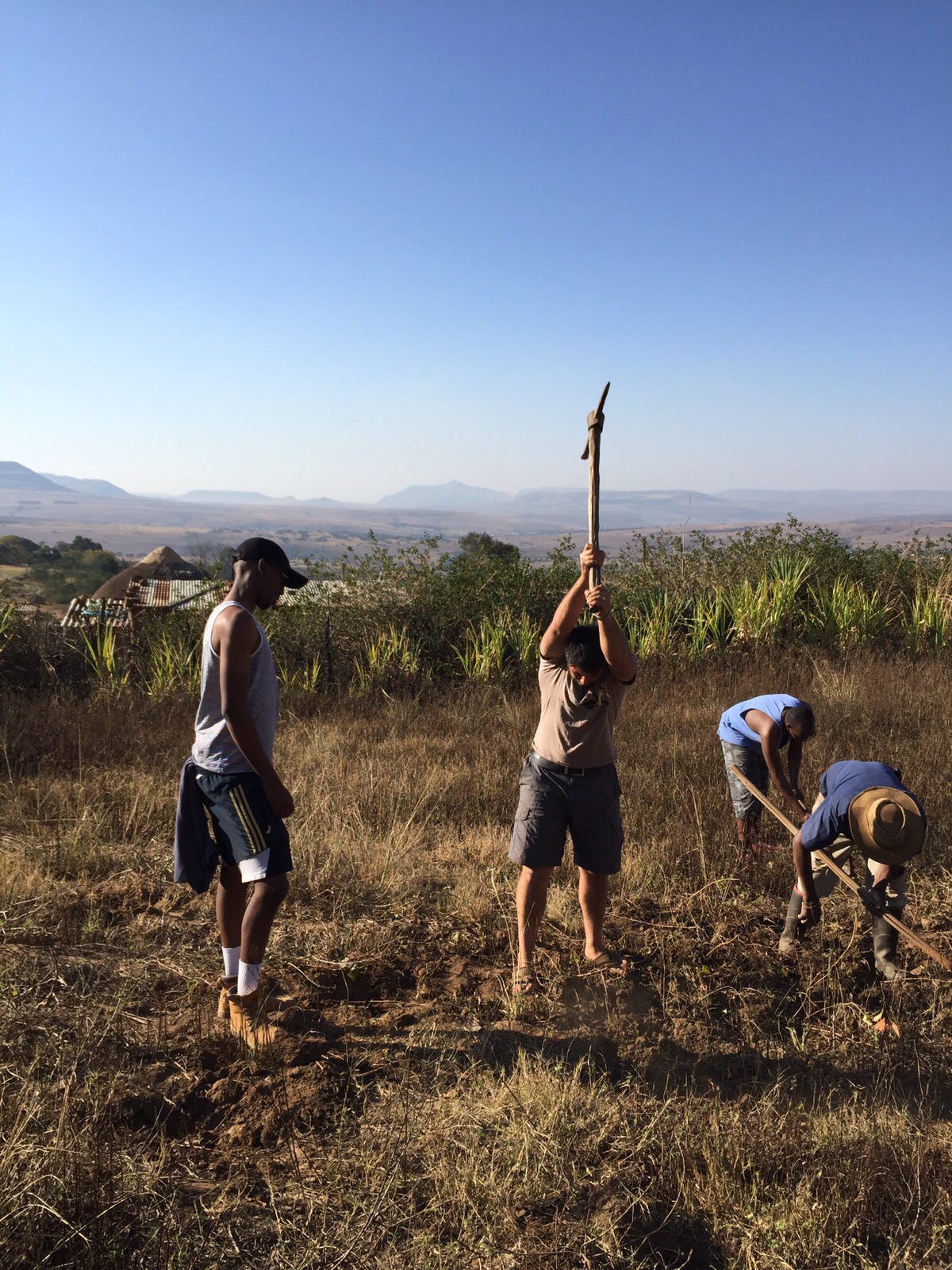
Salvador chipping in at Mkhulu’s
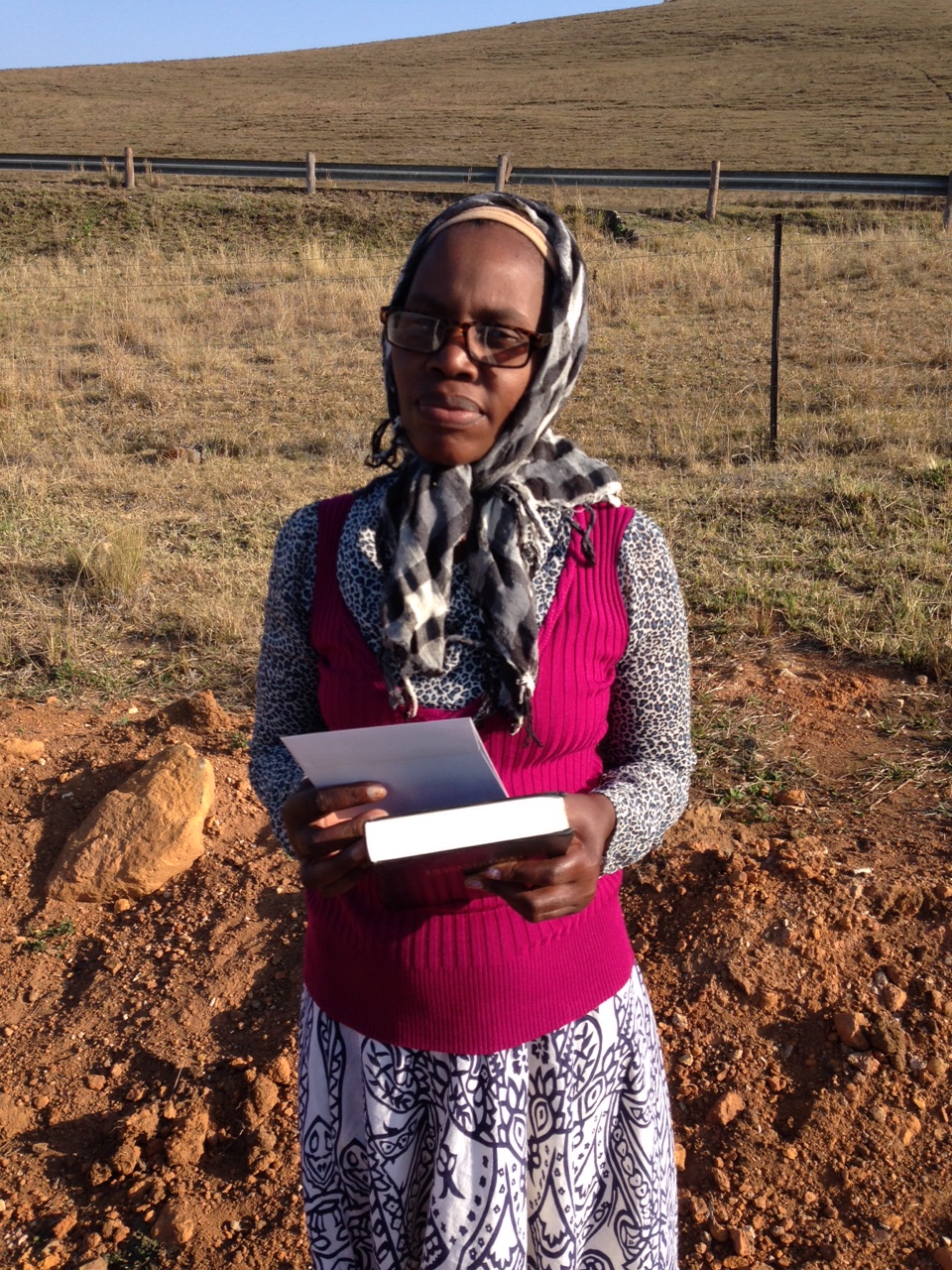
MaKhumalo with her bible
Salvador has started teaching the older kids at Kid’s club. It has been a challenge to communicate the simplest of truths to them. Unlike previous years there is more parrot fashion repetition of answer and far less comprehension so we are taking things even slower with them. Di taught care bear Creche and Salvador has started teaching Victory school once a month. We have been invited back to teach the kids at Joyland once a month again, so we will be doing that in the coming week.
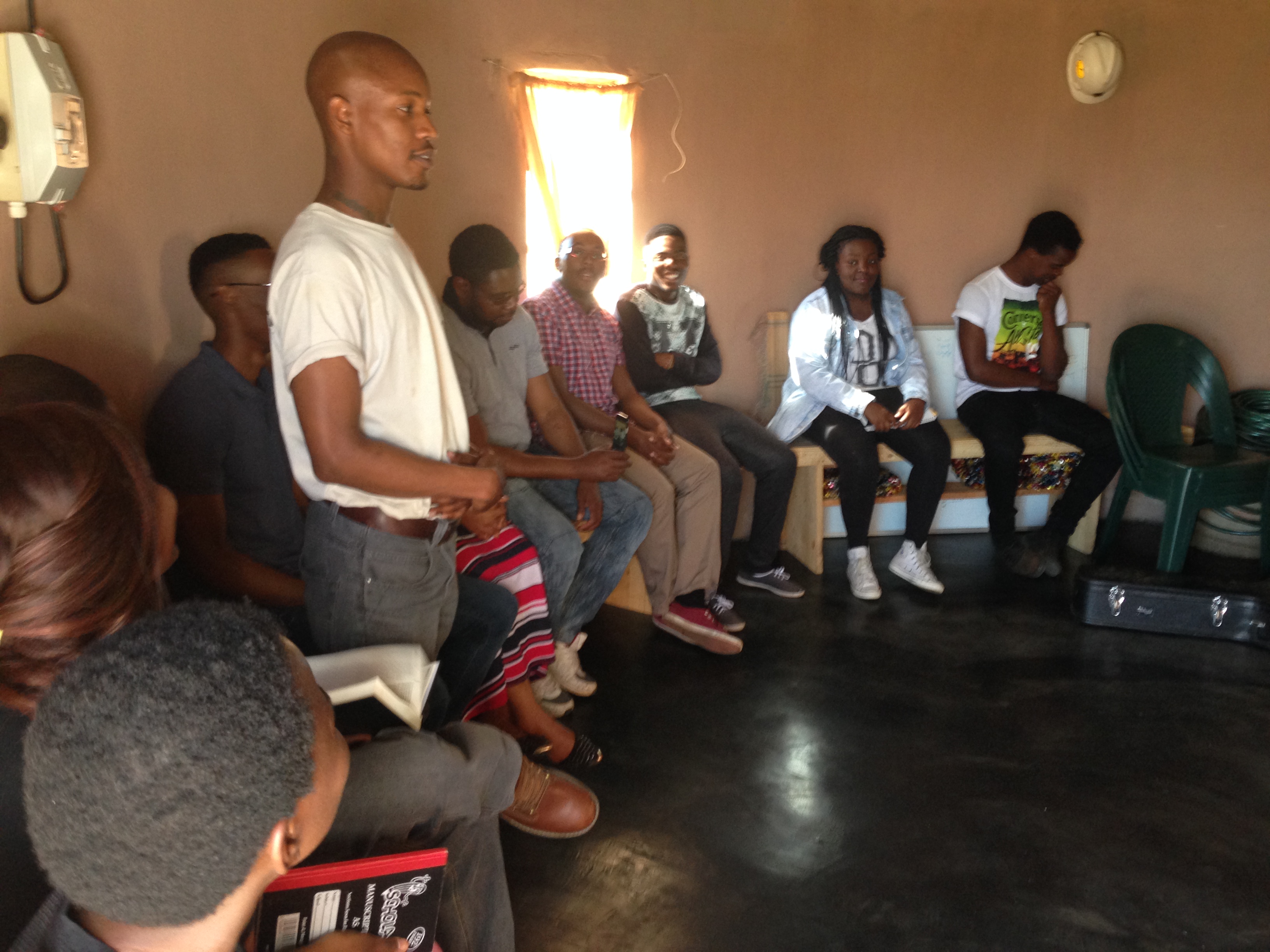
Sibusiso introduces himself at Kids Club
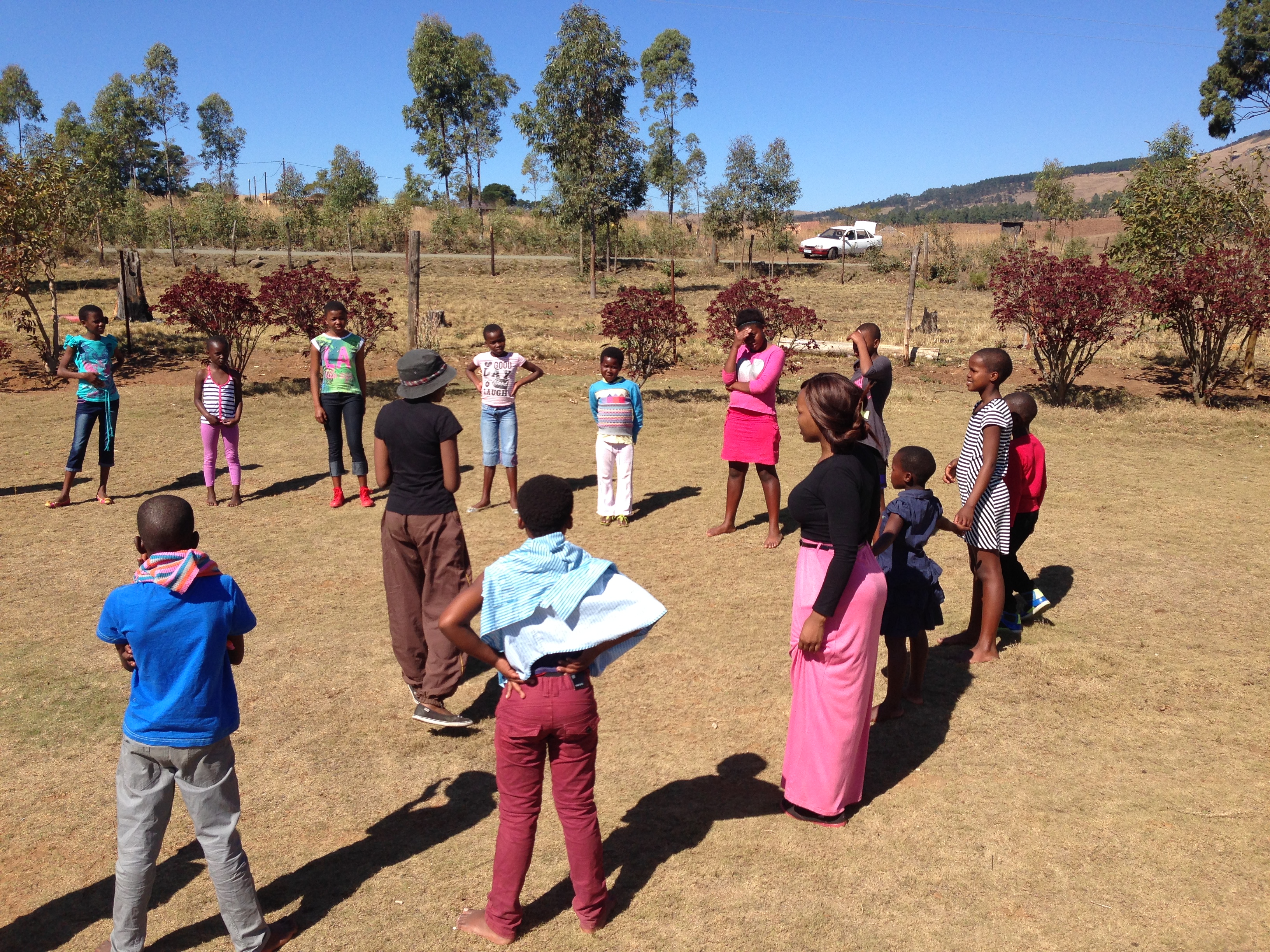
Kids Club
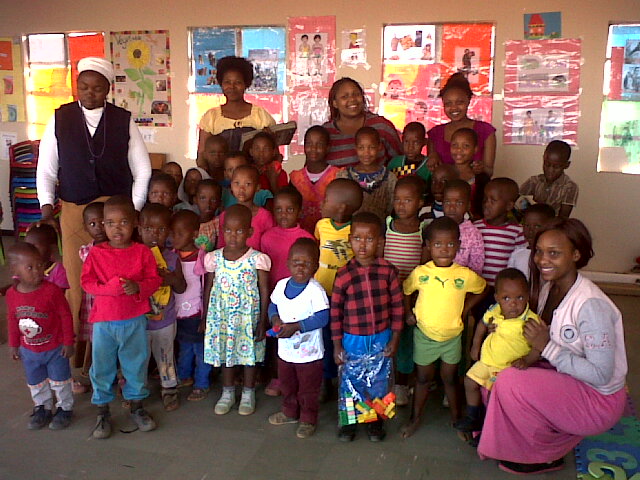
Some of the young people visit the creche
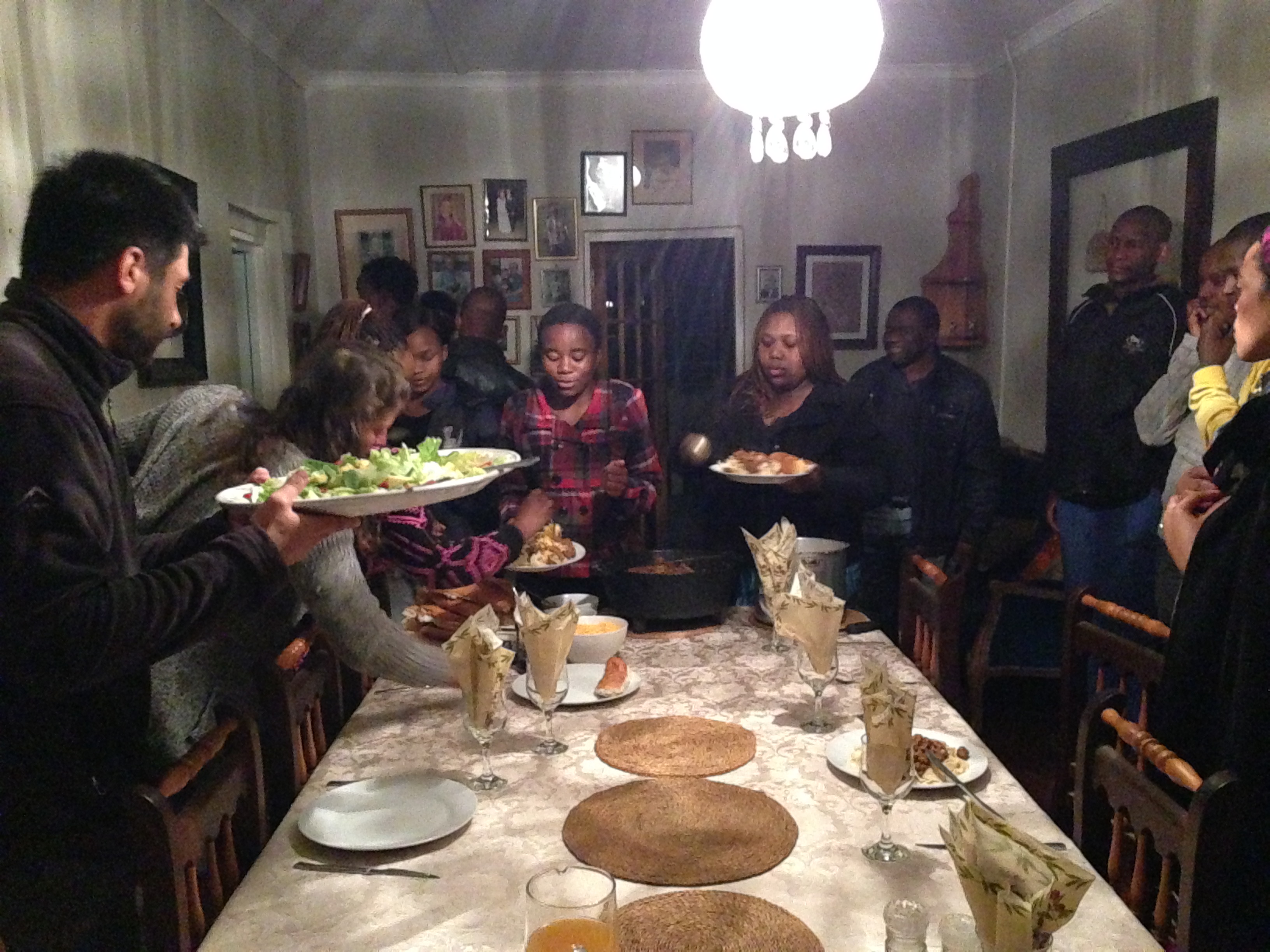
With the young people at cell group
Our toilet has been leaking for a long time. Salvador hasn’t been sure how to fix it. He has put wax seals in them numerous times but they never hold it for long until it leaks along the bowl. We are a long way from town and so getting a plumber out would entail a lot of work for to redo the whole system. However, Di had to keep soaking and bleaching the towels put down to soak up the leakage. Upon some advice Salvador opted to buy a flexi pipe and sawed off the current pipe. But alas, the flexi pipe could not fit as the toilet is too close to the wall. Therefore, he took the pipe apart, shortened it, then glued, silicon sealed and put putty in it. There is a minor leak in the pipe but this drips into a container, and the drip is not bad. This means that we need not put towels down as before and the whole thing is holding nicely.
At the end of the weekend we went to Gauteng, and stayed with Mark and Paula Hibberd in Krugersdorp, outside Johannesburg. We were supposed to visit our friends Jozua and Veronica on the way there, however, we started to have car trouble as we heard a chugging sound coming from one of the wheels. It got progressively worse by the time we reached Utrecht. We found a mechanic who said that it was the wheel bearings but there was no chance they could get the part delivered to Utrecht that week so we had to drive another 50kms till we reached Newcastle. On the way, not only the chugging sound continued but there was some screeching and the steering started playing up a little. Di kept asking Salvador, what that sound was. Salvador, concentrating on driving and keeping a consistent speed of 80kmph, told Di, “I don’t know, stop asking and keep praying!” When we got to Newcastle we asked at two places for a mechanic that was available to do the work before we found a breakdown service. When we were round the corner near the breakdown service, the steering had become very stiff but we found the breakdown service and managed to get to the gate but as soon as the front wheels got to the gate the wheel bearing collapsed and the car stopped. Salvador got out of the bakkie and walked over to a dumbfounded mechanic who had stopped and stared at our vehicle, and said, “We have arrived!” The brake calliper had snapped but they managed to find a cheap replacement at the scrap yard. The guy said we were lucky we lasted till we got there and we were lucky to have gotten a brake calliper at the scrap yard. We told him that it was not luck but the Lord! So we were able to make the journey to Krugersdorp that afternoon to get there in the evening. The point of the visit was to conduct a preliminary interview with a lady saved out of necromancy and occultism. She is one of the people Salvador will be using for his outreach project to help people get saved out of ancestral traditions. We were blessed by the interview and thank the Lord for her testimony. Jean (not her actual name) will need to have her identity disclosed as she is preparing to be a missionary in a muslim country and therefore cannot jeopardize her ministry there. While staying in Krugersdorp, our friends, Riaan and Debbie as well as their son and his friend came to visit us. Salvador went to a boys home with Mark and shared his testimony which helped to confirm some of the truths that he and a friend, Tyrone, have been teaching the boys there.

Wheel Bearing gone.

The brake caliper snapped.
At the end of the stay there Salvador started to get a flu, and now we are both recovering. The first Friday back Salvador started a series on the Holy Spirit which was a great encouragement to those who attended.
We will be visiting Ballito again in the beginning of October so that Salvador can get some help and advice in conducting his project concerning ancestral traditions. More news will be forthcoming.
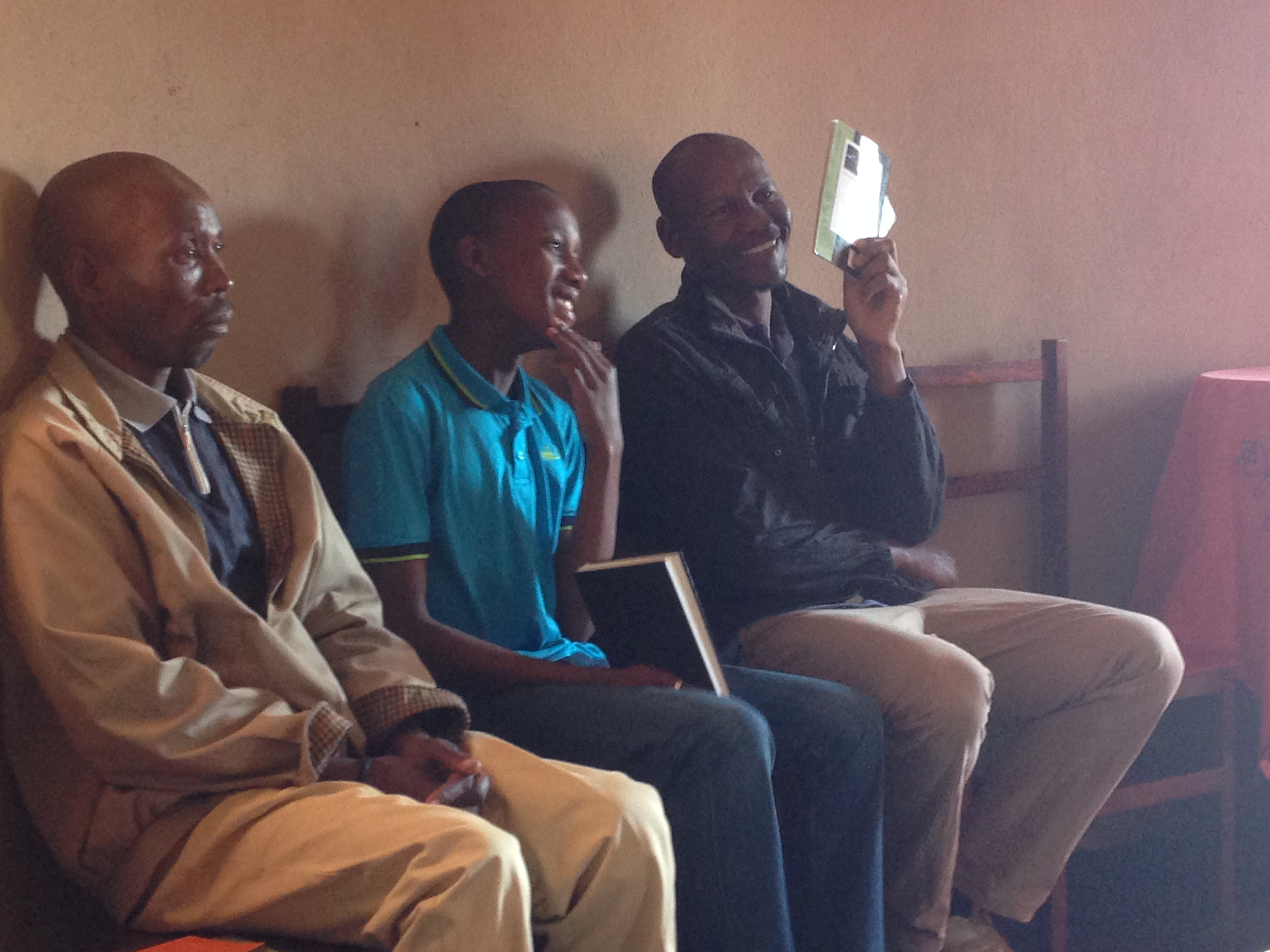
Jabulani, Menzi and Phumlani at church
Prayer requests:
-
Di’s father.
-
Please pray for Marg Godwin who has been having health issues.
-
Ministry and evangelism in the area.
-
Outreach project on Ancestral traditions.
-
Thanda Mtshali
TWELVE
THE RICHES BOTH OF THE WISDOM AND KNOWLEDGE OF GOD
ROMANS 11
In the last chapter we saw this paradox: God shows His grace to Gentiles and they accept it but God has held out His hands to the Jewish people continually but they have been obstinate and stiff necked. So God has hardened them. This paints a bleak picture of Israel’s purposes in God’s salvation plan. How will Paul address this dilemma? This chapter is the culmination of Paul’s theological teaching on the Gospel and its implications on the Jews. In the next chapter Paul moves onto the practical outworking of the Gospel. But this chapter is a humbling chapter. It sobers us up to a point where we cannot take our salvation for granted. It should challenge us in our view of Israel so that we should be deeply saddened that many of them do not believe the Gospel. It should make us marvel at God’s wisdom in His plan of salvation. Up till now we have been looking at this epistle from the point of view of the Jews; what they would have thought and the objections they would have had. We have seen how Paul has answered them by demonstrating that the Gospel does not contradict the Old Testament, but on the contrary the Old Testament testifies to the Gospel. Now in this chapter, for the first time since Romans 1, he specifically addresses the Gentiles again. What is the Gentile attitude towards the Jewish nation? Often it has been anti-Israel. The common teaching, not only in the apostate Catholic Church, but also in the writings of the early Church Fathers, as well as in Protestant churches, has been that Israel is guilty of Jesus’ blood. They place this guilt on the Jews because they say the Jews crucified Jesus. So, therefore, God has done away with Israel and instituted the Church. In other words the Church has replaced Israel. This is a half truth. It is partly true because Israel, on the whole did reject their Messiah and bore much responsibility for His death, but it is also lie because Israel never actually crucified anyone. Rome crucified Jesus. Just because Pilate said I am innocent of this man’s blood and the people said, ‘His blood be on us and on our children’, does not make him innocent of the blood. Yes, the Jews rejected Jesus but so did the Gentiles. The fact that Jesus told Pilate that the Jewish leaders had the greater guilt implies that Pilate also bore some of the guilt.
The difference between Jew and Gentile is that Israel is God’s covenant people, whereas we Gentiles were aliens to the covenants. Because of that fact, Israel had greater culpability. But it was Jew and Gentile together that crucified Messiah. Jews did not crucify, rather they were supposed to stone those found worthy of death. Jesus could not have been stoned for at least two reasons.
-
Firstly, stoning was a symbol of the condemnation of the Law (the Law being written on tablets of stone). Although Jesus took the curse of the Law, He had not broken the Law. He did not die as a law breaker but as a propitiatory sacrifice. The reason He had to be crucified was because Jesus had to become a curse for us so that we would be free from the curse. Cursed is anyone who hangs on a tree.
-
But secondly, it had to be by crucifixion because it is a picture of Jesus dying for the sins of the whole world. Jesus died at the hands of Rome, the leaders of the Gentiles and he was handed over by the leaders of the Jews. Whether Jew or Gentile it was still my sins that sent Jesus to the cross.
We will look at this chapter in three sections. Firstly from verses 1 – 10 we will look at the election and the hardening of Israel. Secondly from verses 11 – 24 we will see the reason for Israel’s hardening, and finally from verses 25 – 36 we will look at the fulfillment of God’s plan of salvation.
VERSES 1 – 10:
THE ELECTION AND THE HARDENING OF ISRAEL
Paul uses a diatribe, an imaginary voice of doubt and objection, to deal with potentially opposing arguments. At the end of Romans 9 and in Romans 10 Paul asserted that God has extended His hand out to the Gentiles and they have accepted the Gospel but God has striven with Israel and they have been stubborn and obstinate. If what Paul asserted is true then does that mean that God has finished with His purposes for Israel? This is the seemingly superficial conclusion that one would make from reading Romans 9 and 10. Some people make this claim, even though we saw that Paul has already said that God would save a remnant, even though Paul has said that there is no distinction between Jew and Greek, and even though God is abounding in riches for all who call upon Him. But let us, as Paul does, take this superficial misunderstanding of what Paul has just taught. If Israel, on masse, has rejected the Gospel then surely is it not symptomatic that God has rejected and cast them away? They killed Jesus, they rejected the Gospel. Salvation has come to the Gentiles and therefore we can say that the Church has replaced Israel as God’s covenant people. What is Paul’s opinion to this question? May it never be! If God has finished with the Jews, then we would have no Apostle Paul because Apostle Paul was Jewish. Some people think that Paul was called Saul before his conversion and then became Paul after his conversion. Thus, his Jewish identity was rejected. But after Saul was converted he was still called Saul. In fact the Holy Spirit called him Saul when He called him to ministry in Acts 13:2. It was not until Paul started his missionary journeys in Acts13:9 that Luke starts to refer to him with the name Paul. This says more of Paul’s identification with the Gentiles for the sake of the Gospel than it does of Paul’s conversion. Paul was Jewish through and through, but never gloried in it before God. The fact that Paul was saved was a living testimony to the fact that God had not finished with the Jewish people. Despite their unfaithfulness to God as a nation, God was still faithful to them.
In the second verse, Paul’s wording is very clever because He says that God has not rejected ‘His people whom He foreknew’. This refers back to Romans 8:29. God has planned out the path to glory before hand for all those people, whom He was in relationship with, before the creation of the world. Not all of physical Israel is included in this. But neither can we say that in 11:2 Paul is referring to all believers Jew and Gentile, because that would go against the argument that he is making. Paul is arguing that God is still faithful to the nation of Israel and His promises still stand for Israel. But within the nation of Israel the promises of God only stand for those of Israel that are foreknown. God has not rejected those Jews, but He has rejected the rest of Israel. As an example of this distinction, between these two sets of Jews, Paul gives us the example of Elijah’s experience in 1 Kings 19. Elijah ended three and a half years of drought through calling down fire from Heaven and thereby he demonstrated that Jehovah is the true God. The prophets of Ba’al were false. The false prophets were slaughtered and to all intents and purposes it looked like there was a revival in Israel. The sign was so powerful that it would be hard to imagine anyone who would not recognize the Lord as the only true God. But what was the result of this? Jezebel sent a messenger to Elijah to say that she was going to kill him the day after. Elijah was despondent. The miraculous sign that was to bring revival only intensified the persecution. So Elijah gave up thinking that there was any hope left. God had to show him that God was not necessarily in the wind and the lightning but in the still small voice. Before God revealed this, Elijah had prayed that God may take his life. His argument was that he was the only one that was left and now his life was forfeit. God’s answer to Elijah’s request was ‘I have kept for Myself 7,000 who have not bowed the knee to Ba’al.’ In other words, ‘Elijah, it might look hopeless, it might seem that Israel are finished with, that salvation is forever departed from My people, but look… there are still some that I have kept who listen to my Word.’
GOD PRESERVES A REMNANT
The nation does not deserve it. The nation turned away from the Lord but God does not do away with the whole nation. Rather He shows grace to a number who do not bow their knee to a foreign God. It is not because of their goodness or their works but because of God’s grace. In the dispersion of the Jews, the judgment brought about by Nebuchadnezzar was not only against the idolaters from among the Jews. It was not only the faithless of Judah that went into captivity but it was also Daniel, Shadrach, Meshach and Abednego. But from this present judgment of hardening, that Paul writes about, God keeps a remnant. When we read the word ‘choice’ or ‘election’ in verse 7 we must remember that this ‘election’ is defined by Romans 9:8. The ‘election’ refers to those who are of the promise and not those of the flesh. Throughout the scripture God is always separating. In the creation God was continually separating. He separated light from darkness, water from water, land from ocean and day from night. Throughout the bible we see God separating Abraham from his country and then from his family and then lastly from Lot. Then God separates Ishmael and Isaac, then Esau from Jacob, then Judah from his brothers. Then Solomon’s kingdom was split into two and then finally we got to the one who was separated from everyone else, Yeshua Hamashiach (Jesus Christ). Think about those rejected for a moment. The people that God has striven with, whom He gave His commandments to, whom He promised His new covenant to, for whom Jesus wept over, God has given a spirit of sleep.
8 just as it is written, “GOD GAVE THEM A SPIRIT OF STUPOR, EYES TO SEE NOT AND EARS TO HEAR NOT, DOWN TO THIS VERY DAY.”
In verse 8 Paul quotes from 2 places in scripture as if he is quoting from one place in scripture. In Deuteronomy 29:4 Moses is speaking about a different covenant to the one made at Sinai. This is one that Bible scholars call the Palestinian covenant. As to what this covenant consisted of there is debate. Some people believe that this is a reference to the Mosaic covenant, though the verse expressly states that this covenant was besides the one at Sinai. Some say that it was a covenant that gave Israel a title to the land, though this was already promised before hand by the LORD. John MacArthur sees it as anticipatory for the new covenant in Jeremiah. It is clear that it was an addition to the Mosaic covenant given just before entering the land. But what is intriguing is that it pointed out the lack that Israel had. God had not given them eyes to see and ears to hear. Thus Jesus remedies this when he says ‘let him who has ears to hear, hear’. This problem was not remedied by this Palestinian covenant because the other scripture that Paul takes his quote from is Isaiah 29:10. In this passage we are dealing with Israel at their most self-sufficient. Their religion was one that was only empty ritual and superficial but had no impact on their personal and national life. They would not trust God as the Living God and thought He could not intervene in their lives. But in the first verse of the chapter God calls them Ariel. Ariel means Lion of God. The lion was obviously a reference to the house of Judah, which was prophesied to be a lion’s whelp. But what God was saying is, ‘No lion, you are not autonomous. You cannot hide your plans from me, you cannot be your own boss, because you are Ariel, you are the lion of God and as such He can do with you what He wants and He will bring heavy judgments against you. You act and pretend that you are so religious but it is all a show.’
GOD HARDENS ISRAEL
So, in verse 10, God, as part of that judgment, causes them to be in a position where they cannot perceive the Word of the Lord. It will become a closed book to them. What Paul is doing in these two verses is showing a common theme between verse 8 and verse 9. God has given a spirit of stupor because Israel had rejected God as the true ruler over them. They did this because, as Moses had already said, God had not given them eyes to see or ears to hear. But in verse 9 Paul quotes David who is praying God’s judgment on those who were persecuting him in Psalm 68:23. This psalm is a messianic Psalm and speaks of the crucifixion of Christ. So put these quotes together and what do you have? You have in the first instance a rejection of God by the Jews and in the second a rejection of the Messiah by the Jews. Therefore God has hardened them. Think about this. Because the Jews acted religious yet rejected God as being in command of their lives, God hardened them even though they had such a privileged position before Him. But how many times have we treated God in the same way? We have treated Him as someone who will be happy with our Sundays and Wednesday nights but we have not trusted in Him in our life decisions, nor even consulted Him. We have treated Him as if He cannot see what is going on and does not know. But we are still in Grace. Such a revelation should hit us and humble us, should cause us to walk in fear of the Lord.
VERSES 11 – 24:
THE REASON FOR ISRAEL’S HARDENING
What God did with the nation of Israel is drastic. Yes, Jews that are born again are saved, but the rest who were hardened must have gone so far that it seems that they are beyond recovery. When Paul says that Israel has ‘stumbled’ he means that Israel has sinned. Surely Israel have not sinned to such a point that they are beyond recovery have they? Therefore, though God has saved individual Jews as part a remnant, He must have finished with Israel as a nation, right? Wrong! Paul says that they are not beyond recovery. Paul gives two major reasons for Israel’s hardening. We have already seen the cause, which is Israel’s rejection of their God and Messiah. However Paul shows us that God has two purposes in it.
-
Firstly, in verse 11, Paul says that Israel’s hardening has brought salvation to us Gentiles in order to make Israel jealous. We looked at this in the last chapter. But what we did not stress is the impact that Israel’s hardening had for us who are Gentiles. In our case the children did not only drop crumbs on the floor for us to lick up but they dropped the whole loaf. Their transgression is riches for the world. We did not belong, we were aliens and we were classed as dogs. But because of Israel’s sin, obviously not referring to the remnant that Paul has mentioned, we are now classed as children. This is our privilege. But Paul saw this as something bigger than Gentiles being saved. He saw this as part of the fulfillment of God’s promises to the nation of Israel.
-
Thus, there is God’s second purpose. God wants to bring Israel to a full hearted repentance to their God and Messiah. It is only when you lose something dear to you, then you realize how precious it actually is. Israel was nominal and religious but she lacked reality. God would provoke the Jews to jealousy and make them realize how they made God feel with their idolatries. He would do this so that he may bring them back with a full heart.
RICHES FOR THE WORLD
This has a benefit for us Gentiles. Paul’s argument in verse 12 says, if Israel’s sin and failure brings riches to the world, how much more riches to the world will their fulfillment bring? One primary way that Jews bring riches to Gentiles in their salvation is when a knowledgeable Jew gets saved, he brings out riches from the word. When we look at the book of Ruth from the point of view of the history of Israel and the church, we see a demonstration of this precious truth. Ruth attaches herself to Naomi at the beginning and through Naomi’s instruction she meets the kinsman redeemer, Boaz. Then for a night she is separated from Naomi at the threshing floor with Boaz, speaking of a gentile church suffering with Christ, but then Boaz sends Ruth back to Naomi with 6 loaves of bread. This speaks of the gentiles taking the gospel back to the Jews and Naomi upon receiving the six loaves of bread tells Ruth what they mean. We Gentiles have taken the Gospel back to the Jewish people and after seeing many saved we are receiving riches of meaning of the word. These riches of the word do not contradict the Gospel message we have received but in fullness that we never before realized existed. People like Arnold Fruchtenbaum enrich us with insight of the word.
DO NOT BE ARROGANT TOWARDS THE JEWS
What Paul wants to get us away from is an arrogance that just because Israel has been hardened does not mean that He has finished with them. Rather He plans to bring them back from the dead as it were, like their Lord. Look at verse 16.
16 If the first piece of dough is holy, the lump is also; and if the root is holy, the branches are too.
If Abraham, Isaac and Jacob have been set apart, so have all their descendants too. In KwaZulu Natal a number of Zulus would ask ‘why did God pick the Jews?’ They were inferring another question; ‘why did He not pick the Zulus?’ But this is the question that everybody asks. The Gentiles look at the privileges Israel had in scripture and their being called the apple of God’s eye and so on. So they ask, ‘Why them Lord, why did you have to pick them?’ The Jews look at the Babylonian captivity and the Holocaust, the progroms and the inquisition and they ask, ‘Why us Lord, why did you have to pick us?’ Paul demonstrates this truth by looking at the example of the olive tree. Note what he says about the tree. There is one olive tree and many branches. There are natural branches and there are wild branches grafted in. Some people see this as referring to the nation of Israel and the Gentiles as a collective. I believe it is dealing with individual Jews and individual Gentiles for the following reasons.
-
When it refers to the natural branches it refers to them as plural branches and according to verse 17, not all of them were cut off. That is some were cut off and a remnant was left.
-
Secondly, when we Gentiles were grafted in, we were grafted in among the natural branches, that is born again Jews. Verse 17, again, speaks of a number of Jews being on the tree. Therefore the branches represent individual Jews and Gentiles.
-
Also God threatens that the Gentile might be cut off if there is unbelief, which cannot be true of the body of Gentile believers, but only individual believers.
-
And lastly in verse 19 Paul gives the argument of a Gentile who says that the branches were cut off so that ‘I’ may be grafted in’. He does not say that ‘we’ may be grafted in.
In other words we are individual branches. Yes there has been a hardening of Israel but remember this, the covenant you are in is Jewish at its core. The cutting off of Jews was for a reason and not merely because God desired it to be that way. The reason Paul gave for their rejection is their unbelief. Our inclusion is based on our faith and the continuance of our faith.
Paul explicitly teaches us that we must not think that we are beyond being cut off. To teach, at this point in the scriptures, it is impossible for someone to forfeit their salvation is to undermine the force of Paul’s argument. Paul says that we stand by our faith, the just shall live by faith, we are saved by faith and we are being saved by faith. He tells us not to be conceited but to fear. If God did not spare the natural branches, neither will He spare us! If we do not continue in His kindness, we also will be cut off. Is this an idle threat that has no reality behind it? Does God really mean what He says? We must have a two fold view of our relationship to Jews. In Christ we are equal but outside of Christ we are not equal. Outside of Christ we do not belong and are classed as dogs instead of children. We must always remember that in the natural we have no place with the children of Israel. We were second class citizens. If God can graft us in, though being alien to Israel, surely He can graft the believing Jews in again.
VERSES 25 – 36:
THE FULFILLMENT OF GOD’S PLAN OF SALVATION
There is a remnant of Israel that has been saved and the rest were hardened. What a catastrophe! It seems like a hopeless situation but it is not. Though God is angry with His people, His hardening of them is not final. He has not finished with them. But as Paul says in verse 25, a partial hardening has happened to Israel. Yet it will not last forever. There is more that God has planned for Israel than this predicament that they are in. He means to fulfill the Old Testament prophesies about them. Look at Acts 1: 6 – 8.
“6 So when they had come together, they were asking Him, saying, “Lord, is it at this time You are restoring the kingdom to Israel?” 7 He said to them, “It is not for you to know times or epochs which the Father has fixed by His own authority; 8 but you will receive power when the Holy Spirit has come upon you; and you shall be My witnesses both in Jerusalem, and in all Judea and Samaria, and even to the remotest part of the earth.”
Some people read this scripture and say that the Apostles were arrogant. They claim that the Apostles were still caught up in their pro-Israel mindset and therefore Jesus had to rebuke them. They claim that the Apostles had not yet understood that it was not about Israel anymore. Rather they had to take the Gospel to the ends of the World; that being the final phase of God’s salvation plan. They believe that God has done away with any purpose for Israel as a nation. But look at what Jesus says to them. He does not say that they were wrong to ask about the restoring of the kingdom to Israel. He simply tells them that they should not concern themselves with the timing of its fulfillment. In other words Jesus was saying, ‘You are right, the kingdom will be restored to Israel BUT it is not for you to know when. Your concern is to be My witnesses.’ We are presented with a certain form of Christianity and we think that is the sum and total of what there is to be known and experienced. Much in scripture has been fulfilled but there are still other things that have not happened yet. What this should do is create a hunger in us to see these things come to pass. The salvation of the Gentiles is not final in God’s plan. After the fullness of the Gentiles, God restores the fortunes of Israel.
THE FUTURE RESTORATION OF ISRAEL
Look at verse 26. 26 and so all Israel will be saved; just as it is written, “THE DELIVERER WILL COME FROM ZION, HE WILL REMOVE UNGODLINESS FROM JACOB.”
After the fullness of the Gentiles, then all Israel will be saved. This cannot be a reference to all Jews of all times because Paul is adamant that many Jews of his day were not saved and not among the election. But rather we are talking about a moment in the future history of the planet. There will be a time when the Jews who are still alive, at the end of the Tribulation period, will be saved as a nation. Remember what Jesus said to the Jews after Palm Sunday, when they had already called out to Jesus, ‘Blessed is He who comes in the name of the Lord’. In Matthew 23: 39 He tells them that they would not see Him again until the next time they call out ‘Blessed is He who comes in the name of the Lord.’ He will fulfill the promise made in Jeremiah 31: 31ff that states the new covenant is made with the house of Israel and the house of Judah. This is a covenant where all the Jews will know God, from the least to the greatest of them, for God will remove their iniquity and sin. Paul quotes from Isaiah 59 and Jeremiah 31. I find that interesting because Isaiah 59 is the portion of scripture that Paul quoted from to say that there is none righteous. In other words Paul, in great depth and through 11 chapters, has just expounded what Isaiah has said in one chapter. That is, Israel has transgressed the law of God, they have become unclean but Messiah comes with a greater covenant and removes their ungodliness. This is how Paul understood the Old Testament scriptures.
We see God’s treatment of Israel and we conclude the wrong thing, namely that God has finished with them. But we are ignorant of the fact that God has two attitudes to the Israel that rebel against Him. Verse 28 shows us that it depends on what way you look at it. From the standpoint of the Gospel they are enemies for our sake. That is, at the time of Paul’s writing they persecuted God’s house. They were the same as Paul was before he got saved when he wanted to silence the voice of God’s messengers. They were enemies to the Gospel. Therefore they were put under judgment. God has endured with much patience the vessels of wrath prepared for destruction. But there is another view point that God has concerning Israel and that is that He deeply loves them. It is from the view point of God’s election. Because God made a covenant with Abraham and God put upon Himself alone the obligation to uphold it, therefore, He cannot finish with Israel as a nation. The election is and always will be Israel. But God has separated a people for Himself and they are an elect nation. But not all Jews in Israel are of faith and have had a spiritual birth. Thus, they are cut off from their own election. But we Gentiles who believe are grafted in amongst the elect nation and by virtue of that grafting in, we are, therefore, elect. God, who is eternal is in relationship to us before the creation of the world, therefore, knew us before the creation of the world. And based on this foreknowing, He has predestined us. The election can never be taken away from Israel, why? Because verse 29 says clearly that the gifts and calling of God are irrevocable. Replacement theology is a lie and a perversion of scripture. God cannot do away with Israel as a nation because if He does then the scripture is a lie.
GOD’S INTENTION TO SHOW MERCY TO ALL
So finally, we see God’s ultimate purpose in conclusion to this chapter. We used to be disobedient to the Word, just as the western nations were absolutely Pagan before the introduction of the Gospel, yet we obtained mercy. So Israel, being God’s election, have been disobedient so that God may also show mercy to them. If God showed mercy to those who were not His covenant people in their disobedience, then surely the disobedience of God’s own people will not deter Him from ultimately showing mercy to them. What is the point of all this?
Verse 32 For God has shut up all in disobedience so that He may show mercy to all.
Why does God harden Israel? So that He may show mercy to them. What was an experience of God’s judgment on humanity is actually the means of salvation to humanity. It does not make sense. If you want to save a nation, surely hardening them to the Gospel is not the way to go about it. It does not make sense does it? Yet it does to God. He sees it and He understands exactly what to do in every situation. He works all things together for a greater purpose than the salvation of Gentiles or the salvation of Israel and that purpose is this, the salvation of all nations, Jew AND Gentile.
Read verse 33 – 36. 33 Oh, the depth of the riches both of the wisdom and knowledge of God! How unsearchable are His judgments and unfathomable his ways! 34 For WHO HAS KNOWN THE MIND OF THE LORD, OR WHO BECAME HIS COUNSELOR? 35 Or WHO HAS FIRST GIVEN TO HIM THAT IT MIGHT BE PAID BACK TO HIM AGAIN? 36 For from Him and through Him and to Him are all things. To Him be the glory forever. Amen.”
Think about all the ground we have covered in these last 11 chapters of this epistle. Remember all the wealth of insight that Paul has demonstrated concerning God’s salvation plan.
-
Paul knows all about the gospel.
-
He knows all about the condemnation of mankind.
-
He knows all about the Law and about grace.
-
He knows all about the typology of the two covenants in the Old Testament scriptures.
-
He knows all about the promises of God to Israel and how they are to be fulfilled.
-
He knows all about the use of the Gentiles’ salvation to provoke Israel to jealousy.
-
He knows all about the restoration of Israel in the future.
-
He knows all this and much, much more.
Peter said of Paul’s writings that they are difficult and hard to understand. Paul’s mind was incredible and his knowledge exhaustive and yet what does Paul say in verse 33. He says in effect, ‘I know all of this but I cannot figure it all out. I know all this but my knowledge is nothing. I cannot search it out. I cannot fathom God’s ways. I do not understand why God does stuff the way He does.’ God alone is wise and verse 36 shows that He is the focus of everything. He is the originator of all things, He is the means of all things and He is the purpose of all things. Therefore, He alone is to be praised and if there is only one thing that we can get from this chapter, I hope it will be an awe and appreciation for God’s tremendous wisdom of His plan of salvation for the world.
 KwaZulu Mission