
SALVADOR & DIANNE’S MSINDISI MONTHLY
NUMBER: 98 Nov 2012
PO BOX 1481
VRYHEID 3100
KWAZULU NATAL
SOUTH AFRICA
+27 (0) 728311008
+27 (0) 815836288
Email: msindisi@gmail.com ,
salv.di@gmail.com
KwaZulu Mission Website: http://www.kwazulumission.com
Personal Website: http://msindisi.googlepages.com
Dear Friends and family,
Firstly we apologise for missing last months newsletter.
We can start this months with some wonderful news. We now have our old bakkie which was in the accident back !!!!! After months of using Genrod’s bakkie we were able to return it. To Genrod we say a HUGE HUGE THANK YOU, without the use of your bakkie we would have been relying on public transport. You enabled us to continue the work as much as possible. Many many thanks !!!!!
The roads we travel are very hard on a bakkie, especially a town run about bakkie, so we restricted the use of Genrod’s bakkie on the dirt roads and used only the tar. This meant longer trips and walking to areas from the main road. The Alpha believers would walk down on a Sunday and Phumlani and Sal would walk up to them on the Tues for discipling. Reading classes with Tholakele were put on hold as was clinic runs and evangelism. However now we are almost able to resume our normal routine.
Sal and Alan MacKenzie from Port Elizabeth have been in constant communication over the last few months. Bayshore fellowship have been instrumental in helping with the bakkie situation. Due to many believers love and support the Audi which Sal hit has been repaired. Some brothers in the Lord in Port Elizabeth have offered to insure the bakkie in Phumlani’s name so we are just trying to get the Bakkie registered in his name. While long term, God willing, a newer bakkie will be purchased with 4 x4 and air conditioning which will help with the muddy conditions and summer heat. This will also mean that Phumlani having the other Bakkie will be able to start his business up again if he wants to as he was not able to do any business without the use of a vehicle.
Sal made use of the extra time which became available by researching and completing his assignment. Also Phumlani and himself have been writing and getting material to put together a discipling book in Zulu. This has involved translation and much correction work. Much of the work has been done my hand but making the most of power when the opportunity comes when in town for printing and typing.
Over the school holiday break we had the pleasure of having a braai for Celani and the family while Khethiwe was home. This was a wonderful day, there was lots of laughter and games. Messages were recorded for Caleb and Sophie with much joy and fond memories.
Louwsburg bible study has continued thanks to the grace of God. Many have been going through personal struggles and these impacted the study for a time. However these times help us to grow and be stretched in our personal walk with the Lord. A couple of months back there was also much rejoicing when Lorens, Jonny and Kim’s youngest boy, gave his life to the Lord with tears of repentance. What a privilege for parents to witness the salvation of their child. Please pray for Lorens as plans for his baptism are being arranged to take place in the Bethany baptist church, Lorens has asked that Sal baptise him like he baptised his dad.
Sadly over the month, we saw the death of the man that Di would take to the clinic on a Tuesday. He continued to battle with his health having TB. Sal was able to share with him the gospel message, about true repentance and being born again but sadly he thought following ancestors and his other so called godly actions where acceptable to God. However God is clear in His word, that not all those who say ‘Lord,Lord’ , will enter the kingdom of heaven, but the one who does the will of the Father who is in heaven. The traditions of men can hinder many from desiring and hearing the truth of Gods word. Many take on a form of godliness but have never acknowledged Jesus’ completed work of dying on the cross to save us by grace and faith alone in him. Sin has never been acknowledged and true repentance has never taken place. Therefore due to our limited understanding and NOT the Lords we come to our own conclusion without seeking what the word of God says, believing we are ok and God will accept us into Heaven because we have been good people. But John 3 v3 says “unless a man be born again he cannot see the kingdom of God”.
Oct has been a very wet month, which is unusual, very rarely do we see day after day of wet, overcast weather. Di saw her garden go under in water and Phumulani and Thabi had water enter their home. Ditches have been dug now to take away the excess water however the mud will always be a problem. The rain was badly needed as several of the dams in the Vryheid area were dangerously low. We however feel for the people who are living in mud huts. Often you see kids heading off to school without coats or black rubbish bags draped over them for shelter. One poor lady’s hut had collapsed, after much heavy rain and herself with her 3 children under 5 had to resort to living in a small tent. Our hearts also go out to all those in America who are suffering after the storm of Sandy. We are praying for you.
Oct saw Di’s dad turning 80. Sadly due to the still awaiting visa from home affairs we were unable to share in the celebration in NZ.
” Congratulations Dad!!! Happy birthday for the 30th of October. It was great being able to talk over the phone. Our love and thoughts are with you and all the family at this special time. ”
Each week we check up on the visa situation but for some reason with Di’s visa there seems to be an on going delay. Please continue to pray about this. Sal had his visa application approved for another 3 years.
On the health front , Thabi is improving, she has her difficult days but taking her medicine has seen her strength return. Gogo ( Phumulani’s mother ) goes into hospital in November 18 for her treatment for cancer. Please keep her in prayer. Di’s shoulder remains the same, this cooler weather does give it grief.
We continue with the routine of kids club, disciplining, cell meetings, care bear, etc and now with the truck back we will be distributing clothes and jumpers which have been given for the community.
This month Sal was asked to preach at the Baptist church in Vryheid at the Sunday evening service. He shared on John 21 and some people said they were challenged by it.
Well once again we apologize for last months lapse. We thank you for your faithfulness to the Lord and His work. Your prayers and support are truly appreciated. Until next month, God willing, may the Shalom of God be with you all.
________________________________________________________
For those who are interested there is a website with three audio messages uploaded that concerning the building of the Church and having a Zeal for God’s house. These messages were recorded in Port Elisabeth, South Africa 2011. http://www.sermon.net/msindisi . We have corrected the message entitled “Haggai” to contain the right audio file. More teachings will be posted in the future.
ELIJAH AND ELISHA
FULFILLING THE COMMISSION 1
PART 19
2 Kings 8: 7 – 15
Last time we looked at Elisha we saw how the property of the Shunammite was restored to her after she had been out of the land for seven years. We saw how this was a good picture of the restoration of the land and the Kingdom to Israel after they have been through the 7 years tribulation. But we also saw that God is not only involved in the big picture but also in the little things and in our individual lives. Despite our mistakes and failings God may intervene or turn our faults around for His glory. But in this session we will see the first part of Elisha completing the commission that was given to Elijah.
1 Kings 19: 15 – 18.
There would be three agents of judgment under God’s anointing and as we will see they will bring an end to the house of Ahab. There will be a remnant left, of 7,000 who have not bowed their knee to Ba’al and because of this we may see why we have been looking at the narratives of Elisha concerning how they typify and illustrate truths about Israel’s hardening, judgment and restoration. The reason how we can say that the account of 7,000 typify Israel’s hardening, judgment and restoration is found in Romans 11: 1 – 3. Paul also saw this meaning in the text also. The judgment brought about by those who were anointed illustrates the truths about how God deals with his people in judgment, while still faithfully maintaining a remnant and ultimately bringing a restoration of these things back to Israel. Part of the reason that a hardening has come to Israel is because God wants to save Gentiles. The gospel has to go out to the Gentiles until the fullness of Gentiles has come in and then God will turn His grace back to Israel. Elisha has been anointed as one of those agents of judgment and up till now we have only seen grace to the house of Ahab, though there was judgment against the young men of Bethel who said to him, ‘Go up baldy’. It would seem out of character for Elisha to bring down the house of Ahab. But that is what people think about Jesus. Jesus has brought an age of grace and it seems out of character for His to be described as the one who would bring about the tribulation.
8: 7 – 15. THE ANOINTING OF HAZAEL
Ben-hadad is seriously ill. He does not know if his disease or illness is life threatening or if it will pass. For the king to be thinking this way it must have been quite serious. But at this time it is reported that Elisha is on his way. Elisha is not mentioned by name but simply called, the man of God. That was enough. By this time Elisha had gotten a reputation in Aram/Syria. Ben-Hadad knew about him, all too well, and knew that Elisha was a prophet who had shown great insight and power, thwarting his attacks and healing Naaman of leprosy. The timing of Elisha’s arrival is amazing because the way in which Hazael will take over the throne will not arouse any suspicion. Though that does not justify the deceit that Hazael used to secure the throne it did have the effect of bringing to pass God’s judgment through Hazael. Elisha is led to Ben-Hadad at the time of serious illness and thus, everybody would have thought that the King would die because of the illness even though Elisha prophesied that he would recover. Ben-Hadad tells Hazael to take a gift in his hand in order that Elisha may inquire of the LORD. Here a heathen king is seeking answers from the Jewish God. There is no indication that he is seeking salvation or repentance but he is seeking an answer as to whether he will live or die. Ben-Hadad is like the majority of people that do not want God to rule their lives. They do not want salvation or holiness but they will turn to him in the hard times. You can see how much this king wants an answer because the gift that he gives is made up of every good thing of Damascus. This Hazael must have been one of Ben-Hadad most trusted men because we will see that he is allowed to be alone with the king and he is also crowned as king after Ben-Hadad is murdered and thus he got away with it.
Elisha knowingly answers Ben-Hadad’s question in a two fold manner. Firstly he tells Hazael what he should reply to the king, that the disease is not until death and that he should surely recover. This is what Hazael is told to tell Ben-Hadad. But then Elisha gives Hazael some extra information in that Ben-Hadad will surely die. In other words it will not be the disease that will kill the king but the king will die in another manner. In the next verse Elisha stares at Hazael, knowing what kind of a person he will be. It seems that Elisha is penetrating into the recesses of Hazael’s soul and Hazael feels ashamed. God has shown Elisha something about the man standing there and it causes him to weep. He cannot contain himself. Hazael is puzzled by this and asks why Elisha is so upset. Elisha reveals what God had shown him concerning what Hazael would do to Israel. He would burn strongholds with fire and kill the young men with the sword. But not only that, he would also dash the babies to pieces and rip open pregnant women. Hazael would be the instrument of God’s judgment but he would go farther than would be needed for a judgment. And Elisha sees this. It is not only what God had shown him but, it seems, that he had sensed it in Hazael because it was when Hazael felt ashamed that Elisha then started weeping.
Hazael is amazed at such a thing. He is simply a servant to the king, he is a nobody. It is not as Peterson portrays in the message that he is asking, is he a mongrel dog that would do such a thing. In fact he is saying that he is simply a dog. The Greek Septuagint translation, instead of writing the word ‘dog’, has, ‘What is your servant, the dead dog’. In the Greek there is the definite article, ‘ho’ as there is in Hebrew, ‘av’d’chah haKalev’ (your servant the dog). Hazael was saying that he was a dog and because of this he was lowly and powerless to do such an act. It was not that he was a repulsive person. It was that he did not have any influence or power to perform such actions and thus Elisha informs him that the Lord had shown that he would be king over Aram. Now notice a few things about this passage.
Firstly Hazael never showed any abhorrence that such an act against Israel would be awful for anybody to do. Rather he appeals to the fact he is powerless to do such a thing. It is soon after this encounter that he kills the king and he does not seem to have much conscience about doing so. In fact Josephus writes that by the time that he was alive the Syrians had come to worship both Ben-Hadad and Hazael. So it is interesting that somebody who was nothing special, a humble, trusted servant who probably has never done something so heinous, in time becomes deified as a god. The issue was the heart. He was already a murderer in his heart and in his heart lay his shame. The prophet perceived it though it was not apparent until he had the promise of power in his grasp. Even then it was done secretly until he gained power itself and then he would commit those deeds against Israel. We look at world rulers and we say that we would not be as corrupt as they are if we were in their position. And yet, I think we should be very careful to suppose ourselves saints if we would obtain that much power and those much privileges. Lord Macauley said, ‘The measure of a man’s real character is what he would do if he thought he would never be found out.’ A sociologist called Darrow Miller wrote a book called ‘Discipling Nations’ and in it he wrote that he went to a conference and shared a room with a guy who was thinking of running for president in Colombia. This gentleman asked Darrow what advice he would give should he became president. Darrow said, ‘The first thing you should do when you get in is to put in a law to protect the people from you.’ Never underestimate the sin nature even if you do not have the power to execute sin’s most flamboyant dreams.
Secondly, Elisha never told Hazael to kill the present king. He only said that the present king will die and then Hazael would be king. Hazael decided in his heart that he would seize the opportunity and cause it to come about. Compare him with King David who was anointed to be king but would never once lay his hand against God’s anointed, even though Saul persecuted him. The attitude of David was one of Godliness. He suffered in the flesh but he waited on the Lord for vindication and never took it himself, even though he had the opportunity to do so and even though everyone around him would have applauded him for doing so. David had faith that God would accomplish whatever He had purposed and did not need David to break God’s laws in order to help Him along. Hazael was not of faith or obedience but a person of ambition.
Thirdly, though Hazael was wicked he was still God’s instrument in judgment against the house of Ahab. As a foretaste of the judgment of Assyria against Israel he would kill with the sword and dash babies and rip open pregnant women. The first act of this judgment is against Jehoram in his first battle with him and Jehoram gets severely wounded by Hazael’s army. (2 Kings 8: 25 – 29). Here the king of Judah, Ahaziah, the son of Athaliah who was Ahab’s daughter. So Jezebel had gotten influence over both the house of Israel and the house of Judah. What Hazael had started, with the demise of Ahab’s house, Jehu (as we will see next time we look at Elisha) completed with all Ahab’s house apart from Athaliah who is put to death later. Hazael would also bring judgment on Israel but the people of Judah would be spared according to verse 19. No matter how bad Jehoram was, Hazael was worse. He was a despicable man. Now why would God use Hazael in order to judge Ahab’s house? Habakkuk had this same dilemma in Habakkuk 1: 13. In this case, Habakkuk had complained against the wickedness of his people and asked God why there was no deliverance from seeing such violence. God answer that He was going to use the Babylonians to bring judgment against Judah, though they were more wicked than the Judeans. The prophet is therefore protesting, asking how God could do such a thing. How could God look more favorably upon those who were more wicked? Yet in scripture the fortunes of Israel are ultimately restored, but the kingdoms of the nations are ultimately terminated. The nations go further than God needs them to and eventually He turns their sins on their own heads. In Deuteronomy 30: 6 – 7, God says that when Israel as a nation will repent, then God will cause all the curses they endured (that were written about in Deuteronomy) upon their enemies. That is one reason why God will use those more wicked to chastise.
But lastly we must look at Elisha for in him we see the face of Jesus. Firstly Elisha discloses Hazael’s heart. He knows the evil that Hazael will do and reveals to Hazael the real nature of his heart. And this is what Jesus does to us also. When we see Jesus we come face to face with ourselves. But more profoundly than this, Elisha pronounces the forthcoming disaster against his people and he weeps over it. Jesus also did this. In Luke 23: 28 – 31 Jesus prophesies about the horrors that would happen to the Jews and especially concerning the women and children. But more profoundly are the verses Luke 19: 41 – 44. Jesus, like Elisha, weeps over his people while prophesying of the judgment that awaits them. But Hazael is unaffected by Elisha’s sorrow and judgment and so leaves Elisha in order to perform his murder of the king.
Let us highlight the points of similarity between Elisha and Jesus in this passage. Elisha revealed the nature of the heart of the one that came to him. Jesus reveals the nature of the heart of the ones that come to Him. Elisha helped Israel so much and showed much grace. Jesus helped Israel so much and showed much grace. Elisha was to be the agent of bringing judgment. Jesus will be the agent of bringing judgment. Elisha wept over the judgment that would befall his people. Jesus wept over the judgment that would befall His people. Hazael being unchanged by Elisha’s grief and his word departs from him and goes on to commit sin. He would not remain with Elisha any longer. Those who are unrepentant will leave Jesus and his word in order to commit sin. They will not remain with Jesus’ word any longer.




SALVADOR & DIANNE’S MSINDISI MONTHLY
NUMBER: 97 Sep 2012
PO BOX 1481
VRYHEID 3100
KWAZULU NATAL
SOUTH AFRICA
+27 (0) 728311008
+27 (0) 815836288
Email: msindisi@gmail.com ,
salv.di@gmail.com
KwaZulu Mission Website: http://www.kwazulumission.com
Personal Website: http://msindisi.googlepages.com
Dear Friends and family,
With the truck out of action we are truly grateful to Genrod who have loaned us a small bakkie to continue the Lord’s work until ours is fixed. We had caught a bus the week before and had returned home laughing and grateful as the bus had been full to overflowing with standing room only and the driver had been drunk.
Health up dates: Di had a cortazone injection this month for her frozen shoulder but sadly there has been no improvement. It is reported that it can take up 18 months to thaw. Physio has been stopped and she now just does daily exercises.
Due to her shoulder we have asked Bhabekile if we could pay her to do the weekly wash to help Di.
Thabi has suffered with her health this month, please pray the lord will strengthen her.
Gogo has also been for tests. She is waiting on her results, they are concerned she may have cancer.
The bible study continues going through Romans and the Lord has been present.
One evening we were on our way to home cell when we saw that fire had stuck the farm of Jonny and Kim. As we are a small group we cancelled the study and became fire fighters for the evening. Girlie came with her husband who does not usually attend cell with the food that she had already prepared. Another couple who have been coming to Friday night studies also showed up to help. After the fire was out we all ate together, sang hymns and choruses and had a short devotion.
Salvi is looking into changing the format of the bible study at Alpha. We have started a survey of the whole bible which we intend to continue but also more practical teaching is needed to give a balance.
This month we were blessed at church when Mesuli asked to be baptised. Salvi use to teach him at kids club in 2004 and he gave his life to the lord while at primary school. He was recently challenged concerning his commitment to the lord when the pretoria brethren came down to us. Mesuli was desiring a closer walk with the lord. The weather was freezing that day. The weather has been so changeable with hot temps like summer to cold and hail. It snowed in Vryheid and apparently in all 9 provinces in south Africa on the same day, but sadly no rain.
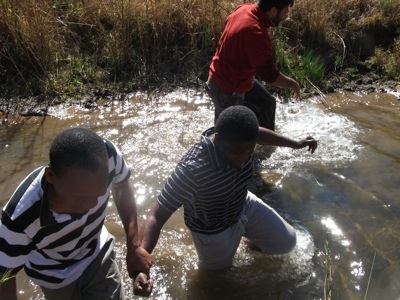
So on the freezing sunday morning Mesuli testified of his faith at church then we headed down to the river were Phumulani and Salvi baptised him in record time before hypothermia could set in. It was the quickest baptism we have experienced. Mesuli has now gone to live in Port Shepstone for a time where he is learning to drive.
The same week we went to Gauteng and saw Alan, Sue and the kids before going to Joberg to catch up with Salvi’s friend Joe Rumley and Gemma who were out from the UK.
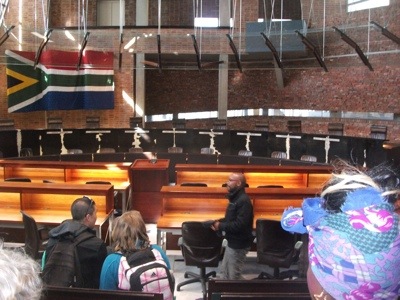
While visiting them and Gemma family we went to visit the constitutional court and the old political prison which it has been built on. It certainly was an eye-opener to see the conditions and how prisoners were treated. Many were apparently sentenced for failing to carry pass books or for political activity to undermine the ruling party. Of course white prisoners fared better than blacks and Indians.
On the Sunday evening Joe preached on going through the wilderness and how God uses it to teach us that he has not left us as orphans but given us the Holy Spirit to teach us to rely on God as our Abba Father. The next morn we left Gauteng at quarter past 4 so Salvi could be in Vryheid to interpret the gospel into Zulu at the prison. A group of American short term missionaries had come to South Africa to share the gospel. They came to us on the Wed for lunch then we all went to the pension point where they played their brass instruments and preached. A number of opportunities arose for one on one witnessing.
We have fenced Di’s garden to prevent the chickens and cows from entering. Now the fruit trees need to be fenced off as goats have turned up in the area. Today we have had our first light rain fall so planting will soon be taking place.
Phumulani and Thabi returned from visiting the pretoria brethren early in the month and you can read there report here.
________________________________________________________
For those who are interested there is a website with three audio messages uploaded that concerning the building of the Church and having a Zeal for God’s house. These messages were recorded in Port Elisabeth, South Africa 2011. http://www.sermon.net/msindisi . We have corrected the message entitled “Haggai” to contain the right audio file. More teachings will be posted in the future.
VISA update. Di’s application for extension for Temporary Residence Permit. Home Affairs contacted us to say they lost the application so now her new 3rd application is in process. Please pray for the Lord to guide her applications according to His will. Salvi received his renewed Visa for another three years.
We thank you all for your prays and support, may the lord richly bless you as we labour together in His work.
Shalom
Salvi and Di
ELIJAH AND ELISHA
RESTITUTION
PART 18
2 Kings 8: 1 – 6
In the last session we saw how God brought food to end a famine and how the disbelief openly expressed to Elisha on the part of Jehoram’s official lead to the prophecy that he would see the provision of food but not taste of it. Those who had a sense of their position before the Law of God as being unworthy were the first to partake of the food and the riches. The unbelieving official was crushed to death at the gate. This served as a great picture of the attitudes of the people and the Jewish leaders at the preaching of the Gospel of the Kingdom conducted by John the Baptist and Jesus.
In this session we will see the restitution of the Shunammite’s property and the assassination of Ben-Hadad. It doesn’t matter what aspect of our lives that we are engaged in or experiencing, God has a more than passing interest in it. Even though we have been seeing how the narrative surrounding Elisha’s ministry typifies and teaches something about Jesus, we must not forget the other levels of interpretation, or as some prefer to call it application. There is the historical interpretation. There is the interpretation that seeks to bring out rules for living ones life. There is the interpretation that seeks to bring out an instruction on how we are to view or think about certain matters. There is the interpretation that seeks the prophetic nature of a passage. There is the interpretation that finds the allegorical meaning behind the narratives in scripture. But with all this it is easy to miss a very important and profound point to these narratives in scripture, which is that God cares and gets involved. We looked at the raising of the axe head but one thing we did not bring out was the fact that God was concerned about that man’s historical and unique situation. And in the situation of the famine, there is a Jewish woman who escapes the foretaste of the judgment that was to come.
VERSES 1 – 6: THE RESTORATION OF THE SHUNAMMITE’S PROPERTY
Some people believe that this famine couldn’t have been the same famine that we read about with the siege and they say this because in this passage Gehazi was in the King’s presence. As it was against the Mosaic Law for lepers to be entertained then Gehazi would not have been allowed in the king’s presence. But the problem is that there were different types of leprosy and not all required isolation. It is possible that the leprosy that Naaman, and now Gehazi, had was the kind that could have been pronounced clean is indicated from Leviticus 13: 13 – 17. But even if Gehazi’s leprosy required him to be outcast there is nothing to say that the king wouldn’t have broken the law in this regard to get information from Gehazi. The king wasn’t a follower of God’s law and he walked in the way of Jeroboam who changed the Law of God to suit his own political ends. It was about seventeen years between the ascension of Jehoram in Israel and Hazael in Aram / Syria.
Gehazi getting leprosy could not have happened at the start of Jehoram’s reign because their getting to know the Shunammite woman took a while of Elisha’s traveling through Shumen. (2 Kings 4: 8) Gehazi was there at the time of Naaman seeking healing and Naaman had a girl who had known of Elisha. She was possibly taken in by the marauding bands that went out until the siege of Samaria. (2 Kings 5: 2) The famine happened after Naaman was cleansed and this is hinted at by the fact that the famine was touched upon in the previous passage in 2 Kings 4: 38 – 44 and Gehazi is nowhere mentioned. However there is one verse that would seem to place this famine before the encounter with Naaman and that is, verse four, where scripture calls Gehazi ‘the servant of the man of God’. This is not the claim of someone within the narrative itself but the writer of 2 Kings is claiming this. Thus it would stand to reason that it was before Gehazi had leprosy, for after he ceased from being Elisha’s servant. And if that was the case then the seven year famine would be different to the famine caused by the siege. The fact that the siege was over Samaria only and the famine in chapter 8 verse 1 was over the land does not prove there are two different famines as the effects of the siege spread out as the lepers who were outside the city were also feeling the effects of the famine.
Whatever famine it was we are told one new thing about it and that is that the Lord had called the famine. God’s working in nature and the day to day is tied up to the greater spiritual purpose but His greater spiritual purpose does not alienate Him from the natural realm. People ask, why would God ever be concerned about a tree or a township or a little country? You may talk about God in Theology and even put forward the assertion that he does not exist but you bring God into other areas of knowledge. There is a compartmentalizing of what belongs to ‘God’s domain’, (i.e church, heaven, morals, grace) and what is outside of ‘God’s domain’ (i.e nature, men’s empires, history). Here we see that there is not one thing in existence that is outside of ‘God’s domain’ and that He cannot account for. The LORD called for the famine. Daniel 2: 20 – 21. Nebuchadnezzar was not the kindest of Kings. He was cruel. Rome was barbaric and cruel and yet, God raised these Kingdoms up. Now here is where it pinches: if God has raised up these Kingdoms, then surely isn’t God responsible for the evils done by those kingdoms. When you look at the seven year famine, many people end up suffering. God brought about the famine. Thus God caused those people to suffer. What does one say to the unbeliever that points his finger towards God?
The first thing we note is that God is involved in the day to day workings of humanity. He is involved with the political situation, with the natural phenomenon and with the day to day loves of the people within a society. Even when things do not look favourable does not mean that God is not involved. But the problem is that often we look at situations simplistically and we do not see all the factors involved. Firstly there is man’s involvement. God raises up rulers but those rulers must give an account to God for what they have done. It is the same with any of God’s servants. It is not just a mechanical process. God may raise up a leader to bring judgment but that leader might go too far and further the disaster that would have been sufficient for God. Zech 1: 14 & 15. God was angry with Jerusalem and Judah but his purposes for them were for restoration. Jer 29: 10 – 14. God intends for good. But whenever God uses fallen and sinful man, sinful man distorts God’s intended purposes. This does not thwart God’s will because God has already accounted for it. So there is the aspect of man. There is also the aspect of the devil. My friend, Tony, is in Israel and he says that he discerns a spirit of oppression over the hearts of many Jews. There is such an antagonism to the gospel and this is something that has a supernatural origin. Romans 11: 25. There is only one problem with looking at this verse too simplistically. That we don’t take into account Satan’s agenda as taught in scripture. The last 18 years have seen more Jews as believers in Jesus more than the last 18 centuries. It is probably more so now. We are in the cross over period between grace given to the Gentiles and it going back to the Jews. Also Revelation 12: 9 – 17 gives Satan two descriptions concerning his hounding of the Jews. He is the serpent of old who deceives the whole world and he is also the dragon. He is the one who deceives and the one who persecutes. If it was as simple as God hardening Jews then why would Satan be actively involved in their deception and demise? But Satan knows that Israel’s salvation and repentance is integral to Jesus return and hence he is at work among that people.
Lastly, often when God himself brings on a famine or a natural disaster or some other similar thing, not in terms of permitting it but of bringing it about by His own arm, then it is often in response to the group’s rebellion to Him and His laws. Jer 18: 5 – 10. This is a highly important point because if it is simply down to God feeling like doing this without regard to what man has done, or because of something he made them do, then that makes God unjust (punishing people for what He has done Himself). God is a relational God and his judgments are rendered according to a person’s deeds. Now we see clearly that this was the case with Israel who were apostate. And even though the nation turn away from Him and, thus He has every right to do away with that nation in one sense He can’t because of His promises to their fathers. There are three covenants that concern the nation of Israel in the Torah. The first is the Abrahamic covenant which is unconditional. The second is the Mosaic covenant in Exodus 19: 5 – 6 which was a covenant to actualize those promises with the national of Israel so that they would be a people for God’s own possession. But the problem was that this covenant was conditional on Israel’s obedience and they broke this covenant. So according to the Mosaic covenant Israel had no right to be called God’s people but according to the Abrahamic covenant, God had an obligation to make them His people. So how can these things be reconciled? Through the Land or as some call it ‘The Palestinian covenant’. Deut 29: 1 & 4 & 12 – 13 & ch 30: 1 – 8. In other words, God already knew that Israel would break the Mosaic covenant so He made this unconditional covenant in order to make sure that the Abrahamic covenant would be fulfilled. Notice that the land covenant works in the context of two covenants, the Mosaic covenant and the New covenant. In regards to the Mosaic covenant it has brought curses on Israel and displacement out of the land. But in terms of the new covenant it will bring blessings. This is because the New Covenant will bring the nation of Israel to walk in God’s ways and notice that in verse 8 of chapter 30, they will observe the Mosaic Laws when that day happens, which is probably why the millennial temple in Ezekiel chapters 40 – 44 seem to show the observance of Mosaic temple practice.
So in God’s obligation to the Abrahamic Covenant, God has also kept a remnant of Israel in order to fulfill these purposes. This remnant goes through the judgments, the famines and the exiles, such as Daniel, Shadrach, Meshach, Abednego and Ezekiel but then they or their children are returned with their fortunes restored. Link that to the words of Romans 11 which speaks about the partial hardening until the fullness of the Gentiles has come in with the words of Acts 1: 5 – 8. The Apostles were not to know the times and epochs that the Father had set concerning the restoration of the Kingdom to Israel but they were to be busy about evangelizing the world, which would bring about the fullness of the Gentiles coming in so that God would be able to restore the Kingdom to Israel.
So going back to the text we see that God’s appointing of the famine was relational to Israel’s rebellion. God was intimately involved in Israel’s affairs. Not just nationally but also individually for He preserves the Shunammite who ‘in effect’ loses her property and goes into exile. At the end of seven years she returns and petitions the king who restores to her the inheritance, her house and her field plus everything that these things had accumulated while she had gone and the king does this on account of the work that Elisha had done in her life. A good picture of what the Bible says concerning the restoration of Israel’s inheritance.
And for us, we must perceive everything in our lives from God’s perspective. We must see His purposes and His purposes may be different for every one of us but they must be bound up in the parameters of God’s word. Our start and our aim in this Christian walk is identification with Jesus. Luke 18: 29 – 33. Jesus was focused on getting to Jerusalem in order to become that sacrifice and to rise from the dead. But there were many things that Jesus had to do in order to get there. Healing, bringing salvation to Zaccheus, the Passion Week. So it is with us. When we are saved, our start is bound up in identification with Jesus and that is the purpose, the aim and the end product. However there is all this stuff we must go through before we end up there. Rather that see it as years that interfere with the time where we will be identified we must see it as Jesus did, as part of the process of journey to get there. Thus everything that happens to us has that significance and all our journeys will be different. KwaZulu is part of Di and my journey, thus we become identified with Jesus that reaches the Zulus and loves them. But there will be aspects of your journey that will teach a different aspect. My friend Tony is in Israel and experiencing something of the Jesus that reaches out to the Jews. It is the same Jesus but we realize that Jesus is bigger than the one we thought Him to be and that is why the process of identification takes our whole lives. Everything must be brought under His lordship and then we may experience what identification with Jesus means in many different contexts. In edification, chastisement, rebuke and exhortation Jesus is Lord over every sphere of our lives.

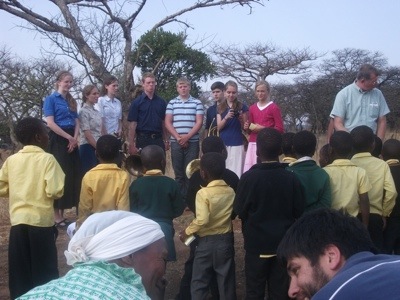
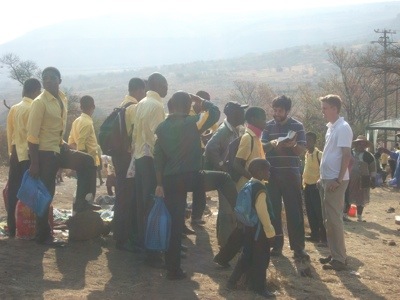
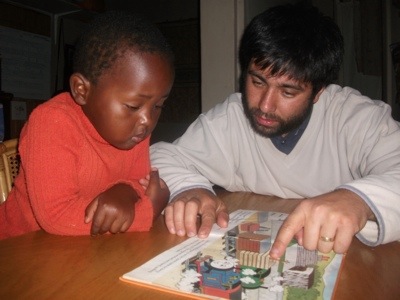

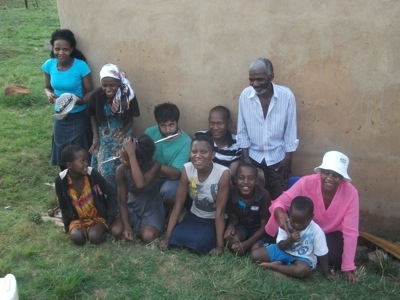
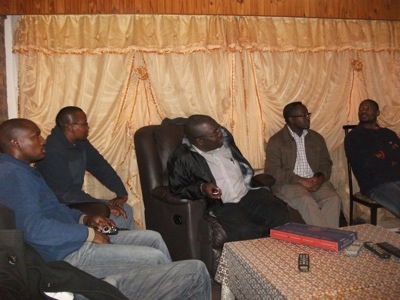
Our visit to Pretoria
The preparation for our visit to our brothers in the lord in Pretoria went ahead with great excitement my wife Thabi and I got up earlier to prepare food for the road. Thabi baked steam pudding and I killed a chicken ” road runner ” for Mujuru because the time when they had visited us he said ” I like road runners ” , so then Gogo gave it to us to give to him.
We thank God who made it possible for us to visit our brothers there. At 10:00 we took a taxi from our place to Vryheid to ride a Greyhound bus to Pretoria. We arrived there at about 10:30 pm. We find our brother Mujuru and Abel waiting for us in the bus station, then afterwards brother Clayton joined us. They drove us to brother Kingsley’s place we got there nearly about 11.30pm because it was a long journey then they gave us food and we prayed together and we went to bed. The next day we spend with Kingsley wife and their little girl. In the afternoon 5.00 pm we started our bible study, Clayton was leading we did the book of Colossians , it went well and we have meal together. At Kingsley place we spend two nights and we went to Abel’s place in the afternoon we did another bible study we looked on the book of Numbers. At that time we were at Clayton’s house everybody was sharing about what it means to us and what are we going to do. After that we had a meal together then Karapo drove us to Abel’s house. We slept 2 nights at Abel, his wife took us out and she showed us union building where Zuma our president lives. That afternoon there was no bible study but Karopo and his wife came to Abel’s house. I shared to them the gospel of John 13 I showed them that our fellowship is very important I use many scriptures and brother Karapo was blessed about that. The next day, Abel’s wife took us into town to see the shops and my wife Thabi bought a wool cap and sleepers. Afternoon we went into the prayer meeting. Mujuru came he drove us to Clayton’s house. There we pray for different things like our brothers who are in prison because of Gods word and those persecuted in different ways, our brothers all over the world, our government, our families etc. Then Karopo drove us to his place we spend one night there. We wait for Kingsley and Karopo to finish work till 2.00 pm and Clayton went to fetch them in their working place to go into Mujuru’s house. We met there because the bible study was there. Clayton was leading we study the book of 1 Peter everyone was sharing. We enjoyed it so much visiting our brothers in christ makes me remember psalm 133 said How good and pleasant it is when brothers live together in unity. It is like precious oil poured on the head, running down on the beard, running down on Aarons beard, down upon the collar of his robes. It is as if the dew of Hermon were falling on Mount Zion. For there the lord bestows his blessing even life forever more. As we are really blessed to be with them I hope they too are really blessed to have us there. I thank God for this time and our brothers.






SALVADOR & DIANNE’S MSINDISI MONTHLY
NUMBER: 96 Aug 2012
PO BOX 1481
VRYHEID 3100
KWAZULU NATAL
SOUTH AFRICA
+27 (0) 728311008
+27 (0) 815836288
Email: msindisi@gmail.com ,
salv.di@gmail.com
KwaZulu Mission Website: http://www.kwazulumission.com
Personal Website: http://msindisi.googlepages.com
Dear Friends and family,
Praise the Lord. God is good and His mercies are everlasting. It is with great pleasure that we announce that this month marks the 10th year anniversary of the KwaZulu Mission. Started on the 26th Aug 2002, the mission has seen God’s faithfulness and mercies. In Romans 1: 13 Paul sought to gain fruit from his ministry. Many people sow and serve the Lord with all diligence and faithfulness but rarely gain the privilege of seeing fruit. Other people think they have fruit but what they have is hands raised in a meeting to pray a prayer for salvation but without conviction of sin or the reality of the Spirit’s drawing. Such “fruit” is temporal and not eternal. We praise the Lord that we have seen some fruit which is lasting and standing the tests and, God willing, will be kept for eternity. It is all by His grace. From the time when Caleb and Sophie Massey started the mission and Salvi joining them, with none of them knowing how to speak Zulu, we can thank the Lord for His guiding hand over people and the work.
July was truly a month for thanksgiving as we witnessed the faithfulness of the Lord despite ourselves. We were blessed to have a brief visit from Pete and Gay Moolman from the Bayshore assembly in Port Elizabeth. The Bayshore assembly, pastored by Alan Mackenzie, sent 4 big boxes of baby clothes and toys to be given to the creches in our areas. While they were here we had the pleasure of meeting a man called Errol who had been shot several years ago while serving in the police force. His testimony and courage was a huge blessing to us.
This month we also had the pleasure of Craig and Magda Boardman with their two sons stay with us for one weekend. They testified that they were really blessed by the studies and church service but wanted more teaching! They actually came to collect their caravan which they generously lent when we had our two big groups of visitors. In light of how busy we have been Salvi organised for a few days away in the middle of the month to give Di some time out. So after cell group on Tuesday night which is continuing going through the book of Romans, we drove to Stanger for two nights by the sea graciously given by dear friends who live their. On the friday we met up with Pastor Calvin of 2 churches we are in fellowship with, co pastored by Mark Van Niekerk. We were meeting a lovely brother in the Lord called Leslie Crickmay and his co worker Kevin. They had recently planted a church in Ballito and it was so wonderful to see the unity that we have in Christ. It is possible that we may meet again and even share resources for the sake of the Lord’s work. After this we shared some wonderful fellowship with Calvin and his wife, Gracie, before spending the evening with Mark, Marie-Anne, and their son Dean with his wife Tarryn. Please pray for Mark who is suffering with severe migraines. Also please pray for Marie-Anne who’s father has just recently died. While there we had a problem with our fuel pipe leaking diesel. Pravesh from Calvin’s church very kindly fixed it for us and we are constantly encouraged by the love for the Lord that Calvin’s churches constantly display.
A couple of days later, Pastor Jannie of Bethany Baptist Church in Vryheid with his wife Glenda took us to the Drakensburg area in order to attend the international congress of revival’s seminar. These are old time revivalists strongly preaching the gospel of repentance from sin and a need to acknowledge the holiness of God. It was a good reminder of some very basic truths that we sometimes take for granted. Sadly, before leaving our truck packed up again but Genrod, once again, kindly came to the rescue. This allowed Phumlani to sell and continue the ministry while we were at the congress.
Upon returning we prepared for the visit of an old church friend, from Aletheia days, called Morne Lombard with his son, Joshua. It was Morne’s mother who upon first seeing Di had constantly prayed for us to be married from day one. She provided Salvi’s wedding band and a month before our marriage she passed away in the very home that we got married in. This was the first time that Morne had ever visited a Zulu home. Over the week leading up to their visit, Home Affairs had sent a text message notifying Salvi that his application for extension of temporary residence visa had been finalised and we had to go to home affairs after five working days to find out the outcome. Morne arrived on friday to a smashing welcome. While Salvi was going to meet him, Salvi ran a stop sign and ended colliding with two other cars. The truck doors were both severely smashed so it took time for Salvi to be freed. However he only suffered small cuts and a bump to the head. The other drivers also did not suffer major injuries. We thank the Lord! Our dear friends from Genrod kindly took Di to the scene and later gave us, Morne and Joshua supper and coffee. Due to the accident we were unable to do the bible study with Jonny and Kim.
This month Phumlani and Salvi have continued to preach in Ngenitsheni. One day a lady called, Mrs Mthethwa claimed to have responded to Phumlani’s preaching and given her life to the Lord. When we asked what her husband would say with her leaving ancestors, she said that it doesn’t matter because he is dead! We are following up with her but it seems she may not fully understand the gospel. Another lady had told her grandson to speak to us when he saw us. Her son said that the Gogo, called Mrs Manxele wanted to talk about the gospel. When Salvi visited her the following week she said that she wanted salvation and wanted to know the truth. When Salvi and Phumlani went with Morne to visit her she wasn’t there as she was attending a funeral. This last saturday Salvi took Jabulani to visit her and she seemed so open to the gospel even agreeing that ancestral traditions are incompatible with biblical truth. She came to the church meeting today and was very encouraged by the testimonies and the word preached. Please pray for her, she seems so close to salvation and is desirous for a sunday school for her children. It seems that we are starting a bible study in Ngenitsheni on saturdays for her and whoever else wants to attend.
We were also blessed by Celani’s sharing in church this morning. A couple of children in the Kid’s club go to a Zionist church (not a church that believes in Israel but one that mixes biblical things with ancestral traditions and witchcraft). Their mother testified to Celani that at some of the meetings in the area and in Johannesburg the preachers had asked the congregations questions which these children answered leaving the preachers amazed at their bible knowledge. They asked the children how they knew these things and the children answered that they had learned them at kid’s club.
At the moment our Bakkie is being repaired by a panel beater who is a brother in Christ. Praise the Lord that the Chassy is not bent and engine is all fine. In the meantime Genrod have lent us a Bakkie until ours is fixed so that we can continue in the work. We have been astounded by the support and kindness of so many people both in Vryheid, Port Elizabeth, Stanger and overseas in Iowa (USA), Melbourne & Brisbane (Australia), New Zealand and the UK. As I write Phumlani and Thabi have just returned from a week’s visit to the Pretoria brethren who meet with Mujuru and Clayton. We trust that it has been a time of growth, encouragement and stretching in ministry and the faith for them both.
It has been wonderful to see the growth in Phumlani’s life, the first member of the church planted by Caleb and Salvi and in Thabi’s life, one of the first people to sit under Caleb and Salvi’s Khambi bible study in 2002 and whom Di led to the Lord late 2011. In celebration of the 10th year anniversary of the KwaZulu Mission we have asked Caleb to write a short article:
___________________________________________________
South Africa and the Essence of Church
by Caleb Massey (Ezra Ministries, Arkansas U.S.A)
http://www.ezraministries.net
It was ten years ago this August that my wife and I helped start a work in South Africa among the Zulu people. It is a joy to us to know and see how it continues to progress and mature. Our friend Salvador, or Msindisi as the Zulus call him, was with us back then in the beginning and now he is currently there and still preaching and teaching the Word of God. We were there fives years and now live in America beginning another ministry. The work we do here is really a progression of what we did and learned there.
I can remember when we started in South Africa we didn’t know anybody, had no resources and didn’t even speak the language. Just recently I did a teaching for our fellowship here and looked at the excuses that people make to Jesus about why something can’t be done. Remember the man at the pool of Bethesda? Jesus asked him, “Do you want to be made well?” He did not respond with a “yes” or a “no”. Instead he gave an excuse as to why he was not healed? “Nobody helps me into the water and somebody always gets there before me.” He thought it was all up to him to be healed. He was wrong.
Or what about when there were 5000 men whom Jesus wanted to give lunch to because they were out in the middle of nowhere to hear Him preach. He asked Philip to give them something to eat and Philip’s excuse was “We don’t have enough money to feed these people even a little bit each!” He thought it was all up to him to be the one to feed that crowd. He was wrong.
We were there in KwaZulu-Natal with really nothing but Bibles, prayer and each other. And the Lord. The crippled man at Bethesda had nothing but the Lord; Philip had nothing but the Lord. The Lord does not want our excuses. He didn’t care that I thought back then, “We have no resources, no money.” Did Philip? What do you need to do a work for the Lord? A thousand dollars? Ten thousand pounds? A million Rand? No. None of that. Sometimes Salvador would walk from kraal to kraal and read the Bible to the people who lived there. We prepared Bible studies from the Bible. We didn’t have ‘bible study books’. The Bible was our Bible study book. There was demonic activity in one of the local schools. We didn’t drive there and talk to anybody, we simply prayed as a fellowship and the evil activity stopped. Jesus can do that. We didn’t have a building to meet in for church, so the church met in the home of Celani. We had gardening projects but realized that spiritual food is more important. We helped run a mobile medical clinic but learned that spiritual health is more important. Everything we did at a temporal, hands on level we learned that the deeper spiritual, God is active level, was more lasting.
Bible, Prayer, Fellowship. Those were the things I left South Africa with and will never forget. We gave away a lot of Bibles. The trouble was getting people to read them and apply what it taught. One day our friend Phumulani was walking to our place for a Bible study. His eldest brother was going past and he laughed at him saying, “Are you still reading that book? It will make you go mad.” This is a man who lead a local ‘church’. Sadly he was killed last year. Phumulani continues to study the Word of God and preach it to the people around him. I was once doing a teaching on the Ten Commandments in Esihlengeni and a girl said, “You’re saying that God doesn’t want me to sleep with my boyfriend?” I said to her, “Do you want to be pregnant without a husband? Do you want to get AIDS and die young?” She said, “No.” Then I said, “Neither does God. That is why these commandments are there for your protection, not because God is mean.” Man is a spiritual being. His faith will be in something. Either God, a false God or himself, but his faith will be put into something. Zulu people loved having a Bible but very few of them read it and even fewer applied it. They had their faith in something other than the God of the Bible.
One thing I realized when I began to spend time with African people is that they do not need to be convinced of the existence of God or the spiritual world. When the Bible says, “In the beginning God…” many people in the developed world begin to argue and question whether or no there is even a God/god. Not in Africa. They take for granted that there is a God/god. The question there is: How do you follow that God/god? The Bible is the only true and reliable guide.
Fellowship is highly important to the believers in Zululand. Africans are extremely social people. Everything revolves around relationship, first with family, and then with tribe. Relationship happens on different levels, but among Zulu believers the idea that “I’m South African!!” falls down the list a bit. I remember a conversation I had with Pastor Mandla. He told me that he and other pastor friends of his listen to American preachers on the radio quite often. He said that sometimes they did not see themselves as being very good Christians because they were not as patriotic about South Africa as American preachers were about America. Myself being an American I was a little embarrassed about this. Mainly because I knew that America prided itself on being a “Christian nation”. I told Mandla to ignore that element of their preaching. Personally, I needed to strip my own teaching of anything and everything “western”, “American” or “British.” The language of the Bible was what I needed to use in teaching and evangelism in addition to illustrations from South African and Zulu life. In doing this the fellowship was enhanced. My goal was not to create a little Western/American church in the middle of Africa, it was to create a Biblical Zulu church, a Biblical Zulu culture and a Biblical Zulu society. Praise the Lord that Salvador and Phumulani are still there working toward that goal. We still remember our friends in the church we were a part of there and think of them often, and pray for them. The fellowship still continues through letter writing and, joy of joys, when we all gather together with the Lord in heaven.
Prayer, Bible, Fellowship. It is so simple, and yet so deep. After Jesus, these three ideas are the key elements of the church. Let us pray that we may keep them pure and not get distracted by the ways of the world and the lies of the enemy. Let us transcend time and space in prayer, coming to the throne of grace boldly by the blood of the Lord Jesus. Let us hear from our Lord through the pages of His holy Word and have it be our guide and bread of life. Let us love each other as we are commanded, pray for each other and edify each other in Christ that we may grow into a strong and expectant church ready for the Lord’s return.
I thank God that 10 years on the KwaZulu Mission is still active. May it continue to preach the truth until every one has heard the gospel and come to a knowledge of the Lord Jesus Christ.
Caleb Massey
Jn 17.17
________________________________________________________
For those who are interested there is a website with three audio messages uploaded that concerning the building of the Church and having a Zeal for God’s house. These messages were recorded in Port Elisabeth, South Africa 2011. http://www.sermon.net/msindisi . We have corrected the message entitled “Haggai” to contain the right audio file. More teachings will be posted in the future.
VISA update. We still have not as yet got any news concerning Di’s application for extension for Temporary Residence Permit. Her application is in process. Please pray for the Lord to guide her applications according to His will. But to end this newsletter we can finish with a note of thanksgiving. Salvi received his renewed Visa for another three years. This is a real answer to prayer as legally we were supposed to lodge a form when we joined Road to Recovery Christian Fellowship when we changed contracts. We serve a faithful God. In the words of Psalm 34, “Let us exalt His name together.” Please keep Di’s frozen shoulder in prayer.
______
We thank you all for your prays and support, may the lord richly bless you as we labour together in His work.
Shalom
Salvi and Di
ELIJAH AND ELISHA
FOOD TO END A FAMINE
PART 17
2 Kings 6: 24 – 7: 20
In the last session we saw that God was merciful to both the House of Ahab and to the Arameans who sought to capture King Jehoram. Judgment was set aside for Jehoram but the time of judgment had not come yet. Until that time we see a period of grace. Grace was shown to the Arameans because it would be under Hazael that the Arameans would fatally wound Jehoram. So the Arameans would not successfully capture Jehoram because Hazael was the appointed vessel of judgment and not Ben-Hadad. In Ezekiel 33: 11, God says that he has no pleasure in the death of the wicked; He would rather have them repent. And often before complete judgment is rendered, God often brings little tasters of judgment. Before the Judgment makes desolate God takes away a portion as a taster of what is to come, that men may be warned and be left without excuse and also that some may repent. We remember that judgment was declared against Judah but because of the revival led by Josiah that judgment was held back for a time. Judgment would come against Israel and it would come during the reigns of Hazael and Jehu but the judgment could have been postponed if Jehoram was truly repentant. Yet his respect of God was not real but surface. We have to examine the text in light of what was happening to those people and what the text meant to the people to whom it was written. And then in the light of that we may see what God is saying to us, morally, prophetically and spiritually in terms of the covenant that we are in. In the last study, that meant that we must see things through the eyes of faith and for that to happen God must open our eyes that we may see the greater reality of the spiritual realm. And for us, as post-ascension people, we can see that the text gave us a picture of Messiah who would bring in an age of grace and yet not to such an extent as to completely spare this world from judgment. God is slow to anger but with enough provocation His anger will eventually arrive and when it does it will be terrible.
6: 24 – 31 THE SIEGE AGAINST SAMARIA
Under Elisha we saw that the marauding band sent to capture him, could have been killed by Jehoram who was eager to execute them, but instead they were shown grace. According to Josephus, they were given a lavish feast and then released. And then verse 23 says that the marauding bands stopped coming into the land of Israel. And if we stopped there it might look like a happily ever after ending, except that it is not. With the grace shown to Ben-Hadad’s men you might expect him to be touched by this gesture of kindness and seek peace with Israel out of gratitude. But war is war. Rather then relent, he quits the use of marauding bands and instead brings on a full on assault against Samaria by besieging them. This siege was not the only one of its kind in Israel’s history but it would happen again in Jerusalem with the Babylonians and also in AD 70, also in Jerusalem. We have a repetition of experience as a teacher of God’s salvific and prophetic purposes for Israel that will find it’s full expression in the time of Jacob’s trouble during the tribulation, according to Luke 21: 20 when compared with Matthew 24: 15 – 20. The idea of the siege is not to conquer in terms of a typical battle between armies fighting each other but to starve the people in order to storm the place.
The siege brings a famine. The famine is so bad that the price of food escalates rapidly. There is nothing left for people to eat and so people start to eat anything. The donkey was an unclean animal and there would hardly be any meat on a donkey but according to Ryrie, people were buying a donkey’s head for 1 kg of silver. And dove’s dung was bought at 55 grams of silver. There is a little debate as to what dove’s dung is. Some people say it was an Arabic name for some kind of pulse. People seem to have a problem with the idea that these people would have resorted to eating excrement. Yet these people were starving to such an extent that I may well believe they would have resorted to literal dove’s dung. But whatever it was one thing is certain, the famine was severe and people were starving. This famine seems to be the one that chapter 8 verse 1 refers to and if it was then we can see that the famine lasted 7 years. This was worse than the drought of Elijah which only lasted 3 and a half years. In verse 26 we read that the King was doing His rounds on the city wall, possibly to check on the fortification of the wall and its defences, when a woman approaches to ask the King for help. The king assumes that she is asking for food and he tells her that he has nothing. There is nothing in the threshing floor and nothing in the wine press. The is no grain and no wine. But this lady does not desire food from the king but she wants him to grant her justice, from at least her point of view. It seems that this lady had dragged along another lady with her because she refers to the other lady as ‘this woman,’ which seems to indicate that the other woman was there. These two women had made an agreement that they would eat each others sons for food. One son this day and one son that day. Her son was eaten on the one day and then the other woman hid her son. There are two reasons the other one hid the son. Either the son was alive and she could not bear to kill and eat him or that the son was dead and the mother wanted to hide him so that she could eat him all to herself. There is nothing of remorse about this woman, but rather she wants the King to bring justice in order that the other woman may disclose where she has hidden her son.
What a desperate situation these people must have been in to even imagine doing such a thing. The unthinkable had not only been thought of but had also been done. Josephus believed that such a city where such acts have been committed should be left uninhabited. And the king is profoundly struck in such a way as he goes about mourning. He is brought to severe sorrow and grief. And the first thing he says is that he will take Elisha’s head off. He had wanted to slay the Arameans that were captured but Elisha said to let them go. It is like the Middle East when Israel show kindness to their Palestinian neighbours, such action is not seen as a sign of kindness but a sign of weakness to be exploited. This is the way it must have seemed to Jehoram. Because of Elisha’s order to feed the Arameans and then to let them go, now Aram had besieged Samaria and they had been brought to such a point that 2 women had made an agreement to eat their own children, while the man of God was sitting in his own house.
It is easy to feel sympathetic towards Jehoram and almost wonder why God had allowed this to happen to his people. But we must remember that we have to look at the whole story and not just a part of it. Deut 28: 15 & 53 – 57. They had gone after idols and had not repented. There was witchcraft and injustice. What was worse was that Jehoram was not the head of some backward rural tribe who did not know any better. He was the King over God’s covenant people, whom God had called and given his law. He had heard God’s rebukes of Elijah against the idolatry and witchcraft of his parents. The same thing happened in AD 70. In good time before the destruction of Jerusalem, the Jewish believers remembered what Jesus said about the armies surrounding Jerusalem and they fled to a place called Pella in Decapolis. In Jerusalem the stores of grain were burned down destroying the food source and the water dried up. When the famine got to its worst mobs of Jewish men were going round beating up people who they suspected were harbouring secret food. Children would take food out of their parents’ mouths and the mobs would do the same to anyone. One woman called Mary from Perea, the area that the Christians had fled to, had come to Jerusalem and was caught up in the siege. She was from a wealthy background and was brought to such a desperate state as she could not keep anything or any food because the mob had taken everything and would take anything. Josephus writes about her, saying; ‘She then attempted a most unnatural thing; and snatching up her son, who was a child sucking at her breast, she said, “O thou miserable infant! for whom shall I preserve thee in this war, this famine, and this sedition? As to the war with the Romans, if they preserve our lives, we must be slaves. This famine also will destroy us, even before that slavery comes upon us. Yet are these seditious rogues more terrible than both the other. Come on; be thou my food, and be thou a fury to these seditious varlets, and a by-word to the world, which is all that is now wanting to complete the calamities of us Jews.”’
In Luke 19: 44 Jesus claimed that this calamity would come down upon them because they did not recognise the time of their visitation. At the instigation of their leaders, apart from a remnant, they had nationally rejected their Messiah which was akin to idolatry, witchcraft and injustice. It was the same situation as in Jehoram’s day. But did not Jehoram repent and get rid of the Ba’al worship? It was no revival that Jehoram instigated. Jehoram was no Josiah. The idolatry still continued because he had left the golden calves in Bethel and Dan.
6: 32 – 7: 2 GRACE SHOWN TO ISRAEL YET AGAIN
Jehoram blames Elisha for something that he himself was guilty of. By unjustly sentencing Elisha to death he was thus guilty of putting to death a righteous man and thus stood as a murderer. We can well understand that Jehoram was pushed to the limit. He was at his wits end. He had expressed his mourning in clothes that symbolised repentance or deep grief but that still did not minimise the fact that he wanted to put to death an innocent man. From outward appearances it would seem that Jehoram was righteous and that Elisha was unconcerned for the plight of the Samarians. But this could be argued for many that undergo troubles in this life. They ask, ‘what have we done to deserve this?’ and they have no idea of the severity of how God sees their sins and rebellion against Him. They believe they are innocent of mortal sin and yet the scripture shows us that all have sinned and are continually falling short of the glory of God. Why will the world rejoice when the two witnesses will be slain? Because the two witnesses will bring plagues against a world that sees it unwarranted to go through such suffering because deep down inside we are all good people! By condemning the innocent to death, they are murderers. So Elisha, by the Spirit of God warns those with him that the son of a murderer was on his way to chop off his head. He is the son of a murderer, not simply because Ahab was his biological father, but also because he was in the character of a murderer. As Jesus said in John 8: 44, “You are of your father the devil, and you want to do the desires of your father. He was a murderer from the beginning, and does not stand in the truth because there is no truth in him. Whenever he speaks a lie, he speaks from his own nature, for he is a liar and the father of lies.” Like father, like son. Jehoram was of his father the devil and wanted to do the desires of his father. Jehoram did not follow the truth because the Truth was not in him. Under pressure, Jehoram spoke from his own nature because he was a liar. He feigned repentance.
Elisha made sure that the elders held the door fast against the messenger and when Jehoram saw it he was faced with the reality of the situation. This whole siege was from the Lord. And yet, when he understood that the Lord was behind it, did it drive him on his knees to seek the Lord and turn away from his sins? No, instead he pathetically said that because it was of the Lord there was no point in waiting on the Lord. It happened before that when he was in dire straits he gave up saying that the situation was from the Lord. He did not perceive that God may have been using the danger to bring Jehoram on his knees. With this king it was about living his own way in the good times or treating these times of judgment as if they were matters of fate that he could do nothing about. Jehoram recognises God’s hand but not His purpose in it. He had seen the supernatural at work and after this day there would still be more miracles for Jehoram. He had been given every opportunity to repent and he had rejected them all. Surely now God’s hand would crush him. But God is longsuffering to him still because the time of judgment had not yet come. There was still a period of grace. Elisha prophesies that there will be flour and barley sold at an inexpensive price. There will be food to end the famine. Though not rained out of heaven, as we will see, the miraculous was involved in the supplying of the food. A senior officer, (literally a ‘Third’) expressed his disbelief in the possibility of God’s provision. Thus he is told he will see it but will not eat of it. There is no real belief from Jehoram’s men that this will happen. Even when it does, it is treated with suspicion. They have experienced famine, the food is coming and yet there is no or little belief in it.
7:3 – 20 THOSE WHO WILL NOT EAT THE GRAIN AND THOSE WHO WILL
Who is it that partakes of the food? It is the outcast, it is the lepers. They partake of the food before the rulers do. Though the rulers were told first, the people get through to the food though the King takes measures to control the access to the food. The provision of the food was from God. Though the food came from the Arameans, the manner by which it was left for the Israelites was a miracle from the Lord. The whole army heard the sound of chariots and horses. Some people argue whether it was an audible sound or was only heard in the ears of the Arameans. Whatever way it was does not matter. If it was audible it was a miracle, and if it was only produced in the minds of the Arameans it was still a miracle for illusions are not experienced by a mass of people but are individual. 5 people suffering from hallucinations will have 5 different experiences. The whole army of the Arameans heard the same thing. And so afraid were they that they fled for their lives. The lepers came to the food, they ate and drank and carried off gold, silver and clothes and hid them. But then something starts nagging at their consciences. They have eaten, they have partaken in riches and now they start to realize that they have an obligation to tell others.
These lepers were afraid, not because they might get found out by people and then punished by people but in verse 9 their first words are “We are not doing right.” They realise that it is not just a case of the jealousy of other people that will result in their punishment. They knew that what they were doing was wrong. It was a moral issue that would bring judgment on them. They were God fearing. Thus they were secluded from society because the Law of God pronounced that judgment on them. Much more righteous were they than Jehoram who entertained the presence of Gehazi in 2 Kings 8: 4. Gehazi had the leprosy of Naaman. Charles Ryrie asserts that Gehazi must have had a form of leprosy that did not require isolation but this is not true to what the Bible says. 2 Kings 5: 27 says that Gehazi received the leprosy of Naaman and he went out from Elisha’s presence a leper as white as snow. I do not know how much more leprous can a person get. The truth is that Jehoram did not follow the Lord but these lepers did. They were outcasts and condemned to be so by the Law and yet they were the first to partake of the food and the riches that the Lord had prepared.
When the news came to the king he was reluctant to accept it believing it to be a trap. It was only at the behest of one of his servants, who said that the scouts were practically perishing anyway so why not send them to find out if it was true that he sends them out. Before the king can do anything, the common people are already plundering the camp and the food was being sold at the price that Elisha had prophesied. The king was too slow in getting there. And when he hears about it he stations the unbelieving officer to man the gate and bring some measure of control. He sees the food but he does not eat of it. Such is the price of rejecting the Word of the Lord, you will not partake of its blessings. Instead he was trampled to death at the gate.
But how are we to understand this in light of Christ? In Israel’s history there would also be a famine. There would be about 400 years after the ministry of the prophet Malachi which we call silent years. They are not called silent years because nothing happened in them. There was plenty of activity and there was the miracle of the feast of Hanukkah where the oil did not run out for eight days at the rededication of the temple. There would be a development of bible teachers called the Pharisees who would work hard at teaching the Law of God to the people. Rather, these were the silent years because there was no inspired prophet sent by the Lord to the people of God. The pharisaical Rabbi’s, though they started off right, would end up adding so much of man’s traditions to God’s Laws that they would make a heavy weight of it and set aside God’s Laws for the sake of the traditions of the Elders. Then John the Baptist arrived on the scene and everyone crowded round to hear him. Then Jesus also came and people still crowded round. Mt 11: 12. Jesus was validating John the Baptist’s ministry and showing that from John the baptist, the Gospel of the Kingdom of Heaven was being preached and many people were violently trying to get in. There were times, especially at the beginning of Jesus’ ministry, where Jesus had his privacy invaded for the multitude of people that came to seek healing or to hear him preach. The people pushed in on him. Lk 16: 14 – 17. The Pharisees were justifiers of themselves. But the problem was that, though they claimed love and devotion for the Law of God, they actually placed themselves above the Law. The common people were forcing their way into the kingdom but Jesus repeats the necessity of holding up the Law of God that shows us our sinfulness. The lepers knew the Law pronounced them unclean and they accepted its verdict. Jehoram did not seem to see the need for repentance. One of his chief officials expressed his unbelief at the words of the prophets. Thus we see in this narrative a picture of Jesus’ prophesy. Mt 22: 1 – 14




Dear friends
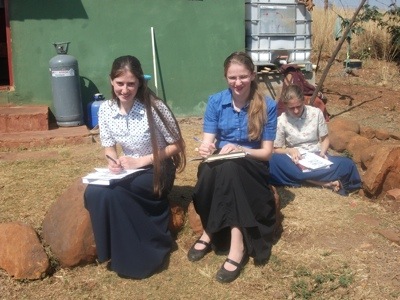
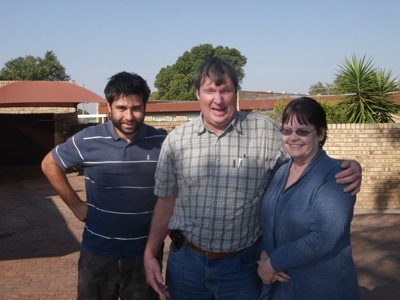
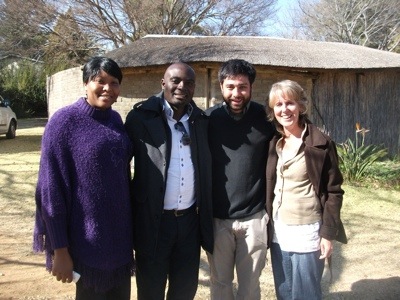
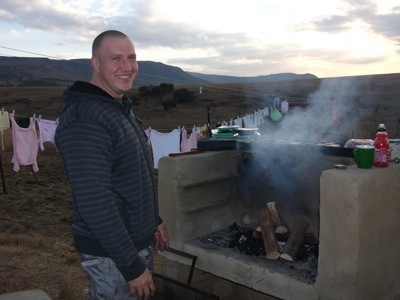
The preparation for our short holiday visit to our friends Salvador and Dianne, who serve the Lord as missionaries in Kwa Zulu Natal, went ahead with great excitement. Our last visit in October 2009 was by 6 of the children and me, but this time all 11 children and our very dear friend Lilian, 78 years of age and who has been a close and active friend to Bezaleel from its inception, accompanied me while Allen held the fort at home. He put in a ceiling and painted a 3×3 metre wooden shed we had installed to house our library and one of the pianos for practising on, as collectively many hours of practise are required for the 3 children who play and it is disruptive to our other lessons. On our return home we have been busy with the mammoth task of moving the books into the library before our 3rd school term starts, which has created so much more space for us in the house. But getting back to our trip. Lilian came to stay a few days earlier to prepare, with the help of Lizzie and Thoko, our ‘padkos’ (food for the road in Afrikaans) and goodies for our teatimes. The day finally dawned and early on Tuesday morning of June 27th we hit the road, the H1 jam-packed with children and luggage. Our trip there and back went smoothly for which we thank the Lord. The drive takes about four and a half to five hours one way.
On our arrival in Vryheid we met Salvador and Dianne at the local Baptist church where we had the opportunity to meet Jannie the pastor of the church and George who lives on the property and takes care of it with his wife Kogie. We had lunch, fellowship and prayer together then shopped for a few supplies before following Salvador and Dianne home to the kraal, which is about another 40 minutes away. On our way we made a short stop to visit Celani, Phumulani’s sister and her children. It was lovely to see her again. She has a well cared for home and is very industrious and her vegetable garden is always an inspiration to me. On Sundays Phumulani, Salvador, Dianne and the people meet at Celani’s home for their church service. Celani asked after Clayton our son and his then fiancé and now wife Jessie from the UK, who had visited there in April 2011.Celani served us refreshments and after the children kicked the ball around a bit we piled back into the vehicles and set off for the kraal. Quite often during our stay some of the children would ride on the back of the open bakkie (truck), which was huge fun for them.
The head of the kraal is Phumulani’s mother, Gogo. With her is Phumulani and Thabi his wife whom we met for the first time. Her granddaughter Bhabakeli, who has a little boy Asimbonge (who couldn’t wait for our visit) and a baby daughter, as well as Salvador and Dianne live at the kraal. There are 4 dwellings with no running water or electricity, of which one is Salvador’s and Dianne’s and has a bathroom with a toilet and there is also another outside toilet for everybody at the kraal.
It is important to show respect and politeness by greeting Gogo on arrival, as it is her hospitality as well that has been extended to visit the kraal. She was delighted to see us again and especially to meet Lilian, another gogo. Kim and Johnny, Craig and Magda each provided a caravan to house the overflow of visitors. Salvador and Dianne slept in one and Walter, Thabo and Ernest slept in the other one. Lilian and Lizzie slept in Salvador and Dianne’s hut, Thoko and Rosie in a room in Phumulani and Thabi’s hut and I slept in a room alongside Gogo’s hut with Ruth and the 4 younger children. Having got ourselves all sorted out including a quick walk down to the stream, up the hillside and back again we were back in the cars to drive up to Kim and Johnny’s farm for supper and bible study. There we met Girlie for the first time, who is also part of the bible study and she graciously gave us plenty of fresh bread from their bakery. What a precious evening of fellowship we had together. Salvador and Ernest on guitar with Lizzie accompanying on the flute, Phumulani sharing breaking of bread with us, a lovely dinner prepared by all the ladies and a talk from Salvador from the book of Romans with some response from those who had some contribution to add to what Salvador had shared.
I must interject here and say that we had the most wonderful weather for that time of the year. The skies were clear and it was not bitterly cold at all. The mornings were crisp but on 2 days the wind was quite warm. One morning I was up at 4 o’clock, sitting on the steps of Salvador and Dianne’s hut gazing at the myriad of stars in the night sky. They seemed close enough to pluck from the sky with my hand. The stillness and beauty of the night sky was amazing. How great is our God.
The next morning after breakfast found us back at the farm for a day of fellowship and delicious food with Kim, Johnny and their 3 boys. Olaff, Charnel and their little boy Nathan came up from Piet Retief and we were so glad to see them again. We met Belinda, her daughter and 2 boys and some of their friends as well as Magda and her 2 boys for the first time. They fellowship at the local Baptist church in Vryheid and are very good friends of Salvador and Dianne and they have been such a wonderful support and blessing to them. Everybody went to such lengths to make the day special, especially Kim. She has a lovely home and is incredibly creative and with her love for the Lord she expresses it beautifully. Besides enjoying the incredible scenery and the farm itself Kim arranged fishing at the dam which is on a plateau on top of a mountain on their property, seeing the chickens, feeding the lambs and art activities for those who were interested. Kim gave me lots of plants from her lovely garden and some invaluable advice regarding a question about some artwork I’d like to do one day. Kim’s art is very inspiring. Johnny gave Ernest, Ruth and Big Themba some tennis tips as they’ve just recently started playing at a local tennis club. Interspersed throughout the day was stimulating and interesting conversation. The day ended with Salvador sharing a talk from the book of Haggai, encouraging us to be faithful and to build God’s church to His glory were we find ourselves. As a very small token of our gratitude to everyone’s hospitality, Thoko and I (mostly Thoko) knitted 9 scarves for all the ladies whom we spent time with during our stay. That evening before bed we had a bible study on the book of Acts chapter 13 in Sal and Di’s hut but I had to leave early as the children wouldn’t go to sleep until I was back in the hut. Asimbonge enthusiastically joined us for the night and dived into bed with the boys and was fast asleep in no time. He was having a joyful time with all his visitors.
Our last day began early. We met Girlie and Kim at the gate of Ithala Game Park to finalise arrangements to enter. We travelled in the H1 and the older children with Dianne on the back of the truck. Asimbonge and Celani’s son spent the day with us. For most of the morning and early afternoon we spent driving around the park looking for the animals that have their habitat there. Although we did not see much game, the scenery was spectacular. The sense of infinity when gazing upon the expanse of the scenery around us is something to treasure, where back home in the suburbs most things are at such close quarters. The mountains and valleys are something to marvel at as the glory and evidence of God’s creation declares His Lordship over his handiwork without uttering a word, but clearly proclaiming the Word, our Lord Jesus Christ who has been with Him from the beginning and was present and active at creation. We stopped to picnic and stretch our legs near a wide river and then headed for home at the kraal. We spent the evening around the fire, where we enjoyed a yummy braai, talked, sang and laughed with Salvador and Ernest on guitar and Lizzie on the flute. Gradually one person after the other reluctantly drifted off to bed. During this time God restored, refreshed and strengthened us. The peace and stillness around us, echoed in our hearts.
We are so thankful to the Lord for the window of opportunity we had to spend time with our dear friends Salvador and Dianne in their home; for their hospitality and for the tremendous encouragement they bring to our lives. To observe their faithful and most often joyful work for the Lord among the people He has placed them, and to talk with them of all the Lord is doing in their midst. After we left for home Phumulani said to Dianne that we had left a hole behind. What a blessing to have in common, our Lord Jesus Christ and together to be a part of His family. We came bearing gifts in love and we left carrying gifts given in love and the most priceless one, that of fellowship.
To quote Psalm 133:
Behold, how good and how pleasant it is
For brothers to dwell together in unity!
It is like the precious oil upon the head,
Coming down upon the beard,
Even Aaron’s beard,
Coming down upon the edge of his robes.
It is like the dew of Hermon,
Coming down upon the mountains of Zion;
For there the Lord commanded the blessing – life forever. NASB
In no time we have been inundated with the demanding routine many of our days bring, but within our hearts we cherish the memory of our time together and often reminisce about the good times we had together.
We thank you friends for your continued love and friendship, so freely and generously given to us.
Peace be to you
Sue
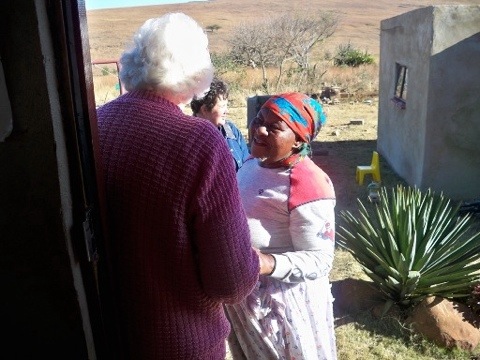




SALVADOR & DIANNE’S MSINDISI MONTHLY
NUMBER: 95 July 2012
PO BOX 1481
VRYHEID 3100
KWAZULU NATAL
SOUTH AFRICA
+27 (0) 728311008
+27 (0) 815836288
Email: msindisi@gmail.com ,
salv.di@gmail.com
KwaZulu Mission Website: http://www.kwazulumission.com
Personal Website: http://msindisi.googlepages.com
Dear Friends and family,
This month has mainly been composed of preparation for visitors and having visitors along with our regular activities of doing the care bear creche outreach, literacy class with Tholakele, discipleship with guys at Alpha, Tuesday cell group and Friday night bible teaching at Jonny and Kim’s farm.
The first major piece of news is that, after months of prayer and discussion, Phumlani has left his job in order to be freed up to do ministry. He has started to do some translation of materials into Zulu and goes out with Salvi to preach the gospel in Ngenitsheni. One afternoon Salvi was playing Zulu hymns on the guitar outside of two Zulu homesteads when the father of the home came out and asked Phumlani and Salvi to go in to share with the whole family. Many people were crammed in the round hut. The women were soaking long yellow grass in order to weave them to make small ropes. Salvi shared the gospel and also dealt with ancestral traditions in a way that he didn’t have to tell them it was wrong, they could see it was wrong by reading the bible itself. But only the Lord can touch their hearts. Another time Phumlani and Salvi preached and that was followed by a number of people asking questions. We are very encouraged when people ask questions.
In order to meet his needs Phumlani borrows our truck on a Monday in order to buy and sell. Please pray the Lord grants him wisdom as he runs his little business. But on one of his selling runs with his wife Thabi, a lady shared with Thabi that she heard Phumlani’s preaching. She said that his message was very good and right but it was too late for them having been married into homes that follow ancestral traditions. Apparently Phumlani must reach the young because they can choose for themselves! It is quite sad that people see the gospel as too hard an option to choose for this life but they cannot see that no matter how hard it is in this temporary life on earth it is much harder and more intense suffering to dwell in hell fire for eternity!
Di received Physio for her frozen shoulder. It could take two years for it to mend. She has been given exercises for her to do but please pray that the Lord will touch her shoulder. However Di tirelessly plods on. Her literacy class with Tholakele is going extremely well and Tholakele is ready to start reading the bible soon. We hope that she will do so with relative ease. Tholakele shares often at church and discipleship the things that scripture signifies to her. One day when Di was at literacy class, the gate to her veggie garden was left open and unfortunately a cow came in and ate all her veggies! On top of these things Di faithfully teaches the younger kids at Saturday kids club while Salvi teaches the older ones. Both of us are teaching the creation at this moment. Despite physical limitations Di worked so hard at preparing for visitors. We had 2 caravans lent to us for this month and one of them was covered in ants and needed a major clean out. Di had the hard work of Celani to help with that. Thanks to wonderful brethren we had blankets, cutlery, and furniture lent to us and food or money for food also given. The other huts in Phumlani’s home also needed to be prepared as well as filling up 80 litres of water for use in the outside toilet on two occasions – Salvi did those kind of jobs etc. We had two batches of visitors stay with us. The first lot was a group of 14 people, which included 4 children that hailed from Pretoria. The report of their visit is contained on the following link written by their bible teacher Clayton Lowane:
Mujuru also was invited to speak at Bethany Baptist Church concerning ancestral traditions. Being a Dr of chemistry is a tool the Lord can use to open doors of ministry. But Mujuru has a wonderful testimony concerning how the Lord led him out of ancestral traditions and the sufferings he has borne for Jesus’ name’s sake. He also showed how the same superstitions that pervade ancestral traditions also pervade many churches and encouraged the listeners to stay away from the hyper charismatic stuff in order not to confuse people in ancestral worship.
The second group of visitors was made up of our friend Sue Wells of the ministry Bezaleel which has been fostering and adopting children either affected or infected by HIV for close to 20 years. She came with an older sister in the faith, a widow called Lillian, and all 11 children. They came to our cell group meeting that week at Jonny and Kim’s and Sue loved the interactive fellowship around the word. The format of the cell group, if you didn’t know, involves the sharing of a meal together, then communion, praise and worship through singing hymns where anybody may choose the songs, open sharing and testimony followed by prayer and then the study of God’s word, which is going through the book of Romans at the moment. The following day we met at Jonny and Kim’s again for the kids to experience the farm animals and play at the dam. Our friends and old members of the cell, Olaf and Charnel came for a visit from Piet Retief and so did Magda and Belinda (our friends from Bethany Baptist Church), kids and some other friends bringing a wonderful chicken pie. We also had a time of studying the word together. The last day of their visit was spent taking Sue, Lillian and kids round Ithala to see the animals at the game reserve. It had been a long time since the older kids had seen animals and the younger ones were too young to remember. We also took Asimbonge from the Kraal and Phumlani’s nephew, Menzi who had never seen animals such as Zebras and Giraffes except in Photos. This day was followed by an evening braai and then singing hymns and choruses round the fire under a star lit night. We have asked Sue to write a report for the website which hopefully should be put up soon.
At bible study with Jonny and Kim on a friday evening another local couple has started to attend. We hope to get to know them more and learn about them but we were really touched by the wife’s prayer last friday when she thanked the Lord for “this oasis in the desert” referring to the bible study itself. We thank the Lord for His grace in these small things we can see his hand at work in our lives and through our lives to others.
This month we will see some more visitors. We will also be taking two nights to get away to the east coast for time out away from ministerial considerations and also to visit our friends that live in Stanger. We will also be attending a ministers conference at the end of the month sponsored by some people from Bethany Baptist Church.
For those who are interested there is a website with three audio messages uploaded that concerning the building of the Church and having a Zeal for God’s house. These messages were recorded in Port Elisabeth, South Africa 2011. http://www.sermon.net/msindisi
VISA update. We still have not as yet got any news concerning Di’s application for extension for Temporary Residence Permit. Her application is in process. Please pray for the Lord to guide our applications according to His will. Salvi’s application is with head office we have been told.
We thank you all for your prays and support, may the lord richly bless you as we labour together in His work.
Shalom
Salvi and Di
ELIJAH AND ELISHA
LOOKING WITH THE EYES OF FAITH
PART 16
2 Kings 6: 8 – 23
In the last session we saw that the sons of the Prophets built a new place. We could see the judgment of God against Israel in the action of the cutting down of the trees at the Jordan. But we also saw God’s grace to the prophet who was in debt having lost the axe head. In this session we will look at the King of Aram and how he tries to take the King of Israel.
VERSES 8 – 14 THE KING OF ARAM ATTACKS IN VAIN
There was not much friendship between Israel and Aram. In fact we see that the Arameans were raiding Israel. Aram had never really had good relations with Israel even though they enjoyed some form of treaty. The first mention of an Aramean in the Bible is Abraham’s nephew Bethuel and Bethuel’s son Laban. Gen 25: 20. According to 2 Samuel 10 the Arameans were unable to defeat King David’s men and made peace with David. In 1 Kings 11: 23 – 25 we read that God raised up an adversary against Solomon from Aram because his heart had been turned away from the LORD. The adversary’s name was called Rezon and he became the leader of a marauding or a raiding band. Through staying in Damascus and reigning in Damascus we see that he also reigned over Aram and he abhorred Israel. Today the country Syria still hates Israel. So there was no love lost between Aram and Israel. We see that the raiding bands were still sanctioned by Aram at the time of Jehoram, the son of Ahab. In verse 23 we see that as a result of the King’s failed attacks against Ahab, and his failure to get at the King of Israel, these raiding bands stopped coming into Israel in order to loot.
In verse eight we read that the King of Aram was warring against Israel and in the process of his warring he decided to set his camp in a particular place. The scripture does not give us an indication of where he wanted to set up his camp. The reason for this is that we are not reading an account of one single incident in verse 8 but this situation was repeated over and over again. The King of Aram would regularly take counsel with his servants, discuss the next plan of attack, and then he would choose a place to make an encampment in order to capture the King of Israel. We know he was after Jehoram because of his reaction when Jehoram foils his attempts by escaping. We know this was something that was repeated again and again because verse 10 tells us that this happened not once or twice, in other words, more than once or twice. It happened quite a few times. Every single time that the King of Aram pitched his encampment and sought to get hold of Jehoram, Jehoram had somehow already anticipated it and had stayed clear of the area where the Arameans would pass by and would be able to guard himself against their attacks. How did Jehoram know the Arameans’ agenda? How did he know their every move? It did not matter what course of action that the Aramean king had decided on, it was always preempted by Jehoram who frustrated all these plans. There was only one way that it could have happened and that was because there was a spy amongst his group of servants. Thus the king of Aram asks very bluntly in verse 11 “Will you tell me which one of us is for the king of Israel?” The king was angry because the only logical answer was that there was a traitor. There was no other reason. But often the problem with us is that we are looking for the logical answer but based on a logic that is bound up in a cause and effect universe. In other words, in a universe where everything can be explained scientifically and where God and miracles cannot intervene.
The King of Aram did not perceive what was truly happening behind the scenes. He was like what we often are like. We walk by sight and sight gives us a limited judgment. We do not perceive what God is actually doing. We are often like that with our prayers. We pray so quickly for people to be healed without realizing that there are different reasons as to why a person may be ill. One of the reasons is that we live in a fallen world and we are all susceptible to sickness. But that is not the only reason. Sometimes sickness is a trial, sometimes it is a teacher and sometimes it is because of sin. James 5: 15 gives recognition that some sicknesses may be related to sin in a person’s life when it says that the prayer offered in faith will restore the one who is ill and if he has committed any sin they will be forgiven. The following verse shows us that this healing, in the case of a sickness that is tied up with a sin necessitates confession to the brethren. This does not in anyway mean that we are to pre judge cases where someone does not get healed and start heaping guilt of sins that that person may or may not have committed. This is too simplistic a way to deal with all God dealings with us. Maybe that sickness is a trial through which God will glorify His own name. We see that in the case of Job but Job’s friends take the simplistic approach to sickness which says, sickness is a curse, God blesses the righteous, thus if you are sick you are not righteous. When someone takes this approach they may well end up making up sins that the person has supposedly committed. ‘Oh Job, you are suffering because you have withheld your hand from helping the poor and the needy.’ What this is to say is that we must recognise that we do not always see what God’s purposes are when it comes to things like sickness and trials. We see things by sight and we pick the answer that seems most logical to us. Thus it demands humility. The King of Aram was told that there was no betrayer but this thwarting of his purposes was down to a certain prophet called Elisha who tells Jehoram the words that he says in his bedroom.
It was Elisha that was telling Jehoram to stay out of the Arameans way. There was no naturalistic logical explanation but it was the logic of the higher reality that dictated that God, the living God was behind the scenes, doing His pleasure and affecting the course of the reality which men find themselves in. The King, though he made an assumption based on naturalistic logic, was not trapped by the naturalism of modern science. He was from a world view where the spiritual and the physical where interlinked. He had his gods and believed in the reality of the spiritual world. He knew that it was possible that there was a prophet who had power to do such a think as hear the words spoken from the King’s bedroom. These was not because he believed that the God of Israel watched over His people but because the prophet must have a certain kind of power that he could tap into and thus perform this amazing feat. Thus if they could capture the prophet, it would stop him from sending messages to Jehoram and thus they would be able to get at him.
V 15 – 23 GRACE SHOWN TO ISRAEL AND TO ARAM
What would you do if one day you woke up and outside your window was a whole load of Union protestors with AK47s in their hands chanting war songs? I do not think that you would say to your spouse, ‘Do not be afraid, for those who are with us are more than those who are with them.’ But this is the reality which Elisha could perceive. By all natural logic and reasoning he was done for and there was no hope of escape. They were surrounded. Here we do not read about Gehazi. He has been cursed with the leprosy of Naaman. So we read about another servant and he sees things according to a naturalistic logic. He is like what we often are like. We see things by sight but sight gives us a limited judgment. We do not perceive what God is doing behind the scenes. There was no naturalistic, logical means of escaping but there was the logic of the higher reality that dictated that God, the living God was behind the scenes, doing His pleasure and affecting the course of the reality which men find themselves in. The servant, like we often speak toward God when we are in a pickle, complained to Elisha. God sometimes promises us that he will protect or open the way for his purpose to come to pass, and then something in the realm of sight comes in a threatens the fulfillment of that promise and our whole expectation, our whole theology even, gets turned inside out. Did God not tell us? Did Elisha not say that there were more with them than with the Arameans? And yet Elisha still has to pray to God to ask that the eyes of the servant may be opened. The servant did not believe. We look at the servant and think that he should have known better and yet how often do we treat such words of assurance as some little psychological positive word of encouragement that have no basis in reality. You know like the words of an air hostess that says reassuringly, ‘There is no need to panic, everything is under control’ and meanwhile you look out the window and see all the engines on fire and you think ‘Who are you kidding?’ Faith and sight have to come to logger heads at some point because at some point faith is going to contradict our sight and then who are we going to believe?
Romans 4: 18 – 22. In hope against hope Abraham believed. This points to 2 occassions where Abraham held up the hope of an heir. The first instance he asked that Eliezer, his servant, be regarded heir. The second instance saw him doing the same for Ishmael. Both times God put down his hope, conjured up by the cleverness of his own flesh, and gave Abraham a promise. Now how did Abraham believe in the promise of God? Was it a blind faith that ignored the fact that he and Sarah were too old to have children and would dismiss such thoughts as negative confessions? No, verse 19 says that without becoming weak in faith, he contemplated his own body which was as good as dead. He looked at the problem that stood in God’s way straight in the eyes and in spite of the physical reality he believed. He did not pretend that there was no obstacle. He knew it was humanly impossible for the promise to be fulfilled but in spite of the evidence pointing against it happening he was fully convinced that what God had promised He was also able to perform. What faith! Elisha was not trying to say the right theological words so that his servant might feel a little better. If that was what he was trying to do it is plain that it was not working. It is a bit like someone telling you a joke just before you are to be shot by a firing squad. It does not work. No, Elisha was speaking out of the reality of faith. It was not a ‘there, there everything will be alright in the end’. It was a matter of fact. ‘Do not be afraid, because we actually do have more with us than they have with them.’ It is true. And because it is true we may take courage. But it is not enough for us to be assured of that and to tell others. Elisha tried to convince the servant but it was not working. God had to open the servant’s eyes. What a great example of how evangelism should be. You share with the person and then you turn to God and ask Him to open their eyes. The servant received a different type of sight, he saw the reality of what was happening spiritual, behind the scenes. I like what my old Pastor, David Hamilton, said once. He said ‘A person isn’t changed by information, a person is changed by revelation.’ A person needs information. Our part is to give people information but they also need the revelation of the truth by God opening their eyes. All must be perceived by faith and faith is a gift of God.
The servant’s eyes are opened but then God asks for the eyes of the Arameans to be closed. They receive blindness. And just as the sight the servant received was a different kind of sight, so also the blindness the Arameans received was a different kind of blindness. It was a blindness where they could see and yet they did not see. They saw but they did not perceive who it was that was speaking to them. This is such a picture of spiritual blindness. They see and yet they do not see. In verse 19 Elisha says to them that they had not found the one they were looking for and that he would bring them to the one they were looking for? Were they not looking for Elisha? Yes they were at this moment, but getting Elisha was only part of the process in order to get to the one that they really wanted who was the king of Israel. The King of Israel has been spared. God has shown him grace once again, though he did not deserve it. So Jehoram has the army of the Arameans in his hand and he is eager to kill them. Note the repetition of the request. ‘Shall I kill them? Shall I kill them?’ Jehoram was eager to do it. It would be an easy victory. He wanted them dead and yet Elisha then turns the grace onto the Arameans. He reprimands Jehoram for requesting such a thing. It was God who captured these men and not Jehoram. They were God’s prisoners and if He wanted to be merciful to them what was that to Jehoram? Rather the King was to set bread and water before them and then let them go.
What do we see when we look with the eyes of faith at this passage? Why did God show mercy to Jehoram and then proceed to show mercy to the Arameans. God had a plan for the Arameans. They would be God’s vessel for judging the House of Ahab, but the present King, Ben-Hadad was not God’s chosen vessel for judgment. God had already told Elijah that he had picked Hazael to be the King who would bring judgment on Israel. Under Hazael Jehoram would be wounded by the Arameans and then Jehu, future king of Israel would kill Jehoram and his son. Thus a full end would be brought on the House of Ahab. But Hazael was not yet on the scene. Thus God would not grant Ben-Hadad success in capturing and slaying the King of Israel. He would thwart his plans. This was not a total protection as Israel had experienced the raiding bands of the Arameans and in the rest of the chapter Ben-Hadad lays up a siege. But Jehoram was protected by God. God had ordained a day for judgment but that day had not yet arrived. God showed mercy to the Arameans because one day they would be God’s vessels of judgment on the house of Ahab. But that Day of Judgment had not yet come. Jehoram was in a day of grace. And that grace was accepted by Jehoram but it would not spare him from the judgment that was to befall him.
And so, yet again, we see in Elisha a picture of Messiah who would bring in an age of grace and yet not to such an extent as to completely spare this world from judgment. God is slow to anger but with enough provocation His anger will eventually arrive and when it does it will be terrible. We tend to fall to two errors. One error is that we think God is just waiting for en excuse to send a lightning bolt out of the sky. The Jewish Rabbi’s taught that in mercy the world is judged and they are right. God waits and waits and waits until the sins are full up and then vents his fury. The other error is that God does not feel angry at all, that he is simply a God of love and does not want to hurt anybody. They would reject the teaching that God will send a 7 year tribulation and see it as inconsistent with their perception of His character. Both errors are wrong. Long is God’s patience and heavy is His judgment. We must see everything through the eyes of faith and not by sight. We must see our lives through the perspective of God’s promises to us and we must see the happenings in this world through the perspective of the prophetic promises of God and the character of God as revealed in scripture. May He grant us to see when we cannot see. May we see His footprints behind the scenes that we may know His purpose in our lives.
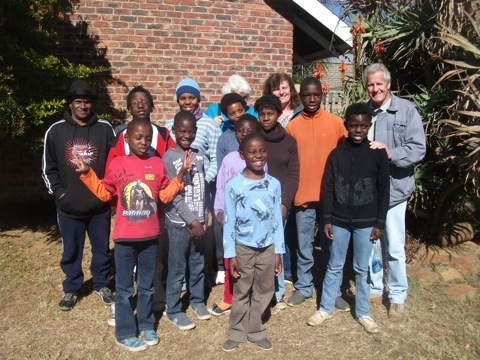
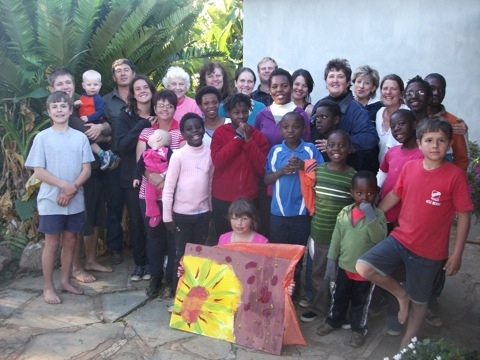
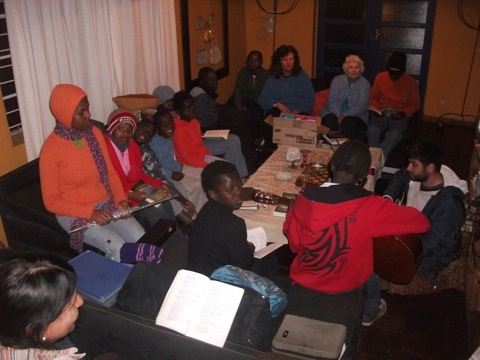
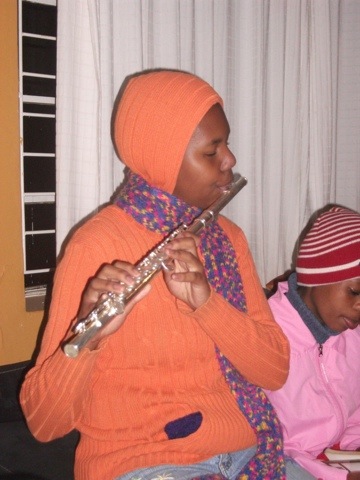
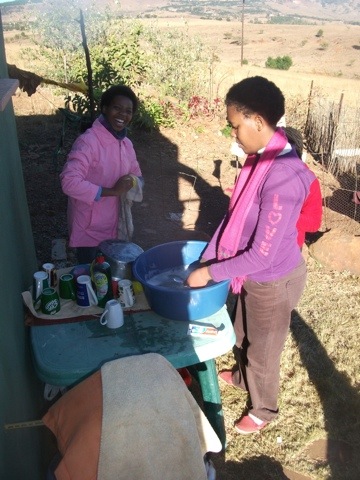
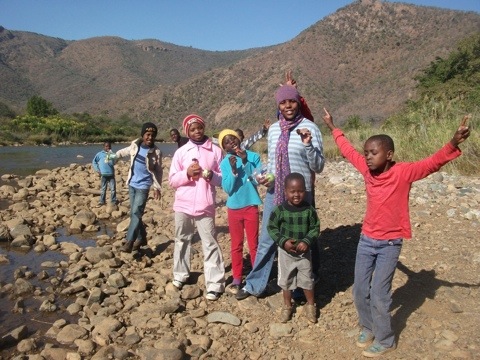
By Clayton Lowane
Dear brothers and sisters,
It was on 15 June 2012 at 21:45 when the church in Pretoria visited brothers and sisters at the Ibandla Lendlela Eyodwa church in kwaNgadi in KwaZulu Natal. Everyone from the church in Pretoria was so excited most especially because it was our first outing as the whole group and were going to fellowship with our brothers and sisters of the Ibandla Lendlela Eyodwa church. A group of ten adults and four children embarked on this wonderful journey. The names of brothers and sisters in the Lord that visited the Ibandla Lendlela Eyodwa church were as follows: Munyaradzi and Rachel Mujuru; Karabo and Tebogo Letshulu; Kingsley and Lindel Jere; Welheminah Marumo; Abel Maluleka; Matsoso Molwantwa; Clayton and Maggy Lowane. We arrived in kwaNongoma on 16 June 2012 at 05:00 in the morning and were well received by Phumlani and Thabi; Gogo; Salvador and Di. We would like to share with you our experience with the Ibandla Lendlela Eyodwa church.
On 16 June 2012 at 09:00 there was a kid’s club meeting for the Ibandla Lendlela Eyodwa church. The age of the kids that attended ranged from about 3 to 16 years. Maggy and Clayton Lowane from the church in Pretoria felt so privileged to have been a part of the kid’s club meeting. Although it was a Saturday, the kids were punctual for the meeting. Salvador led the singing and played the guitar, as the children sang along with Mama Celani from Ibandla Lendlela Eyodwa church, Clayton and Maggy. All the kids made the same moves with their hands and feet at the same time while singing which showed that they have been well taught. The songs that were sung were in Hebrew, Zulu, Pedi and English languages. The singing was so uplifting that it had quite an impression on Clayton and Maggy. All the songs were scripturally based such that the children were learning about the message of Christ as we were all praising God. Clayton and Maggy were deeply touched when all the children prayed one after another before the bible study of the day. This reminded us of a time in South Africa when the bible was taught in schools. The majority of South Africans in the former days learned about the message of the gospel at such a tender age just like the children in the kid’s club of the Ibandla Lendlela Eyodwa church. Our hearts were filled with immeasurable hope having heard the kids call on the name of the Lord at such a tender age.
Salvador asked Clayton for a brief introduction which also included his occupation and that of his wife Maggy. Maggy and Clayton introduced themselves as Salvi translated into Zulu in order for the kids to understand well.
Clayton explained his occupation and this of his wife Maggy to the kids and further encouraged the kids as he shared briefly about his childhood which included him having attended a kid’s club 18 years ago. He further told the kids that he was saved when he was 15 years of age. Clayton was so humbled when he was trying to explain what he does for a living by referring to a TV show that accurately describes his occupation when he learned that they do not even have televisions in their houses. What we learned from this is that we need to count our blessings and be grateful for what the Lord has given to us. It is common for us believers not to be content with what the Lord has given to us these days. After the introductions, Maggy Lowane had an honour to minister to the kids from the book of Jonah 1:1-Jonah2:4. She shared about the importance of obeying God and the consequences of not obeying Him. The learning was interactive and the kids were asked questions to which they responded. The kids had an opportunity to share the lessons learned from the passage. Their explanations showed that they had understood the story of Jonah the prophet. Clayton and Salvi also shared what they learned from the passage that was studied.
On 17 June 2012, all the brothers and sisters from Pretoria attended the church service of the Ibandla Lendlela Eyodwa church. Everyone had an opportunity to choose the song they wanted the church to sing. Phumlani the pastor gave us the direction of the sequence of events as we continued with the service. All the brothers and sisters from Pretoria were greatly challenged and encouraged to hear our brothers and sisters from the church of Ibandla Lendlela Eyodwa give their testimonies and encourage us from the scriptures. The challenge was in the fact that they neither have concordance, commentaries nor internet but the Spirit of the Lord working in their lives. There was a unity between us all in our scriptural beliefs which was a proof of the unity in the spirit with the Ibandla Lendlela Eyodwa church. This unity between us confirmed what the scriptures teach especially to the church from Pretoria that the Holy Spirit is our teacher. Clayton was given an opportunity to share from the book of Matthew 7:21-28; 1 Corinthians 3:10-11 and Ephesians 2:19-22. The topic that he encouraged the church with was Christ the rock, the chief cornerstone and the foundation. Phumlani translated to Zulu since Clayton shared in English. Mujuru was also given an opportunity to share from Exodus 20 amongst other scriptures and shared about the topic of ancestral worship. The meeting was interactive as Mujuru responded to questions about ancestral worship and the body of Christ learned more about this topic.
The Ibandla Lendlela Eyodwa church reminded us of the church as it was in the book of acts. We were so blessed to have shared a meal with our dear brothers and sisters of the Ibandla Lendlela Eyodwa.
We were touched by the quiet demeanor and humility of Phumlani who directed the program while sitting among other believers. As we spent time with Phumlani, we saw that he was not puffed up and had a heart of a servant. We have seen that the kids from the church in Ibandla Lendlela Eyodwa were very disciplined and attentive during the service and are going to engage with Phumlani, Thabi, Salvi and Di so that we can learn from them. We are always touched by the lives of Salvi and Di as they have forsaken the pleasures of this temporary life for the sake of the gospel.
The church in Pretoria would like to lastly express its sincerest gratitude to Phumulani, Thabi, Salvador, Di and the church at large for their hospitality, humility, kindness and love.
The grace of our Lord Jesus Christ be with you all.
From your brother in Christ,
Clayton Lowane
Shalom
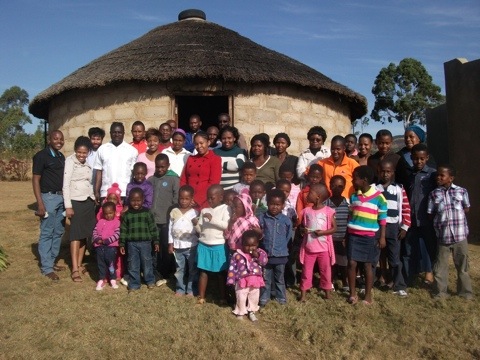
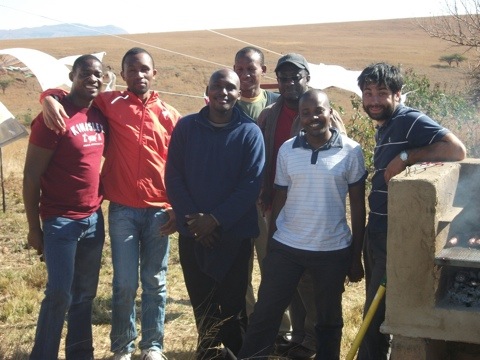
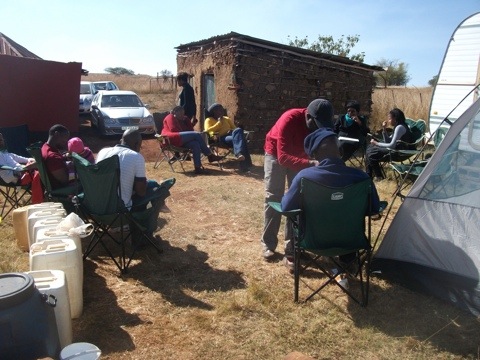

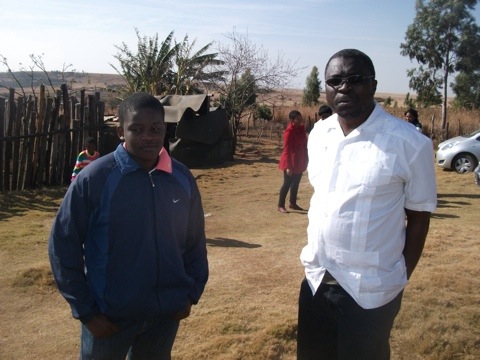
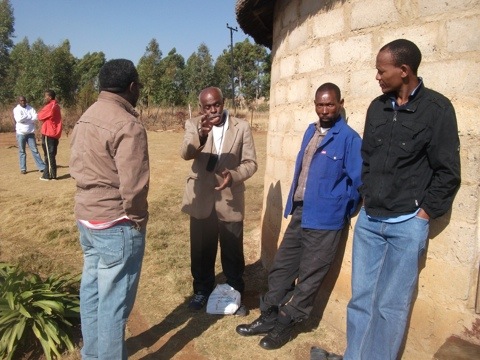
SALVADOR & DIANNE’S MSINDISI MONTHLY
NUMBER: 94 June 2012
PO BOX 1481
VRYHEID 3100
KWAZULU NATAL
SOUTH AFRICA
+27 (0) 728311008
+27 (0) 815836288
Email: msindisi@gmail.com ,
salv.di@gmail.com
KwaZulu Mission Website: http://www.kwazulumission.com
Personal Website: http://msindisi.googlepages.com
Dear Friends and family,
We finally have news about Salvi’s application for permanent residence though not about Di’s extension of Visa application. Salvi’s application for relaxation of criteria went all the way to the top, to the minister of Home Affairs, Mrs Nkosana Dlamini Zuma, the ex-wife of the president of South Africa himself. She declined Salvi’s application for relaxation of the criteria as he did not fit the criteria for application. However as soon as we received the news we realized that we should have already put in the application for Salvi’s extension of visitors permit on that day as his current visa expires on the 21st of June. Amazingly we were able to get all documentation together over twenty four hours and we had Salvi’s application submitted by the end of the week. God gave favor. We have never been able to submit an application that quickly before.
At the beginning of the month Di taught the kids at care bear preschool in Vryheid. Di used the shapes that they had been learning in the preschool to teach different aspects of the gospel message. The kids love the guitar and they will stiffen their left arms like it is a guitar neck and then furiously strum the air with their other arm. It is most hilariously cute to watch them. But we trust with the clever repetition Di employs of Gospel themes throughout the diverse lessons that those truths will remain with them throughout their lives till the Lord will quicken them to accept the gospel.
At the beginning of the month Phumlani went to visit Zimbabwe with Jonny, a member of our cell group. They were visiting a cell based church (a church that stress the importance of the cell group more than sunday attendance) to see how they run their church system. It was Phumlani’s first time out of South Africa and first time on a plane. Jonny is a farmer in and around where we live. He is a dairy farmer cum chicken farmer who also grinds mealie (corn / maize) and farms some sheep with his wife Kim. Jonny went to Zimbabwe to be a support and encouragement to Phumlani and to make sure that Phumlani managed to make it to the plane. They both stayed in a township in Harare and were looked after by the leading elder there Ngoni. Here is a short report Phumlani wrote about the trip:
__________________________________
PHUMLANI’S REPORT FROM THE ZIMBABWE TRIP
MY JOURNEY TO ZIMBABWE
I would like to thank our brothers here, Salvi and Di, those who prayed for me to go to Zimbabwe and God who made our trip to be possible and safety. We met our brothers there at Zimbabwe. We had a nice fellowship. We spent about five days and we visited their cell groups. The first night Ngoni, the elders of the church, show us how they do their meetings on the cell groups. They share the word that was preached on Sunday. They let everyone on the group share what he/she learned on the message and how are we going to apply it in our lives. Their emphasis was on the book of James 1:22-24. Their focus was more based on the cell groups because their church was big in numbers. Then Ngoni the elder said cell groups help him to not hold all the work, i.e individual questions, individual problems. Ngoni said the leader of the cell group is going to help those people who mare with him. I asked Ngoni about how many cell groups are there? He said it is about 14. The next two days he shown us the cell prayer. All pray one and the same time for different things. All cell groups meet at 6:00pm-7:00pm during the week and during the day we visited some members of church. We encouraged them by God’s word and we prayed with them and Ngoni asked me to lead Bible study. I did the book of Jude. Our last day was Sunday. Ngoni gave the children opportunity to share God’s word on the meeting.
______________________________________
While Phumlani and Jonny were away, we helped Jonny’s wife Kim on the farm and with their selling to the local communities. Jonny and Kim do an amazing service to the local community in selling the products at a reasonable price. When they sell out of food the people are full of complaints stating that they are going hungry. A common question we were asked when we didn’t have tomatoes or maize meal for sale was “What are we going to eat?” There were some Zulu guys who bought a shop in the nearby community who were selling but we were told that they were charging 3 times the price Jonny and Kim sold for. All this makes us marvel that there has been so many land claims on farmland. When farmers are pressurised into selling their farms and then the farms are put into the hands of the community the farm might produce for up to one year if that but then the farm comes to a stand still. As we helped out on and off for a few days Salvi got opportunity to witness to one of the farm workers.
Di also did a couple of clinic runs this month. Her literacy classes with Tholakele this month, though stop start have seen much improvement in Tholakele’s reading. We reckon that Tholakele will start reading the bible within a few months. Di’s shoulders have not been good for a while and they have been throbbing. The doctor said that Di has a torn ligament. Di has been trying to rest her shoulders as much as possible and not doing any of the heavy lifting which is not always possible when Salvi is out. She has received some magnesium product that originates from the dead sea in Israel and she has noticed a marked improvement. We are set to book her an appointment with the physiotherapist in Vryheid on monday. The last time Di called in to her office the physiotherapist was out running a marathon!
Salvi has finished the Israel studies with Alpha and now they have started a survey of every book in the bible. We hope that this survey will enable them to understand the bible when they come to read it, to give them a framework of the whole scripture. Salvi also fixed up the fencing for Di’s garden to stop the cows from coming in. He was not impressed of being lacerated by the barbed wire constantly – he really needs to harden up – which was practice for doing the fence at Florence, a lady whom we had a garden built for. The cows were reaching over the fence so Salvi put a couple of lines of barbed wire over the top to stop the cows from eating her fresh growing veg.
Bethany Baptist Church very kindly donated a lot of clothes and tinned food to the mission. We have given the food to the poorest in our church but also to three families. One of which the mother was recently widowed and the other house hold the man, Veli had recently lost his brother. His mother had passed away a while ago and it is just him and his younger sisters. Most of the clothes have also been given out.
Salvi has continued witnessing in Ngenitsheni and one older lady has expressed desire for further bible study. We are not committing but going to test the waters. People can be quick to say that they want to study the bible to please you. Salvi is going back next week to preach there. It is quite amazing that for the last couple of weeks it has seemed that hardly a person would come out and Salvi would be preaching to the air. But then nearer the preaching time three or four people would come out besides the small number of children who always seem attracted to the guitar and singing.
In the third week of May we went to visit our brethren in Stanger that are part of Mark Van Niekerk’s church pastored by Calvin Josiah. Mark’s family are the only white members of that fellowship, everyone else being South African Indians. We stayed with Calvin for the first time and had much discussion and fellowship. We were there to help Calvin do a tent outreach to the Zulu settlement near where his church meets. Salvi was asked to preach over the four meetings as he can preach in Zulu. This was in the hope of establishing a church plant. The messages were hard hitting but firmly gospel orientated and seeking to separate those who are serious about getting to know the Lord from those who would be looking to play games. The meetings went very well. It was Calvin’s first time doing a crusade like this. Salvi also preached a message for the church in English based on Hosea 5. Mark had just returned from New Zealand where he had spoken in Di’s home church among other places of the heresy of replacement theology. Mark has an extraordinary love for the salvation of Jewish people and conducts short term mission trips to Israel to witness concerning messiah to Jews and Arabs in the land. If anyone would like to obtain a copy of Mark’s message in New Zealand please email us and we will send you the necessary details. On the last two nights of being in Stanger we stayed with Mark and Marianne and had wonderful fellowship with them. It was wonderful to hear what the Lord had been doing through Mark in New Zealand and how very timely as Stephen Sizer had gone to New Zealand with his replacement theology. Many, many churches in New Zealand are replacementist but thanks be to God, the Lord used Mark to touch quite a number of people there to have a heart for Israel.
For those who are interested there is a website with three audio messages uploaded that concerning the building of the Church and having a Zeal for God’s house. These messages were recorded in Port Elisabeth, South Africa 2011. http://www.sermon.net/msindisi
VISA update. We still have not as yet got any news concerning Di’s application for extension for Temporary Residence Permit. Her application is in process. Please pray for the Lord to guide our applications according to His will.
We thank you all for your prays and support, may the lord richly bless you as we labour together in His work.
Shalom
Salvi and Di
ELIJAH AND ELISHA
THE SONS OF THE PROPHETS BUILD A PLACE
PART 15
2 Kings 6: 1 – 7
Elisha has done numerous miracles. And now we are coming to the end of Elisha’s miracles that the scripture has recorded. Elisha may have done other great works but the scripture has recorded these miracles because they talk of something that we would see in Messiah. In fact three of the miracles we have read directly mirror miracles that Jesus did in His earthly ministry. Raising a boy from the dead, feeding many people from a little food and curing a leper. In the last session we looked at the healing of Naaman and the cursing of Gehazi, Elisha’s servant. There were huge parallels in that narrative to the truth of the partial hardening of Israel. The way parallelism works in the bible is that a story will bear some resemblance to the truth or to the New Testament person it is portraying. We take someone like Joseph and we see that there are many parallels with Jesus in his first coming but he will not parallel Jesus in every way. The reason for that is that if he did so he would be none other than Jesus Himself. So the way we understand parallels is through the clear teaching of the New Testament itself. This is what some people call Midrash. Midrash is looking at the spirit of the Law and not just looking at it in terms of what the actual words mean. Historically and grammatically it has nothing to do with us as believers. It is purely about the handling of dead bodies by priests. However because the New Testament speaks of us as being priests, believers as being alive in Christ and unbelievers as being dead in their sins we see that there is a New Testament application for us. However, doing this kind of interpretation does not negate the historical and grammatical mode of interpretation. There must be that literal interpretation in place before going onto the other interpretations. The historical and grammatical method only speaks of what the text meant to the people who were involved or to whom the text was written. However, we do not live in that day. We need to transfer that meaning into our own lives. Thus on top of the historical and grammatical approach we need other interpretations which are based on the former. Other interpretations are, interpreting what this teaches about how we should act in our day and age, how we should think, allegories of larger biblical themes, and pictures of prophecy demonstrated in the biblical accounts. And there are many parallels in the Old Testament which Paul makes note of in 1 Corinthians 10: 11 speaking of the narrative of the Exodus. Now all these things happened to them as examples: and they were written for our instruction, upon whom the ends of the world are come.
2 Kings 6:1 – 7 BUILDING A PLACE
For many people this narrative is merely given to show Elisha’s care for something as mundane as recovering a borrowed axe head. The point being it was for someone who was concerned about not being able to return it to its owner. This interpretation should in no wise be minimized as restitution is of major importance in the Old Testament and is a principle we should hold to. However there have always been many debtors. Why does the Bible make special mention of this one? I believe that it speaks of the preparation of Israel for the judgment that God would bring through Hazael. Elisha is not only an agent of grace but is also an agent of judgment. We saw this two fold aspect of his ministry in the session that dealt with him taking Elijah’s mantle. To the people from Jericho he was a source of salvation but to the young men from Bethel he was a source of judgment. What we see in this passage is that the sons of the prophets gathered or lived in a place that had become too small to contain them. We are either talking about a communal home for the prophets to live in or we are talking about a place where they gathered to sit and hear God’s instructions and teaching. The word for ‘dwelling’ or ‘living’ is the Hebrew word ‘Yashav’ and it is the same word that is used to say that the sons of the prophets were sitting before Elisha in 2 Kings 4: 38. So most people would say that they were looking to build a meeting house, rather than build a communal living house. But why did they want to build a bigger place?
In this we see that God had blessed their number and caused them to grow. The sons of the prophets did not have an agenda to build a big and expensive place in order to impress people. The reason they wanted to build a bigger place was out of necessity and not out of desire. Notice we are not dealing with a rich bunch of people. They did not ask for cedars of Lebanon or for stones of marble but contented themselves with what was within their means of provision. Simple trees from the Jordan. Contrast that to 21st century Churches that seek huge building projects and brow beat their members to give finances so that the best materials can be bought. They may use passages where the Bible speaks of the building of God’s temple, and they may say that God only wants us to give the best. Yet they twist the truth because the temple of God is not a man made building anymore, but it is the people of God. Secondly, God does not expect us to give the best, but He wants us to give OUR best. Thus the widow that give 2 small coins gave more into the temple treasury than all the others. She gave her best. When it comes to meeting places, we must shed ourselves of the boastful pride of life that seeks to create something big. We must build when there is the necessity of building and according to our means.
The necessity was there because the place had already become limited. The word ‘limited’ in Hebrew is the word ‘Tsar’ and it literally means that the place had become too pressed in. It had become too tight or too narrow. Thus is linked to the Hebrew word, ‘Tsarah’ which means trouble or affliction. Thus the meaning of affliction or trouble is something that presses in on you. The same thing happened between Abram and Lot. They were grown so large that the land could not sustain them. (Gen 13: 1 – 11) In this context God used the affliction, the pressing in, to separate Abram from Lot. And then God could reiterate His promise to Abram.
The sons of the prophets were in a place that had become too narrow for them. It had become an affliction for them and thus they were forced to leave and build elsewhere. God may use affliction for a number of reasons but one of the reasons that God uses it is to get us to move to the place where He wants us to be or to get out of a place where we should not be. This is both figurative and literal. Figuratively it may be to do a task that God wants us to do or to get us to a certain place spiritually. Literally it may be to move you out to the physical place He wants you to go. This is what is meant by the phrase ‘stirring the nest’. A young eagle is not meant to sit in the nest all through its life. The eagle is meant to fly and if the mother eagle does not do something, the baby eagle will just stay in the nest and die there. So what she does is she stirs the nest. She takes out all the fir lining, all the stuff that makes it comfortable so that there are just irritating sticks. And if the baby eagle still does not get out of the nest she will start to destroy the nest. That is an amazing use of affliction to get someone out of where they are. Sometimes God will bring affliction into our lives in order to purify us and to bring into our lives the fruit of patience and perseverance. At other times God brings affliction in order to move us from where we are to the place that He wants us to be in. This said we may say that the sons of the prophets had a legitimate reason to move place.
Secondly, they did not leave simply on their own initiative. They sought for confirmation. They asked Elisha if he would let them go. Sometimes it is hard to know God’s purpose of affliction in our lives. For some of us, our immediate reaction to affliction is to run away from it. Even when there was a need, and the need was legitimate, they still waited on the Lord. They sought wise counsel from one who walked closely with the Lord. Not only this, but they asked Elisha to go with them. They did not simply want permission but they sought to remain accountable in the building work that they undertook. What an excellent example for us. It was God’s will for them to leave but they were not simply content to rest in the knowledge of that. They wanted God’s hand to be with them all the way. If we have the same mind as these servants then we will place ourselves within a protection from the pride of the flesh. If there is no accountability then there is a danger that we can veer off the path onto our own agenda. He who separates himself seeks his own desire. There is submission, there is order, and there is accountability.
RAISING THE AXE HEAD
The next aspect of this narrative concerns the prophet who was felling a tree and his axe head fell into the water. The problem with this was that the axe head was not his own but belonged to another. In other words he had requested it or begged it from someone. This is a poor group of people. It was not big business being a true prophet of God. You do not make a lot of money by preaching the Truth. If that was their desire they would have fared better by being a prophet in the court of the king. Therefore there was a problem because this prophet would have had to return the axe to the master. There is no talk of, ‘well it was an accident. He will just have to bear the loss for the sake of the kingdom of God.’ How different to the stories that Pastors sometimes give to their flock. There is a lady I knew who went to a word of faith church and believed the lie that God would return it hundredfold if she gave more money in the offering. When it did not happen she waited out side the pastor’s house for an explanation. He did not want to see her but his answer was, it was either lack of faith or some unconfessed sin in her life. He put the blame on her. Of course her money was not returned. As Ronald Dunn wrote in his excellent book, ‘Faith Crisis’, ‘one of these days someone is going to sue God because of breach of promise.’ But this prophet does not resolve to say to the owner of the axe, ‘You cannot get the axe back because of your lack of faith or some unconfessed sin in your life.’ If the prophet promised that the man would get the axe back he knew that he had to do it. Thus the prophet was in a debt to the owner of the axe.
Elisha cuts a stick and throws it in the Jordan. This makes the axe head float so that the guy can take it and thus get out of the debt he was in. In Deuteronomy 20: 19 and 20 we read that when Israel were besieging a city they were not to use their axes to cut down fruit trees but only trees that they knew were not fruit trees. John the Baptist took this theme and expounded it in the New Testament in speaking concerning the judgment of Israel. Just as these prophets were cutting down trees at the Jordan, so John the Baptist, at the Jordan, prophesied of the cutting down of trees that did not bear fruit. Mt 3: 7 – 10. There would be a judgment of fire against the trees that did not bear fruit. John was the greatest prophet under the Law and he epitomized the purpose of the Law which was to convict hearts of sin. Thus the baptism of John was a baptism of the confession of sin. It was a baptism of repentance. The cutting down of the trees with an axe, symbolized a judgment against those who would not repent. Thus in Romans 3: 20 Paul explains that the Law of Moses cannot justify a Jew because through the Law comes the knowledge of Sin. The purpose of the Law is not to save but to bring someone to the knowledge that the axe is at the root of the tree. It can only lead as far as repentance but no further. So in Romans 7: 10 Paul said that the Law that was to produce life in him resulted in death for him. We see that Israel, at the time of Elisha had not repented and this cutting down of the trees symbolized them being under judgment.
However there is one problem with this analogy concerning the narrative in 2 Kings 6: 1 – 7 and that is this. The wood that was cut down was not there to be thrown into a fire but would be used to build a meeting place for the sons of the prophets to sit under the teaching of the Lord. However in 1 Corinthians 3: 10 – 15 anything that is built of wood will be burned with fire. The fire does not come immediately against a church but at a time appointed by God. So with Israel as the people of God, they also would not experience the judgment immediately though it had been decreed. They had been judged already as far as God was concerned but the timing of the actual judgment had yet to arrive. God still persevered with Israel because of His grace and caused His prophets still to reside within the house of Israel if perchance Israel may repent and be saved. Yet the writing was on the wall. 1 Kings 19: 15 – 18. Here we see that God had already decreed the judgment. Though Hazael was spoken of first, Elisha was anointed first. Elisha would fulfill the commission of judgment given to Elijah on Elijah’s behalf. Elisha would anoint Hazael and Jehu. Thus Elisha was the main vehicle of judgment. But what would Hazael do to Israel? 2 Kings 8: 12. I do not want to go into this verse in any detail as we will return in the future to it but we see that Hazael would do 4 things, the first of which would be to set their strongholds on fire. This would be a foretaste of what Assyria would do to Israel. Thus we see that Elisha as an agent of grace was also an agent of judgment. The Law of God that was to give life results in death. So the judgment had been signalled with the cutting of the trees but there was no fire sent yet as God still continued to cause His prophets to dwell in the House of Israel because of His lovingkindness and faithfulness to His covenant.
But Elisha does not get rid of the debt by getting rid of the axe and calling the owner to forget about it. He simply throws in a stick to raise it up and to have it restored. The word for stick in the passage is the Hebrew word ‘ets’. Ets literally means tree. Just as Moses threw a tree in the water to make the waters sweet, so Elisha throws in a tree in order to raise the axe head. See the picture. Jesus did not come to abolish the Law but to fulfill it. He does not get rid of the debt by simply cancelling it. He does not say ‘Well you messed up, it does not matter. Let us call it quits because I can see you are sorry.’ He meets the righteous requirement of the Law and cancels it by the restitution of the cross, of the tree. God cannot forgive us simply because we ask for it. There has to be a basis of forgiveness. God’s anger against sin, and His judgment needs to be satisfied. That is why Jesus had to suffer and spill His blood on the cross. ‘Do we then nullify the Law through faith? May it never be! On the contrary we establish the Law.’
So in applying this to us let us ask some questions. Is God bringing affliction in our lives, is He causing things to press in on us? Is He doing it to bring about perseverance or does He want us to leave the nest? Are we waiting on the Lord for His timing? And if we are to go somewhere or do something are we doing it off our own backs or are we being accountable? Are we servant minded or are we empire minded? Are we obedient to God’s voice or are we disobedient? If we have been disobedient, there is a way that can be put right by turning to the cross of Christ. There was once in our lives where we turned to the cross and died with Christ. But Paul also says, ‘I die daily.’ In the scripture it says concerning Babylon, ‘Come out of her my people that you do not share in her sins and partake of her plagues.’ In Jeremiah 51: 6 it gives a similar warning at the time that judgment was about to fall. In other words, it is not too late to turn until it is too late. It is not too late to turn until the judgment has fallen. The house is still standing at this point. Do not carry on in your own ways. When God shows you the time, when He tells you, come out from among them so that you do not share in her sins and partake in her judgment.
SALVADOR and DIANNE’S MSINDISI MONTHLY
NUMBER: 93 May 2012
PO BOX 1481
VRYHEID 3100
KWAZULU NATAL
SOUTH AFRICA
+27 (0) 728311008
Email: msindisi@gmail.com ,
salv.di@gmail.com
KwaZulu Mission Website: http://www.kwazulumission.com
Personal Website: http://msindisi.googlepages.com
Dear Friends and family,
We can hardly believe we are in April. It just seems the time is flying by this year. This month has been unusual in that we have participated in activities that are outside of our routine. Firstly, we got back from Port Elisabeth and we were thoroughly blessed to see the brethren there and the sense of fellowship they have. We have since learned that several of the visitors for the passover and meetings have since joined the fellowship there. Praise the Lord for His goodness.
In Vryheid, we have taken opportunity to do plenty of house sitting as Salvi had a deadline to submit two assignments before the end of the mont to ensure his continuation in his theological studies. He managed to get them done over a week and has now started studying the last module for his diploma level before he will be able to go onto the degree level which is the last level of his course. For those who may be interested, Salvi’s bible college “Kings Evangelical Divinity School” is working on opening a way for students to do the degree with a focus of Jewish-Christian studies. For more info please visit the following link http://www.kingsdivinity.org/about/centre-for-jewish-christian-studies .
While house sitting, Salvi was invited to preach the word at a Christian Evangelical Zulu meeting on Good Friday. Salvi spoke about being ready for Jesus’ return and the message seemed well received. Salvi also sang a Zulu song called, ‘Hallelujah Hosanna’ in isiZulu, isiPedi, Afrikaans, English and Hebrew which was apt for Jesus said that Israel would not see Him again until they cry out the words of this song to Him.
This month we also gave out about 2000 bibles donated for 2 schools. Evangelism still continues in the area of Ngenitsheni and Salvi had opportunity to contradict a preacher of the Nazirite sect. The Nazirites in KZN are followers of a late prophet called Isaiah Shembe. He is a false Messiah. The traditional teaching of the sect is that Jesus was the white Messiah and Shembe is the Messiah for black people. Numerous cars can be seen on the streets of KZN with stickers which say ‘Shembe is the way’. People follow him because of the alleged miracles he did. Strangely they see Shembe as equal to Jesus, as the prophet like unto Moses for the Zulu people, and the comforter that Jesus promised to send from the Father.
This month we have also helped with the wedding of the daughter of brethren, Craig and Magda, at the Bethany Baptist Church. Di took the whole week to help out practically. Salvi had a song recorded and ready as backing track. He arranged a traditional Hebrew song sang at weddings called ‘Dodi Li’ which lyrics are from the ‘Song of Songs’ but Salvi wrote an coda in English to emphasize the relationship between Christ and the Church. The song can be downloaded at the following link http://soundcloud.com/msindisi-1/dodi-li-mp4 for free. Before Salvi sang he gave a brief exhortation for the hearers to be ready for Jesus’ return. Apparently Magda’s brother was challenged and by it and wants to find out more. So we will see if anything transpires and whether we may visit him.
Salvi has continued discipleship with the Alpha brethren and we have just finished a series of studies concerning Israel and their place in God’s purposes as His elect nation. Next we will be doing a survey of the Biblical books starting with the Torah, first five books of the bible. Di’s literacy class with Tholakele has been stunted but she continues to practice reading and listening to her audio bible. Di has just taught the care bear creche and used different shapes as visual aids to teach about different aspects of the gospel. We are usually welcomed with loud applause when we turn up. In fact last week, in a supermarket called Checkers, a lady who works there came up to us and said that her grandson had spotted us in Checkers and told her “There is uncle Salvador”. When she told him that she did know us, her grandson replied by saying “What! You don’t know uncle Salvador?!!!”
Phumlani has gone to Zimbabwe being accompanied by Jonny, a farmer who is a member of our tuesday night Bible study. They are visiting a cell based church group in Harare to see how they operate as a Church and how they disciple. We are hoping that Phumlani will be inspired by the visit and will be sensitive to whatever the Lord might want to tell him. We have heard they are well and they will be set to come back tomorrow. It is a time of new experiences for Phumlani. It is his first time outside of South Africa, his first time on an airplane, and we heard that at the airport his first time on an escalator. When he saw the lift he told Jonny that he wanted to ride it as he had never been in a lift before either! With Jonny being away, we have been helping his wife Kim with the farm where we can. We have gone out selling with her to the local communities. But without the lorry, which none of us had the license to drive we were not able to take enough food or milk for people. Thus near the end of the run people were complaining that we had sold out. They cried out saying, “What are we going to eat?” It is at times like this we marvel at the government’s desire to buy farms up to give them to the local communities. With the depletion of farmers there is also a depletion of local jobs and food productivity. But while on the farm, Salvi has had an opportunity to challenge one of the farm labourers, called Muzi, concerning the unbiblical nature of ancestral traditions. Salvi also witnessed to a client there one Saturday who is a Nazirite. The Nazirites also try to keep the Mosaic Law. The man was challenged by the conversation as Salvi kept appealing to scripture. The man eventually responded by asking when the Sabbath was, as they keep a Jewish Sabbath. I responded by telling him that if he wanted to live by the Mosaic Law he had already broken it for he had bought 2 chickens on the farm and elsewhere had bought a crate of beer on the Sabbath! Salvi encouraged him to read him Bible and not place a man or prophet above scripture.
For those who are interested there is a website with three audio messages uploaded that concerning the building of the Church and having a Zeal for God’s house. These messages were recorded in Port Elisabeth, South Africa 2011. http://www.sermon.net/msindisi
VISA update. We still have not as yet got any news concerning Di’s application for extension for Temporary Residence Permit, but as we reported in the last newsletter there is news concerning Salvi’s application for Permanent Residence. As you may or may not know, Salvi does not qualify to apply for Permanent Residence so he put together an application to be considered as a special case for exemption of the regular rules for application for permanent residence. Salvi found out that his application had gone through to the director general of home affairs. Thinking this was the last step we were surprised to find out that he then made his own notes and forwarded it on to the exemptions department. The latest update is that the application has been forwarded to none other than the minister of Home Affairs! What a testimony to the Lord. Salvi will be contacted them this week to see if there might be any news update. The official Salvi spoke to said that hopefully a decision would be reached this month or next. We trust the Lord for His leading in this matter but we also trust that His glory will be magnified through this time. May many be touched with the gospel of His grace.
We thank you all for your prays and support, may the lord richly bless you as we labour together in His work.
Shalom
Salvi and Di
ELIJAH AND ELISHA
THE CLEANSING & SALVATION OF NAAMAN THE ARAMEAN
PART 14
2 Kings 5: 1 – 27
Elisha is a picture of Christ. Jesus healed a non Jewish leper (Samaritan) and this is what Elisha does in Chapter 5 of 2 Kings. Here we find a picture of the way the church would become after the apostolic period. At its inception, the Church was a Jewish institution. There was no distinction between Christianity and Judaism; except for the fact that the Jewish believers held that Yeshua was the embodiment and fulfilment of the Law and the prophets. Then, the gospel spread to Samaria and then the Gentiles started to believe. We have salvation at the first given to an Ethiopian. However; because he was a student of the Law and the Prophets he may well have been a convert to Judaism. The first Gentile that we definitely know was not circumcised was Cornelius. After this event with the vast numbers of Gentiles getting saved and the antagonism among the Jews towards believers grew. In Acts 13: 42 – 48 we see that the Jews loved the message that Paul was preaching and were starting to follow it. But when they saw the Gentiles coming to faith they started to contradict the things said by Paul. As Paul teaches in Romans 11, a hardening of Israel had started so that grace may be shown to the Gentiles until the fullness of the Gentiles has come in. This did not stop Jews getting saved but there was a rejection of Messiah by the Nation of Israel and a national salvation will only happen again when Jesus comes back. In Luke chapter 4: 23 – 29 we see Jesus using Nazareth’s rejection of Him as symptomatic of the Nation’s rejection of Him. Though Jesus’ home town was Nazareth, the examples that Jesus gives of the rejection of God’s prophets were not localised to a specific hometown but epitomised a national rejection. The people were fascinated with the teaching of Christ in the synagogue, but they did not believe in him. Rather, they thought they had ownership over Jesus. For in verse 23 Jesus reveals their hearts. Because Jesus had done miracles in other places then the people of Nazareth thought He must do miracles for them because Nazareth was His hometown. They thought they had a special claim over Jesus. This is symptomatic of the nation of Israel. “Jesus is ours!”, thus there was jealousy over many Gentiles coming to believe in Him. And because Paul did not show special treatment to the Jews in regard to salvation, they rejected Jesus. This is the same thing that happened in Nazareth. In verse 27, Jesus uses Elisha’s healing of Naaman to teach about this principle.
VERSES 1 – 7 NAAMAN’S ENCOUNTER WITH JEHORAM
Aram is the ancient name for modern day Syria and in fact the New King James Bible uses the name Syrians to denote the people that came from there. This is fine so long as we do not mix this people up with the ‘Assyrians’ which came from modern day, Iran. The Arameans were Pagans. Their king was referred to by the title ‘Ben-Hadad’, meaning ‘Son of Hadad’ and Hadad was a pagan god. Now if you read 1 Kings 20, the Arameans were not the greatest of friends with the Israelites. In fact Israel had slaughtered many of their men and it was the Lord who had ensured Israel’s victory. The Arameans seemed to be alienated from the God of Israel, defeated by the God of Israel and enemies of the God of Israel and yet what do we find in verse 1? The LORD was also with the Arameans in their battles too. God had been with them and helped them to win their victories through a leper called Naaman. Naaman would have been an outcast in Israel’s society because God had commanded it. But the Arameans did not follow God’s laws and as such did not have a problem with him, a leper, leading the army as long as he granted success. That is the way of the world. So long as it works, who cares about it not being Kosher. But Naaman was not yet a believer in the true God and yet God had been using him and working through him, even though Naaman may have attributed his successes to other gods.
Naaman had a Jewish girl who waited on his wife. This girl may have been taken from Israel in the battle the Arameans lost in 1 Kings 20 or in the plundering of marauding bands as is indicated in 2 Kings 6: 23. The girl expresses her desire for Naaman’s healing. There are a couple of reasons for this. Firstly, it was ritually unclean to be around a leper. But more profoundly than this, it must have said something concerning Naaman’s treatment of his servants. Naaman must have been a good and fair master. Thirdly, we see there is some level of humility, though not a great amount. Naaman accepts the testimony of the girl instead of dismissing it as an invention. No doubt, being the Captain of the army and highly respected, he would have had the best physicians and witchdoctors in the country trying to cure him. So after speaking with the king he is sent with a letter and expensive gifts to Jehoram, King of Israel. Now if he was told to see Elisha then why did he go to Jehoram?
Firstly, Naaman being a foreigner, had no clue who Elisha was. Secondly, concerning the King of Israel, Naaman would have expected that he would be in good relations with the prophets of the God of Israel since Yahweh was Israel’s God. When a person is seeking the truth, he expects that the churches are following the God of the Bible. It comes as a shock to them when churches are off the wall and when Pastors, like Ray Macaulay continue to divorce and remarry. Thirdly, the King was in charge of the country. Thus the prophet would be subject to the king. But in God’s way of working, the kings were to be subject to the voice of God’s prophets. Yet, though Jehoram should have called for Elisha from the outset, he did not. He responded by renting, or ripping, his garments. When someone rents their garments they are showing that they highly grieved. Sometimes a Jew would do so when highly grieved in the presence of blasphemy. We see this in Matthew 26: 65, where the high priest made a show of his ‘supposed’ grief in that he claimed Jesus had blasphemed. Jehoram was reacting to the King of Aram’s request that he heal Naaman. The King of Aram had sent a lot of wealth and thus the pressure was on Jehoram to come up with the goods. Imagine if Mugabe, surrounded by a small group of armed soldiers, turned round to Tshangarei and loaded him with 10 million American Dollars and said to him; ‘My friend, I know we have had our differences but I want to put the past behind us, so to speak. Let us be friends. By the way, we are in dire need of rain. I have given all this money to you. Now you must make it rain today.’ ‘No I can’t do that, it is impossible.’ ‘You lie Tshangarei. I give you all this money and how do you repay me? You refuse to help me after everything I have done for you?’ He cannot be serious. It is a set up.
Note the reaction of Jehoram. Ben-Hadad had been defeated by Israel. He must have felt that the loss was a sore one. The pressure is on for Jehoram to cure Naaman of his leprosy. If he does not come up with the goods, it could end up in war. How can a mere man heal a leper? He speaks as if he is hearing a charge of blasphemy? ‘Am I God, to kill and to make alive?’ It is a show that has the air of religiosity about it but in reality was driven by fear for he says that Ben-Hadad was seeking a quarrel against him. If Jehoram was concerned about the Lord’s honour, or was a truly religious man he would have sought the Lord but instead he was simply reactive. Elisha hears about the king tearing his clothes and his reaction is different. He saw what God’s purpose was in this request. God’s purpose was to reveal Himself to this gentile.
VERSES 8 – 19 NAAMAN’S ENCOUNTER WITH ELISHA
Naaman was filled with expectations of how his healing would come about. He was a man who had great honour and was greatly respected in his own country. He had heard about this prophet from his servant girl and was no doubt greatly looking forward to meeting him. When he arrives at Elisha’s place, Elisha sends him a servant to tell him to wash in the Jordan 7 times. Naaman is furious at this and leaves. Now why was Naaman so angry? In Greek mythology, when a person wanted to request something from a god, the god would send the hero to do some mighty task. Sometimes the hero would have to go into the underworld to rescue someone or ascend some great mountain in order to get an object. In Shamanism, in order to get an answer or healing from the spirit world, the Shaman has to do spells, incantations and rituals. There has to be the bringing together of the physical world and the spirit world, often by means of a sacred object like a diviner’s pole, or as in the Roman Catholic Church the communion wafer and wine to invoke Christ’s presence; the invisible has to become visible. Put simply, there must be a show or some great feat accomplished in order to procure the healing. A simple washing in a muddy river 7 times would be seen as ridiculous. What magical powers could be lurking in there? If Naaman had come across someone like Benny Hinn, he would have been filled with joy at the prospect of being healed. But Elisha is no Benny Hinn. He simply sends out his servant with a simple message, telling Naaman to do a simple act without any sense of Drama.
The second thing that would have brassed Naaman off was that though he was highly respected in his own country, and though he had come with riches, Elisha could not even show him the decent courtesy of coming out to see him personally. Naaman wanted a Benny Hinn. He thought the miraculous depended on someone who had the air of the magical about him. He wanted a waving of hands and the speaking of faith filled words in order to see a healing take place. With God’s miracles, no such atmosphere needs to take place. God did not need Naaman to merit the miracle through some mighty deed or through him creating the right atmosphere. As his servant said in verse 13, Naaman would have done what the prophet said if it was some mighty act. God did not need that. He only wanted obedience. Some people have a real problem with the simplicity of the Gospel. For them there must be something more to it that Jesus dying on a cross and being risen again. And there must be something more required than just believing and repenting. Surely we must do so many good works before we are sure we can go to heaven. God wants simple obedience. Naaman did not even wash himself. The text says he plunged himself in the water seven times. He got baptized. I can imagine him bobbing up and down in the water in quick succession in order to say to his servant, ‘See, I did it. There you go.’ The Jordan is the river where John the Baptist would later baptise those who desired the remission of sin. Leprosy is a picture of sin. Sin spreads. Leprosy was not just something that a person could have but it was something that could appear on someone’s house or on someone’s clothes. When the mark of leprosy appeared deeper than the surface and if it spread then drastic action would be taken. If the leprosy was on a person, then that person would become an untouchable. If the leprosy was on a house or someone’s clothes then the house or clothes would be destroyed. Leprosy was serious business. Leprosy is a picture of sin. Sin is something that can spread and contaminate everything and everyone around it. Understand the typology of Naaman’s healing. Naaman, as a gentile leper, was a picture of us, outside Christ. We were sinners who were outcasts, separated from the commonwealth of Israel. He comes to the Prophet of God in order to be cleansed. Through simply obeying the words of the Prophet he is cleansed after going through the waters of the Jordan. 1 Peter 3: 21. He believes in the God of Israel and in verse 15 he seeks to pay for his cleansing but no payment is acceptable to the Prophet of God. It was a gift of grace. In verse 17 Naaman turns away from the worship of false gods and claims that he will only serve the God of Israel. Naaman is a servant and is expected to serve his master by helping his master bow down to a false god. Naaman knows it is wrong and so asks that God would be gracious to him and pardon him over that which he had no choice about. Naaman would not worship anyone else but God. And Naaman departs with God’s peace. Compare this to Israel. We have a Pagan Gentile who renounces the false gods, decides to worship the God of Israel and is cleansed. Israel, being God’s special people, have rejected their own Messiah in favour of false ones and they become unclean. But let us look further.
VERSES 20 – 27 NAAMAN’S ENCOUNTER WITH GEHAZI
Because of covetousness Gehazi chases after Naaman and tries to gain some wealth from him. Gehazi runs after Naaman, so we know that Gehazi was ambitious. Naaman gets out of the chariot in order to meet him. Though Gehazi is only Elisha’s servant, Naaman esteems him. Gehazi claims that his master has asked for a gift of clothing and one talent of silver. In his mind he has already thought of the riches he would have. But because he had done this, Elisha makes the leprosy of Naaman cling to him. What a picture. Gehazi, because of jealousy had turned away from his master. Many Jews, out of jealousy turned away from their Messiah. What was supposed to be salvation by a free gift, they sought to turn into salvation by works and were very fervent in trying to circumcise the Gentiles. They claimed that ‘The Master’ had commanded that they contribute towards their salvation by observance to Moses. And, as Paul taught, those Jews who did that were cut off from their own covenant. They ended up in the situation the believing Gentiles were in before they got saved, away from God’s presence. There are similarities between Naaman and Gehazi and the situation of Gentiles getting saved but Jews being cut off from their own covenant.
I want us to notice some things about Gehazi.
Firstly, in verse 20, Gehazi swears by the Lord that he will do this thing. Gehazi tells himself that it is God’s will to do this thing. He knows it is not but he tells himself that it is. How could he do such a thing? Because Naaman was a ‘Goy’. He was a Gentile and as such, the spoils of the wicked belong to the righteous.’
Secondly, he is headstrong and determined. He runs up to the chariot.
Thirdly, he lies in the name of his master. He gives a concocted story concerning some need that his master has and seeks for Naaman to supply the means to meet the need that does not exist.
Fourthly, he is careful not to arouse suspicion. He only asks for one talent of silver and 2 changes of clothes. This is a false humility because we see that Naaman has to urge him to take 2 talents of silver. He seems like he is a humble servant but inwardly he is a lying thief.
Fifthly, we see that one lie begets another. When Elisha asks where he has been he answers that he went nowhere. In fact the way that Gehazi answers Elisha is the same way that Cain answers God, when asked ‘where is his brother’? And the same way Satan answers God in Job. With the insolence and pride of a teenager. ‘Your servant went nowhere’.
Gehazi could no longer be in Elisha’s presence or before Elisha’s face.
There are serious consequences to changing the word of God. It was not wrong for Elisha to receive gifts from people. It was not wrong for him to receive talents of silver or changes of clothes. The problem was not with that. The problem was, as verse 26 shows, it was not a time for receiving these gifts. There is a time for everything under heaven. This would have been a great picture of the free gift of salvation if Gehazi’s covetousness had not spoiled it. No gift was supposed to be taken from Naaman. Salvation was free. Satan will always try to pervert God’s way of salvation. It was not a time for receiving gifts. Receiving gifts is not a bad thing. So how can we know what the right time is and what the wrong time is? Not through having some fixed idea in our limited understanding but by constant turning to the word of God and a constant ear for the voice of His Spirit. God had made known the timing through the mouth of Elisha? What is God making to known to me and to you today?
SALVADOR & DIANNE’S MSINDISI MONTHLY
NUMBER: 92 Apr 2012
PO BOX 1481
VRYHEID 3100
KWAZULU NATAL
SOUTH AFRICA
+27 (0) 728311008
Email: msindisi@gmail.com ,
salv.di@gmail.com
KwaZulu Mission Website: http://www.kwazulumission.com
Personal Website: http://msindisi.googlepages.com
Dear Friends and family,
It has been an awesome and challenging month and we thank the Lord for His mercy and grace. This month Di taught at the care bear creche, we have continued with discipleship with the guys at Alpha on Tuesdays, this means Salvi has to take time to translate English lessons into Zulu, we have continued with discipleship for our friends from Cell group on Friday evenings in which we have been going through the gospel according to John, we have continued with Tuesday evenings with working through the letter of Romans, as well as Di teaching Tholakele to read in Zulu so that she might be able to read the bible. In Church Phumlani has been continuing to teach us all from the book of 1 Samuel. On saturdays we have started a children’s club for the older Zulu children in which we are going through the New Tribes Missions curriculum “From Creation to Chirst”. One lesson is done over two or three weeks as we want to engage the children in interaction. The Baptist church – Bethany Baptist Church in Vryheid, has started a bible study on Wednesday evenings after the prayer meeting. We have been going and Allen has been doing a really good job of provoking discussion and working through the material.
We had a scare towards the beginning of this month with Asimbonge. Asimbonge is a little boy who lives at our place. Phumlani’s mother is Asimbonge’s grandmother. Asimbonge sneakily took his grandmothers medication and swallowed 7 little pills. He started to lose his motor skills and started falling over like a drunk man. We found the open packet of medication and we rushed him to the hospital. Thank the Lord that he was okay after being given other medication to counteract the effects Asimbonge was under. He was also on a drip and had to stay in hospital for 2 nights. As Asimbonge is 3 years old the hospital would not allow his mother to stay the night so that would have been a big thing for him but he is right as rain now and Gogo is extra careful with the medication. Di teaches him English during the week, basic numeracy and they do activities together such as art and puzzles. It is like Asimbonge has his own personal kindergarten teacher. His English has really come on.
The Gideon’s have donated over 2000 New Testaments to be given to the schools and hospitals in our local area. Salvi has used this as an opportunity to preach the gospel. The first week was spent by Salvi visiting the different schools and hospitals to ask if they are interested and how many bibles would be needed. Up to now Salvi has given bibles in 6 schools and in 2 hospitals and over 1000 new testaments will be given next term in two more schools. So altogether we will have distributed between 3000-4000 New Testaments.
Around this time, a lady in our church called Jessica Ntombela saw the passing away of her mother in law. It was wonderful to see the church support her. The church gave an offering of various items and we visited together to sing for her. At the funeral Salvi was given 5 minutes to hit on the ancestral spirits. The idea was to ask the family to lay off the pressure concerning Mrs Ntombela conforming to then ancestral traditions. But the family did not lay off the pressure and are requiring Mrs Ntombela to wear then clothes for the dead. She says that her heart does not want to wear the clothes for ancestral traditions but her husband is adamant and says if she does not wear them her husband will throw her out of the house. It is a very tough time. It is a very difficult situation and one that requires wisdom. It could be that some of these women would experience violence if they violate these traditions. These traditions are a wicked bondage used by the enemy to keep souls from true repentance. Please pray that the Lord makes her a way. It is amazing that persecution is on our doorstep.
This month a brother in Johannesburg donated 9 audio Zulu bibles that get recharged with a Solar panel. Up to now we have given 3 out. One to Phumlani’s mother, one to Jabulani and one to Tholakele. Gogo is using it all the time and we know the other ones are being used also. We thank the Lord for these great gifts.
To finish off this month we have visited Alan Mackenzie and the brethren at Bayshore Assembly. We have joined in legal Affiliation with Alan Mackenzie’s NGO “Road to Recovery” after we left Moriel and have been blessed at the fellowship and their huge prayer support. Salvi taught on three subjects while we were there. On thursday evening Salvi taught on Election from Romans 9, hitting against Calvinism, on friday Salvi taught on Predestination as a prophetic analysis of our future inheritance and on sunday morning Salvi encouraged the brethren concerning how we should respond to so great a predestination. On saturday both Salvi and Alan taught on the Passover as 54 of us crammed into his home and enjoyed the meal together and remembered what the Lord did for us and what He is going to do. A lot of work went into the meal. On Sunday afternoon we went to the Chinese assembly and Salvi preached on the mystery of Godliness.
Salvi has finished preaching the Gospel in the area of KwaNdlandla and now will continue to go through the other areas of KwaNgenitsheni. The school of Ngenitsheni has asked Salvi to come there once a month to preach to the children. So we will see how that goes.
VISA update. Though we have not as yet got any news concerning Di’s application for extension for Temporary Residence Permit, there is news concerning Salvi’s application for Permanent Residence. As you may or may not know, Salvi does not qualify to apply for Permanent Residence so he put together an application to be considered as a special case for exemption of the regular rules for application for permanent residence. During this last month there has been some news as to progress. Salvi found out that his application had gone through to the director general of home affairs. Thinking this was the last step we were surprised to find out that he then made his own notes and forwarded it on to the exemptions department. The latest update is that the application has been forwarded to none other than the minister of Home Affairs! What a testimony to the Lord. We trust the Lord for His leading in this matter but we also trust that His glory will be magnified through this time. May many be touched with the gospel of His grace.
We thank you all for your prays and support, may the lord richly bless you as we labour together in His work.
Shalom
Salvi and Di
ELIJAH AND ELISHA
MIRACLES WITH FOOD
PART 13
2 Kings 4: 38 – 44
In the last session we saw Elisha’s provision for a widow and a great lady. One lady was given the only source of provision that would help to preserve her life and the life of her two sons. The other lady was given a life, in the form of a son. Both ladies were blessed though they had different relationships to Elisha. The first lady was simply married to a co-worker and servant of Elisha and she pleads for help on the basis of her husband’s piety. The second lady was a personal supporter of Elisha in providing hospitality. She was a partaker in Elisha’s work without being a “co-worker”. For this she is rewarded without even wanting or seeking after the reward. Both of these ladies were blessed. One was shown mercy, the other had a reward. Both of these ladies were noble.
Verses 38 – 41. THE PROPHETS AND THE CLEANSING OF FOOD
But then we have a group of people that were more than relations of co workers or more than supporters of God’s servants, they were co workers themselves. This time we are in a famine and it seems that this is the famine that is written about in chapter 8: 1. It is not in chronological order to the rest of 2 Kings because God wants to bring something out for us concerning Elisha and the miracles he did. There is a famine and this famine was set for 7 years. Now a famine of grain has a spiritual significance. It is used in scripture to signify a famine for hearing the words of the Lord. Firstly we have a taking away of the rains with Elijah for 3 ½ years which signifies a spiritual drought where the prophet was also taken away from the Land. Then there is a famine which signifies a spiritual famine. In the drought God provided food and water for Elijah and now we see God’s prophets needing food. But in this famine we do not have the prophet of God being taken away. Rather he is involved in the provision of food for the sons of the prophets. The sons of the prophets, in verse 38, were sitting at Elisha’s feet. A few other people have noted something about this posture in the bible. This symbol of sitting at the feet is symbolic of being under someone’s teaching. Luke 10: 38 – 39. We see Mary was sitting at Jesus’ feet, hearing Jesus’ words. And lest we think this was just a thing that Mary did we can look at Acts 22: 3. Here Paul says that he was educated under Gamaliel. The word ‘under’ in this passage literally means that he was educated at the feet of Gamaliel. This was the posture that disciples took to listen to their teacher. Thus when we look at the demoniac in Luke 8: 35 after he had been set free from the bondage to a legion of demons, he was sitting at the feet of Jesus, clothed in his right mind. This would have meant that the man was listening to the teaching of Jesus. And so these sons of the prophets were at the feet of Elijah, listening to his teaching.
Are we sitting at the feet of Jesus? Do we take time to come to the word day by day? When we take the time to come under the teaching of the Lord it is as something intimate like sitting at His feet, drinking in His teaching. You see here, the prophets are being spiritually fed. But not just spiritually fed. Elisha also makes sure they are physically fed. Now which one comes first? The modern missions’ principle tends to be, “You cannot preach to someone on an empty stomach.” This may have some element of truth in it. If someone is absolutely on death row, they are not going to hear the message and might die at any moment. However that is a rare situation. Most people would not be at death’s door. What is the example that Elisha sets. He looks to their spiritual need first and then cares for their physical need. What about Jesus? Mark 6: 34 – 37. Here Jesus has been teaching the crowd that followed Him because of the miracles. According to Luke 9: 11 He was teaching them concerning the kingdom of God and had been healing their sick. It was at the end of the day that the disciples recommend Jesus sending the crowds away to get something to eat. It was then that Jesus did the miracle with the loaves and the fish.
No one in their right mind would hold a teaching seminar without having organized the catering but this was not planned. The crowds just came and Jesus felt compassion. But Jesus never once seemed concerned about the people’s hunger. Jesus does not seem to have been mindful of the physical need of the crowd until this point. It was his disciples who brought up this concern and not Jesus. But as Jesus said to Satan, “Man does not live by bread alone but by every word that comes from the mouth of the Lord.” On the other hand, when it came to the feeding of the four thousand it is Jesus who brings up the people’s need for food after they had been with Him for three days. So we see that even though we need food to survive, the scripture puts a bigger emphasis on the spiritual bread, the bread from heaven. Thus spiritual food in this text comes before physical food.
Thus after we hear about the teaching, in verse 38 Elisha tells his servant to cook up some food. Now firstly notice that these prophets do not turn round and complain that Elijah was fed meat by ravens but they have to put up with herb soup. There was contentment with whatever God provided them. Now the servant goes out looking for herbs and ends up finding a gourd. In Hebrew this is called ‘Pakkuah’ and it means a wild cucumber and it comes from a word meaning to burst. Apparently this wild vegetable when it is ripe bursts open its seeds which must have made it look somewhat appetizing. The problem was that it was poisonous. It looked like good food but it was not good food. The servant did not just cook this cucumber by itself and try to feed the prophets with it but he mixed it in with the rest of the food. As a friend of mine says; “you have a glass of juice with some drops of cyanide and you have a bottle of cyanide with danger marked on it and a skull and cross bones label. Which is more dangerous?” The glass of juice is more dangerous because without the bottle of cyanide there you would not know that the juice is dangerous. So it was with this stew. The poisonous food is mixed with the good food so that it might be eaten undetected. There are 2 preachers. One preaches that it is wrong to tell people they are sinners. He says that we are just to love people and if we tell them they are unsaved then you are satanic for doing so. The other preacher does not say it is wrong to tell people they are sinners but he does not deal with sin himself when he talks about becoming a Christian. He asks people if they want to know God’s purpose for them then they should pray for God to show them and now they are in the family of God. He did not deal with sin, or repentance. Which is more dangerous? The second preacher. The first preacher is to be compared with Robert Schuller and the second preacher is to be compared with Rick Warren and more especially with Nick Vujicic. Nick is a motivational speaker who lives his life without limbs. He has no arms and legs and has been able to find hope and perseverance despite such a hard life. His life without limbs is very inspiring. But not once during his preaching videos does he give a testimony of conviction of sin, of knowledge of judgment and the acceptance that Jesus took his punishment on the cross. Not once does he tell people to repent and nowhere does he give the biblical gospel. Robert Schuller showed his real colours but Rick Warren and Nick Vujicic do not oppose the Biblical message of sin and judgment but they practice the same kind of preaching as Robert Schuller. Thus they are acceptable to many churches that may reject Schuller.
The servant here unwittingly gave poisonous food. However the sons of the prophets as they start eating can taste that the food is not good. Either they could taste it in their mouths or they could start to feel the effects in the stomach. But they could easily discern that there was something not good in the stew. How do we know that they discerned quickly? Because there was no one who needed to be healed or resurrected. You see they did not only discern that there was poison in the food, they also stopped eating the stew. All the discernment is pointless if you do not stop eating the poisoned food. Sometimes people say, “I have discernment. I will continue to take in this teaching because I can see the difference between the two.” The leaven leavens the whole of the dough. The prophets did not only discern the poison, they stopped eating out of what was poisoned.
What was the antidote? Elisha calls for flour. Flour is ground wheat, it is processed. The grain is representative of the word. Flour is like good bible teaching, the grain is processed. The grain, the word is broken down for us. Instead of adding more of the poison, more mixed food we must turn to the word. Instead turn to solid bible exposition. Remember Psalm 1, the man who meditates on the Law day and night will prosper. Once the word takes root there is no more evil in the pot. But there is yet another application.
What do unclean foods speak of in the bible? Acts 10: 9 – 17 and verses 30 – 35. The unclean food speaks of us Gentiles. Before we were not accepted into the commonwealth of Israel. We were not allowed to go into the Temple to worship God. We would have defiled the temple. We were from a wild, uncultivated olive tree and we have been grafted into the Jewish tree. We were unclean, we would have defiled. After Elisha threw in the flour did the sons of the prophets still hesitate to eat of the stew? What God has made clean let no man call unclean. Compare that to the parable in Isaiah 5: 1 – 2. Israel was God’s cultivated vine and they were supposed to bear grapes but they only brought forth, worthless ones or more accurately, poisoned berries. In the flesh both Jew and Gentile, no matter how cultivated or uncultivated our spiritual background, in the flesh we both bring forth poisoned berries. It is only the sanctifying influence of the Word in our lives that will make us clean and fruitful.
Verses 42 – 44 MULTIPLICATION OF THE LOAVES.
The second feeding miracle is very reminiscent and foretelling of the miracles that Jesus would do with the feeding of the four and five thousands. It also tells us something of God’s character. Have you ever heard of God’s mathematics? Because of God’s holiness He brings division. Because of God’s goodness He brings addition. Because of our sinful propensity to idolize things He brings subtraction. So God does division, addition and subtraction but God loves to do multiplication. That is a fairly simple statement and there are other reasons why God takes or allows things to be taken away. Sometimes it is to test us but the fact remains that God does love multiplication. As with the widow who had one jar of oil, God works with what people have and not with what people do not have. Now saying this we must be careful not to make this principle that expresses something of God’s desire, and His will into ‘this is the way it works every time’. God is the God who made everything out of nothing. I find it highly impossible to think that God would have been at a loss to provide without these scant offerings. There are times when, because of prayer God has provided food on a door step given for free. When Israel was in the wilderness, what did they give to God for the manna to come out of heaven? It was given for nothing. God did not use what they had. But there is a spiritual lesson here and that is, that often God wants to use what we have and, though what we have to give is insufficient, He does not despise it. In fact it gives God more glory when we do not have the sufficiency but He takes what we have and makes it sufficient. Think of the time Paul had the thorn in his flesh and 3 times he asked God to take it away. God’s reply was that His grace was sufficient for Paul, why? Because God’s power is perfected in weakness.
Now a certain man brought 20 loaves of first fruits. This was the feast of Pentecost or the feast of Weeks. To celebrate the harvest a person would bring 2 loaves of bread to the priest. Lev 23: 9 – 17. Just after passover the first sheaf of the barley harvest was to be presented as first fruits of the harvest. After 50 days there first fruits of the rest of the harvest were to be brought. There were also sacrifices to be done too. But here is the thing, before the people could partake of the harvest God was to get the first and the best. Remember Abel’s offering, he did not only bring lamb sacrifices, speaking of the sacrifice of Christ, but the fact is that he gave the firstlings of the flock and their fat portions. He gave God the best. What do we set aside to the LORD? Do we give Him the firstlings, the best portion or do we give a few left overs? This is not to say that there needs to be a certain standard or a certain amount of money. It is the principle. How about in our service for Him, do we give our first and best? But the first fruits were set apart for the priests. So it is with Jesus. According to Jamieson, Fausset and Brown when the sheaf was waved by the priest just after the Passover Sabbath. Thus it was the same time as He rose again from the dead as the first fruits of the resurrection. We are a kingdom of priests. Thus we will share in Jesus’ resurrection.
However since the time of Jeroboam, the Israelites in the northern kingdom were prohibited from going to the temple when he set up the golden calves. But though many go their own way, God still has a remnant. As we can see from verse 42 there is no possible way to get the first fruits to a priest, so he brings them to the Man of God. It is important that we recognize that he was not keeping the Law of God by this piety. When God commanded certain things to be done in the Law we see that God meant that those Laws be kept. Without blood there is no remission of sin. You cannot turn round and say that doing good works can replace the sacrificial system. But still, even though he does not obey the Law by coming to Elisha his offering is accepted. He has not kept the Law of God and he is not keeping it now but he goes to the man of God and his offering is made valid. Now how about us? We have not kept God’s Law, we have failed but as the man went to Elisha, so we go to Yeshua and our offering is made acceptable because of him. Any good works that we do are only made acceptable because of Christ’s righteousness given to us. As soon as Elisha is given the offering, what does he do? He tells his attendant to give it to the people, to 100 men. This obviously prefigures the 2 feeding miracles that Jesus would do. But here is the issue, Elisha did not hoard the gift for himself but looked to the welfare of his people. He was a good picture of how a good shepherd should be. The hirelings look to feed themselves off the fat of the sheep, real shepherds feed the sheep. In feeding the sheep Elisha uses the gift of one of the sheep and multiplies it, just like Jesus.
So what can we learn from this? First let us first seek the kingdom of God and His righteousness and all these things, what we need to eat and what we need to wear, will be added to us. Secondly, when our food is poisoned, do yourself a favour and stop eating from it! Then seek solid teaching from the word to sanctify you. Thirdly we must accept all in Christ whether Jew or Gentile, Zulu or Afrikaans as all in Christ are sanctified in Christ. What God calls clean, let no man call unclean. Fourthly, let us give our first and best to God’s service. And lastly, as God is a God of multiplication let us have faith to entrust him with what ever we have. And let us seek to employ all our lives in His service that, as we drink in His word, He may produce fruit in us.
 KwaZulu Mission