
SALVADOR AND DIANNE’S MSINDISI MONTHLY
Number: 130 Aug 2015
P. O. Box 1481
Vryheid 3100
KwaZulu Natal
South Africa
+27 (0) 72 8311008
+27 (0) 72 3843786
Email: msindisi@gmail.com, salv.di@gmail.com
KwaZulu Mission Website: www.kwazulumission.com
KwaZulu Mission Facebook Page: www.facebook.com/kwazulumission
As this is being written, its hard to believe the amount of traveling that has taken place, we left you in the last newsletter as we headed off to the Cape. Salvador’s teaching series on Ezekiel’s temple was filmed but now the video files are available for download from the internet at the following address: http://1drv.ms/1GWyLbw .
We were grateful for accommodation from Tom and Ayanda from Durbanville,they were away visiting family in Canada and kindly let us use their home over our stay in the Cape. On our travels to the Cape we stopped in and visited Wessel Kruger and his wife and had brunch with them. We knew them from Elijah and, having recently moved to an area near George, we could not pass by an opportunity to see them. It was wonderful to see the Lord’s work in their lives and the gift of two children, one through birth and the other through adoption. On our arrival at the Cape the first day we headed off to visit Dave and Lyn Royle in Swellendam. This was a lovely day of chatting, sharing a meal and catching up with the children. The day had started with a heavy mist but soon cleared into a glorious day. The scenery is spectacular where they live and so we went walking around the property looking at the projects they have started.
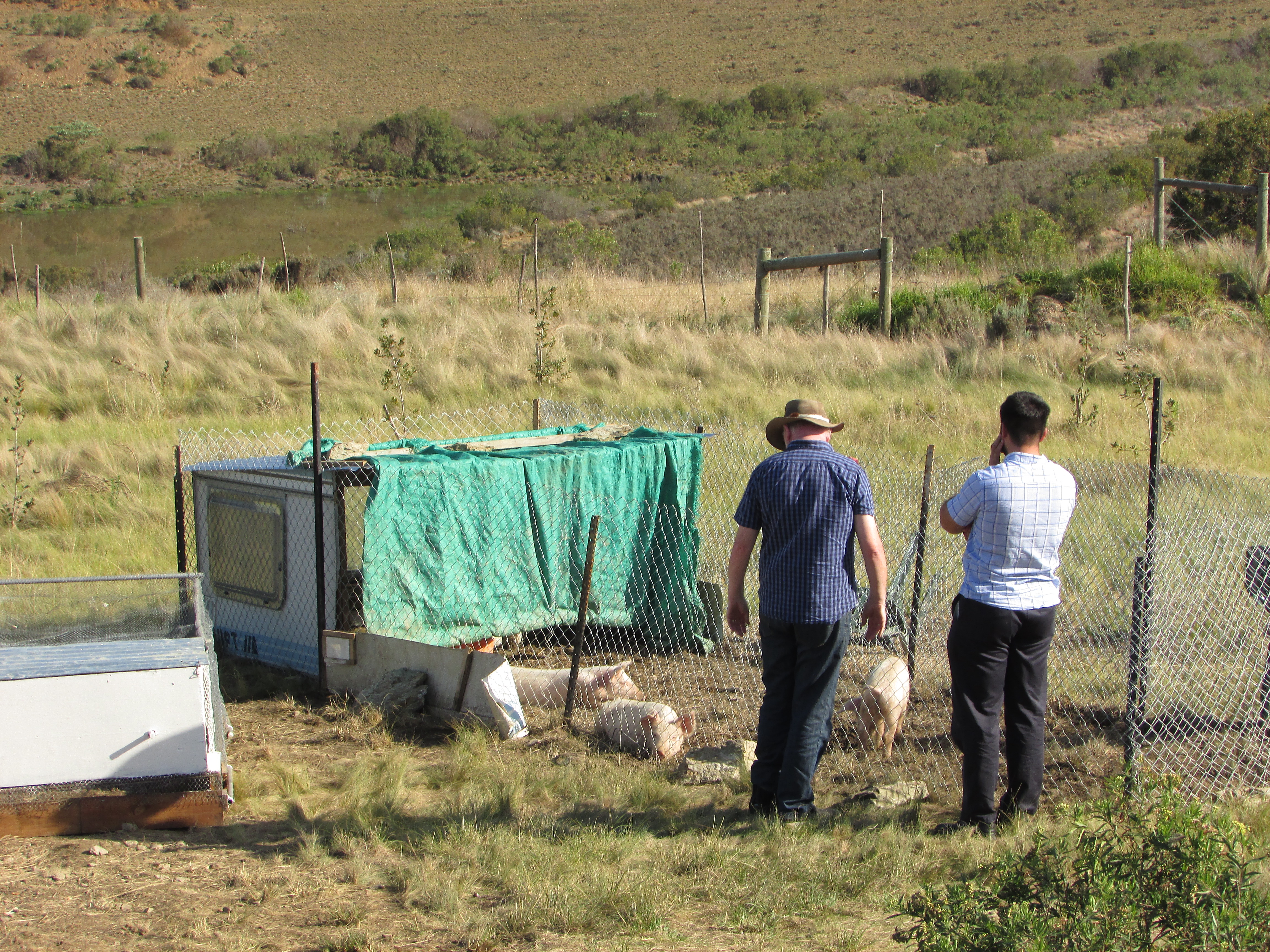
Dave and Salvador look at the pigs

Luke, Baden and Ntombi
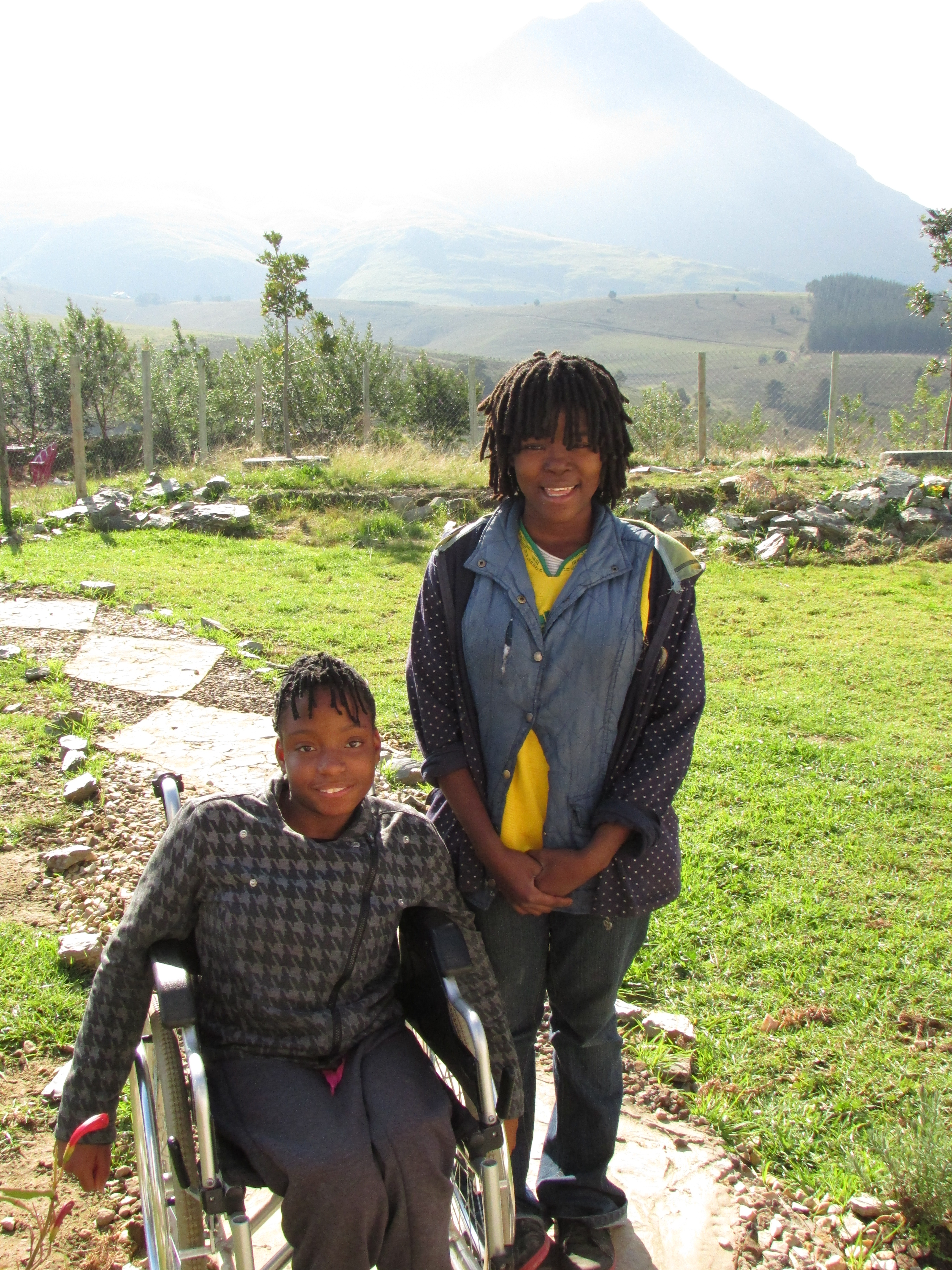
Ntombi and Paulina
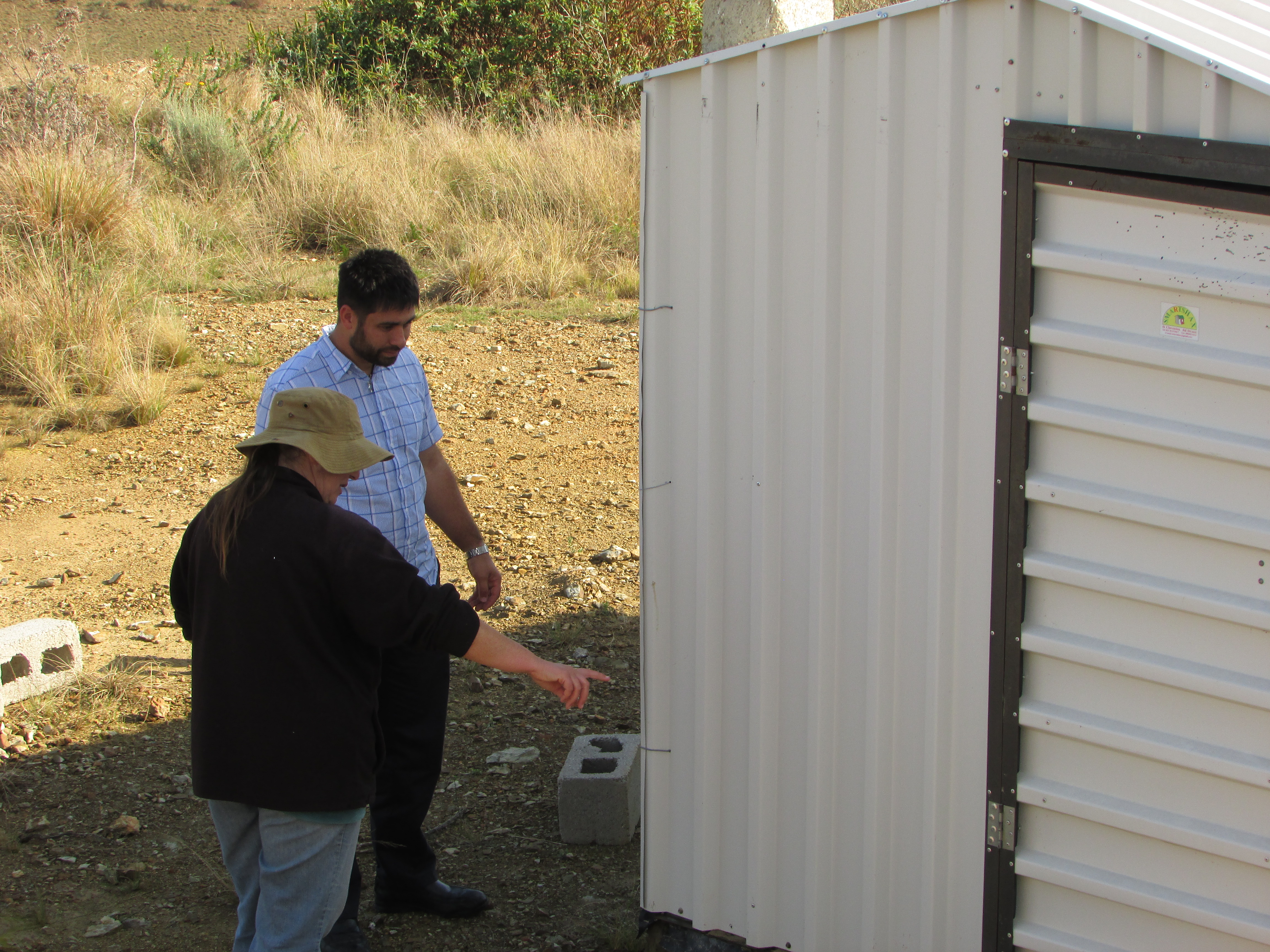
Salvador and Lyn
It was lovely to see everyone looking so well and relaxed. It was a lovely day however around 3 we had to leave to meet up with Paul and Ronel Grobler for an evening meal back in the Cape. They have Paul’s parents staying with them as both are not well. We were able to share a great evening with them and the kids. Over the next few days we were able to have some down time, visiting the Jewish museum, walking along the beach front, visiting the gardens, having Eritrean coffee with Tom’s neighbour from Eritrea, Hadas (Her mum who was visiting from Eritrea made the coffee), checking out the history of Franschoek. Sal, of course, had to visit a second hand bookshop, and we had coffee at the waterfront. This gave us a lovely break away. We did have the opportunity to visit a pastor in Michell’s Plain from the coloured, community, Graham Klink and his wide. This was a wonderful time of unity in Christ. While we were both sharing the conversation came around Salvador’s research project concerning ancestral traditions. We left hoping to interview a Xhosa woman from his congregation over the next few days but sadly it wasn’t possible as she was working but Graham has offered to interview her and record it and send it through.
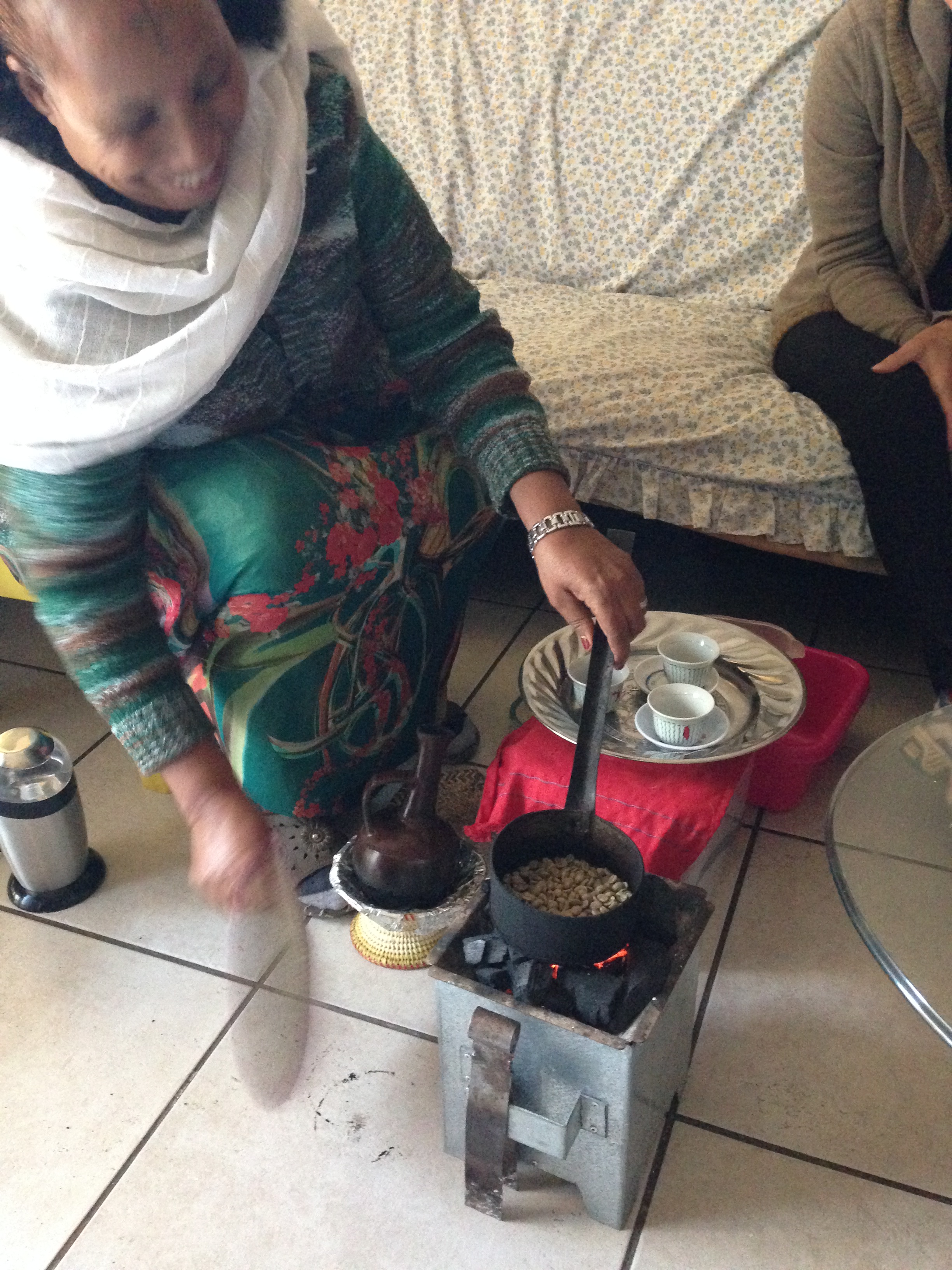
Roasting the coffee beans
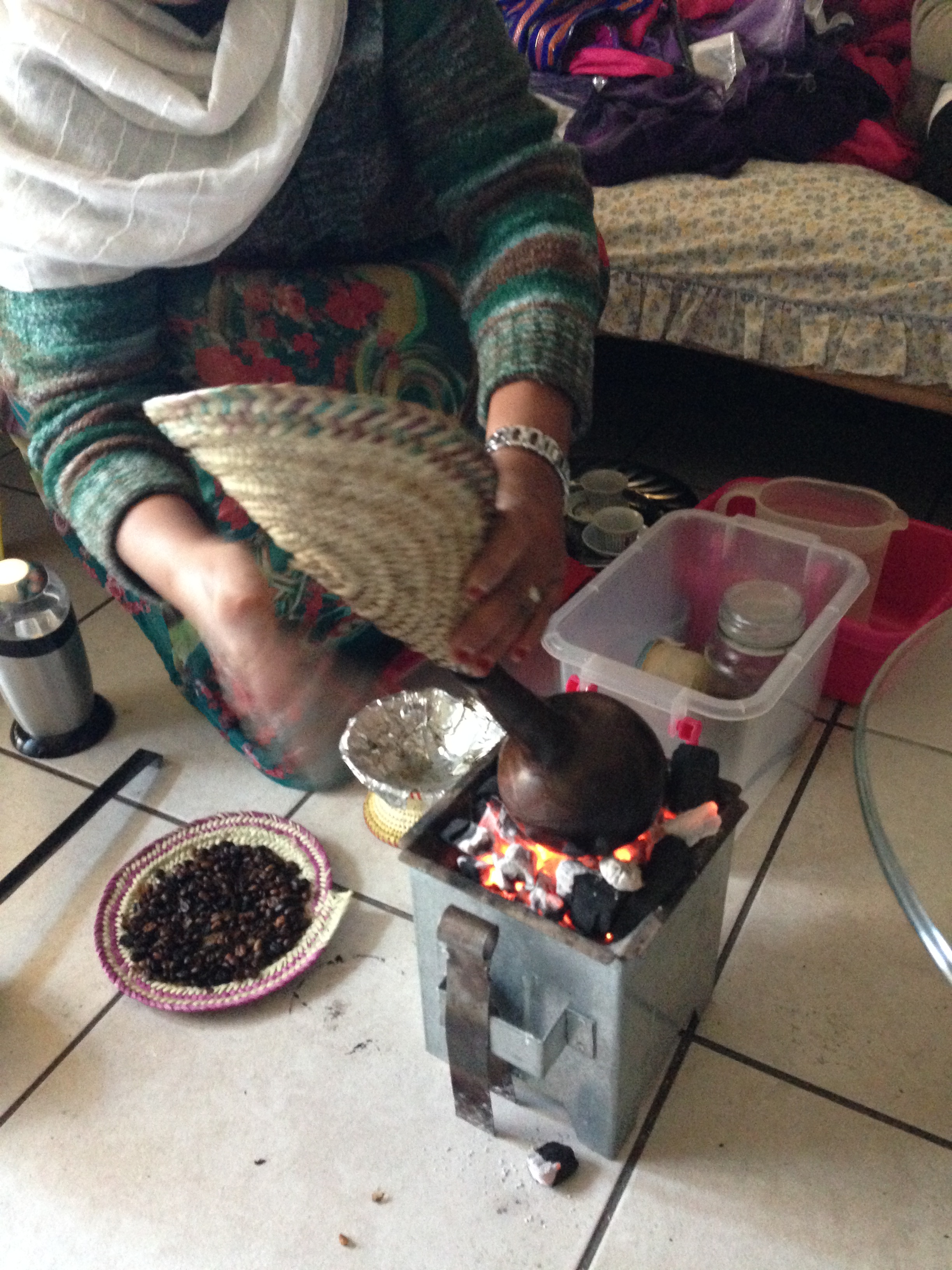
Brewing the Coffee
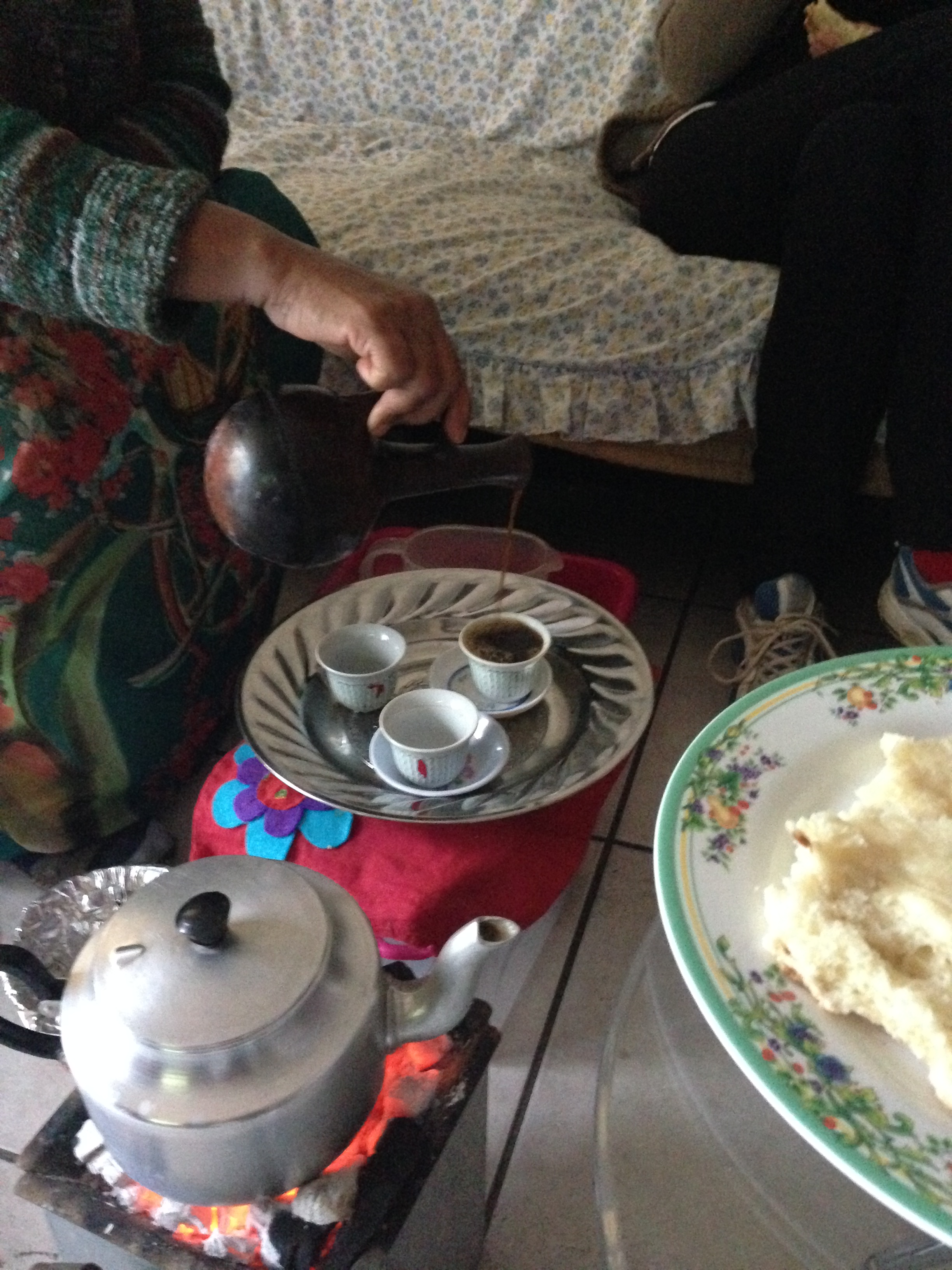
Real Eritrean Coffee
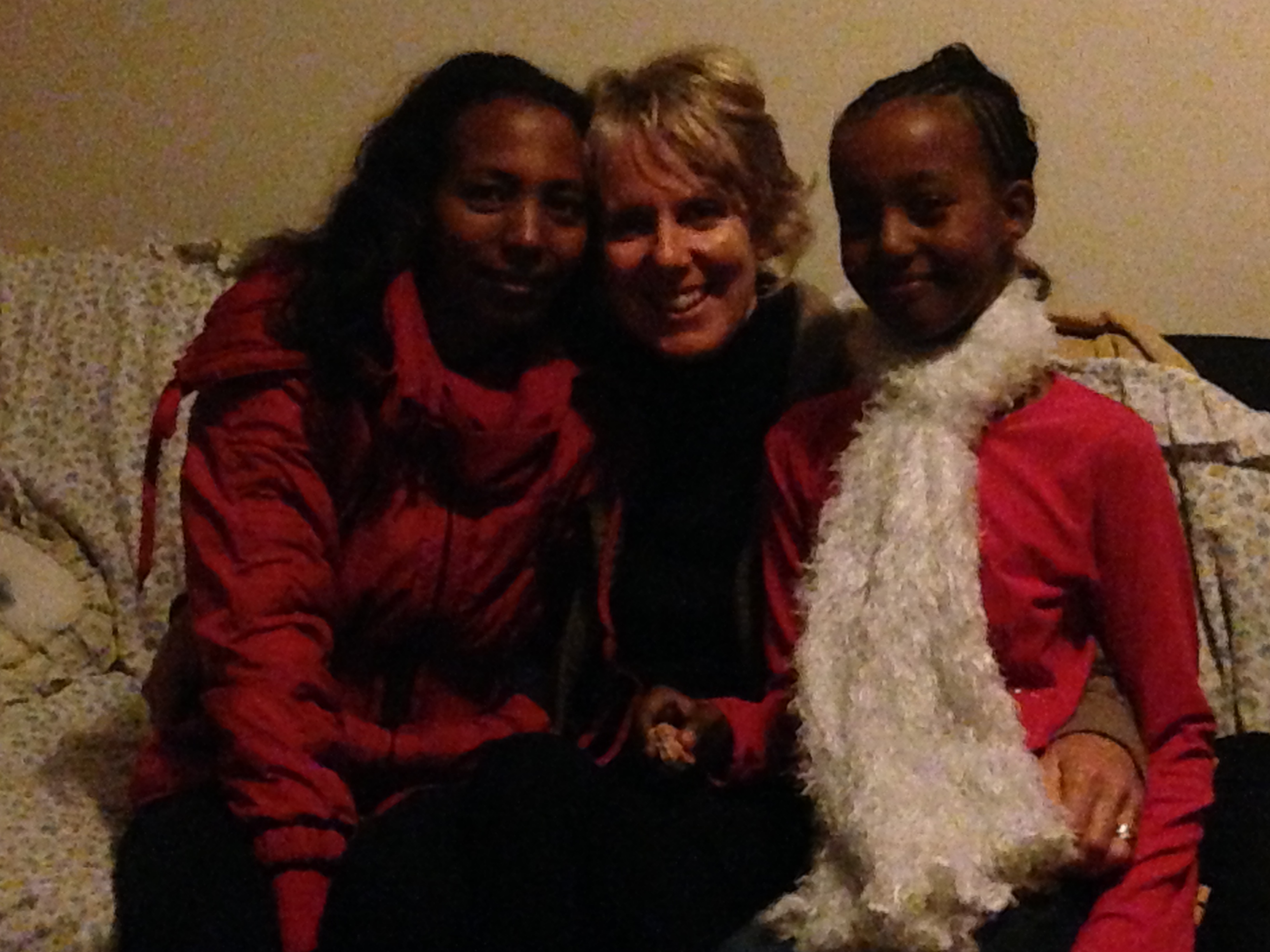
With Hadas from Eritrea and her daughter

Franschoek

Di at the Jewish Museum
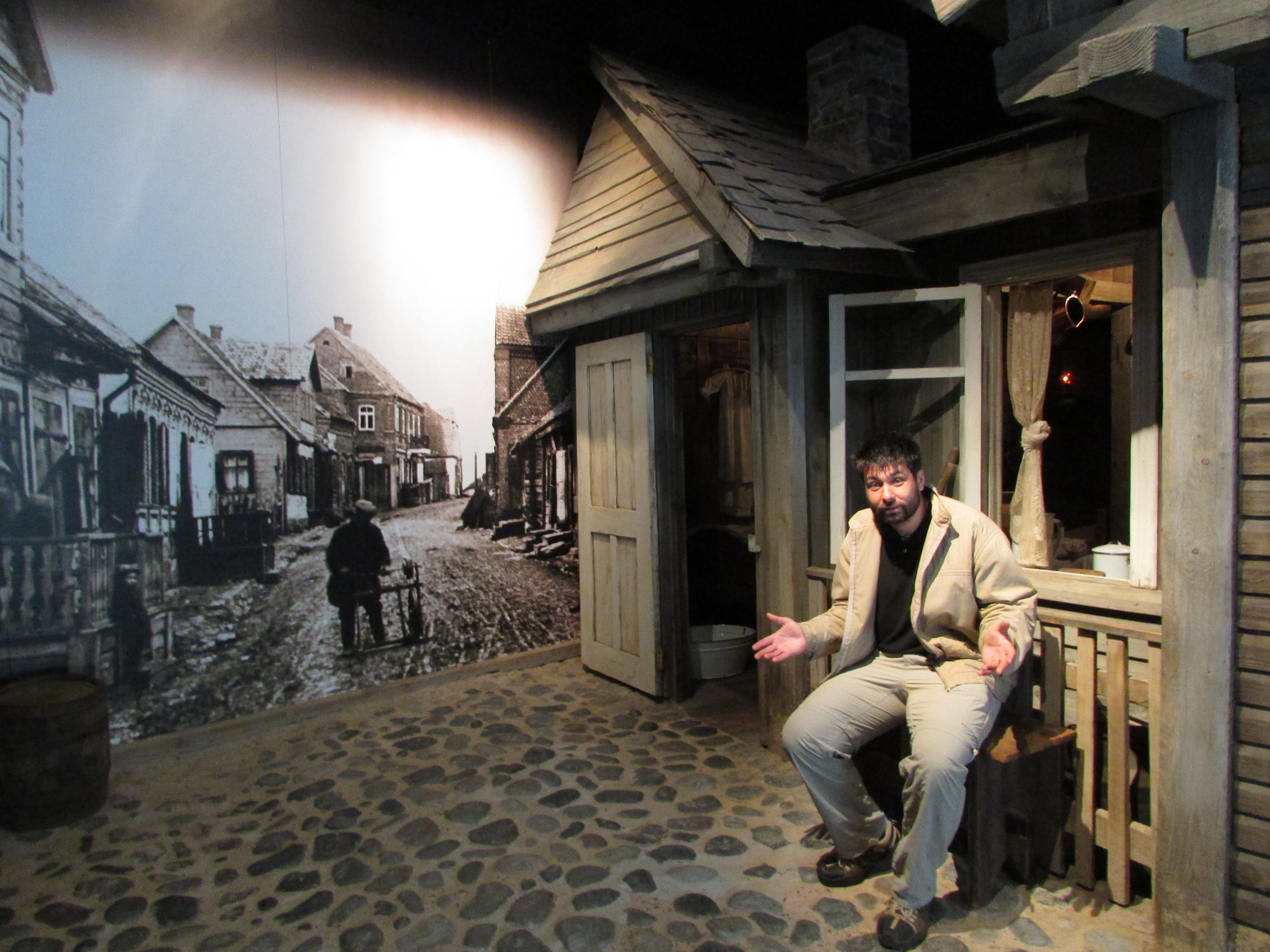
Salvador at the Jewish Museum

The Botanical Gardens in Kirschtenbosch
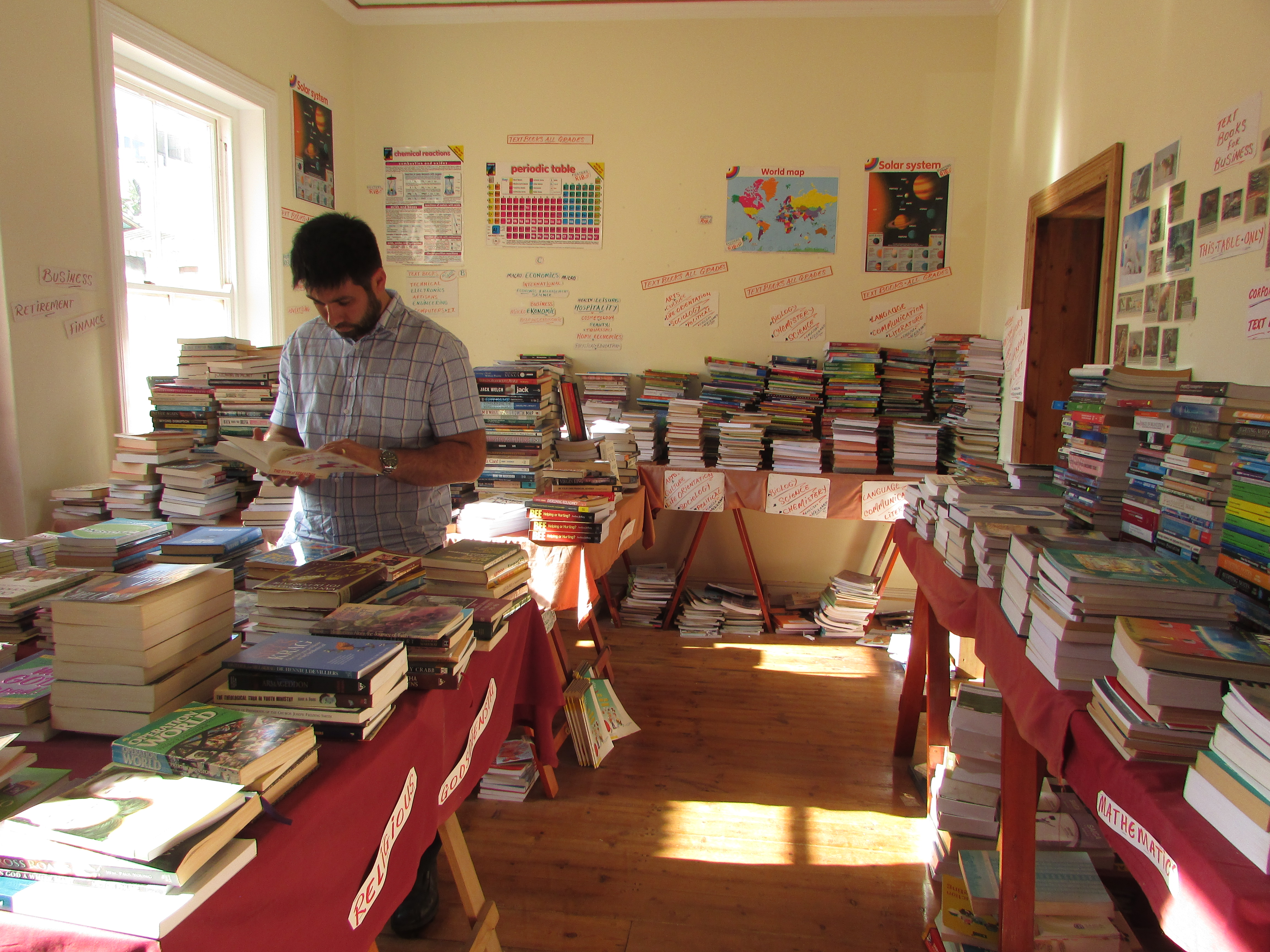
At the second hand bookshop in Gordon’s bay
Leaving the cape we set off for Bloemfontein with an over night stay in a small place called Richmond to break the trip up. When in Blom we stayed with Chris and Linda De Wet. That Sunday we shared huge home made burgers for lunch and had lovely fellowship with the De Wets, a lovely family and couple called Melnick and . We sang and Sal brought a small message.
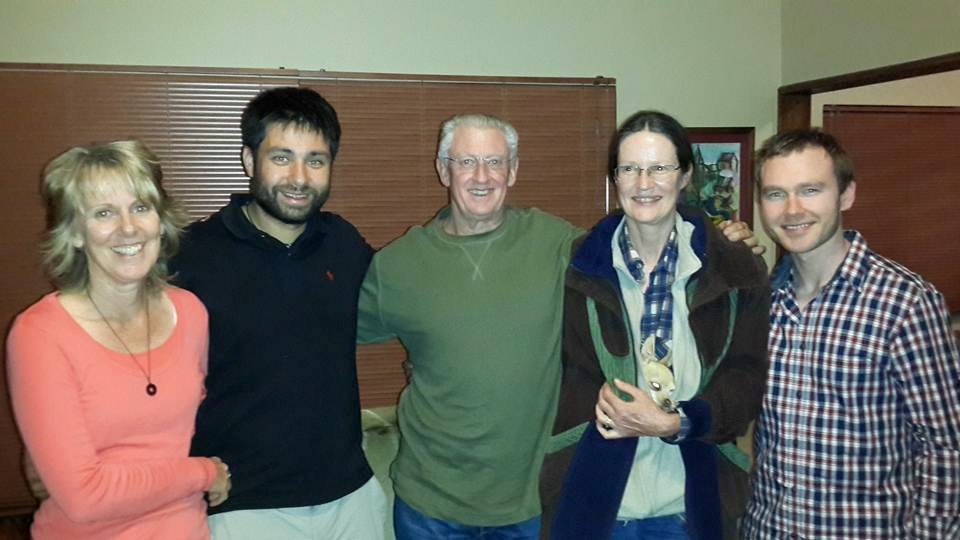
With Chris and Linda De Wet and Melnick Smith
Next morning we headed for home. On arrival it was a wonderful surprise to see Asimbonge and his uncles staying over for the school holidays. This of course meant ice cream in town the next day and borrowing a kids video from Belinda for a movie night. He is looking very well and doing well in his schooling. He was relaxed to be back in his old homestead even though his Gogo and mother are no longer with us. We thank the Lord that Celani’s daughter, Zanele, testified of her saving faith. She had attended the kid’s club for years, sitting under the New Tribes Mission material and had knowledge of what the Gospel meant. Through wrestling with the Lord she has come to accept His message of salvation.
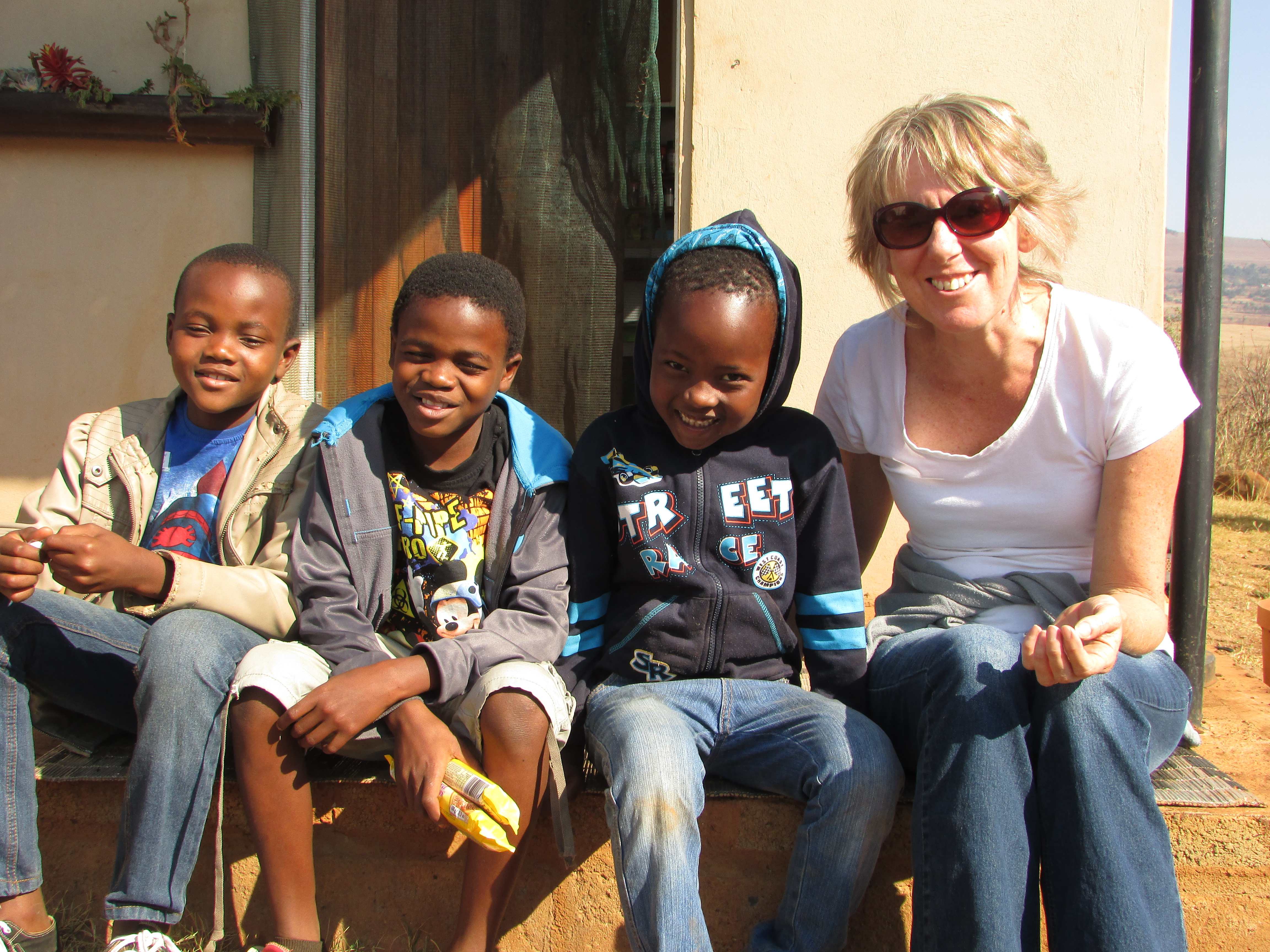
Di with Asimbonge and his uncles
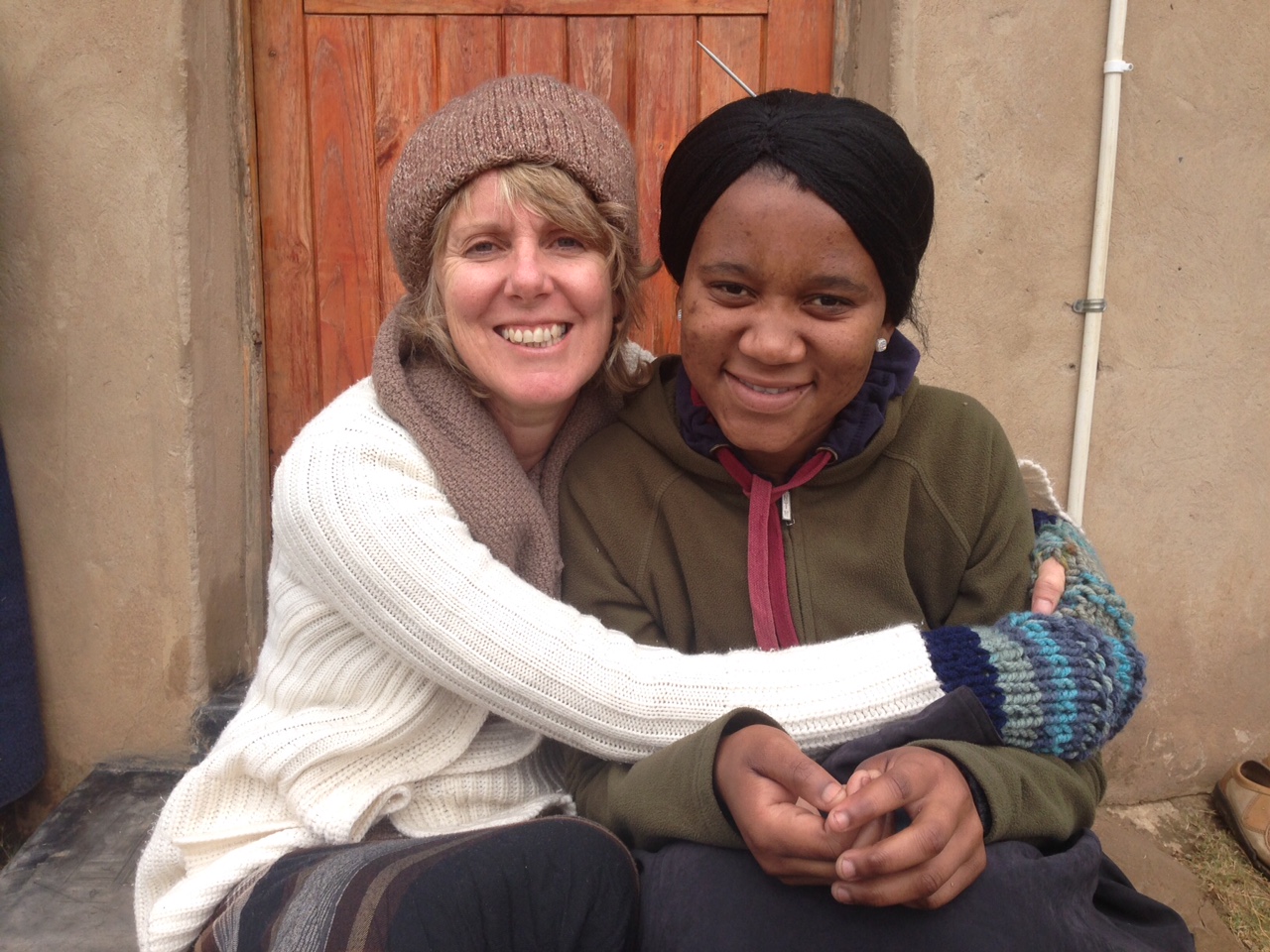
Di and Zanele
Over the next two weeks it was back into routine, Wednesday continued with Di visiting the old people’s home in Vryheid, discipling, Carebear teaching at the crèche, prayer meeting and study, cutting of hair. Fri cell group was with us and it was lovely to see everyone all together again. We were asked by a lady from a local crèche to visit and help explain the gospel to one of her workers who was wanting to change and follow the Lord. This was a special time as she was finding it hard to compared that she could do nothing to earn her salvation that it was already done for her through what Christ did on the cross. It is common that people think they must do something when it’s a free gift and what the bible says is believe it and be saved. She likened it to a small child coming to a parent with cuts and, bloody knees, the parent would not send the child away to clean themselves up first but as they came and trusted in the parent they would clean them up. We visited her again and she said she understood and believed what the Lord had done for her, she is now attending a local church and going through a study of the bible. She was plagued by demonic presence in her home but with immersing herself in the word of God and keeping her eyes on the Lord she testified that she has not been experiencing those things. Please can you keep her in prayer as she had come from a former life style of Satanism, fortune telling, contacting demons (necromancy) etc.
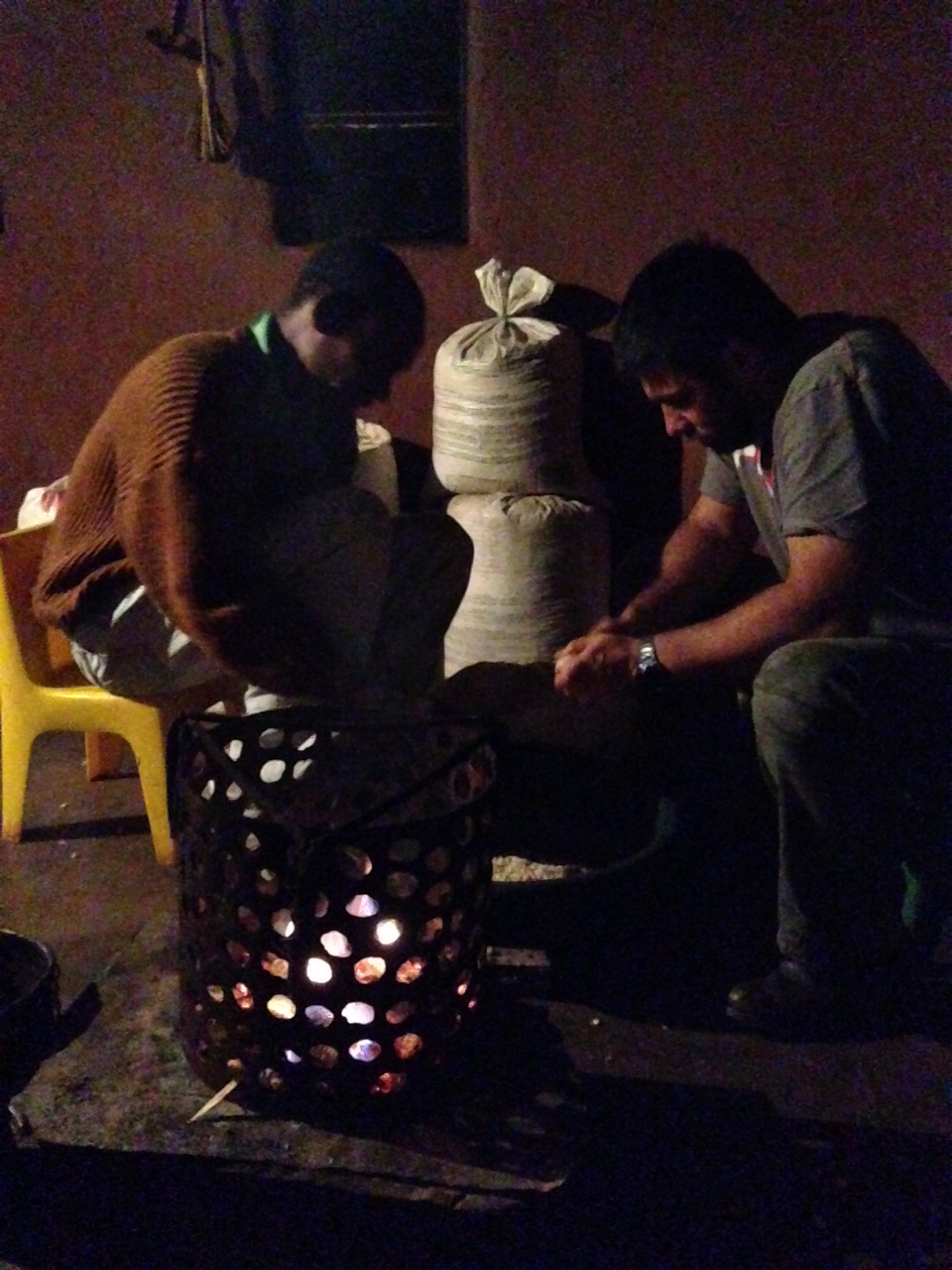
Helping Phumlani pluck mealies
The congregation we are part of, Ibandla Lendlela Eyodwa is going through some stretching time which we rejoice in as we have been praying the Lord would show us were we are lacking. For now the church is having to deal with church discipline, something that does not come easy. The church has gone and spoken to the person involved and offered help as they show forth repentance.
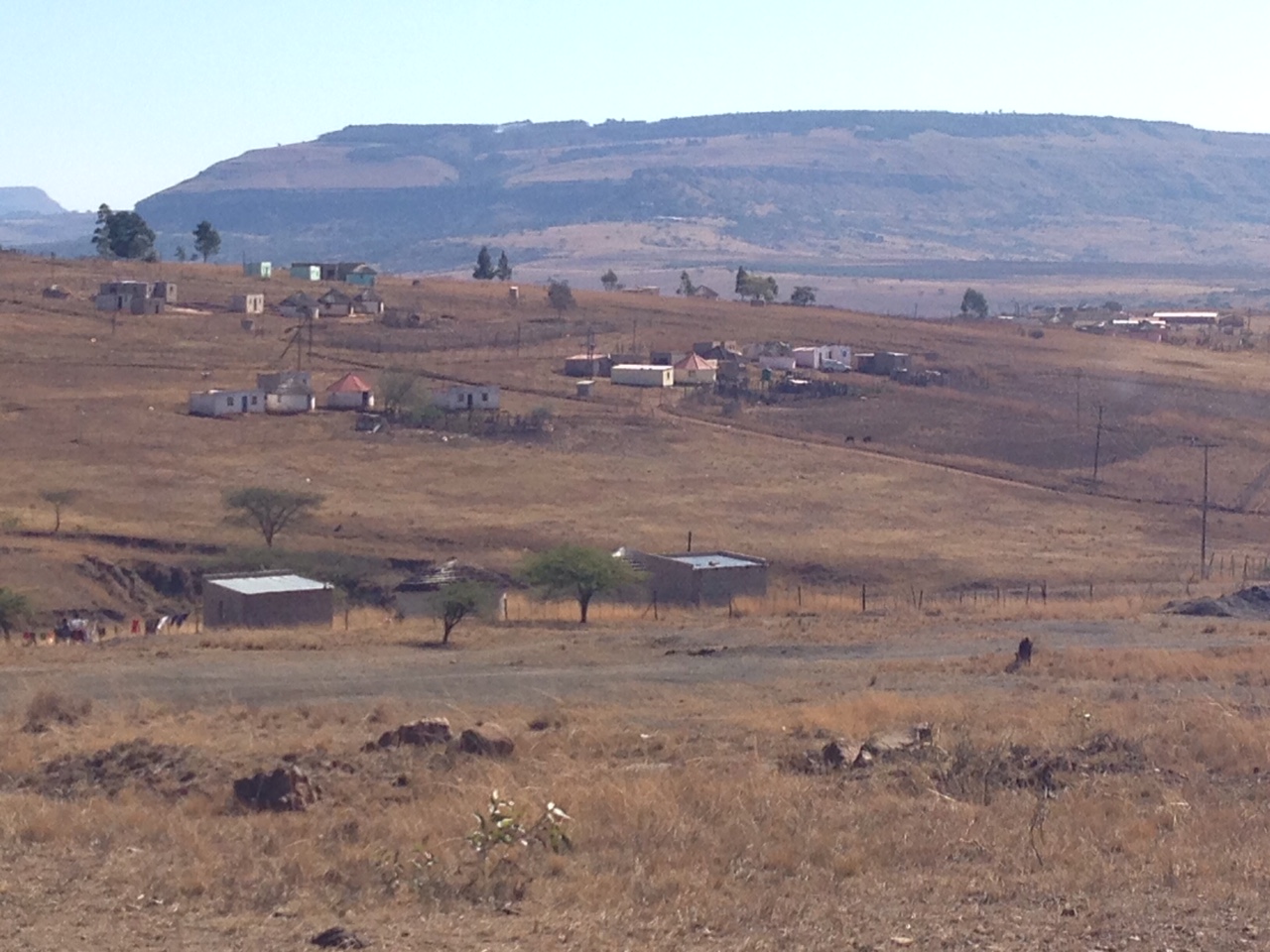
Eastmine, where the Church meets
Phumulani has also had a difficult time in having to tell his family that they are not welcome to come and do the ancestor ceremony for Phumulani dead mother. This is when they think they are bringing her back to the homestead to protect it from evil when in reality they are calling up demons to come into the home. This has weighed heavy on him and we ask you also to keep him in your prayers. While we were away, a young fellow from an area called Cibilili phoned Salvador three times asking for Salvador to visit. He got Salvador’s number from a tract he and Phumlani gave out when they preached in that area. When Salvador arrived the first Sunday there the young man, Siphamandla, had been drinking but wanted Salvador to preach to a local family. Salvador asked him what he wanted and he said that he wanted a church. Knowing that Siphamandla had little knowledge of the gospel, Salvador said that he didn’t want to start a church but was happy to start a bible study. Another gentleman called Thanda also showed interest in studying the bible. So the following week we found out where at hands stayed and Salvador preached the gospel. Today, Sunday, Salvador took Siphamandla to Thanda’s home, and though Thanda was at work Salvador was able to start the first bible lesson with them concerning the Bible as God’s message. He is using the New Tribes Mission material with them and taking them chronologically from creation to Christ. Salvador has resumed his bi-weekly bible studies with a young man called Sabelo who attends the cell group. Please pray for this young man to gain a clear understanding of the gospel. Salvador is using the discipleship book that we put together to build a foundation of important doctrines. We were blessed with two days of rain during the month which was desperately needed. We thank the Lord as now the tanks are about three quarters full again.

Thank the Lord for access to water
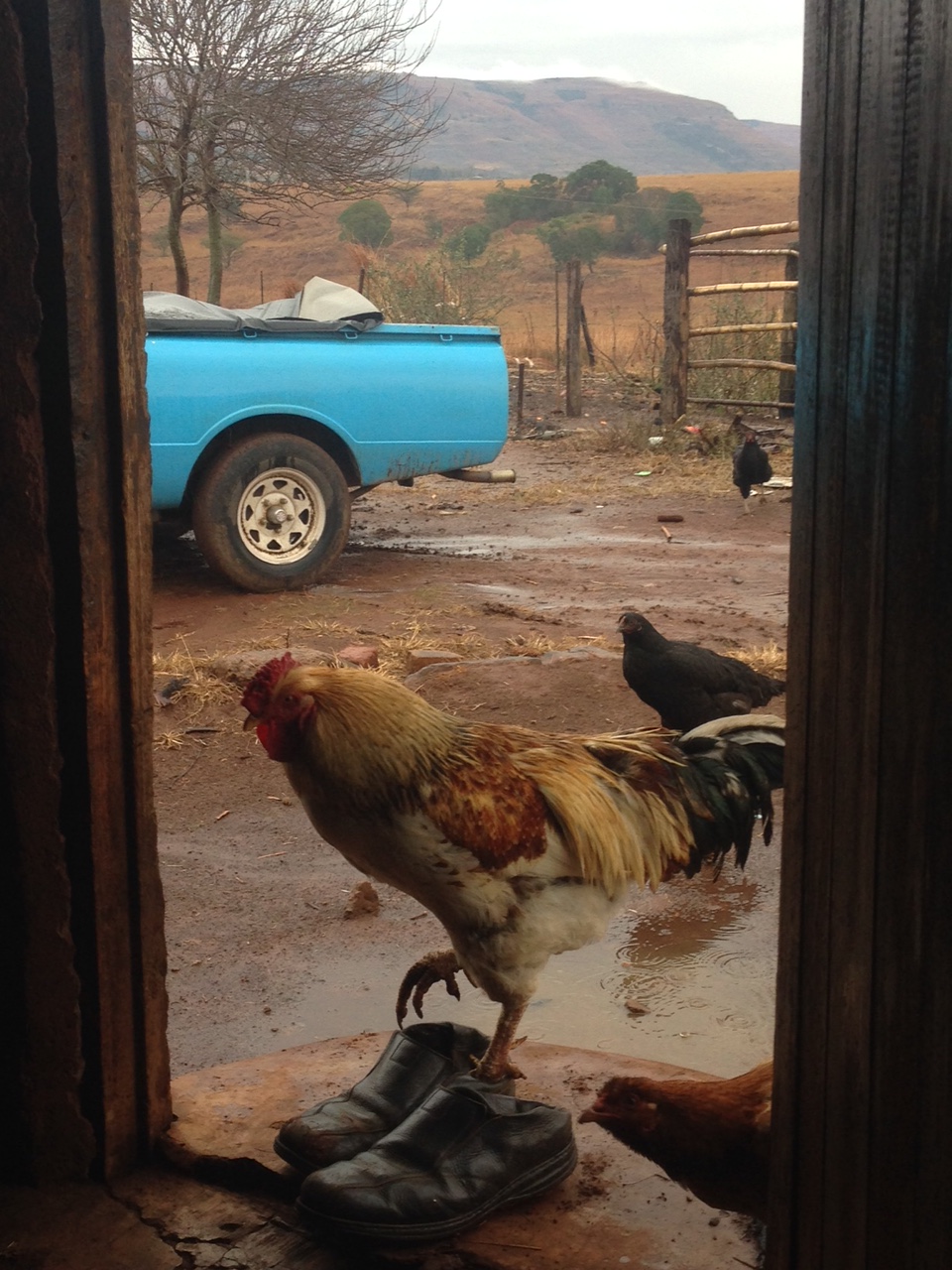
It was a rainy day
We ended this month with a very quick visit to Joberg to help our dear friends
Allen and Sue Wells move into a larger home. Much pray had been going into this as the children are young adults now and space was very tight in their previous home. Also two bathrooms for 14 people was taking its strain. It was a total answer to prayer which the Lord put together. So with only a few days to move it was all hands on deck. Alot of the packing Sue had already done before hand and Alan had already moved his tower for his wifi business but what remained was the classroom furniture and the thousand of books that had been boxed up. The kitchen, lounge, and bedroom plus bathroom. With an amazing effort from all it was moved into their new home in 3 days. Many thanks to friends and family who helped by making meals and Elco steal for the loan of their huge truck.
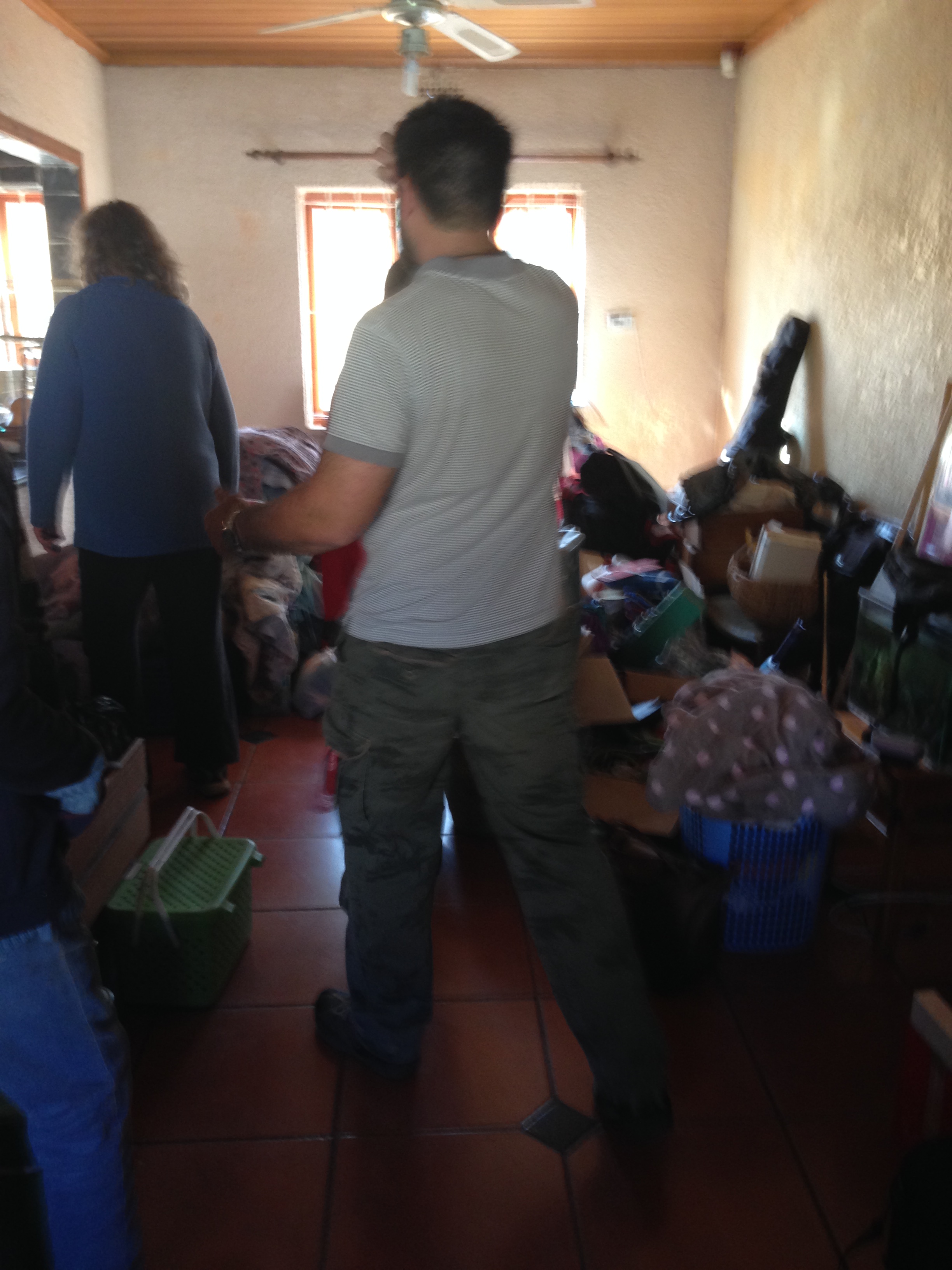
Alan and Sue moving
Helping Alan and Sue Move

Thank you Elco for the loan of your truck
We drove back to KZN on fri morning, leaving still alot to be sorted and unpacked but grateful that they were in. After cell group that night and kids club the next morning that afternoon we both crashed for a afternoon nap. I know Allen and Sue both are in need of some rest now, please keep them in your prayers. They are rejoicing between the yawns. This coming weekend we have the young adults from Joberg who visited 2 years ago coming for a mission trip. They will be staying here at the homestead 9 guys and 6 ladies. They will be bringing the teaching to the kids at kids club, going and preaching the word with Sal and Phumlani, giving out blankets and tracts, doing a small labour task and reaching out to the children in our local area. We ask for prayer for them.
Prayer needs:
Give thanks for the Wells new home, for strength and time of refreshing.
For Phumlani as he stands and for wisdom and courage as he is grows in the fullness of Christ.
For the new believer, Monique, as she grows in the knowledge and grace of her Saviour.
For the youth who are visiting this coming weekend for a mission trip, for safe travels and opportunities to share. For growth and fruit in their lives and friendships to be formed with the youth of believers this side.
For the Holy spirit to lead and guide and work as we prayer for salvation for those who are willing to hear the word of the Lord.
Give thanks for the Lords faithfulness to His work and the fellow labours who pray,support and encourage.
Until the month of August is over, sala kahle, stay well and God bless
ELEVEN
ISRAEL’S REFUSAL OF GOD’S GIFT OF RIGHTEOUSNESS
ROMANS 9: 30 – 10: 21
In the last section we looked at two camps of Jews under the covering of two different covenants. The one covenant concerns a physical birth and a Law kept in the power of the flesh. The second covenant concerns a spiritual birth and a Law that was kept perfectly by Christ, who was also the perfect sacrifice for sin. Paul showed us that God elected the older to be a servant to the younger. Though both groups come from the same father, God has chosen salvation to come by faith and never instituted Moses as a means of salvation. The younger was already chosen beforehand for honour and the older for dishonor. Just like Moishe (Moses) was never entitled to go into the promised land but Yehoshua (Joshua) did. So Moses was a tutor to lead to someone other; to the one who would bring the people into the promised rest. This second group, elected to be saved by faith, is not only comprised of Jews but Gentiles also. The reality is that many Jews will go to a lost eternity. This is not because God’s word has failed but because of their refusal to accept salvation by faith in Jesus as their Messiah. Yet God has preserved a remnant because of His Grace. This next section of scripture can be read in three sections. Firstly there is ‘The offer of saving grace’ then there is ‘The means of saving faith’ and lastly there is ‘Israel’s rejection of saving grace.’
ROMANS 9: 30 – 10: 13
THE OFFER OF SAVING GRACE
In the last chapter we saw that God’s promise of salvation has only been promised to those Jews of spiritual birth, not to those who are merely Jews by physical birth. But the blessing of this is that because it is by spiritual birth, we Gentiles, who believe and are called, are also made part of the elect people. The clear implication of this is that there will only be a remnant of Israel that will be saved. Now, for reasons that we will see in the next chapter, when Paul speaks about a remnant of Israel being saved, he is speaking of a remnant of all Jews that ever lived. But secondly, we know that the surviving remnant of the nation of Israel, who are still are alive when Jesus comes back, will experience a national salvation. This is evident from Romans 11. But having said that, Gentiles are being saved but only a remnant of Jews are being saved, albeit an ever growing remnant. Paul then compares the Gentiles who are saved to the Jews who are not. Why is Paul making this comparison? It is because he is contrasting the way of faith to the way of works. This is the election we talked about in the last chapter. It is not the children of the flesh that are considered heirs but the children of the promise. Let us look at the nature of the Gentiles that got saved, then the nature of the Jews that are not saved and then we will carry on to Paul’s conclusion and response to this predicament.
THE NATURE OF THE GENTILES THAT GOT SAVED
When we look at verse 30 the first thing we read is that the Gentiles did not pursue righteousness.
-
Firstly, let us remember that Paul is speaking from His own experience of evangelism. Paul saw many Gentiles get saved. However, from many of his own people, from God’s special people, he endured persecution. Although Paul saw a number of Jews get saved, he started his ministry well after the great Jewish revival of Pentecost, and after the Lord’s work started to branch out into Samaria under Philip. It was Paul who, after holding the coats of Stephen’s murderers (which unleashed a great persecution on the Messianic Jews), spread that persecution as far north as Damascus, and intensified that persecution. Under Paul’s ministry it was the Gentiles who were starting to get saved in bigger numbers. When Paul claimed that Gentiles did not pursue righteousness we must understand that there were Greek philosophers who pursued morality, like Seneca who deplored hypocrisy and taught the equality of all men. So what does Paul mean when he says that the Gentiles did not pursue righteousness? Look at what Paul wrote to the Thessalonians in 1 Thessalonians 1: 9. He wrote that they turned from serving idols to serve a living and true God. Everywhere that Paul went he would have seen pagan temples. And no matter how moralistic some of the people within these nations were, they still served these false gods. They were not searching for the true God. They were not turning away from their idolatries and, therefore, they were not seeking after righteousness. Paul had already established in Romans 1 that God had handed these nations over to their lusts and to commit indecent acts. There were some within those nations who became proselytes to the God and the people of Israel but on the whole these nations were given over to depravity, much like the western world today. But when Paul came to them, he brought the Gospel and people got saved. They were not searching for God’s righteousness, but God had brought His righteousness to them through the preaching of the gospel.
-
Secondly, and very briefly, these Gentiles attained righteousness. This proves Paul’s thesis in Romans 1: 16 – 17 that the Gospel is the power of God to salvation. The Gospel can change the most hardened of men and change the greatest criminal. Those who were hopeless cases find themselves with hope. Those who were considered beyond saving become reconciled to the Creator of the universe. So much so, that when you hear of their past, you listen with disbelief because you never would have guessed that they could have done such things. God has changed them that much.
-
Thirdly the Gentiles attained that righteousness by faith. They heard a message and they believed. And because of their belief they have been counted righteous by God. This must build on what Paul has already said about Abraham. He has already proved that this thesis is biblical, conforming to the pattern of Old Testament Scripture, and that this righteousness is possible from the example of Abraham. Abraham’s faith was credited for righteousness while he was uncircumcised and this paves the way for uncircumcised people to receive this righteousness too.
THE NATURE OF THE JEWS THAT ARE NOT SAVED
Let us compare this salvation of Gentiles with Israel in verse 31.
31 but Israel, pursuing a law of righteousness, did not arrive at that law.
-
Firstly, we see that Israel pursued a law of righteousness. This is the Law of Moses which is righteous, and a manifestation of the law of God, which is spiritual. And yet it bestows no spiritual power, unto obedience, for those who try to keep it. Every year Jews would go to the temple, offer sacrifices, celebrate the feasts, and keep the Sabbaths but what was the result of this every year? On the Day of Atonement, Yom Kippur they are still forced to say, ‘We have sinned, we have sinned.’ Even today Jews say this phrase and will go up to everyone they know asking for forgiveness.
-
Paul states in his second point that they did not arrive at that law. The Day of Atonement is the proof of this point. It does not matter what sacrifices the people did in that year, those sacrifices never sufficed. Look at what Hebrews 9: 6 – 8 says. “6 Now when these things have been so prepared, the priests are continually entering the outer tabernacle performing the divine worship, 7 but into the second, only the high priest enters once in the year, not without taking blood, which he offers for himself and for the sins of the people committed in ignorance. 8 The Holy Spirit is signifying this, that the way into the holy place has not yet been disclosed while the outer tabernacle is still standing,” In other words the daily sacrifices made for sin did not take away sin. On the Day of Atonement, all the things that were done in the outer tabernacle are done away with. All eyes are centred on the High Priest who deals with the sins committed in ignorance. What does this communicate? Though the Jews may not have been conscious of the confession, through this act of the high priest, they were saying; ‘We have kept Your feasts, done Your sacrifices. O Lord, we have kept Your feasts and paid our tithes. We have sought covering for all the sins we are aware of and yet we are still not right before You. We have not met Your perfect standard. We have pursued a law of righteousness and yet we have not arrived at that law. We have sinned, please forgive us.’
-
Thirdly, Paul gives the reason for this failure, and that is in verse 32. “32 Why? Because they did not pursue it by faith, but as though it were by works. They stumbled over the stumbling stone,” They thought they could keep the Law instead of believing in the One who had to do it for them. Christ is the stumbling stone and a rock of offence. Christ offends any notion of self-goodness and self-righteousness that we might have. Christ breaks us because His testimony tells us we deserve eternal punishment. As long as Jews, and by extension us, think that there is enough goodness in us and that one day we will reach that standard; or that God will take into account all the good things we have done, then we will never arrive at that righteousness.
In Romans 10, this sets Paul weeping over the Jews just like he did at the beginning of Romans 9. Now some commentators say that though God has only decreed a certain number of people to be saved, not wanting to save all, as it is not for us to know God’s secret counsel but they say that, nevertheless, we must follow Paul’s example of seeking all men to be saved. But I do not think that this is the right way to look at the text. Remember that we are dealing with the nation of Israel. This is God’s special covenant people, a people whom He has striven with to cause them to hear His voice. Does any heart bleed for Israel more than God’s heart does? The reason that Paul’s heart’s desire and his prayer to God is that Israel would be saved, is because his heart is reflective of God’s heart for His people. Think of Jesus weeping over Jerusalem after rebuking the Pharisees and Scribes in Matthew 23: 37. He does not tell them that He was not willing. Jesus was more than willing. The fault lay with them.
So it was with Paul’s life before Christ. The fault lay with him. Paul can well understand the Jewish mind and their condition because from verses 2 and 3 he is describing his own condition before he came to Christ. He had a zeal but not according to knowledge. This ignorance does not make them innocent and dissolve them of responsibility. We will see in the last section that they were given warning and they were told. But what we see is not an ignorance of Messiah or of the message of Jesus the Messiah but it is an ignorance of God’s righteousness. They rebelled against the idea of a crucified Messiah who became a curse. But as Jesus said, ‘Those who are well do not need a doctor but only the sick. I have not come for the righteous but to call sinners to repentance.’ In 1 Corinthians 1: 23 Paul writes that the message of Christ crucified is to Jews a stumbling block and to Gentiles is foolishness. Heavy Metal bands like Metallica sing songs like, ‘Follow the God that failed.’ They say this because, for them, the cross is defeat. But for us who are saved it is victorious. However, when you do not see your own sin, or acknowledge that you deserve God’s wrath, you will never see your need for a Saviour and, therefore, you will always be ignorant of the righteousness that God has to offer you. The Jews kept pursuing their own righteousness of the Law but they never got it. That is a dilemma. But the answer to this dilemma is in verse 4.
PAUL’S RESPONSE TO THE PREDICAMENT
4 For Christ is the end of the law for righteousness to everyone who believes.
The word for ‘end’ in Greek is the word ‘Telos’. It can mean a termination, or a goal, or a completion. Here, the primary sense is not that Christ terminates the Law, though we know from the scripture that we, who are in Christ, are not under the jurisdiction of that Law. But what it is saying is that Christ is the completion of the Law for righteousness to those who believe. In other words, the Law promises righteousness and life for those who keep it but the problem is that we have all broken it. But Christ came and kept the whole law and won the righteousness and life that the Law promised. He did this on our behalf and through His sacrifice He can give that righteousness to whosoever believes on Him. Therefore, it is by faith and faith is a vehicle of reception which does not add anything to what Christ accomplished.
Look at verses 6 – 8. “6 But the righteousness based on faith speaks as follows: “DO NOT SAY IN YOUR HEART, ‘WHO WILL ASCEND INTO HEAVEN?’ (that is, to bring Christ down), 7 or, “WHO WILL DESCEND INTO THE ABYSS?” (that is, to bring Christ up from the dead).” 8 But what does it say? “THE WORD IS NEAR YOU, IN YOUR MOUTH AND IN YOUR HEART” – that is, the word of faith which we are preaching,”
This text is taken from Deuteronomy 30: 12 – 14. Here Moses is giving some of his final words to Israel. In this chapter he prophesies of their future captivity and their return to the land. Their return to the land would be in accordance with their repentance. Moses also speaks of the future covenant that God will speak of in Jeremiah. But the point is that the command that God is giving to them ‘to Love the Lord and walk in His ways’ is not too difficult. They do not have to traverse the ends of the earth to find it. They do not have to ascend on high to get it, and they do not have to go to the depths of the ocean to bring it up. Paul takes this and applies it to Christ because He is the embodiment of the Law. He is everything it means to ‘Love the Lord our God’. And so Paul sees heaven here as referring to Heaven where Jesus has come from. And the depths of the ocean Paul takes as midrashically speaking of the grave which is deeper than the ocean. That is we do not have to get to heaven to get Jesus, because God took the initiative for us and brought Him to us. We do not have to go to Hades, as in Greek mythology where the hero has to cross the river Styx and enter Hades to rescue the maid, because God brought Jesus up from the dead for us. We do not go up to God, but He stoops down to us and makes salvation something easy for us to obtain. But there is another application to these verses and that is, that there is nothing we can add to God’s work of salvation. We cannot add to the incarnation one iota nor can we add to the resurrection. God had planned it all and brought it to pass by the strength of His own arm.
Just as God brought down the living Word to live amongst us, so he brings the word of His cross to our hearing. Our part is to confess and to believe with our heart. The invitation is open to all; for the ‘whosoever will’. Salvation is secure because it is based on a promise that whoever will call on the name of the Lord will be saved. The name represents His character, His attributes and, therefore, our believing is based on His character and His work. His character and His work are communicated to us through the Gospel message.
VERSES 14 – 18:
THE MEANS OF SAVING GRACE
If believing is necessary to salvation and if this is based on the work and person of Christ then there must be a communication of that message so that we may believe. This is a debated issue among some circles of Christians. When we see the hardness of western people to the Gospel, we also see that some people have given up on the idea of preaching. One pastor I heard in Vryheid, South Africa said that we do not need more preaching. He said that people have had enough preaching and they need more love. So is preaching an outdated mode of communicating the Gospel message? I do not necessarily think when Paul uses the term preaching that he necessarily means street preaching. Preaching simply means a proclamation. In other words, there has to be an authoritative verbal communication of the message. Look at the logic of Paul’s argument. Faith comes by hearing and hearing by the Word of Christ. You cannot call on someone who you have never heard of. This message cannot be communicated by simply loving people. There is a testimony that must be verbally communicated. Paul tells us, in verse 18, that the Jews have even heard the message through creation and quotes from Psalm 19 to prove this. But creation itself is not a sufficient means of understanding. There are certain things that are clear from nature; like God’s eternal power, His Divine nature and His invisible attributes. But the specific message of the Cross and God’s righteous requirements of man are not communicated through nature. Psalm 19: 7.
“7 The law of the LORD is perfect, restoring the soul; The testimony of the LORD is sure, making wise the simple.”
There is still a need for a verbal communication of the Truth. Say you found a piece of paper with the following words, ‘Sgd fnrodk hr sgd onvdq ne Fnc sn dudqxnmd vgn adkhdudr.’ Would you understand it? But what if I told you that the way to understand it is to exchange each letter for the one that comes after it in the alphabet? Now does it make sense? ‘The gospel is the power of God to everyone who believes.’ So there was a communication but that communication necessitated an explanation of the code. So when Jesus said ‘let your light so shine before men that they may see your good works and praise your Father who is in heaven.’ he was not telling us that we should not preach the Gospel. How will people praise someone that they have never heard of? It does not mean that we have to engage in street preaching, but the Church has been given a commission to preach the Gospel. Therefore, we are to take opportunities given to us to audibly share the Gospel message and to do good works.
VERSES 19 – 21:
ISRAEL’S REJECTION OF SAVING GRACE
Gentiles started to believe and accept this Gospel at the time of Paul. But Israel, for the most part, rejected the message. But God knew this and prophesied this. It did not take God by surprise and God had already put a plan in place concerning this rejection. We will look at the way God would use this hardening of Israel in the next chapter. Paul quotes from Moses in Deut 32: 21.
“21 They have made Me jealous with what is not God; They have provoked Me to anger with their idols. So I will make them jealous with those who are not a people; I will provoke them to anger with a foolish nation,”
God did not arbitrarily decide, before the foundation of the Earth, that He would harden Israel. God’s decision was a response to something that His nation, Israel, had done. They provoked God to jealousy with a ‘no-god’ and so in turn God would provoke Israel to jealousy with a ‘no-nation’. God is using the Gentile believers as a way of provoking the Jews to jealousy so that they might turn with their whole hearts and be saved. I was once in conversation with some British ex Patriots in Vryheid, South Africa. They were astounded when I made the proclamation that a Christian with a good knowledge of the bible will know more about the Jewish religion than many nominal or non-observant Jews. I was not referring to Talmudic Judaism but Mosaic Judaism. Jesus said to the Pharisees of His day that their real problem was not that they did not believe in Him. Their real problem was that they did not even believe Moses; because Moses wrote about Jesus. The reason I love things to do with Israel is not because I think Israel are such a great bunch of people. The main reason I love things to do with Israel is because Israel is a real nation that really exist. And they show me that the bible is not a bunch of fairy tales but it is a real history of God’s dealings with a real nation. And their survival over millennia is a miracle that can only have been accomplished by the God of Israel. The things that we read in the bible are true and the place names are real places. Archaeological finds fit the bible’s description of those times and places. You want evidence that the Bible is true, look at Israel. And we, as believing Gentiles, have a part to play in God’s salvation plan for Israel. We are to provoke the Jews to jealousy with our love for their people, a love for their Law and a love for their God. This is the paradox, God shows His grace to Gentiles and they accept but God has held out His hands to the Jewish people continually, but they have been obstinate and stiff necked. So God has hardened them. This paints a bleak picture of Israel’s purposes in God’s salvation plan. How will Paul address this dilemma? We will look at this in the next chapter.
SALVADOR AND DIANNE’S MSINDISI MONTHLY
Number: 129. July 2015
P.O. Box 1481
Vryheid 3100
KwaZulu Natal
South Africa
+27 (0) 72 8311008
+27 (0) 72 3843786
Email: msindisi@gmail.com
KwaZulu Mission Website:
KwaZulu Mission Facebook Page:
www.facebook.com/kwazulumission
Well, praise the Lord. Salvador and Di moved into Phumlani’s homestead in April 2009. On Salvador’s heart was the desire to preach the Gospel outside every homestead within. The local areas surrounding the chief’s office. The local clinic at that time claimed it serviced over 10,000 people. This last month saw the completion of that vision and now we will see what is on Phumlani’s heart in terms of continuing to evangelise these areas again. At the moment we are sat by a lake near Sedgefield typing this newsletter on our way through South Africa. More on that later but let us update you on the movements of the last month.

Writing the Newsletter
We are enjoying the opportunity to share the word in speaking and song at Care Bear preschool and also at an ACE school. Both of these schools are a once a month occasion. But Salvador ministers to the staff of another crèche on a weekly basis. A couple of weeks ago Salvador ministered to the children while Di was able to have some time with the lady running the crèche and be a source of encouragement to her.
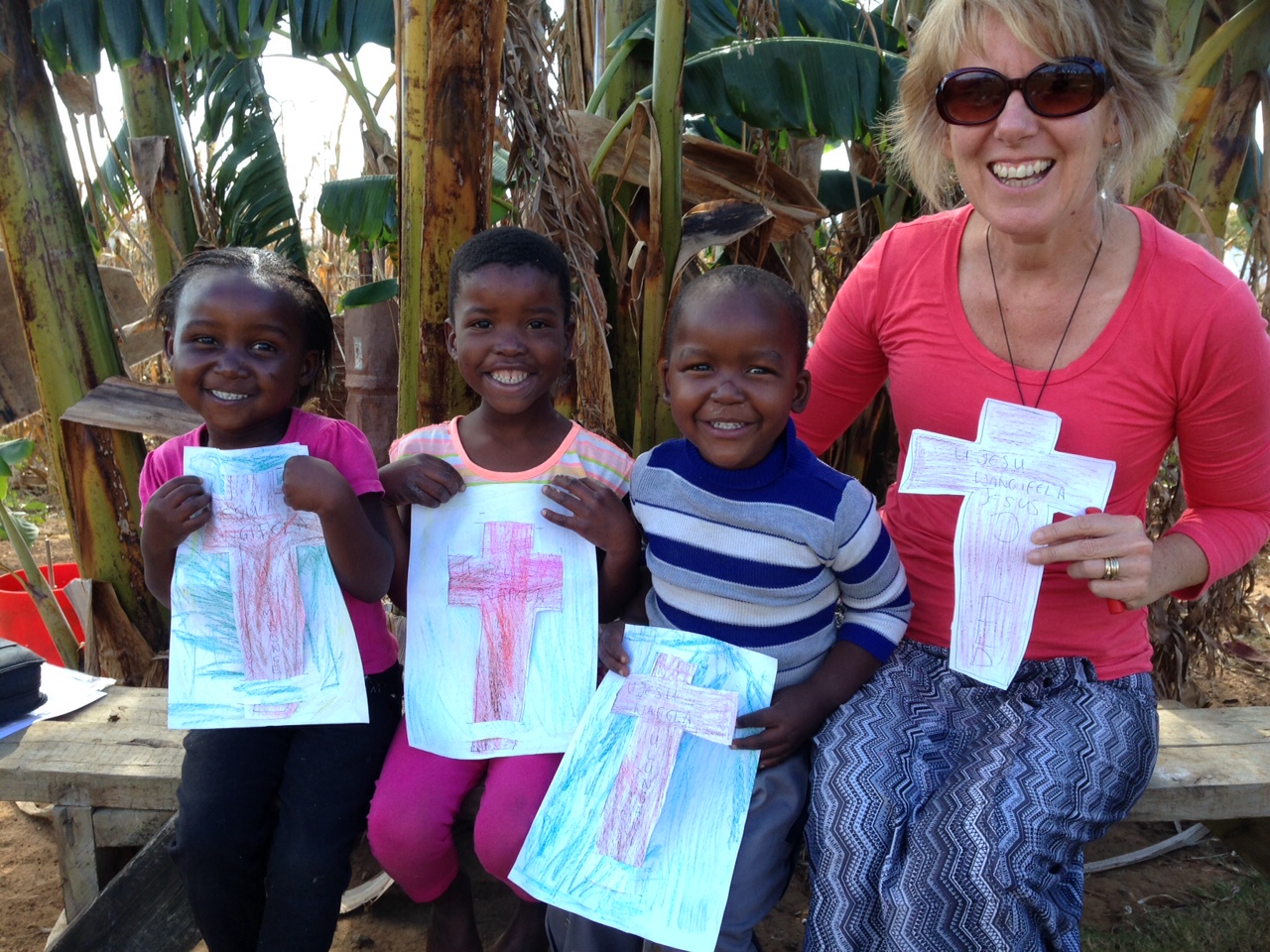
Di’s Kids Club class
Phumlani faithfully teaches the Sunday meetings and Salvador has been encouraging Phumlani and Mandla to share some of the teaching at cell group. Mandla may have to lessen his involvement because of other commitments to his church and his family. Salvador has yet to finish his series on the ministries of Elijah and Elisha but has it on his heart to do a series on the attributes of the Holy Spirit. Di had some opportunity to join the ladies of Bethany Baptist Church in visiting the ladies of Vryheid’s old age home. It was just one introductory visit and they are hoping that opportunities to share the Gospel with them will open up as they visit again. During the first two weeks of being home we took a young girl called Mbali to the hospital. She was in her late stages of pregnancy and has since given birth to a baby boy. Sadly she is one of many young teenage girls who fall pregnant. The positive side has been that she has been visiting some of the meetings to hear the word of God and we hope that she will desire salvation through the truth of the Gospel.
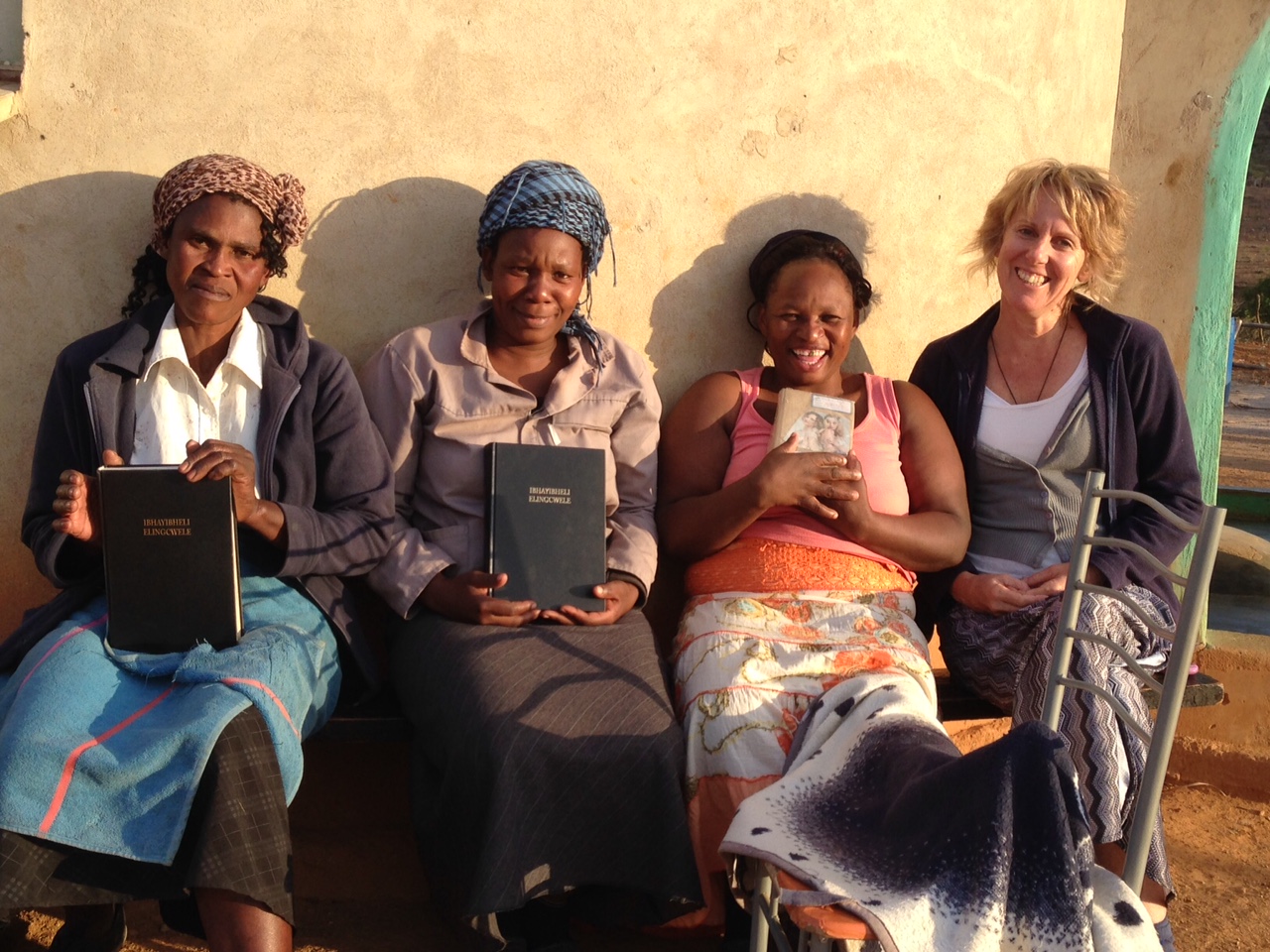
Phumlani’s Bible Study Group at KwaBhekephi.
During the month we went to a town called Rosetta to meet with likeminded brethren and ministries from other parts of South Africa. We wanted to see if we could start a network of churches and believers which could participate with one another in various ways for the edification of the body of Messiah. There was, understandably reticence from various people who did not know others in the retreat but within 26 hours the Lord brought about a unity. We are just grateful to know other brethren who believe the truth and that we can refer other brethren too. We will see how the Lord leads us from here but already brethren have been networked together.
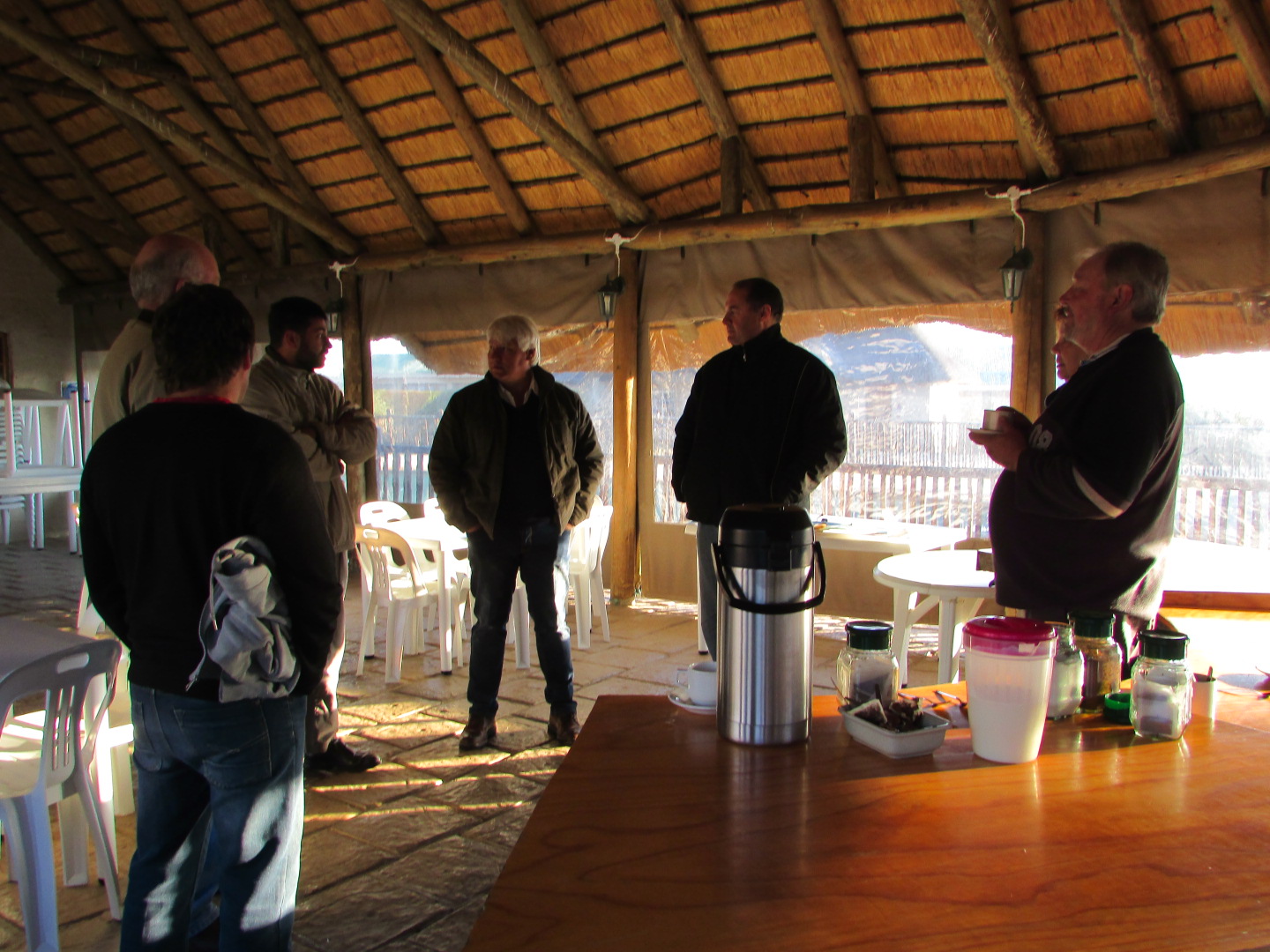
Morning Tea at the Retreat

Phumlani with Noelene at the Retreat
A week later we had to be in Durban for a wedding of an Indian couple who are saved, Salvador was asked to share at the family function on the Friday evening. He shared on idolatry and the importance of giving thanks and how that works in our relationship with the Lord and with our spouses too. This was the beginning of our trek around South Africa. Alan Mackenzie, from Port Elizabeth, had asked us to visit this year to share at the assembly, so we decided that we should tie it with the trip to Durban. After the wedding we headed to Kokstad on the Sunday morning and stayed with our friends, Jed and Jenna Van Niekerk. Salvador took the opportunity to interview a Xhosa lady who was saved out of ancestor traditions as part of his research for his outreach.
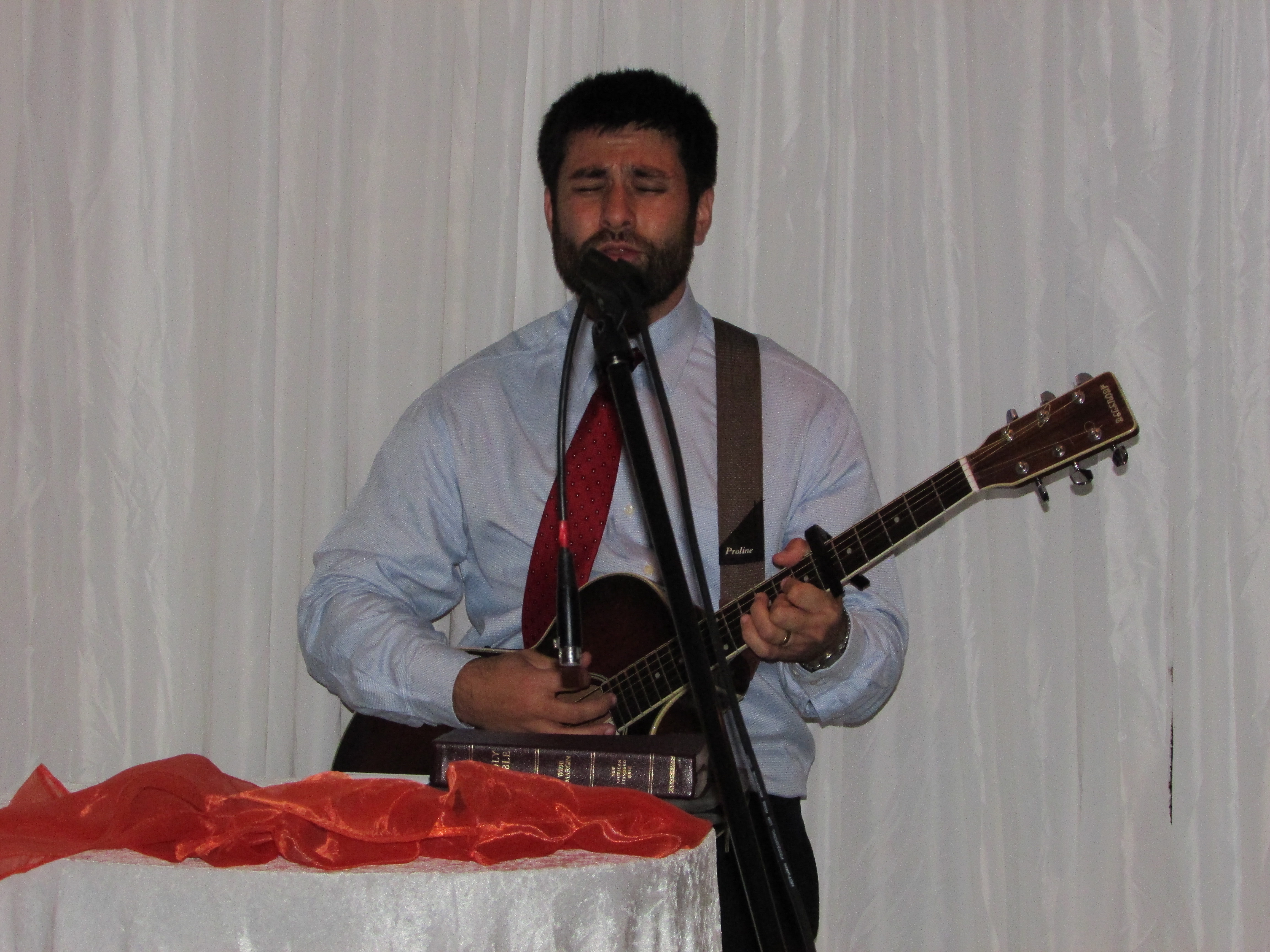
Salvador leading Worship at the Bridal Meeting

Salvador and Dianne at the Wedding

Loren Joseph and Samara Naicker’s Wedding
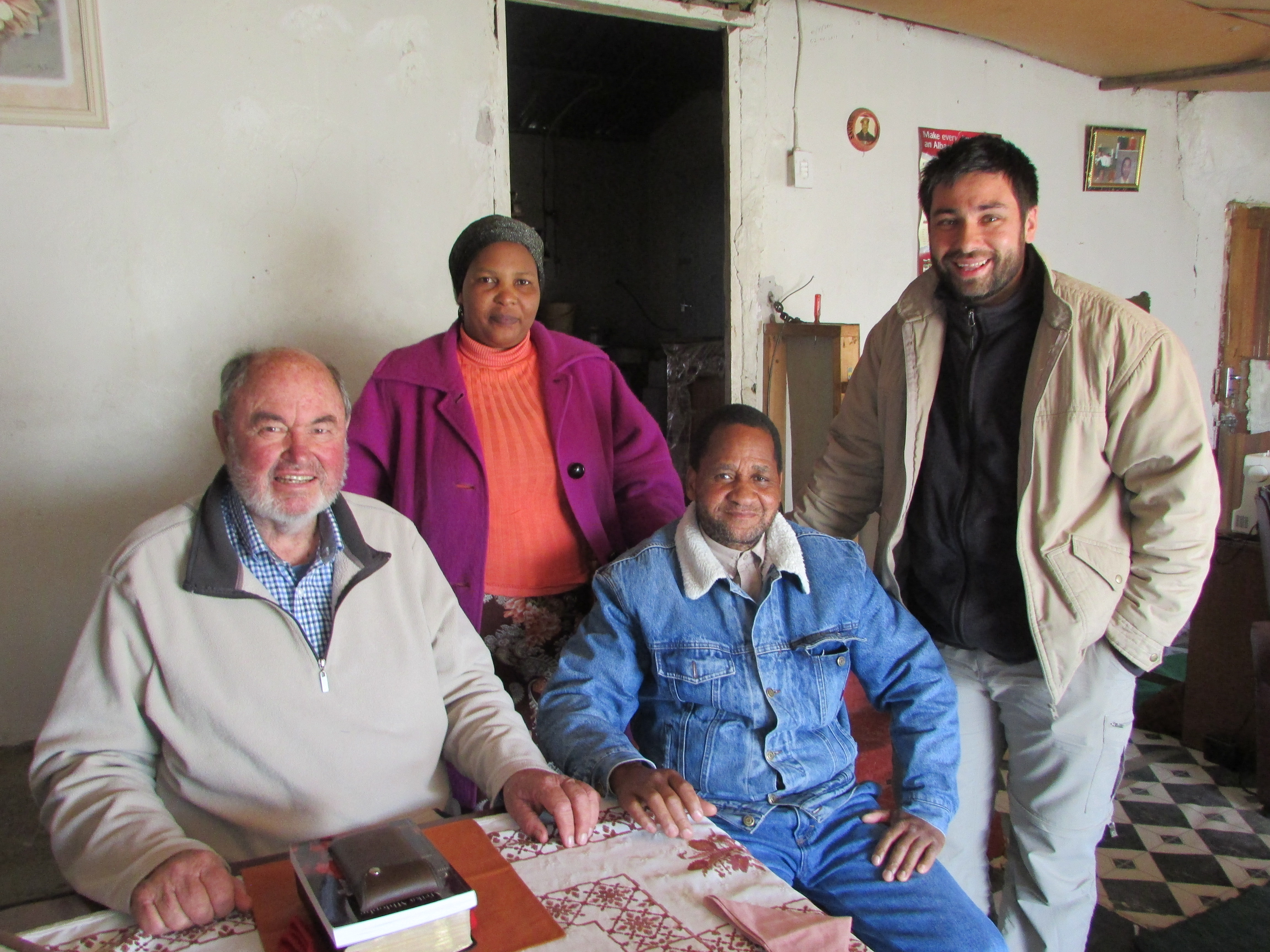
Conducting an interview concerning ancestors in Kokstad
Then it was 3 o clock start on that Tuesday morning to head to Port Elizabeth. While on the way to Port Elizabeth we stopped off at Grahamstown to visit Mesuli, a young person from our church who is studying Pharmacy at Rhodes University. It is wonderful seeing this young man of God grow in the Lord. The next day he notified us that he had gone out to do some street preaching. Please pray for this young man. After a couple of days of fellowship with the brethren, Salvador did a five part series on Ezekiel’s temple starting on Friday evening and ends on the Sunday morning. The first session was an introduction and the last concerned our adoption as sons, which meant that the Saturday sessions focussed on Ezekiel 40-48. Many of those attended gave good feedback despite there being much information disseminated. On the Sunday afternoon Salvador preached at the Chinese assembly that Alan also leads and spoke of our identity in Messiah transcending our cultural identity.
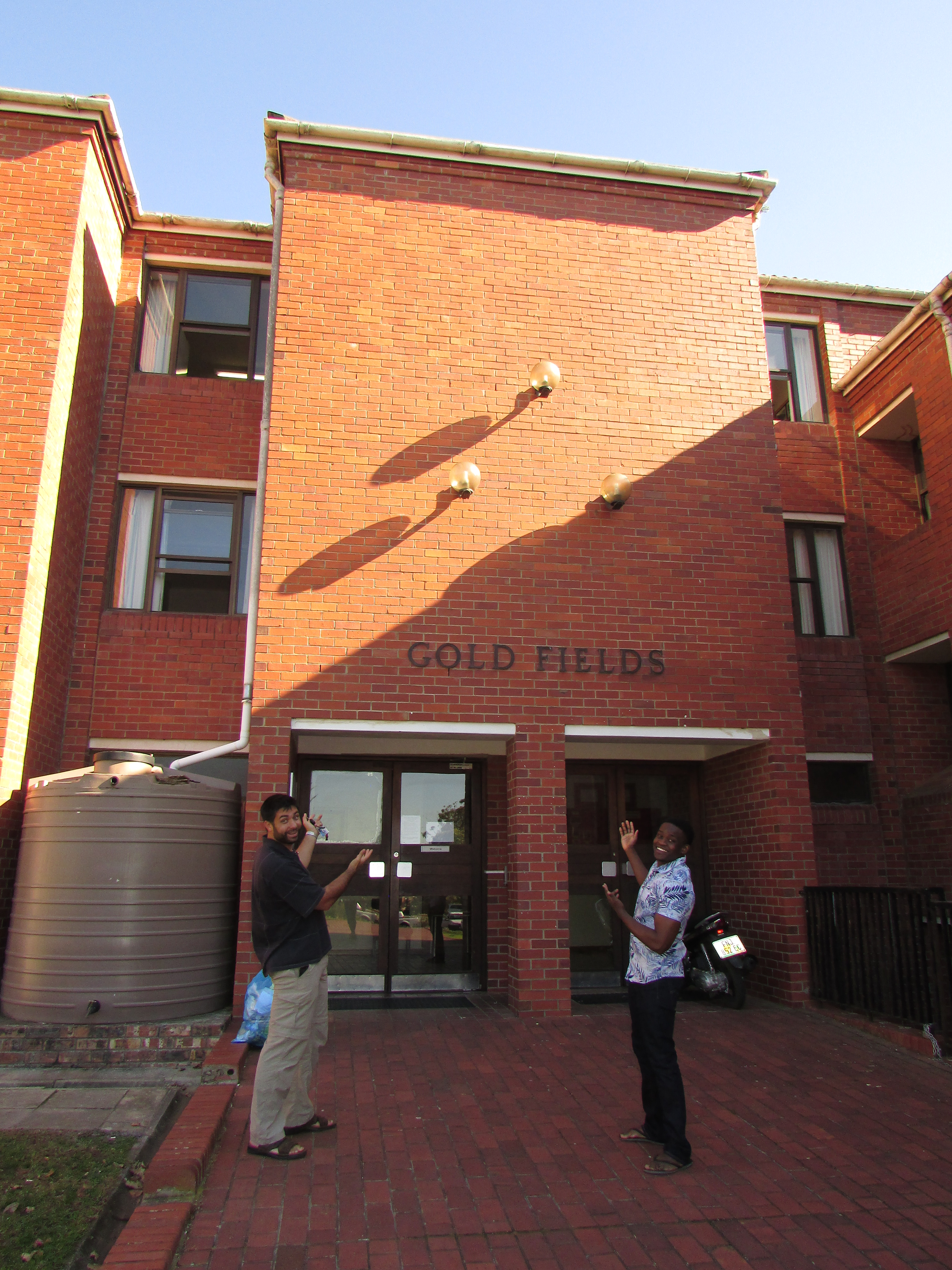
Mesuli’s Student halls of residence

Inside Mesuli’s Student Accomodation

Mesuli Witnessing on the Street
At the moment we are in Sedgefield and are staying with a lovely Christian couple Peter and Antoinette. We met up yesterday with a lovely brother in the Lord, John Davy, and hearing of the wonderful testimony of how the Lord is drawing together believers of like mind in Knysna and in George who have a heart for the truth. We will be heading to the Cape tomorrow, visiting some brethren on the way there and around the Cape itself, then going home via Bloemfontein and visiting brethren there.
May the Lord continue to encourage you in His truth and His love.
TEN
THE ELECTION OF ISRAEL:
THE CHILD OF PROMISE OVER THE CHILD OF THE FLESH
ROMANS 9
THE IMPORTANCE OF ISRAEL IN THIS EPISTLE
I have adamantly asserted the necessity of seeing this epistle from the perspective of the people of Israel. Israel is the key here but more importantly we have to acknowledge Israel from 2 perspectives. There is Israel under the Mosaic covenant and Israel under the new covenant. If we miss this foundational truth then, I believe, we will totally misconstrue Romans 9. This is by far one of the most controversial passages in all of scripture. It has been interpreted by many within various churches, especially by Reformed and many Reformed Baptist churches as applying directly to individual election; that is the choosing of certain people to salvation. It is said that it is not of a person’s choosing if he will be saved. Salvation is solely down to the choice of God and not on the basis of anything you or I have chosen. Thus, it is also reasoned that though the devil may try to deceive and mislead the elect, it is impossible for him to take them away from God. It is simply and only down to God’s choice because God has already determined that certain people and not others shall be saved. Any influence that man can have on his salvation is therefore completely rejected from this system of theology, as it is considered a denial of God’s sovereignty. They claim it is man determining his own salvation.
A CALVINISTIC ELECTION?
The logical extension of this particular doctrine is that if God chooses some people to salvation, then He must also have chosen not to save others. This is because, in God’s sovereignty, man cannot make the choice. When accused that this doctrine shows God to be unloving and that it makes one set of people more superior to the damned set of people (demonstrating favoritism on the part of God), proponents of this doctrine have stated that it does not make God unloving at all. The whole of mankind has sinned and all deserve hell. God has ‘full rights’ to send everybody to hell. But the point that God has chosen to save a few reveals that He is a God of love. In advocating this view, these proponents also claim that there is no superiority of persons because God does not elect individuals on account of their own righteousness but out of His unbiased will. They also say that it just pleases God to save some and not others.
But think about the whole context of the letter to the Romans thus far. We have seen that we have been predestined on the basis of God foreknowing us before we existed. However, this foreknowing must be based on God’s eternal nature and not merely on God’s decreeing that certain things must come to pass. In this chapter we will spend the bulk of time on verses 1 – 24 and then we will summarize with verses 25 – 33.
VERSES 1 – 8:
THE JEWS THAT ARE REJECTED
The question that confronts us is this: If the Law cannot save, and only Christ may save, then what happens to those Jews who reject Yeshua? The answer is that they are rejected. If you read Romans 9: 1 – 8 you will notice that in verse 4 the covenants belong to Israel. In these verses Paul is not simply grieving over Israel simply because they are His own people. It is not a proof text teaching that we must desire our own nation’s salvation, though that is a noble thing. The reason Paul grieves over them is because certain blessings rightfully belong to them. That glory that is to come and the service and the promises all rightfully belong to Israel. But look what else belongs to Israel… the covenants belong to Israel. Though the Abrahamic covenant was made with Abraham, it still stands with Abraham’s descendants. But the two covenants made with all of Israel as a nation are the Mosaic covenant and the new covenant. Let us read about the new covenant in Jeremiah 31: 31 – 34.
“31 “Behold, days are coming,” declares the LORD, “when I will make a new covenant with the house of Israel and with the house of Judah, 32 not like the covenant which I made with their fathers in the day I took them by the hand to bring them out of the land of Egypt, My covenant which they broke, although I was a husband to them,” declares the LORD. 33 “But this is the covenant which I will make with the house of Israel after those days,” declares the LORD, “I will put My law within them and on their heart I will write it; and I will be their God, and they shall be My people. 34 They will not teach again, each man his neighbor and each man his brother, saying, ‘Know the LORD,’ for they will all know Me, from the least of them to the greatest of them,” declares the LORD, “for I will forgive their iniquity, and their sin I will remember no more.”
This is the covenant of salvation. Laws are written on the hearts. It is a relational covenant where God knows His people and they know Him. It is a covenant that brings real forgiveness. And this covenant is made with the house of Israel and the house of Judah. But look at what it says closely. Verse 34 They will not teach again, each man his neighbor and each man his brother, saying, ‘Know the LORD,’ for they will all know Me, from the least of them to the greatest of them,” declares the LORD, “for I will forgive their iniquity, and their sin I will remember no more.
God says that they will all know Him. That is a big problem. Why is it a big problem? Because Paul has shown us that not all Jews know God. There are Jews who will go to hell. So does this mean that God was lying in Jeremiah 31: 34? This is the promised covenant and the fulfillment of Genesis 12 where God said that through Abraham’s seed all the nations will be blessed. What Paul does in the rest of the chapter is show us that not all Jews are regarded as sons but only certain Jews. Remember! We must not think Gentile, here. We Gentiles are not mentioned until verse 24 of Romans 9. There are Jews that are saved and there are Jews that are not saved. So how will Paul explain that all Jews will know God? We will see the ultimate fulfillment of this promise in Romans 11. There is a time coming when all surviving Jews will know the Lord. However, in Romans 9, Paul deals with this promise from the perspective of election. Some Jews are chosen and some Jews are rejected. Let us read verses 6 – 8.
6 But it is not as though the word of God has failed. For they are not all Israel who are descended from Israel; 7 nor are they all children because they are Abraham’s descendants, but: “THROUGH ISAAC YOUR DESCENDANTS WILL BE NAMED.” 8 That is, it is not the children of the flesh who are children of God, but the children of the promise are regarded as descendants.
WHAT IS A JEW?
God’s definition of Jew and man’s definition of Jew are two separate things. It is not physical birth that makes one a true Jew because not all Abraham’s descendants were counted as God’s covenant people. There was a distinction made between the sons of Abraham and the sons of his ‘only begotten’ son, Isaac. They were all part of the same family but only one son became heir of the promise. Paul is not completely doing away with physical descent because he is looking at this issue from within the sphere of the Jewish people. But what he is saying is that if you are Jewish you cannot boast in your physical descent. As John the Baptist said, ‘God can raise up from the stones children to Abraham.’ The ‘promise’ in this passage is one of a spiritual covenant that brings about the promise of salvation by faith in the Gospel. It is not concerning a covenant that calls one to obtain salvation by works of the Law, nor by a covenant that calls a person to maintain their salvation by works of the Mosaic Law. Paul summarizes this passage up in verses 30 – 33 of Romans 9. It is a spiritual covenant with a spiritual birth and that is what God has decreed for the salvation of His people. He has chosen those who come through the new covenant over those who boast in their own physical descent. All of Israel were considered to be God’s people. So in regards to salvation there comes a division within the God’s nation, Israel. Some are rejected and some are chosen. God has rejected the self-righteous ones of His own people. What Paul does in this chapter is a Midrash. on certain instances of election in the Old Testament where God made sure that His purpose according to election would stand. He does a Midrash on the birth of Isaac, on Esau and Jacob, on the parable of the potter and clay. He also uses the example of Pharaoh to communicate this truth.
VERSES 6 – 9:
ISHMAEL AND ISAAC
Look at the example of Ishmael and Isaac. Ishmael was conceived in the power of the flesh. Isaac was conceived in the power of the Spirit. Isaac’s birth is a type of the born again experience of the Christian. Now some people say that this passage teaches that just as Ishmael was rejected and Isaac was chosen, so God Himself chooses to save some and chooses not to save others. Though we agree that election to salvation is a biblical concept, we cannot apply this interpretation to ourselves. This is about the election of Israel and not of individual human beings to salvation. Look, both sons come from the same father Abraham. Both sons have promises from God made to them but only one was counted as heir of the promise. One of the sons is not born of the power and cleverness of the flesh but by God’s spiritual power. Look at what it says in verse 9.
“9 For this is the word of promise: “AT THIS TIME I WILL COME, AND SARAH SHALL HAVE A SON.”
God says that He will personally come and as a result of that, Sarah will have a son. The Gospel is the power of God unto Salvation to those who believe. This Gospel is the power that the Mosaic Law could never be. God has chosen those Jews, whom He foreknew, to be heirs. He has chosen those Jews who believe in the Gospel over those Jews who seek a righteousness of their own through the Law. This picture of the two sons also links with the 2 covenants. The covenant under Moses and the covenant under Christ. Moses is rejected as a means of obtaining salvation and Christ’s is the chosen covenant. Moses was forbidden from entering the land but Yehoshua led the people. So also those who remain under Mosaic authority will be forbidden from entering the land and only those under Yeshua will enter. It is the children of promise and not the children of the flesh who are chosen. Isaac is a picture of the Messiah because his father offered him as the only son, whom Abraham loved, on the altar. So God offered His only Son, whom He loved, on the cross. ‘Through Isaac your descendants will be named.’ So through Yeshua shall the children of promise be named. So if this is the case, ‘how can anyone compel the Gentiles to come under Moses?’ would be a good question to ask.
VERSES 10 – 13:
ESAU AND JACOB
Not only this, but Paul draws from another example. Let us read verses 10 – 13.
“10 And not only this, but there was Rebekah also, when she had conceived twins by one man, our father Isaac; 11 for though the twins were not yet born and had not done anything good or bad, so that God’s purpose according to His choice would stand, not because of works but because of Him who calls, 12 it was said to her, “THE OLDER WILL SERVE THE YOUNGER.” 13 Just as it is written, “JACOB I LOVED, BUT ESAU I HATED.”
Some people say that just as Jacob was chosen before he had done anything good or bad so also before the world was created, God looked forward into the future and saw humanity and said ‘I will have you and you and you, but I do not want the rest of you.’ They say that God did this without reference to anything good or bad we have said or done but simply because of His own pleasure. They call this doctrine ‘Unconditional Election’. But these verses do not speak of individual people but of nations. Dave Hunt has pointed out that when God spoke to Rebekkah, He started off by saying, “Two nations are in your womb.” Thus when God said, ‘the older will serve the younger,’ He was speaking about the two nations and not two individuals. We know that Esau never personally served Jacob. When God says “Jacob I have loved but Esau I have hated” in Malachi 1: 2, He does not arbitrarily hate Esau simply because He felt like it.
God is comparing His treatment of Israel to His treatment of Edom. He makes this comparison to prove that, even though He had judged Israel, yet they still had their land. However Edom’s land had been and would remain desolate. And this is not merely because God felt like doing it, but as Obadiah teaches, it was in response to Edom’s treatment of Israel. And this principle is the same for all nations. How this passage in Malachi fits in with election, is that though Israel had offended God and had gone to the lengths they did, yet God had not cast them off completely. Neither had He made their land desolate forever. God would not completely cut them off because they were God’s chosen covenant people. A chosen people! Paul is not dealing with the election of individuals but with the election of Israel. This is the election of the Israel under Christ and the rejection of Israel who refuse to come under Christ and stay under Moses. Those chosen would gain their inheritance and those rejected will lose their inheritance. It is God’s choosing of the covenant in Jeremiah to be a means of salvation over the Mosaic covenant. When we understand this, each bit of these verses in Romans makes perfect sense. Look at what Paul says.
- Firstly, Paul says that Jacob and Esau were twins by one man, ‘our father Isaac’. Note here, Paul is expressly speaking from a Jewish perspective. He is speaking about the Jews’ physical father. As the two brothers come from the same father, so the two covenants come from one Father who is God. The Jews under these two Covenants come from the one father too.
- Secondly, God made His election before the two were born. He had chosen before they had been able to do good or bad because it is not about works. Well this is what the new covenant is about. It is not about salvation by works of the Mosaic Law but about the God who calls. Why is it based on Him? Because we need His righteousness and we cannot save ourselves. He calls and we respond. This is what the Ebionites have to realize. God justifies the ungodly. But also Paul goes on to say that because of God wanting His purposes, according to election, to stand, it was said to her that the older will serve the younger. Is this an election of individuals that Paul is referring to?
Galatians 3: 24 & 4: 1 – 7.
“24 Therefore the Law has become our tutor to lead us to Christ, so that we may be justified by faith.”
“1 Now I say, as long as the heir is a child, he does not differ at all from a slave although he is owner of everything, 2 but he is under guardians and managers until the day set by the father. 3 So also we, while we were children, were held in bondage under the elemental things of the world. 4 But when the fullness of the time came, God sent forth His Son, born of a woman, born under the Law, 5 so that He might redeem those who were under the Law, that we might receive the adoption as sons. 6 Because you are sons, God has sent forth the Spirit of His Son into our hearts, crying, “Abba! Father!” 7 Therefore you are no longer a slave, but a son; and if a son, then an heir through God.”
Which of the covenants came first? Was it the new covenant or the Mosaic covenant? Therefore what do you think Paul is meaning when he speaks of the prophecy, that the older will serve the younger? He is using Midrash to say that this prophetically applies to the two covenants. The Mosaic covenant and those under it are servants and the new covenant and those under it are sons. The older will be a servant of the younger. The Law leads to Christ.
IS GOD UNJUST?
Does this election make God unjust? This can be interpreted in two different levels. The first level is concerning the election of Jacob’s descendants over Esau’s before anyone did anything good or bad. Surely that is not fair is it? Should God not rather base His election upon the character of Jacob’s descendants or of Jacob or of the Descendants of Esau? But Paul shows us that God is entitled to be merciful to whoever He wants to. If God wants to show mercy to this person and not that person, it is God’s right and privilege. It sounds harsh but that is what Paul is saying. The question is not, ‘can God give mercy to some and not others?’ That is not the question we should ask. Rather we should ask ‘who does God show mercy to’? ‘What kind of person does God resist’?
1 Peter 5: 5 – 6. “5 You younger men, likewise, be subject to your elders; and all of you, clothe yourselves with humility toward one another, for GOD IS OPPOSED TO THE PROUD, BUT GIVES GRACE TO THE HUMBLE. 6 Therefore humble yourselves under the mighty hand of God, that He may exalt you at the proper time,”
What does it take to become a Christian? We need to accept the conviction of the Holy Spirit, who shows us our own sinfulness. To do this is humility. It is humility to come to God and to display ourselves just as we are before Him. Think of the prodigal son. What did he say to his father? ‘I am no longer worthy of being your son.’ The Jew must become as Paul who realized he was the chief of sinners. As long as the Jew hides behind a pretense of self-righteousness, through observance to the Mosaic Law, then there is no hope for him. Paul continues in verse 16 to say that it is not about the man who wills and runs but on God’s mercy.
Some people take this verse and say that it does not even require you to will or to run but if God chooses to have mercy on you, you will still be saved. But a look at Hebrews 11 and the hallway of faith will show us men and women, from the Old Testament, who by faith conquered kingdoms or suffered or were victorious. They all gained God’s approval by faith. We are justified by faith. Both people before Christ and people after Christ are justified by faith. Those before Christ lived in the expectation of the Messiah and we live in the revelation of the Messiah. Yet what does Hebrews say about those before Christ?
Verses 39 & 40. “39 And all these, having gained approval through their faith, did not receive what was promised, 40 because God had provided something better for us, so that apart from us they would not be made perfect.”
They did not receive what was promised. What was the thing promised? The whole letter is speaking about the Messianic covenant being superior to the Mosaic covenant. The promise is contained in the previous chapter where God had promised a coming Messiah who would be the perfect sacrifice. Then comes the quote from Jeremiah 31 that we read earlier of the new covenant, in Hebrews 10: 16 – 17. We have received it and they did not. What is the difference between the two groups? Was it the fact we are of faith and they of works? No, because both groups exhibit faith and both groups exhibit works. Why did they will and run and not get the promise but we will and we run but we have received it? Because it is not our willing and running that makes us partakers. We were simply born after the new covenant came into effect. It is down to the God who gives mercy. But we are all made perfect together because we look forward to that day when Jesus will return. The saints in Hebrews 11 looked forward to that day and to Jesus’ first coming. The focus here is the God who gives mercy. The second level of interpretation (of Romans 9: 14) springs from this and is a question that many people ask in the world today. When we say that a person is justified by faith alone and not by works of the Mosaic Law; they retort, “So you’re saying that an evil criminal, or a thieving paedophile, who accepts Christ before he dies will go to heaven but a good, law abiding Jew who only tries to help people will go to hell because he did not accept Jesus? Where is the justice in that?!
VERSES 14 – 20:
PHARAOH
As we have already said, God has ‘full rights’ to give mercy to who he desires and to harden who He desires. Paul proves this further from the example of Pharaoh. God said that He raised him up to show His power through him. The reason God did this is seen from the Philistines’ recollection of the Exodus in 1 Samuel 4: 8.
“8 “Woe unto us! Who shall deliver us from the hand of these mighty gods? These are the gods who smote the Egyptians with all kinds of plagues in the wilderness.”
God used Pharaoh so that His name would be proclaimed throughout the whole earth. But some people would say, ‘this is proof that God simply chooses to harden some people and not others.’ In response to this interpretation of God’s hardening of Pharaoh I say;
- Firstly, to believe that God has to harden people’s hearts goes against their doctrine of Total depravity or Total incapability. Total depravity says that, because man is so thoroughly fallen, he is incapable of accepting the Gospel. If that is true than why does God have to harden people?
- But also, the quote that Paul takes from the Old Testament is from Exodus 9:16. When you read this verse in the Old Testament it is worded differently. Instead of God saying, ‘For this reason I have raised you up’, it says, ‘For this reason I have let you remain’. How did God raise him up? Though God’s punishment was due him and God should have taken him out a long time ago, God kept him alive so that His judgment would be enlarged to a terrible degree. People think that God merely chose to harden Pharaoh arbitrarily. However, when God said these words it was during the 7th plague. For the first four definitely, and possibly also for the fifth, Pharaoh hardened his own heart. It was not until the 6th plague that we see that God hardened Pharaoh’s heart for him. But did God not say in Exodus 7: 3 that He would harden Pharaoh’s heart? Yes He did, but notice that God was speaking in future tense. It was prophetic. God knew what was going to happen and He had His plan. All this proves is that the future is not a surprise to God.
Notice why God said He would harden pharaoh’s heart. So that he would MULTIPLY His signs and wonders in the land of Egypt. He did not say He would harden the heart of Pharaoh so that he could DO some signs. To multiply means to increase. That is exactly what happened after the fifth plague. The signs increased and became more terrible. It is on this premise God says that He will have mercy on whom He will have mercy and He will harden whom He will harden. But, as always, Paul’s words get misconstrued. The opposing argument seeks, using Paul’s reasoning, to place blame on God for his own resisting of God. In reality the opposing argument is saying, “I am not guilty for resisting God because I did not choose to be hardened. God hardened me and I cannot resist His will.” This is fatalism, which is claiming that man has no choice in life. Everything is limited to the bounds of fate and has already been destined.
IS GOD’S WILL IRRESISTABLE?
Paul does not reply in saying that this opposing argument is wrong. He does not say ‘God’s grace is resistible and it is the individual that rebels’. It seems from first glance that Paul does not see anything wrong in the proposed truth of the opposing argument. So does this imply that Paul actually agrees with the statement, that man cannot resist God’s choice of damning some men to eternal hell? Is Paul agreeing with this fatalistic philosophy? No he is not.
20 On the contrary, who are you, O man, who answers back to God? The thing molded will not say to the moulder, “Why did you make me like this,” will it?”
Look at verse 20, what does Paul say? He says ‘On the contrary’. How can God find fault because His will is resistible, right? Wrong, on the contrary, (rather) you are resisting God’s will right now by trying to pin the blame on God. Look at the scriptures Paul quotes from. Paul paraphrases Isaiah 45: 9 & 10. He uses this scripture to show that God has complete authority to make us into what he wants. Is this arbitrary or is it in relation to our response to him? Look at how the passage of Isaiah 45: 9 starts. “Woe to the one who quarrels with his Maker”. Paul is not agreeing or disagreeing with the truth or error of the previous opposing argument but he is attacking such arrogance in questioning. Paul is attacking the opposing of God’s decisions and actions, which in fact is the questioning of God’s justice. Who is man that he should demand anything of God? God made man; He is the judge and not man. How dare man cast a moral judgment on God and decide that God is either right or wrong!
The objection that Paul has imagined is not a proposed intellectual difficulty. It is simply another excuse and attempt at justifying man’s sin. It is that ‘voice of doubt’ speaking once again. This attempt at justification protests against receiving punishment for rebelling against God since it argues that God willed them to rebel. They had no choice, as it was God’s election.
VERSES 21 – 24:
THE POTTER AND THE CLAY
By looking at the next piece of paraphrasing we can see that God’s choice is not unconditional at all. This paraphrase is taken from Jeremiah 18 v 1 – 10, where a picture, distinct from the Calvinistic picture is portrayed. In Jeremiah 18, God stated that when the clay is spoiled, God would choose to make Israel into a vessel of wrath. But if Israel repented of its evil God would relent. God promised to make Israel into a nation for uprooting if they continued to rebel and to do evil. Israel had a choice. They could either conform to God’s ways in obedience or they could rebel against God and disobey Him. Israel had this choice but they could not choose the consequences of their own decisions and actions. God decides what He will make a man into but He does this on the basis of the man either accepting or rebelling against Him. This factor finds its outworking in the gospel message. One may believe the gospel and obey, or he may rebel against the truth presented. Yet it is God who sanctifies a person or hardens him so that he might ‘believe the lie’. It is God who judges and determines the outcome of one’s decisions.
However, looking back at Paul’s statement in verse 21, it is important to observe that Paul’s phraseology is different to the phrasing used in Jeremiah. In Jeremiah God determines to make one lump of clay into either a vessel of wrath or a vessel of honour. Yet in Romans, Paul says that God has the right to make one lump of clay into both a vessel of honour and a vessel of dishonor. What is Paul speaking about? Paul is speaking regarding the two covenants again. The vessel for ‘honorable use’ is speaking of those under the new covenant, and the vessel for ‘common use’ is speaking of those under the Mosaic covenant. After defining what the two vessels represent it must then be asked, what does the lump of clay represent? As Adam was made from the dust of the earth (Genesis 2 v 7), so clay represents humanity, (Genesis 3 v 19). Yet for one to assert that the lump of clay represents all of humanity presents us with a great dilemma; namely not all of humanity was under the first covenant but only the physical descendants of Israel.
Therefore, it must be concluded that Paul is using this parable to contrast the Jews under the old covenant to the Jews under the new covenant. As Jeremiah 18: 6 states that the lump of clay is Israel. Hence, even though the elect may be defined as those under the new covenant, it specifically refers to Israel under the new covenant as opposed to Israel under the Mosaic covenant. In other words, it must be concluded that God had all along chosen to save Israel under the new covenant, of faith, and not Israel under the old covenant, of works.
VERSES 25 – 33:
CONCLUSION
And so Paul, as the Apostle to the Gentiles, not only wanting to look at the election as referring to the Jews only, states that the Gentiles are also included in the election. The Gentiles, according to Paul in Romans 11:18 – 20, have been grafted into the olive tree (Israel). This view of election finds support from Romans 9: 6, “For they are not all Israel who are descended from Israel”. The elected Israel consists not only of Jews but also of Gentiles too. Those who were formerly excluded from being in covenant relationship with God are now included in the new covenant. Has God changed His mind regarding the acceptance of Gentiles and thus proved not to be immutable? Not in the slightest! This is what God had chosen before the foundations of the earth. The covenant delivered through Moses was never intended to bring about salvation as it was only for the Jews and also was powerless to save anyone. But God desired salvation to come through the new covenant to save men from all nations.
Continuing from the theme from verse 6, it is to be recognized that the chosen Israel are those under the promised new covenant. Thus, sadly, only a remnant of the sons of Israel will be saved.[1] Paul’s heart bleeds for the salvation of his people. But could it be argued that Paul bleeds any more for the Jews than God’s heart does? Is God trivial about the destruction of Israel because of His election? Of course not! God, who desires all men to be saved, does not simply elect people to eternal hell simply because He desires to. So why is there only going to be a remnant of Israel that will be saved?
Verse 30 – 33. “30 What shall we say then? That Gentiles, who did not pursue righteousness, attained righteousness, even the righteousness which is by faith; 31 but Israel, pursuing a law of righteousness, did not arrive at that law. 32 Why? Because they did not pursue it by faith, but as though it were by works. They stumbled over the stumbling stone, 33 just as it is written, “BEHOLD, I LAY IN ZION A STONE OF STUMBLING AND A ROCK OF OFFENSE, AND HE WHO BELIEVES IN HIM WILL NOT BE DISAPPOINTED.”
These verses show that the difference between those under the new covenant and those under the old is that the Gentiles in the new, even though not initially seeking righteousness, obtained righteousness through faith. The Jews under the old did not obtain righteousness because they were trying to earn it. Does this mean that Paul has done away with Israel in this statement? Not at all, but as Romans 11: 1 demonstrates; Paul himself was Jewish, of the tribe of Benjamin. What Paul is doing is contrasting the Gentiles under the new covenant to the Jews under the old in order to convince his readers of something. He is proving that subjecting oneself to obtaining salvation through works of the Law will not lead to righteous standing before God. This is simply because God never ordained salvation to be attained in that way. He had purposed from the foundation of the world that salvation would be attained by faith, as a free gift. This is at the very heart of the new covenant.
What Paul has done at the end of the chapter is show that this covenant is not only for Jews but also for us Gentiles whom God has called. It is down to God’s mercy and not our obedience to the Mosaic Law. Why do Jews reject their own Messiah? It is because it is an offence for them to accept Him. To accept Jesus means that they have to admit their own sinfulness and failure. As Paul concludes, it is not by works but it is by faith. The way for salvation for the Jew is the same way of salvation for the Gentile. Both necessitate admitting that we are poor in Spirit. We have failed to attain to God’s standard of righteousness and need the provision and grace given by Christ.
[1] This is not to be confused with the great end time Jewish revival which will immediately precede Jesus’ return in which, as Romans 12: 26 tells us, all Israel will be saved.
SALVADOR AND DIANNE’S MSINDISI MONTHLY
Number: 128 Jun 2015
P. O. Box 1481
Vryheid 3100
KwaZulu Natal
South Africa
+27 (0) 72 8311008
+27 (0) 72 3843786
Email: msindisi@gmail.com, salv.di@gmail.com
KwaZulu Mission Website: www.kwazulumission.com
KwaZulu Mission Facebook Page: www.facebook.com/kwazulumission
We shared a lovely braai meal at the beginning of this month with Sam and LJ who are getting married in June. Sam is the daughter of Girlie who attends the weekly Friday night cell group. We have known Sam since around 2010. She is a very special lady and we are so looking forward to being at her wedding to LJ in June.
Over the month we have made several runs to the Vryheid Hospital. One was, sadly, with a young girl who had taken an overdose of tablets to try and solve her problems. She was fine and we were grateful to be able to talk with her and the family about her response. The other visits were dropping mothers to be and fetching a mother and child. Sadly all these girls are not married and are very young themselves. This is very common in the area we live in.
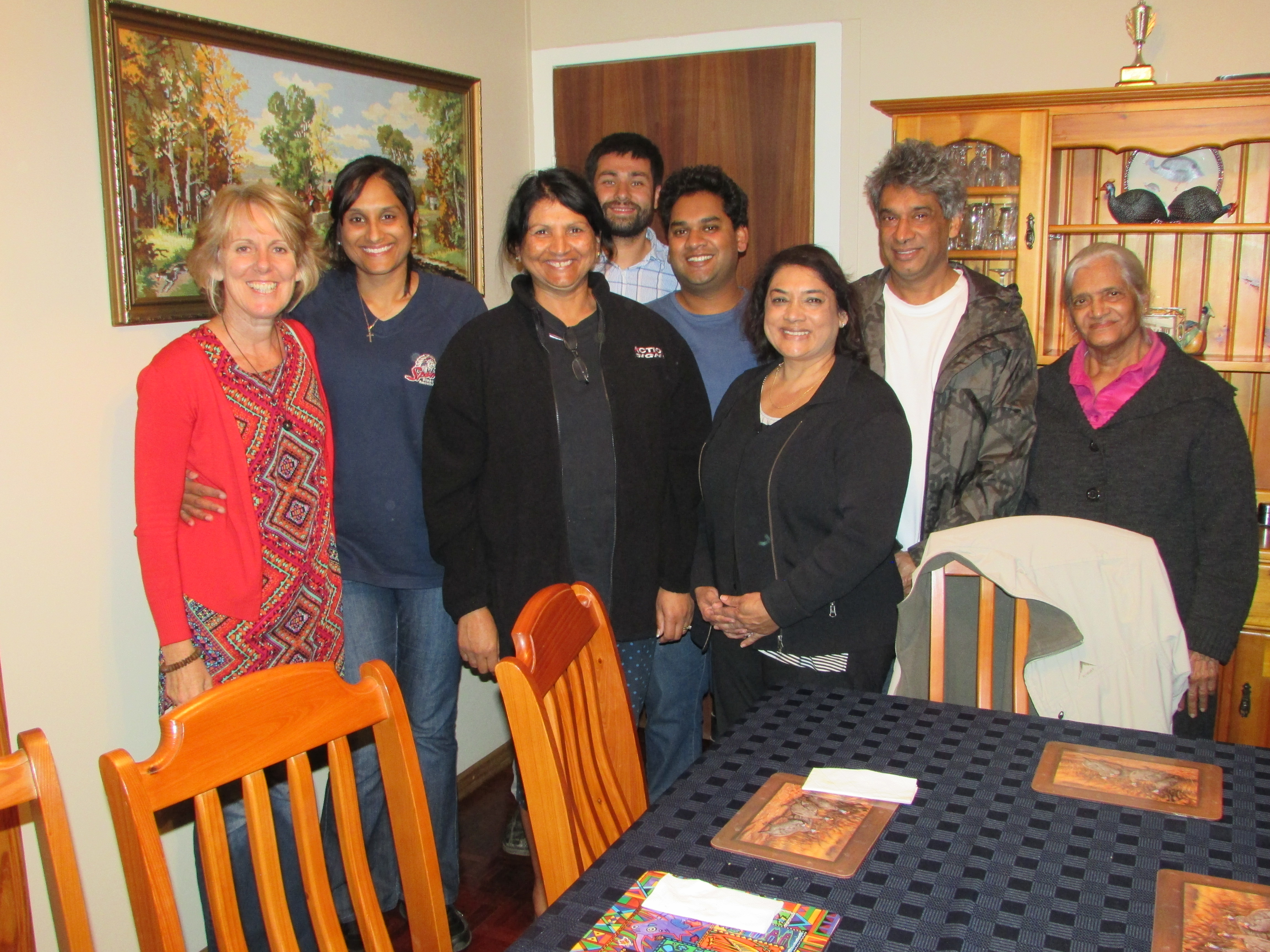
Enjoyed lovely Braai with Sam and LJ’s families.
Kids club has been varied over the month, with us teaching the smaller children while Celani has taken the older kids. This last week we swapped and Sal taught the older ones while Celani was with the smaller kids. We always start the morning picking up the kids from the Alpha area about 10 min drive away. Then the kids play while we set things up before singing and teaching. It really is a special morning with the kids.
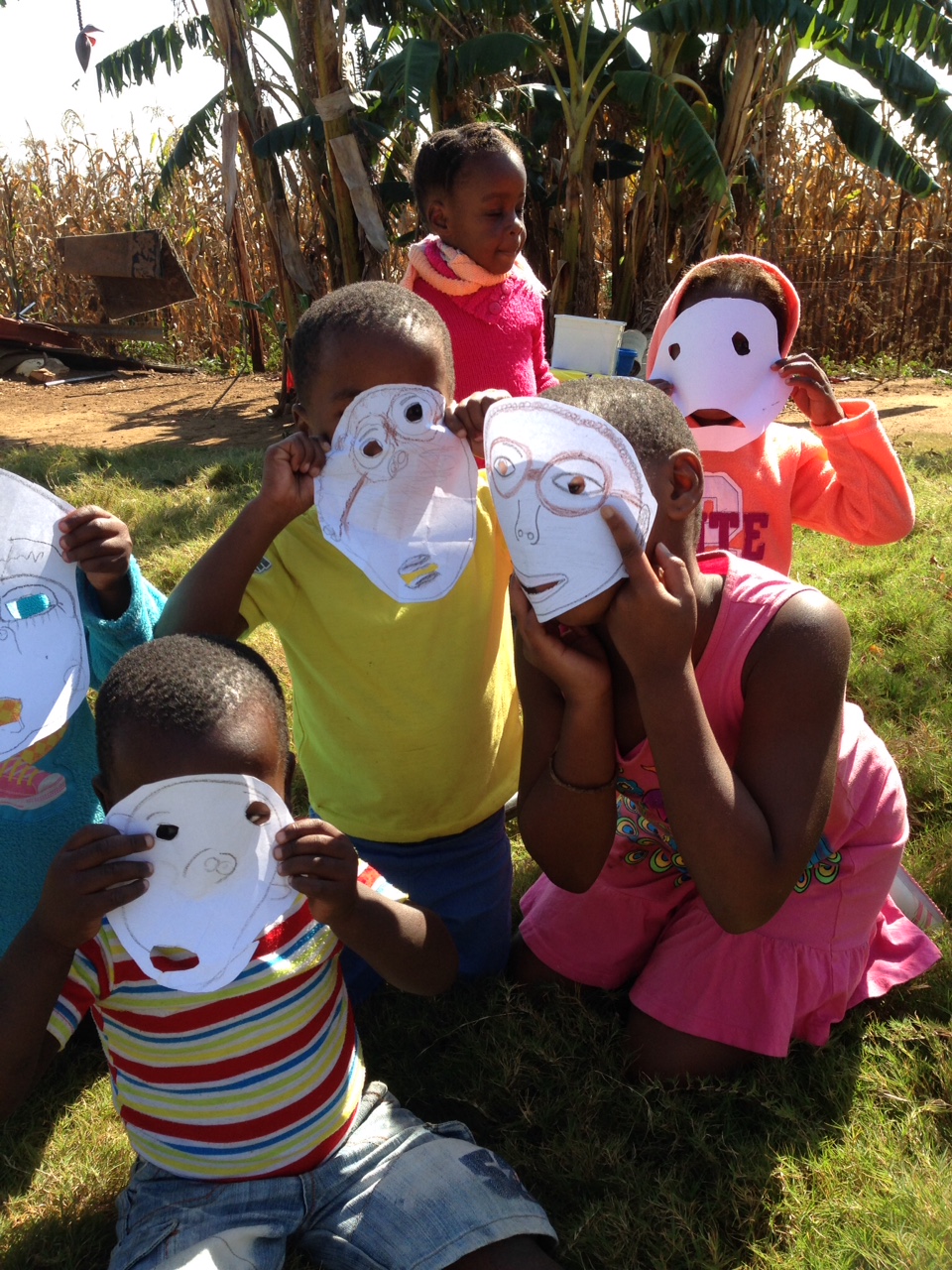
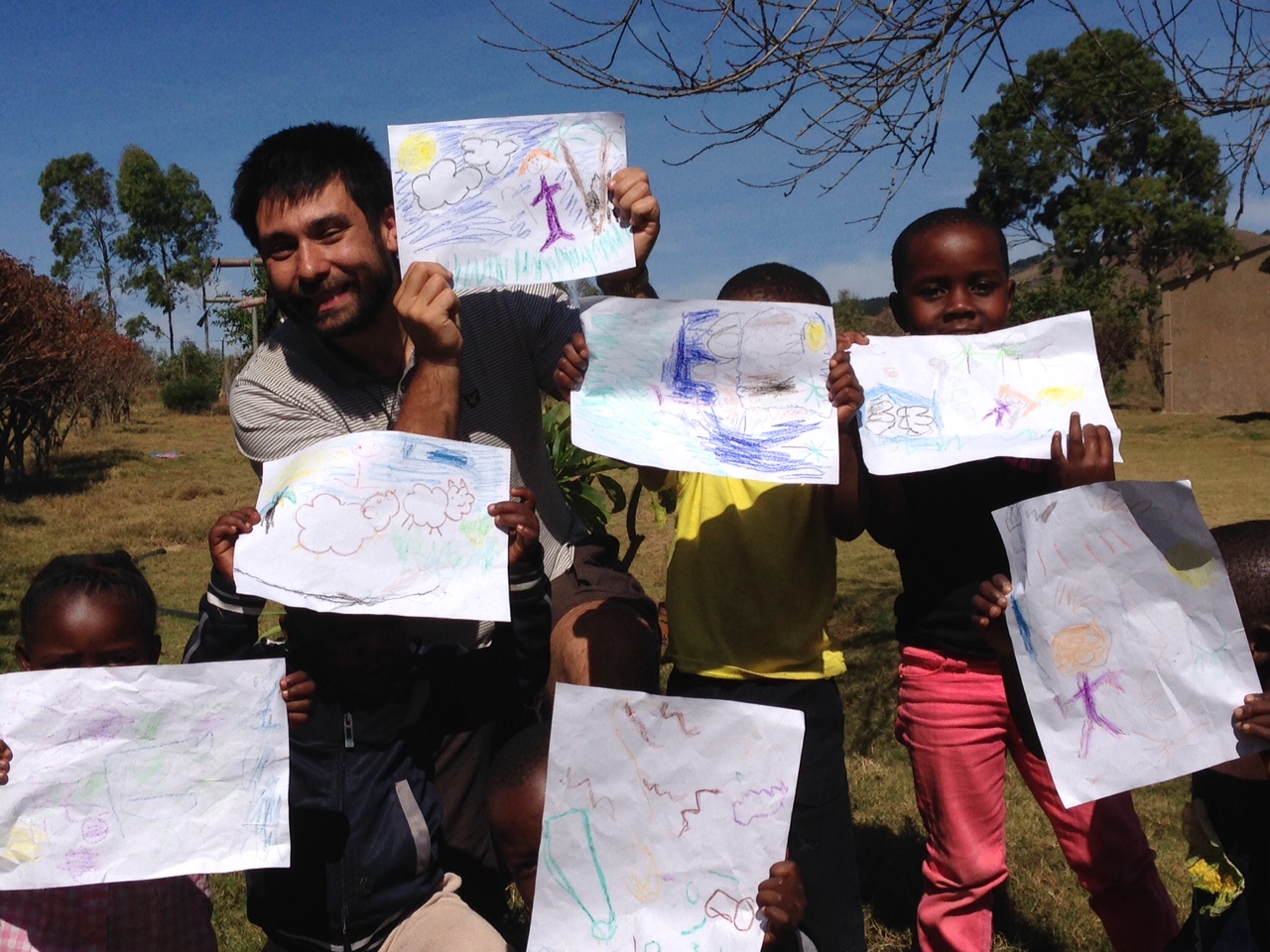
Di used parts of the human face to teach that God sees everything, God hears everything and God knows everything. Older kids were taught by Celani.
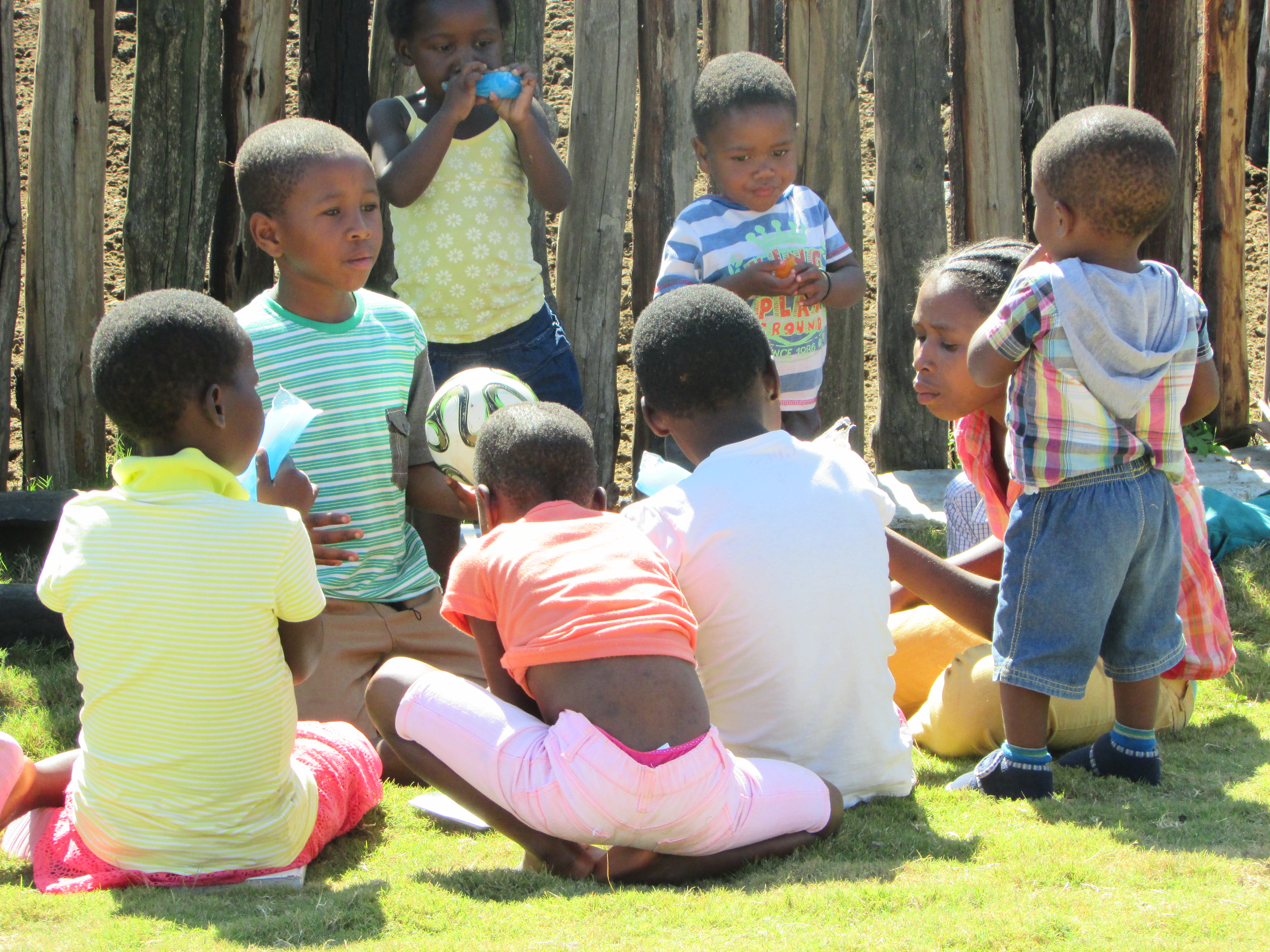
Kids enjoying refreshments after kids club
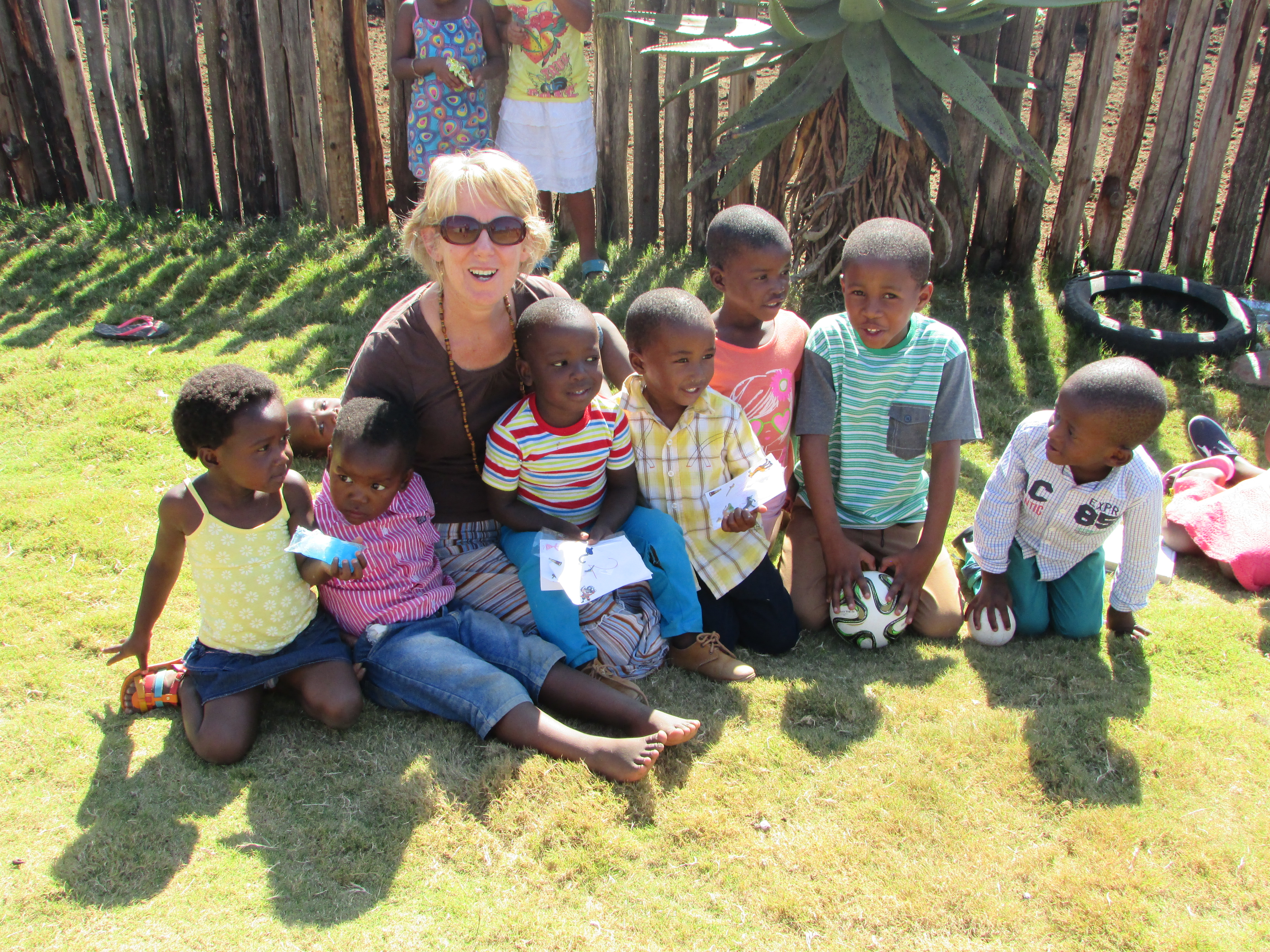
Di with Kids from Kids Club
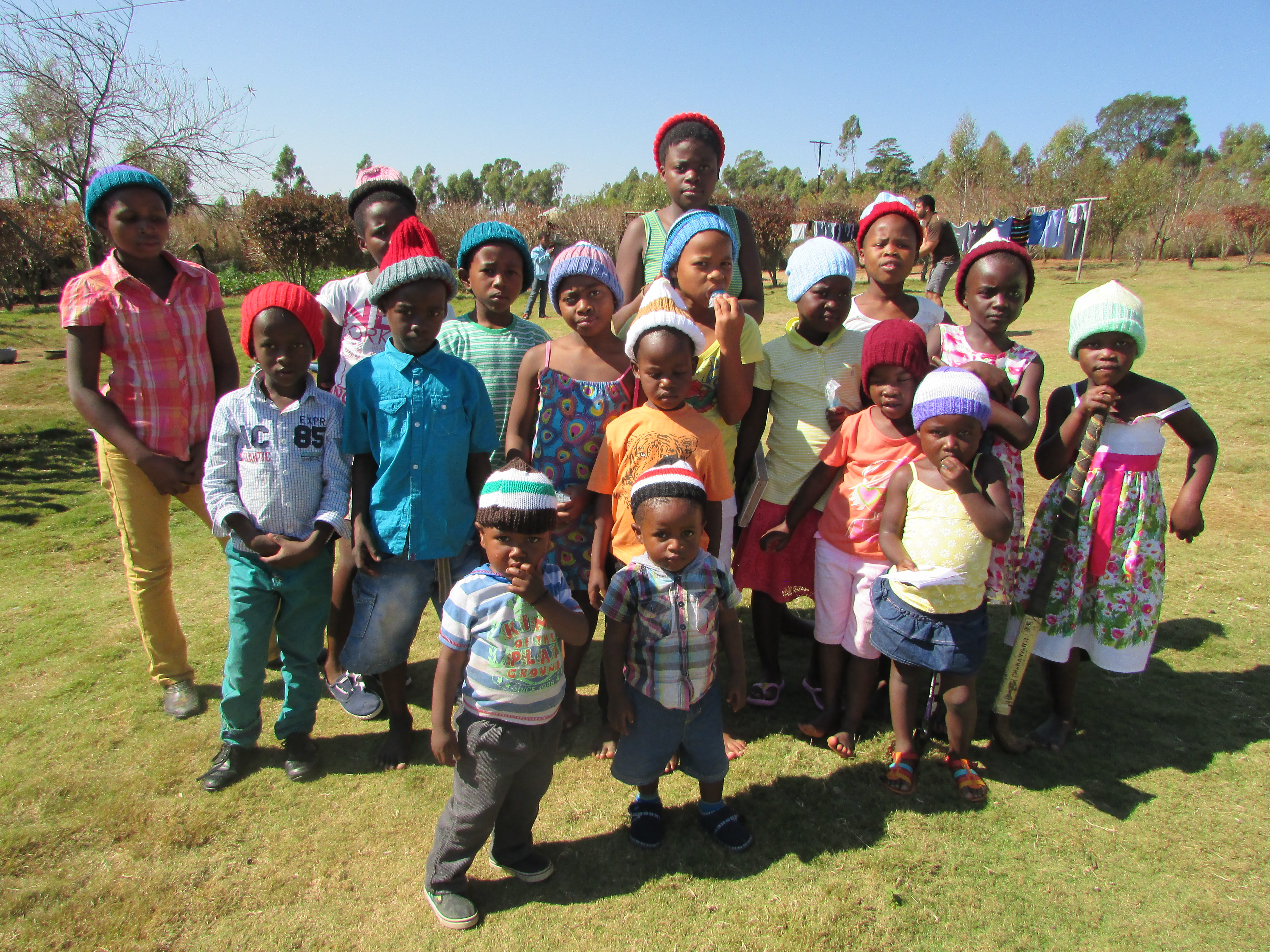
Kids Club
Salvador teaches the little kids on the lost sheep.
Sal made contact with another Zulu pastor in Louwsburg called Hamilton Bhuthulezi. He was encouraged to hear his testimony. Sal has been researching for an outreach project to reach people into ancestral traditions. Sal has been going through to Johnny and Kim’s farm on a Saturday afternoon every two weeks to go through the discipling book that has been printed with one of their workers who has been attending the cell group when we have it at their place. He is very quiet and his English is very limited so Sal has felt that it was important to work through some fundamental doctrines with him in Zulu and to check his understanding of the Gospel. This month Nomusa asked to be baptised. She had heard Sal preach in 2010 when he had been in the Alpha area. Her testimony was that she knew there was nothing that could make her right before God but Jesus. She had been attending the discipling group which meets in Mkhulu’s homestead on a Tuesday afternoon. Please keep her in prayer.

Baptising Nomusa.
We were excited to have Tony and Maria Verlaan with their friend Ashley come and stay a night. They brought with them the NTM Foundation teaching that has been completed and printed into Zulu. This is very exciting and we hope to run a workshop in the future at some stage. It’s always a pleasure having them come to stay, but it is never long enough!!
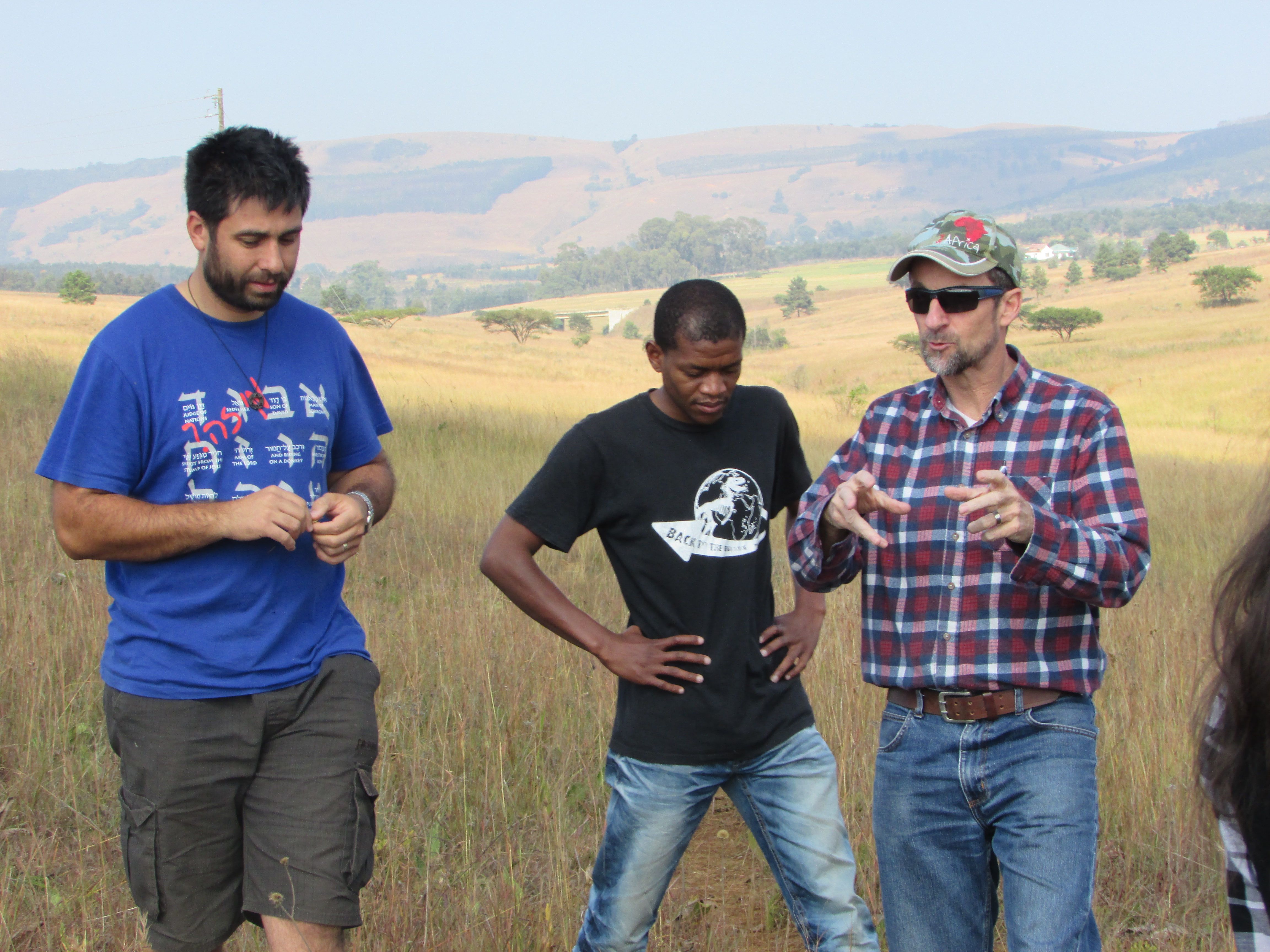
Tony and Ashley with Salvador
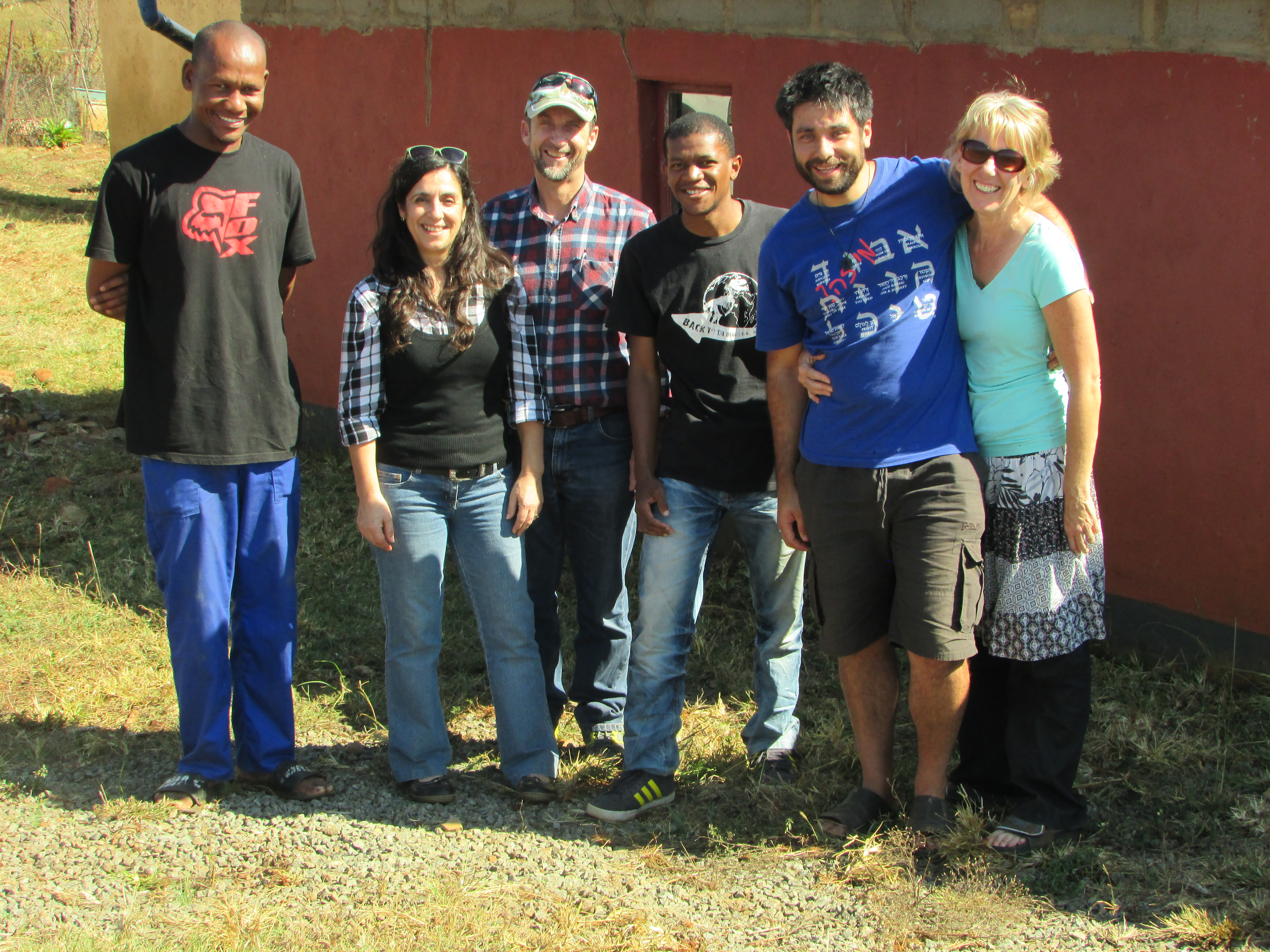
At the homestead saying goodbye to Tony, Maria and Ashley
We visited the victory school for the second time, this is now going to be a monthly occurance, to sing and give a small talk for their devotion time in the morning. Di taught at Carebear earlier in the month.

Amazing KZN sunset view from our house.
On the 23rd we headed down to the coast again. Sal was asked to preach at CKM . He spoke on Pentecost and its special significance for Gentiles. We stayed with a lovely couple while there called Bruce and Moyra Cohen. While there we got to meet up with Calvin and Gracie from New Guelder Church. We also got to visit Transworld radio to seek assistance for Sal’s ancestor project.
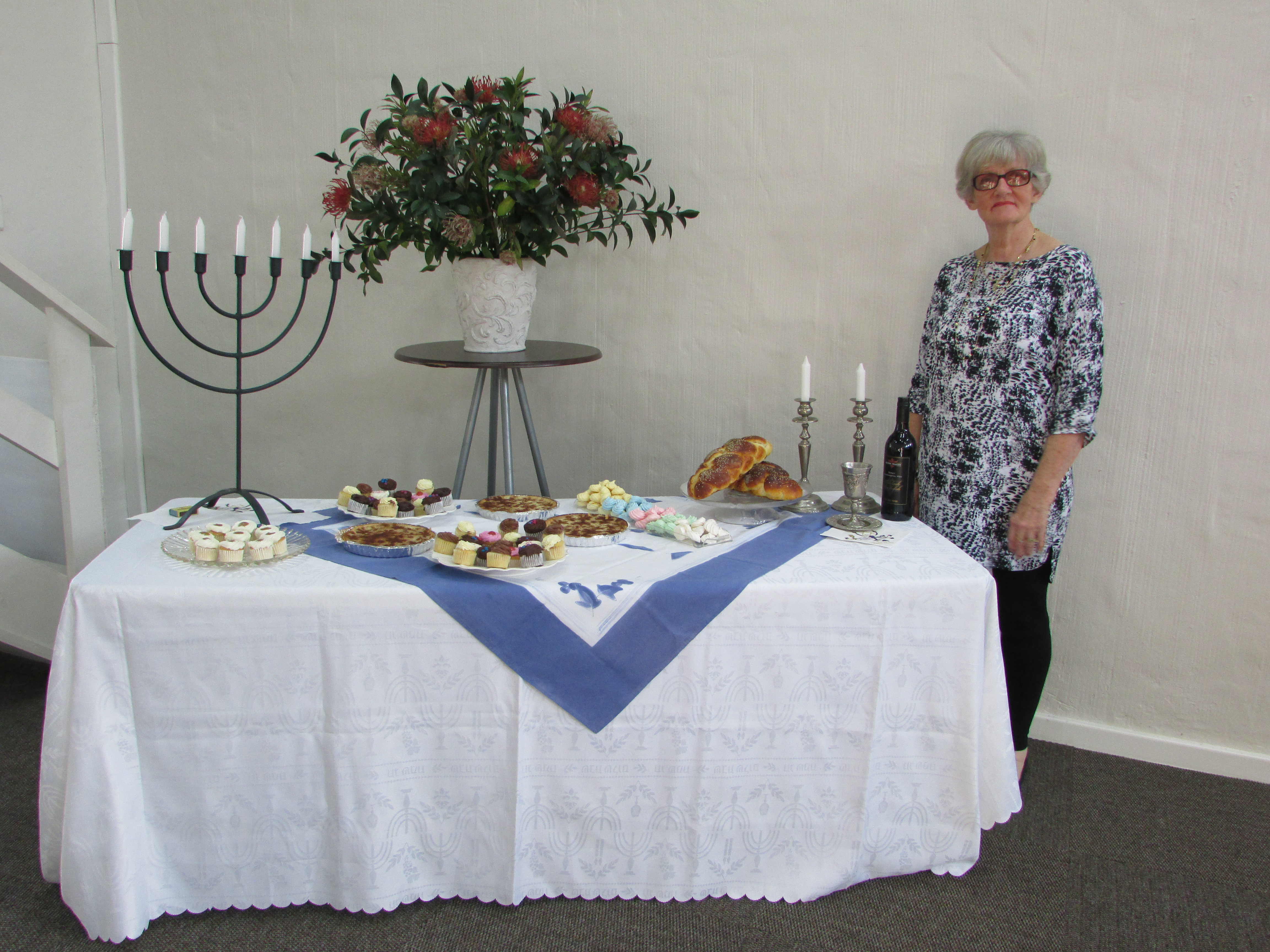
Judy set up the table for Shavvu’ot at Coming King Ministries (CKM).

Shavu’ot loaves.

Getting prepared for collective worship at Coming King Ministries in Ballito.

Lee at sound desk at CKM

Leslie (Right), pastor of CKM with John who is a fluent Zulu speaker.
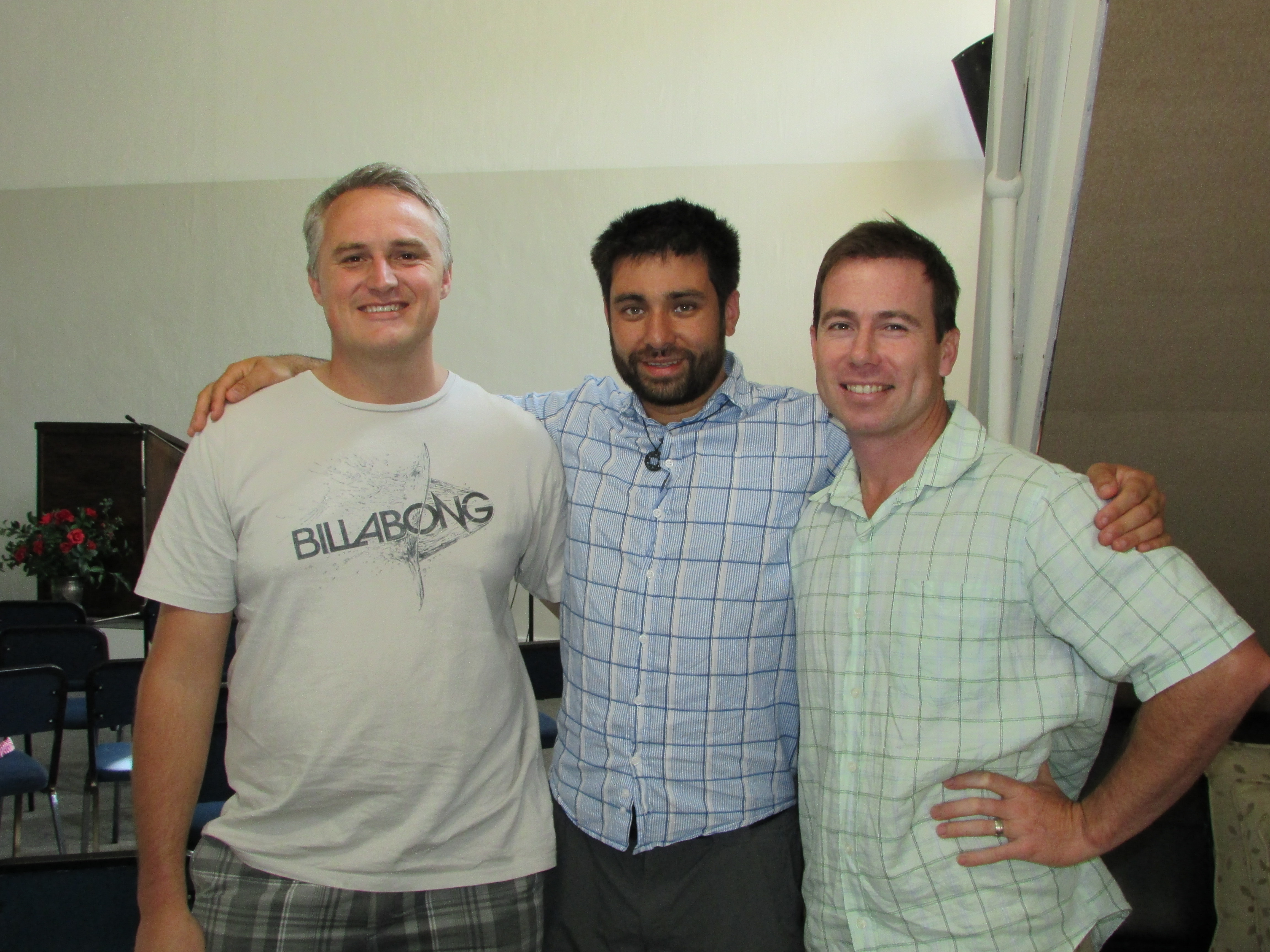
Salvador with Lee and Matthew
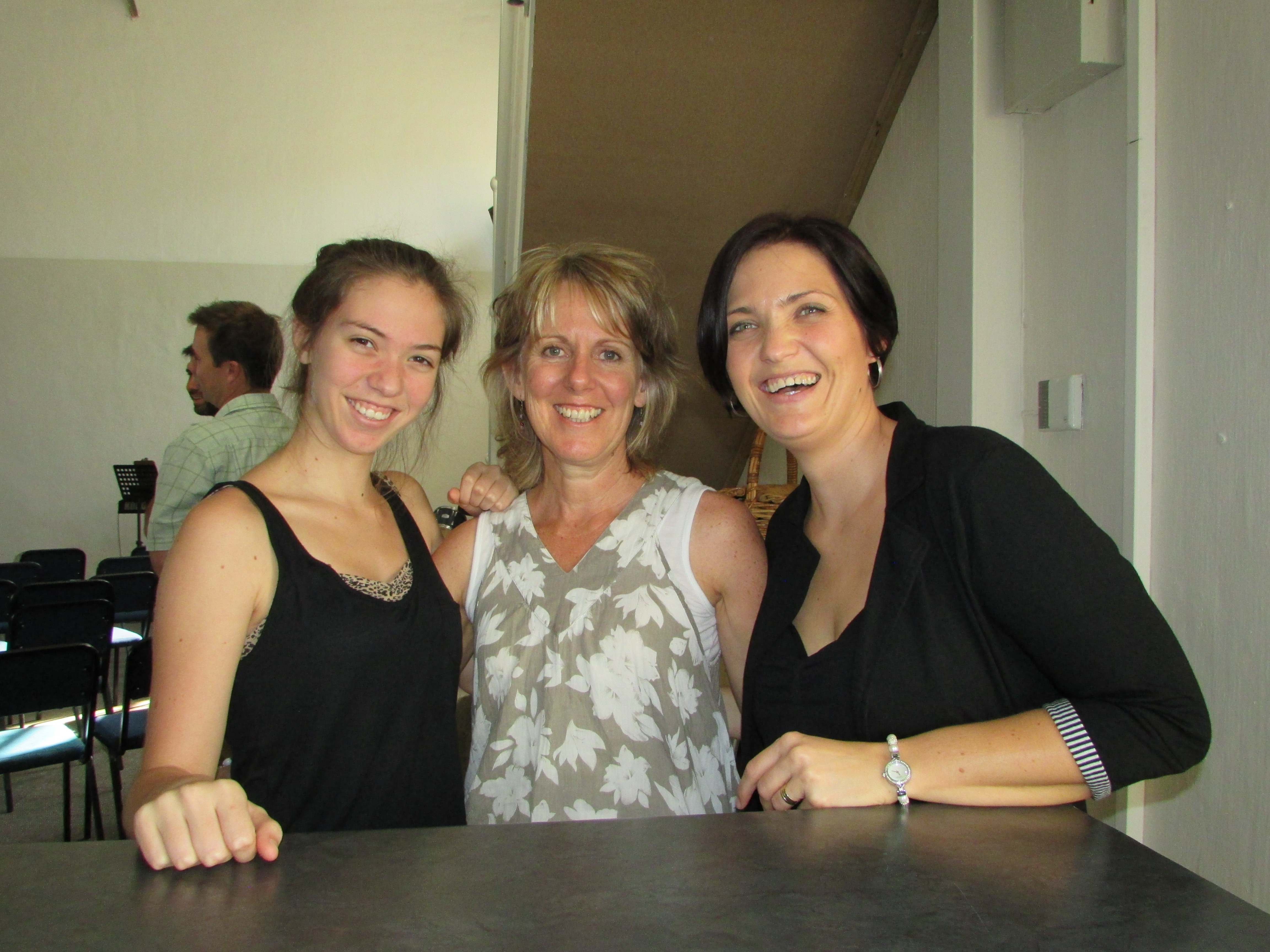
Di with Lorna and Lorna’s daughter
At the end of the month we celebrated Phumlani’s birthday with a steak meal at the Spur. Lots of laughs as he spoke briefly with Caleb online before his meal then it was topped off with the staff girls dancing and singing happy birthday and giving a free ice cream.

Happy Birthday Phumlani
Salvador and Phumlani have finished preaching through the area of Ehlanzeni which was very resistant to hearing the gospel. They have started working through an area called KwamaBaas and it will not take that long to work through it. This is the last area to spread the Gospel through in order to fulfil the vision with which we came toKwaZulu Natal in 2009. The idea was that someone from every homestead will have heard the gospel preached. Admittedly there have been occasional homsteads which were closed to the Gospel and some where their occupants have not been around but the vast majority have heard the message and even the vacant homesteads are left with Gospel literature waiting for the hosts’ return. The next thing is to prayerfully consider the next stage of evangelism, whether to revisit some homes or to preach at key places or both.Phumlani’s bible study in KwaBhekephi continues on Friday afternoons and the ladies have many questions. It is such a pleasure to see the zeal these ladies have for God’s word. When Phumlani gave one of the ladies a large print Zulu bible she screamed at the top of her voice in excitement and joy. All the other activities continued in between these events but this gives you some wide strokes to see how the month went.
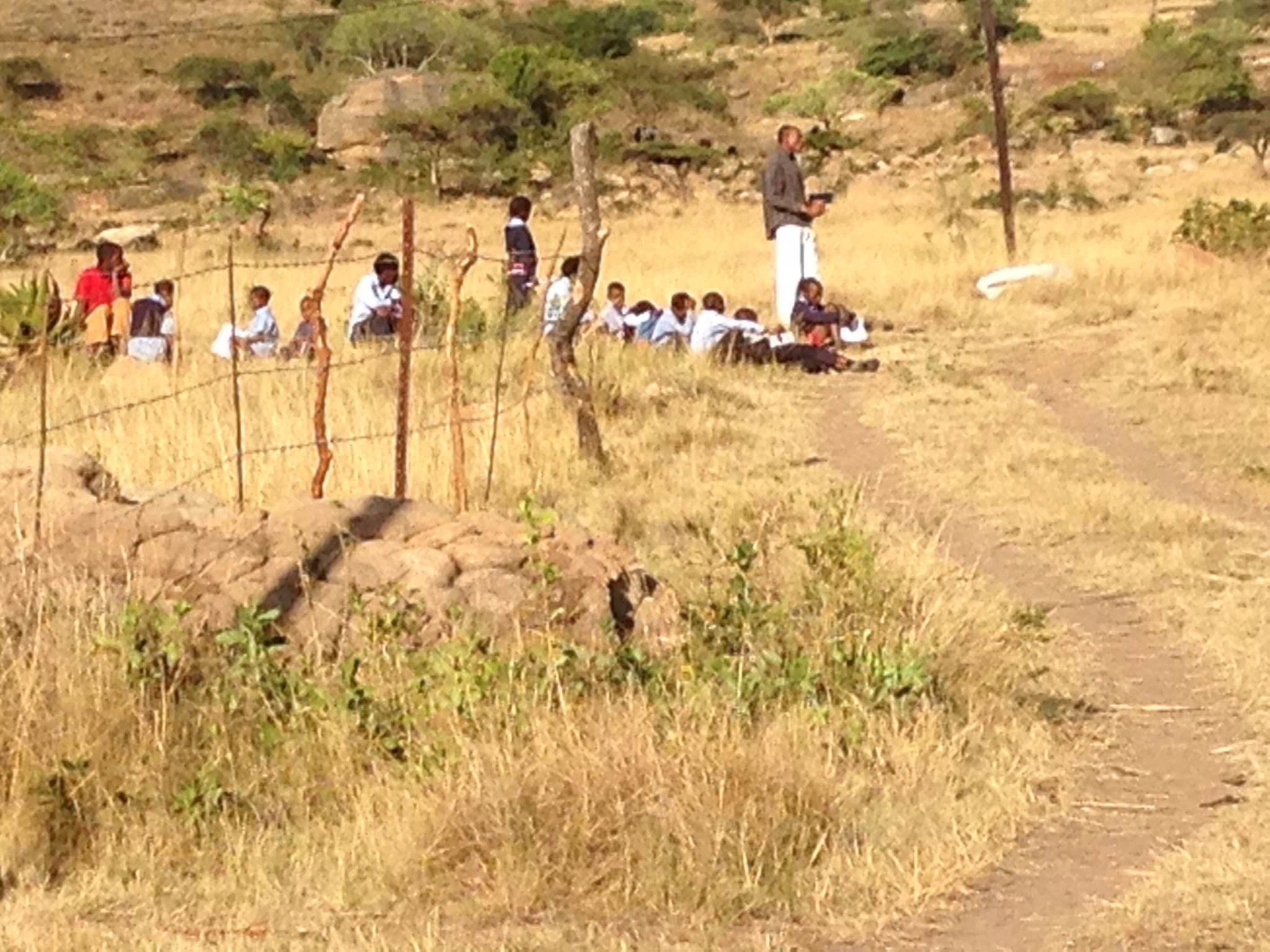
Phumlani preaches to a small crowd of young people
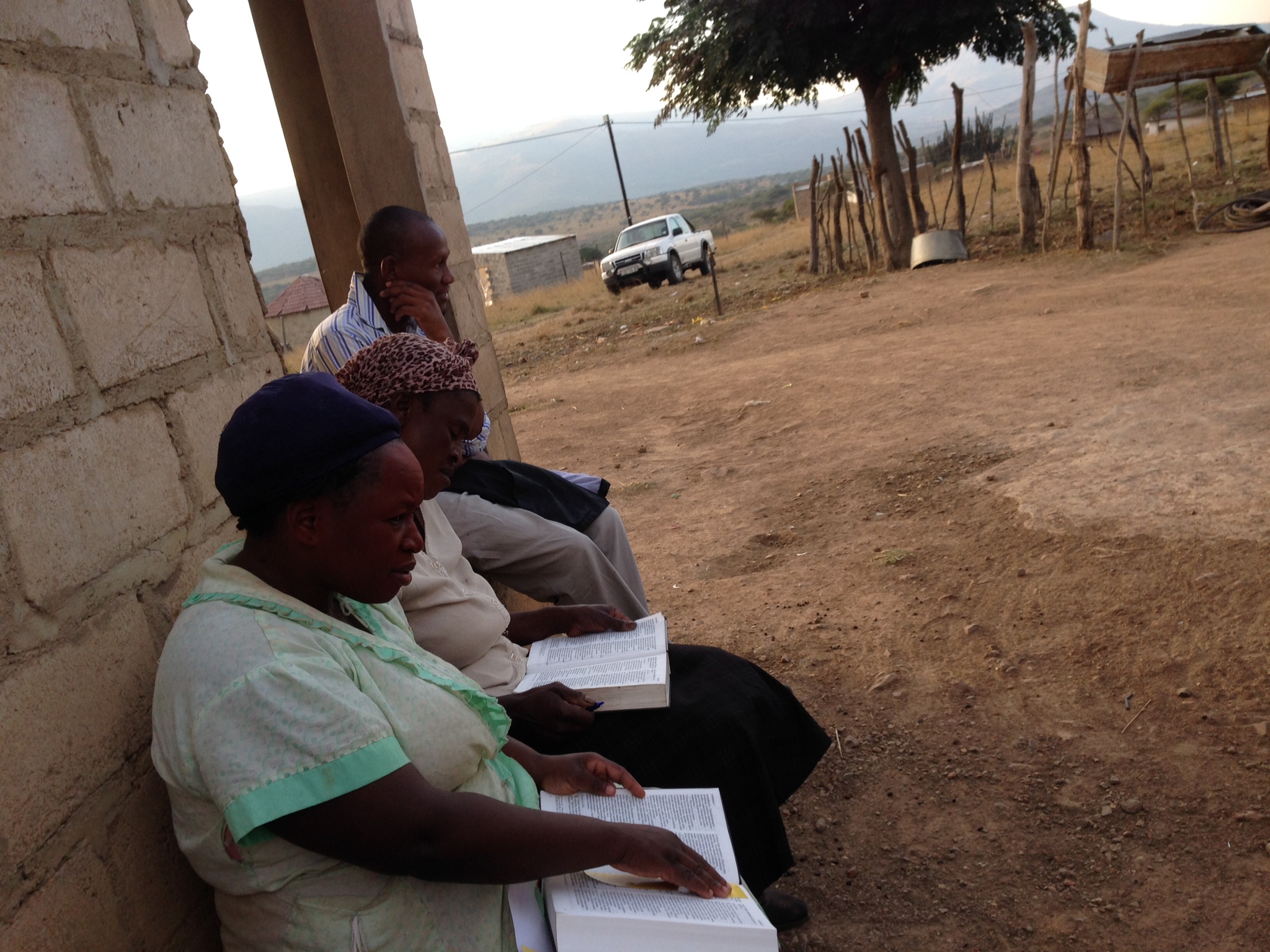
Phumlani teaches the ladies in KwaBhekephi Bible Study
This coming month we will be meeting up with members of other like minded independent assemblies in order to see how we can network and affiliate with one another. The following week we will take a trip round South Africa starting with LJ and Sam’s wedding. We are looking forward to seeing various brethren again and conducting some more interviews concerning ancestral traditions.

Salvador in Ballito
We give thanks to God always for you all.
Please pray for:
Nomusa in her new life in Christ.
Evangelism and outreach projects.
Bible Study in KwaBhekephi.
NINE
THE SECURE, SOUND HOPE OF THE GOSPEL
ROMANS 8
From Romans 1 – 7 Paul has been expounding his Thesis of salvation; that the Jew cannot be made right before a holy God through observing the Law of Moses. He can only be made right by faith in Jesus and in what Jesus did on the cross. This is good news for us Gentiles because we were never included in the Mosaic Law in the first place. In Christ, however, we are equals with the believing Jews, being part of a higher law. In Romans 8 Paul brings a conclusion to the first 7 chapters. Now there are a couple of things I want to remind us about from previous chapters.
THE MYSTERY OF GODLINESS REVISED
One is the mystery of godliness. It is beneficial for us to remember the mystery of godliness because we will be dealing with the area of our adoption as sons. What is the mystery of godliness?
1 Tim 3: 16. “By common confession, great is the mystery of godliness: He who was revealed in the flesh, Was vindicated in the Spirit, Seen by angels, Proclaimed among the nations, Believed on in the world, Taken up in glory.”
Jesus never took His own vindication, He never righted His own wrongs, but submitted Himself to the will of the Father and God exalted Him. God initiates and we respond in faith. If we get this, we get the Christian life and God becomes very real. This means that we have an attitude of being God’s servants. That is the first thing I want to remind us of.
A LOOK AT THE MESSIANIC JEWISH COMMUNITIES
The second aspect is this, and that is the aspect of the Messianic Jewish community. There were two main messianic sects within early Christianity. There was the orthodox one and the heretical one. It seems that by the time of the early church fathers both groups had become heretical, OR it seems that they were both perceived to be heretical because the Gentiles did not understand the orthodox group, OR (more probably) like today’s denominations, these messianic Jewish communities were a mixed bag. But the orthodox group consisted of people that Paul belonged to in Acts 24: 5, and they called themselves the Nazarenes. This group of Jews believed that Jesus was God and man, that Jesus was the Messiah and the completion, or the fullness of everything that the Law, the Torah, spoke of. They practiced all the Jewish feasts and still went into the Temple, but they did not compel the Gentiles to do so, recognizing that these things did not secure or bring salvation. In this sect Gentiles and Jews lived together equally in the Messiah.
The other Messianic sect within the early Church was called the Ebionites, which comes from the same word as Ebyown, meaning poor, needy or destitute. They believed that Jesus was Messiah and, it is claimed, they only accepted the Gospel according to Matthew. However they rejected Paul’s teachings and Gospel. Does this sound familiar? But they did not believe that Jesus was the son of God. This is what Paul was writing into and this is why Paul’s Gospel in this letter has to be viewed with Jewish eyes. Jewish readers would have been concerned with such questions as: How can Christ supersede the Law? Is this biblical? What about the Jews that do not accept Jesus as their Messiah? What about those who trust in their obedience to the Mosaic Law?
I am going to deal with this chapter in four points. From verses 1 – 4 we will look at the fact that there is no condemnation. From verses 5 – 13 we will look at being led by the Spirit as opposed to being led by the flesh. From verses 14 – 25 we will look at our future hope of adoption and lastly from verses 26 – 39 we will look at our assurance in Christ.
VERSES 1 – 4:
THERE IS NO CONDEMNATION.
‘Therefore’ is a word that summarizes what has gone before. In this case it is concluding the whole of the preceding 7 chapters. This goes back to Romans 1: 16 – 18. 16 For I am not ashamed of the gospel, for it is the power of God for salvation to everyone who believes, to the Jew first and also to the Greek. 17 For in it the righteousness of God is revealed from faith to faith; as it is written, “BUT THE RIGHTEOUS man SHALL LIVE BY FAITH.
The wrath of God is revealed against all ungodliness of men who suppress the truth in unrighteousness. The answer to this problem is not Moses. The solution to the problem of sin is the Gospel, which is the power of God to salvation. The reason for this is because in it, as I believe from faith to faith, I go through a process where God’s righteousness is revealed more and more to me. In Romans 7, Paul thanked God that Jesus set him free from the body of this death and in the mind he was then able to serve the Lord. Therefore there is no condemnation. There is no sentence hanging over us. We are free and free on two plains.
FREE FROM SIN AND ITS PUNISHMENT
We are free from sin. Though we still have a body of sin and we get tempted; though our flesh nature craves illicit desires; we are given the ability, if we walk in the spirit, to say no. But we are also free from the eternal consequence of our sins. We are no more counted guilty. How does God forgive us? God cannot forgive us purely on the basis of our penitence and saying that we are sorry. This is the problem with much of the Gospel preaching that people have listened to. They are told that if they only say sorry and try to stop sinning God will forgive them and this is a tragedy. If I do a bank robbery I will have to go before the magistrate and what will happen to me? I will have to be sentenced for my crime. But what if I turn round and say, ‘yes, I did it. I am guilty but I am really sorry’? Will that get me off Scott free? I may get a leaner sentence but I will still be sentenced. “Sorry” does not change anything. I have still broken the Law. We need to get a handle on this for ourselves and our Gospel preaching. God cannot simply let us off the hook, because He is a good God who does not pervert the course of justice. He does not take a bribe. It needed a sacrifice. Someone had to pay the price for our sin. If the cross is not at the centre of our gospel, then we do not have the Gospel. If the cross is not presented as the answer to forgiveness then we have neither the answer nor forgiveness.
The Law was weak in this regard. It was feeble, impotent, it carried no power and it was weak through the flesh. Remember the two diagrams that we drew concerning the Law of Moses, the law of Christ and the law of sin and death.
Diagram # 1 Diagram # 2
Righteous: Power of Spirit:
Law of Moses & Law of Christ
Law of Christ
__________________ _________________
Unrighteous: Power of Flesh:
Law of Sin Law of Moses
& Law of Sin
Both diagrams have a horizontal line. When it comes to righteousness, both the Law of Moses and the law of Christ are above the line and the law of sin and death is below the line being unrighteous. But when it comes to spiritual power, only the law of Christ is above the line. Though the Law of Moses is spiritual, it grants us no spiritual power. So it can only be kept in the power of the flesh. It is powerless, weak, sickly and diseased through the flesh. That is why the Ebionites, and those Jews who still trusted in Moses, had to realize that they needed a law that superseded the Law of Moses. They needed to be under the greater law rather than the Law of Moses. Maybe this is the reason as to why Paul said in Romans 1 that he wanted to preach the Gospel to the Christians in Rome. There may have been some Ebionites in Rome confusing the believers. What is Paul telling the Ebionites who boasted in their attempt to fulfill the Law? ‘You do not fulfill it, we do!’ The requirement of the Law is fulfilled in us. How can that be when we, as believers, still sin, when we do not keep Shabbat or the Day of Atonement and when we do not circumcise our baby boys?
- Firstly because Jesus is the fullness of the Law. When we have Jesus we have the fullness of the Law.
- Secondly, verse 4 tells us that the Law is fulfilled for those who walk according to the Spirit and not according to the flesh. What does the Law expect the Jew to do? It requires him to uphold righteousness through external means. Christ goes further and allows us to uphold righteousness through an internal change of heart. It is the requirement of the Law that is fulfilled in us.
VERSES 5 – 13:
BEING LED BY THE SPIRIT AND NOT BY THE FLESH.
The first four verses deal with our justification and escape from the righteous sentence of God that was on our heads. This section deals with the Christian life, or sanctification if you like. Paul brings a distinction between those of the flesh and those of the Spirit. The bible is full of these distinctions; the righteous and the unrighteous; the saved and the unsaved. There is no middle ground. We are in one camp or the other camp. And how can we tell the difference between those of the flesh and those of the Spirit? Paul tells us in verse 5.
5 For those who are according to the flesh set their minds on the things of the flesh, but those who are according to the Spirit, the things of the Spirit.
The word for ‘mind’ in Greek is the word, ‘Phroneo’. It means to exercise, i.e. entertain or have sentiment or opinion. By implication it also means to be mentally disposed, to interest oneself in (with concern or obedience), to set the affection on. Those who are of the Spirit set their minds on the Spirit. Their disposition is to entertain the things of the Spirit rather than the things of the world. This is not a natural disposition. Note here it says that they set their minds on the Spirit. This is not a nature but an act. As we saw in the last chapter, in the flesh we are slaves to sin but in the mind we serve the law of the Lord. Remember what Psalm 1 says, ‘Blessed is the man who does not walk in the counsel of the ungodly, nor stand in the path of sinners, nor sit in the seat of scoffers. But his delight is in the Law of the Lord and on His Law he meditates day and night.’ His affection is set on the spiritual things but this is an act of the will. It is not done for us; it is something we must exercise. But those who are of the flesh are not so. Their minds are set on the flesh. Now if our experience tends to the latter, the answer is not in simply changing our minds, though that is something important. Remember that having our minds changed is not the principle thing here. The principle thing is always verse 3.
3 For what the Law could not do, weak as it was through the flesh, God did: sending his own Son in the likeness of sinful flesh and as an offering for sin, He condemned sin in the flesh,
The principle thing is always the Cross of Jesus. We must start from there and our act of setting our mind on the Spirit is a response to the work of Christ that God has done for us. Paul shows us this in verses 11 and 12.
11 But if the Spirit of Him who raised Jesus from the dead dwells in you, He who raised Christ Jesus from the dead will give life to your mortal bodies through His Spirit who dwells in you. 12 So then, brethren, we are under obligation, not to the flesh, to live according to the flesh –
Paul says that on the basis of the Holy Spirit living in us (and on the basis of God’s promise), just as Christ was raised from the dead, so we will be raised too. On the basis of Christ’s complete and finished work on the cross, we are under obligation not to walk according to the flesh. Why? Because there are consequences to the path that we walk down. Verse 6 says the mind set on the flesh is death and the mind set on the Spirit is life and peace? These are the destinations of the two paths. We cannot walk down a path of lawlessness and end up with life. We cannot walk down the path of the Spirit and end up with death. We need a spiritual life to live, a newness of life and notice that this is something that you cannot do. John 3 shows us that this is completely a work of the Holy Spirit.
How do you get the Spirit? You cannot simply ‘get the Spirit’. In fact Romans does not tell us how we get ourselves born again; that is God’s work. What it does tell us about is the glory of the new covenant and Christ’s sacrifice. It tells us that we need to believe and trust in that sacrifice. It also gives us the promise that if we believe with the heart that God raised Jesus from the dead, and if we confess with our mouths the Lord Jesus, we WILL be saved. If we enter into this salvation, if we accept the biblical account of the Gospel, then the Spirit births us into the Kingdom on the basis of faith.
John 1: 12 “But as many as received Him, to them He gave the right to become children of God, even to those who believe in His name:”
As Peter said, ‘Repent and be baptized and you will receive the gift of the Holy Spirit.’ And if Christ’s Spirit lives in you then you belong to Him, so implies Romans 8:9. Is it any wonder why Paul says that the Gospel itself is the power of God to salvation for those who believe? This is because it is ministered to us by the Holy Spirit of God who lives in us. This same Spirit also raised Jesus from the dead.
VERSES 14 – 25:
OUR FUTURE HOPE
The first section dealt with justification; the second dealt with sanctification; but this section deals with glorification. If you look at this section it tells us that we are children of God and yet, at the same time, we are still waiting to receive the sonship. It tells us that we have been saved and yet 1 Peter 1: 5 & 9 tells us that we are still awaiting the salvation ready to be revealed in the last time. We are still obtaining the salvation of our souls. How can you have something and, then in the same breath, still be waiting to receive it? Are we saved or are we still waiting to be saved? There are two extremes of thought on this. There is the Roman Catholic error, which says you can never truly say that you are definitely saved. They say that is the sin of presumption. That is why my friend’s grandmother lives in fear because no one will be doing Mass cards for her when she dies. She does not know how long she must ‘supposedly’ stay in purgatory. The second error is when we say that we are totally saved now and therefore we have it all in the bag no matter how godless a life that we live. Thus we do not move on at all in the Christian walk. One heresy says that, because we are in salvation, and God has done it all, then we can claim all the blessings and benefits of salvation now. This would include total healing and in another stream of Christianity, total sanctification. We will deal with healing shortly but the truth lies elsewhere outside these two errors. The truth is that we truly have salvation now, and yet we still are awaiting it too. This seems like a contradiction in terms. It makes no logical sense to us. Yet it is perfectly logical and makes perfect sense when you introduce 3 certain spiritual ingredients. Hebrews 6: 11 – 12.
“11 And we desire that each one of you show the same diligence so as to realize the full assurance of hope until the end, 12 so that you will not be sluggish, but imitators of those who through faith and patience inherit the promises.”
The ingredients are hope, faith and patience. To realize the full assurance of hope until the end means that you have an assurance of salvation but that assurance needs to be realized. It is like when you have a plan to do something. That plan may be a reality in your mind. But for it to become an experiential reality, you have to execute certain activities to cause it to become an outward observable reality. Now when we receive salvation it is similar yet different to this analogy. It is similar in the fact that what we receive has yet to be realized. But it is different in the fact that the reality in the mind is not a certain thing. It may happen or it may not happen. Who knows? That is why you have to work on probability with these ventures. But that is not the way with salvation. Salvation is not about probability but about certainty.
Turn back to Romans 8: 24 & 25.
24 For in hope we have been saved, but hope that is seen is not hope; for who hopes for what he already sees? 25 But if we hope for what we do not see, with perseverance we wait eagerly for it.”
SAVED AND YET STILL NEEDING SALVATION
We have been saved; that is past and that is fact. Yet it is in hope that we have been saved. Hope does not speak of something past but of something future. The word in Greek is ‘Elpis’ and it means a confident expectation of something that will come to pass. These verses teach us that we do not have it all here and now. We have been justified and positionally sanctified, we are being experientially sanctified and, one day, we will be glorified. We have not yet received the sonship. If we did have it all here and now then we would not need hope, because as verse 25 says, ‘who hopes for what he sees?’ We do not see it all here and now. People tell us, ‘So you believe in heaven, where is it? All you believe in is pie in the sky when you die but where is it?’ In hope we have been saved. We cannot see it but it is certain and will happen. But there is still something lacking in understanding how something yet future, that has not happened yet, can be brought into our present day reality. By grace you are saved, through faith. Faith is the key here. Hebrews 11: 1 & 2 say that faith is the evidence of things hoped for, the conviction of things not seen. Faith takes what is there as future fact and brings it into our present day experience. Faith is something we grow in and so Paul said in Romans 1: 16 – 17, that the righteousness of God is revealed from faith to faith. It is not a stagnant thing; it is a living thing. Thus, when we accept the Gospel we are not only positionally righteous but we have actually received a new nature, a living Word and a living hope. A seed may not look like there is any life in it when it is sown but it will not fail to grow if planted and watered. It is not a static faith that we have but it is living and dynamic. We rob ourselves of so much when we only see our salvation as positional and, what theologians call, merely forensic. God does not only declare me righteous but He has made me a new creation in Christ. As Paul also says, the Just shall LIVE by faith. Faith is based on God’s word and is staking your whole life on what God has said. It is so certain that we will be completely saved to the utmost if we are in Christ, thus we are saved. So if we are still waiting to receive the adoption to sonship, what right do we have to call ourselves children of God in the here and now?
Verse 16 The Spirit Himself testifies with our spirit that we are children of God,
The Holy Spirit, who lives in us, testifies that we are children of God. The Holy Spirit is the One who makes our faith a reality in itself and our hope is not vain. The Holy Spirit is God almighty. He is the ‘I AM’ as much as the Father and the Son are. In the beginning ‘He is I AM’, He now is I AM and in the end ‘He is I AM’. The Spirit is eternal and not bound to the limits of time. He knows us now and, in the same measure, He also knows what we are when we are glorified. He is there in the future just as much as He is here in the present. He ministers to us the reality of what we shall be. We are dealing with something that we cannot grasp it with our finite minds. How can someone that is outside time relate to us who are trapped by time? God sees the finished product but we do not and therefore we have to travel the journey to reach the destination of ‘fully realized’ salvation. When we look at salvation by faith we are looking at it from an eternal perspective. When we look at the salvation yet to come, we are looking at it from a perspective of time. And this journey that we travel includes certain ingredients.
As verse 17 shows, the journey includes suffering. But this is suffering in a specific context. It is suffering with Christ. Jesus suffered in His death for sin, and through His persecution for righteousness’ sake. But our journey also includes enduring a fallen world and fallen bodies. It includes living with sickness, though God does heal. Our God still heals today but these people that claim you do not have to suffer, you are a ‘King’s kid’, they forget some things. Though they are right that the Atonement includes healing, (Jesus carried our infirmities), they are wrong to say that this means we can always claim healing in the here and now.
- Firstly they forget the servant mentality that we looked at in the introduction, which is Godliness. We are sons by faith but experientially we are yet to receive the sonship. Thus even though I approach God boldly as a Son, I still maintain a servant mindset remembering that the glorification lies in the future and is not yet.
- Secondly, they forget that we live in a fallen world. Verse 20 – 21. 20 For the creation was subjected to futility, not willingly, but because of Him who subjected it, in hope 21 that the creation itself also will be set free from its slavery to corruption into the freedom of the glory of the children of God. God’s purposes go beyond saving our souls but God wants to redeem the physical world too. God is concerned about the redemption of creation. But the world was subjected to entropy, futility, so that God would set it free at a later time. The pinnacle of the creation was man and the pinnacle of redeemed creation will be redeemed man. That is God’s ecological program to save the whales and to stop the destruction of the planet. He saves the creation by saving men. We are not oblivious to this corruption though we are saved. In fact, healing is certain but it will come when Jesus returns. Verse 23 And not only this, but also we ourselves, having the first fruits of the Spirit, even we ourselves groan within ourselves, waiting eagerly for our adoption as sons, the redemption of our body. We are still waiting for the redemption of our body. Any healing we receive is only a temporal foretaste of glory and nothing more.
VERSES 26 – 39:
ASSURANCE
I do not want to delve too much into this section. Rather I want to use this section as a conclusion to Romans 8. This is always a question when we talk about the fact that salvation is yet future. ‘Well where is the assurance in that?’ The assurance can only lie in God Himself. I got into a conversation with someone at a former workplace in the UK. He asked me where my assurance of salvation was, if I believed that it is possible that I could walk away from the Lord. I told him that my assurance is not in a doctrine that I can never fall away, nor in a doctrine that I have to keep myself saved, but my assurance lies in a person. That person is the person of Jesus Christ. It is not my STAYING in Him that assures me, but it is staying in HIM. Do you see the difference? Paul seeks to give us that assurance of salvation before he moves on.
- Firstly from verses 26 – 27 we have the assurance of the intercession of the Holy Spirit. We are weak, sick, feeble and we do not know how to pray as we should. Quite often we do not come to God in a way that He deserves. But we have the Spirit who pleads our case and speaks in groans too deep for words. This is not a reference to speaking in tongues. Tongues are simply the ability to speak in another language, other than your own, by the aid of the Holy Spirit. The phrase “too deep for words” means that the groans cannot be uttered. We utter words with the languages that we speak in, but these groans cannot even be uttered in words. What is this about? Verse 27 says that the Spirit searches our hearts. He knows exactly what we are and what we are asking for even when we do not. He knows our hearts’ desires better than we ever could. And the Spirit intercedes for us, filling the gap that we have made with our weakness.
- But secondly there is the assurance of God’s eternal nature. As we have said, God is the ‘I AM’. He is not subject to the limitations of time. As such, verse 29 says, those He foreknew He predestined.
FOREKNOWLEDGE AND PREDESTINATION
This foreknowing does not mean that God saw in advance those who would accept Him and who would reject Him as if he was on the outside looking in. This ‘foreknowing’ is not referring to God looking forward in time and picking out those who He would want to save. This is knowledge in terms of a relationship. In other words, God knew you before the foundation of the world. This is because God is not trapped by the limitations of time. So God was in relationship to us before the creation of the world because He was here today, and in eternity future, before the creation of the world. This does not mean that God chose some people to heaven and hell arbitrarily. The logical sequence starts outside of time and the problem with this whole debate is that we take something that is outside time and try to understand it in a linear fashion. The predestination is based on the foreknowing and not the foreknowing on the predestination. What we are dealing with is a mystery of God’s purposes for His people. Predestination means that God limited certain people in advance for a purpose. Predestination is never spoken of in the New Testament in terms of obtaining salvation. God does not predestine us to be saved. Rather predestination is spoken of as being unto sonship, co heirs and brethren with Christ. Test me on this and look up the word predestine and all the scriptures it refers too. But surely is not sonship itself salvation? No it is not. God could have saved us merely to be servants and not to be sons.
A life as a servant of God is much more than the terrors of hell. But God’s purposes are greater than servitude. He wants to elevate us to being sons of God. We are sons now by faith but we will completely receive the sonship when Jesus returns. There is no choice in this regard. If you are saved, if you are in Christ, God has already determined before the beginning of time that you would be made into a son of God. You are predestined to be rulers and you have no choice in the matter. It is predetermined by God that all those who knew beforehand would be glorified as rulers. And on the basis of that predestination comes God’s call to salvation and on the basis of that call comes justification, and on the basis of that justification comes the glorification. How can we marry this to our temporal experience? We cannot comprehend the magnitude of God’s plan but God’s eternal nature should give us assurance that what He has purposed will come to pass. Nothing can separate us from God’s love.
Verse 39 nor height, nor depth, nor any other created thing, will be able to separate us from the love of God, which is in Christ Jesus our Lord.”
The love of God resides in Christ Jesus. If you and I are in Christ Jesus then what God has decreed cannot fail to come to pass. We have this assurance because the Spirit in us testifies to us. And we can trust God because of His eternal nature. The way to remain assured is to remain in Jesus. Abide in Him and you will bear much fruit. And if you abide in Him, nothing can pluck you out of His hand.
SALVADOR AND DIANNE’S MSINDISI MONTHLY
Number: 127 May 2015
P.
P. O. Box 1481
Vryheid 3100
KwaZulu Natal
South Africa
+27 (0) 72 8311008
+27 (0) 72 3843786
Email: msindisi@gmail.com, salv.di@gmail.com
KwaZulu Mission Website: www.kwazulumission.com
KwaZulu Mission Facebook Page: www.facebook.com/kwazulumission
April started with a trip down to Ballito. We had been asked to help with a Passover event that Coming King Ministry had organised in a local café called the Waterberrry. The evening was on the Friday night, Leslie Crickmay and Salvador walked through the feast teaching through the symbolic meanings pointing towards Christ and salvation, and Jesus’ return. The event had been incredibly well organised by Judy Balcombe a member of CKM with over 90 people attending. Members from the church were involved with readings, prayers, dance, setting up sound equipment, floral art displays for the tables and many other activities. It was a huge effort by all and the evening went very well. On the Sunday of that weekend Sal preached at CKM in their morning service. His message was on Jesus the Nazarene and what Matthew 2:23 means. We are so thankful for everyone who opens their homes for us to stay while we are down your way. We also are so blessed sharing time, meals and coffee with you and getting to know you all even better. There is a real sense of Family in the Fellowship.
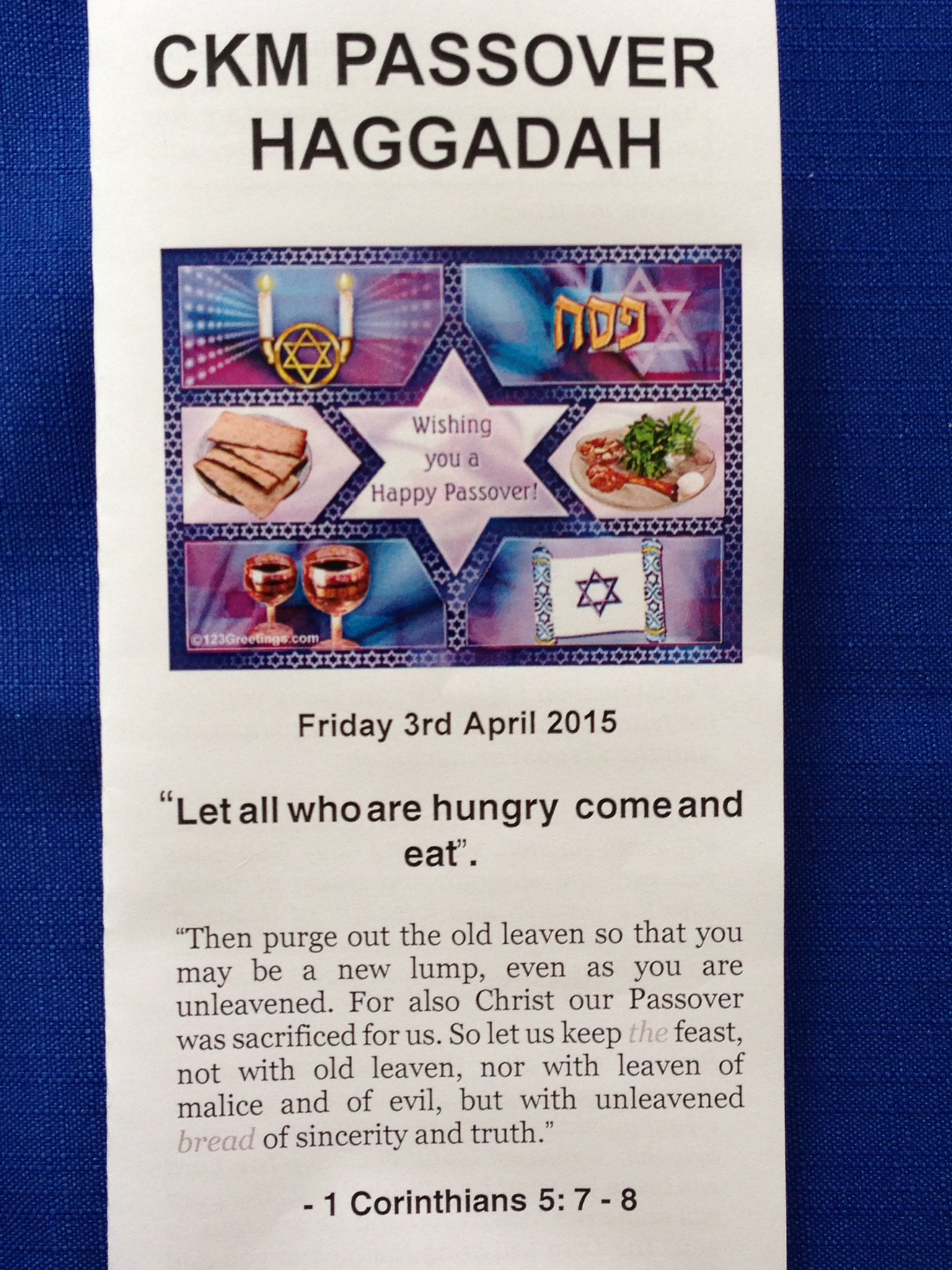
Hagaddah for the Coming King Ministries’ passover.
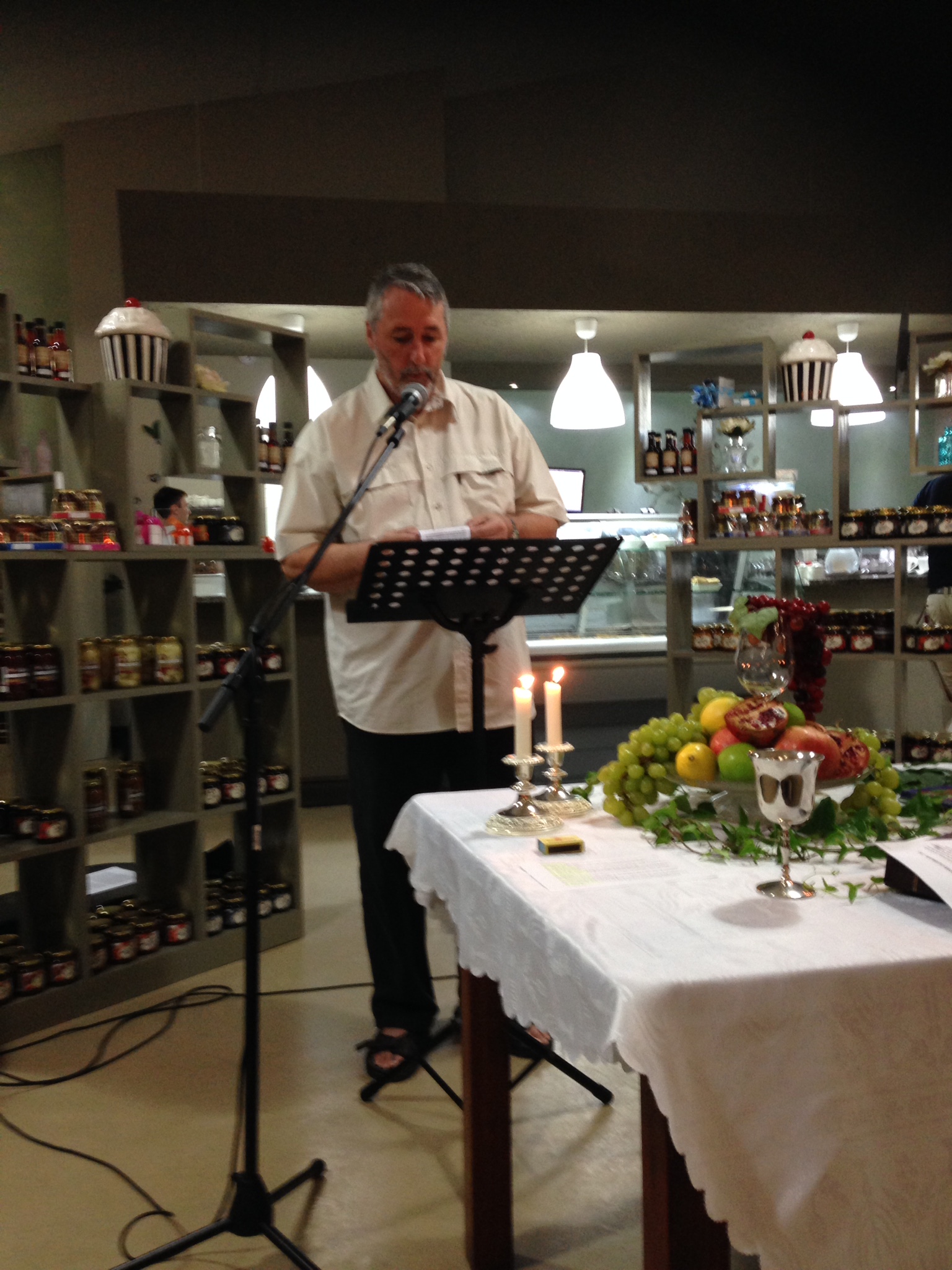
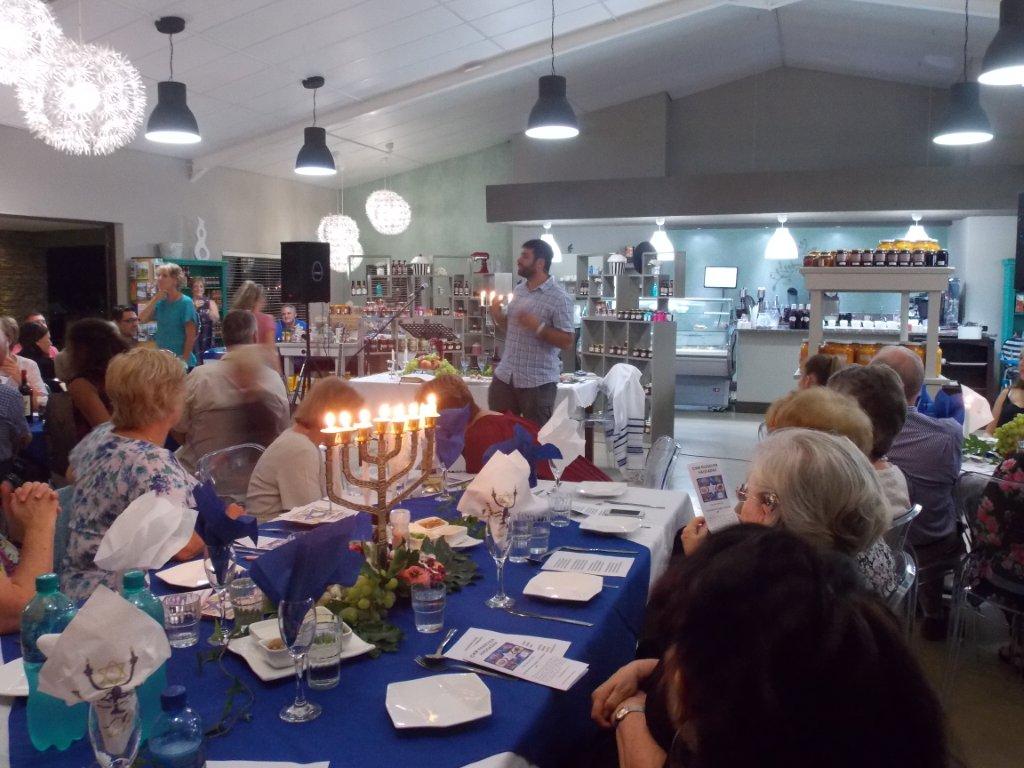
Some of the people attending Passover
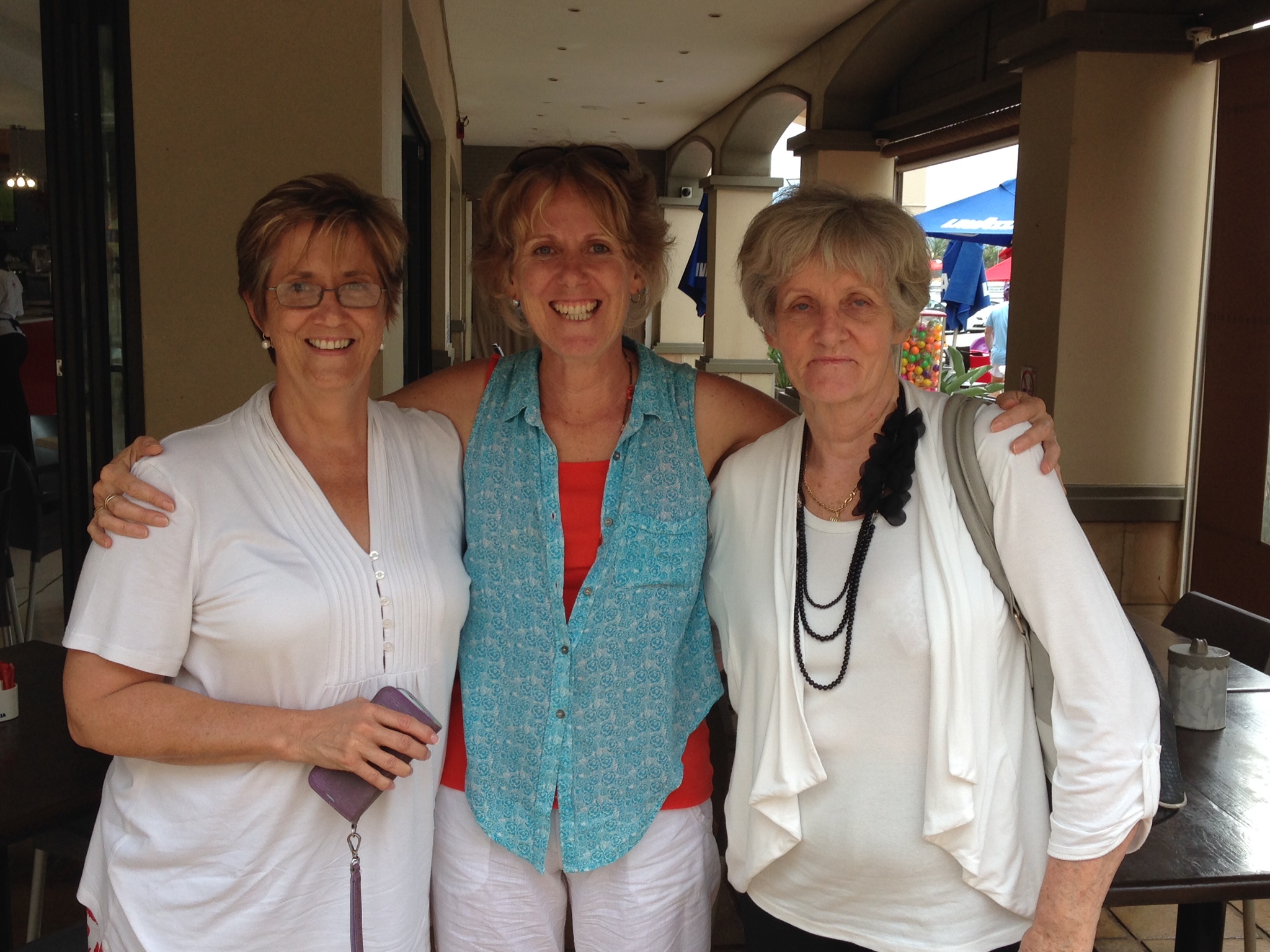
Di with Les’ Crickmay’s wife, Angie, on the left and Judy Balcombe on the right.
We returned from Ballito with gifts of clothes parcel, to give out in the community, on the Tuesday evening. On arriving home we had a week before we were heading off again to Joberg for a conference with Bill Randles. So that week we did the usual routine of evangelising, cell group, kids club, haircuts, teaching at Carebear crèche, discipling. On the Thursday we drove through the evening and arrived to stay with Allen, Sue and family.
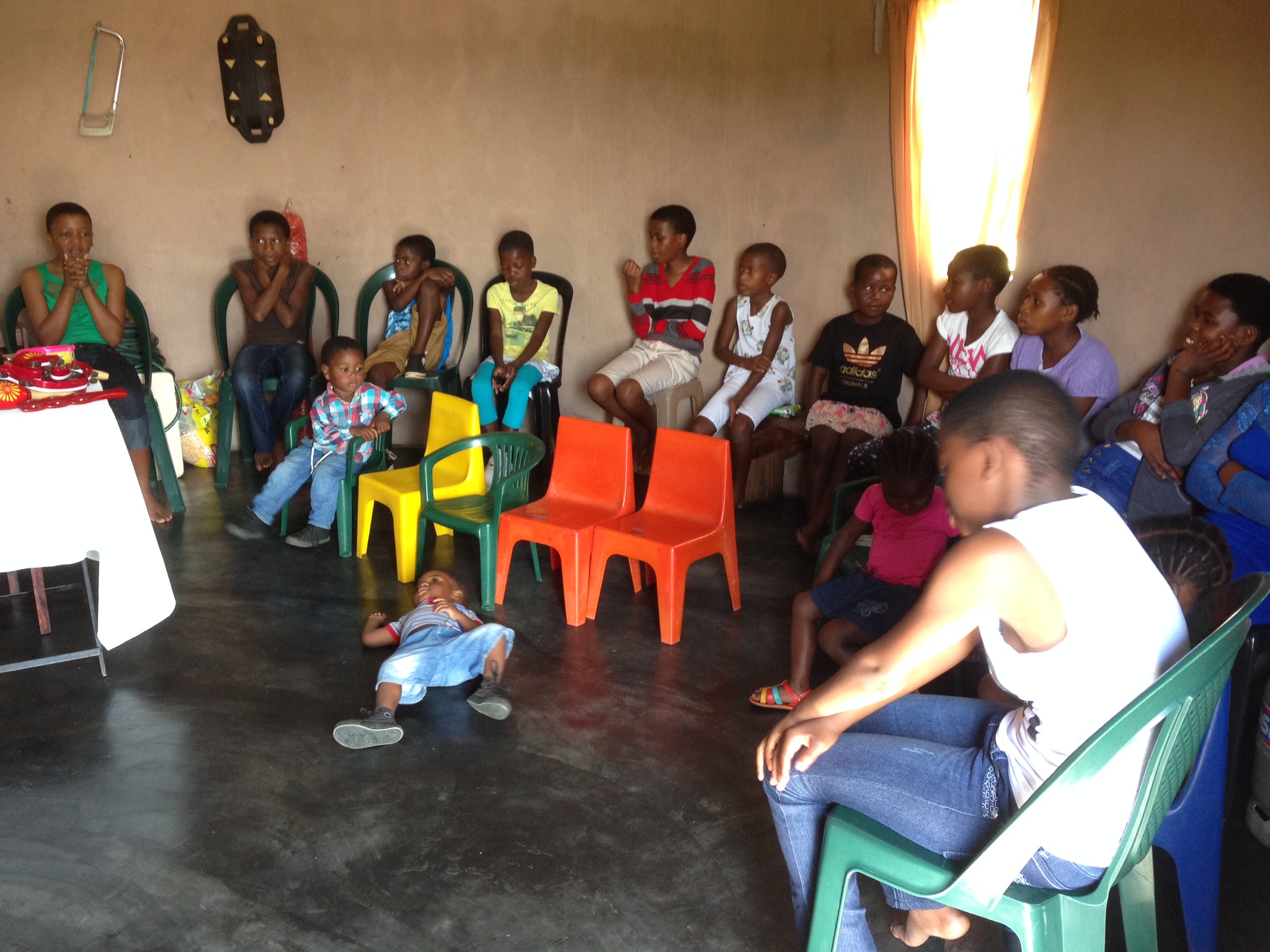
Kid’s club gathers for the lesson
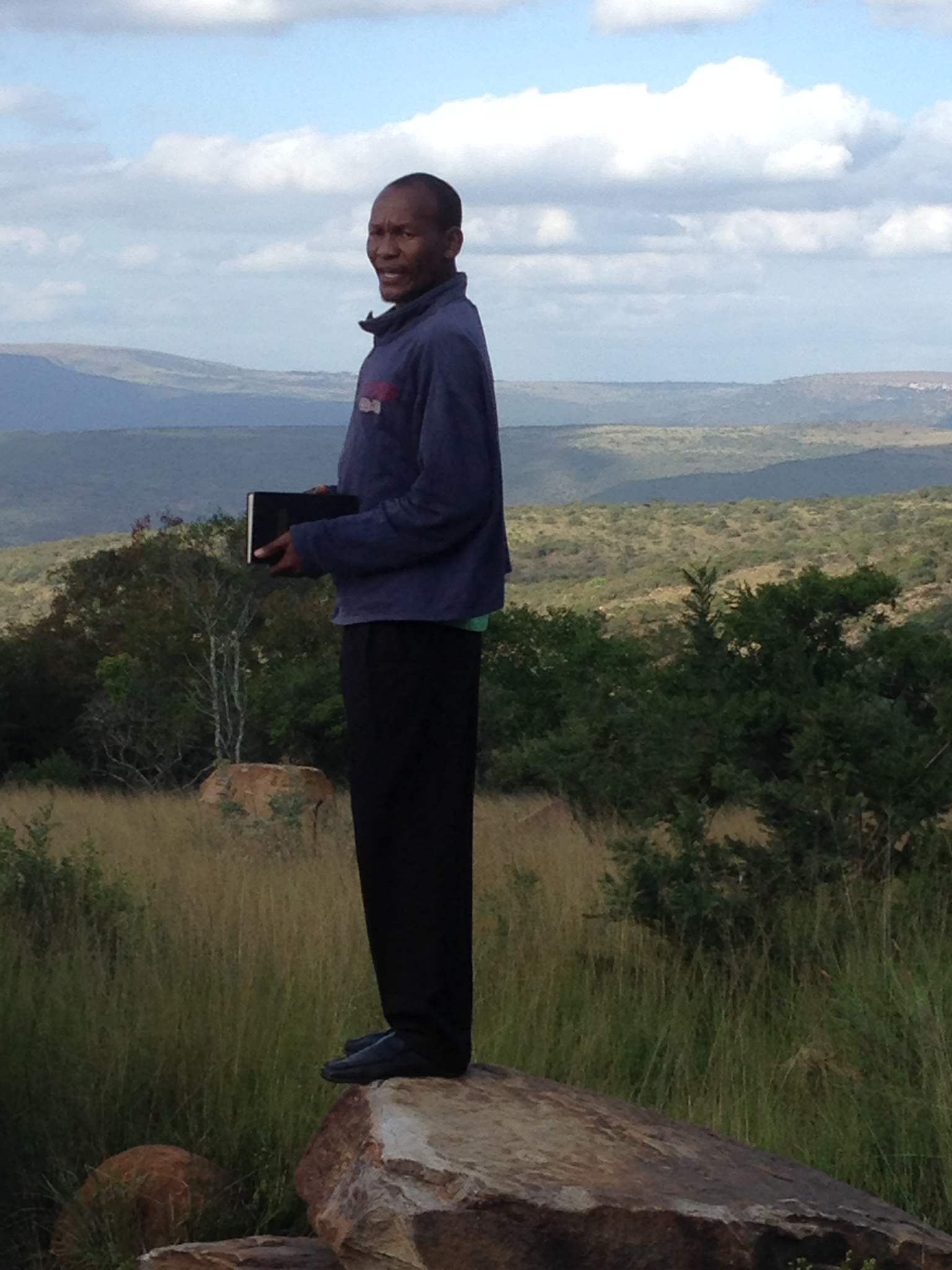
Phumlani preaching the gospel in Esihlenzeni.
The conference started on the Friday evening with Bill sharing from Matthew 25 and the 10 virgins. This was the start of a wonderful weekend of teaching. It was lovely seeing Bill and Kristin again we were so grateful for the time we could share with them and were encouraged by the word. Thank you again for all those who put so much effort into making this conference possible. We brought teaching back with us so those from the cell group and others who could not get to the conference would also get the chance to hear the word. While at the conference we were so blessed to catch a meal with Alan Mackenzie from Port Elizabeth on the Sunday afternoon. We don’t get to see Alan and Brenda (sadly we missed Brenda this time) very often so it was a special time, we were grateful for the opportunity.
Before heading home we stayed 2 nights with our friends Riaan and Debbie Roux. On the first night we had a wonderful study of the word around the Millennium. This went through to midnight but all were blessed. Riaan and Debbie’s daughter, Bianca and Bianca’s husband Bram are now proud parents to their first child, Esther. The next day Sal went and did the final corrections on the NTM firm foundations which is now translated and completed in Zulu. We are VERY excited by this. He also got to interview another believer for a DVD project he is doing on Ancestors and contacting the dead.
Bianca’s sister, Naomi, holding little Esther.
On returning to KZN we had cell group by us, Phumlani was teaching on “How do we know God is with us” a very good teaching reminding us that it is written in the word.
After kids club on Saturday, we attended a Zulu wedding of the daughter of Jostina. We didn’t go for the whole ceremony. What happened at this wedding is they did the Zulu traditional ceremony first and then they did the white wedding afterwards. A wedding can take all day and all evening. When they started calling the ancestors we left.
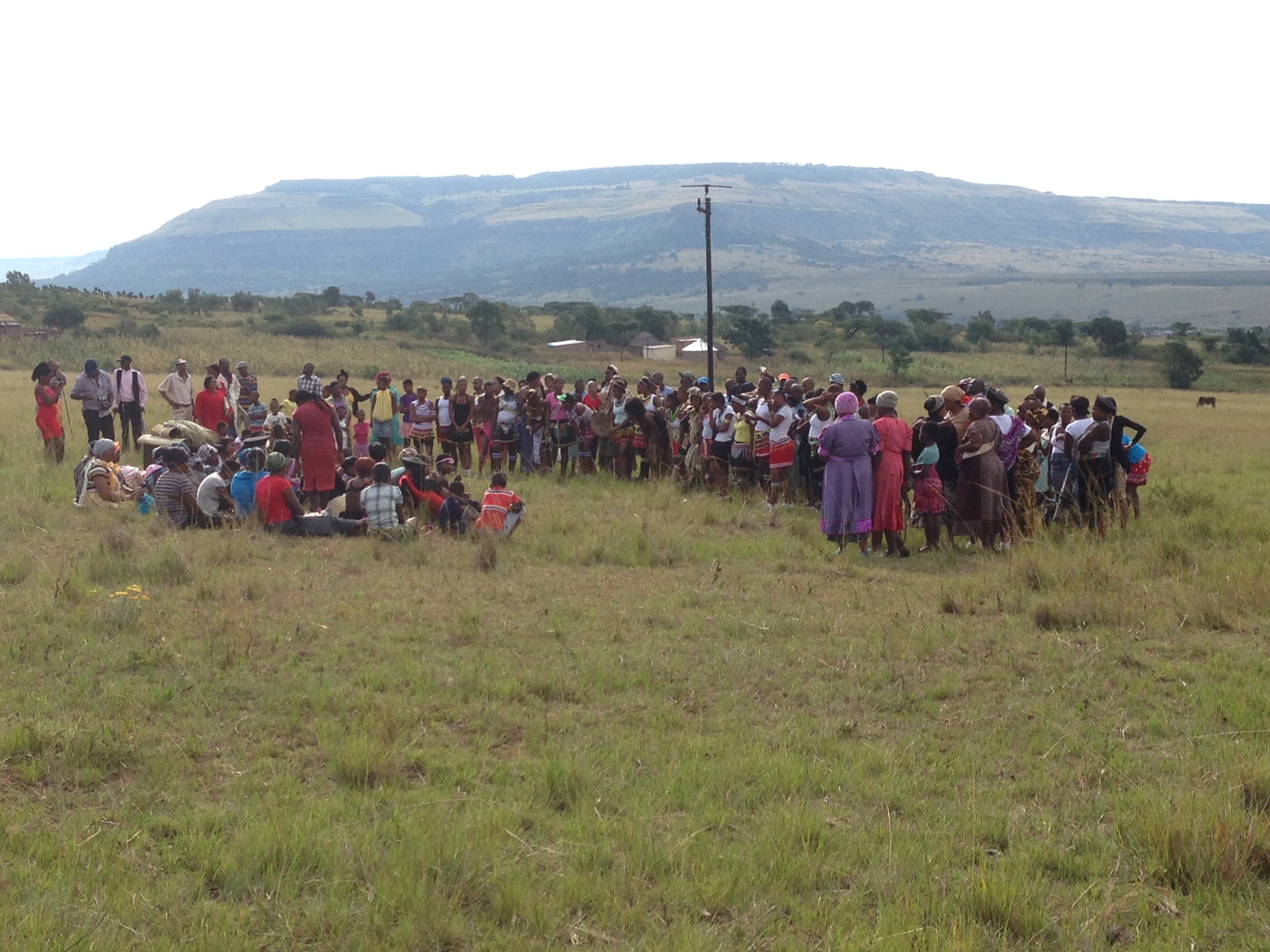
Lots of people attending the Zulu Wedding.
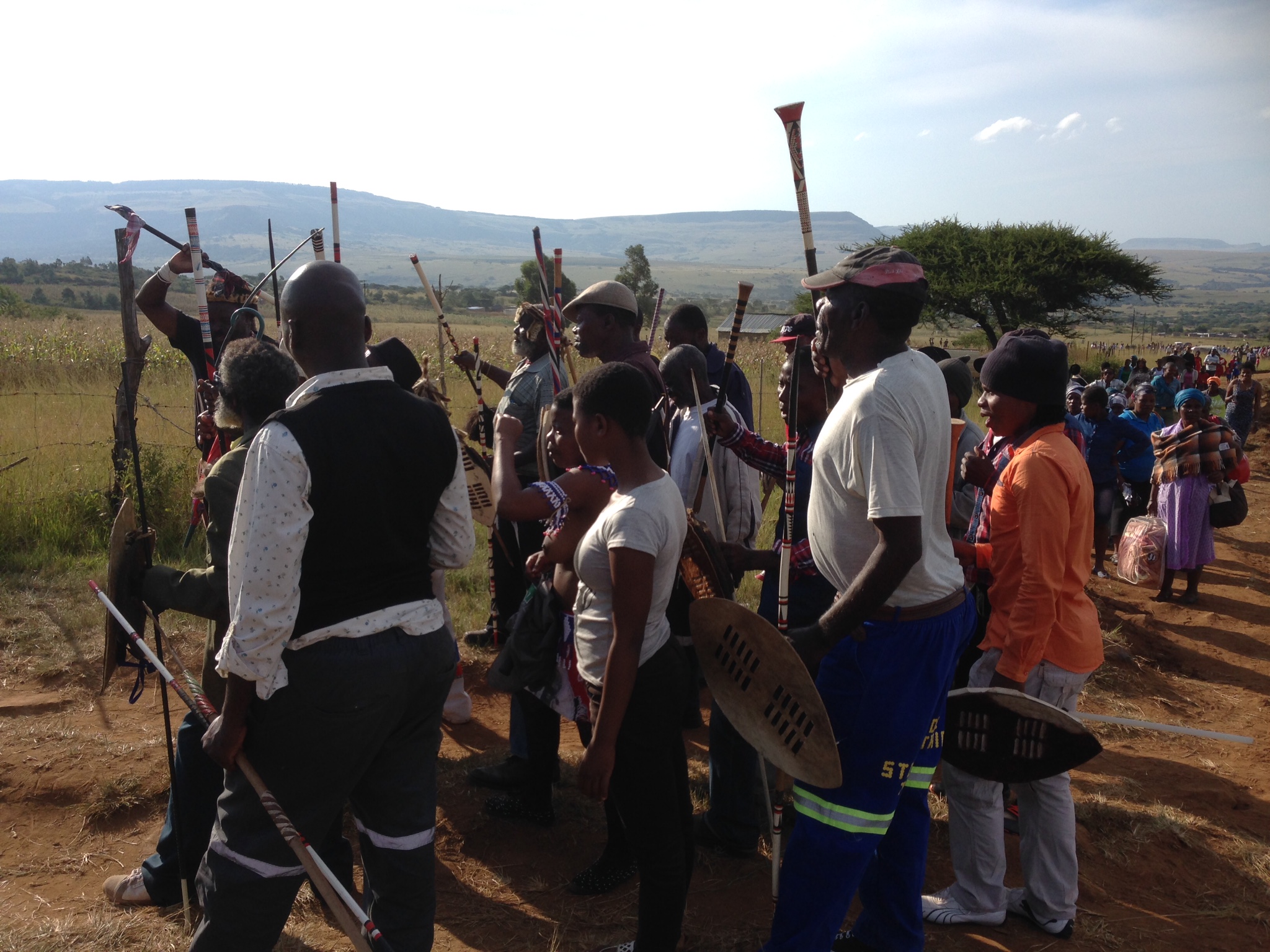
The men at the Zulu wedding waiting to come into the homestead
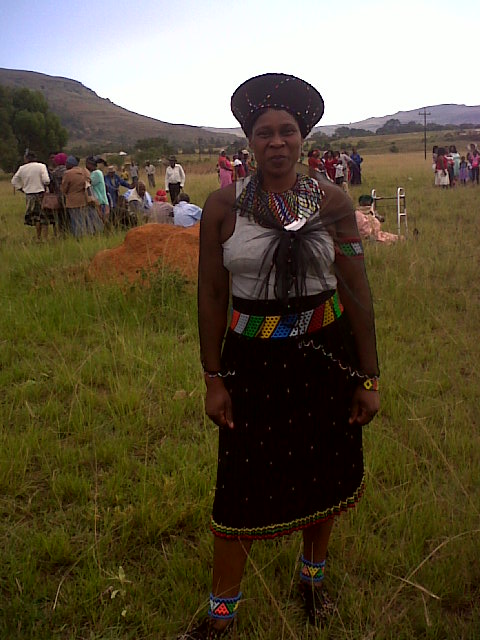
Traditional Zulu dress for women.
This month we also got to visit Nkandla where the home of President Jacob Zuma (South Africa) is located. Sal had made contact with a Zulu pastor called Alpheus Mpungose who had been a Sangoma (Medium/witchdoctor) before he gave his life to the Lord. It was a lovely visit and we learnt more information that we had not been aware of concerning the Zulu understanding of ancestral spirits and some of the rituals that are performed.
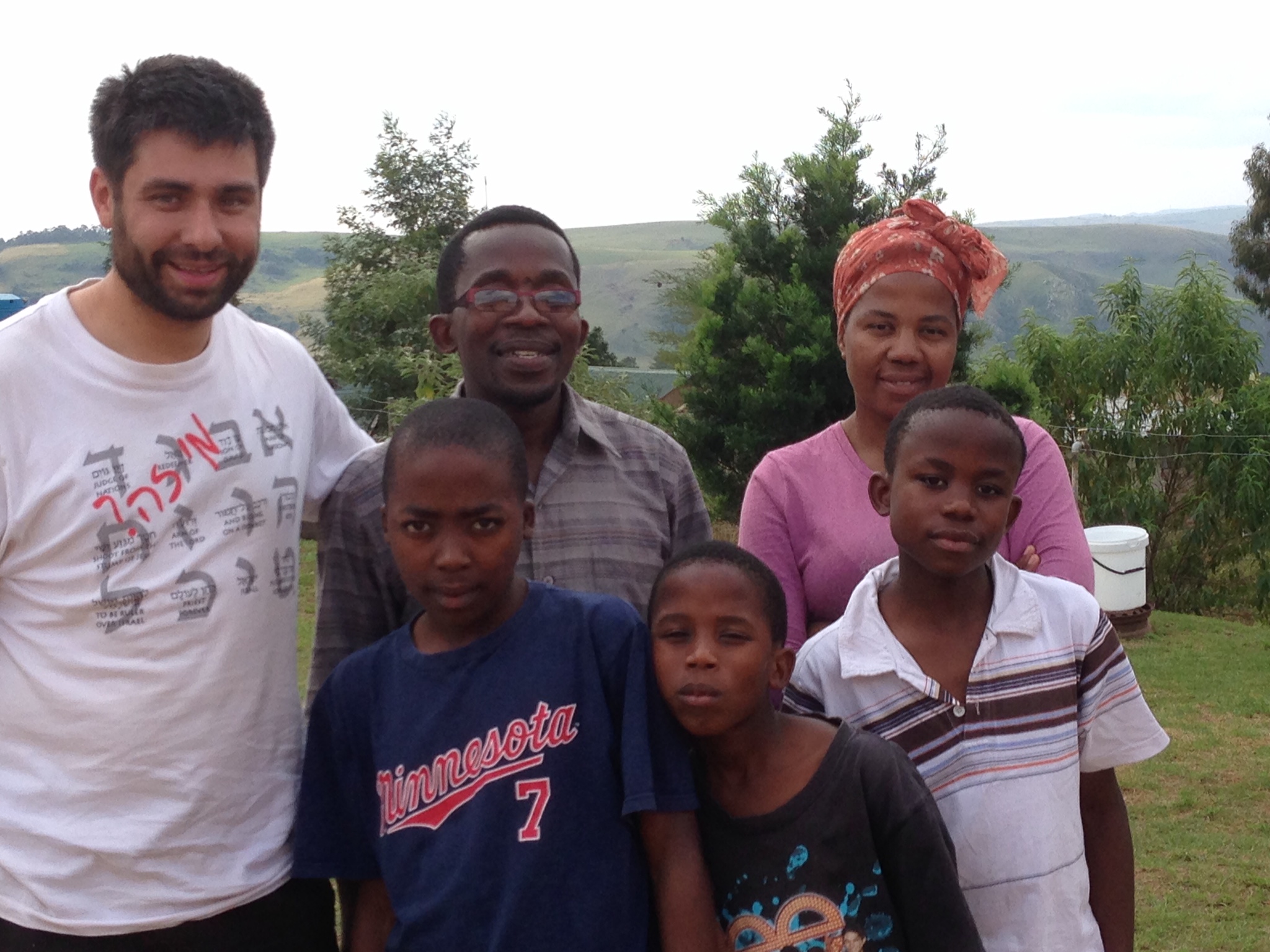
Salvador with Alpheus Mphungose and his family.
This month Sal was able to complete his first draft on the book on Israel and the church. Hopefully there will be more news to follow at the end of the year or the beginning of next year. We also visited Victory Primary here in Vryheid for a day of singing with the kids, this will now become a monthly visit.

Di teaches about the book of Esther at Care Bear Creche.

Mkhulu grew this pineapple in his home garden.
Thanks again for all your support and prayer we lean on the Lord daily. He is our strength and shield. With all our traveling and the people we have met our hearts desire is to encourage you all with the admonition to stay close to the Lord and stay in His word for the days are getting darker and darker.
We need HIM
Please pray for :
The people who were at the Passover and heard the gospel
Pray of Thanks giving for the oppurunity to hear the word from Bill and David
The DVD project
Kids club and the teachers, Celani, Khethwie, Di
Shalom
Salvador and Di
EIGHT
THE RELATIONSHIP BETWEEN THE LAW AND SIN
&
THE RELATIONSHIP BETWEEN SIN AND THE BELIEVER
ROMANS 7: 7 – 25
The book of Romans can be split up into various sections.
- In Romans 1 and 2, aside from Paul’s greetings to them, we have his thesis of salvation. The Gospel is the power of God unto salvation for those who believe because the wrath of God has revealed against all ungodliness of men who suppress the truth in unrighteousness. Everybody is under this condemnation whether Jew or Gentile. This is despite the fact that the Jews are God’s chosen people and were given the Law.
- This naturally leads onto the Antithesis: ‘How can Paul say that the Law of Moses and the election of Israel are of no consequence in regards to salvation?’ In Romans 3 – 5 Paul submits his second proposition which is that God’s righteousness has been manifested without the Law. And this has been witnessed to by the Law and the prophets. He proves this first by repeating the fact that there is no one righteous any way. Secondly he shows us that the cross of Jesus Christ satisfies the wrath of God. Thirdly he proves it by showing the biblical example of Abraham. Though he was the father of the Jewish nation, he was justified by faith and not by works. Fourthly he proves it by showing that Christ is superior to Moses because Christ goes all the way back to Adam and undoes the mess that Adam created. The reason for the necessity of faith without works of the Law is that the Law makes sin increase but grace delivers from sin.
- The rebuttal to Paul’s proposition, that the Jew must come out from under the Law and come under grace, is three-fold. We see this in Romans 6 – 8. Paul deals with the relationship between sin, the Law of Moses and the law of Christ (grace). The more sin we have the more grace we get. Does that mean we should sin more? If grace gets us off the hook, is that not a good reason to live a life of sin? Does the fact that the Law makes sin increase, mean that the Law is sinful? And if the Law brings me death, then surely it is the fault of the Law that I die! Paul rejects this notion by putting the blame on man’s sinfulness and stating that the Law does not liberate but Christ does. That is what we will look at today. In the next chapter we will see Paul’s conclusion to this treatise, in that there is no condemnation for those in Christ Jesus. Also those in Christ Jesus have a future hope; a great assurance that they will be saved to the utmost.
VERSES 7 – 25:
THE LAW AND SIN
This message is a message that will relate to every one of us in a very specific way. This chapter deals with indwelling sin and sin is something that everyone struggles with. If we do not struggle with it then it probably means we are not trying to deal with it but are comfortable with the sin that is in our lives. Elijah was a man with a nature like ours. Paul was no exception. He had to deal with sin before he got saved, being under Moses. Paul had to deal with sin after he got saved, being under Christ. The whole of Romans 6 – 7 is based on chapter 5: 20 – 21.
20 The Law came in so that the transgression would increase; but where sin increased, grace abounded all the more, 21 so that, as sin reigned in death, even so grace would reign through righteousness to eternal life through Jesus Christ our Lord.
It is a fairly long answer. But it is comprehensive in order to silence the voice of doubt who would seek to put the blame on God, excuse man and find license to sin more. The reason the Law was brought in was to make sin increase, to make sin bigger. If that is what the Law does, does that not imply that the Law is sinful in itself? Apple trees produce apples, pear trees produce pears. Thus how can the Law produce sin? How does Paul deal with this? If Paul’s message is contradictory then the Jew would become perfectly satisfied in his righteousness being under Moses. He would discount Christ’s sacrifice as something that is unbiblical, illusionary and full of contradictions. Paul, through answering this rebuttal, reveals a twofold relationship to the power of sin; the relationship to sin under Moses and the relationship to sin under Christ. To keep things in perspective it would be wise to remember the two diagrams of righteousness and spiritual power that were drawn up in the last chapter.
Diagram # 1 Diagram # 2
Righteous: Power of Spirit:
Law of Moses & Law of Christ
Law of Christ
__________________ _________________
Unrighteous: Power of Flesh:
Law of Sin Law of Moses
& Law of Sin
VERSES 7 – 12:
THE RELATIONSHIP BETWEEN THE LAW AND SIN.
The voice of doubt brings up another objection; if the Law was introduced to make sin increase then is the Law itself sin? “On the contrary”: in other words quite the opposite. The Law is not sin but the Law reveals sin to us. Now you will notice in these verses that Paul speaks from his own experience in the past tense, i.e. before he got saved. He struggled with sin and how did he deal with sin? Well he did not really deal with sin but instead he was forced to see the reality of sin in his life by the Law of Moses. But what effect did the Law of Moses have? It merely showed Paul his sin but did nothing to curb it. The Law educates us about what sin is. Think about when you learned to drive, you could not simply get into a car and drive. First you must do your theory test and then, under the tutelage of an instructor you did your practical test. The theory is there to educate you in knowing what acceptable driving practice is and what it is not. But knowing the theory does not mean that you are able to drive. If you pass the theory but fail the practical, you do not then say that the theory was all wrong. You cannot say of the law that it is unlawful. So it is with the law of God. On the contrary, quite the opposite of being sin, it actually tells you what sin is. Paul gives an example of how this works. Paul picks one of the commandments, ‘Thou shalt not covet’. Now why does Paul pick this commandment? Because it deals with the heart. This is the one commandment that bears similarity with the Sermon on the Mount.
The Mosaic covenant is a covenant of externals in many respects, in terms of worship and in terms of obedience. It is about the sacrifice of animals and the offering up of public prayer. It is about worshipping in the temple. But when Jesus came, He said that the time is coming and now is when we shall not worship at a certain mountain, meaning at a certain geographical location, but we will worship in spirit and in truth. Jesus brings a new order, a new garment and new wine. It is not about the external primarily but about a newness of life, it is a covenant of the heart. His law is written on the heart. In Exodus 20 Moses received God’s law from the mountain and brought it to the people saying ‘God spoke all these words’. However, Jesus takes His disciples up to the top of the mountain in Matthew 5 and says, ‘But I say to you’. He takes the Mosaic Law and the teachings of the elders and goes further to the heart of the issue. Moses said ‘do not murder’ but Jesus says, in effect, do not even think about killing anyone – do not have anger in your heart against your brother. Moses said ‘do not commit adultery’ but Christ said do not even lust after a woman. This is the very essence of the Mosaic covenant for even in the Mosaic Law God looks at the heart when He says ‘These people draw near to me with their lips but their heart is far away from me’. Thus Paul picks the one commandment out of the ten that deals with the problem of the heart.
IS THE LAW SIN?
So back to the original question, ‘Is the Law sin?’ No, quite the opposite it speaks against the same things as the law of Christ does. It speaks against the evil in the heart just like Jesus did. The Law teaches us what sin is so that we can identify it as evil. It is like the example we looked at of the driving law. If I break the speeding limit, does that make the law wrong? No the law is right and I am in the wrong. If I am driving in a 100kmph zone and that zone becomes a 70kmph zone but there is no sign to show the change in the speeding limit then I can claim ignorance. But once the sign comes up then I become culpable and guilty. So it is with the Law, the Law shows us what sin is so that we may become culpable for our sin. However, when it comes to the law of God, as manifest in the Mosaic covenant, it does not deter me from sinning but on the contrary it makes sin increase. If the Law is good how can it have such an effect on sin? Paul tells us how this can happen.
Verse 8 But sin, taking opportunity through the commandment, produced in me coveting of every kind; for apart from the Law sin is dead.
Have you ever tried to write a poem or to compose a song, or to write a letter or email? One thing that you need is information and ideas to allow creativity to perform its work. You cannot create in a vacuum. So then whether we have the Law or no law, sin exists in us and is active. Without the law of God we might not be that conscious of it. However when the Law comes in Sin looks at it and says, “Thou shalt not covet? Ohh that sounds like fun. I must try that out. And I can covet in this area and that area, there are so many possibilities.”
Sin takes opportunity through the commandment. That word for opportunity in the Greek is ‘aphorme’, which means to set up a base of operations for an attack. And sin uses this opportunity in a two-fold manner. Firstly sin uses the opportunity to produce sin in our heart. Coveting leads to every other sin. Coveting is like leaven and at the heart of it is pride. Coveting is a form of pride. “Why should they have that car, that house, that spouse, that opportunity in life, I am more suitable than that guy. His car would be looked after better with me, His house would look more presentable with me. His wife would be happier with me. His children would be happier with me.” But this leads on to the second thing.
Verse 11 for sin, taking an opportunity through the commandment, deceived me and through it killed me.
Sin, taking opportunity through the commandment, deceived Paul and killed Paul. In Hebrews 3: 13 we read that we can get hardened by the deceitfulness of sin and this is a very real danger. The context is speaking about not following Israel’s example in the wilderness of putting God continually to the test. Why did they get to that point?
- They never really left Egypt. Though they left Egypt physically they still carried it in their hearts.
- They were ungrateful. This is the same thing that happened with the Pagan nations, our ancestors. They did not honour God nor give thanks but their foolish hearts became darkened and they turned to idols.
- They did not believe God despite all the miracles and the signs. Through deception sin hardened their hearts.
When Satan tempted Eve, he attacked the Word of God (Has God truly said…). And when he tempted Christ he tried to use the Word of God in one of the temptations. Sin takes opportunity through the commandment to deceive and then to bring forth death. How did Paul die here?
Galatians 2: 19. “19 For through the Law I died to the Law, so that I might live to God.”
Paul says that when the commandment came he died. The commandment ‘coming to him’ must refer to him being personally convicted by it. It does not refer to the time where the commandment was given to Moses. This probably refers to Paul’s coming of age. Until a Jewish boy reaches 13 he is in a period of innocence. When he reaches the age of thirteen he undergoes his bar-mitzvah and that means he becomes a son of the commandment. Thus he became a man who was able to join with the men as students of the law. When the commandment ‘came’ to his heart, to his conscience, it killed him. Through the Law, Paul died to the Law. Why? Because the Law pronounced him guilty and sentenced him to death. He was on death row. But this death was a necessary evil. It was a good death because it made him aware of his need for a Saviour.
The worst spiritual death is when you think you are alive but you are not. It is when you think you know God but in fact you do not. What does it take to own up to the fact that we do not know God? It takes a willingness to go back to square 1 and relearn what it is to be a Christian. Deception and sin bring death but the Truth and obedience bring life. The Law did not help Paul know God in a relationship with Him. Rather, the opposite happened, through the Law he was enticed to sin more. Read this quote from Barnes.
“Such is the depth and obstinacy of sin in man, that the very attempt to restrain often only serves to exasperate, and to urge to greater deeds of wickedness. Restraint by law rouses the mad passions; urges to greater deeds of depravity; makes the sinner stubborn, obstinate, and more desperate. The very attempt to set up authority over him throws him into a posture of resistance, and makes him a party, and excites all the feelings of party rage. Any one may have witnessed this effect often on the mind of a wicked and obstinate child.”
Is this not true? That is why people say we should do away with law altogether. When you tell people they cannot do something they will go ahead and do it anyway. So should you tell them not to do it? That is the argument that people had in the UK about legalizing cannabis for recreational use. By legalizing it, less people will be breaking the law. But if people are told they cannot do it, they will be more inclined to take it. Look at children. When a parent tells his little child ‘No, do not touch’, the kid will often walk over to the forbidden item, hands outstretched all the while looking at the parent as if to say, ‘Look I’m touching, I’m touching!’ And that was Paul’s experience of being under the Mosaic Law. Therefore Law is not sin, but rather the Law of Moses is holy, righteous and good. It could be nothing but holy, righteous and good because it is a reflection of the character of God. The problem is that we are sinners by nature.
VERSES 13 – 25:
THE RELATIONSHIP BETWEEN SIN AND THE BELIEVER.
In this section Paul changes from speaking in the past tense to speaking of himself in the present tense. The context has seen Paul admitting that he was under the condemnation of the Law but never gave the remedy. I used to believe that this section where Paul speaks in the present spoke of his life as a believer. But Paul starts this section off with a question from that notorious voice of doubt. The question in verse 13 is based on the statement in verse 9, that through the Law sin became alive and Paul died. This does not mean that sin never existed before that time but that it became alive to him personally. This is why I no longer believe that Paul is primarily speaking of his life as a Christian because the question concerns the state of the person who is dead in sin. So even though Paul gives his answer in the present tense, the context concerns a person before they come to Christ. The voice of doubt is saying, in effect, ‘well if I die when I receive the commandment, then why not live without the commandment and stay alive?’ Therefore the reason I die is not because of my sin but it is the fault of the Law. Is this not what people say? ‘Why do you have to bring the Law into this? I was alright the way I was. I felt good about myself and then you had to spoil it all!’ This is what some preachers are saying. Robert Schuller says that making someone aware of their own sinfulness is unchristian, uncouth and is counterproductive to the evangelistic enterprise. Why do you have to bring the Law into it? May it never be! It is not the fault of the Law that we die.
Lev 18: 5. “5 So you shall keep My statutes and My judgments, by which a man may live if he does them; I am the LORD.”
On the contrary, the Law promises life to those who keep it. The Mosaic Law promises life and the Messianic law promises life too. The Law is not the cause of death. If the Jew could only keep it, it would give him life. But the reality is that, like the rest of us, the Jew is sinful and therefore the Law will not have that effect. Rather the Law comes in and makes sin utterly sinful. That word ‘utterly’ is the Greek word ‘hyperbole’. The word hyperbole means to exaggerate something to make it look bigger. The Law scrutinizes sin and makes it more serious and, as such, makes it exceedingly sinful. As a matter of fact the absence of Law would not stop death because sin’s nature is to bring forth death. Just like in Romans 5: 14, death reigned from Adam until Moses, even over those who had not sinned in the likeness of Adam. Go back to the driving analogy. There might be an area that warrants a 60kmph speed limit. Just because there is no speeding sign does not mean that I will not kill a child by exceeding 60kmph. Legally I might not be incriminated but I still cause a death. If a speed limit is imposed, I would be incriminated by breaking the law but it would make me aware so that I might do something about my driving. So the Law brings out the gravity of sin so that I might seek a remedy, an answer.
SLAVES TO SIN?
Paul is sold into bondage to sin. In Romans 7: 14 Paul does not present himself to sin but is sold against his will. The next verse gives the reason that he can say he is sold against his will. (i.e. he hates what he does). In verse 2 of the next chapter Paul reiterates the truth that we have been set free from the law of sin and death. In Judaism there was an understanding that Jews had two impulses. There was the yetser hara, the evil impulse, which Jews said began at conception. There was also the yetser hatov, the good impulse, that began at ones Bar Mitsvah. Jewish rabbis taught that the evil impulse was older than the good impulse by thirteen years and was therefore stronger. The good impulse was pictured as a prisoner in a castle run by the good impulse. A good Jew must therefore strengthen his good impulse by his obedience to the commandments that the good impulse may eventually overcome the evil impulse. This was the reality Paul experienced before he became a believer in Jesus. The reason that Paul writes this in the present tense is that we are told to walk in the Spirit, that we will not fulfil the lusts of the flesh. Thus, if we do not actively walk in the Spirit, we will fulfil the lusts of the flesh. Though we have been positionally set free from sin’s service, it does not mean that sin is not a reality in an experiential sense. What Christian does not struggle with sin? God has set us free from sin and given us what we need to live godly lives. But we still experience sin’s hold on us. Paul does not brush aside our day to day experience and live in a fantasy world of total sanctification. He does not tell us he has arrived. I once heard a story of a lady that boasted that she had not sinned for so many years. When she was asked if she was proud about that, she replied, ‘Yes’. So pride and sin is a reality whether we recognize it or not.
So what are we to do? What is the difference between the Jew’s relationship with sin in the old covenant and the believer’s relationship with sin in the new covenant? This is what many people say in the world today. ‘Those Christians are no better than the rest of us!’ They do not even realize the full extent of the truth which they have uttered.
There are a few things that Paul tells us about himself.
- Firstly, and most importantly, Paul hates the sin that he does. He hates it so much that it has become much like the experience of a drug addict. Since getting saved sin has taken on a life of its own. It is not that Paul is saying he does not do those things himself and is blameless. When the drug addict comes to hate his drug abuse, he knows he is to blame but he also claims that this is not him doing it because he hates doing it. So Paul knows what is good and acknowledges it but he cannot attain to it. Now John Macarthur has made a very important point concerning this passage. Paul is not dealing with a particular sin that he was struggling with, but he is speaking in reference to the whole law of God. Paul desired to keep the whole Law but found it impossible. The sin was not outside of him but inside him and yet he wished it was not that way. Sin is a nature, not merely the breaking of commandments.
- Secondly, present within Paul is not only the law of sin and death but also the law of God. And it is with the law of God that Paul joyfully concurs. As a good Jew he delighted in the Law but the Law by itself could not help Paul overcome the evil impulse. The law of God is spiritual and the law of sin is fleshly. Man is tripartite. (He is made up of 3 parts). In the beginning, when God made man, he took dirt from the ground (body) breathed into him, the breathe of life (spiritual) and the man became a living being, soul. This is the best way of explaining the Trinity. God is one but he is three. We are one but we are three. We are made spiritually alive in Christ and God’s law is written on our hearts according to the new covenant of Jeremiah 31: 31. We joyfully concur with God’s law in the inner man. But our body we get from Adam and within that body resides a law of sin which is fleshy. And even though we are saved we still have that same body which has yet to be redeemed. Thus as long as we continue in this life we will always battle with the flesh.
- So thirdly Paul shows that he is in a battle between the two laws.
Who will deliver Paul from this? Moses will not. Moses offers no power and sin thrives under Moses. What can Paul do? He can call out to Jesus. Jesus will deliver us from the body of this death when we get new bodies but Jesus can deliver us now, from day to day. May be we are caught up with some sin. You and I must learn to call out to Christ. Because here is the answer that Paul gives to this predicament. Verse 25 Thanks be to God through Jesus Christ our Lord! So then, on the one hand I myself with the mind am serving the law of God, but on the other, with the flesh the law of sin. With my flesh I serve sin. My body craves satisfaction and indulgence. I cannot do anything about that. That is the way it is and I must accept that. But with my mind I serve the Lord. It is with my mind that I make the choices I make. Sometimes I may have terrible dreams, wicked dreams. I do not have control over that. I did not choose to dream that. I may crave certain illicit things, and I may feel powerless against it. But in my mind I serve the Lord. I may have these pulls and temptations and these dreams but I will never consent to go down that path and I choose not to give in. I might be powerless in the flesh but, thanks be to God, the answer is in Jesus. He is the power, He brings deliverance and I must learn to rely and call out to him. Where Moses keeps me in captivity, Jesus brings liberty and that is something worth praising God for.
NINE
THE SECURE, SOUND HOPE OF THE GOSPEL
ROMANS 8
From Romans 1 – 7, Paul has been expounding his understanding of salvation; that the Jew cannot be made right before a holy God through observing the Law of Moses. He can only be made right by faith in Jesus and in what Jesus did on the cross. This is good news for us Gentiles because we were never included in the Mosaic Law in the first place. In Christ, however, we are equals with the believing Jews, being part of a higher law. In Romans 8 Paul is bringing a conclusion to the first 7 chapters. Now there are a couple of things I want to remind us about from previous chapters.
THE MYSTERY OF GODLINESS REVISED
One is the mystery of godliness. This, I feel, is beneficial for us to remember because in this chapter we will be dealing with the area of our adoption as sons. What is the mystery of godliness?
1 Tim 3: 16. “By common confession, great is the mystery of godliness: He who was revealed in the flesh, Was vindicated in the Spirit, Seen by angels, Proclaimed among the nations, Believed on in the world, Taken up in glory.”
Jesus never took His own vindication, He never righted His own wrongs but submitted Himself to the will of the Father, therefore, God exalted Him. God initiates and we respond in faith. If we comprehend this, we can comprehend the Christian life and God becomes very real. This is hard for us to walk in because it means that we must wait on God for when He decides it is the right time to answer our prayers. This means that we have an attitude of being God’s servants. That is the first thing I want to remind us of.
A LOOK AT THE MESSIANIC JEWISH COMMUNITIES
The second aspect is the aspect of the Messianic Jewish community. There were two main messianic sects within early Christianity. There was the orthodox one and the heretical one. It seems that by the time of the early church fathers both groups had become heretical. But it is also likely that, like today’s denominations, these messianic Jewish communities were a mixed bag. But the orthodox group were the group that Paul belonged to in Acts 24: 5, the Nazarenes. This group believed Jesus was God and man, that Jesus was the Messiah and the fullness of everything that the Law spoke of. They practiced all the Jewish feasts and still went into the Temple, but they did not compel the Gentiles to do so, recognizing that these things did not secure or bring salvation. In this sect Gentiles and Jews lived together equally in the Messiah.
The other Messianic sect within the early Church was called the Ebionites, which comes from the word “Ebyown”, meaning poor or destitute. They believed that Jesus was Messiah and, it is claimed, they only accepted the Gospel according to Matthew, rejecting Paul’s teachings. Does this sound familiar? But they did not believe that Jesus was the son of God. Jewish readers would have had many questions. Why does Christ supersede the Law? Is this biblical? What about the Jews that do not accept Jesus as their Messiah? What about those who trust in their obedience to the Mosaic Law? I am going to deal with this chapter in four points. From verses 1 – 4 we will look at the fact that there is no condemnation. From verses 5 – 13 we will look at being led by the Spirit as opposed to being led by the flesh. From verses 14 – 25 we will look at our future hope of adoption and lastly from verses 26 – 39 we will look at our assurance in Christ.
VERSES 1 – 4:
THERE IS NO CONDEMNATION.
‘Therefore’ is a word that summarizes what has gone before. In this case it is concluding the whole of the preceding 7 chapters. This goes back to Romans 1: 16 – 18. 16 For I am not ashamed of the gospel, for it is the power of God for salvation to everyone who believes, to the Jew first and also to the Greek. 17 For in it the righteousness of God is revealed from faith to faith; as it is written, “BUT THE RIGHTEOUS man SHALL LIVE BY FAITH.
The wrath of God is revealed against all ungodliness of men who suppress the truth in unrighteousness. The answer to this problem is not Moses. But rather it is the Gospel that is the power of God to salvation. The reason for this is because in the Gospel, as I believe from faith to faith, I go through a process where God’s righteousness is increasingly revealed to me. In Romans 7, Paul thanked God that Jesus set him free from the body of this death, and in his mind, he was then able to serve the Lord. Therefore there is no condemnation. There is no sentence hanging over us. We are free and free on two plains.
FREE FROM SIN AND ITS PUNISHMENT
We are free from sin. Though we still have a body of sin and we get tempted (though our flesh may crave illicit desires) we are given the ability, if we walk in the spirit, to say no. But we are also free from the eternal consequence of our sins. We are no more counted guilty. How does God forgive us? God cannot forgive us purely on the basis of our penitence and saying that we are sorry. This is the problem with much of contemporary Gospel preaching. They are told that if they only say sorry and try to stop sinning, God will forgive them; this is a tragedy. If I rob a bank I will have to go before the magistrate and what will happen to me? I will have to be sentenced for my crime. But what if I turn round and say, ‘yes, I did it. I am guilty but I am really sorry’. Will that get me off Scott free? I may get a leaner sentence but I will still be sentenced. Sorry does not change anything. I have still broken the Law. We need to get a handle on this for ourselves and our Gospel preaching. God cannot simply let us off the hook, because He is a good God who does not pervert the course of justice. He does not take a bribe. It needed a sacrifice. Someone had to pay the price for our sin. If the cross is not at the centre of our gospel, then we do not have the Gospel. If the cross is not presented as the answer to forgiveness then we have neither the answer nor forgiveness.
The Law was weak in this regard. It was feeble, impotent, it carried no power and it was weak through the flesh. Remember the two diagrams that we drew concerning the Law of Moses, the law of Christ and the law of sin and death.
Diagram # 1 Diagram # 2
Righteous: Power of Spirit:
Law of Moses & Law of Christ
Law of Christ
__________________ _________________
Unrighteous: Power of Flesh:
Law of Sin Law of Moses
& Law of Sin
Both diagrams have a horizontal line. When it comes to righteousness, both the Law of Moses and the law of Christ are above the line and the law of sin and death is below the line being unrighteous. But when it comes to spiritual power, only the law of Christ is above the line. Though the Law of Moses is spiritual, it grants us no spiritual power. So it can only be kept in the power of the flesh. It is powerless, weak, sickly and diseased through the flesh. That is why the Ebionites, and those Jews who still trusted in Moses, had to realize that they needed a law that superseded the Law of Moses. They needed to be under the greater law rather than the Law of Moses. Maybe this is the reason as to why Paul said in Romans 1 that he wanted to preach the Gospel to the Christians in Rome. Possibly within the church in Rome, there could have been some who shared the same beliefs as the Ebionites confusing the believers. What is Paul telling those people who boasted in their attempt to fulfill the Law? ‘You do not fulfill it, we do!’ The requirement of the Law is fulfilled in us. How can that be when we, as believers, still sin, if we do not keep Shabbat or the Day of Atonement and when we do not circumcise our baby boys?
- Firstly because Jesus is the fullness of the Law. When we have Jesus we have the fullness of the Law.
- Secondly, verse four tells us that it is fulfilled for those who walk according to the Spirit and not according to the flesh. What does the Law expect the Jew to do? It requires him to uphold righteousness through external means. Christ goes further and allows us to uphold righteousness through an internal change of heart. It is the requirement of the Law that is fulfilled in us.
VERSES 5 – 13:
BEING LED BY THE SPIRIT AND NOT BY THE FLESH.
The first four verses dealt with our justification and escape from the righteous sentence of God that was on our heads. This section deals with the Christian life, or sanctification if you like. Paul brings a distinction between those of the flesh and those of the Spirit. The bible is full of these distinctions; the righteous and the unrighteous; the saved and the unsaved. There is no middle ground. We are in one camp or the other camp. And how can we tell the difference between those of the flesh and those of the Spirit? Paul tells us in verse 5.
5 For those who are according to the flesh set their minds on the things of the flesh, but those who are according to the Spirit, the things of the Spirit.
The word for ‘mind’ in Greek is the word, ‘Phroneo’. It means to exercise, i.e. entertain or have sentiment or opinion. By implication it also means to be mentally disposed, to interest oneself in (with concern or obedience), to set the affection on. Those who are of the Spirit set their minds on the Spirit. Their disposition is to entertain the things of the Spirit rather than the things of the world. This is not a natural disposition. Note here it says that they set their minds on the Spirit. This is not a nature but an act. As we saw in the last chapter, in the flesh we are slaves to sin but in the mind we serve the law of the Lord. Remember what Psalm 1 says, ‘Blessed is the man who does not walk in the counsel of the ungodly, nor stand in the path of sinners, nor sit in the seat of scoffers. But his delight is in the Law of the Lord and on His Law he meditates day and night.’ His affection is set on the spiritual things but this is an act of the will. It is not done for us; it is something we must exercise. But those who are of the flesh are not so. Their minds are set on the flesh. Now if our experience tends to the latter, the answer is not in simply changing our minds, though that is something important. Remember that having our minds changed is not the principle thing here. The principle thing is always verse 3.
3 For what the Law could not do, weak as it was through the flesh, God did: sending his own Son in the likeness of sinful flesh and as an offering for sin, He condemned sin in the flesh,
The principle thing is always the Cross of Jesus. We must start from there and our act of setting our mind on the Spirit is a response to the work of Christ that God has done for us. Paul shows us this in verses 11 and 12.
11 But if the Spirit of Him who raised Jesus from the dead dwells in you, He who raised Christ Jesus from the dead will give life to your mortal bodies through His Spirit who dwells in you. 12 So then, brethren, we are under obligation, not to the flesh, to live according to the flesh –
Paul says that on the basis of the Holy Spirit living in us, and on the basis of the promise that, just as Christ was raised from the dead, so we will be raised too. On the basis of that we are under obligation not to walk according to the flesh. Why? Because there are consequences to the path that we walk down. Verse 6 says there is death or life? These are the destinations of the two paths. We cannot walk down a path of lawlessness and end up with life. We cannot walk down the path of the Spirit and end up with death. We need a spiritual life to live, a newness of life and notice that this is something that you cannot do. John 3 shows us that this is completely a work of the Holy Spirit.
How does a person get the Spirit? You cannot simply ‘get the Spirit’. In fact Romans does not tell us how we get ourselves born again; that is God’s work. What it does tell us about is the glory of the new covenant and Christ’s sacrifice. It tells us that we need to believe and trust in that sacrifice. It also gives us the promise that if we believe with the heart that God raised Jesus from the dead, and if we confess with our mouths the Lord Jesus, we WILL be saved. If we enter into this salvation, if we accept the biblical account of the Gospel, then Christ births us into the Kingdom on the basis of faith.
John 1: 12 “But as many as received Him, to them He gave the right to become children of God, even to those who believe in His name:”
As Peter said, ‘Repent and be baptized and you will receive the gift of the Holy Spirit.’ And if Christ’s Spirit lives in you then you belong to Him, so implies verse 9 of Romans 8. Is it any wonder why Paul says that the Gospel itself is the power of God to salvation for those who believe? This is because it is ministered to us by the Holy Spirit of God who lives in us. This same Spirit also raised Jesus from the dead.
VERSES 14 – 25:
OUR FUTURE HOPE
The first section dealt with justification; the second dealt with sanctification; but this section deals with glorification. If you look at this section it tells us that we are children of God and yet, at the same time, we are still waiting to receive the sonship. It tells us that we have been saved and yet Peter in 1 Peter 1: 5 & 9 tells us that we are still awaiting the salvation ready to be revealed in the last time. We are still obtaining the salvation of our souls. How can you have something and, then in the same breath, still be waiting to receive it? Are we saved or are we still waiting to be saved? There are two extremes of thought on this. There is the Roman Catholic error, which says you can never truly say that you are definitely saved. That is the sin of presumption. That is why my friend’s grandmother lives in fear because no one will be doing Mass cards for her when she dies. She does not know how long she must ‘supposedly’ stay in purgatory. The second error is when we say that we are totally saved now and therefore we have it all in the bag. Thus we do not move on in the Christian walk. One heresy says that, because we are in salvation and God has done it all, then we can claim all the blessings and benefits of salvation now. This would include total healing and in another stream of Christianity, total sanctification. We will deal with healing shortly but the truth lies elsewhere outside these two errors. The truth is that we truly have salvation now, and yet we still are awaiting it too. This seems like a contradiction in terms. It makes no logical sense to us. Yet it is perfectly logical and makes perfect sense when you introduce 3 certain spiritual ingredients. Hebrews 6: 11 – 12.
“11 And we desire that each one of you show the same diligence so as to realize the full assurance of hope until the end, 12 so that you will not be sluggish, but imitators of those who through faith and patience inherit the promises.”
The ingredients are hope, faith and patience. To realize the full assurance of hope until the end means that you have an assurance of salvation but that assurance needs to be realized. It is like when you have a plan to do something. That plan may be a reality in your mind. But for it to become an experiential reality, you have to execute certain activities to cause it to become an outward observable reality. Now when we receive salvation it is similar yet different to this situation. It is similar in the fact that what we receive has yet to be realized. But it is different in the fact that the reality in the mind is not a certain thing. It may happen or it may not happen. Who knows? That is why you have to work on probability with these ventures. But that is not the way with salvation. Salvation is not about probability but about certainty.
Turn back to Romans 8: 24 & 25.
24 For in hope we have been saved, but hope that is seen is not hope; for who hopes for what he already sees? 25 But if we hope for what we do not see, with perseverance we wait eagerly for it.”
SAVED AND YET STILL NEEDING SALVATION
We have been saved; that is past and that is fact. Yet it is in hope that we have been saved. Hope does not speak of something past but of something future. The word in Greek is ‘Elpis’ and it means a confident expectation of something that will come to pass. These verses teach us that we do not have it all here and now. We have not yet received the sonship. If we did have it all here and now then we would not need hope, because as verse 25 says, who hopes for what he sees? We do not see it all here and now. People tell us, ‘So you believe in heaven, where is it? All you believe in is pie in the sky when you die but where is it?’ In hope we have been saved. We cannot see it but it is certain and will happen. By grace you are saved, through faith. Faith is the key here. Hebrews 11: 1 & 2 say that faith is the evidence of things hoped for, the conviction of things not seen. Faith takes what is there as future fact and brings it into our present day experience. Faith is something we grow in and so Paul said in Romans 1: 16 – 17, that the righteousness of God is revealed from faith to faith. It is not a stagnant thing; it is a living thing. As Paul also says, the Just shall LIVE by faith. Faith is based on God’s word and is staking your whole life on what God has said. It is so certain that we will be completely saved to the utmost if we are in Christ, thus we are saved. So if we are still waiting to receive the sonship, what right do we have to call ourselves children of God in the here and now?
Verse 16 The Spirit Himself testifies with our spirit that we are children of God,
The Holy Spirit, who lives in us, testifies that we are children of God. The Holy Spirit is the One who makes our faith a reality in itself and our hope is not vain. This is because the Holy Spirit is God almighty. He is the ‘I AM’ as much as the Father and the Son are. In the beginning ‘He is I AM’, He now is I AM and in the end ‘He is I AM’. The Spirit is eternal and not bound to the limits of time. He knows us now and, in the same measure, He also knows what we are when we are glorified. He is there in the future just as much as He is here in the present. He ministers to us the reality of what we shall be. We are dealing with something that we cannot grasp with our finite minds. How can someone that is outside time relate to us who are trapped by time? God sees the finished product but we do not and therefore we have to travel the journey to reach the destination of realised salvation. When we look at salvation by faith we are looking at it from an eternal perspective. When we look at the salvation yet to come, we are looking at it from a perspective of time. And this journey that we travel includes certain things.
As verse 17 shows, the journey includes suffering. But this is suffering in a specific context. It is suffering with Christ. Jesus suffered in His death for sin, and through His persecution for righteousness. But our journey also includes enduring a fallen world and fallen bodies. It includes living with sickness, though God does heal. These people that say that you do not have to suffer, you are a ‘King’s kid’, forget some things. Though they are right that the Atonement includes healing, (Jesus carried our infirmities), they are wrong to say that this means we can always claim healing in the here and now.
- Firstly they forget the servant mentality that we looked at in the introduction, which is Godliness. We are sons by faith but experientially we are yet to receive the sonship.
- Secondly, they forget that we live in a fallen world. Verse 20 – 20 For the creation was subjected to futility, not willingly, but because of Him who subjected it, in hope 21 that the creation itself also will be set free from its slavery to corruption into the freedom of the glory of the children of God. God’s purposes go beyond saving our souls but God wants to redeem the physical world too. God is concerned about the redemption of creation. But the world was subjected to entropy, futility, so that God would set it free at a later time. The pinnacle of the creation was man and the pinnacle of redeemed creation will be redeemed man. That is God’s ecological program to save the whales and to stop the destruction of the planet. He saves the world by saving men. We are not oblivious to this corruption though we are saved. In fact, healing is certain but it will come when Jesus returns. Verse 23 And not only this, but also we ourselves, having the first fruits of the Spirit, even we ourselves groan within ourselves, waiting eagerly for our adoption as sons, the redemption of our body. We are still waiting for the redemption of our body. Any healing we receive is only a temporal foretaste of glory and nothing more.
VERSES 26 – 39:
ASSURANCE
I do not want to delve too much into this section. Rather I want to use this section as a conclusion to Romans 8. This is always a question when we talk about the fact that salvation is yet future. ‘Well where is the assurance in that?’ The assurance can only lie in God Himself. I got into a conversation with someone at a former workplace in the UK. He asked me where my assurance of salvation was, if I believe that I am able to walk away from the Lord. I told him that my assurance is not in a doctrine that I can never fall away, nor in a doctrine that I have to keep myself saved, but my assurance lies in a person. That person is the person of Jesus Christ. It is not my STAYING in Him that assures me, but it is staying in HIM. Do you see the difference? Paul seeks to give us that assurance of salvation before he moves on.
- Firstly from verses 26 – 27 we have the assurance of the intercession of the Holy Spirit. We are weak, sick, feeble and we do not know how to pray as we should. Quite often we do not come to God in a way that He deserves. But we have the Spirit who pleads our case and speaks in groans too deep for words. This is not a reference to speaking in tongues. Tongues are simply the ability to speak in another language, other than your own, by the aid of the Holy Spirit. The phrase too deep for words means that the groans cannot be uttered. We utter words with the languages that we speak in, but these groans cannot even be uttered in words. What is this about? Verse 27 says that the Spirit searches our hearts. He knows exactly what we are and what we are asking for even when we do not. He knows our hearts’ desires better than we ever could. And the Spirit intercedes for us, filling the gap that we have made with our weakness.
- But secondly there is the assurance of God’s eternal nature. As we have said, God is the ‘I AM’. He is not subject to the limitations of time. As such, verse 29 says, those He foreknew He predestined.
FOREKNOWLEDGE AND PREDESTINATION
This foreknowing does not mean that God saw in advance those who would accept Him and who would reject Him as if he was on the outside looking in. This ‘foreknowing’ is not referring to God looking forward in time and picking out those who He would want to save. This is knowledge in terms of a relationship. In other words, God knew you before the foundation of the world. This is because God is not trapped by the limitations of time. So God was in relationship to us before the creation of the world because He was here today before the creation of the world. Remember this does not necessarily mean that God chose some people to heaven and hell arbitrarily. The predestination is based on the foreknowing and not the foreknowing on the predestination. What we are dealing with is a mystery of God’s purposes for His people. Predestination means that God limited those people in advance for a purpose. Predestination is never spoken of in the New Testament in terms of obtaining salvation. God does not predestine us to be saved. Rather predestination is spoken of as being unto sonship, co heirs and brethren with Christ. Test me on this and look up the word predestine and all the scriptures it refers too. But surely is not sonship itself salvation? No it is not. God could have saved us merely to be servants.
A life as a servant of God is much more than the terrors of hell. But God’s purposes are greater than servitude. He wants to elevate us to being sons of God. We are sons now by faith but we will completely receive the sonship when Jesus returns. There is no choice in this regard. If you are saved, if you are in Christ, God has already determined before the beginning of time that you would be made into a son of God. And on the basis of that predestination comes God’s call to salvation and on the basis of that call comes justification, and on the basis of that justification comes the sanctification. How can we marry this to our temporal experience? We cannot comprehend it but God’s eternal nature should give us assurance that what He has purposed will come to pass. Nothing can separate us from God’s love.
Verse 39 nor height, nor depth, nor any other created thing, will be able to separate us from the love of God, which is in Christ Jesus our Lord.”
The love of God resides in Christ Jesus. If you and I are in Christ Jesus what God has decreed cannot fail to come to pass. We have this assurance because the Spirit in us testifies to us. And we can trust God because of His eternal nature. The way to remain assured is to remain in Jesus. Abide in Him and you will bear much fruit. And if you abide in Him, nothing can pluck you out of His hand.
Our South African Visit
By John Hayworth
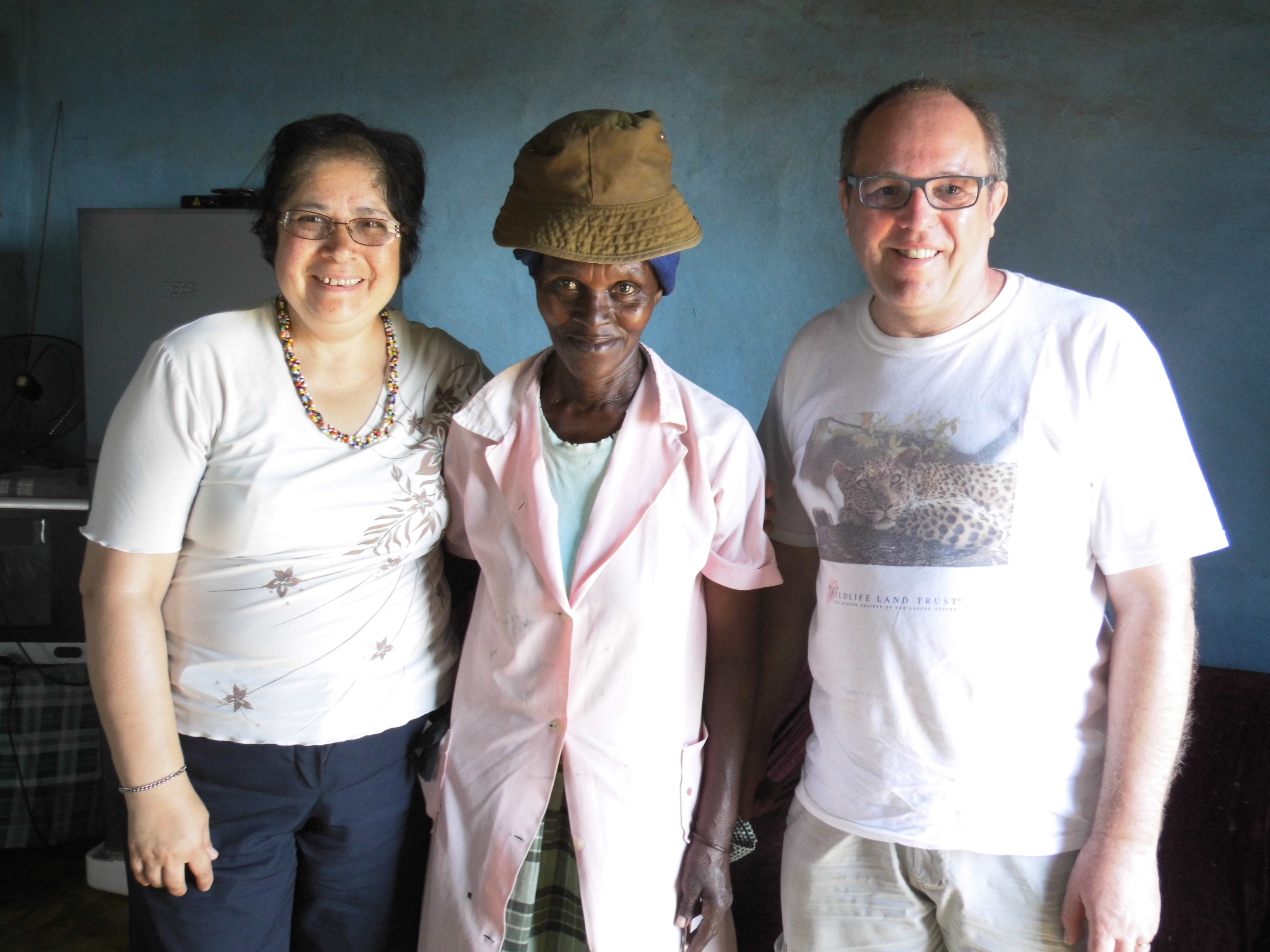
Visiting Gogo at another Mtshali home
We finally arrived at Oliver Tambo Airport after spending 11 extremely uncomfortable hours in the air during which we barely slept. I was glad to get off the plane and stretch my legs. After getting through immigration and collecting our baggage (not sure which first) we finally made our way through to the main lobby where we were met by Salvador and Dianne.
Salvador suggested that we would need a rest so we could go somewhere and sit down. I replied that as we had spent many ours sitting, cooped up in an aeroplane, that was not something either of us wanted to do, so instead we made our way to the lift in order to descend to the parking bay where their vehicle was parked.
At the lift we met two extremely “friendly” men who insisted on helping us with our baggage to the car. Though we protested that it wasn’t necessary they insisted on accompanying us to the vehicle. Fortunately there was car park security near-by so we were able to leave with our pockets intact. Thus we were introduced to one of two main examples of South African hospitality.
There are two types of hospitality:
- The kind that will cost money; either by tipping a couple of Rand or handing over one’s wallet and valuables, or..
- Genuine kindness.
Our second introduction to South African hospitality came in the shape of a couple of friends of Salvi and Di called Morne and Doret Lambert. They had so kindly offered their home to us for the night so that we could rest up before travelling up to KwaZulu Natal the following morning. They would do the same at the end of our trip when we returned home.
Buy a Donkey?????
Morne and Doret are Afrikaans speakers and while when we arrived at their home Doret introduced us to the Afrikaners’ obsession with donkeys. Every were we went Afrikaners would insist we should buy one. In fact even when they pray they often tell our Heavenly Father to buy one also! “Buy a donkey, Father!” “Buy a Donkey!” If ever you visit S.A. you will hear the Afrikaners tell you to, “Buy a donkey”!
At first I had the suspicion that Afrikaners made money from the commission they received from the sale of all these donkeys yet they, themselves, never actually owned donkeys! My suspicions were without foundation as what they were actually saying to us was not to “buy a donkey” but “Baie Dankie” which is Afrikaans for “Thank you very much!”
Birthday Embarrassment
The following day we went to visit Alan and Sue Wells a couple who have a large extended family of adopted children. It was not easy to remember everyone’s name. I recall a Rosie, two Thembe’s (I think that’s how it is spelt), a Thabo and the rest skips my mind. We shared lunch in the garden and the eldest daughter and one of their sons (Edward I think) treated us to a concert of guitar and woodwind music.
Later on we drove on to Vryheid where we stopped for a meal in a restaurant. Unbeknownst to me Salvador had leaked the news that the following day would be my 61st birthday. At the end of the meal all the waitresses came to our table and began to dance to music in celebration of my birthday. Being your typical Englishman I felt really embarrassed, especially as the dancing went on and on for at least 3 minutes. Finally I was presented with a serving of ice cream that had a lighted sparkler in it!
The Kraal
Salvi and Di live in a Kraal belonging to their good friend and fellow worker in Christ, Phumlani. A Kraal is a typical Zulu homestead comprising several small buildings, the most important being at the centre, which is the home of the “Gogo” (the Grandmother—or mother of the family where there are no children).
Phumlani’s mother had, sadly, passed away, sot her little house remained empty, a monument to the family’s love and devotion to her.
Zulu Tradition
Towards the end of the 18th century what is now the proud Zulu nation was a collection of different tribes spread across the Eastern part of what was called Natal. In 1825 all these tribes were united under the rule of the legendary Zulu king Shaka kaSenzangakhona (Shaka Zulu). Shaka was a military genius however very brutal and three years later, at the age of 41, Shaka was brutally assassinated by his three half-brothers.
Under Shaka the Zulu empire grew and the Zulu armies were a most feared and formidable opponent as the British Colonial Army was to find out at the hill Insandhlwana where, on 22 January 1879, an army of 20-25,000 Zulu despatched a force of around 1800 British troops armed with field guns, rockets and rifles. This was the worst defeat the British Army has ever suffered at the hands of an indigenous people.
The following day several thousand Zulus moved on to attack the mission station at Rorke’s Drift where a small force of British troops had been garrisoned.
Both incidents have been depicted in major films; The battle of Isandhlwana in the film “Zulu Dawn” and the battle of Rorke’s Drift in the film “Zulu”.
During our stay we were fortunate to visit both these sites that are now both Heritage Sites, Isandhlwana being the burial place of a number of British dead as well as having several monuments erected near the base of the hill. Isandhlwana is especially poignant as all across the landscape there are stone cairns (painted in white) where the dead fell, some of them baring gravestones that were erected by the grieving relatives.
Evangelism
We accompanied Salvador and Phumlani as they went out to bring the Gospel to the Zulu people. On one occasion I was able to preach, Salvador acting as my interpreter.
There is one main obstacle to Zulu conversion and that is their devotion to the Ancestors. In Zulu culture the ancestors must be appeased through animal sacrifices and it is believed that they communicate through dreams and can either bless or curse individuals and families if offended.
In the past the Zulu people were evangelised by American Missionaries from Zion, Illinois. The Zulus were largely converted however they were left mainly to their own devices after the missionaries left. Since then the Ancestor cult has been incorporated into their belief system, even though they still hold the Bible in great reverence. Their churches comprise the Zionist Christian Churches in S. A. after the town of Zion.
Both Salvador and Phumlani challenge this belief pointing out that this practice goes against the teaching of the Bible and that people need to repent of such things and believe what the Bible teaches if they are to be saved. The cult of Ancestors has a great hold on people and few seem willing to abandon their superstitions. Nevertheless some do—including some Zionist Churches.
Children’s Evangelism
Children in Rural KwaZulu Natal are generally left to their own devices. During the day they are expected to knuckle down and study. Children often walk many miles to school and back home. In the early hours of the morning and in the middle of the afternoon the dirt paths and small roads are filled with lines of children of all ages on their way to and from school.
Whilst we were visiting a lady in one of these rural areas a young boy who was on his way home from school approached us. He was obviously tired and his forehead was dripping with perspiration under the hot sun. At first we thought that he was asking us for a ride as many people hitch hike due to the lack of transport. However, this young boy simply wanted to practice his English. Salvador offered him a comic tract, which he began to look at. He obviously understood what it was about and so he thanked us and went off on his way home.
Phumlani’s sister, Celani, has opened her Kraal to the local children every Saturday as a “Kidz Club” as a means to evangelise them. Children come from all over; either Salvador or Phumlani often picks some up from further afield. They sing and are taught from the Bible concerning the things of God—much like a Sunday School—and are presented with the Gospel. They will be questioned as to whether they had understood what had been taught. Afterwards they will be given a picture to colour in representing the teaching they had received.
On the second Saturday I taught them the story of David the shepherd boy, his encounter with a lion and a bear and the Giant, and related this to the story of Jesus being tempted by Satan and using the Bible like stones in David’s slingshot to defeat the devil’s arguments.
Children in S.A. are much easier to teach that in UK because they are taught to sit and pay attention as well as to respect their elders and teachers. UK children can be very disruptive, disrespectful and are often rebellious to any form of authority; including parents, teachers and their elders. When we explained this to South Africans they are shocked.
Another lady we were introduced to in Vryheid is called Belinda. Belinda and her husband had invited us to our first “Braai” which is a kind of S.A. BBQ but with much more meat content. Belinda runs a local crèche where she employs several workers because there are so many children. We were all introduced to one of the classes consisting of what must have been 60 or more children. Salvador taught them a story from the Bible and we sang some songs with them. Amélia and I also taught them a new song about the story of Elijah, the Ravens and the widow, “The Raven’s Wings”.
Preaching the Word to churches
Churches come in different shapes and sizes. Some are more formal others less so. Some have purpose built buildings where they meet others do not. However the Bible defines the church as the people who gather together in order to fellowship and NOT the place where they gather.
Salvador had brought a copy of Vryheid’s local English language newspaper. As I was looking through it I came across a headline about someone’s escape from a cult. I thought that it would be an interesting story. It soon became apparent that the article was about Amélia and myself and was advertising a meeting at the local Baptist Church building where I was to speak concerning our experience in, and escape from, the “Children of God” cult.
The meeting was quite well attended as I gave a candid and often emotional account of our life. People obviously must have been touched by it by the comments we received afterwards. What we didn’t know is that a lady was there with her husband who was not a believer. Salvador told us that this was quite a surprise as he was from a Hindu background. Apparently he was very touched by my story and it seems that he had begun to soften in his behaviour towards her. We continue to pray that he will yield to the conviction of the Holy Spirit and turn to Christ.
The second meeting I preached at was with the church that Salvador had help to pioneer in one of the rural areas. They meet in a Kraal, in a mud hut. I preached as Salvador interpreted. I preached from Psalm 121 concerning how that though we may feel that we are insignificant God is always around us, just as the mountains that are around the place we were meeting at. That God is looking for fruit in our lives and is not so concerned as to how much fruit, but the fact that there IS fruit. Like the parable of the sower, the seed sown on good soil brought forth a harvest of different amounts of grain.
One of the women shared that a neighbour’s dog had been stealing her chickens and, even though she had spoken with her neighbour, nothing was being done. We all prayed for her and encouraged her to trust the Lord. A few days later I asked Phumlani about her problem with the chickens. Phumlani said that the problem had been resolved and that the dog had died!
The third meeting was at a Home Church. In fact people had gathered from several Home Churches around the region. I preached on the Judgement and the criterion that Christ will use on that day; how we have loved the least of His brethren and not how well we have performed in our churches.
The Flora and Fauna
As a birthday treat we all went on a Safari to see Africa animals in their natural habitat. Apparently there are 5 animals that we ought to see that are called “The Big Five”; Elephant, Rhino, Buffalo, Lion and Leopard. Up until then I had seen the other Big 5; Chicken, Cow, Bull, Sheep and Goat.
Our guide, knick named “Hallelujah”, was from Zimbabwe. He was amazing at spotting so many animals from a great distance, including a crocodile that looked just like a black rock next to a river. There were many Zebras, Impalas, Buffalo, Rhinos, Zebras and we even saw some Baboons in the distance. Eventually we saw an elephant, however it was across a river from us and had its backside towards us all the time because it was too busy eating the lush grass that was growing there. We also saw several giraffes.
Hallelujah explained so many things about each animal. We stopped off at the main base where we had lunch and a toilet break. Afterwards we set off in another direction in search of elephants and, after Dianne and Salvador had prayed, a lion. Eventually we saw an elephant in the distance feeding from a tree. Just in front of us a car had stopped and the occupants had got out to observe the elephant. Eventually they got back into the car and drove off so Hallelujah edge the vehicle we were in to the place that they were at. Suddenly, not six feet from were the people in the car had been standing, a lion reared up its head to see what all the commotion was!
One rule about gong on safari is that you keep your car doors locked, windows closed and you definitely do not get out of your vehicle! These people were oblivious to the fact that just a few feet away from them was a lion hidden in the grass. Fortunately for them it seems that they got back into their car and drove off just in time and fortunately for us we got to see a lion. We were also fortunate not to witness a lion attacking a person!
We saw many birds during our stay in S.A. Vultures, Birds of Paradise, Eagles, Weaver Birds, European Rollers, Doves, Ibis, Hardidas, Storks, Red Bishops amongst others. Some we were able to photograph some we were not as they wouldn’t stay still long enough in one place in order to be photographed.
We had similar difficulties with the native insects, however we did manage to capture a couple of butterflies, a moth, grasshoppers (one of which was absolutely enormous), giant African wasps (they are really scary), crickets, and Praying Mantis. Once a big grasshopper got into the vehicle as we were driving and landed on Amélia’s foot. We aren’t sure who jumped the highest, Amélia or the grasshopper. After frantic pleading from Amélia and Di we stopped the vehicle so that the grasshopper could leave.
One thing Amélia hates is creepy crawlies and snakes; we saw many creepy crawlies but no snakes. We also ended up sleeping under a mosquito net at the kraal as Amélia became a Smörgåsbord for the local insects, all this despite the presence of several geckos that were patrolling the walls of our room.
We were treated to a visit by several of the local grey monkeys when we were staying at the coast in Ballito on the last day of our stay there.
The plant life is incredible. From Sugar Cane, Bamboo, various species of exotic plants and trees as well as many varieties of the most beautiful flowers the whole experience was an indication of what the Garden in Eden must have been like, and what the Earth will be like during the millennium—except for the nasty biting and stinging plants and bugs, oh and carnivorous wild life!
We spent three wonderful weeks visiting S.A. We saw some incredible sights, even paddled in the Indian Ocean. We petted lion cubs and fed Giraffes, ate some amazing food and met some truly generous people. We also witnessed human suffering in the shape of shantytowns and met women widowed to the victims of HIV/AIDS, some of them losing most of their immediate families to this terrible disease.
All that remains for us to say to our new found friends is; “Ngiyabonga konke” and “Buy a Donkey”!
SALVADOR AND DIANNE’S MSINDISI MONTHLY
Number: 125 Mar 2015
P. O. Box 1481
Vryheid 3100
KwaZulu Natal
South Africa
+27 (0) 72 8311008
+27 (0) 72 3843786
Email: msindisi@gmail.com, salv.di@gmail.com
KwaZulu Mission Website: www.kwazulumission.com
KwaZulu Mission Facebook Page: www.facebook.com/kwazulumission
What a whirlwind of a month we experienced with the visit of Salvador’s parents. It was a huge blessing to have them but we kept them busy and are sure that they will be glad to be back in the UK to have a rest. Salvador’s parents, John and Amelia Hayworth, arrived in South Africa on the 4th of March and we stayed with some friends, Morne and Doret, in Boksburg. Morne was training for the South African iron man (triathlon) and we are pleased that he made it in 13 hours 26 minutes.
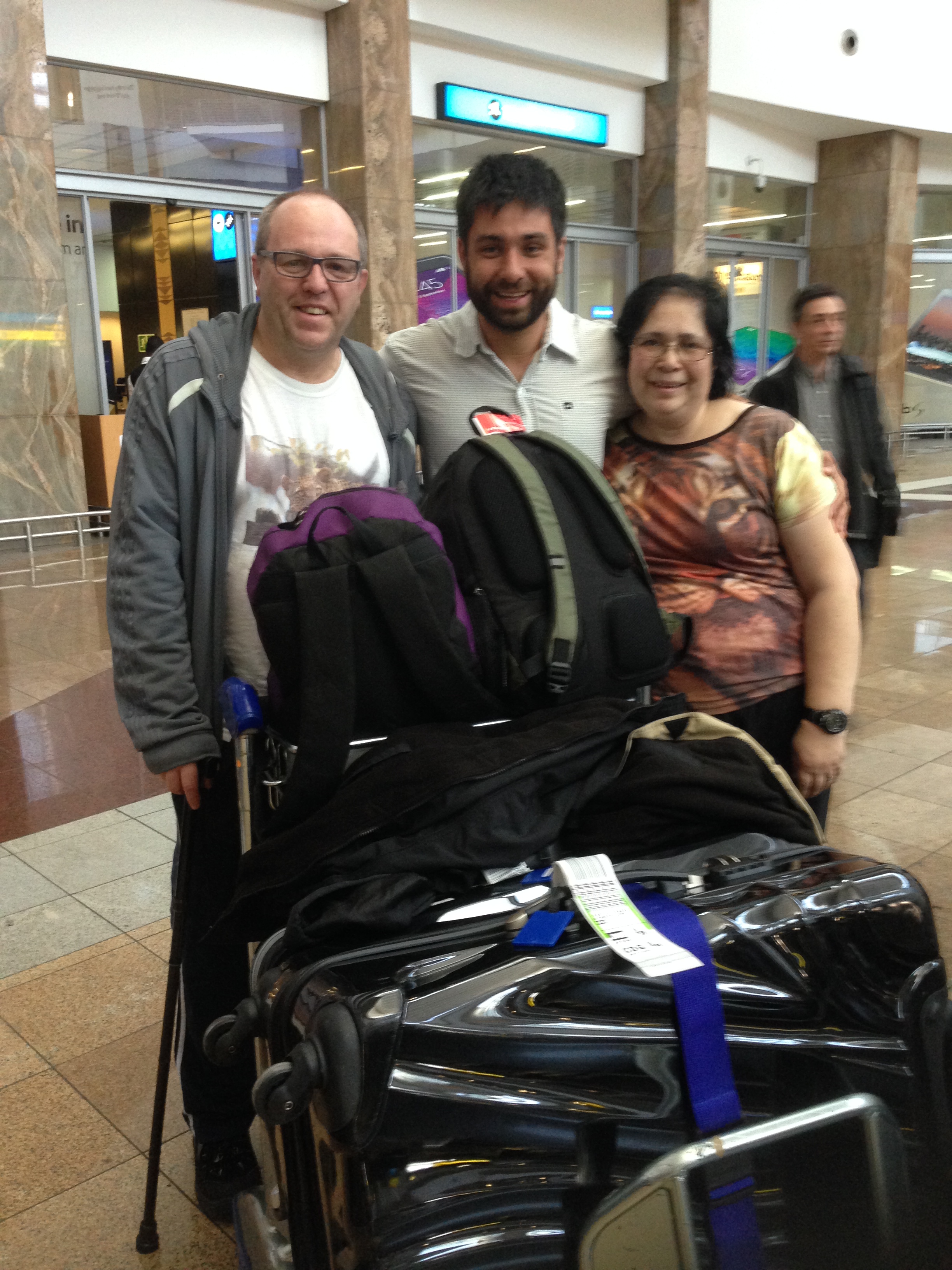
Salvador’s parents arrive in South Africa
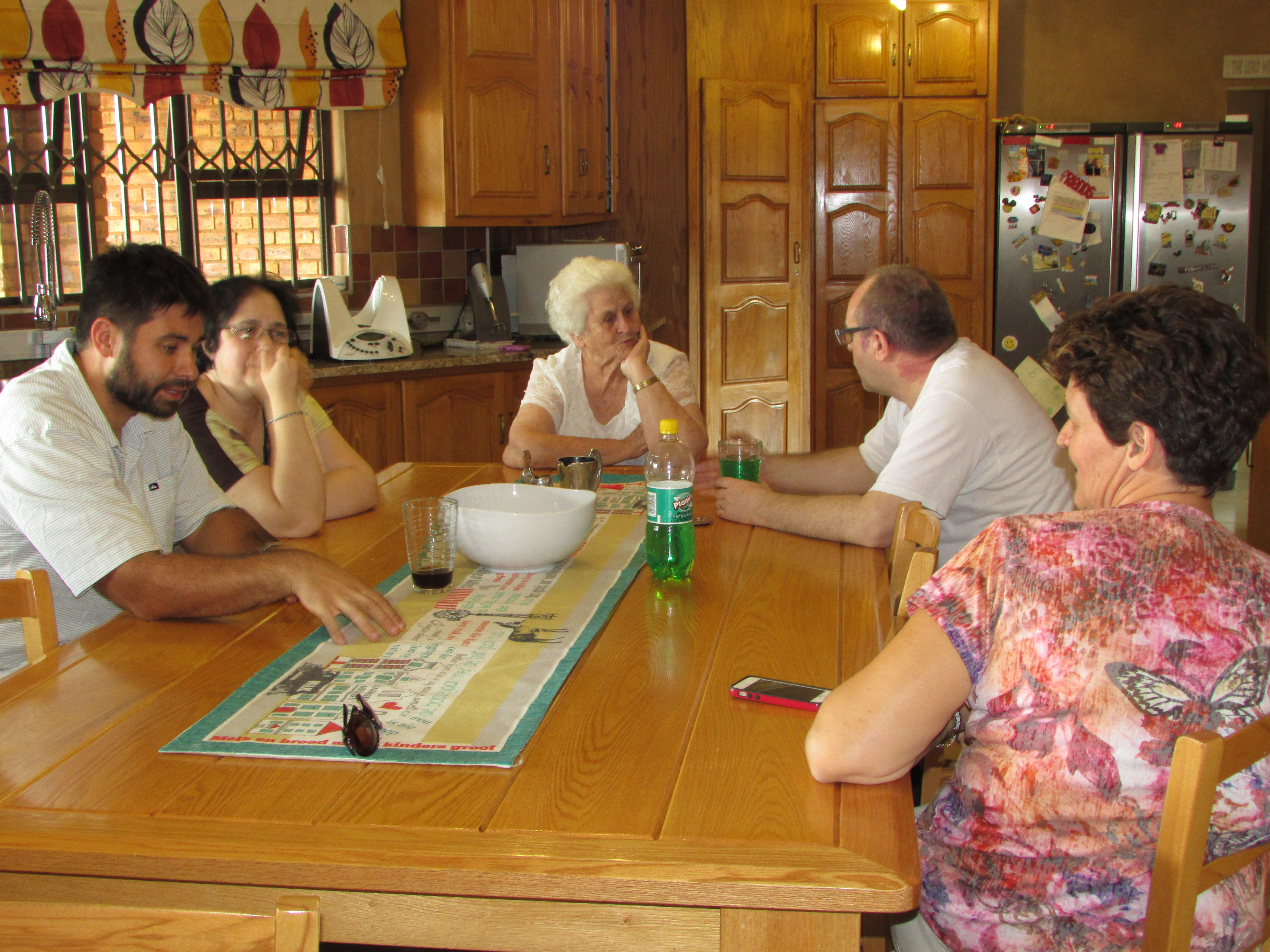
At Morne and Doret’s place.
The next day we visited Alan and Sue Wells and all their kids (and young adults!) before heading off home to KwaZulu Natal. At Alan and Sue’s, Lizzie and Ernest gave a private concert for Salvador’s parents on the flute, recorders, violin and Ernest on the guitar. Lizzie has just gotten a job teaching some students at a local college and is going to study for a teacher’s diploma. So we were all blessed to enjoy their playing.
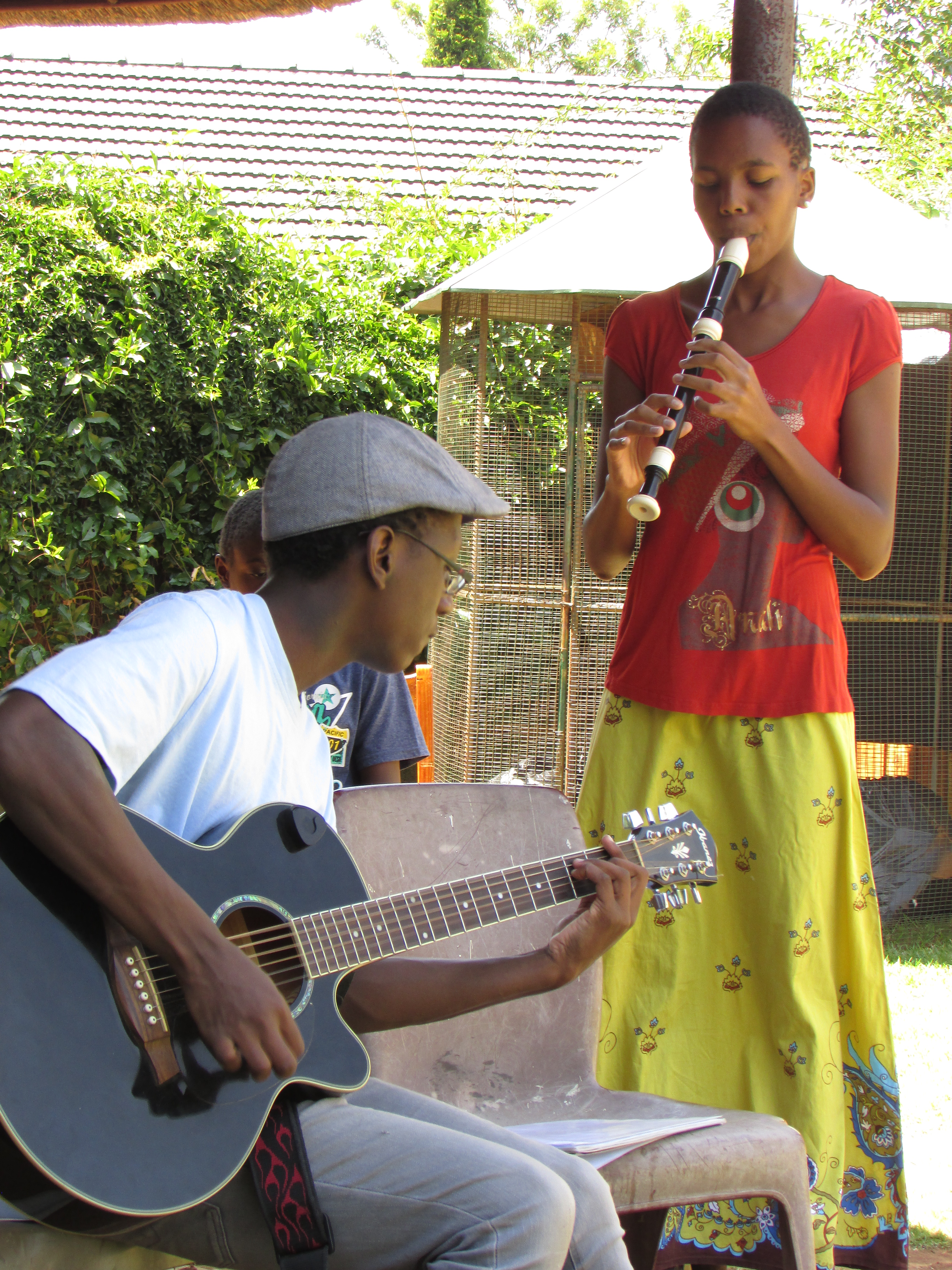
Lizzie and Ernest give private concert
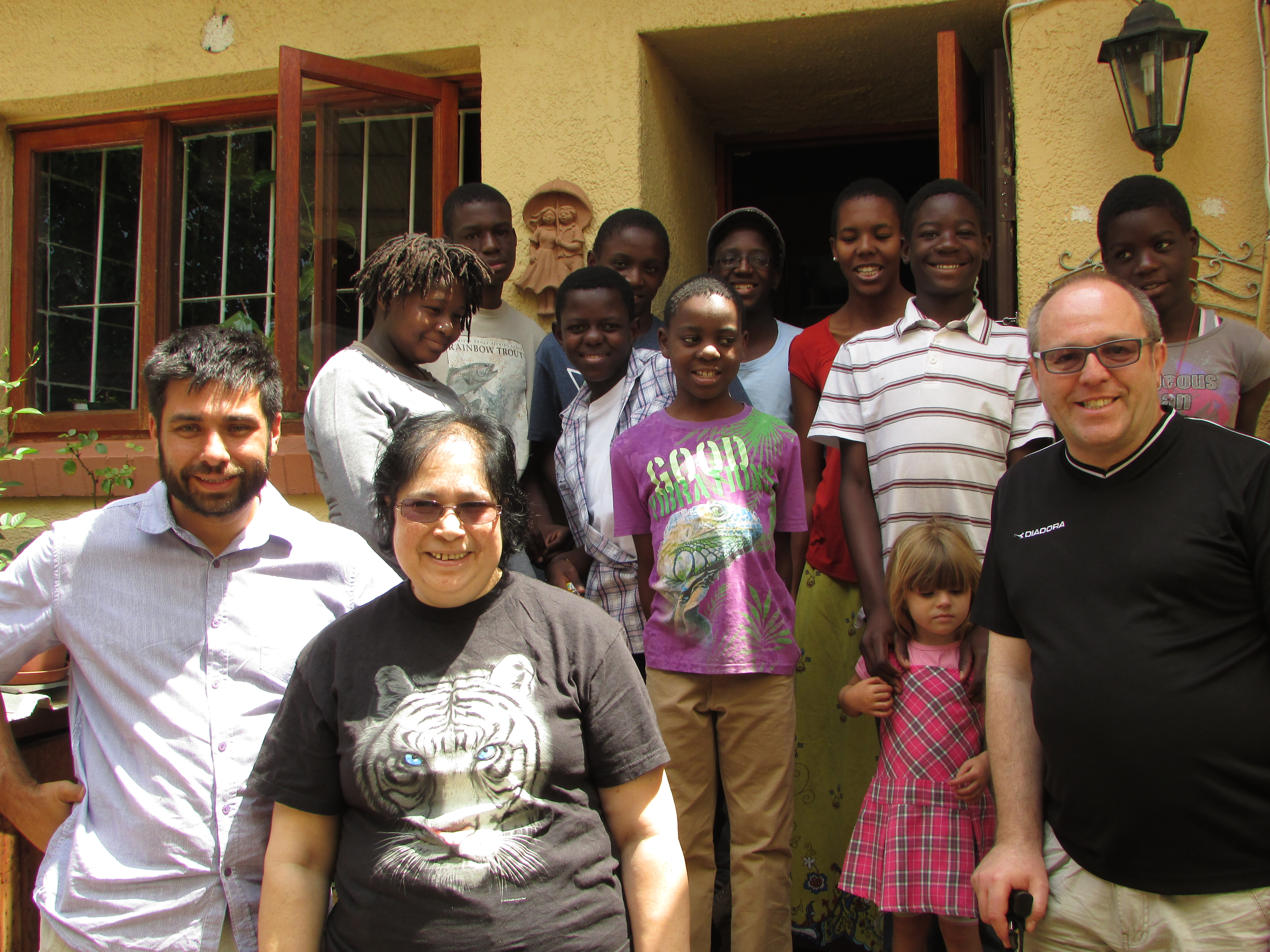
With Alan and Sue’s kids.
It was John Hayworth’s birthday on Friday and at cell group we had a wonderful meeting. Previously we had gone out into the local area and witnessed to some people of KwaBhekephi. In the morning Salvador installed the shower that Alan Wells had shown Salvador how to put together, after he has assembled the relevant parts. The pressure is not great but that is what we need as it takes longer to get through the water. The shower is a pump shower and sits in a bin full of water. It is so nice to stand under running water instead of having a bucket bath, which we have used since 2009. On Saturday John and Amelia observed kid’s club as they were to teach it the following week. Di taught the children on Jesus’ teaching on building our house on the rock. In the afternoon we went to Hendrik and Belinda’s home so that Salvador’s parents could experience a real South African braai (which is like a BBQ but better – those who are from South Africa will know what I mean). It was John and Amelia’s first time eating Pap and they loved it.

Our New Shower!!!

Cell group at our place.
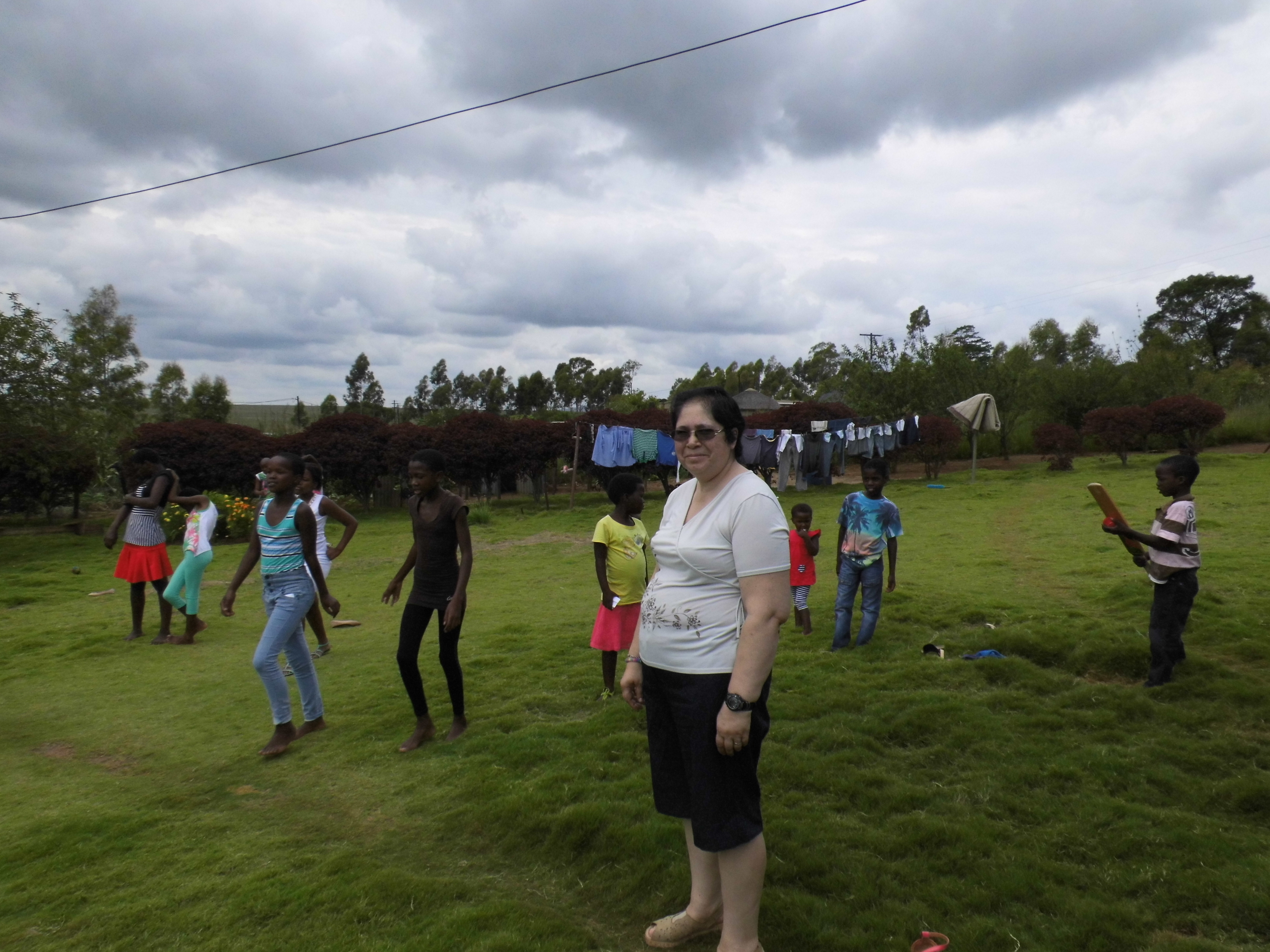
Amelia at kids club while kids play.
Di doing washing.
Braai at Hendrik and Belinda.
On Sunday Phumlani taught at Church in English for the benefit of Salvador’s parents and Salvador interpreted into Zulu. It is easier for Salvador to interpret into Zulu than into English. Phumlani’s message concerned James 1 and the trials we go through, and the need we have for wisdom. On Sunday evening John spoke at Bethany Baptist Church on his time in the notorious cult, the Children of God, and how the Lord got him out. It was very moving and people remarked at the grace of God on each of our lives.
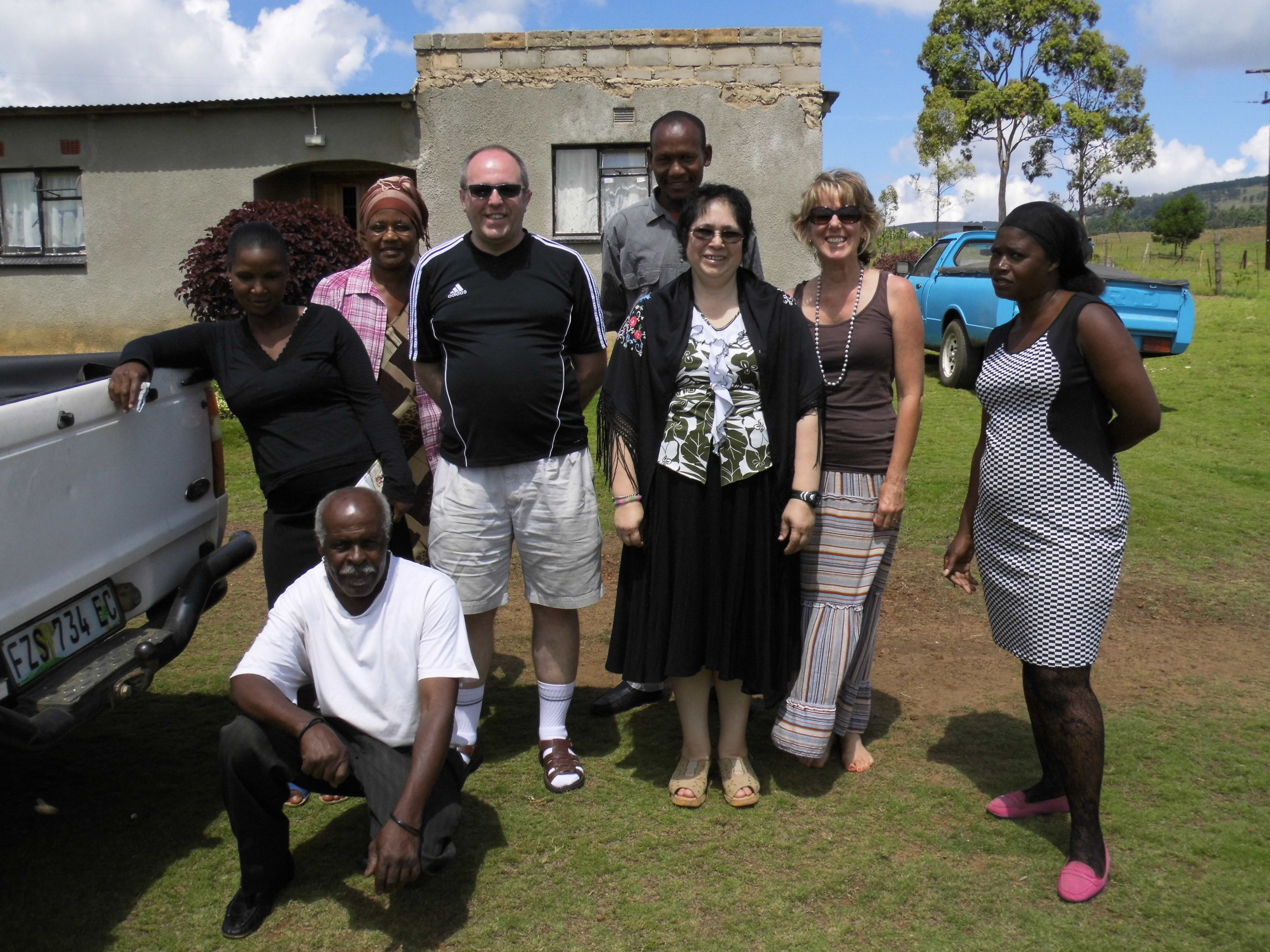
Ibandla Lendlela Eyodwa

John gives his testimony at Bethany Baptist Church
The following day we had arranged for a guide to take us round Hluhluwe-Mfolozi game reserve as a birthday present for John. That day they saw four of the big five. The last of them was a lion which was spotted on the last loop after Salvador and Di had prayed that God would be gracious to grant that for John. We saw an Elephant in the distance and when the guide, whose nickname was Hallelujah, made a growling noise a lion popped his head up and looked John in the eye. After getting him on camera, the lion made his exit.

White Rhino at Hluhluwe-Mfolozi

Buffalo at Hluhluwe Mfolozi

Elephant at Hluhluwe Mfolozi

Lion at Hluhluwe Mfolozi
On the Tuesday we visited various people in the local community, and in the afternoon Salvador’s dad taught the Zulu brethren at Alpha while Salvador interpreted for him into Zulu. On the following day we went to town where Salvador and Di taught kid’s club and John and Amelia taught the children a new song. In the afternoon we went to a crèche run by a lady called Arashni to be an encouragement to her. In the evening we went to the prayer meeting and Bible study at Bethany Baptist Church. The following two days we went out to evangelise. At one home we were able to visit and share our testimonies and the gospel to those living there. The father of the homestead initially did not want us to enter but at the end he was all smiles and desired to have a bible. The problem was that he couldn’t read much, so Phumlani later took him an audio bible which was left from bibles acquired through the help of believers in New Zealand over a year ago. At cell group, at Girly’s house Salvador taught on having a zeal for God’s house.
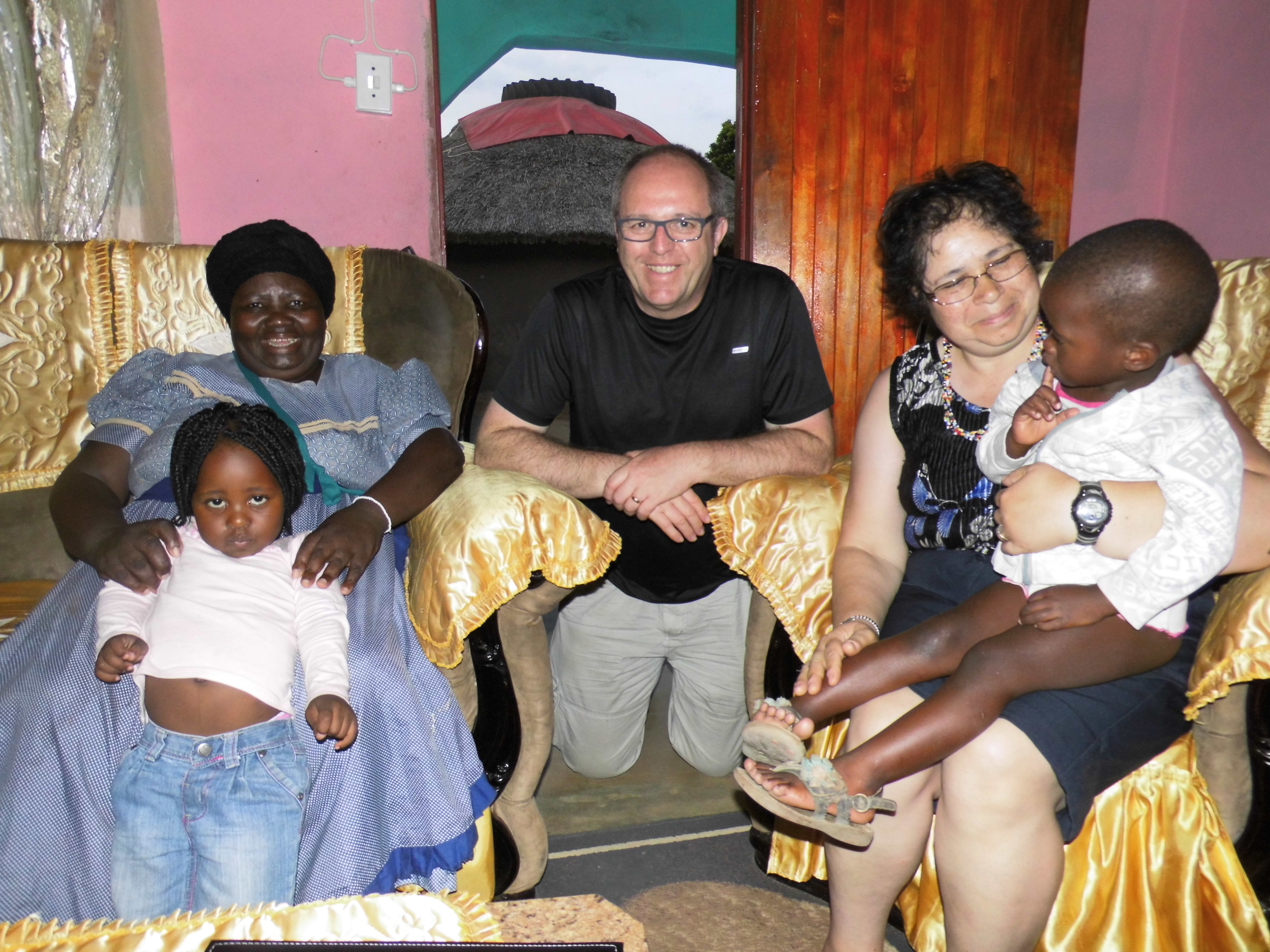
Visiting Jostina Madide

Visiting Agnes Xulu the Mtshali family
Visiting Gogo at another Mtshali home
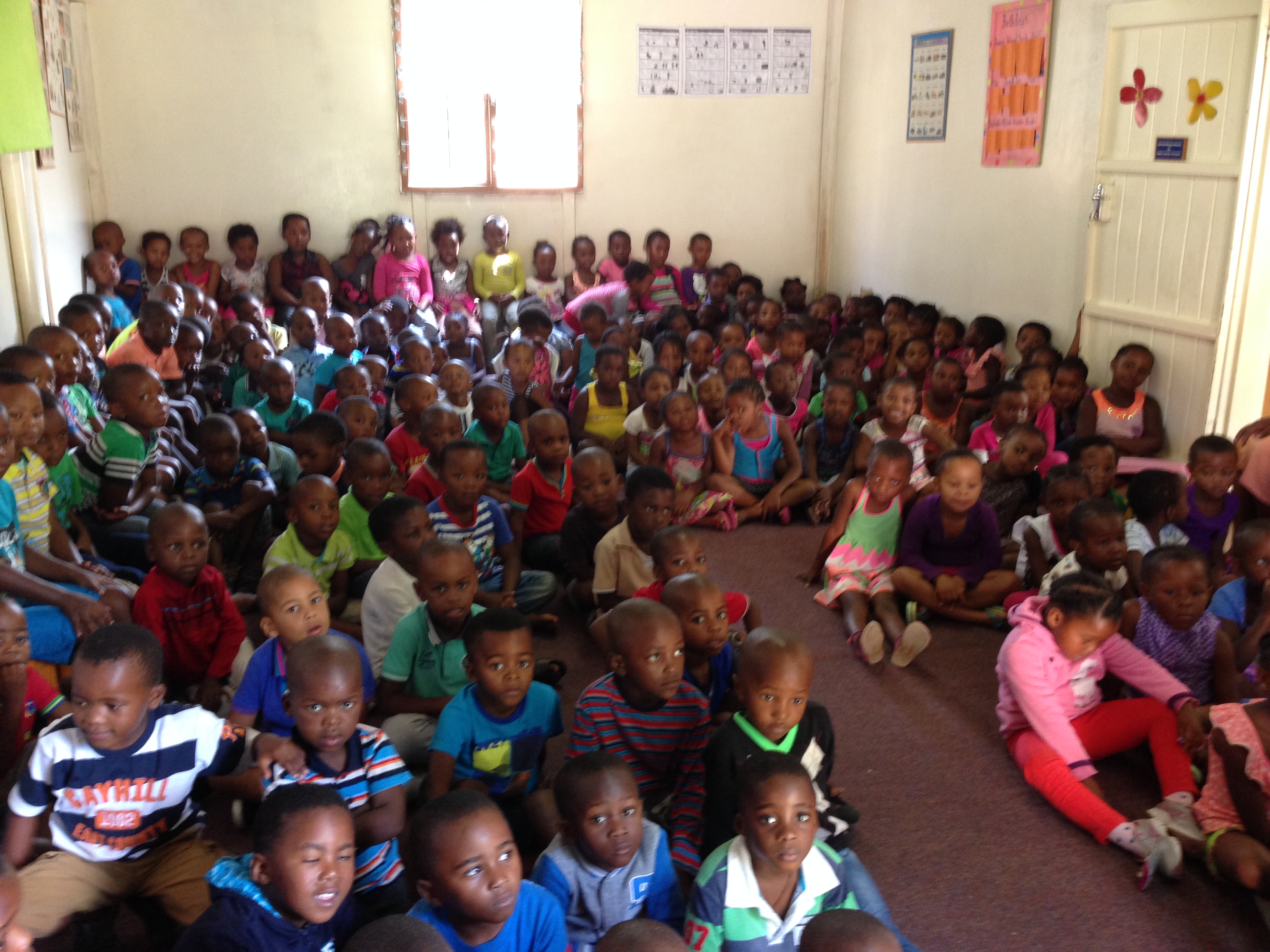
Kids at Care Bear Creche
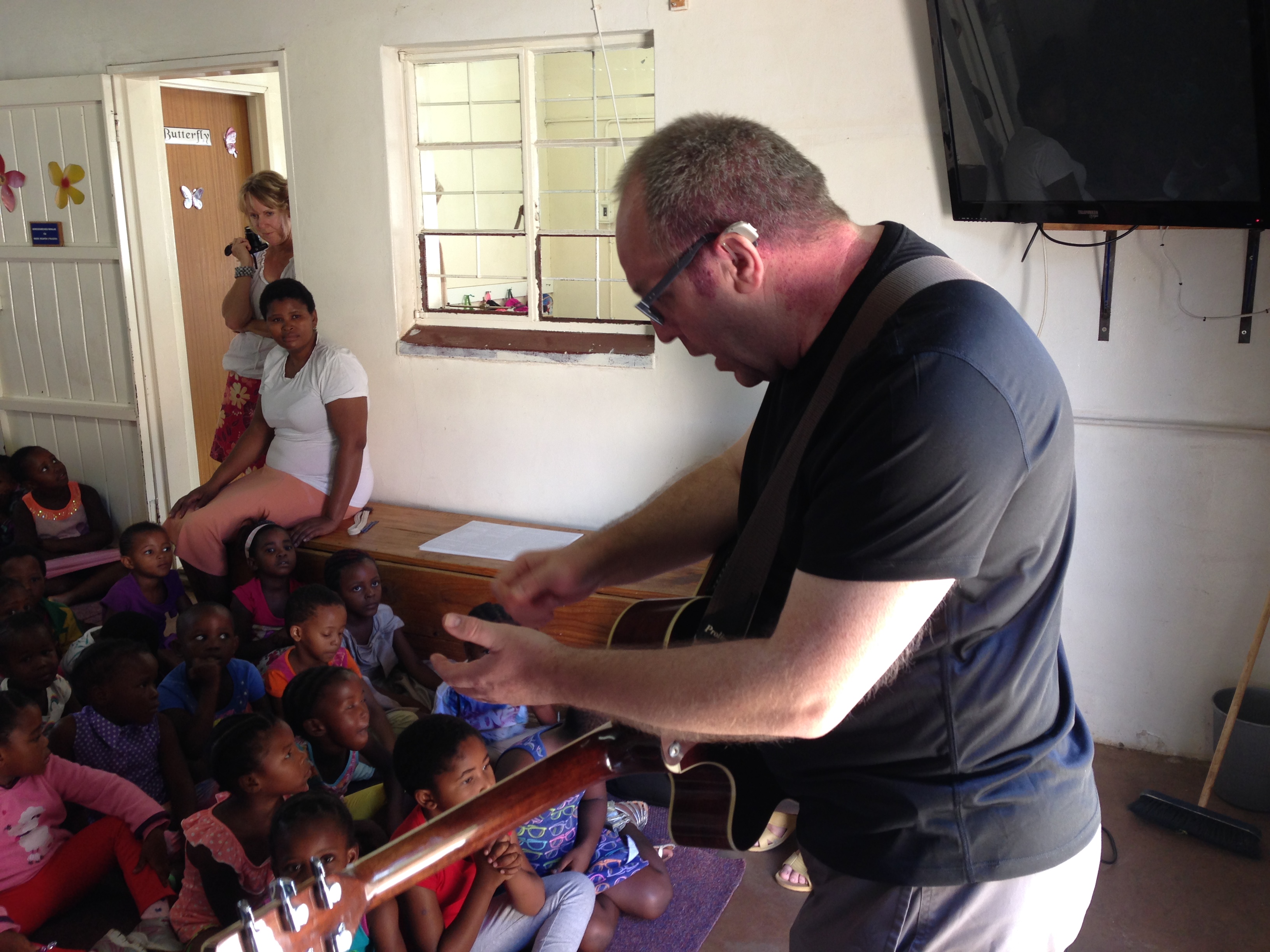
John teaches the children a new song
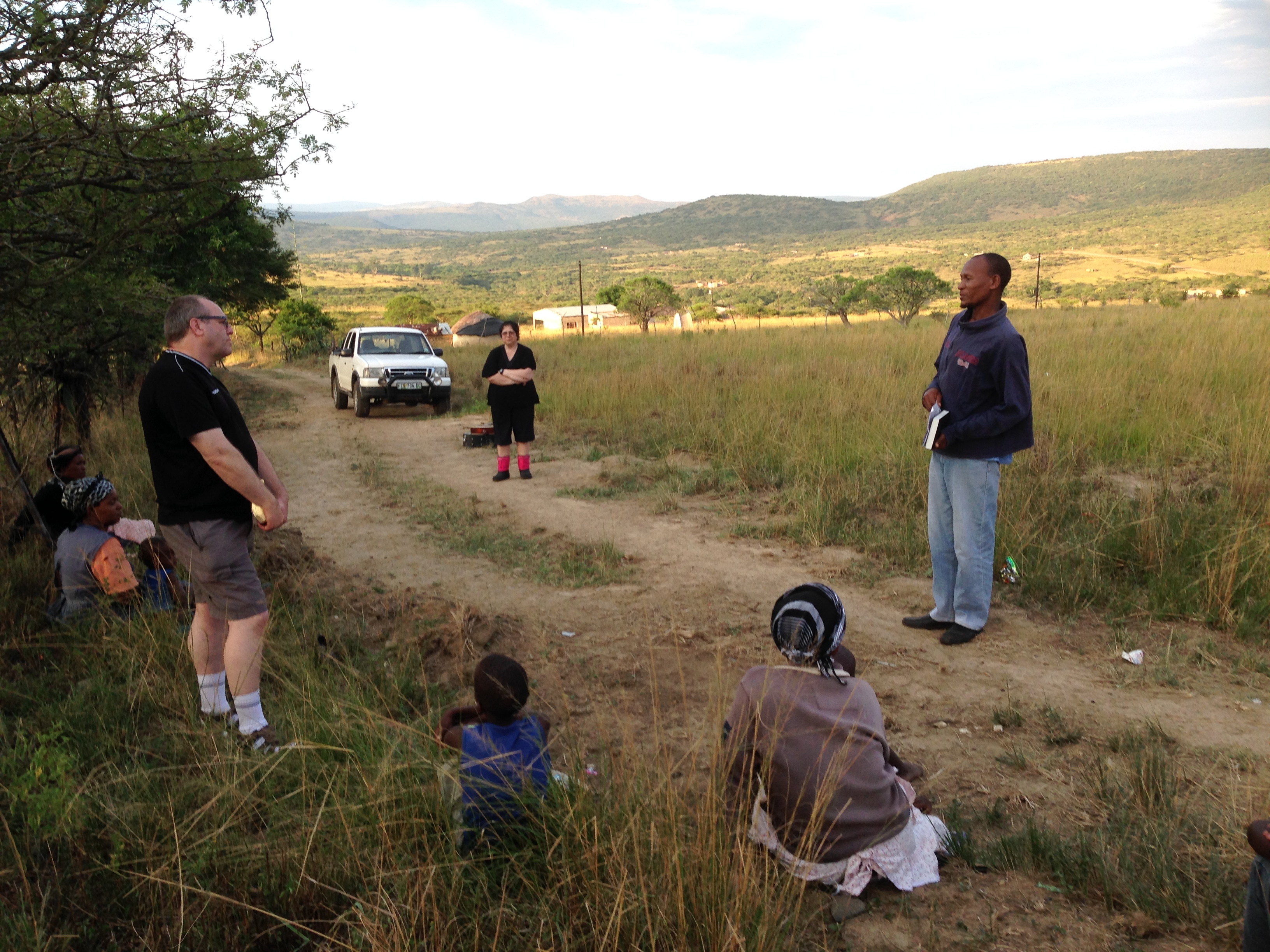
Phumlani shares after John shared the Gospel.
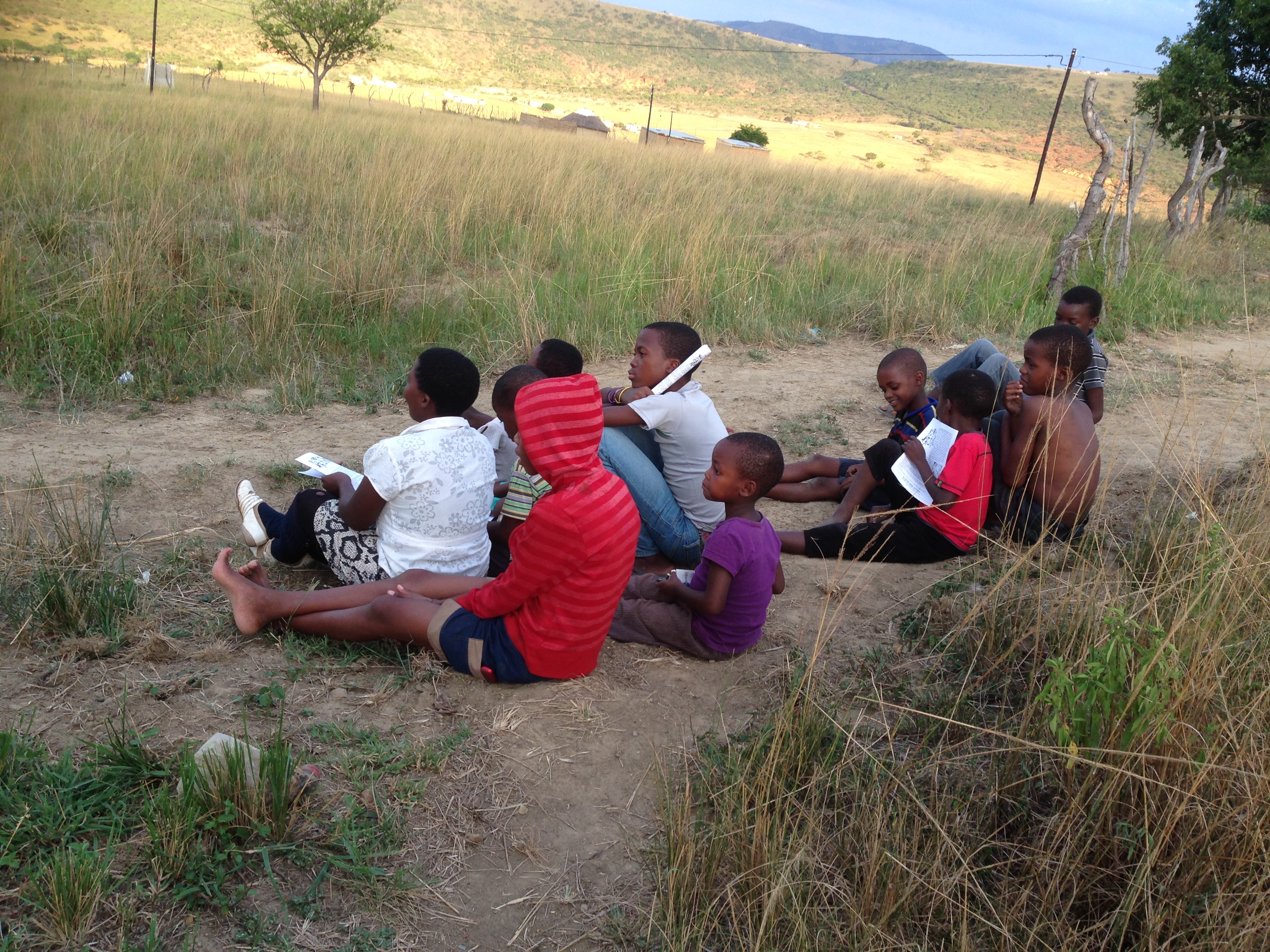
A little crowd listening to the Gospel.
On Saturday, Salvador’s dad taught kid’s club after which we headed down to Ballito to visit brethren there. Kevin and Michele Edwards kindly gave up their house for us and stayed with Kevin’s parents. Salvador preached on the Sunday at Coming King Ministries about Jesus being the one who breaks believers out from being under the jurisdiction of the Law of Moses. The wonderful news was that Di was able to pick up her visa on the following day, with no spelling mistakes and that means she is good to stay in South Africa till 2018. Salvador will need to make his visa renewal application at the beginning of next year. As well as taking some time to relax and enjoy the scenery, Salvador’s parents cooked a Portuguese style meal for Kevin and his family as a thank you for their hospitality.
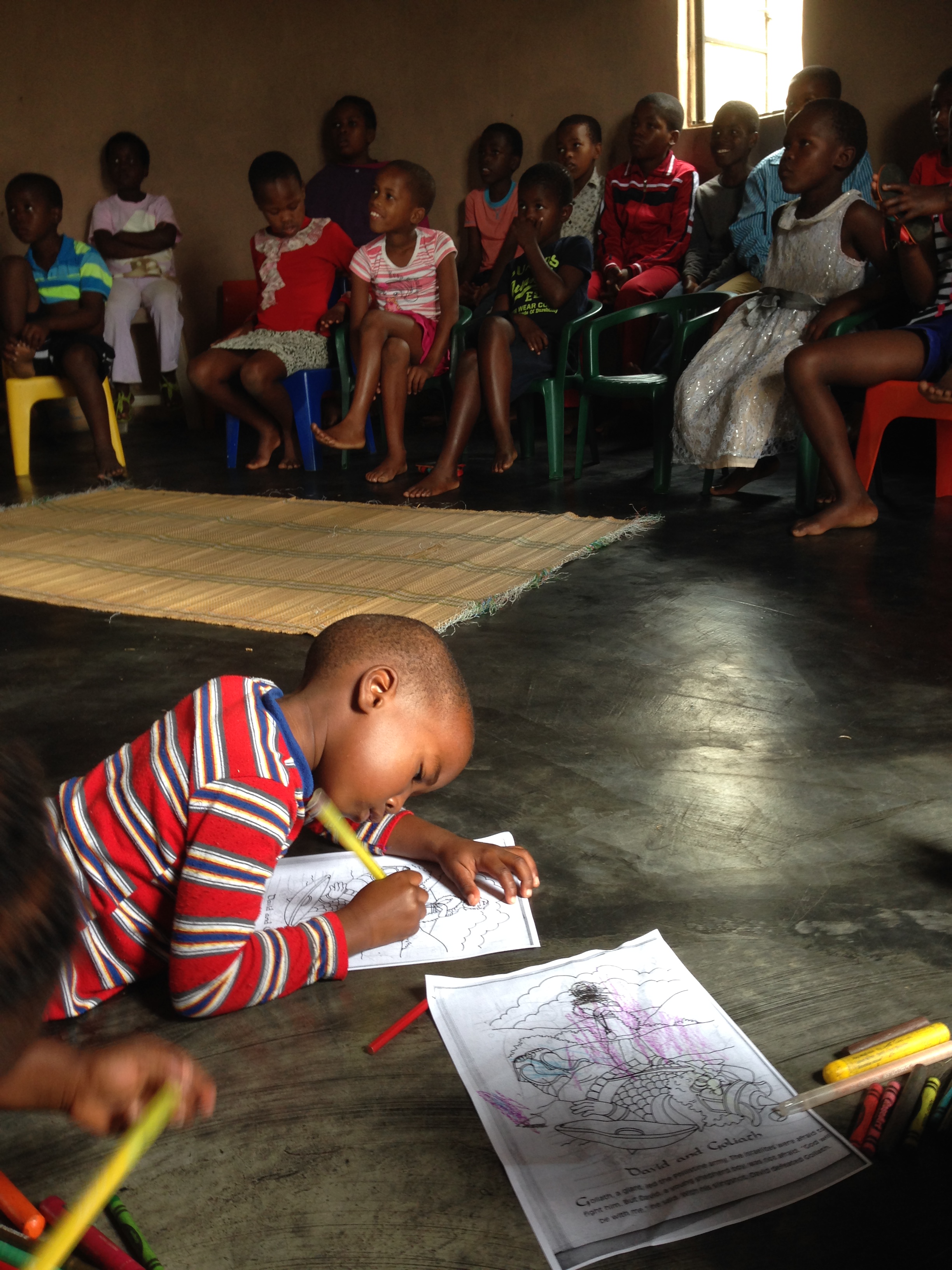
Kids learning at Kids club
John teaches kids club
Amelia at Kids club
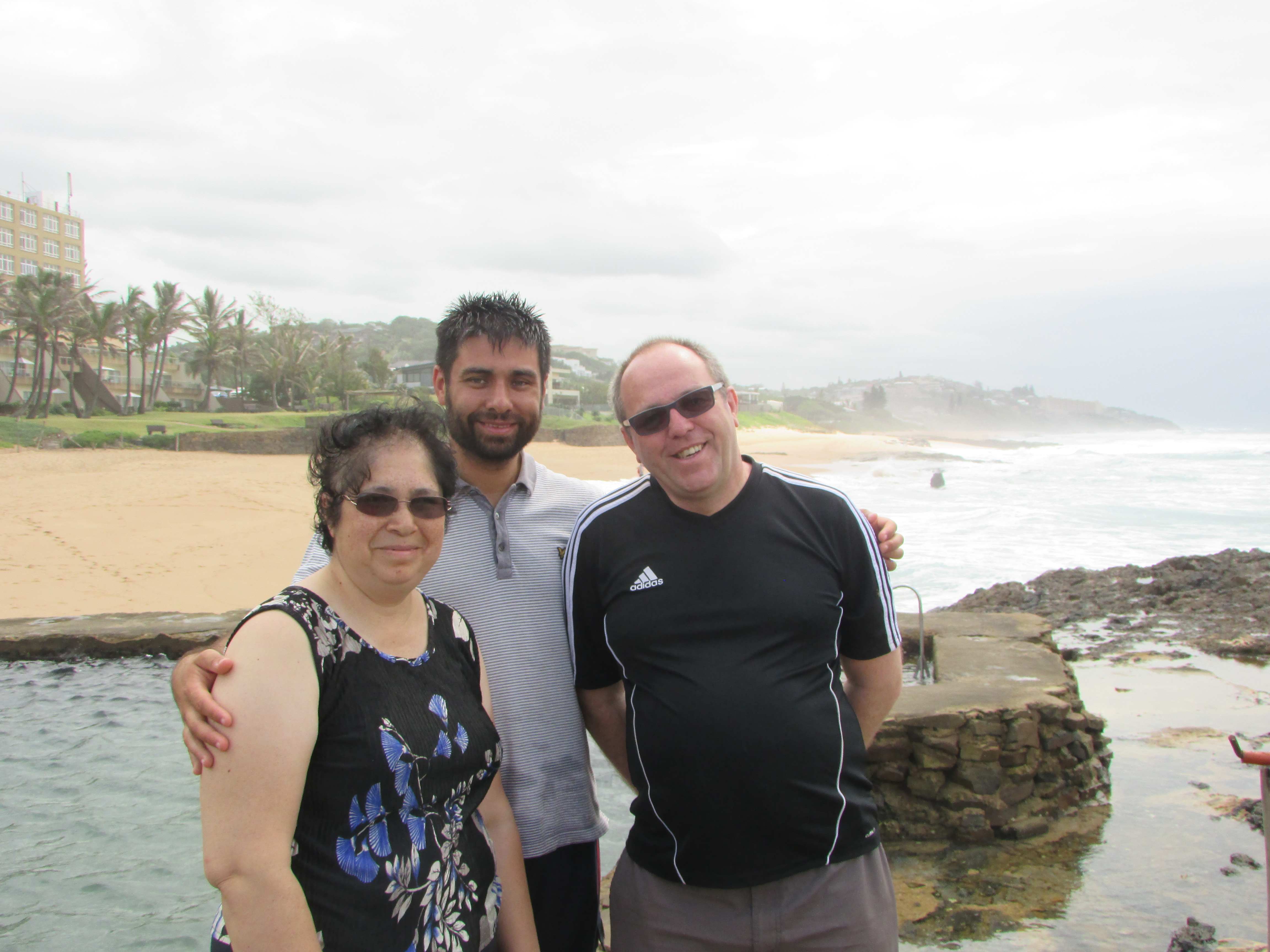
Hanging out at Ballito
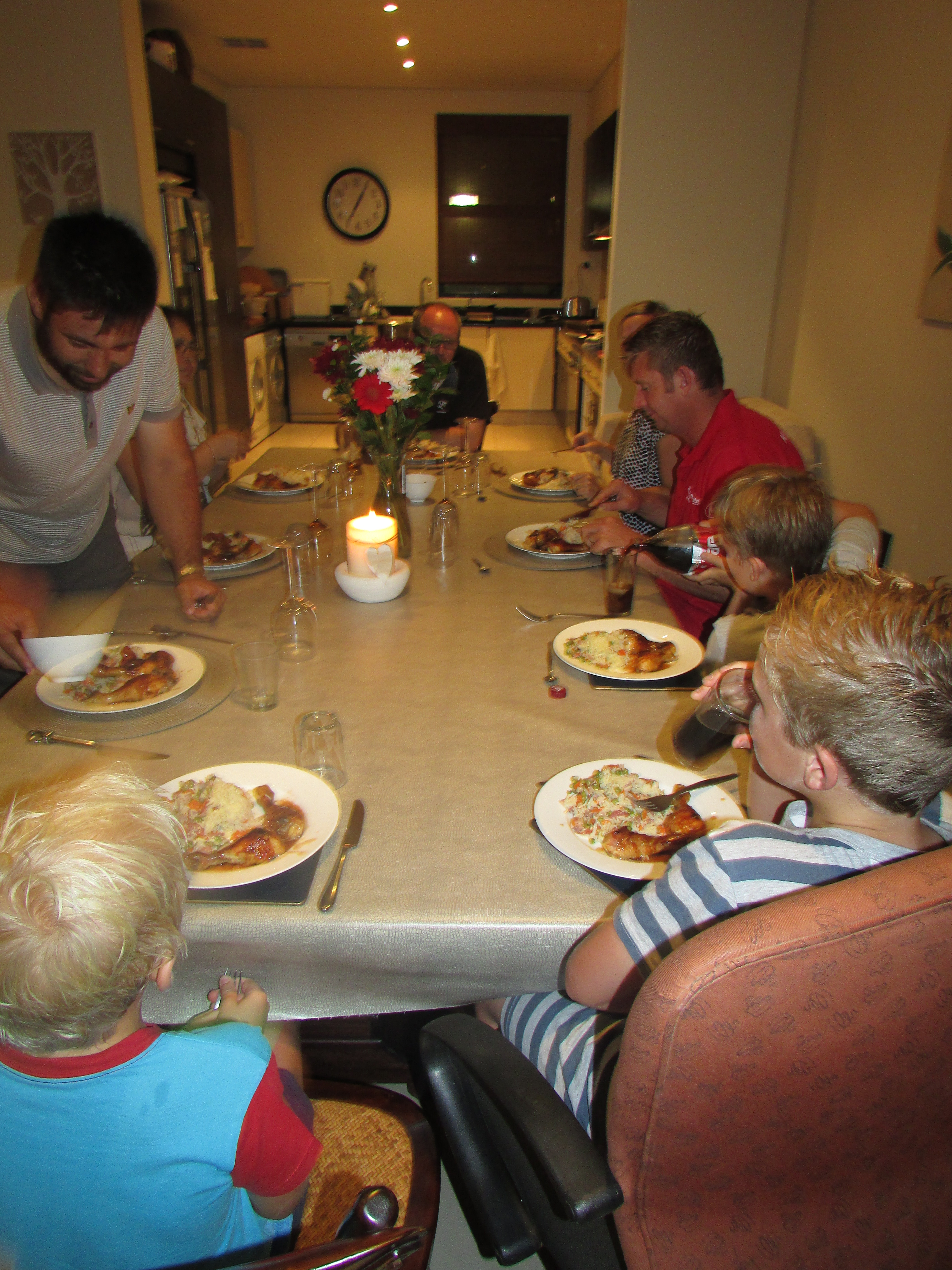
Meal with Kevin and Michele Edwards
On the way back from Ballito on the Wednesday, a precious sister in the Lord had provided for us to take Salvador’s parents to Shakaland. Shakaland is a tourist place that educates people concerning traditional Zulu culture including African dancing. The first dance demonstrated was the Zulu dance, and none other than Salvador and Di got roped into copying that Zulu dance in front of an audience of French tourists. On the following day, Salvador took his parents to Isandlwana, where the British Army lost against the Zulu impi under Cetshwayo (depicted in the film Zulu dawn). He then took them to Rorke’s Drift where 100 British soldiers later the same day held out against thousands of Zulu warrior led by Dabulumanzi (as depicted in the film Zulu, starring Michael Caine). As was said on that day “Her majesty does not like to lose twice in one day”.
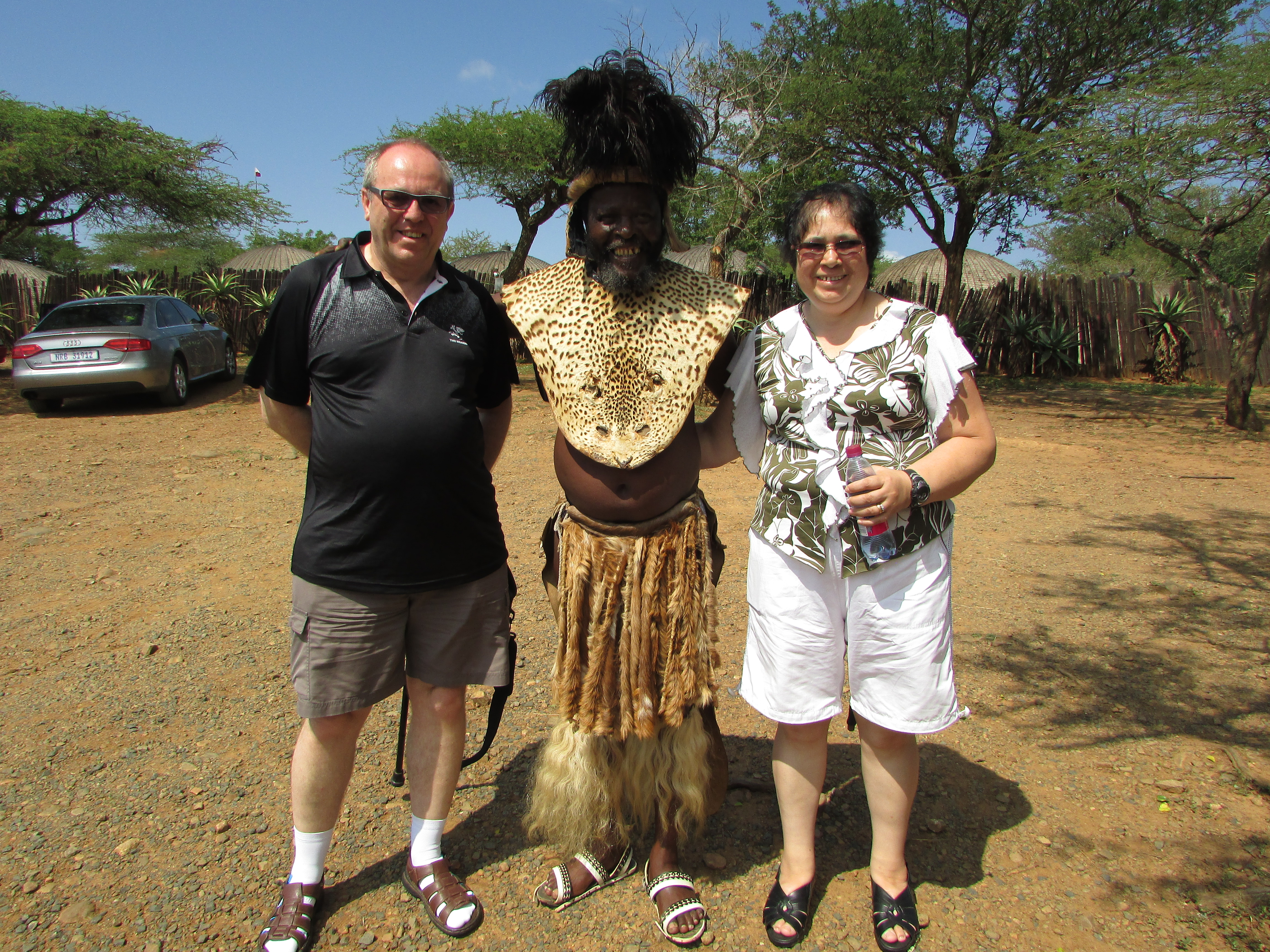
Visiting Shakaland

Isandlwana
The following day we went to visit people in the community one last time before going out to evangelise. We had finished witnessing at KwaBhekephi and were starting a new area called Ehlanzeni. That evening we had cell group at Johnny and Kim who also put a braai on for us. Salvador taught on Elisha and the healing of Naaman the Aramean. The following day we left to go to Gauteng and on the way visited our good friend Veronica. Her and her husband have been praying for us since 2007. We thank the Lord for them and it was a wonderful time of fellowship with Veronica. Jozua, her husband was at work.

Cell group at Johnny and Kim
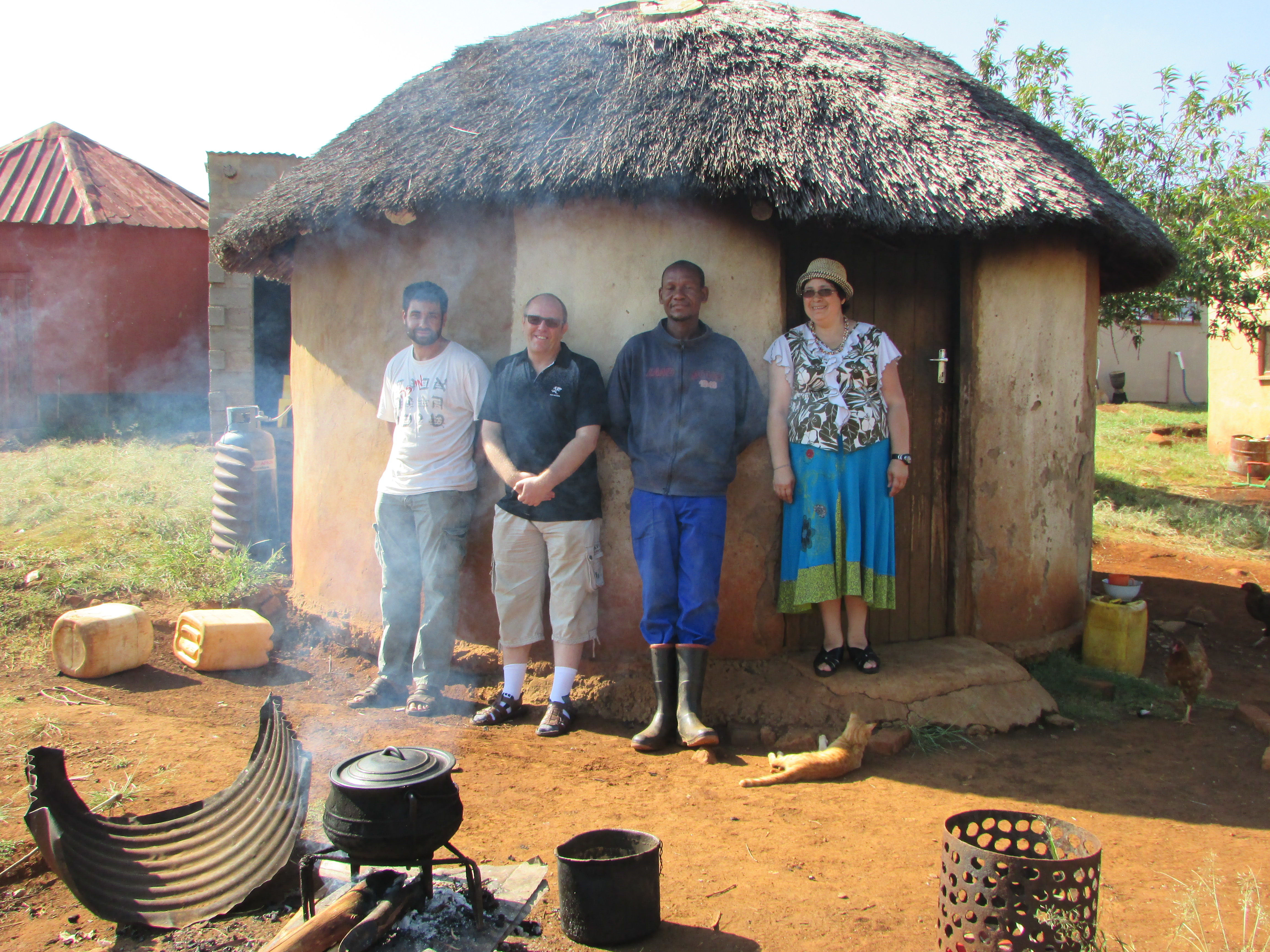
Leaving KwaZulu Natal
We stayed for the remainder of John and Amelia’s stay in South Africa at Morne and Doret’s home. On Sunday morning we visited the house church in Pretoria and John taught on the judgment seat of God. It was a wonderful time of sharing, fellowship and interaction. The brethren in Pretoria really demonstrate what it means to fellowship and sharpen one another in the faith and it is always a blessing to see them. It was also wonderful to see our friends, Riaan and Debbie Roux come to join the group for the day.
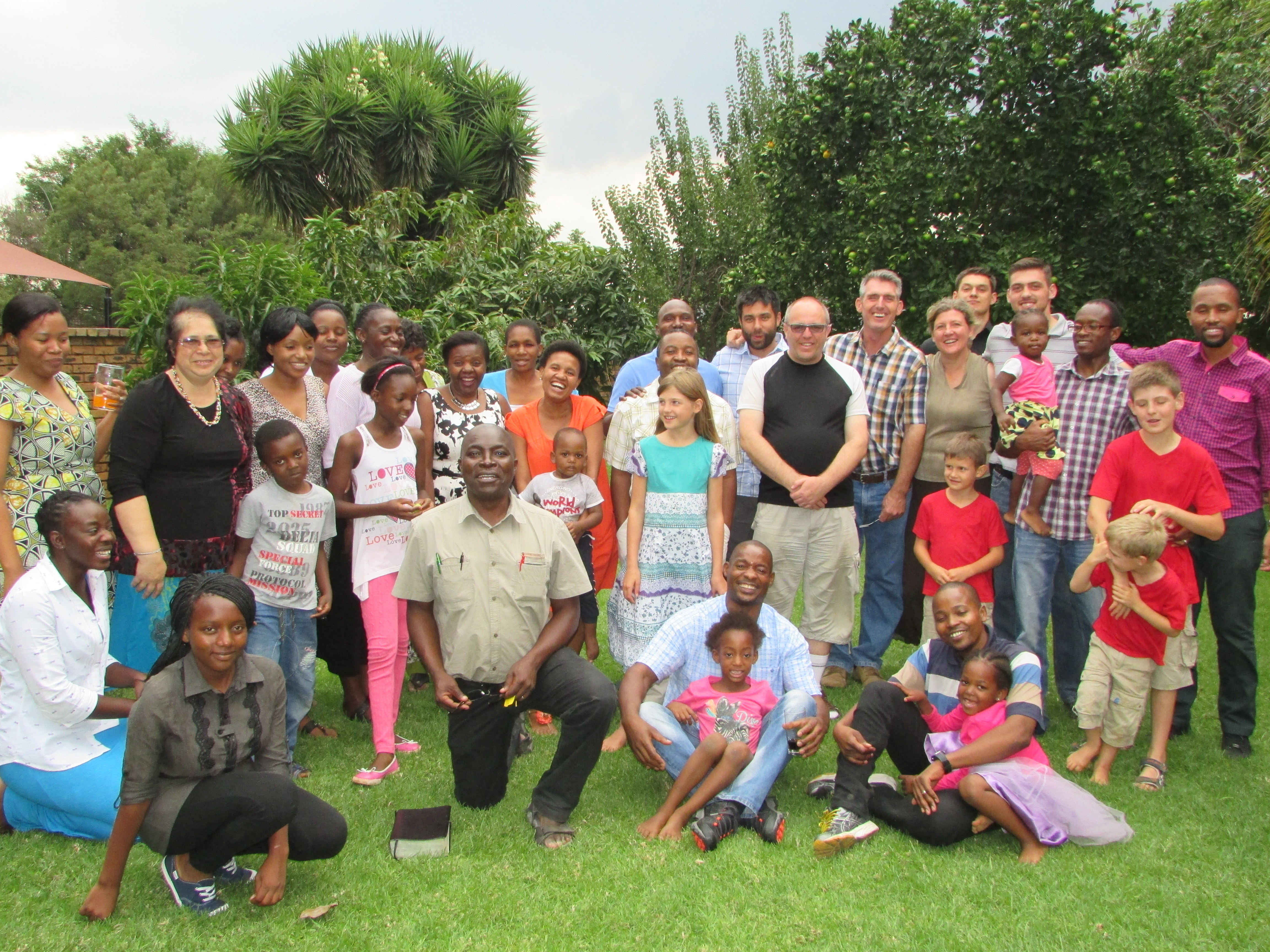
Meeting with the brethren at Pretoria
The next day, the day before they flew out, we took John and Amelia to the Lion Park where they were able to pet lion cubs, feed giraffes and see several different animals in various enclosures. Tuesday was the last day and in the morning we visited Vita Nova and played hymns and choruses for the guys, and Salvador’s parents played them a new song. Salvador shared concerning what it means to be born again. It is such a blessing to be with such special people and to minister to them. From sufferers of cerebral palsy, to autism and downs syndrome, many of these people are forgotten by most people in society. We thank the Lord for places like this that give such people a home and sense of community. www.vitanovacentre.co.za
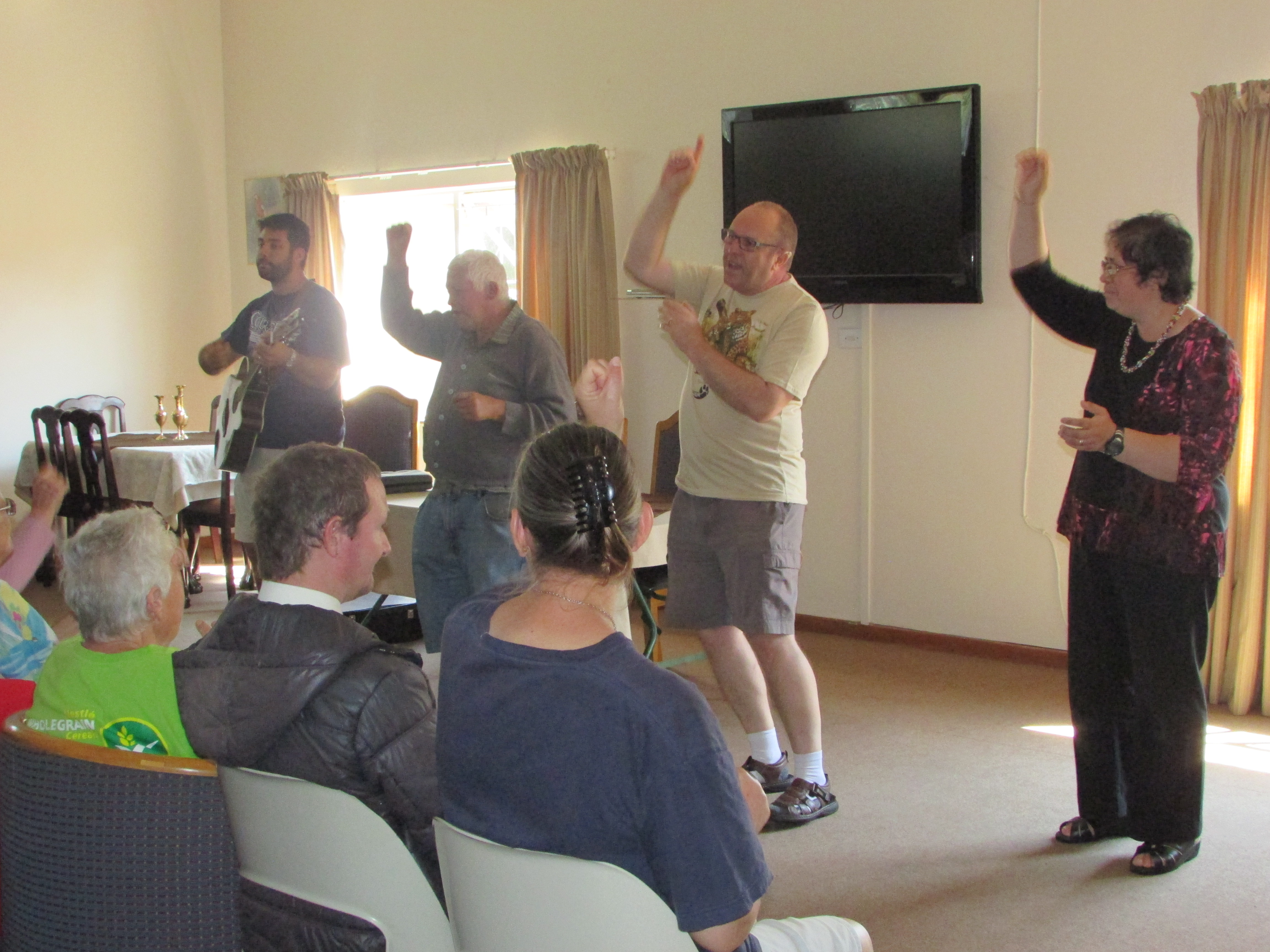
Singing at Vita Nova
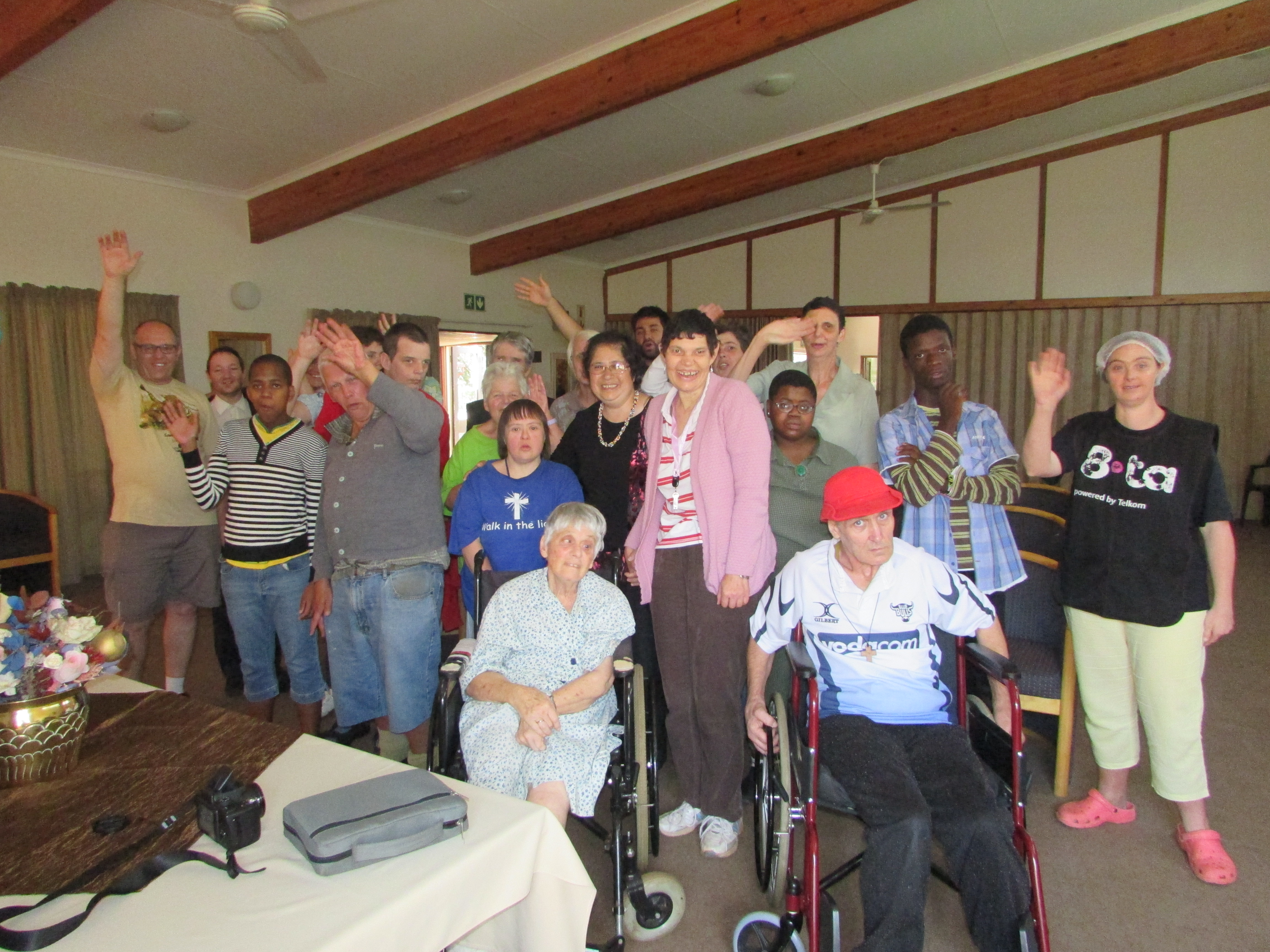
The guys at Vita Nova
In the afternoon it was a tearful time at the airport, having our last meal together. But we thank the Lord for His timing and believe that this visit was His will for this time. For the rest of the week Salvador has been working on a journal article he wants to submit for a theological journal. He has also been working on the final touches of a discipleship book in Zulu and it is now ready for printing. On Thursday we went to Pretoria to pick up Zulu tracts before heading home on Friday. In the Evening Mandla taught us at Cell on the way of Cain. At kid’s club Khethiwe taught the children on Lot and Sodom. Phumlani taught at Church on Sunday on James 3 and the tongue. It was an excellent message. On a side note, Celani has received some work from the local school and has been sewing pinafores for staff and students so it is so wonderful to see the sewing machines donated by our friend, Morag, coming into good use. A lady who has been attending meetings, Nomusa, has expressed her belief in the gospel and desire to follow the Lord and so we pray that the Lord will ground her in the faith and help her to grow.
Saying goodbye to parents
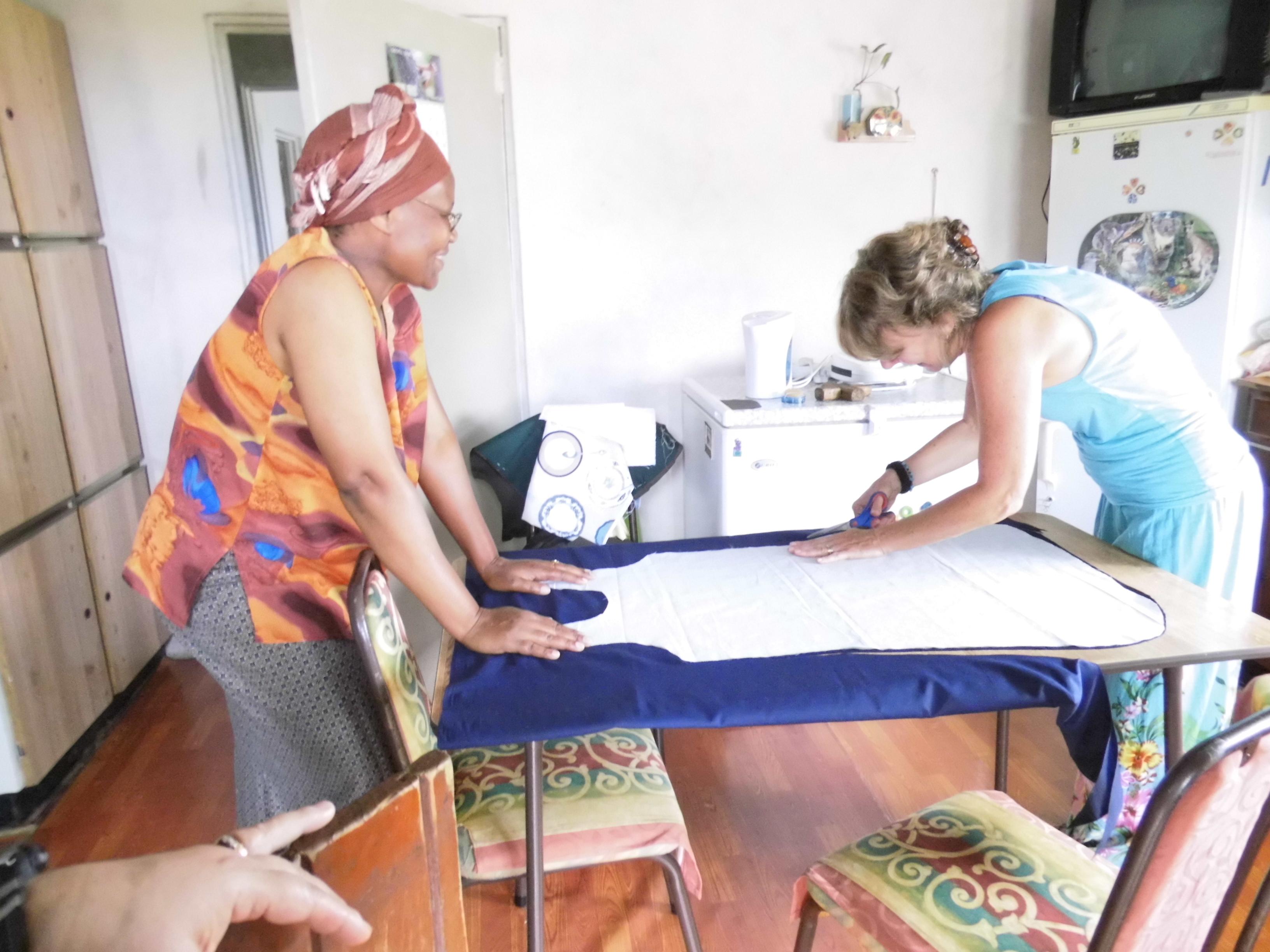
Celani makes her pinafores
This weekend we will be going to Ballito again to help Coming King Ministries with their Passover celebration. Salvador will be teaching there on Sunday Morning. In three weeks’ time we will be heading back up to Gauteng to see Bill and Kristin Randles who will be visiting the country. Salvador is researching ancestral traditions as part of a project to reach out to those across South Africa steeped in those traditions. Please pray for this project. More details will follow in the future. We are once again grateful and blessed by the support and love of God’s people. I, Salvador, just also want to show my appreciation for Di who has worked so hard this month in serving my parents as a true Zulu Makhoti. It is not always normal in western cultures but in Zulu culture the daughter in law generally serves the family of her husband, always in the background but working harder than everybody. In doing so Di could identify with other Makhotis and was a real blessing to everybody.
Shalom
Salvador and Di
Prayer Requests:
- For Nomusa in her walk with the Lord
- Tony and Maria from NTM
- Evangelism of area
- Phumulani and the fellowship
- Publishing and other projects
- For the Passover this Friday
- For Bill and Kristin Randles’ visit to South Africa
EIGHT
THE RELATIONSHIP BETWEEN THE LAW AND SIN
&
THE RELATIONSHIP BETWEEN SIN AND THE BELIEVER
ROMANS 7: 7 – 25
The book of Romans can be split up into various sections.
- In Romans 1 and 2, aside from Paul’s greetings to them, we have his thesis of salvation. The Gospel is the power of God unto salvation for those who believe because the wrath of God has revealed against all ungodliness of men who suppress the truth in unrighteousness. Everybody is under this condemnation whether Jew or Gentile. This is despite the fact that the Jews are God’s chosen people and were given the Law.
- This naturally leads onto the Antithesis: ‘How can Paul say that the Law of Moses and the election of Israel are of no consequence in regards to salvation?’ In Romans 3 – 5 Paul submits his second proposition which is that God’s righteousness has been manifested without the Law. And this has been witnessed to by the Law and the prophets. He proves this first by repeating the fact that there is no one righteous any way. Secondly he shows us that the cross of Jesus Christ satisfies the wrath of God. Thirdly he proves it by showing the biblical example of Abraham. Though he was the father of the Jewish nation, he was justified by faith and not by works. Fourthly he proves it by showing that Christ is superior to Moses because Christ goes all the way back to Adam and undoes the mess that Adam created. The reason for the necessity of faith without works of the Law is that the Law makes sin increase but grace delivers from sin.
- The rebuttal to Paul’s proposition, that the Jew must come out from under the Law and come under grace, is three-fold. We see this in Romans 6 – 8. Paul deals with the relationship between sin, the Law of Moses and the law of Christ (grace). The more sin we have the more grace we get. Does that mean we should sin more? If grace gets us off the hook, is that not a good reason to live a life of sin? Does the fact that the Law makes sin increase, mean that the Law is sinful? And if the Law brings me death, then surely it is the fault of the Law that I die! Paul rejects this notion by putting the blame on man’s sinfulness and stating that the Law does not liberate but Christ does. That is what we will look at today. In the next chapter we will see Paul’s conclusion to this treatise, in that there is no condemnation for those in Christ Jesus. Also those in Christ Jesus have a future hope; a great assurance that they will be saved to the utmost.
VERSES 7 – 25:
THE LAW AND SIN
This message is a message that will relate to every one of us in a very specific way. This chapter deals with indwelling sin and sin is something that everyone struggles with. If we do not struggle with it then it probably means we are not trying to deal with it but are comfortable with the sin that is in our lives. Elijah was a man with a nature like ours. Paul was no exception. He had to deal with sin before he got saved, being under Moses. Paul had to deal with sin after he got saved, being under Christ. The whole of Romans 6 – 7 is based on chapter 5: 20 – 21.
20 The Law came in so that the transgression would increase; but where sin increased, grace abounded all the more, 21 so that, as sin reigned in death, even so grace would reign through righteousness to eternal life through Jesus Christ our Lord.
It is a fairly long answer. But it is comprehensive in order to silence the voice of doubt who would seek to put the blame on God, excuse man and find license to sin more. The reason the Law was brought in was to make sin increase, to make sin bigger. If that is what the Law does, does that not imply that the Law is sinful in itself? Apple trees produce apples, pear trees produce pears. Thus how can the Law produce sin? How does Paul deal with this? If Paul’s message is contradictory then the Jew would become perfectly satisfied in his righteousness being under Moses. He would discount Christ’s sacrifice as something that is unbiblical, illusionary and full of contradictions. Paul, through answering this rebuttal, reveals a twofold relationship to the power of sin; the relationship to sin under Moses and the relationship to sin under Christ. To keep things in perspective it would be wise to remember the two diagrams of righteousness and spiritual power that were drawn up in the last chapter.
Diagram # 1 Diagram # 2
Righteous: Power of Spirit:
Law of Moses & Law of Christ
Law of Christ
__________________ _________________
Unrighteous: Power of Flesh:
Law of Sin Law of Moses
& Law of Sin
VERSES 7 – 12:
THE RELATIONSHIP BETWEEN THE LAW AND SIN.
The voice of doubt brings up another objection; if the Law was introduced to make sin increase then is the Law itself sin? “On the contrary”: in other words quite the opposite. The Law is not sin but the Law reveals sin to us. Now you will notice in these verses that Paul speaks from his own experience in the past tense, i.e. before he got saved. He struggled with sin and how did he deal with sin? Well he did not really deal with sin but instead he was forced to see the reality of sin in his life by the Law of Moses. But what effect did the Law of Moses have? It merely showed Paul his sin but did nothing to curb it. The Law educates us about what sin is. Think about when you learned to drive, you could not simply get into a car and drive. First you must do your theory test and then, under the tutelage of an instructor you did your practical test. The theory is there to educate you in knowing what acceptable driving practice is and what it is not. But knowing the theory does not mean that you are able to drive. If you pass the theory but fail the practical, you do not then say that the theory was all wrong. You cannot say of the law that it is unlawful. So it is with the law of God. On the contrary, quite the opposite of being sin, it actually tells you what sin is. Paul gives an example of how this works. Paul picks one of the commandments, ‘Thou shalt not covet’. Now why does Paul pick this commandment? Because it deals with the heart. This is the one commandment that bears similarity with the Sermon on the Mount.
The Mosaic covenant is a covenant of externals in many respects, in terms of worship and in terms of obedience. It is about the sacrifice of animals and the offering up of public prayer. It is about worshipping in the temple. But when Jesus came, He said that the time is coming and now is when we shall not worship at a certain mountain, meaning at a certain geographical location, but we will worship in spirit and in truth. Jesus brings a new order, a new garment and new wine. It is not about the external primarily but about a newness of life, it is a covenant of the heart. His law is written on the heart. In Exodus 20 Moses received God’s law from the mountain and brought it to the people saying ‘God spoke all these words’. However, Jesus takes His disciples up to the top of the mountain in Matthew 5 and says, ‘But I say to you’. He takes the Mosaic Law and the teachings of the elders and goes further to the heart of the issue. Moses said ‘do not murder’ but Jesus says, in effect, do not even think about killing anyone – do not have anger in your heart against your brother. Moses said ‘do not commit adultery’ but Christ said do not even lust after a woman. This is the very essence of the Mosaic covenant for even in the Mosaic Law God looks at the heart when He says ‘These people draw near to me with their lips but their heart is far away from me’. Thus Paul picks the one commandment out of the ten that deals with the problem of the heart.
IS THE LAW SIN?
So back to the original question, ‘Is the Law sin?’ No, quite the opposite it speaks against the same things as the law of Christ does. It speaks against the evil in the heart just like Jesus did. The Law teaches us what sin is so that we can identify it as evil. It is like the example we looked at of the driving law. If I break the speeding limit, does that make the law wrong? No the law is right and I am in the wrong. If I am driving in a 100kmph zone and that zone becomes a 70kmph zone but there is no sign to show the change in the speeding limit then I can claim ignorance. But once the sign comes up then I become culpable and guilty. So it is with the Law, the Law shows us what sin is so that we may become culpable for our sin. However, when it comes to the law of God, as manifest in the Mosaic covenant, it does not deter me from sinning but on the contrary it makes sin increase. If the Law is good how can it have such an effect on sin? Paul tells us how this can happen.
Verse 8 But sin, taking opportunity through the commandment, produced in me coveting of every kind; for apart from the Law sin is dead.
Have you ever tried to write a poem or to compose a song, or to write a letter or email? One thing that you need is information and ideas to allow creativity to perform its work. You cannot create in a vacuum. So then whether we have the Law or no law, sin exists in us and is active. Without the law of God we might not be that conscious of it. However when the Law comes in Sin looks at it and says, “Thou shalt not covet? Ohh that sounds like fun. I must try that out. And I can covet in this area and that area, there are so many possibilities.”
Sin takes opportunity through the commandment. That word for opportunity in the Greek is ‘aphorme’, which means to set up a base of operations for an attack. And sin uses this opportunity in a two-fold manner. Firstly sin uses the opportunity to produce sin in our heart. Coveting leads to every other sin. Coveting is like leaven and at the heart of it is pride. Coveting is a form of pride. “Why should they have that car, that house, that spouse, that opportunity in life, I am more suitable than that guy. His car would be looked after better with me, His house would look more presentable with me. His wife would be happier with me. His children would be happier with me.” But this leads on to the second thing.
Verse 11 for sin, taking an opportunity through the commandment, deceived me and through it killed me.
Sin, taking opportunity through the commandment, deceived Paul and killed Paul. In Hebrews 3: 13 we read that we can get hardened by the deceitfulness of sin and this is a very real danger. The context is speaking about not following Israel’s example in the wilderness of putting God continually to the test. Why did they get to that point?
- They never really left Egypt. Though they left Egypt physically they still carried it in their hearts.
- They were ungrateful. This is the same thing that happened with the Pagan nations, our ancestors. They did not honour God nor give thanks but their foolish hearts became darkened and they turned to idols.
- They did not believe God despite all the miracles and the signs. Through deception sin hardened their hearts.
When Satan tempted Eve, he attacked the Word of God (Has God truly said…). And when he tempted Christ he tried to use the Word of God in one of the temptations. Sin takes opportunity through the commandment to deceive and then to bring forth death. How did Paul die here?
Galatians 2: 19. “19 For through the Law I died to the Law, so that I might live to God.”
Paul says that when the commandment came he died. The commandment ‘coming to him’ must refer to him being personally convicted by it. It does not refer to the time where the commandment was given to Moses. This probably refers to Paul’s coming of age. Until a Jewish boy reaches 13 he is in a period of innocence. When he reaches the age of thirteen he undergoes his bar-mitzvah and that means he becomes a son of the commandment. Thus he became a man who was able to join with the men as students of the law. When the commandment ‘came’ to his heart, to his conscience, it killed him. Through the Law, Paul died to the Law. Why? Because the Law pronounced him guilty and sentenced him to death. He was on death row. But this death was a necessary evil. It was a good death because it made him aware of his need for a Saviour.
The worst spiritual death is when you think you are alive but you are not. It is when you think you know God but in fact you do not. What does it take to own up to the fact that we do not know God? It takes a willingness to go back to square 1 and relearn what it is to be a Christian. Deception and sin bring death but the Truth and obedience bring life. The Law did not help Paul know God in a relationship with Him. Rather, the opposite happened, through the Law he was enticed to sin more. Read this quote from Barnes.
“Such is the depth and obstinacy of sin in man, that the very attempt to restrain often only serves to exasperate, and to urge to greater deeds of wickedness. Restraint by law rouses the mad passions; urges to greater deeds of depravity; makes the sinner stubborn, obstinate, and more desperate. The very attempt to set up authority over him throws him into a posture of resistance, and makes him a party, and excites all the feelings of party rage. Any one may have witnessed this effect often on the mind of a wicked and obstinate child.”
Is this not true? That is why people say we should do away with law altogether. When you tell people they cannot do something they will go ahead and do it anyway. So should you tell them not to do it? That is the argument that people had in the UK about legalizing cannabis for recreational use. By legalizing it, less people will be breaking the law. But if people are told they cannot do it, they will be more inclined to take it. Look at children. When a parent tells his little child ‘No, do not touch’, the kid will often walk over to the forbidden item, hands outstretched all the while looking at the parent as if to say, ‘Look I’m touching, I’m touching!’ And that was Paul’s experience of being under the Mosaic Law. Therefore Law is not sin, but rather the Law of Moses is holy, righteous and good. It could be nothing but holy, righteous and good because it is a reflection of the character of God. The problem is that we are sinners by nature.
VERSES 13 – 25:
THE RELATIONSHIP BETWEEN SIN AND THE BELIEVER.
In this section Paul changes from speaking in the past tense to speaking of himself in the present tense. The context has seen Paul admitting that he was under the condemnation of the Law but never gave the remedy. I used to believe that this section where Paul speaks in the present spoke of his life as a believer. But Paul starts this section off with a question from that notorious voice of doubt. The question in verse 13 is based on the statement in verse 9, that through the Law sin became alive and Paul died. This does not mean that sin never existed before that time but that it became alive to him personally. This is why I no longer believe that Paul is primarily speaking of his life as a Christian because the question concerns the state of the person who is dead in sin. So even though Paul gives his answer in the present tense, the context concerns a person before they come to Christ. The voice of doubt is saying, in effect, ‘well if I die when I receive the commandment, then why not live without the commandment and stay alive?’ Therefore the reason I die is not because of my sin but it is the fault of the Law. Is this not what people say? ‘Why do you have to bring the Law into this? I was alright the way I was. I felt good about myself and then you had to spoil it all!’ This is what some preachers are saying. Robert Schuller says that making someone aware of their own sinfulness is unchristian, uncouth and is counterproductive to the evangelistic enterprise. Why do you have to bring the Law into it? May it never be! It is not the fault of the Law that we die.
Lev 18: 5. “5 So you shall keep My statutes and My judgments, by which a man may live if he does them; I am the LORD.”
On the contrary, the Law promises life to those who keep it. The Mosaic Law promises life and the Messianic law promises life too. The Law is not the cause of death. If the Jew could only keep it, it would give him life. But the reality is that, like the rest of us, the Jew is sinful and therefore the Law will not have that effect. Rather the Law comes in and makes sin utterly sinful. That word ‘utterly’ is the Greek word ‘hyperbole’. The word hyperbole means to exaggerate something to make it look bigger. The Law scrutinizes sin and makes it more serious and, as such, makes it exceedingly sinful. As a matter of fact the absence of Law would not stop death because sin’s nature is to bring forth death. Just like in Romans 5: 14, death reigned from Adam until Moses, even over those who had not sinned in the likeness of Adam. Go back to the driving analogy. There might be an area that warrants a 60kmph speed limit. Just because there is no speeding sign does not mean that I will not kill a child by exceeding 60kmph. Legally I might not be incriminated but I still cause a death. If a speed limit is imposed, I would be incriminated by breaking the law but it would make me aware so that I might do something about my driving. So the Law brings out the gravity of sin so that I might seek a remedy, an answer.
SLAVES TO SIN?
Paul is sold into bondage to sin. In Romans 7: 14 Paul does not present himself to sin but is sold against his will. The next verse gives the reason that he can say he is sold against his will. (i.e. he hates what he does). In verse 2 of the next chapter Paul reiterates the truth that we have been set free from the law of sin and death. In Judaism there was an understanding that Jews had two impulses. There was the yetser hara, the evil impulse, which Jews said began at conception. There was also the yetser hatov, the good impulse, that began at ones Bar Mitsvah. Jewish rabbis taught that the evil impulse was older than the good impulse by thirteen years and was therefore stronger. The good impulse was pictured as a prisoner in a castle run by the good impulse. A good Jew must therefore strengthen his good impulse by his obedience to the commandments that the good impulse may eventually overcome the evil impulse. This was the reality Paul experienced before he became a believer in Jesus. The reason that Paul writes this in the present tense is that we are told to walk in the Spirit, that we will not fulfil the lusts of the flesh. Thus, if we do not actively walk in the Spirit, we will fulfil the lusts of the flesh. Though we have been positionally set free from sin’s service, it does not mean that sin is not a reality in an experiential sense. What Christian does not struggle with sin? God has set us free from sin and given us what we need to live godly lives. But we still experience sin’s hold on us. Paul does not brush aside our day to day experience and live in a fantasy world of total sanctification. He does not tell us he has arrived. I once heard a story of a lady that boasted that she had not sinned for so many years. When she was asked if she was proud about that, she replied, ‘Yes’. So pride and sin is a reality whether we recognize it or not.
So what are we to do? What is the difference between the Jew’s relationship with sin in the old covenant and the believer’s relationship with sin in the new covenant? This is what many people say in the world today. ‘Those Christians are no better than the rest of us!’ They do not even realize the full extent of the truth which they have uttered.
There are a few things that Paul tells us about himself.
- Firstly, and most importantly, Paul hates the sin that he does. He hates it so much that it has become much like the experience of a drug addict. Since getting saved sin has taken on a life of its own. It is not that Paul is saying he does not do those things himself and is blameless. When the drug addict comes to hate his drug abuse, he knows he is to blame but he also claims that this is not him doing it because he hates doing it. So Paul knows what is good and acknowledges it but he cannot attain to it. Now John Macarthur has made a very important point concerning this passage. Paul is not dealing with a particular sin that he was struggling with, but he is speaking in reference to the whole law of God. Paul desired to keep the whole Law but found it impossible. The sin was not outside of him but inside him and yet he wished it was not that way. Sin is a nature, not merely the breaking of commandments.
- Secondly, present within Paul is not only the law of sin and death but also the law of God. And it is with the law of God that Paul joyfully concurs. As a good Jew he delighted in the Law but the Law by itself could not help Paul overcome the evil impulse. The law of God is spiritual and the law of sin is fleshly. Man is tripartite. (He is made up of 3 parts). In the beginning, when God made man, he took dirt from the ground (body) breathed into him, the breathe of life (spiritual) and the man became a living being, soul. This is the best way of explaining the Trinity. God is one but he is three. We are one but we are three. We are made spiritually alive in Christ and God’s law is written on our hearts according to the new covenant of Jeremiah 31: 31. We joyfully concur with God’s law in the inner man. But our body we get from Adam and within that body resides a law of sin which is fleshy. And even though we are saved we still have that same body which has yet to be redeemed. Thus as long as we continue in this life we will always battle with the flesh.
- So thirdly Paul shows that he is in a battle between the two laws.
Who will deliver Paul from this? Moses will not. Moses offers no power and sin thrives under Moses. What can Paul do? He can call out to Jesus. Jesus will deliver us from the body of this death when we get new bodies but Jesus can deliver us now, from day to day. May be we are caught up with some sin. You and I must learn to call out to Christ. Because here is the answer that Paul gives to this predicament. Verse 25 Thanks be to God through Jesus Christ our Lord! So then, on the one hand I myself with the mind am serving the law of God, but on the other, with the flesh the law of sin. With my flesh I serve sin. My body craves satisfaction and indulgence. I cannot do anything about that. That is the way it is and I must accept that. But with my mind I serve the Lord. It is with my mind that I make the choices I make. Sometimes I may have terrible dreams, wicked dreams. I do not have control over that. I did not choose to dream that. I may crave certain illicit things, and I may feel powerless against it. But in my mind I serve the Lord. I may have these pulls and temptations and these dreams but I will never consent to go down that path and I choose not to give in. I might be powerless in the flesh but, thanks be to God, the answer is in Jesus. He is the power, He brings deliverance and I must learn to rely and call out to him. Where Moses keeps me in captivity, Jesus brings liberty and that is something worth praising God for.
SALVADOR AND DIANNE’S MSINDISI MONTHLY
Number: 125 Mar 2015
P. O. Box 1481
Vryheid 3100
KwaZulu Natal
South Africa
+27 (0) 72 8311008
+27 (0) 72 3843786
Email: msindisi@gmail.com, salv.di@gmail.com
KwaZulu Mission Website: www.kwazulumission.com
KwaZulu Mission Facebook Page: www.facebook.com/kwazulumission
This month has flown by so quickly but I guess that is not a surprise considering it is the shortest month of the year. We thank God for His faithfulness and guidance in our lives and for the love and support of his people in various ways. One of God’s answers to prayer has been in the form of Salvador’s parents visiting, John and Amelia Hayworth. They fly out tonight and will be landing tomorrow in South Africa. Salvador has been praying about this for two years. God’s timing is always perfect. We trust that this visit will be a blessing as they experience the ministry, relationships with believers and also see something of South Africa. It will be John’s birthday while they are here so we will treat him with a game drive at a local game reserve.
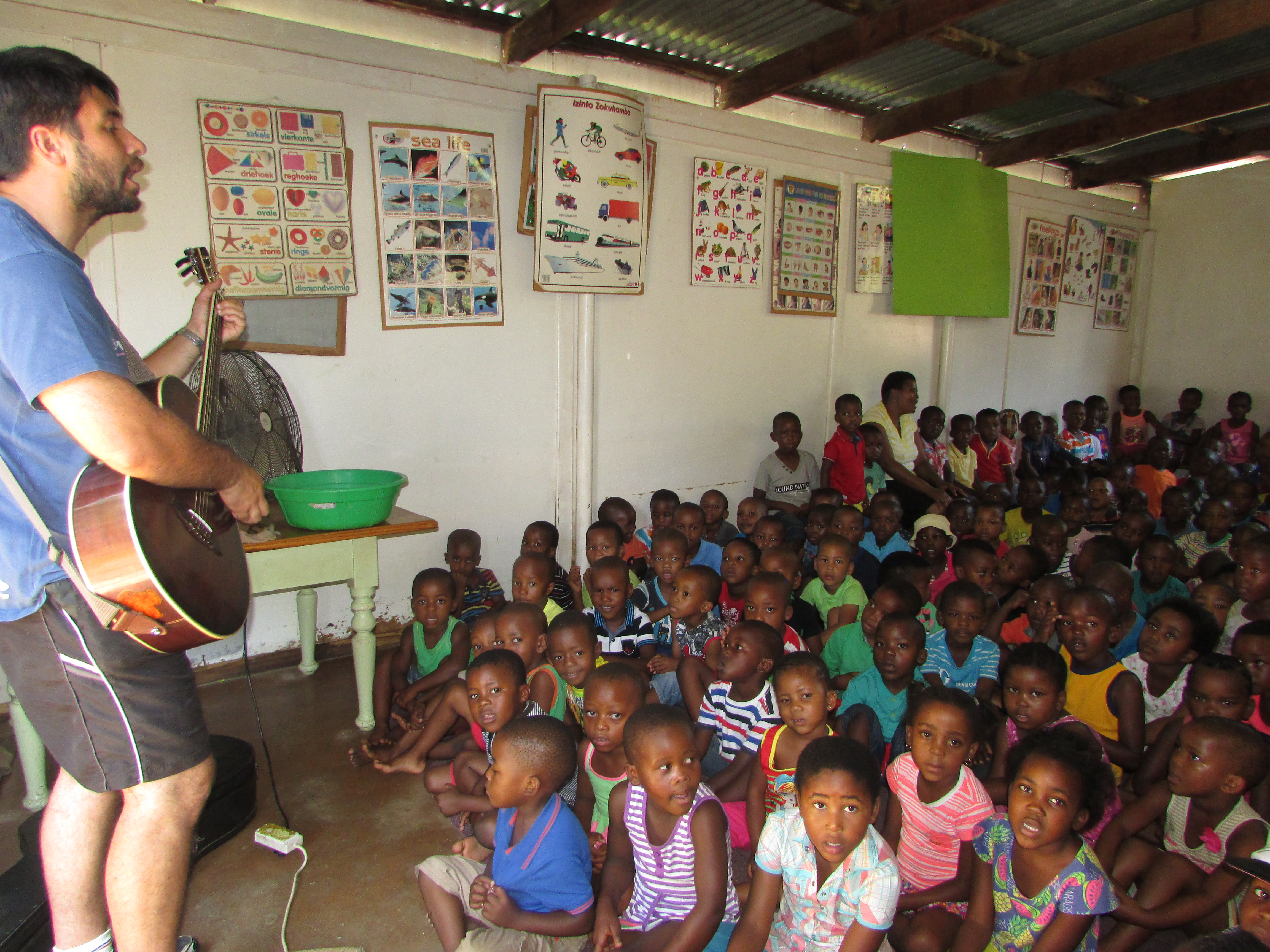
Ministering at the Care Bear Creche
At the beginning of the month Salvador and Phumlani have continued the outreach in the new area of KwaBhekephi and there has been some positive response in the area. Apparently there are some brethren in this area that were saved in a tent ministry and have continued. There has been some gospel influence as one of the local Zionist churches have rejected ancestral traditions and are known to have done so by others in the area. One lady confessed to have decided to respond to the gospel message that we preached so we have started visiting her whenever we go to the area. But our heart is to start a bible study in this community and it seems that it may start in April. We would like to support those believers who are already in fellowship to help ground them in doctrine.
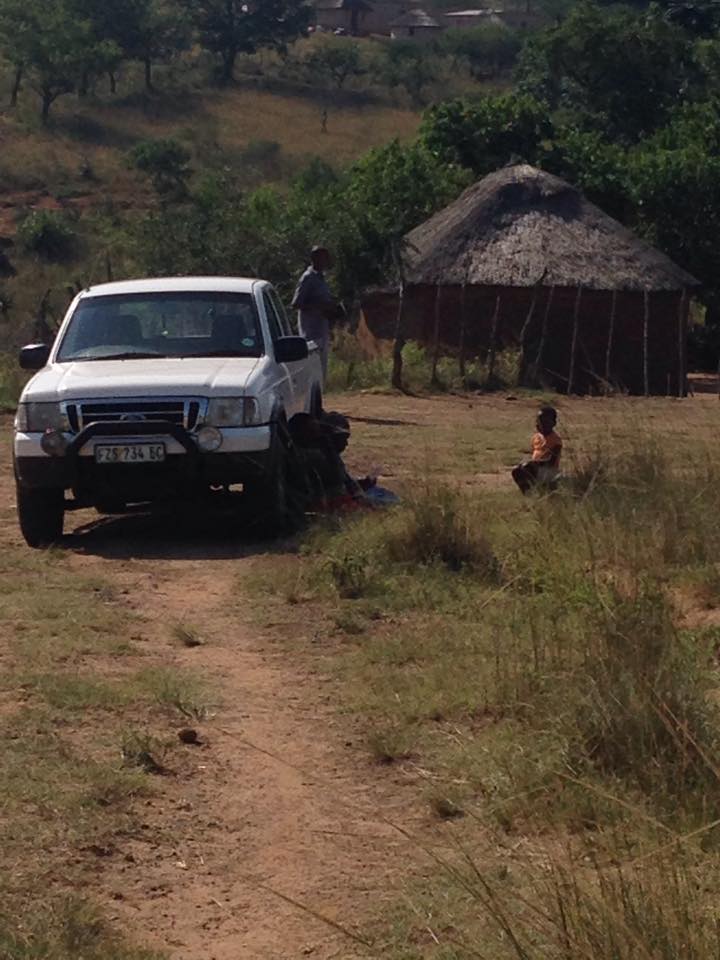
Phumlani Preaching
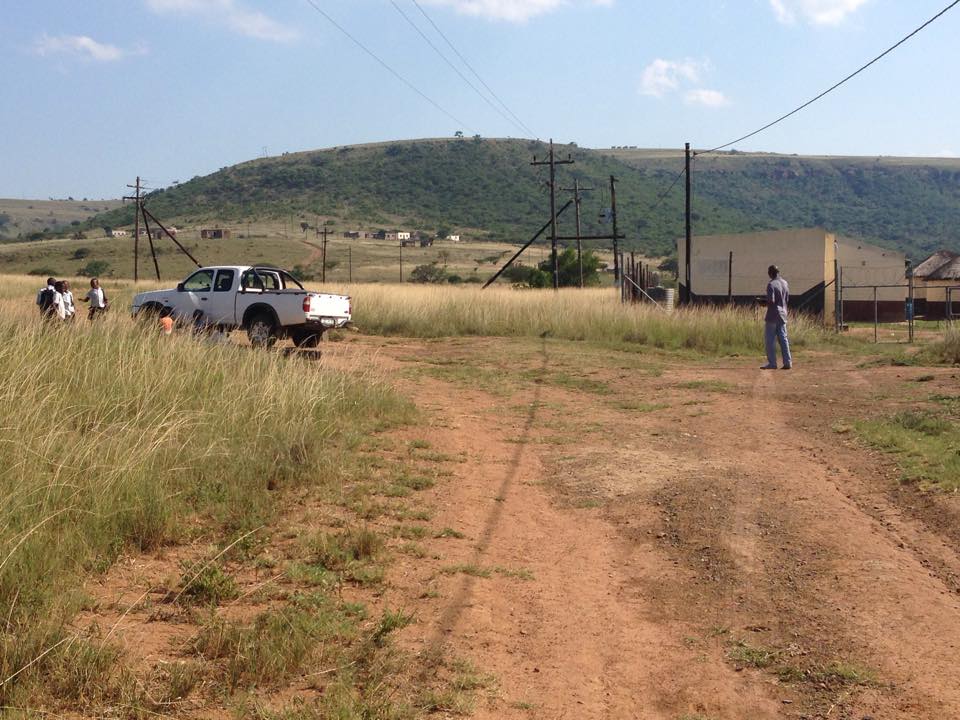
Phumlani preaching again
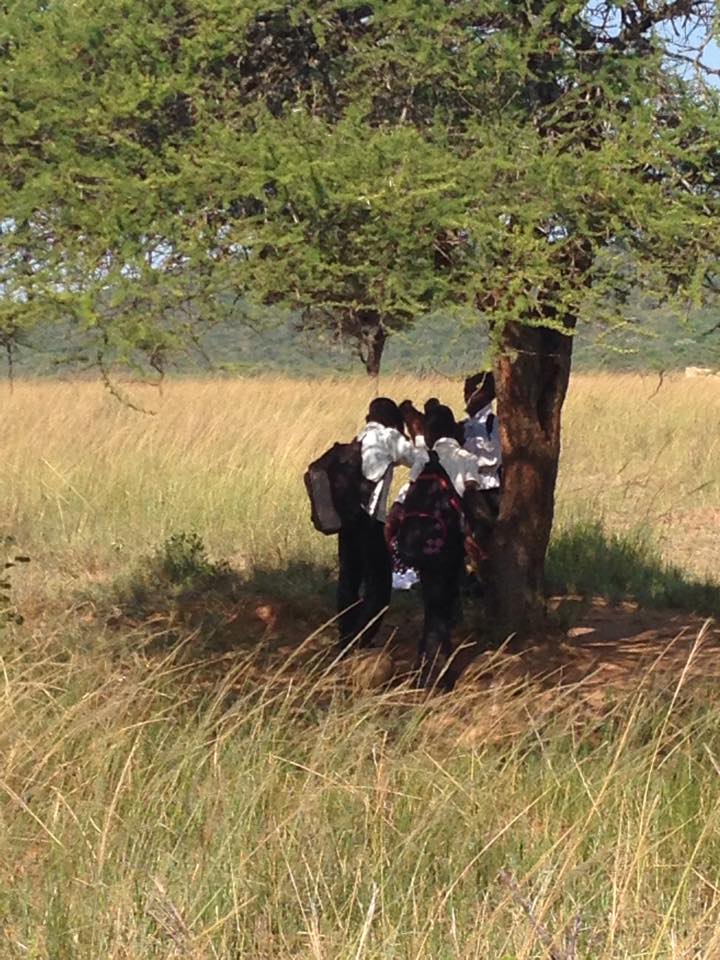
Kids under thorn tree while Phumlani preached
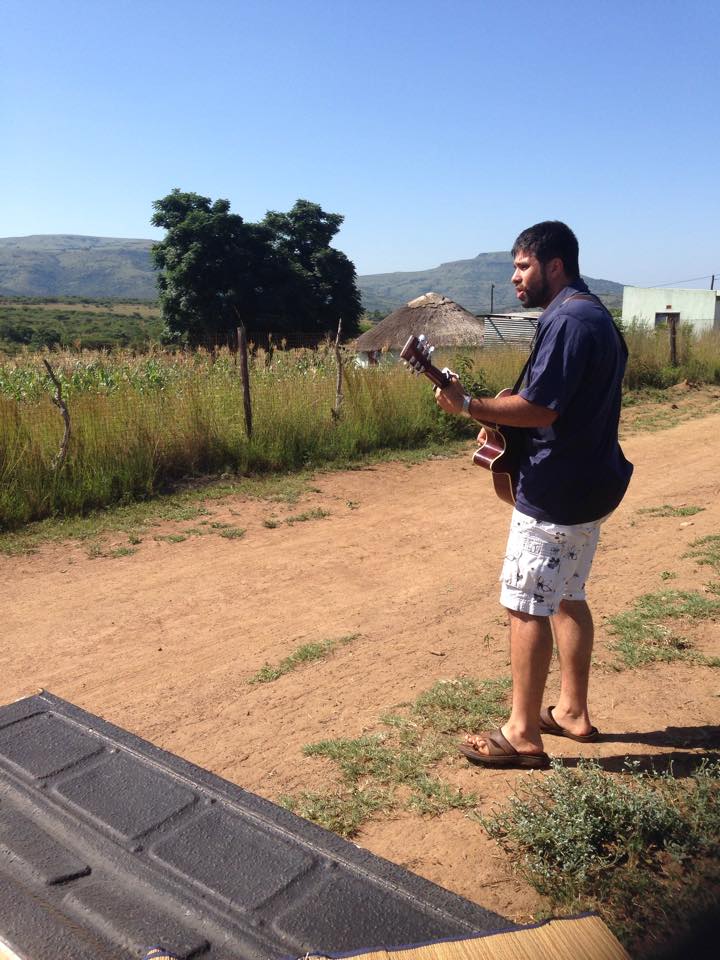
Playing hymns before preaching in KwaBhekephi
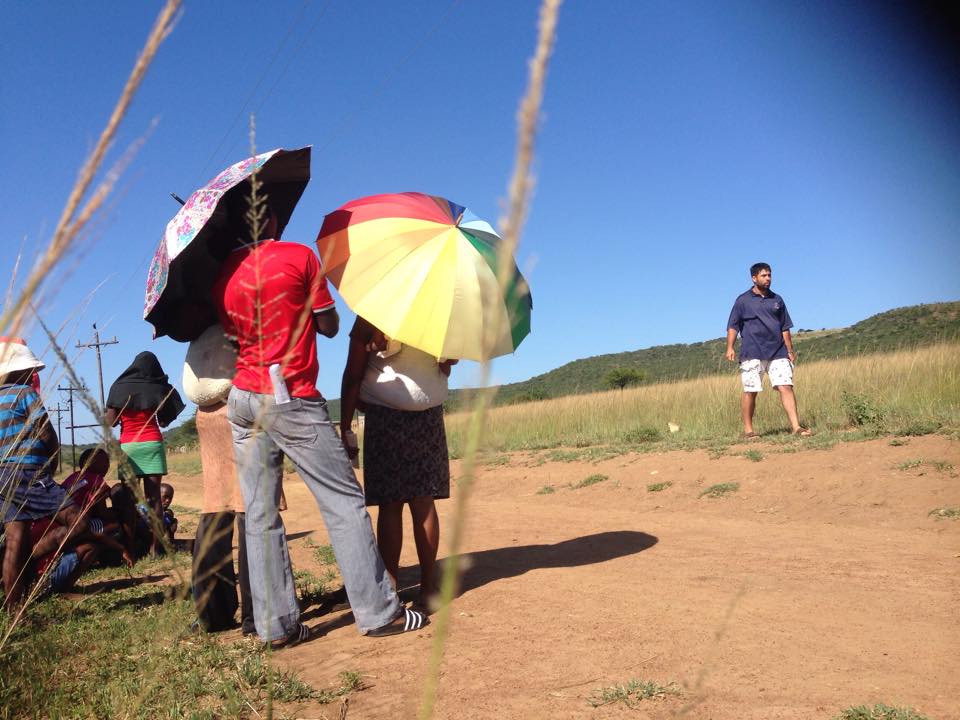
Salvador Preaching the Gospel
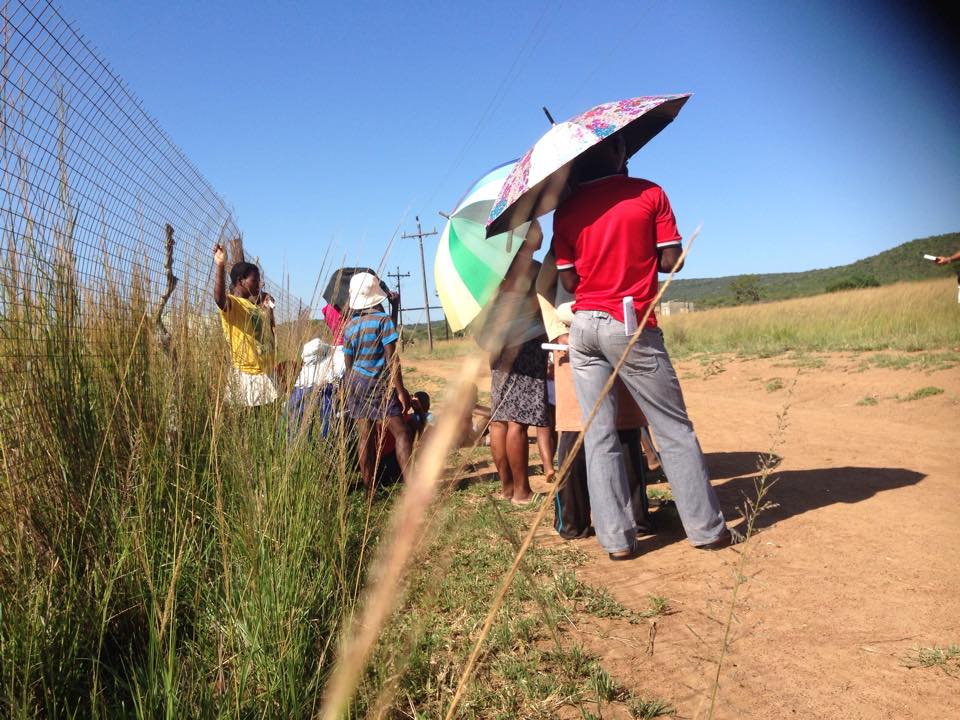
People listening to the gospel in the heat of the day
Cecil Peasley who was supposed to come out in the middle of the month had an accident and therefore was not able to come out. He is apparently okay but has had to remain in Gauteng for his recovery. So the gospel meetings were cancelled but Jannie, from Bethany Baptist church, did not want to cancel the outreaches to the prisons and the school. Therefore, he asked if Salvador would preach at the prison. On the one day Salvador addressed the women and the following day he addressed the men. The Gospel seemed well received by both but more response came from certain men. One particular gentleman wanted to seek God to gain liberty in his personal life and transformation. He was touched by personal testimony that Salvador gave of his uncle. Jannie received details of a couple of gentlemen and will follow up with preparing some literature that he can drop off for them at the prison.
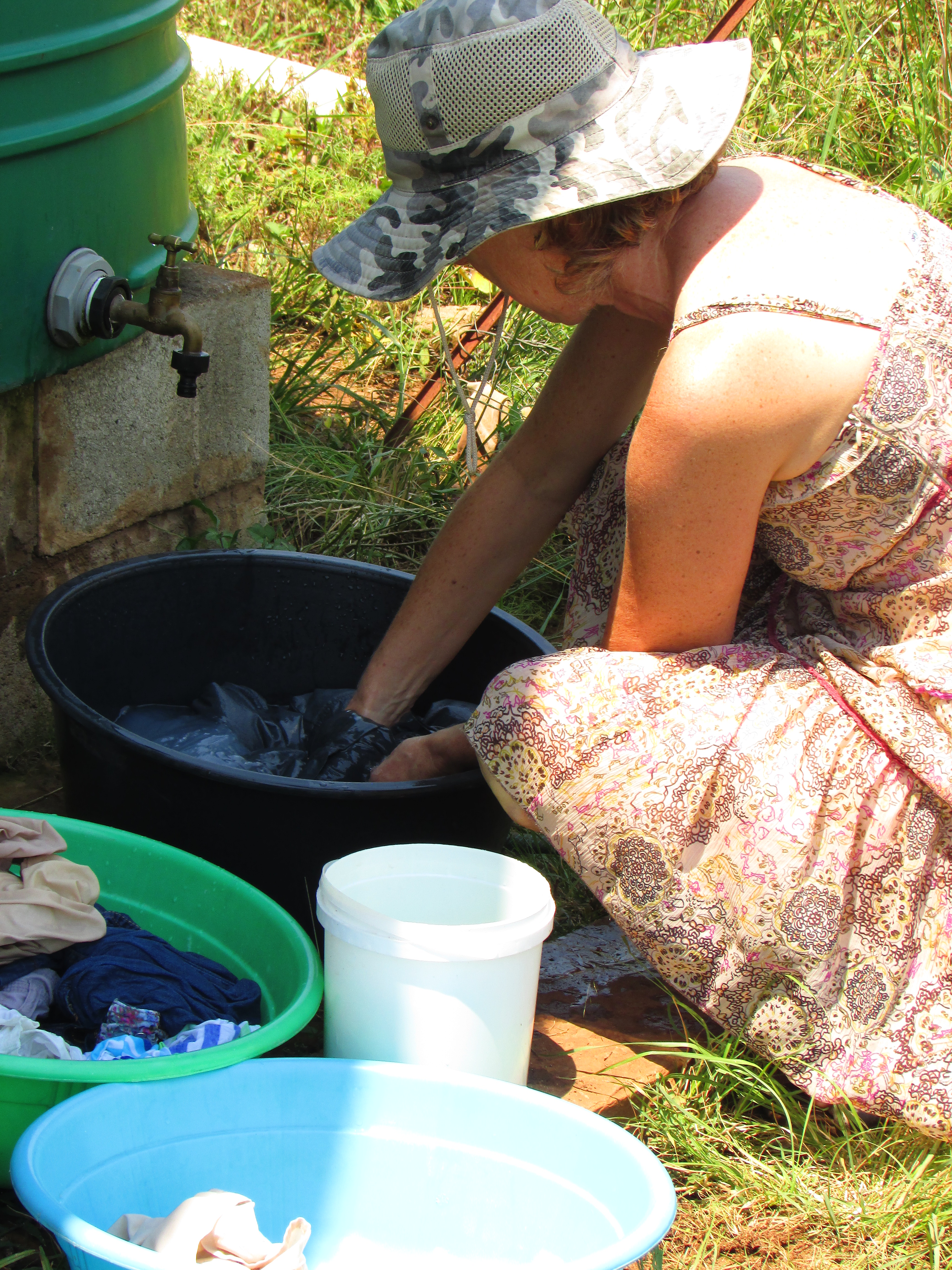
Di washing clothes
The Zulu congregation continues as usual. Phumlani has been teaching some very good messages. He asked Salvador to preach this month, which he did on the darkness and the fire of God in light of Nadab and Abihu and their prefigurement of Messiah. Salvador also taught this at cell group whereas he has usually been continuing in his normal discourse concerning Elisha.

Animals at the Homestead
The kids club also continues. One Saturday we had it at our home and when the local children from our neighbours heard the singing they also came. Salvador did a teaching on the ten commandments and what they meant. These children are from different backgrounds. Some are Zionists who follow ancestral traditions and others follow a man called Shembe, whom they regard as the black messiah. So speaking against these things at such a young age is not the easiest thing, as they may well become confused by the contradiction but we trust the Lord will use it and we explain these things slowly, asking questions of the children.
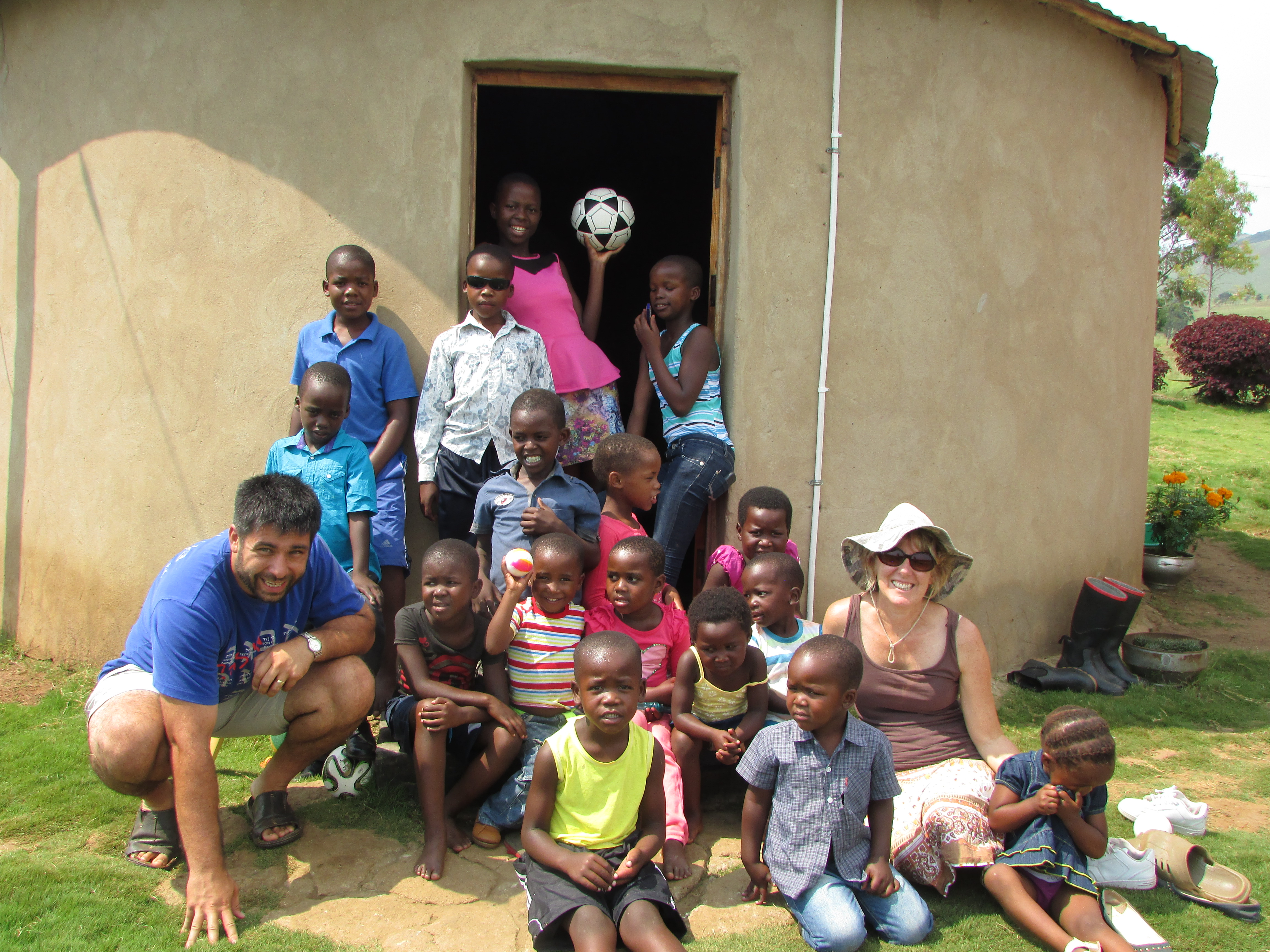
Kids Club before class
Sabelo reads the bible
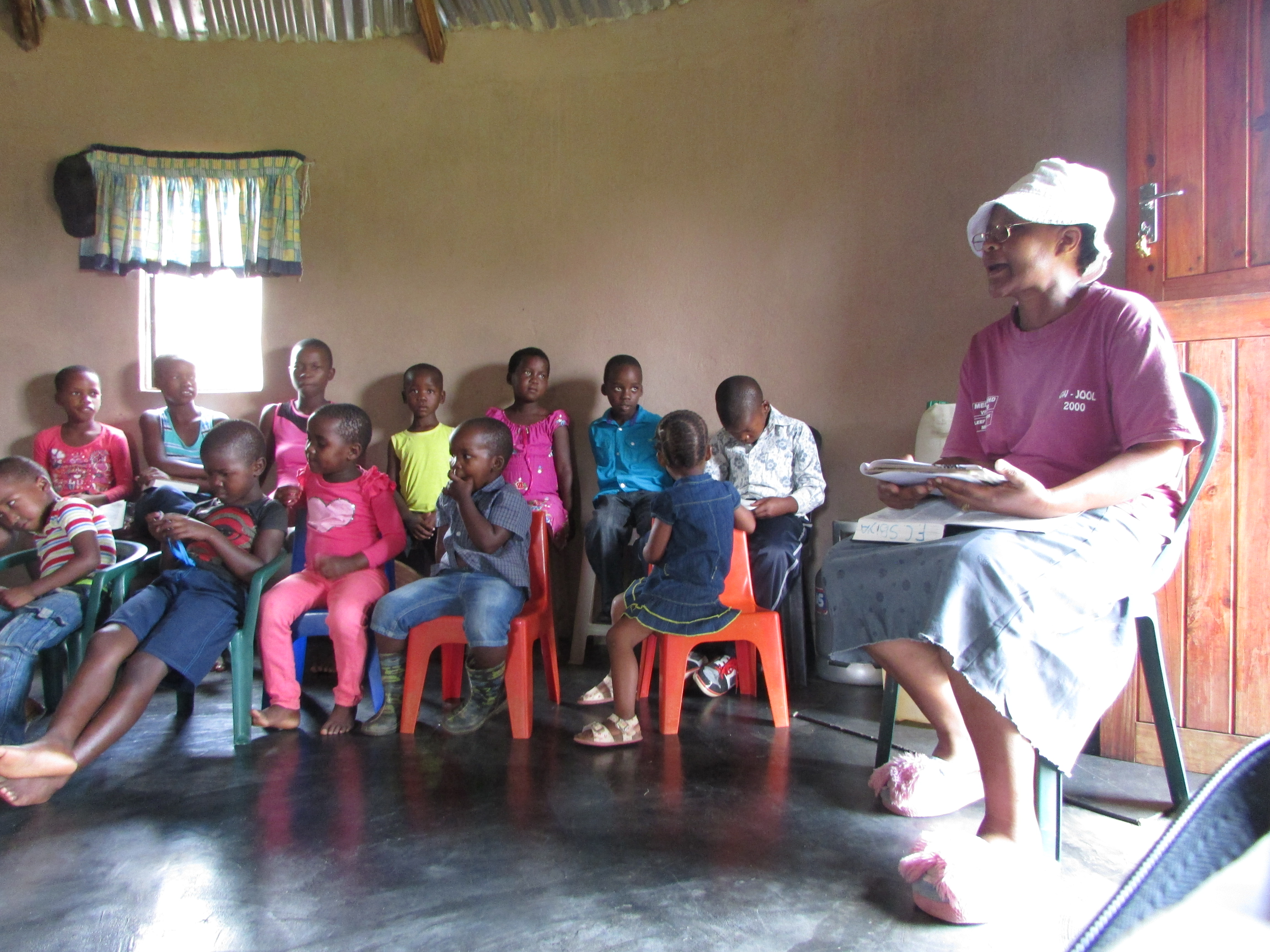
Celani teaches kid’s club
We came up to Gauteng a week early as there were several things needed to be accomplished. We are with our friends, Allen and Sue Wells and enjoying the time with them which does not come often. Salvador made use of the Wifi to upload all the remainder of the tutorial audios for the Zulu discipleship booklet. While here also we went to Pretoria, picked up our Portuguese marriage certificate and got it translated. It is so wonderful that our marriage is registered on some system on the earth, thus we have proof of marriage for the future. We went to a printing company in Pretoria also which New Tribes Mission are using to print their material. Salvador went through the entire book’s correction with Leizl. The poor girl was worked hard and therefore the company have printed out another copy for us to check again in order to make sure we have not missed anything. But we will be printing the Zulu discipleship books through this company. Though the initial cost is higher to get it set up it is half the price of printing each book through an online publishers. We thank the Lord for the recent support that is enabling us to get these books printed. On the same day we then visited John and Julie Leo in Kempton park before spending the evening with Tony and Maria Verlaan from New Tribes Mission and Sean and Catherine De Klerk. Sean is going through training to use NTM material and he and Catherine are great friends of ours.
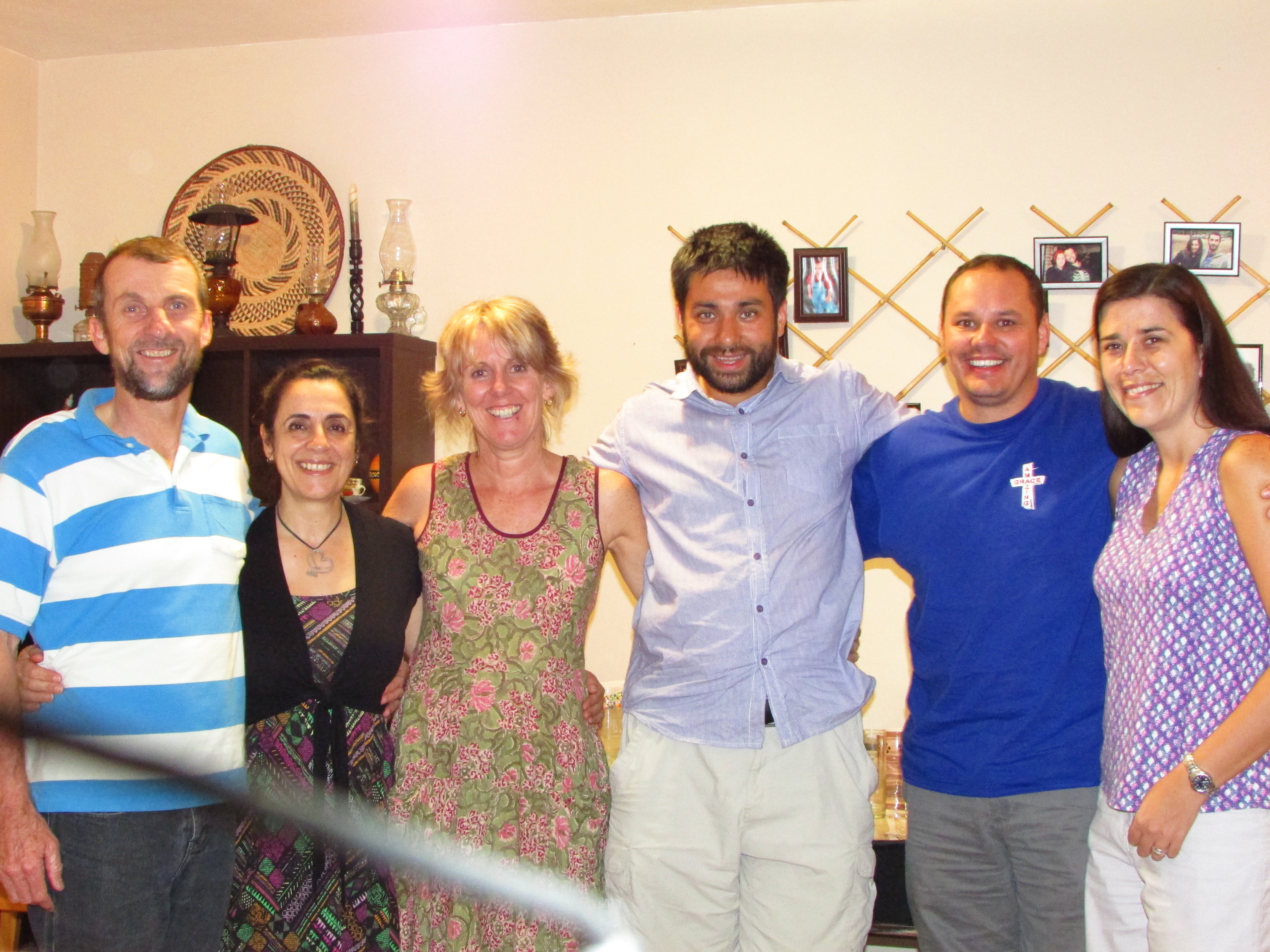
Visiting Tony and Maria Verlaan with Sean and Catherine De Klerk
Salvador met up with another brother called Tony and then we had a lovely visit from our friends Riaan and Debbie Roux. During the other days Salvador and Allen Wells have been working to assembly a pump shower that he will assemble on Friday morning when we get back home. On Saturday Salvador visited Mujuru and interviewed him concerning his salvation out of ancestral traditions and also the word of faith/prosperity teaching. If any of our South African readers know of anybody who have been saved out of these things, please write to us as we would like to interview them for a project to reach out to people involved in these things. Di has been cutting hair, helping out in the house here and has visited different craft and material stores and ministered to the children. Today we visited the special needs home called Vita Nova that we used to minister in on a weekly basis when we lived in Gauteng. It was lovely to see many old friends and lead them in singing and bible teaching. Their website is www.vitanovacentre.co.za and we are thankful for the home that they give to people who have severe learning and physical difficulties. Sometimes these people are among the most neglected and unwanted in society but in this centre they have a sense of community and belonging and the Lord has a special love for one of them. One older guy who is wheel chair bound, TJ, shared today that it was because of his accident over 30 years ago and because of being placed in this home that he found the Lord.
Guys at Vita Nova
Some of Allen and Sue’s kids at craft market
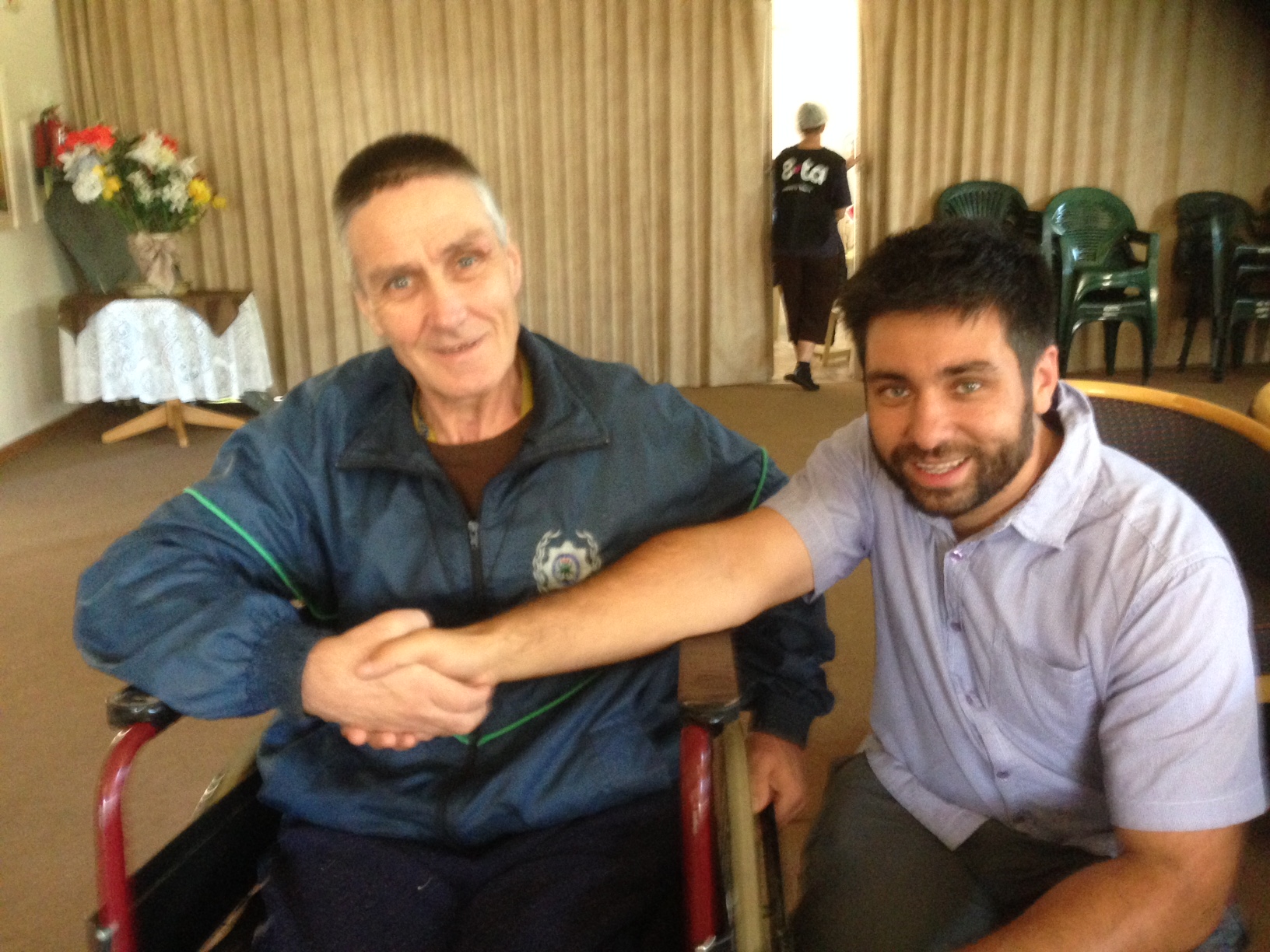
Salvador and TJ
This month we will take our parents to experience the different meetings, John will share his testimony in Vryheid and share in a few meetings. We will take them witnessing, to the east coast where Salvador will be ministering and lastly to Pretoria. Thank you for your faithful support and constant communication. We serve a Mighty God, may we continue to sit at His feet, sharing our heart, praying and listening as we read His word so He can reveal more and more of Himself to us showing His great love and wisdom in a world that is blind, lost and striving after the wind.
Shalom
Sal and Di
Prayer Requests:
- Allen, Sue and the family
- Tony and Maria from NTM
- Evangelism of area
- Phumulani and the fellowship
- Publishing and other projects
- Salvador’s parents visit
SEVEN
NOT UNDER LAW YET NOT LAWLESS: Part 2
MADE FREE YET MADE SLAVES
ROMANS 6: 15 – 7: 6
The Gospel is the power of God to salvation for everyone who believes because as we believe it God’s righteousness is made manifest from faith to faith, i.e. we become righteous. We need to be made righteous because God’s anger has been revealed against all ungodliness of men who suppress the truth in unrighteousness. The book of Romans contains Gospel truth that will transform us if we will only grasp and accept what God is saying through it. The Gospel is part of the new covenant we read about in Jeremiah 31. The new covenant does not forbid Jews the practice of the Mosaic covenant if one does not based their justification, sanctification and glorification on it. We are truly free in Messiah. However one cannot be both under the authority and covering of the Mosaic covenant and under Christ at the same time. The Mosaic covenant has been totally disregarded in terms of meriting salvation because it was never intended to save anyway. We are not under Law but under grace. But how can Paul dismiss such heritage as unnecessary for salvation or as part of Salvation. The commandments contained within the Law were God given commandments. How can he say that we are saved without works of the Mosaic Law? Up till now Paul has shown us how Gentile and Jew alike are all in sin. He has proved that the Law does not save, that salvation comes by grace and through faith. He has shown us how biblical faith is a justifying faith as we saw through the example of Abraham. In the last chapter we saw that the Law gives no power over sin but Grace does. Faith must be placed in the finished work of Jesus on the Cross, the blood He shed and the satisfaction He rendered to His Father. That satisfaction rendered through the punishment He suffered on the cross.
ROMANS 6: 15 – 7: 6
THE IMPORTANCE OF THE SERVANT MINDSET
Dave Royle once preached a sermon called, ‘Made free to serve’, but this is probably one of the most important truths that needed by our western 21st century churches. We are so full of the notion that somehow we have rights and we are ‘King’s kids’, that the whole notion being servants is an alien concept. We look at our national servants and we call them ministers. When we look at the minister of transport, the minister of finance, the ministers of government what do we find? Often we see people on a comparatively high wage bracket, wining and dining and enjoying huge perks and privileges. In South Africa, these ministers, do so while many other people live in informal settlements and mud huts. Ministers of churches drive fancy cars and tell people they must give more in the offering bag so they can fuel their own empires. I am not intending to get political here and my point is not to start pointing fingers. We probably would not turn down our perks if we were government ministers. My point is simply, we have forgotten what it means to be a servant. In the first chapter we looked at the mystery of godliness, that He who was manifested in the flesh (who suffered as a servant in the flesh; who was wronged and endured it without taking his own retribution), the same was vindicated in the spirit. He entrusted His soul to His Father who was able to save His soul from death. Jesus did this even though He had the power to raise Himself from the dead. (Jn 10: 18) We too must learn to let God vindicate ourselves and set right our wrongs.
FREE FROM THE LAW BUT NOT FREE FROM LAW
Paul is adamant that we are set free from the Law; a law that we, as Gentiles, were never a part of and yet we can still apply this principle to ourselves in some way. All nations have some kind of notion of God’s law. In verse 14 Paul has already said that we are not under Law but under grace. The Law stands for everything righteous. Psalm 1 says of the godly that his delight is in the Law of the Lord and on His Law he meditates day and night. Psalm 119: 1 says ‘Blessed are they whose ways are blameless who walk according to the Law of the Lord.’ Verse 9 says ‘How can a young man keep his way pure, by keeping it according to Your word.’ Verse 113 ‘I hate double minded men but I love Your Law.’ It is biblical to love God’s law. The Law is righteous. The opposite of righteousness is unrighteousness. So when we throw righteousness (i.e. the Law) out of the window, we permit unrighteousness.
V15 – ‘Shall we sin because we are not under Law but under grace?’ Here we see the return of that voice of doubt, the diatribe, that was there in Romans 3, and returned at the beginning of Romans 6. He wants to find a way to excuse our sin. But as we said in the last chapter Grace does not mean lawlessness. Rather Grace reigns in righteousness. This relationship between sin, Law and Grace is sometimes confusing because there are two perspectives. Imagine you have two diagrams and in each there is a horizontal line. In the first diagram you have righteousness above the line and unrighteousness below. In the second, above the line, you have ‘Kept in the power of the Spirit’ and below the line you have ‘Kept in the power of the Flesh’. In the first diagram both Law and Grace are positioned above the line and sin is positioned below the line because both are spiritual and both are righteous. Sin is unrighteous and therefore cannot be compared with Law in this context. But in the second diagram Grace is above the line but the Law and sin are below the line.
Diagram # 1 Diagram # 2
Righteousness: Power of Spirit:
Law of Moses & Law of Christ
Law of Christ
__________________ _________________
Unrighteousness: Power of Flesh:
Law of Sin Law of Moses
& Law of Sin
This is because the Law offers no power to conquer sin and so it is only kept in the flesh, just like sin is done in the flesh. That is why Paul not only died to sin, but he also died to the Law. What do we mean when someone dies to the Law? Does this mean the person is without law? Certainly not! We are not under the Law of Moses but we are under the law of Christ.
- The Law of Moses is contained in outward ordinances but the law of Christ gives a newness of life.
- The Law of Moses is written on tablets of stone, the Law of Christ is written on the heart by the Spirit.
- The Law of Moses is a picture of Christ and the law of Christ has the same essence of the Law of Moses because both are given by the same God and therefore both are one in essence.
Therefore we will never be free from the reality of law.
THE LAW OF SIN AND DEATH
In fact there is another law beside the Law of Moses and the law of Christ and that is the law of sin and death. We can never be free from law. We will always be under a law.
Look at verse 16. 16 Do you not know that when you present yourselves to someone as slaves for obedience, you are slaves of the one whom you obey, either of sin resulting in death, or of obedience resulting in righteousness?
We see two elements of servitude in this verse.
Firstly there is the activity of servitude, in that you present yourself to someone as slaves for obedience. This necessitates an act of the will. Now you might say that you could not help yourself but become a slave of sin. But Paul shows us how we became slaves to sin. We willingly presented ourselves as slaves for obedience. There are many sins in our lives that we have committed wholeheartedly. Even though we did not purpose to become slaves to sin, that is what we were doing whether we realized it or not. When we follow the lusts of our temptation we are offering ourselves to its service, to its pleasure, and this leads onto the second element of servitude, which is the identity of servitude.
If we have willingly given ourselves to sin’s service, we have become its slave. Quite often in temptation, whether in terms of moral or doctrinal areas, we have the tendency to separate the one act of disobedience from the ongoing condition of our souls. ‘One bad apple will not affect the barrel. It is only one time, it will not really affect my walk with the Lord.’ 1 Corinthians 5: 6 says, ‘Do you not know that a little leaven leavens the whole lump of dough?’
Proverbs 7: 6 – 13.
“6 For at the window of my house I looked out through my lattice; 7 And I saw among the naïve, And discerned among the youths, A young man lacking sense, 8 Passing through the street near her corner; And he takes the way to her house, 9 In the twilight, in the evening, In the middle of the night and in the darkness. 10 And behold, a woman comes to meet him, Dressed as a harlot and cunning of heart. 11 She is boisterous and rebellious, Her feet do not remain at home; 12 She is now in the streets, now in the squares, And lurks by every corner. 13 So she seizes him and kisses him And with a brazen face she says to him:”
Picture what is being described. Solomon is peeping intently through the slats in his window and is studying some young people in the street. It is a bit like it is today in places like Manchester, UK. You will see young people hanging out in the streets not doing anything, simply passing time. But among one of them Solomon sees a certain silly, seducible young man. And he is heading to the house of the adulteress. We do not know how he knows about the adulteress. Maybe he has been told by his friends what she is like. Maybe he has over heard strangers speaking about her but look at what verse 8 says. He is passing through the street near her corner. He is only passing through. He is not even at her house. He is near his corner and you can well imagine the thoughts in his head. ‘I am not going all the way, I have not done anything yet. I am just passing by.’ ‘I just want to see what happens if I pass by.’ But the word for ‘passing by’ is the Hebrew word ‘Avar’ which means to cross over in terms of a transition. It could mean ‘to go beyond’ depending on the context of the word. In other words the young man might have thought he had not gone too far but in fact he had gone far enough. Because when we give way to temptation it becomes increasingly harder to fight against it.
He is only going through the street, then he is near ‘her’ corner and lastly (inevitably) he takes the way (the course or direction of life) that leads to her house. But look in verse 10, he does not even get to her house and she comes out to meet him. In verse 13 she seizes him; actually she fastens herself upon him brazenly. He never even got to her house initially. Yet he had already gotten enslaved by her. It started when he passed through the street. He presented himself all the way back there to her as her slave and that lead to him actually becoming her slave. Like an ox to the slaughter. It is like when God warned Cain saying, ‘Sin is at the door and its desire is for you but you must master it.’ And just like there are two women in Proverbs, so also, in verse 16, Paul presents us with two masters. There is a virtuous master and a wicked master. We are either slaves of sin or we are slaves of obedience. And just like the wicked woman took the young man to the slaughter, so the mastery of sin also results in death but the mastery of obedience brings righteousness.
THE TRANSITION FROM SLAVES OF SIN TO SLAVES OF RIGHTEOUSNESS
However, there is a major problem. We are all naturally children of wrath and thus slaves of sin. What hope is there for you and me? Yet Paul does not say that his readers are slaves of sin but that they WERE, past tense, slaves of sin. So how did they make the transition from being slaves of sin into being slaves of righteousness?
Verse 17. 17 But thanks be to God that though you were slaves of sin, you became obedient from the heart to that form of teaching to which you were committed,
In other words these people, primarily, became committed to the pattern of teaching to which they became obedient from the heart. Thus they had become free from sin.
First there comes a commitment to the ‘form’ of teaching. The word ‘form’ here, is in Greek ‘Tupos’, and relates to a mold or cast into which molten material is poured to take shape. In other words the teaching of Christ and His Gospel are powerful enough to shape us if only we would be committed to them. The Gospel is the power of God unto salvation to everyone who believes for in it the righteousness of God is manifested from faith to faith. Can you see the link here? Can you see why Paul is going to such lengths to prove biblically and experientially that the Law was never intended to justify? Only the Gospel of grace can do so as it is received in faith? This is real power if only we would believe it. As we walk in the teaching of Christ, as we remain in Him, then we start to take His shape of Christ likeness. As Christ Himself said, ‘he who abides in Me and I in him, he bears much fruit.’ And what is the fruit?
Galatians 5: 22 – 23. “22 But the fruit of the Spirit is love, joy, peace, patience, kindness, goodness, faithfulness, 23 gentleness, self-control; against such things there is no law.”
The fruit is the fruit of the Spirit. In other words the fruit is a Christ like character. When we are truly committed to this mold of teaching then we will start to become obedient from the heart. And committing ourselves to the teaching, the Truth of Christ, sets us free from sin and transfers us into being slaves of righteousness.
WHERE IS THE REAL FREEDOM?
Now what Paul is doing is using the question posed by the voice of doubt to reaffirm the truth that we need to pursue holiness. He wants to encourage his readers to fight sin.
Verse 19. 19 I am speaking in human terms because of the weakness of your flesh. For just as you presented your members as slaves to impurity and to lawlessness, resulting in further lawlessness, so now present your members as slaves to righteousness resulting in sanctification.
Paul is urging his readers on, in order to pursue righteousness. As Martin Lloyd Jones says, ‘Paul’s method is to lay down a doctrine and then make an appeal based on that doctrine.’ Right living follows right doctrine. Rom 8: 15. ‘We have not received a spirit of slavery but a spirit of adoption’. So how can Paul speak of us being slaves of righteousness when God wants to bring us into liberty? Galatians 5: 1. “It was for freedom that Christ set us free; therefore keep standing firm and do not be subject to a yoke of slavery.” The question that stands before us is, ‘are we really free or is our emancipation like the liberty that the Communists brought the Russians’? Paul tells us why he uses the analogy of slavery.
- Firstly, slavery was something they understood too well. The Romans knew only too well the scenario of the slave market. Thus Paul is speaking in human terms of something that is actually spiritual. In the slave market, once a slave has been sold, any prior owner of the slave does not have any hold on the slave. So sin may not be master over us because Jesus entered the slave market and purchased us with the payment of his blood. He presented His blood to the Father. Jesus is now our master. But why use the analogy of the slave market at all if we are not meant to be slaves? Paul says he does it because of the weakness of his readers’ flesh. The flesh nature that we have in our body, in our members, is antichrist. Naturally, the flesh is inclined to rise itself above the knowledge of God and immerse itself in a pool full of sensuality and sinful pleasures. What other way would we be able to fight this sinful nature if we did not count ourselves as slaves to Christ? Slavery brings with it restraint, boundaries and a desire to please our master.
- But secondly, as Martin Lloyd Jones points out, the nature of the new slavery is not the same as the nature of the old. The old servitude is tyrannical – as Gal 5 shows. It leads to fear because fear speaks of punishment. 2 Cor. 5: 14. What is it that restrains us? It is the love of Christ. He gave all for us and therefore we are compelled to give all for Him. When someone does something extraordinary for us, then we somehow feel compelled to do something in return, to even the score. It is a bit like the film ‘Robin Hood prince of thieves’. Robin Hood saved the Saracen Warrior’s life and therefore the Saracen has a life debt to Robin.
We are free and yet we are not free. There are limits and boundaries. Why can we not do whatever we want? Because the whole point of being set free is to be free from sin. If we ask Christ to set us free from sin what is the point of getting entangled in it again? It is like a situation I stepped into in the UK. I used to attend a church called Hazel Grove Full Gospel Church in the first few months of 2005 before moving to Llandudno in North Wales. I would cycle through Manchester and past Stockport and back again. On my way back through Manchester one Sunday evening I saw a gang of youths beating up on a smaller kid and I went over to intervene. I stood between them and wanted to know what the issue was when the little kid, who had been beaten up, went to attack one of the other kids. What is the point of crying out for help if you plan on getting back into the same mess again? What is the point of begging someone to get you out of the line of fire, if you are adamant to get back into the line of fire again? And this is what Paul is dealing with in verses 21 – 23.
Paul is basically saying ‘Look, when you were outside of Christ, you did not have to live righteously. You could sin as much as you wanted but what was the point of all that? What was the benefit from your life of sin? What you got was death!’ It is just like what Keith Green pointed out in his message on Dying to self. We all feel proud when we give up sin. But that does not impress God. God is not impressed when we give up our wrongs. Those things were killing us anyway. It is when we give up our rights that He is pleased. Slavery to God is beneficial. It is beneficial for you and me to live holy lives. And what is the benefit? The Greek word for benefit here is ‘Karton’ and it is the same word in Jn 15: 5 for fruit. The benefit that we get from slavery to Christ is Christ likeness being manifest in our lives which results in sanctification. Sanctification is that process by which we are shaped into a person different then we were before we became Christians, a person that is holy. The outcome of sanctification is eternal life. We have eternal life now and yet this verse says that we are yet to receive eternal life. We will look at this paradox when we deal with Romans 8, but to put it in plain terms, the process of receiving the outcome of sanctification (eternal life) does not mean we are earning eternal life or working in order to get it.
Look at verse 23 For the wages of sin is death; but the free gift of God is eternal life in Christ Jesus our Lord.
Death is the wage of our sinful works but eternal life is a gift from God. But what Paul teaches us is that salvation is not a laser gun by which we can get zapped but it is a journey upon which we embark. We receive eternal life when we believe but this salvation must be completed. It is a journey whose entrance fee is paid for by the blood of Jesus. And He is the one that sustains us on this journey. He is the author and perfecter of faith. That is why the bible says ‘Abide in Him’. We abide in Him because He is the One who will get us through. The amazing thing about all this is that this is a reversal of the fall. Adam and Eve died in the Garden of Eden. They ceased to be in relationship with the Lord. But grace brings a restoration to that broken relationship, i.e. eternal life (Jn 17: 3). The way to God is not through ritual or theatrics or methodology but by grace through faith.
ROMANS 7: 1 – 6:
FREE FROM THE MOSAIC LAW
I want to go through these verses quickly because the same concepts are dealt with in these verses as they were in Romans 6. But there are significant differences. We are still dealing with an exchange of masters, not in terms of slavery this time, but in terms of marriage. Yet Paul is not talking about being married to sin. Verse 4 shows that he is talking about being married to the Law. The comparison is logical as both the law of marriage and the Law of Moses are given as part of or as the heart of a covenant; the marriage covenant and the Mosaic covenant. Why bring in the Law if Paul is dealing with sin? Because just as there is a link between the Law of Moses and the law of Christ in terms of righteousness and being given by God, so also there is a link between the Law of Moses and the law of sin and that is the flesh. Both the Law of Moses and the law of sin and death result in death. The reason why both result in death is because death is the product of sin and the Law of Moses must always condemn the guilty. Another reason why they both result in death is that the Law of Moses has an effect to arouse sinful passions. Paul is using this opportunity to get back to his original argument that grace supersedes the Law in regards to righteousness. Just as we must all die to sin, so also the Jew must die to being under the authority of the Mosaic Law (just as Paul had to) if he gets saved. Why? Because it is like a marriage. You can either be married to Moses or to Christ but not to both. This is what Paul alludes to in verse 6: the two covenants.
There are numerous covenants in scripture. The Abrahamic covenant still stands with the Jewish people, but Paul is not dealing with that one. That covenant stands with Israel by the fact they are descended from Abraham through the chosen line. It was made with Abraham and it had no law with it because only God was obligated to keep it. But all Jews believed in the existence of the Mosaic Law and in the promise of the new covenant of Jeremiah 31. Both of these covenants promise life. Moses promises it on the basis of perfect obedience and Jesus promises it on the Basis of faith. Moses was given the Mosaic Law on Mount Sinai, but Jesus gave His law on the Mount of the beatitudes. (Matt 5 – 7). Paul says you cannot be married to two husbands. So if you really hold to the view that God has promised this new covenant, you will have to die to the old one before you can be married in the new one. The old covenant is a covenant in the flesh, (literally with circumcision). The new covenant is one in the Spirit where the laws are written on the heart. (Jer. 31: 31 ff). Both are made with Israel and Paul is saying you cannot be under both. We must remember this point over the next lot of chapters, especially Romans 9 – 11. We who are gentiles however, are from nations who had God’s law written on our consciences. We can either hold to a law that tries to earn good standing with God through works done in fleshy ability and fleshy understanding. Or we can hold to the law of Christ where God says, “believe and I will make you righteous on the basis of that faith”. It is on the basis of Christ’s sacrifice where he took the punishment for our sin. And it is on the basis of an empowerment given in the message through the agency of God’s spirit.
SALVADOR AND DIANNE’S MSINDISI MONTHLY
Number: 124 Feb 2015
P. O. Box 1481
Vryheid 3100
KwaZulu Natal
South Africa
+27 (0) 72 8311008
+27 (0) 72 3843786
Email: msindisi@gmail.com, salv.di@gmail.com
KwaZulu Mission Website: www.kwazulumission.com
KwaZulu Mission Facebook Page: www.facebook.com/kwazulumission
This month has been a month of good news and much sorrow for our dear friends, Hendrik and Belinda Els. Belinda sadly lost her brother to a brain stem stroke. You can imagine the shock for the family as only last year they had buried his small son Adam after a tumour. Please keep them in prayer.
Early in the month, we were able to visit Asimbonge and Ncedo in Newcastle. We were given many toys and clothes over the Christmas period so we arrived with a bike for Ncedo, puzzles and blocks for the boys and some clothes. It was lovely to see them again, they are doing well.

Asimbonge
Ncedo on her bike
Sadly we got a call from Tholakele who lives in Alpha, while returning from Vryheid one day saying she needed our help as the ambulance that she called had not arrived and her oldest daughter had swallowed half a litre of Jik (bleach). This resulted from many factors as her mum had just hit her after discovering she was 3 months pregnant and her boyfriend had also been hitting her. Mbali left school last year, to try and earn some extra money for the family. She is from a family of 4 girls and her mum, Tholakele, is a widow. Mbali is doing fine now and the baby is ok. We meet up with her last Friday to chat and give some counsel. Before going we downloaded stats about violence that woman endure which has resulted in murder. One woman every 8 hours is murdered by her boyfriend or husband here in South Africa. There is a mindset in some Zulu woman that they deserve these hidings. We were able to remind her of Bhabekile and her recent murder explaining that she was a lovely, respectful girl however that still did not prevent her from being abused and then killed. The usual pattern in this area is that the boys and girls are very young between 14 – 17 when they start a sexual relationship. The girl gets pregnant then keeps the child. She usually stays at home with her parents and the boy comes to visit sometimes but not often. He has no responsibility. It is usually the family who now have to take care of another child. He can return whenever he wants as the child is his, some return to give some clothes, some to give hidings. Sadly men in this culture have no real Father figures so in their mindset to be a man is to have a child and drink beer.
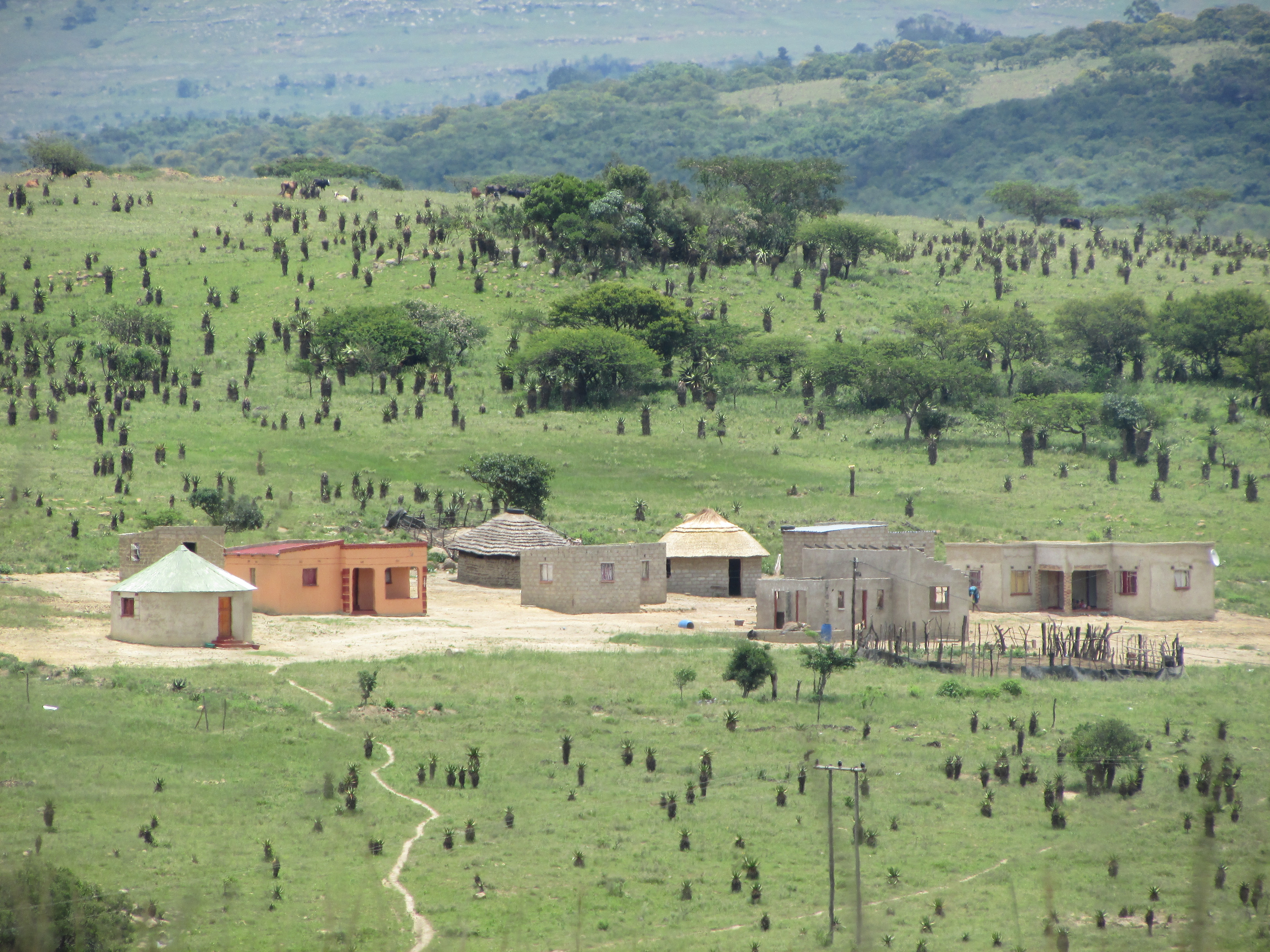
Scenery in Alpha village.
Very rarely will the boy meet the family before he takes the daughter. With the constant fear of HIV, many discover later, (8 years on) that they have contradicted the disease. Meanwhile the boys and men have been sleeping with many other woman. The thinning disease is never named for what it is . . AIDS. When someone dies, as it is the immune system that has been so broken down, the presenting illness is TB or another illness so the community can hide and shake their heads pretending they don’t know how this could happen to someone so young but they refuse to acknowledge it is AIDS. We are praying about how the Lord might use us to reach out concerning this issue, of the absence of Father figures, as it weighs heavy on our hearts.
We attended a funeral, from the Mthembu family this month where the young girl who was in her twenties died. Once again it was not spoken of, she just got very very thin then died. Attending these funerals are very distressing you want to shout from the roof top. The pastors all want to be able to speak so they gather in the front of the tent, they are from all different sects, most not even saved. One of the churches present was “Christ Embassy” of the infamous false teacher, Pastor Chris, who was reported to have paid people to fake illnesses for three weeks before he supposedly heals them in his meetings. It is such a big show but nothing real is addressed. In this case we were told that she had repented and given her life to the Lord. We hope this is true, for our Lord reaches out His hand right to the very end longing that none should perish but all will respond to His free gift of eternal life, knowing there is nothing that we have done or can do that can make us right before a Holy God. Only Jesus can make that way possible by His sinless death in our place.
Calf at our home
It was great having Mesuli home over the holidays. What a blessing this young man is. He has grown so much. His studies in pharmacy are going well and we just heard he has been granted a bursary for next year. These holidays he taught kids club for the first time. We have seen him grow and develop in his faith, asking real meaningful questions and wanting to be able to give a reason for the hope he has. We were able to show the kids at kids club a photo of when he used to attend kids club in 2004 when the Leembruggen family visited the mission at the old cattle auction yard. Kid’s club this last Saturday was taught by another attendee of kid’s club back in 2004, Khethiwe, who is Celani’s eldest daughter. It is wonderful to see these young people grow in the Lord.
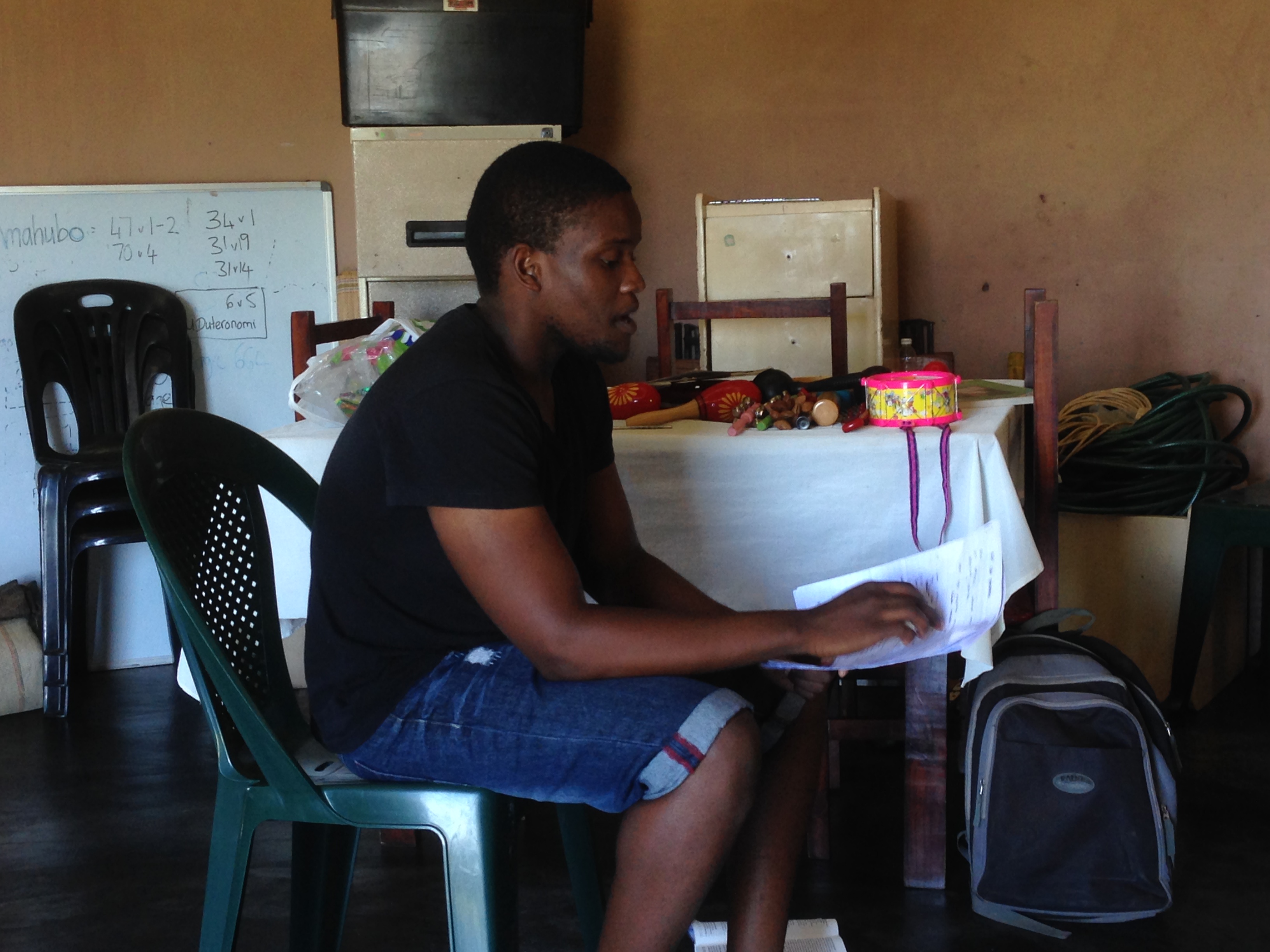
Mesuli teaches kids club
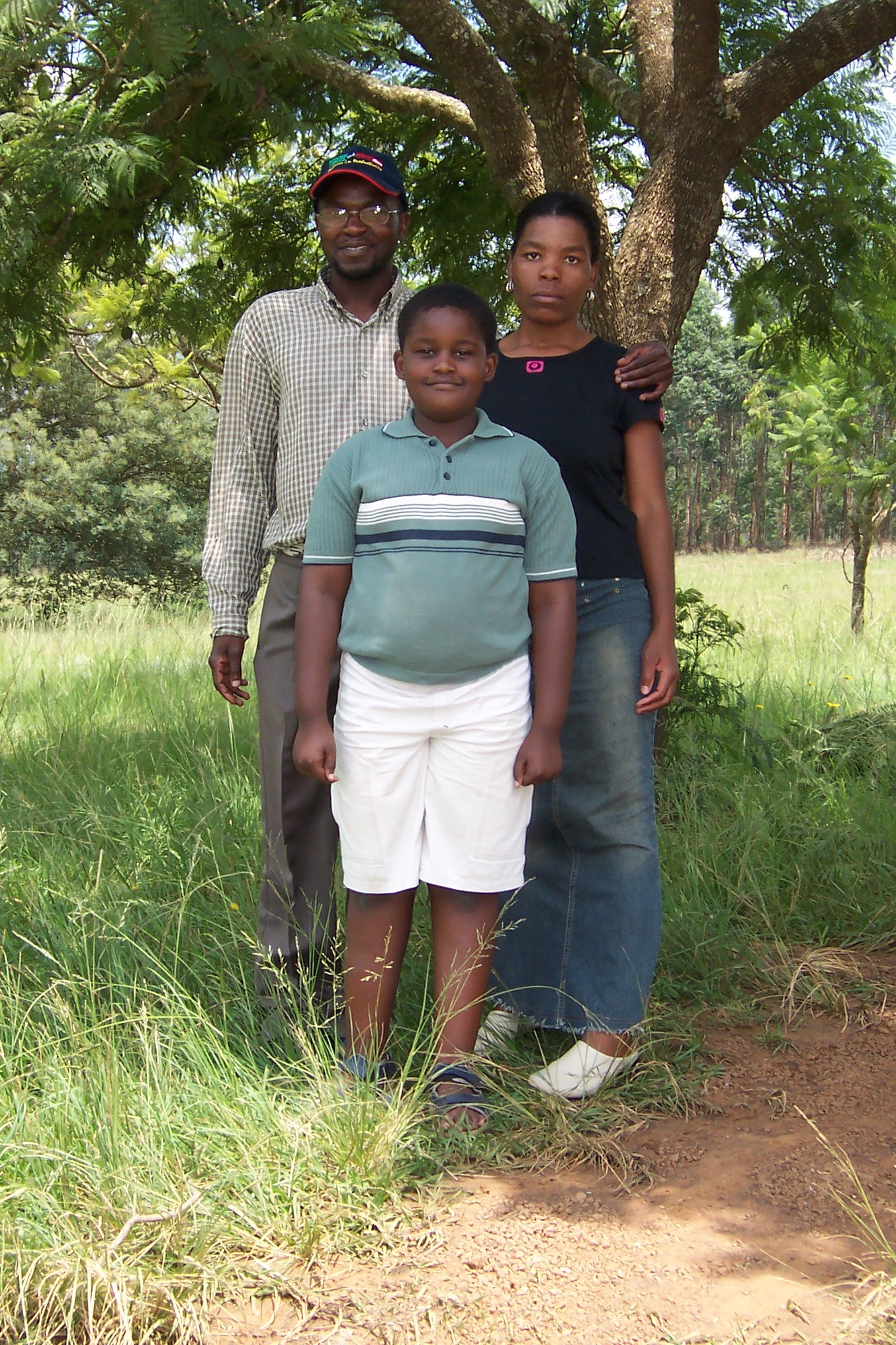
Mesuli in 2004 when he used to attend kids club.
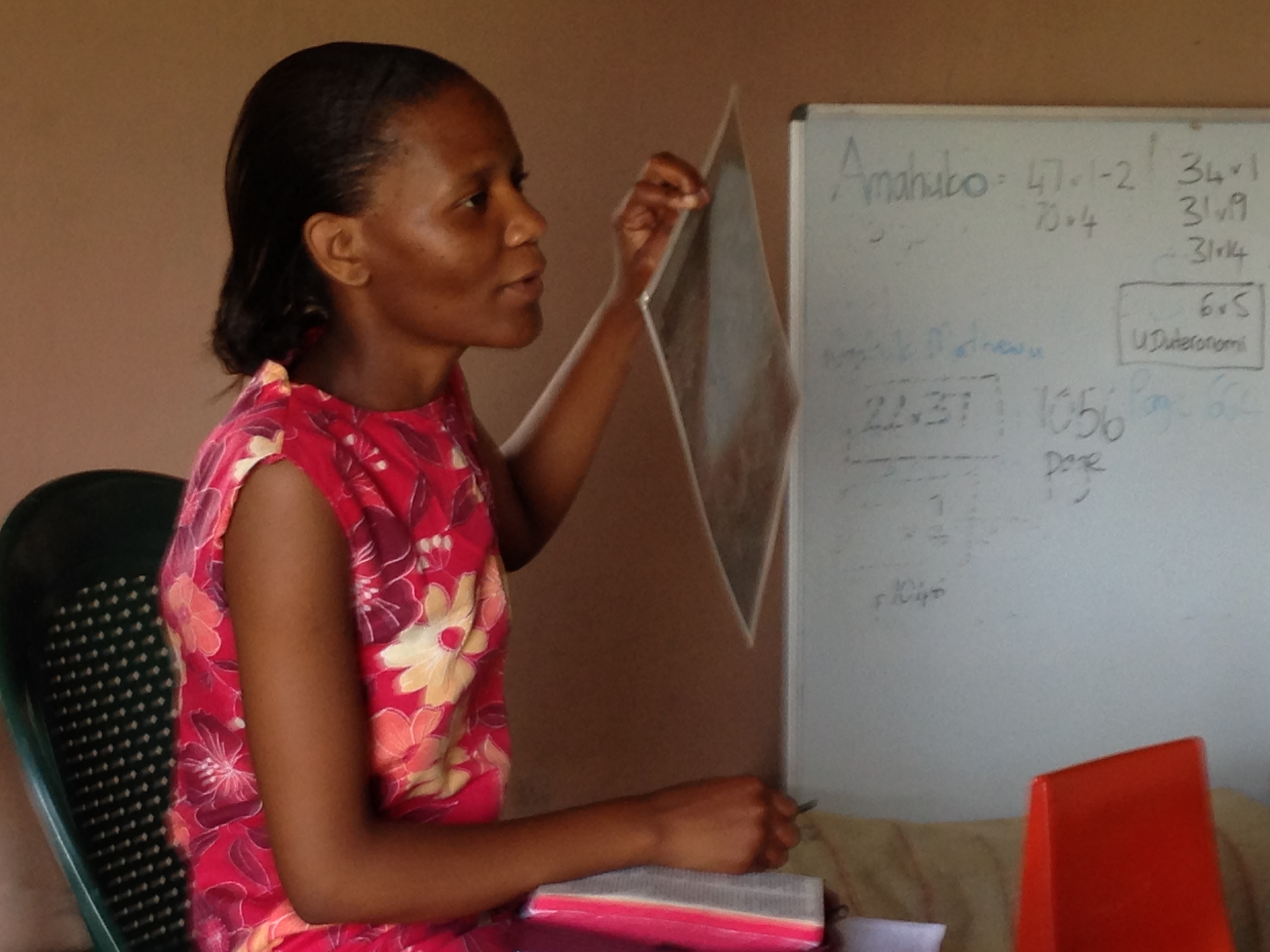
Khethiwe teaches kid’s club
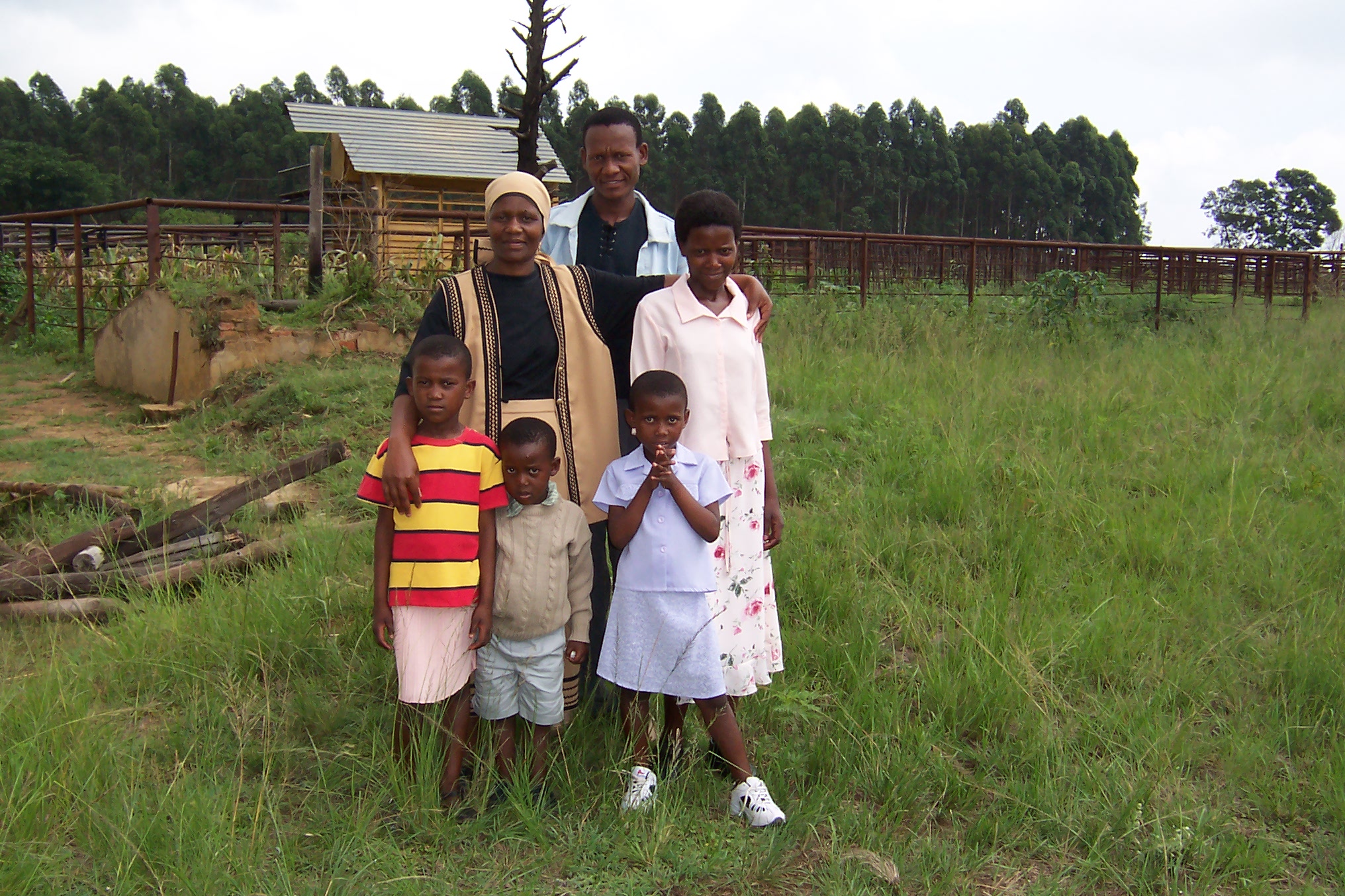
Khethiwe in 2004 when she attended kids club. She is standing on the right of her mother Celani.
Friday evenings continue with cell group. Phumulani started the first one for the year with teaching on “fearing the Lord”. It was very good. Sal has been going through 2 Kings on Elijah and Elisha. We continue to go from home to home, sharing a meal together, praying and singing, along with sharing. Mandla is bringing the teaching next week. Evangelism continues in the local areas. Last month we finished preaching the gospel in the area of KwamaThema without any harassment from local people, though it was first mentioned when we arrived there. Now we have begun sharing the Gospel in the next area called KwaBhekephi.
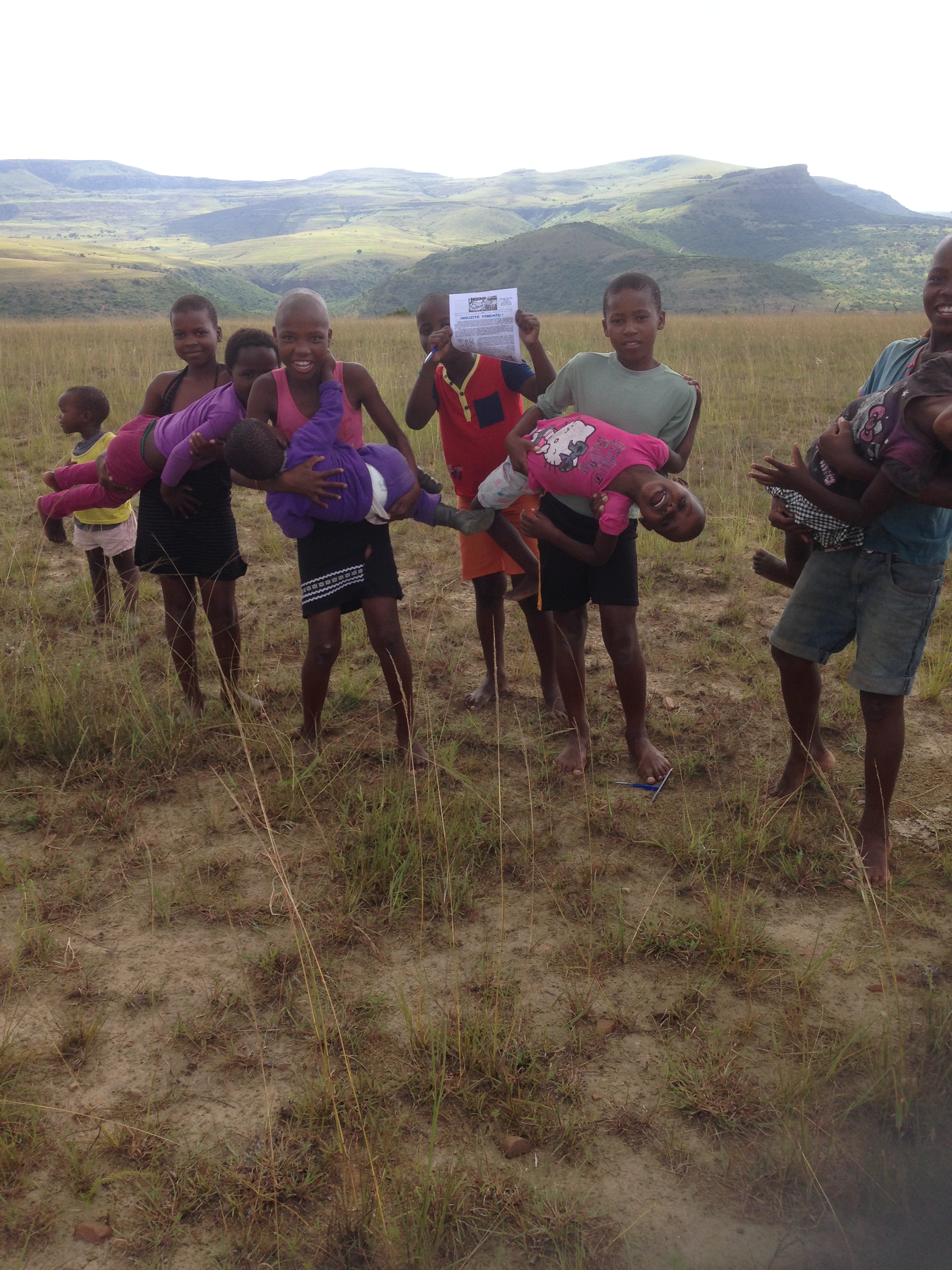
Kid’s playing their guitars at KwamaThema where we preached the Gospel
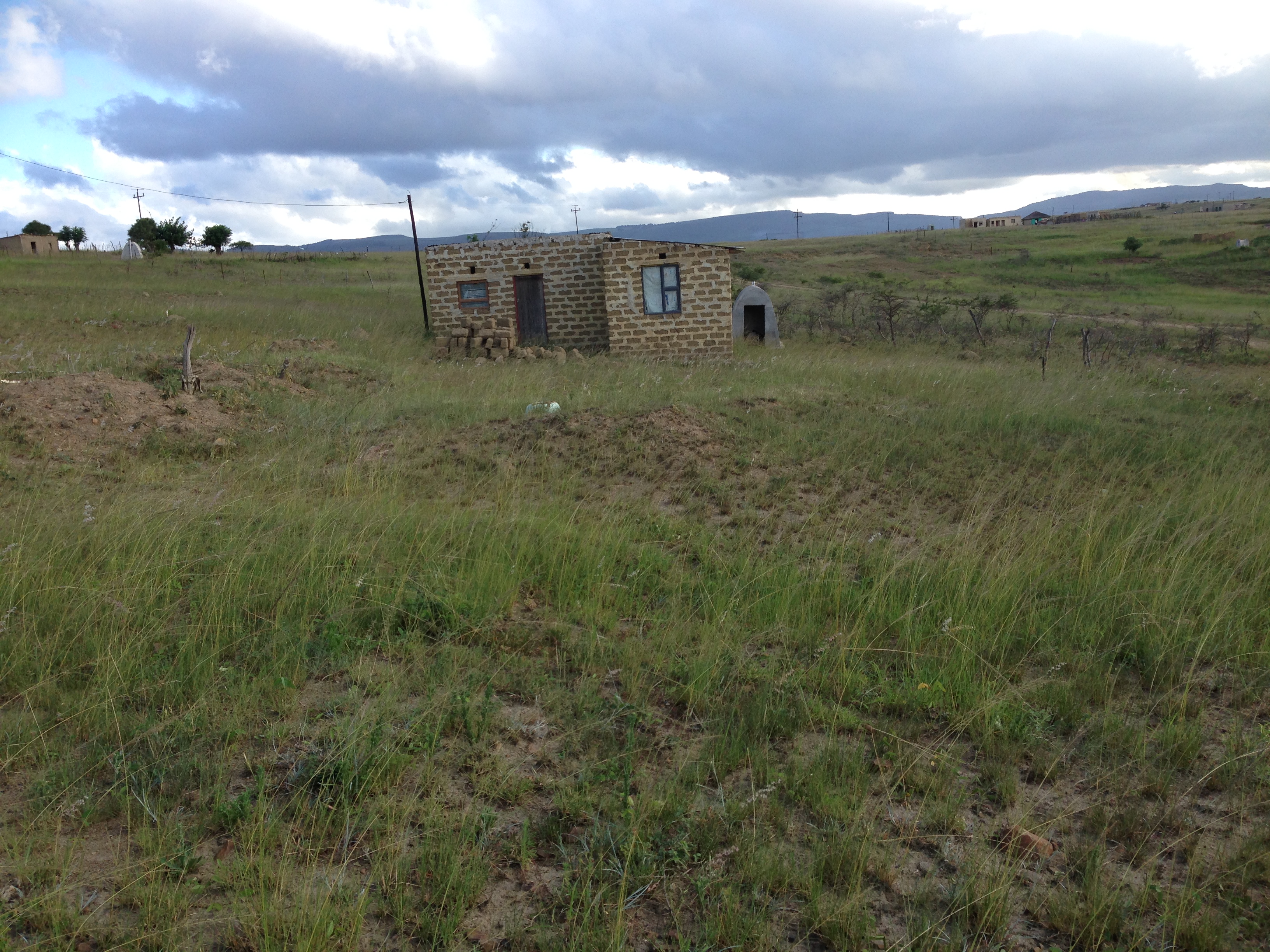
While preaching in KwamaThema saw this cool
Phumlani preaches in KwamaThema.
Every January Di helps Belinda out at care bear crèche to help with the first week of schooling. Therefore, Di helped out in Vryheid in the third week of January which gave Salvador opportunity to Skype his dissertation supervisor for Bible college and he completed and submitted the last assignment of his B.th (Hons). He is very grateful for all the friends and family in Messiah that supported him along the way and when he gets his final grades he will be personally thanking each person. Now Salvador has taken the opportunity to do more recordings for the discipleship book in isiZulu so that he can get that published as a resource. There are several other projects Salvador has got up his sleeve and more news should follow.

Salvador working on his dissertation
Over the last weekend of the month we went to the east coast to get Di’s outcome of her application for her renewal of visitors permit. Praise the Lord, Di got a visa for another three years which means that she gets to stay till 2018. However, they spelled Di’s name wrong which meant that Di had to make another application to get the visa amended. Another two and a half hours later her application was lodged. Fortunately they did not charge her anything for this application. While there Salvador played guitar and preached at Coming King Ministries in Ballito. Salvador preached on the tabernacle and koinonia and it seemed to be a word in season. We stayed with a lovely couple called Matthew and Maralize who attend the assembly. We also visited a home bible study of the Indian church in Stanger on the monday evening. Salvador spoke on witnessing in a multi-faith society. Then on Tuesday we visited a place called Summerhill where there are plans to build an orphanage/children’s home with a community centre. At the moment a Zulu lady opened her home up for orphans and many children go there to get help with homework. It has taken them 5 years to get planning permission to build the complex so should be exciting for them to be able to go ahead with it. On Wednesday evening we visited Kevin and Michelle’s (from Coming King Ministries) home to attend their cell group before heading back on thursday.

Travelling to the East Coast, Beautiful scenery.
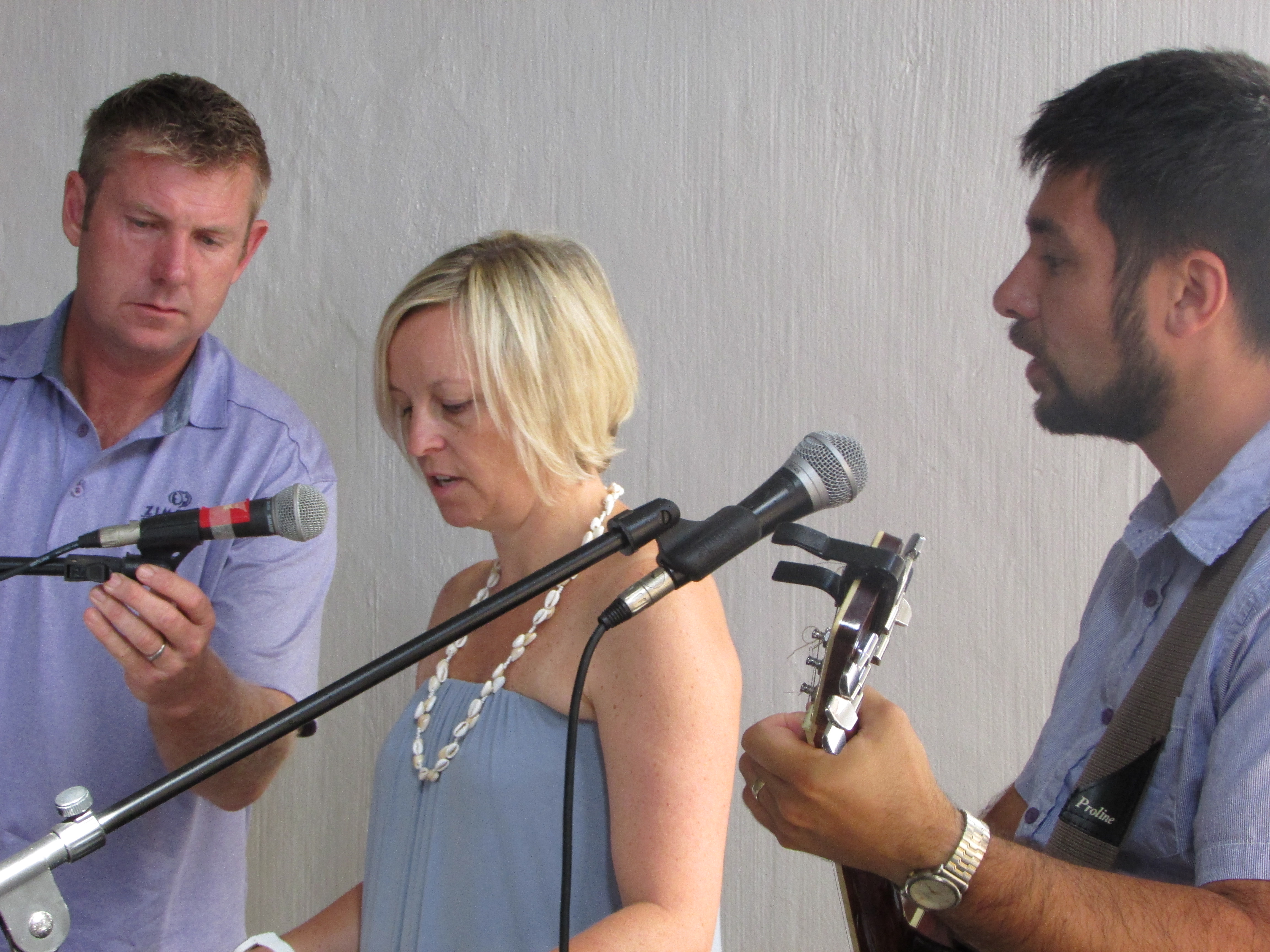
Praise team at Coming King Ministries
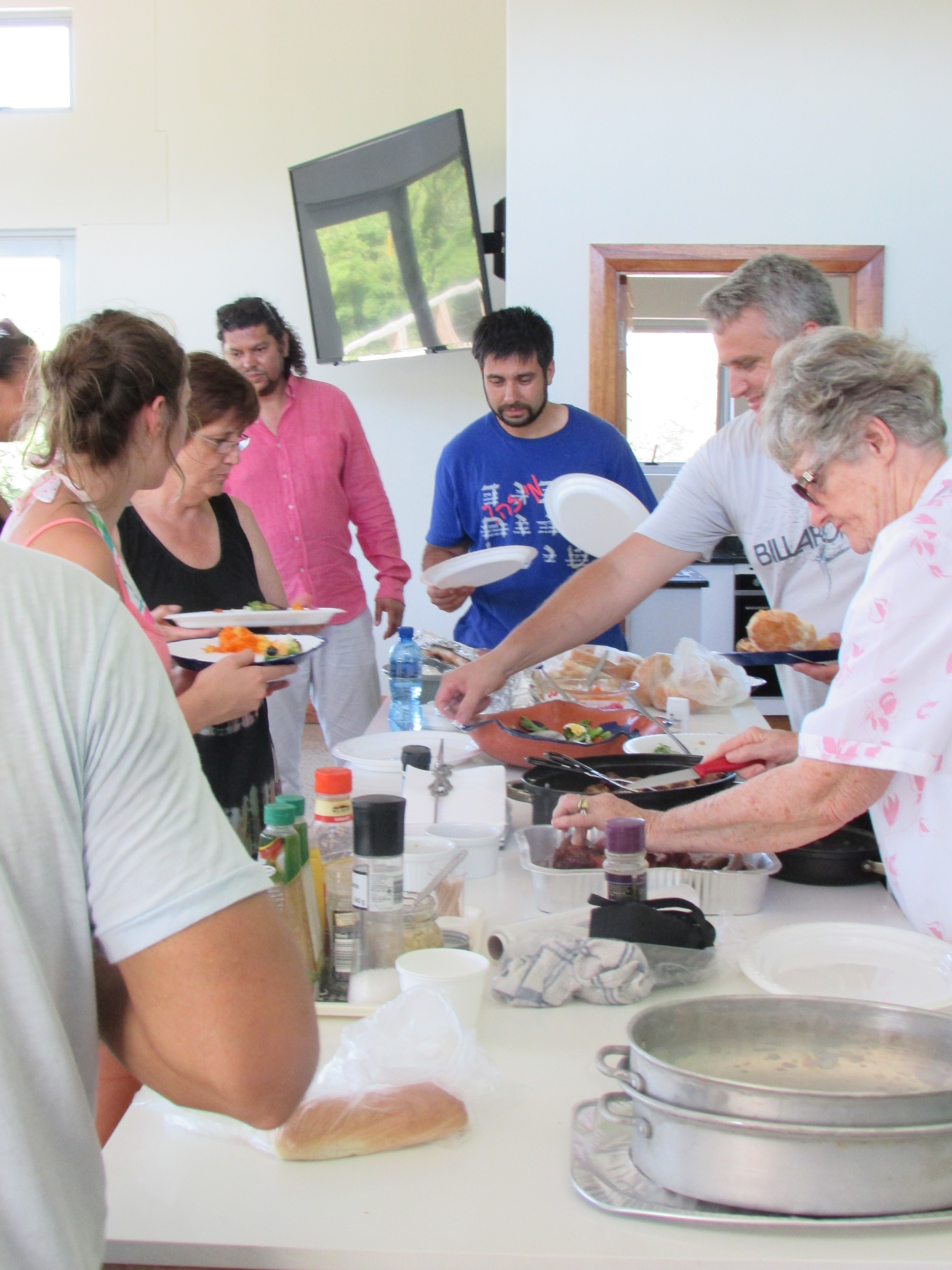
Enjoying a Braai with the brethren of Coming King Ministries
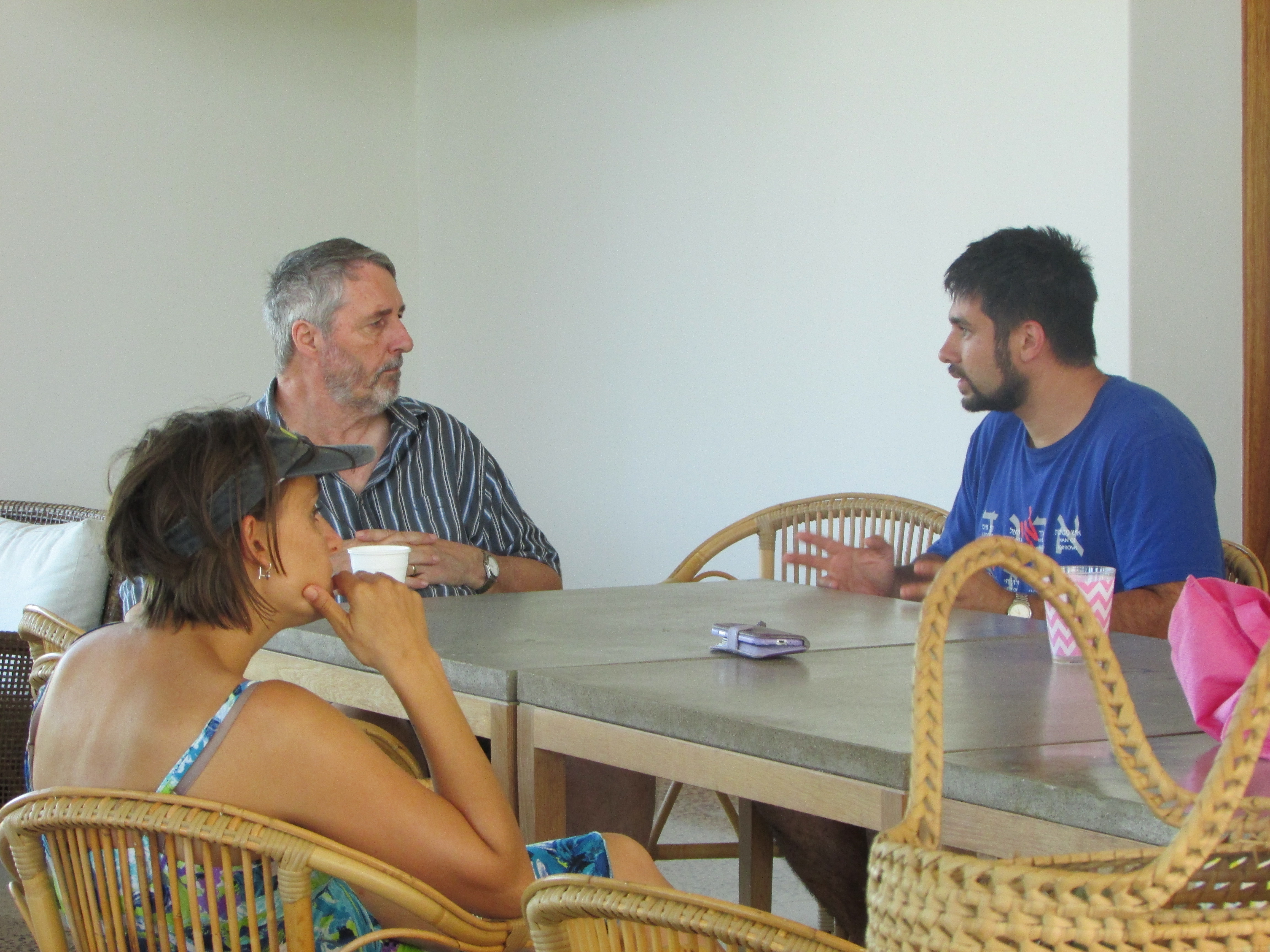
Enjoying discussion with Leslie Crickmay
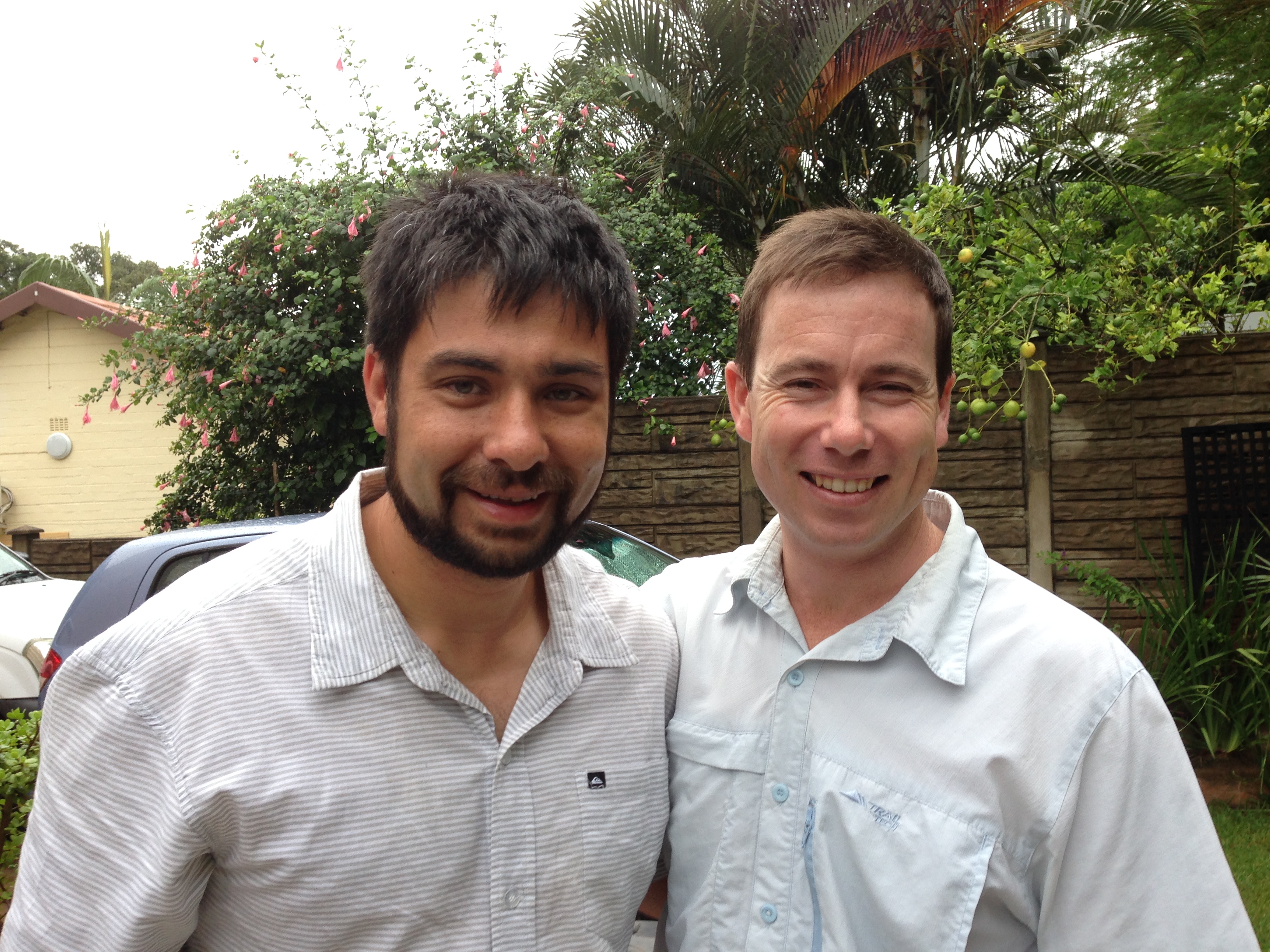
Salvador with Matthew whose home we stayed in.
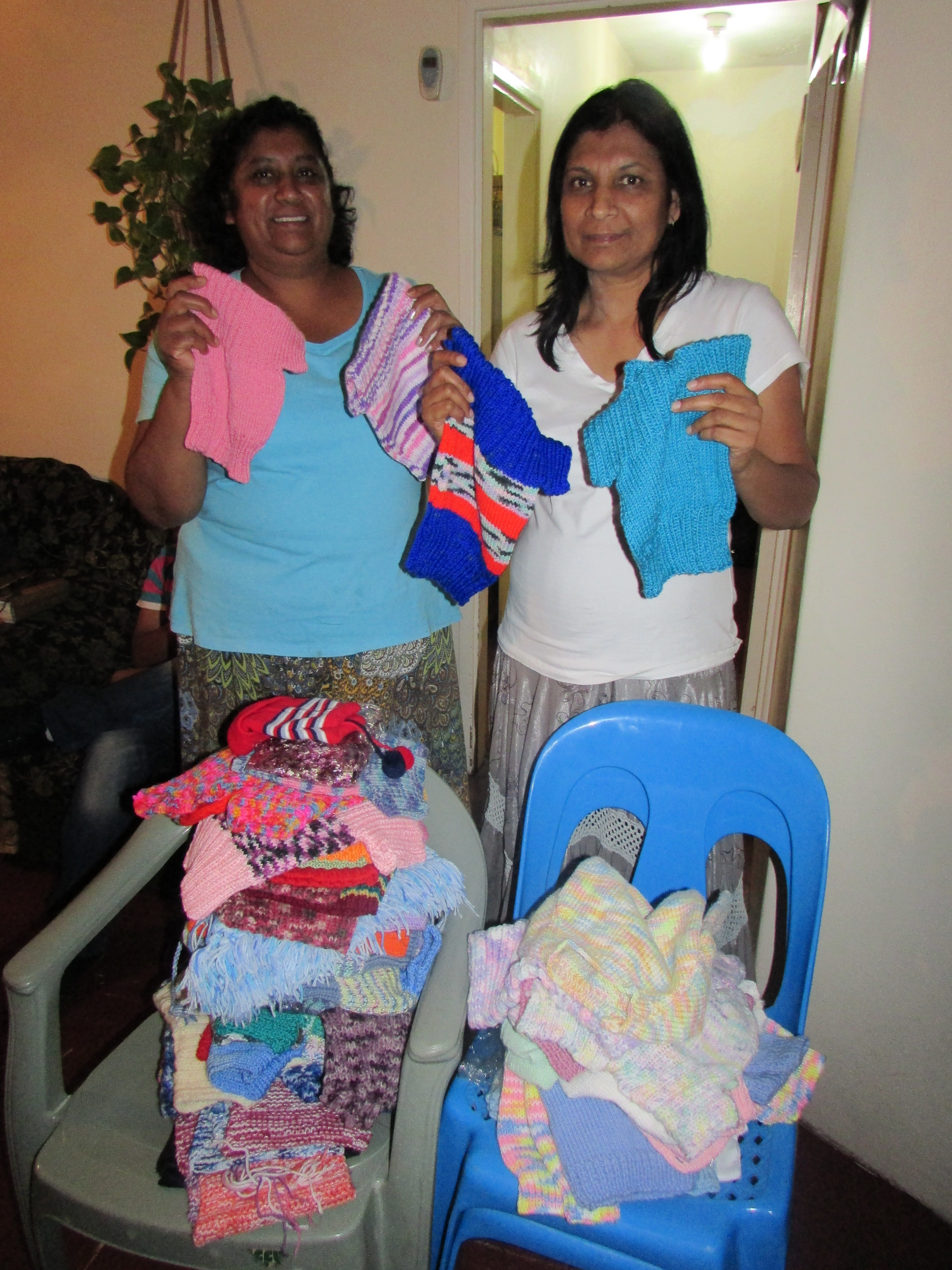
Giving out jumpers to bible study members in Stanger
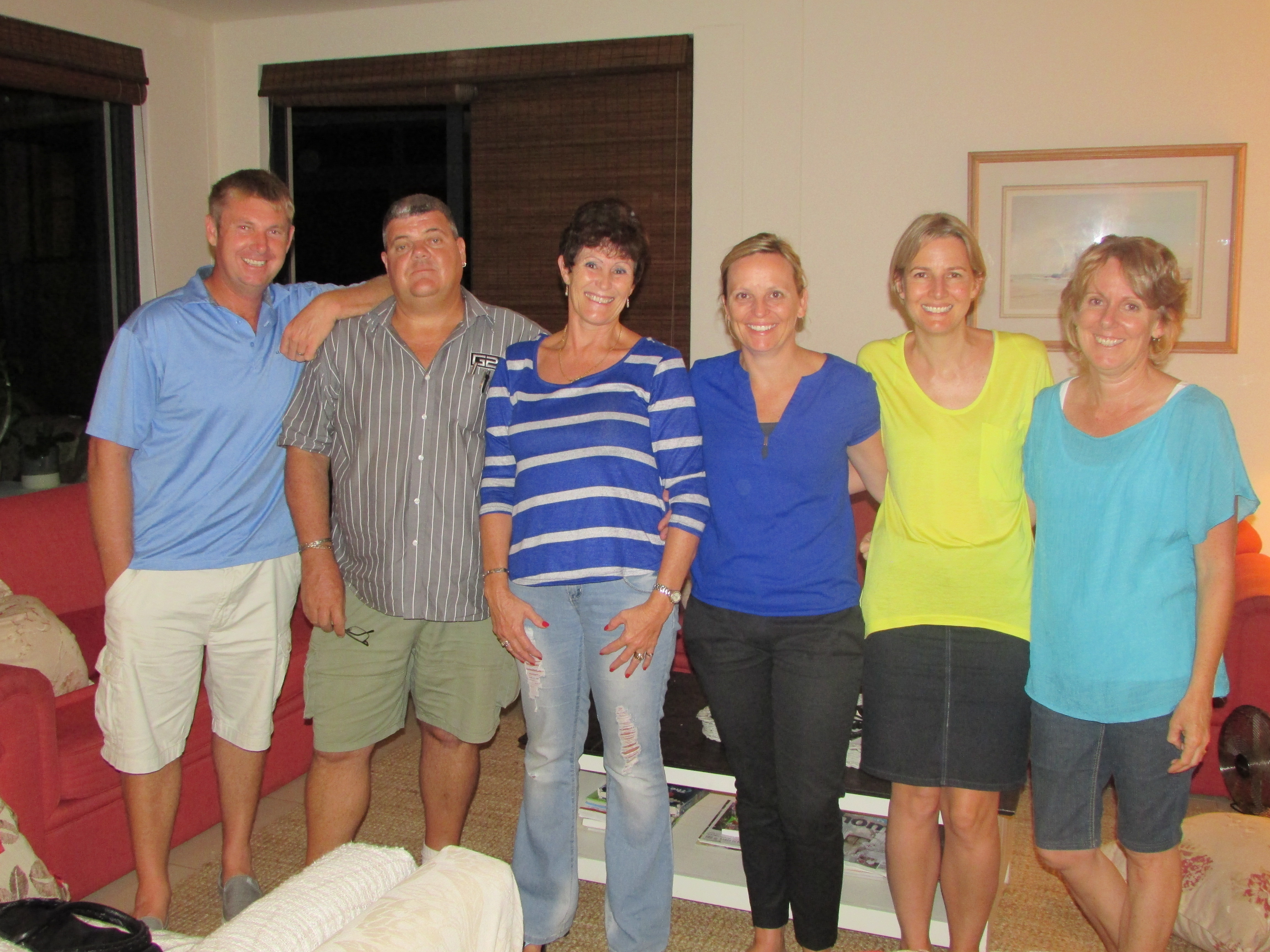
Cell at Kevin and Michelle’s
This month will be rather full. Salvador may be preaching at Coming King Ministries. In a couple of weeks time there will also be an evangelist, Cecil Peasley, visiting Vryheid and speaking at Bethany Baptist Church, the local prison and a Zulu community not too far from us. Salvador will be interpreting for him at the prison on two days and then at a pension day. The week after we will go through to Gauteng to get Salvador’s guitar sorted, to help NTM material corrections at the printers, to do some interviews for a project Salvador is involved with and hopefully to pick up our Portuguese marriage certificate before Salvador’s parents arrive from the UK for a three week visit at the beginning of March.
Di has been sorting baby jumpers into piles to give out to the maternity ward at Vryheid hospital, the clinic, crèches, other Ministries and Neighbours and friends in surrounding areas. Thank you to all the faithful knitters in Australia and Marg and Pam from Moriel ministries for all the work in getting them here.

Di sorting out kids jumpers
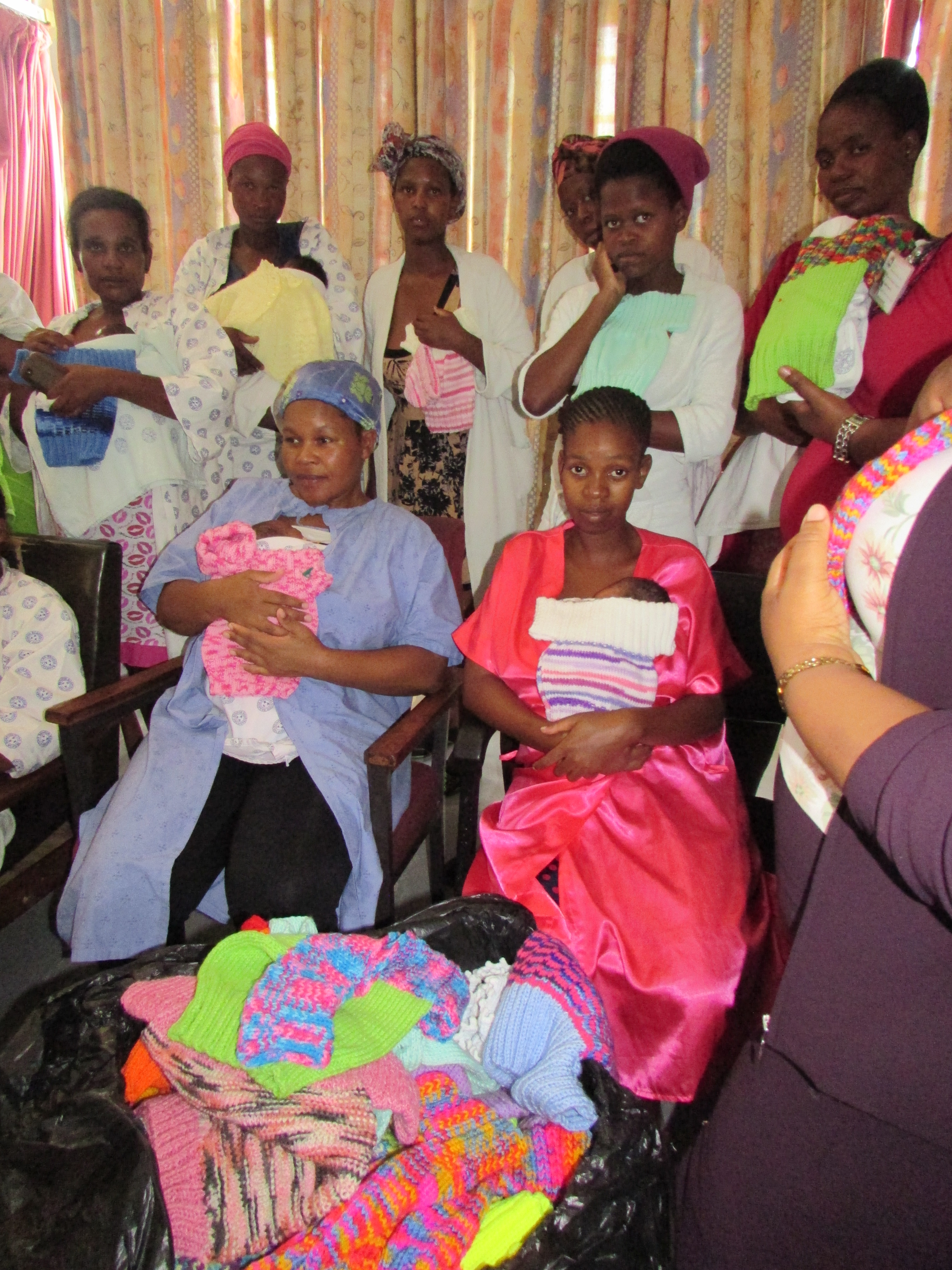
Parents, kids and jumpers

Family of knitted toys needing a home
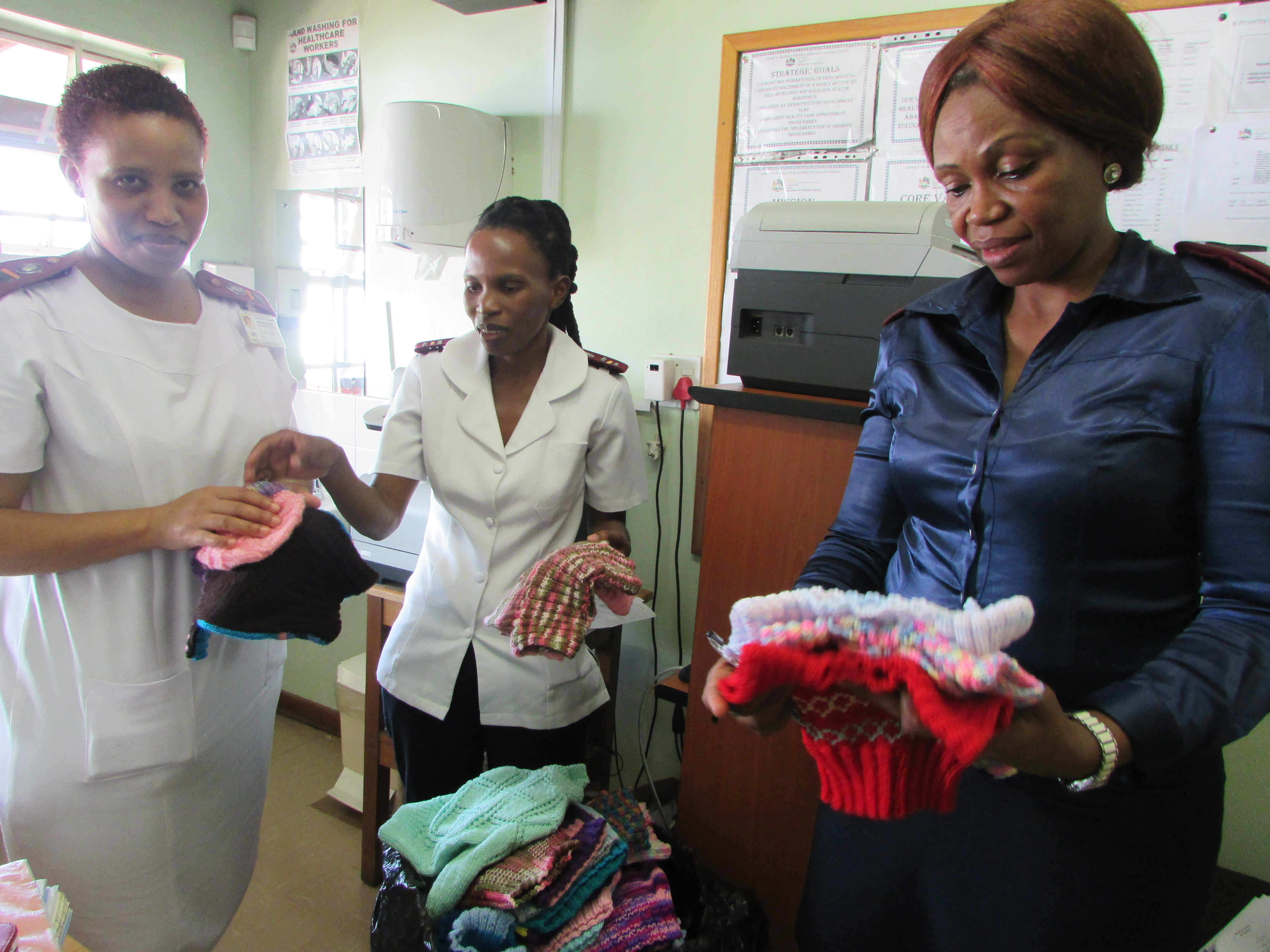
Jumpers given out at clinic
This kid will probably have grown into this jumper by the time winter sets in
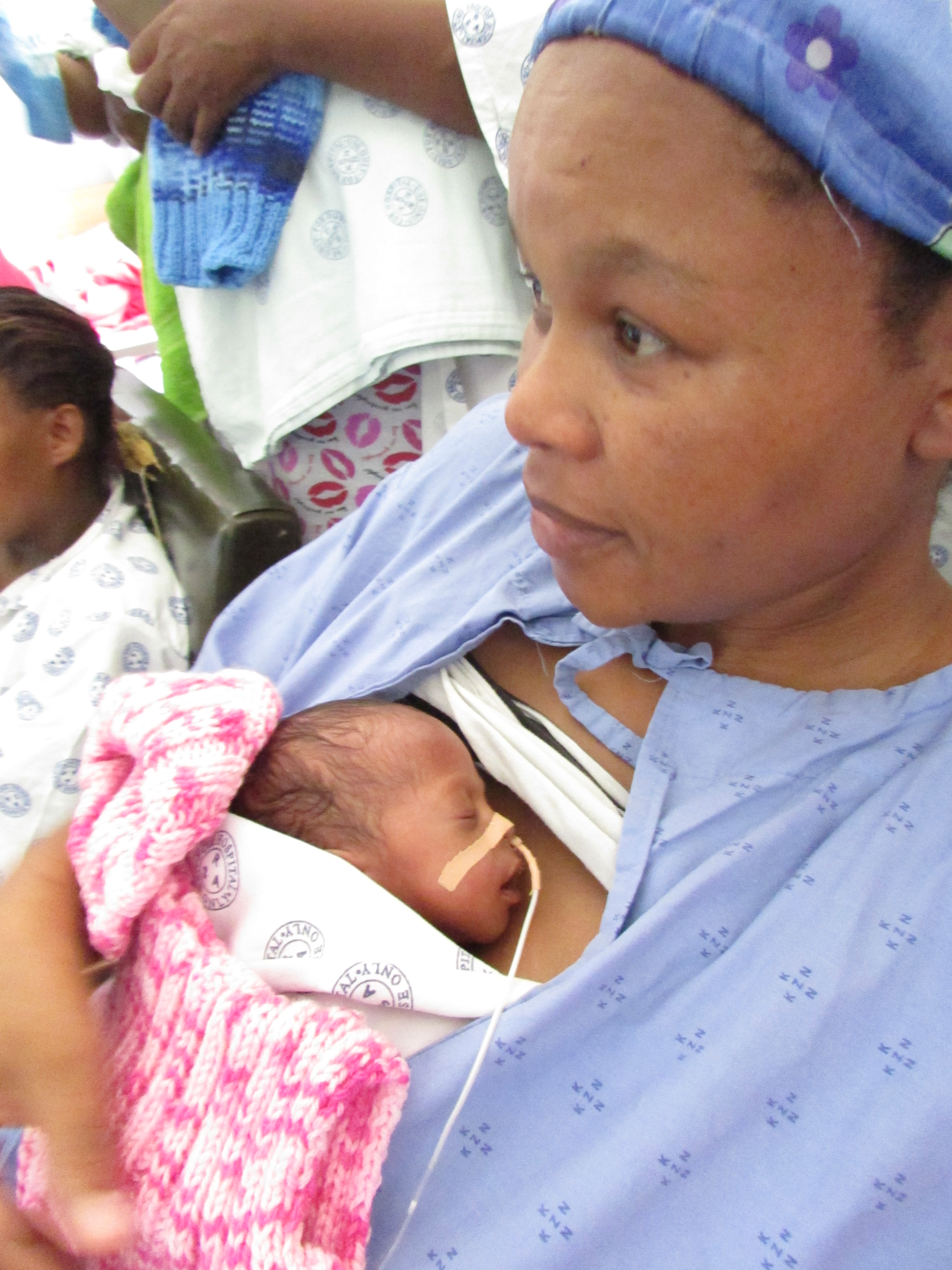
New born baby in Vryheid hospital. They are so tiny.

A mother and baby at Vryheid hospital
Blanket given to little one at Vryheid hospital
Baby at Hospital receiving jumpers
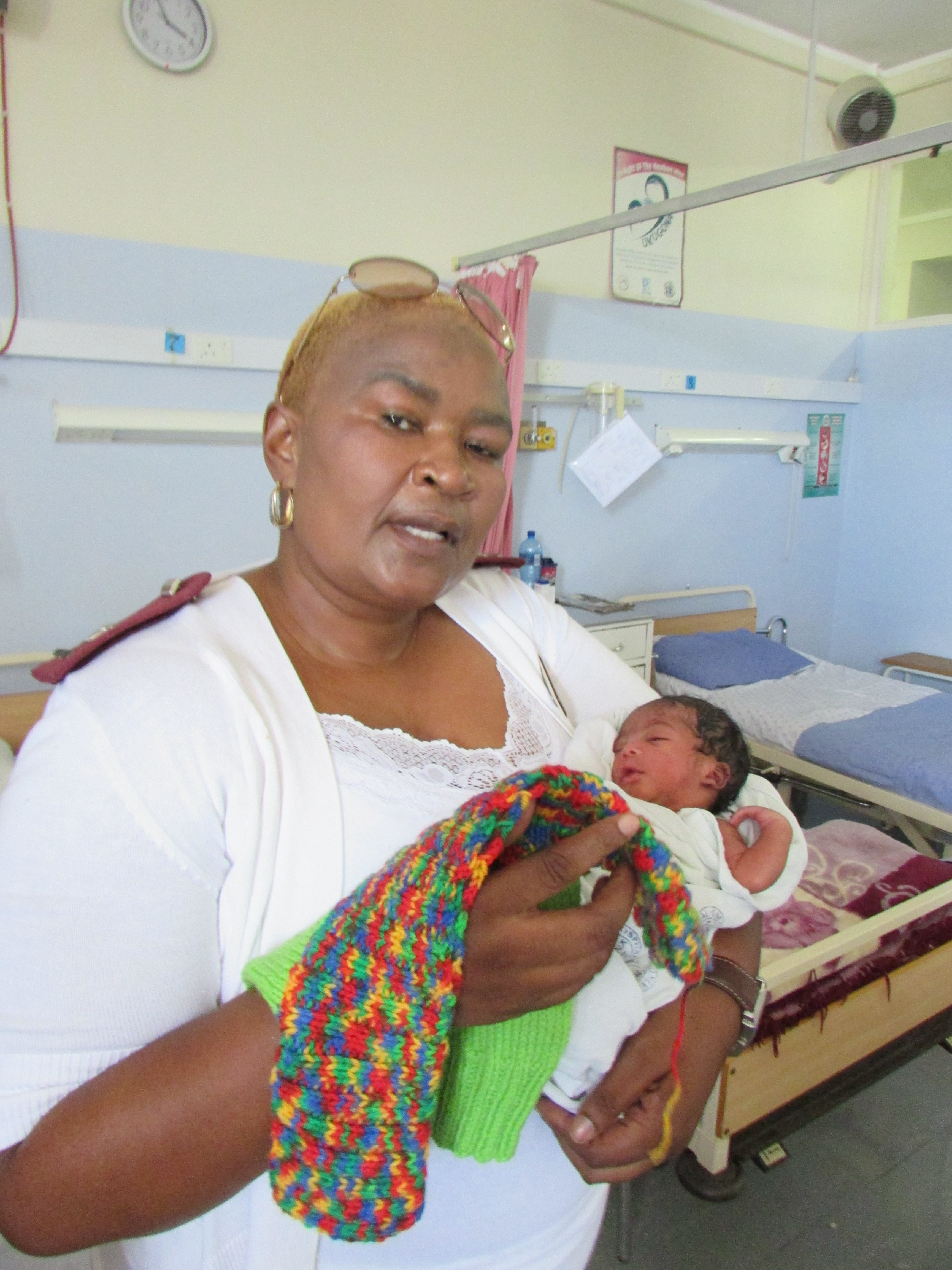
Inserting all these photos because these kids are just so cute
Thank you for your faithful support and constant communication.
We serve a Mighty God, may we continue to sit at His feet, sharing our heart, praying and listening as we read His word so He can reveal more and more of Himself to us showing His great love and wisdom in a world that is blind, lost and striving after the wind.
Shalom
Sal and Di
Prayer Requests:
- Thanks for Di’s visa
- Thanks for Mesuli’s Bursary
- Thanks for growth in Mesuli and Khethiwe’s lives
- Evangelism of area
- Dealing with issues of fatherhood in community
- Publishing and other projects
- Salvador’s parents visit
SIX
NOT UNDER LAW YET NOT LAWLESS: part 1
GRACE, THE REAL ANSWER TO ANTINOMIANISM
ROMANS 6: 1 – 14
Up till now we have been tackling the issue of justification by faith and what a detailed treatise Paul has given the Christians in Rome! These Christians were mainly gentile but had Jewish believers among them. The issue of table fellowship between Jews and Gentiles was one of the earliest difficulties the Apostles had to deal with in the Church. One of the main things we have to remember is that the trimmings of biblical Judaism are exactly what they are, biblical. These issues of the feasts, the Law, the Abrahamic covenant and even the separation between Jew and Gentile are not simply cultural differences but they are issues that God created. It was God who gave the Mosaic Law. It was God who gave the feasts. It was God who made a covenant with Abraham, which He cannot annul. And it was God who made the Mosaic covenant with Israel. It was also God who made the division between Jew and gentile. And so to stand against these things is not to oppose a man-made institution but God. This is why the letter to the Romans is so detailed and goes through such legal debating.
Paul preaches the gospel as historically rooted in Israel, yet also as a prophetic message. When I say a prophetic message I mean that the Israel’s is seen as prophetic of Israel in Paul’s day. Stephen, the martyr in Acts 7 also did this. He went right back to Abraham and gave the history of Israel’s hardness of heart throughout the ages. Then he showed how it related to them in terms of Jesus. When Paul went into the synagogue in Psidian Antioch (Acts 13), he related the history of Israel from the Exodus through David up to John the Baptist, and showed them how Jesus’ death and resurrection fulfilled OT prophecy.
We will deal with Romans 6 in 2 sections. We will deal with the first half of the Romans 6 in this chapter and we will deal with the last half in the next chapter.
Verses 1 – 14:
GRACE, THE REAL ANSWER TO ANTINOMIANISM
Now please remember that this epistle has much to do with the Jewish people. God never annulled the covenants and aspects of the Law as legitimate Jewish cultural practices. He never tried to stop Jews practicing what aspects of the Law that they were able. Rather God has annulled the obligation of keeping the Law for salvation. There are a few reasons why we cannot say it is wrong for Born Again Jews to still practice aspects of the Mosaic covenant.
- Firstly the practice of Torah or Law for the believing Jew, such as Paul or James, was always done in relation to Christ because Christ is the fulfillment of the Law or Torah.
- Secondly, because it is not obligatory, we Gentiles according to the flesh were never compelled to keep any of the commandments except four. Those were to abstain from blood, from meats strangled, from immorality and from things sacrificed to idols. Not even tithing or remembering the Sabbath was included in that. However that was a liberty given to the Gentiles and not a nullifying of the Jewish feasts and food laws for the Born Again Jew.
- But thirdly to keep the Law out of obligation for salvation only brings condemnation because the requirement is to keep all of it. However a practice of it by faith takes it away from a salvation issue.
When a believing Jew keeps the feasts and the commandments out of faith in his Messiah it is the faith that justifies him and not the keeping of the feasts or anything like that. So Paul has taken away the obligation of keeping the Law. He has not said it is wrong to do Passover and keep Shabbat or to eat Kosher. Now it would be wrong for a Jewish believer to look down on a fellow believer because he does not keep those aspects of the Mosaic Law. There were stern warnings in Galatians concerning Jews that tried to convert Gentile believers to Jewish identity and a Jewish lifestyle. If they converted through circumcision they would be denying the Gospel because their testimony would be, “Jesus never brought me all the way in, it was rather Moses who brought me in.” But there is freedom for the Jew from the compulsion of keeping the Mosaic Law in regards to his salvation but there is also freedom for the Jew to keep the Mosaic Law.
Now think of the last two verses of the last chapter. Paul says that the greater the sin, the greater the grace has to be. Where sin abounds, grace abounds even more. Now think of how this must have sounded to Jewish ears. The Law was not simply a set of rules for him; it was a whole way of life given by God. It was the purpose for which he was created. It was through the imposition of these rules that the Jew combated sin. The Law strengthened their good impulse which was naturally weaker than the evil impulse. Eventually they hoped that, through the Law their good impulse would eventually overcome the evil impulse. The Jews believed that the good impulse started at conception but the good impulse began when a boy was bar-mitzvahed. Thus the evil impulse had a bigger advantage, so much that the good impulse was picture as a prisoner in the fortress belonging to the evil impulse. The Law stood for righteousness and so if you brush it to one side, are you not going to excuse sin?
IS IT A CHOICE BETWEEN LAW AND SIN?
Look at verse one. 1 What shall we say then? Are we to continue in sin so that grace may increase?
Now we see the return of that ‘voice of doubt’ (diatribe) that we first encountered in Romans 3. Back in Romans 3 we saw that this voice was Jewish and here it would seem to be the same case. We especially see the Jewishness of this voice’s identity at the beginning of the next chapter where it talks of being free from the Law; a law that we, as physical Gentiles, of which we were never a part. The fact that Paul may be addressing the Jewish contingent in Rome should not make us think that he is not also addressing the gentiles, and by extension us.
- Firstly, we have been grafted in as equals into the commonwealth of Israel.
- Secondly and more importantly, the issues of this chapter are universal to all Christians of all backgrounds. We all struggle with sin.
So the Jewish mind is saying in effect, ‘when I take the necessity of the Law away, does this idea of grace not mean that we should commit more sin in order to get more grace?’ The Law which condemns sin is taken away and there is no condemnation for those acts. ‘Therefore, why should we not sin more to get more grace?’ Paul raises this question, not only to address objections that Jewish people would have raised, but also to reflect man’s heart, which seeks self-justification and to pin the blame on God. This attitude is already becoming apparent and will become even apparent in the next chapter and in Romans 9.
So what is Paul’s answer to this question? Should we throw out the Law that condemns unrighteousness and give way to sin or keep the Law and fight against sin? It is neither. Verse 2 tells us that grace does not excuse sin but grace rather signifies that we have died to sin. The point of grace is not to encourage sin but to deliver us. Grace does not merely deliver us from the consequence of sin but also from sin itself. Now if we are honest we can easily see the seductiveness and appeal of the argument made in verse one. There is something in the human being that strives to find a way of sinning and getting away with it. If people discovered a simple cure for AIDS (which would be much needed and would be a good thing in itself) do you think that the South African Health Authority would promote fidelity? Would promiscuity be on the rise? That is why we need to pay close attention to what Paul says. Grace is God’s free gift. It gets us off the hook so that we will not be punished for our sin; so that we will not die for our sin. The more we have sinned, the greater grace we receive to deal with that sin. That is the benefit of Grace, if you like, but it is not the main purpose of grace. The main purpose of grace is to restore our relationship with a God who hates sin and to deliver us from the dictates of sin through Jesus’ work on the cross. Verse 21 of the last chapter says that grace reigns through righteousness. This is the point of grace. Even though we blew it, we still have the opportunity to be counted and become righteous.
DYING TO SIN ONCE AND FOR ALL AND DYING DAILY
We have died to sin. That tense, according to Martin Lloyd Jones, is the aorist tense. This tense speaks of a once for all act never to be repeated, or in technical terms it is punctiliar. In Galatians 2: 20 Paul says that he had been crucified with Christ. Jesus’ death was our death. When He died we also died. And it was not only a death to sin but as verse 19 says, Paul also died to the Law. The Law no longer had mastery over Paul’s life but Christ did. This death came about through the Law itself. How did this death to the Law come about? It came about because the ultimate purpose of the Law was not simply to guide the Jew to live a life pleasing to God, though it surely did that, but it was to expose sin and to condemn it. Paul died through the Law because the Law condemned him, he was on death row. I once read a book called ‘Cry, the beloved Country’ by Alan Paton. In it a young man is found guilty of murdering another man. The fact that he did it out of fear did not matter. He had taken a weapon and the weapon was loaded. Therefore he was guilty and the sentence was death by hanging. As soon as the sentence was given, this young man was a dead man. He was still living and moving, he could write letters home and before he died he was able to have a feast of anything that he wanted to eat but he was on death row. He was a dead man walking. It was that case with us. We were dead men walking, under the sentence of condemnation. But the Law was also the school master to bring the Jew to Christ. The gentile nations had the law of God in their consciences and so, in a manner of speaking, even they had God’s law, though it was watered down. The law of God in the conscience was our tutor to bring us to Christ too. So it is only when we realize that we are on Death row, that we will look for salvation from the one who fulfilled the Law and gave Himself for us. Instead of us being hung for our crimes, Jesus was hung for us on a tree. When we got saved we became identified with Christ and we were born again of a spiritual birth. His death was our death so now we take His life. ‘I have been crucified with Christ and it is no longer I that live but Christ lives in me.’
We will look at the truth of continual dying at the end of Romans 7. As Paul says, ‘I die daily’. But can you see that when you and I got saved, it was because Jesus took our death and we took his life? His death was our death and so the life of sin has been done away with positionally. Now that is the objective truth. That is the truth when I feel it and when I do not feel it. It happened in time and history and nothing I do changes it. Therefore, Paul says it is completely illogical to continue in a life that we have died to. Imagine if you are a prisoner and someone comes and pays your bail. It does not make sense for you to stay in the jail. You died to sin, how can you continue in it? That is the objective truth. But the objective has to be experienced in a subjective way. And this is what Paul gives us in verses three and four. Baptism is a subjective experience but it speaks of the reality that happened by faith when someone accepted the Lord. When someone accepts the Lord they have died. Baptism is spoken of as a burial.
Whether we like it or not, in the book of acts, people were baptized upon conversion. There is no evidence that baptism was postponed till people ‘were ready’. There is no problem with sitting down with someone to test their conversion and to see if they really have a saving faith. Nevertheless, if that person is truly converted they are ready for baptism. Baptism speaks physically of what has happened by faith, spiritually. It is the Christian who makes the baptism real and not the baptism that makes the Christian real. There is nothing in the book of Acts to suppose that this is an event where people invited relatives to come and see, though it may have been in public where the sources of water were. It was a matter of obedience. In Matthew 28: 18 – 20, Jesus commands that disciples be baptized. There are no ‘ifs’ and ‘buts’. The bible teaches us that if you are a Christian today you should have been baptized. The only condition to baptism is that we have a saving faith. As FF Bruce states in his commentary on Romans. “We may agree or disagree with Paul, but we must do him the justice of letting him hold and teach his own beliefs, and not distort his beliefs into conformity with what we should prefer him to have said. (This applies to many other subjects than Paul’s baptismal doctrine!)”
Paul says that through baptism we are identifying ourselves with Jesus’ death. We are buried with Him in baptism. It is not the baptism that is saving us. Peter explains it in 1 Peter 3: 21. Corresponding to Christ dying for sins once and for all, and corresponding to the salvation of Noah and his family in the ark, he says, baptism now saves you. Now lest we misunderstand this and think that baptism is a prerequisite to salvation he continues – not the removal of dirt from the flesh. The main issue of baptism is not the water. It is not the physical act but of what it symbolizes that counts. It is an appeal to God for a good conscience – through the resurrection of Jesus Christ. We are baptized into Christ’s death, not trusting in baptism because that will never save anyone, but in baptism we appeal to God to clean our conscience. This is on the basis of Jesus’ death and resurrection. Not only this but Peter continues into verse 22 and says that Jesus is at the right hand of God. He is not only waiting for God to make His enemies a footstool for His feet but Hebrews 8: 1 ff also shows us that Jesus is there as our great high priest ever living to make intercession for us.
Let us get back to Romans 6. Now what has a clean conscience and Jesus’ intercession to do with the symbolism of baptism? We are not only identified with Jesus’ death but Baptism holds significance of something else. And it is a twofold significance. Verse 4 shows us the significance for this present time and verse 5 shows us the significance for the future. Verse 4 says that as Jesus was raised from the dead through the glory of the Father, so we too might walk in newness of life. We appeal to God for a clean conscience based on the merits, goodness and the righteousness of Christ and what He did on the cross. Christ intercedes for us and God wipes the slate clean. Because the slate is wiped clean we may walk in newness of life without the stain of the past being counted against us. It is newness of life and not only a fresh start God offers us. As a pastor of mine once said, ‘Christ does not offer us a new start in life but a new life to start.’ This is not like a new year’s resolution that is made over and over again, but it is a brand new spiritual life. As Paul says in Romans 8, the Law could not do what Christ did. The Law, by itself, offers no power to the Jew to conquer sin, it simply tells him, ‘do not sin’. But grace enables a spiritual life to conquer sin.
But verse 5 shows us that baptism also speaks of our future hope. If we are identified with Christ in His death, then we will also share in His resurrection. This is reminiscent of a few other places in scripture where death and glory go together. In Philippians 3: 10 Paul prays that he may know the power of Jesus’ resurrection AND the fellowship of His suffering, being conformed to His death. Suffering here is related to death. There are two crosses in Christianity. There is the cross of atonement, or the cross of justification. That is the cross that saves us and only Jesus could take that cross. No other cross brings salvation to us and there is nothing we can contribute to this cross. It is the source of the free gift of salvation. But there is also the cross of identification. This is the cross that we take, but not to get salvation. Rather, it is part of the package of salvation that we have received.
And as we have seen, this cross is experienced in a twofold way. Firstly as an event, as a one off act where we have been removed from the kingdom of darkness and transferred to the kingdom of light. This aspect is never to be repeated. It is the death to the life of sin and identity with the world. Our repentance primarily concerned a change in identity. We turned from our Adamic nature and received Christ’s nature, through the Holy Spirit. This is a past death. It is the entrance and we only go through the entrance once. Thus Paul in Romans 6: 2 says that we died to sin. But secondly we experience this cross daily. We daily take up our cross. This is not a death to the old life but rather to the resident sin that lives in our bodies. It is a continual dying to the flesh. We have already become dead to the world and the old life; that is past and has already happened. But we still carry about the body of death do we not? Thus Paul says that he died daily. The ‘once for all death’ marks the entrance. The continual dying daily is the path that leads to glory.
DEATH AND RESURRECTION
We cannot have resurrection without death. Jesus said if we deny Him before men, He will deny us before the Father in heaven. (Matthew 10:33) We need to be identified with Him in this life for Him to be identified with us in the next one. Again this is not a prerequisite to gain eternal life but is part of what we accepted when we received eternal life. But why do we have to take on board the suffering in order to get the blessings of Christ? Why do we have to endure some things that we do not want? The mindset of only taking the blessings but rejecting the suffering is the mindset of using the Lord and Master of creation as a means for our personal happiness. We press the right buttons and get what we want. But Christ wants us to know Him and for Him to know us. It is called fellowship. The word fellowship means sharing. If we will not endure the suffering and we decide to cop out, if we will only follow Him in times of blessing but not adversity, then we are not fully fellowshipping with Him. He means for us to share in all aspects of his sonship, both the positive and the negative. It puts a whole new spin on the words of Jesus when He said, many will come in that day and say, ‘Lord, Lord’ and He will say ‘Depart from Me, I never KNEW you.’ “I never fellowshipped with you, I never shared my life with you. You did not go my way, but you did whatever you felt like anyway. You were not identified with me. You were lawless.” This is not what grace is about.
THE BODY OF SIN
Verse 6. 6 knowing this, that our old self was crucified with Him, in order that our body of sin might be done away with, so that we would no longer be slaves to sin;
Who are we identified with? FF Bruce, speaking of this verse, argued that the term ‘body of sin’ does not refer to our own physical bodies. He argues that it speaks of ‘the body of sin’ as it says in the Greek, ‘to soma tis hamartia’, ‘THE body of sin.’ He claims that the term ‘The body of sin’ refers to the community of the human race in Adam. In other words, our old self was crucified with Him in order that the community of sin, the body of sin in Adam, might be done away with. ‘Being done away with’ means it is rendered ineffective or put out of action, because as verse 7 says, the one who has died is freed from sin. Paul makes a distinction between ‘the body of sin’ and ‘our old self’, or ‘our old man’. There is profit in recognizing that ‘the body of sin’ that is rendered ineffective is the community of humanity in Adam, because with Christ there is no middle ground. Just as Psalm 1 indicates, we are either in the camp of the godly who revere the Word of God, are immovable and bear the fruit of Christ or we are in the camp of the ungodly, listening to the advice of the ungodly and are spiritually empty. Here in Romans 6:6-7 we see that, because we have died with Christ and become identified with Him, we have ceased to be part of the world. Unbelievers are outsiders. They are not a part of us. They are different. They are outsiders; not in. But they are outsiders who we should desire to be converted. We should love them and pray for them, help them and share the truth with them but they are not a part of us. Paul calls them outsiders in 1 Thessalonians 4: 12 when he urges people, who are part of the Church, to work. God wants to destroy the body of sin without rejoicing in the death of the wicked. We should want to see God’s enemies killed, not by execution nor by the sword, and not in the Lake of fire, but killed in the same way as we died and became new creations.
CONSIDER YOURSELVES TO BE DEAD TO SIN
From verses 8 – 10 Paul sets forth Christ’s example in a slightly different way than he did in the previous verses. In the previous verses Paul states that our identification with Christ’s death has brought us into union with the new life in Christ, and with the Resurrection of Christ. In these verses, Paul argues that following the example of Christ’s death brings the benefit of sharing in the liberty that is in Christ, or the power He has wrought over death. Jesus died once for all, never to die again. So we too die once. This is a very complicated concept because, as we have said, we have died a death once, never to be repeated and yet we die daily. We will look at this paradox in Romans 8. But we experience salvation, by faith. Faith speaks of our future hope but experiences a foretaste of that future hope and treats it as something present. Death is no longer to be master over us. There is a paradox here. The scripture says that we have died to sin, and that death is no longer master over us. But when we look at the state of churches today, even of our own lives, we can see such a lack of evidence of this being the case. Now we can argue these scriptures away easily and state that they must mean something else. It is too impractical to believe this. But how does Paul deal with this? In verse 11 Paul says, consider yourselves to be dead to sin. This word ‘consider’ is ‘logizomai’ and it is the same word used of Abraham when it says that Abraham believed God and it was reckoned, ‘considered’ to him for righteousness. In other words analyze these truths and come to see yourself by faith in the same way that God sees you. God considered us righteous first and so, let us consider ourselves righteous too. It must be by faith. As Romans 1: 16 – 17 says,
“For I am not ashamed of the gospel, for it is the power of God for salvation to everyone who believes, to the Jew first and also for the Greek. For in it the righteousness of God is revealed FROM FAITH TO FAITH; as it is written, “But the righteous man shall live by faith.””
Let the scripture fill you, meditate on these truths, and let the Holy Spirit work in you till you believe, till you stop fighting it and accept the Truth of what Paul is saying. It is then we will see the difference in our lives. In Christianity we do not separate ourselves in order to make ourselves separate. First God separates us and then He tells us that on the basis of what He has done, in history and by faith, to separate ourselves. In the world, when you go to university, you do the course, you sit the exam and then you get the certificate if you make the grade. God does it the opposite way round. God first gives you the certificate and then he makes you run the course and then He proves you. As Colossians 1: 12 says, “giving thanks to the Father, who has qualified us to share in the inheritance of the saints in Light.” Read from verse 9 and you will see Paul is urging the readers to walk in a way that is worthy of the Lord. Do we believe that we have been made holy, that we are dead to sin? If we do then we may read Romans 6:12 – 14.
OVERCOMING SIN BY GRACE
I find these verses so realistic, so true to life and grasping them helpful. Verse 12 tells us that on the basis of everything that we have talked about ‘do not let sin reign in your mortal body’. Why do I find this realistic? Because it does not say that sin is not there or that sin does not try to take the upper hand in our lives, or even that we are to cast every trace of the flesh out of our bodies. This verse implies that sin has a very real presence in our lives. Verse 13 is even more realistic because it tells us that we are not to go on presenting the members of our bodies to sin as instruments of unrighteousness. I find this encouraging. Why? Because, by the use of the words ‘do not go on presenting’, Paul implies that in the past we have presented the members of our bodies to sin as their tools. But why is this encouraging? Apart from the fact that it portrays the reality of our lives in its commanding us to be holy, it also means that my past, even as a Christian, does not disqualify me from following Jesus. I, who have sinned even as a Christian, am commanded not to let sin reign in me and to stop living like a slave to sin. ‘Yeah you have sinned, and have done it habitually. I know that, I know what you have been like but do not go on doing it. Turn from your sins. Repent and serve God.’ Sin shall not be master over you, for you are not under Law but under Grace. To answer the Jewish objection, from verse 1: Dying to the Law does not promote sin in the life of the Jew and of the Gentile but actually it gives the power to overcome sin which the Law could never do because the Law never gives that newness of life in Christ. Grace does.
SALVADOR AND DIANNE’S MSINDISI MONTHLY
Number: 123 Jan 2015
P.O. Box 1481
Vryheid 3100
KwaZulu Natal
South Africa
+27 (0) 72 8311008
+27 (0) 72 3843786
Email: msindisi@gmail.com, salv.di@gmail.com
KwaZulu Mission Website: www.kwazulumission.com
KwaZulu Mission Facebook Page: www.facebook.com/kwazulumission
Praise the Lord! After doing the Care Bear concert Di’s application for renewal of Visa was submitted successfully and we are still waiting the finalisation of her application.

Salvador preaching at Care Bear Creche Concert
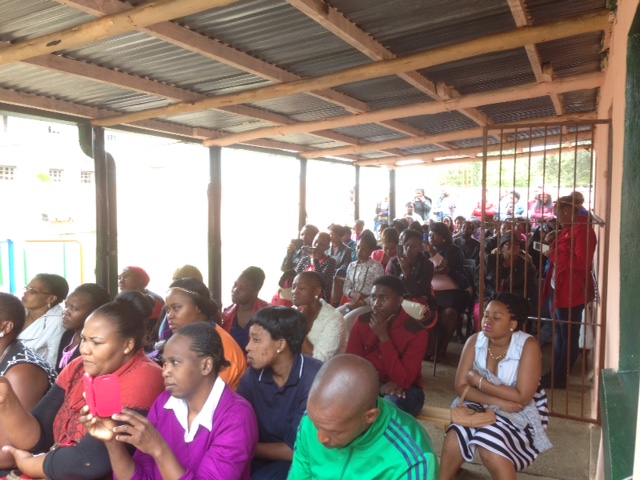
Parents listen at care bear concert
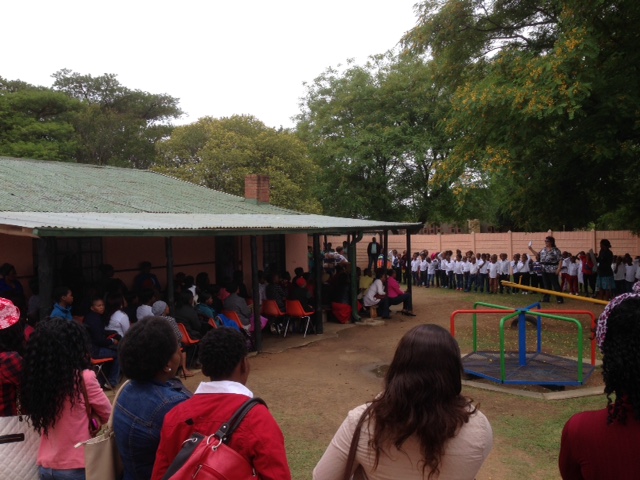
Care Bear concert
Salvador received his visa transfer from his old passport to his new passport and found that they had granted him an extension till 2016 so he does not need to apply for renewal of visa for another year. While on the east coast at the beginning of the month Salvador visited the church in Stanger, pastored by Calvin Josiah, and shared a short message concerning communion: and what Scripture means when it says that, in taking communion, we are sharing in the body and blood of Jesus. It is not that the bread and wine change substance, nor that His Spirit hovers over the emblems, but it is simply in our obedience to and faith in Jesus’ word. We also managed to catch up with friends from Coming King Ministries, the pastor Leslie Crickmay and his co-labourers Kevin and Michelle Edwards. We also met up with our friend, Marie Anne Van Niekerk for lunch the day after we went to the visa centre.

On our way home
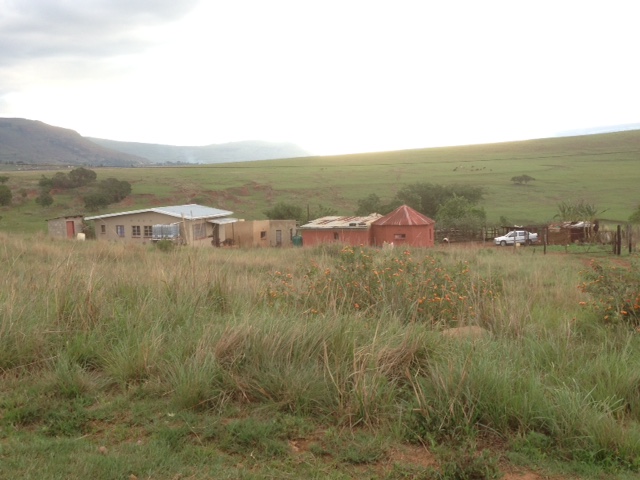
Our home
When we got home Salvador and Phumlani went out to KwamaThema with the gospel for the last two times this year. Salvador preached outside a drinking place and we had some interesting conversations with people though some did not like us being there.

Scenery of KwaZulu Natal

Moonflower in local area
That Saturday we had the last kid’s club of the year, which was a small party. We did not announce it before the time because we did not want word to get out. It was for the faithful children who attended because they wanted to learn and not because they wanted food.

Kids learning at kid’s club
On the following Sunday Salvador preached at the congregation about conflict and its necessity in our walk with the Lord. It is part of the course and we must engage in conflict with the flesh, the world, the principalities and powers of the air and even with other people when necessary. Such conflict must be rooted in the unity of the Godhead and God’s eschatological purpose to manifest His glory in the Church before a wrath deserving and truth-hating world.
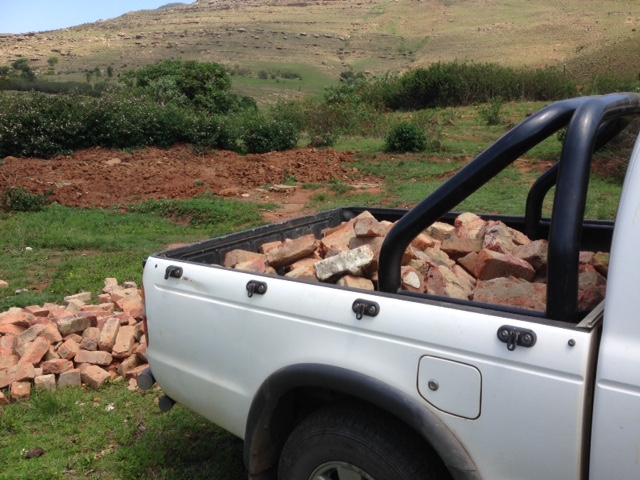
Helping Mkhulu fetching his bricks so he can build in the future
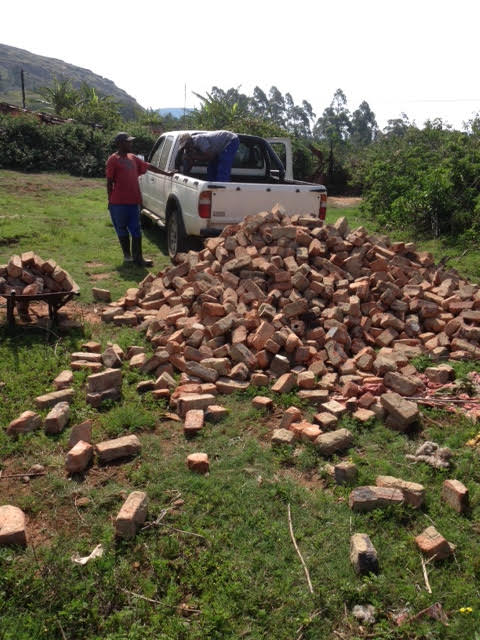
Mkhulu’s bricks

Goodness, who used to work for Caleb and Sophie in 2002 is one of our new neighbours
After the meeting, we went to Gauteng for two weeks to house sit and attend to business and meeting with various people. Altogether, on our trip up there, we met up with and visited over 70 people. However, the main purpose we went there was to register our marriage with the Portuguese consulate in Pretoria so that we could receive a Portuguese marriage certificate, as Salvador is a Portuguese citizen. As we are not residents of South Africa we do not have a South African identity number and therefore it is difficult to obtain an unabridged marriage certificate because they cannot put our marriage on their computer system. Therefore the record of our marriage is lost somewhere in Bureaucracyville where Home Affairs struggle to find it. Having our marriage registered in Portugal means that we are on someone’s system and can prove the legal status of our marriage in the future if we need to.
While in Pretoria, we visited the home church on Friday evening that meets at Kingsley’s home with Mujuru and Clayton who leads the congregation. Salvador was asked to share the word and he gave the message on conflict. The fellowship has such an openness and the participation of the various members is strong.
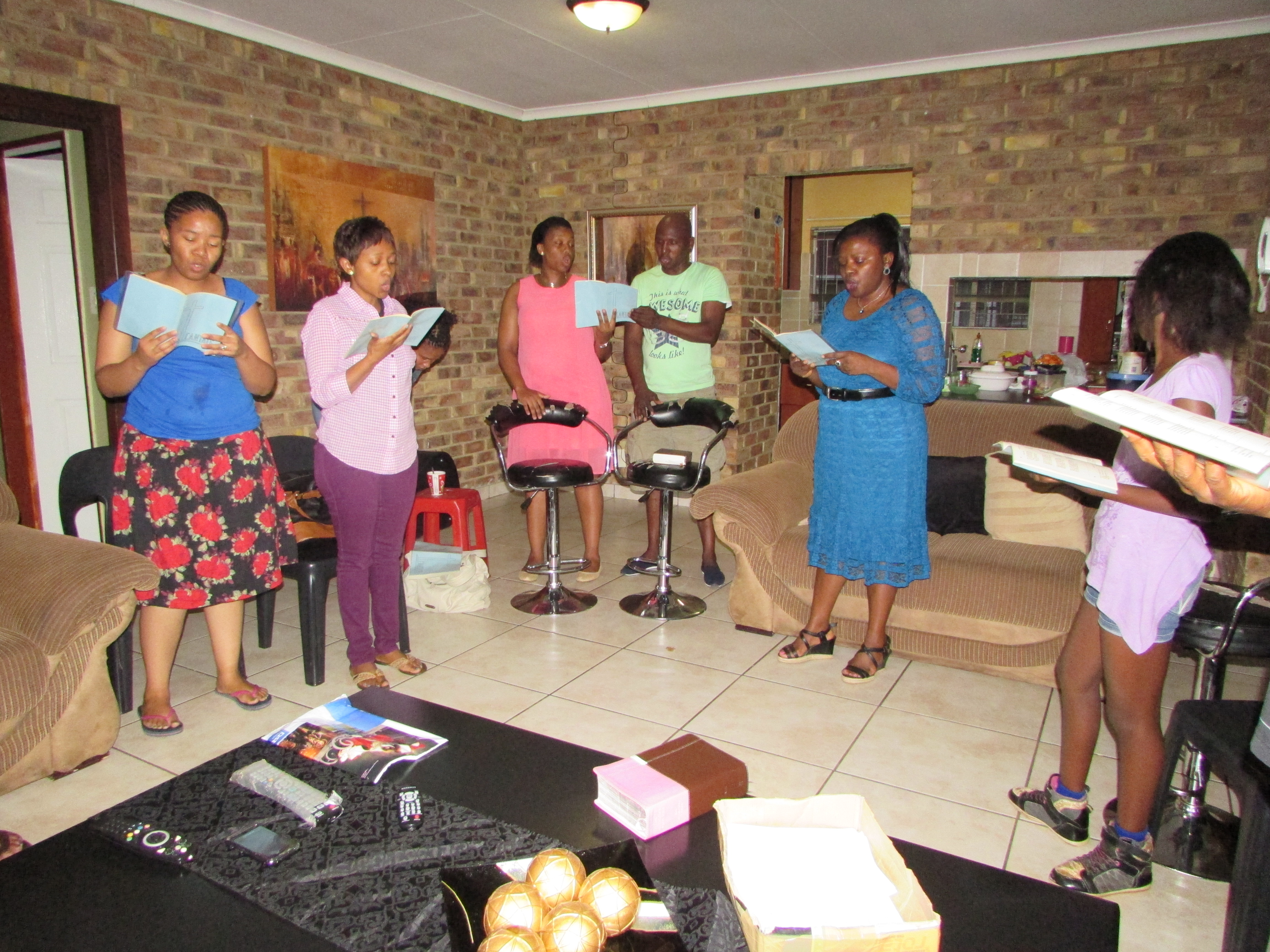
Worship at Kingsley’s in Pretoria
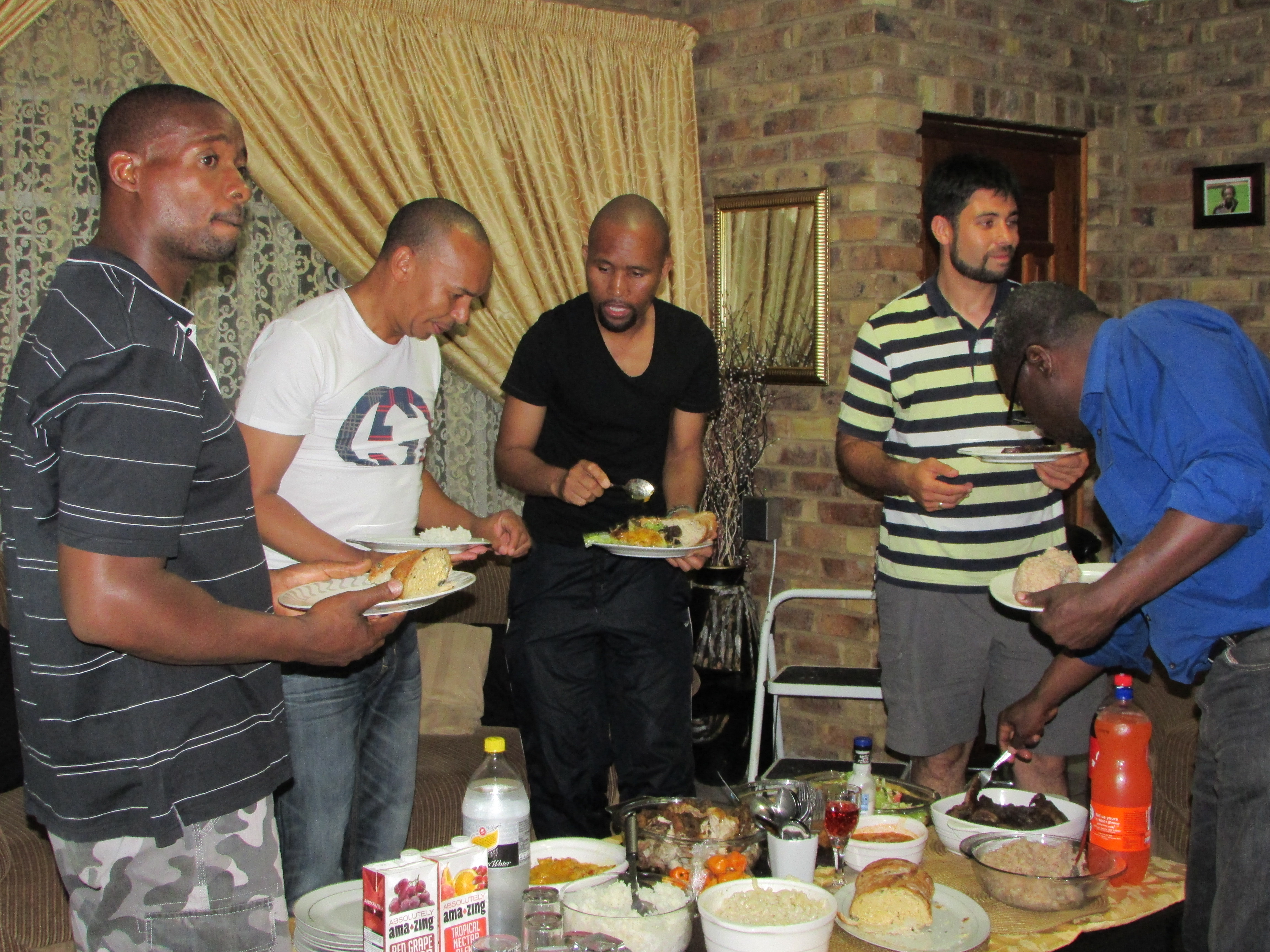
Fellowship at Kingsley’s
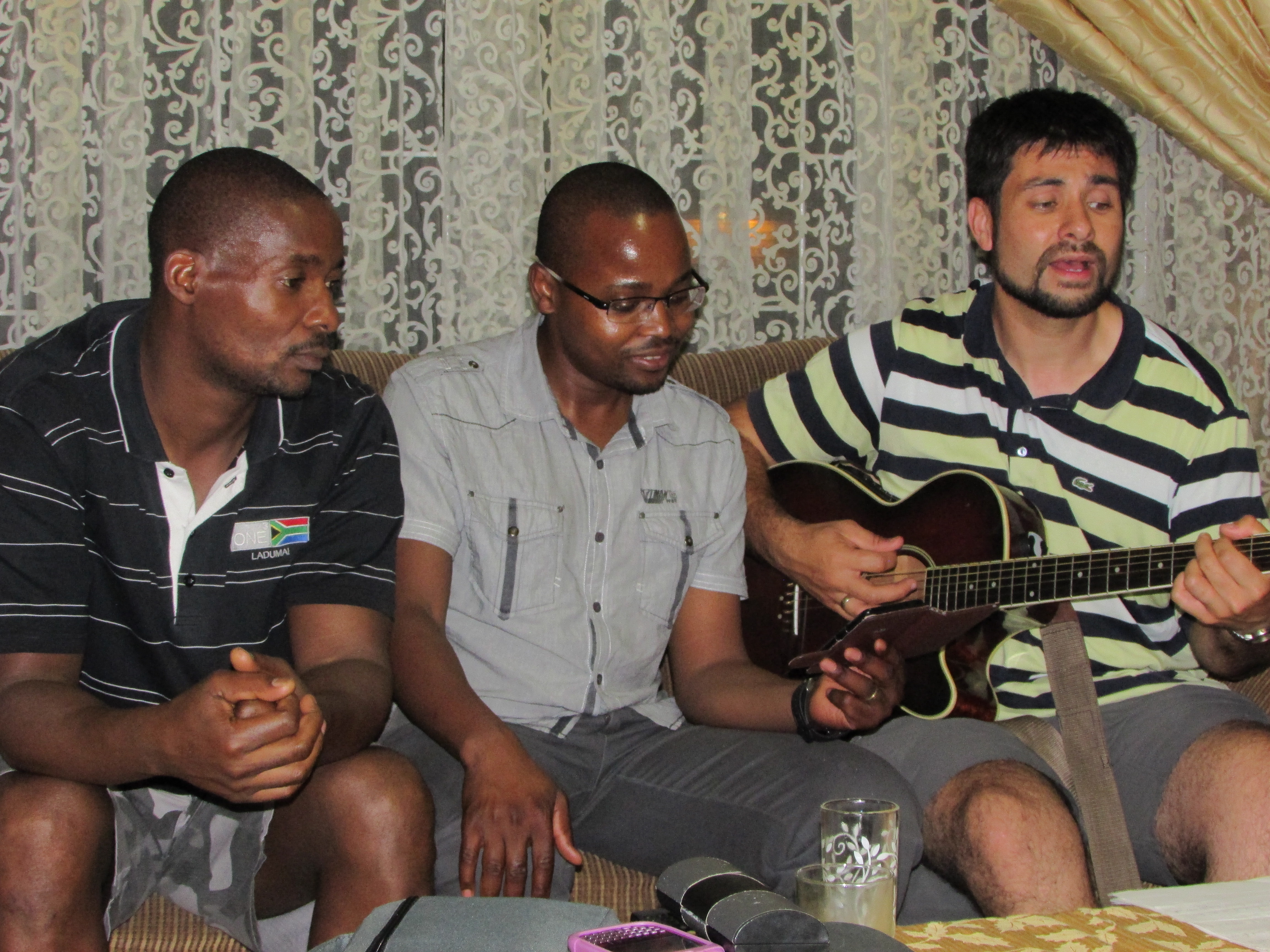
Kingsley, Clayton and Salvador sing at Kingsley’s house.
The following morning the couple that Salvador married in Jan 2014, asked Salvador to baptise them as they had never been baptised as born again believers. Bram and Bianca Van de Minkelis also had Bram’s sister and her husband visiting them from Holland. Bram’s sister had a testimony of salvation but was not baptised as, apparently, in Holland many churches will only baptise you into their own church and then you belong to that congregation. If you want to join another congregation you apparently must be baptised into the new church. So that morning we baptised the three of them in a local pool with friends of the family witnessing.
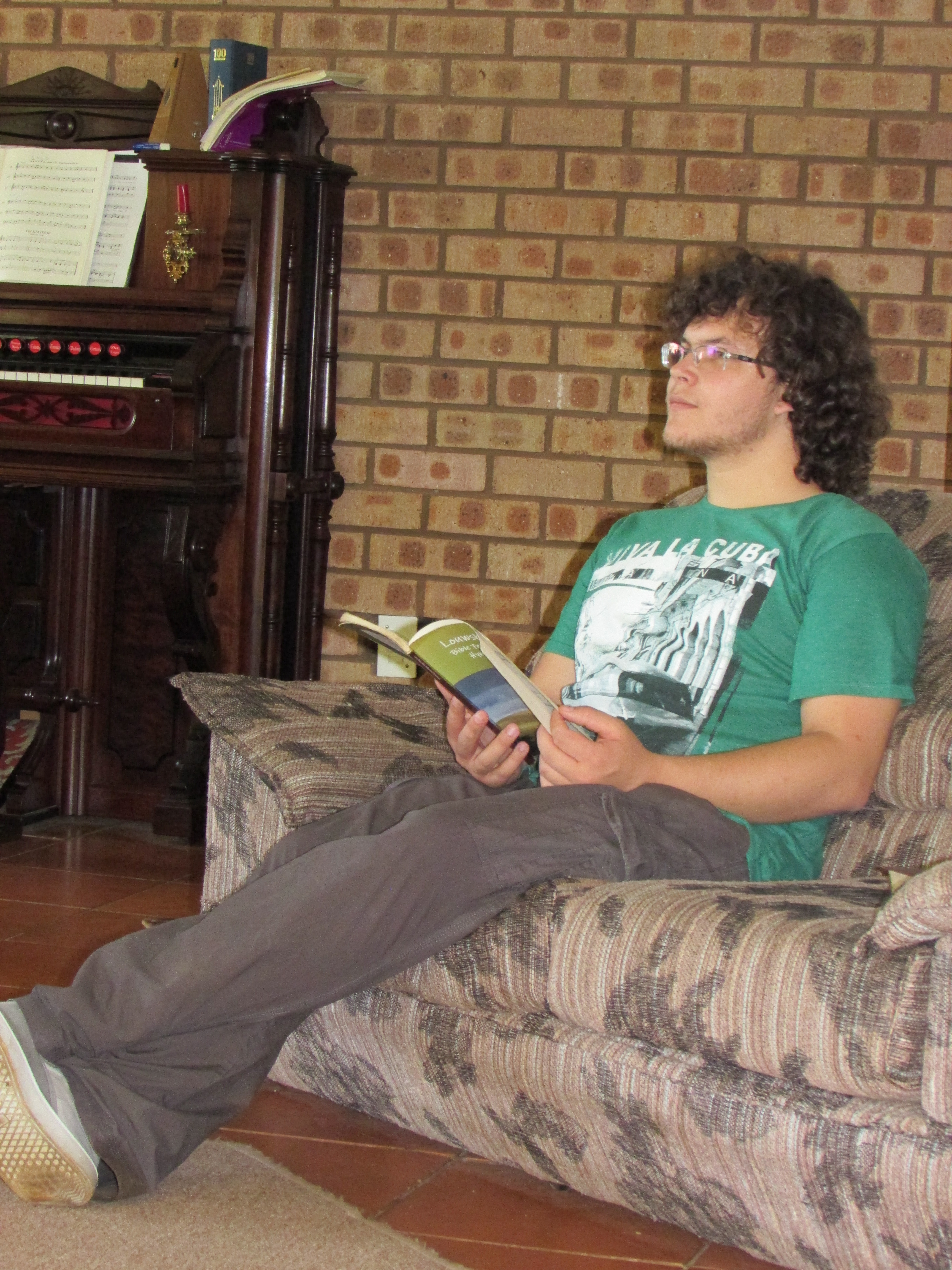
Worship at Bram and Bianca’s.
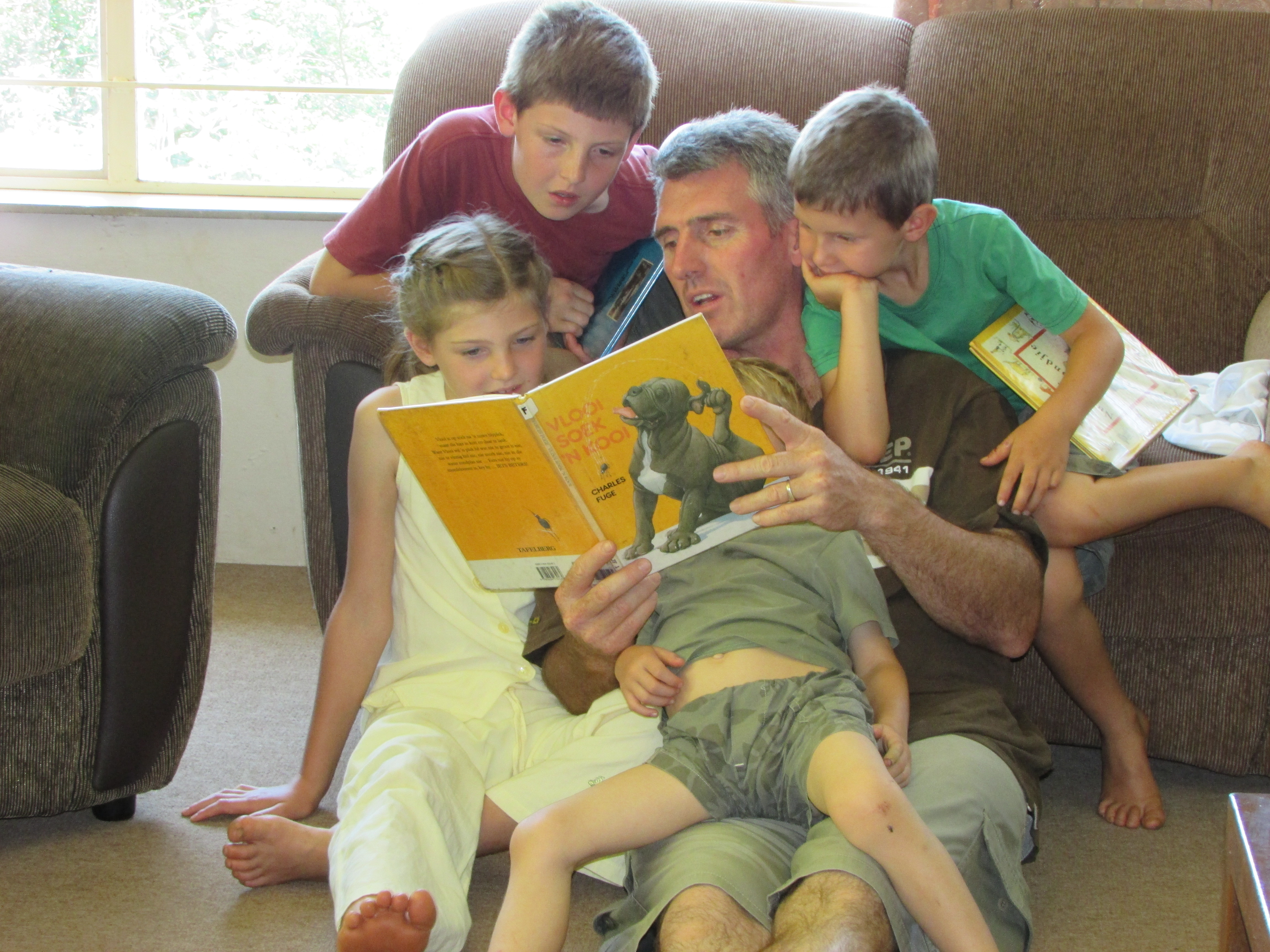
Riaan reading to his kids
During our stay in Gauteng we house sat for friends in Boksburg and thus, Bianca’s family came to stay with us for a few days. The following day, Sunday, we had the Roux family and Alan and Sue Wells and their children in the house for a church service. On the following day we went to visit the mother of our friend Mark Hibberd. Beth is battling with cancer but has a marvellous faith and the Lord has used her sickness to bring glory to Him. Sue went with two of her children Lizzie and Ernest. Lizzie played the flute and recorder and Ernest plays the guitar. Salvador also went with his guitar and together they ministered to Beth and her husband in song.
Beggar in Boksburg.
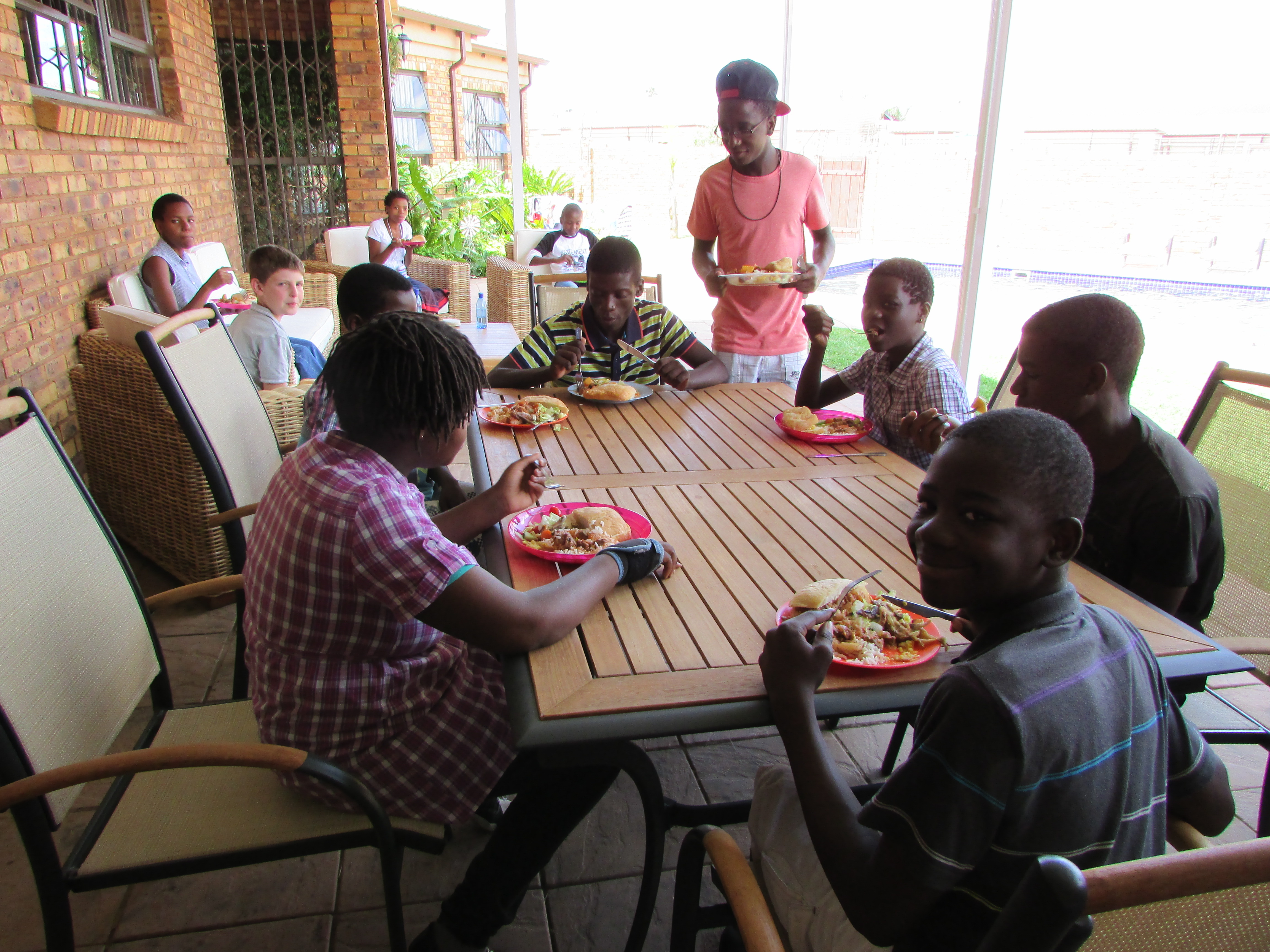
Wells and Roux family visiting us in Boksburg
The following day was Di’s birthday and in the evening Salvador took her to a lovely Portuguese restaurant where we found the owner to be a Pentecostal Christian.

The restaurant we went to for Di’s birthday
The day after was Lizzie Well’s 21st birthday celebration, though her birthday fell on the 25th. We joined the family at a restaurant in Springs. For those who do not know, Alan and Sue Wells, have fostered and adopted 12 children. They have two naturally born grown up children called Adrian and Clayton. Clayton is married and in the UK. Their first adoption was an Afrikaans girl called Roxanne who is grown, married, and has two children of her own. Lizzie was their first black adoption when Apartheid was just over. She is very musical, playing recorder to grade 8 and piano and flute to grade 6 with grade 6 music theory and dabbles with the clarinet. Lizzie will be starting a teacher’s diploma in the future and she is also learning the violin and so, through the generous giving of one of the family’s friends Lizzie received a performance level violin. Sue had saved up all year to take the family out to treat the family to the all you can eat buffet. While there, an Afrikaans family asked Sue if she worked for an orphanage. Upon explaining, that they were a family and not an orphanage, the Afrikaans family donated R500 towards the cost of the meal. So Lizzie thanked them by playing an Irish composition on her new Violin.
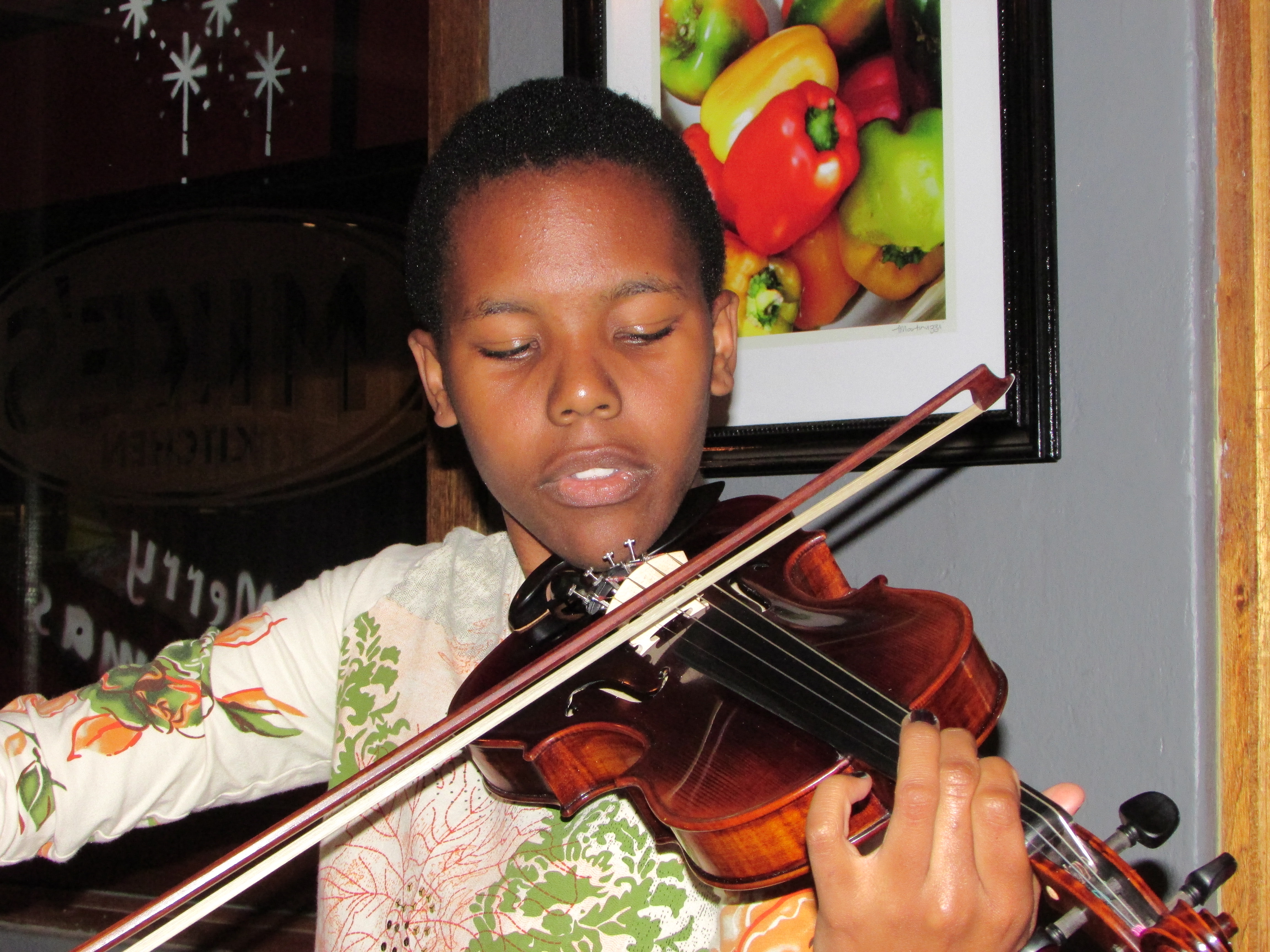
Lizzie’s Violin
A couple of days later we went back to Vryheid to house sit and have some time out. But on the journey from Gauteng we received a phone call from Kevin Edwards who was heading towards Vryheid with his family from Mozambique where they had Christmas with Michelle’s family. They were on their way to Cape Town when their van began to lose power. Kevin wanted to know if there was a good mechanic in Vryheid. We told them about our friend Craig and Craig managed to fix the vehicle temporarily, which managed to get them near Cape Town. However, it was wonderful to see the Lord bringing brotherly encouragement between them.
We are back at home now and Phumlani preached a wonderful message on the fear of the Lord so Salvador has asked him to share it in English at the cell group. Last Friday we just met with Johnny and Kim as they had their family over and Salvador shared about the priestly garments in Exodus 28-29. Salvador’s parents will be visiting us in March this year for three weeks and so we are preparing for their visit. It will be their first time in Africa and we pray it will be a blessing for them. Salvador managed to get a little work done on his dissertation, having completed his research for it. But he is determined to finished his primary draft before they arrive even if he cannot complete it. We were given lots of toys and clothes while we were away. We have given quite a number of toys to a crèche today after church and some to our neighbours. However, the neighbouring children have already started knocking on the door asking for toys, clothes, even the cardboard box and anything they can get their hands on. There is a dependency culture here among some of the people and some of them perceive white people as existing to give hand outs to black people. Even though Salvador is not white, they see him as such and therefore we need to think carefully about how we distribute things like toys in the future.
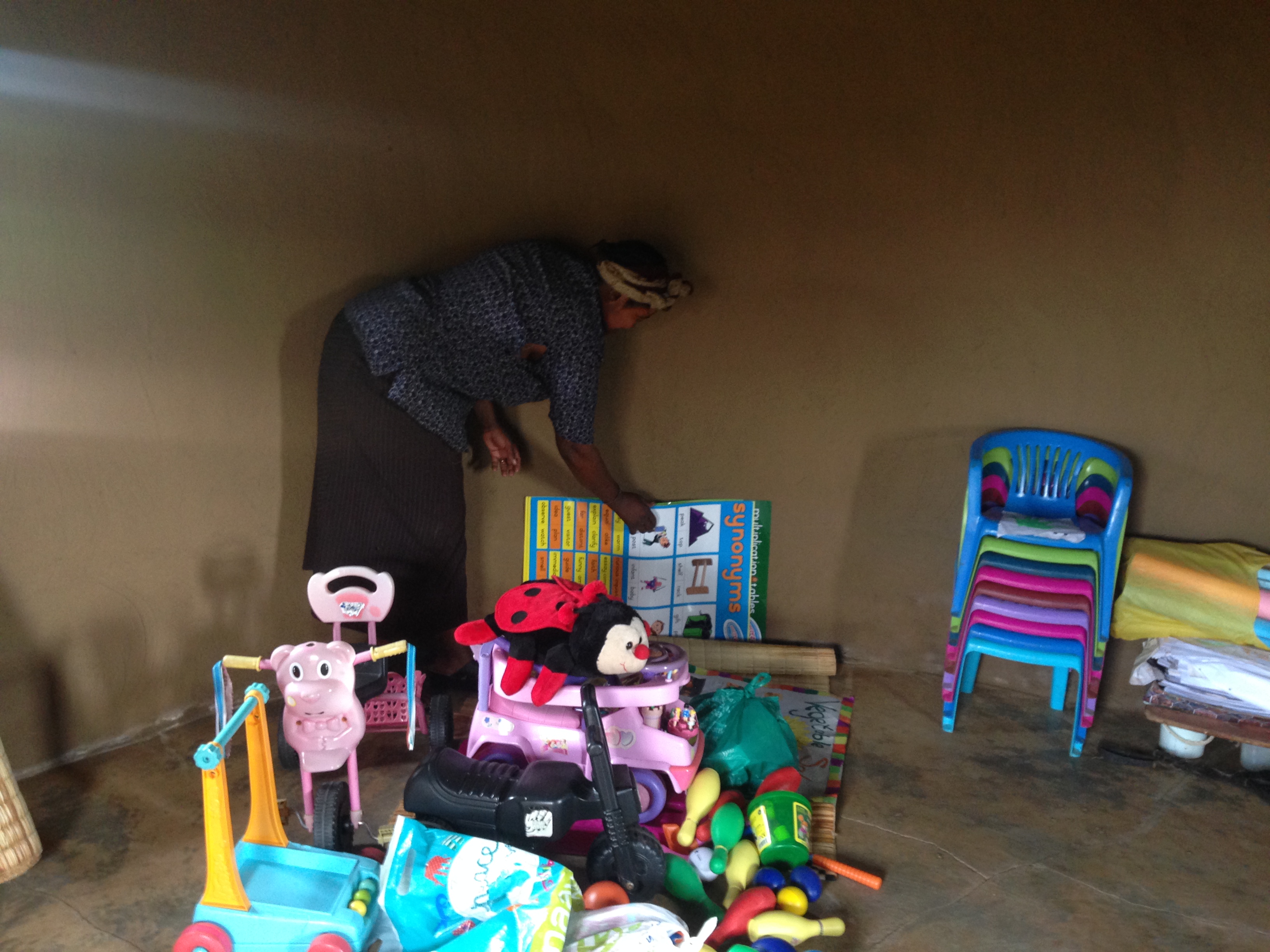
Giving toys to Sicelo Creche
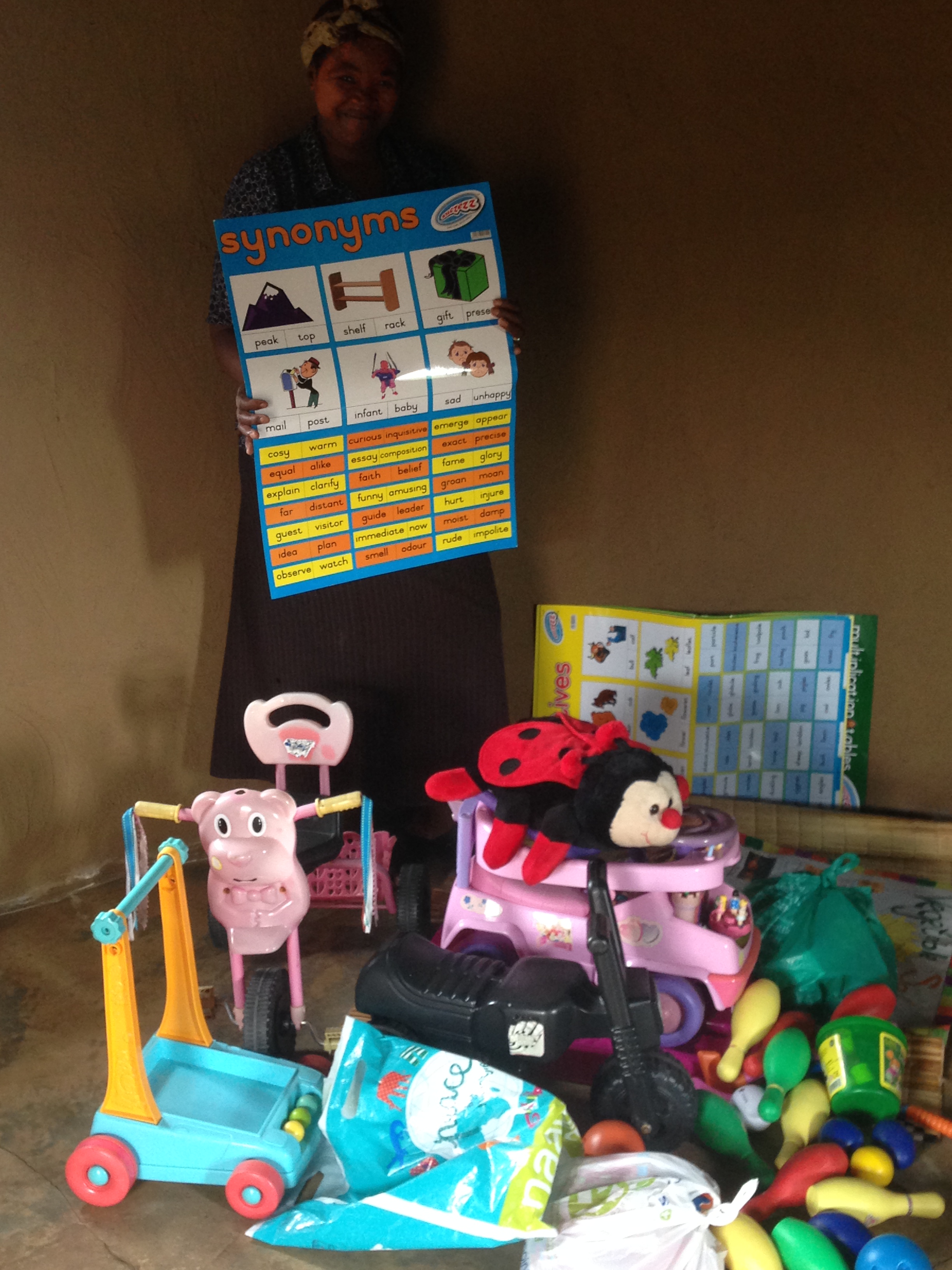
Toys for creche
Toys for creche
So what does this year hold for us if Di’s visa is granted?
God willing, this year, we would like to start getting some materials published and put together. The New Tribes Mission Zulu material has been checked and we are looking forward to them printing it. After writing his dissertation, Salvador wants to get the discipleship material published.

Salvador studying
We are receiving and have received some generous gifts from churches and individuals so, aside from covering outstanding and regular expenses; Salvador is seeking the Lord concerning the production of two DVD documentaries for the South African context. The first will be about ancestral traditions and the second about word of faith and prosperity teaching. Di will be helping out at care bear crèche for one week this month as a thank you for the love and support of Belinda. We were given two sewing machines and an ‘over locker’ and so it seems that Di will be doing some sewing classes for ladies in the local community.
Celani using her sewing machine
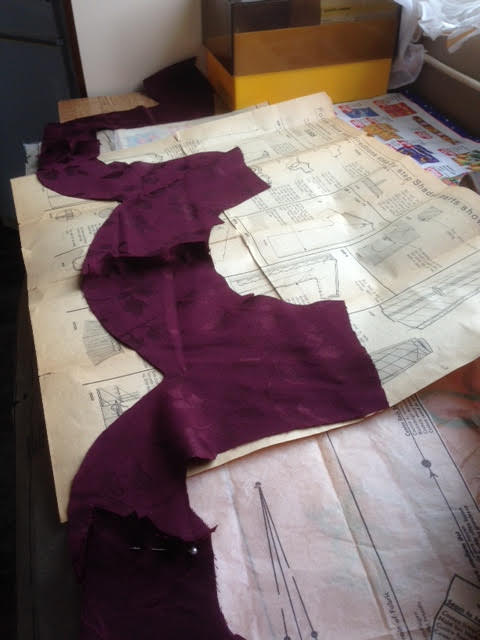
Celani cuts her material

Celani made dresses for her daughters
We will have to visit the east coast again in January or February to pick up Di’s visa once it is finalised. While there, we will visit Coming King Ministries. Then in March, we will go up to Gauteng to pick up Salvador’s parents and our Portuguese marriage certificate. This year we should be doing another trip round South Africa to visit various churches and brethren. Our brother, Alan Mackenzie in Port Elizabeth, has asked us to visit the congregation there and do some teaching on eschatology so, as Port Elizabeth is half way round the country we will come back via Cape Town and Bloemfontein, then straight from Bloemfontein to Vryheid via Bethlehem. If you are along the way and would like Salvador to share then please contact us on the above contact details.
Thank you for your prayers, financial support and encouraging correspondence through email, letter and messages.
Please keep in your prayers:
- Di’s Visa.
- Wisdom in charity.
- The Gospel to penetrate the area of KwamaThema and the other areas we have reached so far. For souls to be saved and discipled.
- The preaching and teaching of the Word.
- Salvador’s parents’ visit.
- The production of ministry materials.
- Our visits to various people and ministries in South Africa.
FIVE
THE ASSURANCE OF SALVATION AND THE SUPREMACY OF CHRIST
ROMANS 5
Paul has given us Biblical evidence that God cannot impute righteousness to the Jew based on the Mosaic Law but only by faith. Paul has to go to the lengths that he does to give sufficient, biblical reasons for his claim. He does this so that the protesting Jew may be without excuse for his disbelief and disobedience to the Gospel message. Remember that we are dealing with how the new covenant fits in with and does not contradict the old covenant. We are also dealing with the term “Law.” These two terms, (Covenant and Law) are integral to the Jew’s identity. God gave everything bound up with the Mosaic Law and God never contradicts Himself. Paul has to show the continuation of the new from the old. He has to prove how he can say that circumcision is not essential, and in fact worthless, in regards to attaining salvation. He also has to show how he can include Gentiles as equals in the covenant when God made Israel separate from all the nations. We take many of these answers for granted, and so this letter may seem pedantic and wordy for us. Yet for a Jew of Paul’s day, his message would have seemed quite radical. As we continue through the next few chapters, let us take Paul’s advice in Romans 11:18. Let us not be arrogant towards the natural branches but recognize that the covenant is a Jewish covenant and the Church was primarily Jewish at its inception. We will look at Romans 5 in two sections. Firstly, the assurance of salvation through Christ and secondly, the supremacy of Christ over Adam.
VERSES 1 – 11:
THE ASSURANCE OF SALVATION THROUGH CHRIST
In the last chapter, we saw Paul give specific biblical evidence for justification by faith and we also looked at what Abraham’s faith entailed. We looked at the nature of Abraham’s faith:
- it was informed by God’s word and not out of his own imagination;
- that it was objective, it did not trust in itself but in something other, that is higher than itself;
- that it was personal, it was not placed in a force or a thing but in a person;
- that it was subservient, it laid down its own desires and accepted God’s;
- that it was effectual, because of it God counted Abraham as righteous;
- And lastly it made its imprint on the outside world, in reality.
This faith is not limited to Abraham’s physical descendants alone but God’s invitation is also open to you and to me today. Moreover, this faith was not blind or merely intellectual. This faith faced up to reality, and it was convinced that the impossible was possible because God is able to give life to the dead. The evidence of this lies in the empty tomb. Jesus, in history, rose bodily from the dead.
Romans 5:1
Therefore, having been justified by faith, we have peace with God through our Lord Jesus Christ,
Because God delights in this manner of faith, we have peace with God. This peace is the Greek word ‘eirene,’ which has a meaning of quietness, stillness. However, the Hebrew word ‘Shalom’. Shalom speaks of wholeness and rest. The noun Shalom comes from the verb ‘le Shalem,’ which primarily means ‘to pay’. The peace that Jesus brings incorporates reconciliation. We offended God and it was necessary to pay this debt off. God had to vindicate His righteousness before we could come into fellowship with God. Why must God be like this? Why must He vindicate His righteousness? There are certain things that God cannot do. God is a limited God in the sense that He cannot go against His own nature.
PEACE EQUALS ASSURANCE
According to Hebrews 6:18 and Titus 1:2 God cannot lie. According to James 1: 13, God cannot be tempted of evil and neither does He tempt anyone. God must judge sinners. If God contradicts His own character, I do not think we could imagine the ramifications. For one the scripture would be untrustworthy for it claims that God’s work is perfect and all His ways are just. That is why some people believe that God is dead. Through their hardened heart, they see the contradiction of a good God with the permitted existence of Evil and think that God is either powerless or unwilling to do anything about it. Yet they are ignorant of God’s wisdom. The Bible gives genuine answers for this dilemma if we would only hear it. The main answer to the dilemma is contained in verse 1. God’s righteousness is in Christ and based on what Christ did. Jesus paid the price and therefore, because we have that secure, steadfast, immovable and deep-rooted faith in the promises of a God that cannot lie, that is able to bring life from death; because we have that same faith of Abraham; because we have been justified by this same faith of Abraham; we now have peace. Some scholars debate whether this verse is really saying, ‘let us have peace’, i.e. continue in the peace. However, one thing is sure, the peace is real and we are to have this peace now. We may rest in the One, whom we once despised and were enemy to. This is utter assurance.
I do not walk through my Christian life continually worried that I am going to lose my salvation. I am not saying it is impossible that I can be deceived or that I will not encounter real dangers. Christ is the basis of my assurance and when I am in Christ no one else can pluck me out Jesus’ hand or take me away from His love. I do not base my assurance in a doctrine that it is impossible to fall away. That is not assurance. My assurance is not in a doctrine but in a person. Jesus is my assurance and He is the one through whom I have peace with God. This means that when I sin, I have to go back to Him and own up to my filthy shame. I must humble myself before Him who despises my sin and must punish it, but He punished it on Christ. Can you see how much weight is behind this verse? This verse by itself tells us that we have utter assurance of salvation in Christ. Assurance is very important in the Christian life. We must not be as Roman Catholics who can never be sure if they have accumulated enough grace to get straight into heaven. We must not think that Biblical assurance is sinful presumption on the fact we are truly saved, as the Church of Rome would have us believe.
OUR INTRODUCTION INTO THIS GRACE
Romans 5:2.
2 through whom also we have obtained our introduction by faith into this grace in which we stand; and we exult in hope of the glory of God.
Sometimes we have the idea that salvation is receiving salvation and that is it. We will deal with this in Romans 8 but for the benefit of looking at this chapter, we will say it now. Salvation is not a one off event, but is a process and a journey. Salvation only starts with conversion. I believe a conversion experience is essential. If we are born again then God has converted us from the kingdom of darkness into the kingdom of light. However, when I speak of the conversion experience I am not talking about a flash of lightning, or some miraculous voice out of the heavens. What I mean is that we were once in the kingdom of darkness and we changed and joined the kingdom of light. There was a time when you did not believe and then there was a time when you believed. You did not always walk according to God’s law. Or else how can we say with Jesus that we must be born again? How can we say with Paul that we once were darkness but now we are light in the Lord? How can we say that we were once children of wrath? We did not always walk with the Lord. Yet salvation is not a conversion experience. Nor is a conversion experience the sum of our salvation. Verse 2 says that through Jesus we have obtained our introduction by faith into this grace in which we stand. Our conversion experience is only the entrance but then there is the way.
God does not only want to save people from going to hell, though that is essential. God wants to make us like Jesus. God wants us to experience eternal life, which is to know God. That only happens if we stand in the grace we have received. The word to stand, in Greek, is ‘histemi,’ which means to continue and to abide. We must continue in the Grace we have been given. If we only accepted the Gospel to get the evangelists off our back, or from the fear of going to hell, but still want to be in control of our own lives, then our salvation is a shallow one. It is incomplete! We have to ask, “Are we really saved?” And as we encourage evangelism and witnessing to people, if we see people saved but do nothing to help them grow, to ground them in truth, to build up their faith, to disciple then we are lacking in our churches. Conversion is only the entrance into this grace. I wish we only had to die once. I put something on the altar and I think that it was dead and it comes up repeatedly. Romans 12:1-2 says that we are to present ourselves as a living sacrifice. Jesus called us to take up our cross daily.
THE HOPE OF THE GLORY OF GOD
In verse 2, we also have the word hope. We are to exult in the hope of the glory of God. This word hope in Greek is ‘elpis’ and it means to anticipate, usually with pleasure, expectation and confidence. Notice our standing and our exulting are in response to what Jesus did. Our hope is also a result of what Jesus did. Remember the first chapter and the attitude of Godliness. God initiates and we respond with an attitude of humility and servitude. This not only gives us the assurance of salvation present but also confidence of salvation future. This glory of God is something God is yet to reveal. In John 17:24, during the high priestly prayer, Jesus specifically prays for all believers; that they would be with Jesus where He is, that they may see Jesus’ glory. We will receive glory from God too when we are resurrected because we will share in Jesus’ sonship, though not His deity (1 John 3: 3). When He appears, we will be like Him, because we will see Him as He is. This is a good reason for rejoicing. According to 1 Corinthians 15:19, if it was not for the hope of the resurrection we are of all men most to be pitied. The Christian life would be a miserable affair if it were not for this hope. How could Paul have endured the life that he led without that hope? Think about the present day suffering of the Church in China. How can the persecuted believers endure their suffering? As Paul says in 2 Corinthians 4: 17 and 18. “For momentary, light affliction is producing for us an eternal weight of glory far beyond all comparison, while we look not at the things which are seen, but at the things which are not seen; for the things which are seen are temporal, but the things which are not seen are eternal.”
What did Paul regard as light affliction? Read from 2 Corinthians 4:7. How can such misery be an experience of real joy? How do these people rejoice? Paul shows us it is because they were looking to the glory that God is still to reveal. Back in Romans 5 Paul ties this experience of rejoicing, of joy, with suffering in verse 3.
3 And not only this, but we also exult in our tribulations, knowing that tribulation brings about perseverance;
We have the entrance into this grace, which begins with hope but it also ends in hope. Paul shows us a progression, a course curriculum if you like, of the Christian’s walk with the Lord. We rejoice in tribulation. This is not natural to sinful man. However, the natural inclination is not to rejoice but to complain, even if we do not verbalize it. Yet to rejoice in tribulation is not the first step. Verse 3 is prefaced on verses 1 and 2, which speak of conversion. The first step is to be born again and to receive the hope of the glory of God. Then we can rejoice in our tribulations. This is not about having a martyr complex. This is not an illogical and unnatural love of abusing oneself, but the rejoicing is rooted in the product of tribulation and not the tribulation itself. Tribulation brings about patience, or long-suffering. So next time you ask God to make you more patient, to produce in you the fruit of the spirit, you know what kind of answer he will give you. The word for patience in Greek is ‘hupomoni,’ which means cheerful endurance or constancy. Job is the prime example of this as James indicates in James 5: 11.
PERSEVERANCE
Endurance is not about what is easy but about what is hard. You do not say of someone who did a five minute sprint to the local shop that he showed endurance. You say of someone who did a marathon that he showed great endurance. Why would James speak of this? Because James’ letter is speaking about the testing of faith, to show, which is true faith and what is mere mental and verbal assent. Paul says tribulation brings about, literally works fully, or accomplishes patience. Patience, or endurance, brings about proven character. God does not prove my Christianity in a meeting, or in the good times. God proves my Christianity in a fire. When they test airplanes for flying, they do not do the bare minimum. They do not fly it for ten minutes in calm conditions and say, ‘well this one works.’ They take it through things that it may never do in a normal flight. They take it to the limit.
God proves my Christianity in the work place, with non-believing friends, with needy brothers and sisters in the church, with my enemies, when the pull of the world is against me and I am being tempted. Then my Christianity is tested. How often I forget that in the heat of the moment! We expect it to be comfortable. We prefer armchair Christianity where we can remain undisturbed in our own little sphere. Yet patience brings about proven character and proven character brings about hope. We started with hope and we end with hope. God has imbued this whole passage with assurance. Nevertheless, this hope, though produced through experiencing the Christian life, does not depend on walking the Christian life. Verse 5 says the reason that hope does not disappoint us is because God’s love “has been shed abroad”, literally it runs greedily, it gushed out into our hearts, in plentiful supply. How do I know that this is what happened in my heart? Let us face it; we do not always feel God’s love. Sometimes we feel quite the opposite, never mind speaking of having Christ’s love in abundance!
How can I be sure that I have received His love?
Verse 6 For while we were still helpless, at the right time Christ died for the ungodly.
Christ died for you while you hated Him, while you cursed Him, while I backstabbed Him with double standards, while we regarded Him lightly as a joke, Christ died for you and for me. God’s love is a love that runs greedily into our heart and that is why our hope will not disappoint. It is based on objective truth that can never be revoked or changed. I am glad for this hope. As a friend of mine once said, “Expectations are funny things.” Life is full of failed expectations. Disappointed hope is hard to live with. That is why I think that dying to self is a commandment of love from God, because it frees us from the pain of dashed hopes.
Paul then shows us another proof of how great God’s love is toward us in verses 7 & 8.
7 For one will hardly die for a righteous man; though perhaps for the good man someone would dare even to die. 8 But God demonstrates His own love toward us, in that while we were yet sinners, Christ died for us.
A righteous man is someone who is right: right in life, right in belief and right in speech. Even though we may think that a righteous person may be deserving of salvation, no one would die in his or her place because we are by nature quite selfish. A person might even die for a good man, for someone who has benefited others, or done good to others. Out of a sense of being indebted to him, someone might die for him. Nevertheless, no one would die for a criminal would they? You cannot imagine someone who is guilty and deserving of the death penalty being offered the kindness of someone else dying in their place so they can get off scot-free, possibly to repeat the offence! Yet that is what Christ did for us! Once again, in verses 9 and 10 Paul shows us that if we have assurance of salvation in the now, much more assurance is there for us concerning our future salvation.
Before Paul looked at salvation in terms of the future hope to come, but now he looks at it in terms of the future wrath to avoid. Paul shows us that assurance of salvation now is more fundamental than having the assurance for salvation future. This is so because, if we have the first, the second is automatically ours. However, if we lack the first then we neither have the second. Why does Paul major on the assurance of salvation in the here and now? Why does present salvation grant greater assurance of future salvation and not the other way round? Because, opposed to the logic of our unbelief, reconciliation with God is harder to accomplish, than salvation from damnation or the future wrath of God. To have our sins forgiven is harder to accomplish than salvation from death. The world sees it the other way round. They say that ‘salvation is okay but what about poverty, HIV/AIDS?’ ‘A man cannot believe on an empty stomach.’ These issues are very important for the believer but nowhere near as important as being reconciled to God. This is a much more difficult and devastating issue. Yet we are not simply to rejoice in the hope of the glory of God, or in tribulation but also in God Himself.
VERSES 12 – 21:
THE SUPREMACY OF CHRIST OVER ADAM
In this passage Paul goes right back to the beginning, before Moses, before Abraham. He does this because the root cause of everything that Messiah dealt with was not the giving of the Mosaic Law or the fulfilling of the faith of Abraham. The scriptures do not start with the birth of Moses or the calling of Abraham but they start right back at the beginning. Moses is not the main issue. The main issue is sin. Note that Paul regarded Adam as historical. If the first Adam is a myth, then the concept of a second Adam is also a myth because He would be undoing something that was never done in the first place. The first thing to note is that sin came into the world, not by man in general and not by various people, but by one man. That is Adam. Though Eve was deceived, and was the first to eat the fruit, Adam received the commandment, for God gave the commandment before He created Eve. It was Adam who flatly disobeyed by listening to the voice of His wife. In Genesis 3: 22, God said that ‘the man’ became like God knowing good and evil. When God says ‘the man’ He is not referring to Adam and Eve as a unit because a few verses on in Genesis 4: 1 it says ‘Now the man had relations with his wife’, Eve. Sin came into the world by one man. Secondly, sin preceded death, not the other way round. We know that even though death means separation from God it means physical death also. This is attested by the genealogies in Genesis where Adam lived 930 years but at the time of Abraham, living to an age of 175 was classed as a ripe old age. Romans 8: 20 – 21 says that God subjected the creation to futility in the hope that it would be set free from its slavery to corruption.
What Paul is doing here is showing us that Jesus ties up the whole of the Tenakh, the Old Testament, together. He has shown us that Moses highlighted sin but did not take it away. Christ makes people righteous according to the same faith as Abraham. Christ solves the problem that Adam created when he sinned and reverses it. This is something that Abraham and Moses never did. Verse 12 summarizes the whole of the letter, which has preceded it because the entire letter has been arguing justification by faith in Christ’s sacrifice. Therefore, we may say that what Adam messed up…
WHAT ABOUT THOSE WHO SINNED BEFORE THE LAW?
Then Paul stops half way through sentence to address something else. The continuation of the train of thought of verse 12 continues from verse 15. Now this becomes frustrating for us reading this as believers but for Paul it must have been essential. I can well imagine while Paul was writing this, some voice in his head was saying ‘Have all men sinned? What about the time when there was no law? How can you say they sinned because they did not break any law?’ This phrase ‘death spread to all man because (or in that) all men sinned’ has been a controversial point. Some people say that the words ‘in that all have sinned’ should be translated ‘in whom all men have sinned’. What they mean is that as Adam was representative of the human race and as we were ‘in Adams’ loins’ so to speak, when Adam sinned we all sinned and therefore we all die. With this doctrine would come the doctrine that there will be aborted babies, or babies that have died in infancy, that will go to hell. This is also related to the belief of infant baptism. Some believe that when a baby is baptized they become a part of the church and therefore they have some kind of assurance of salvation. But I do not believe this is what the text is saying.
How can we know that the text is not saying that when Adam sinned we all sinned? The next verse gives us the clue. Verse thirteen, shows us the reason that all sinned, even those who did not have a law. Though there was no law, sin still existed. Though sin is not imputed without a law, sin will still bring death. This is because sin is not primarily breaking rules. Sin is not killing someone or stealing. Though these are sins, these are not sin itself. Sin is the animal that wants to be satisfied, that lives within us and that tries to enslave us. Sin is at the door and its desire is for you but you must master it. Sin is within us, inherited from Adam. According to verse 14, these people had not sinned in the same way as Adam. They had not gone against an express commandment but death still reigned over them. Paul has already shown us that tribes and peoples who do not have the Law still have God’s law in their consciences, no matter how diluted it is. He showed us this in Romans 2. They may not have sinned in the likeness of Adam but they still sinned at the end of the day and therefore it still warrants the consequence of death.
However, Christ undoes what Adam did and because of this, Adam was a type or a picture of who Messiah would be. Their similarity does not lie in what they did but how they acted, or the way they did what they did.
Verse 15. 15 But the free gift is not like the transgression. For if by the transgression of the one the many died, much more did the grace of God and the gift by the grace of the one Man, Jesus Christ, abound to the many.
Notice that the grace of Jesus and the gift of life are greater than the death given by Adam. This word abound, ‘perisseno,’ means to super abound, to be in excess, enough and to spare, to exceed, over and above. Christ’s grace is greater than Adam’s sin.
Look at verse 16. 16 The gift is not like that which came through the one who sinned; for on the one hand the judgment arose through the one transgression resulting in condemnation, but on the other hand the free gift arose from many trespasses resulting in justification.
One transgression brought judgment, which resulted in condemnation. Yet from many transgressions the gift (that charisma; that divine deliverance, or that spiritual qualification of righteousness; that free gift) resulted in justification. Paul’s argumentation is very clever, because in it he shows the similarity between Adam and Messiah, especially in their effect on humanity. Yet we know all of humanity was made sinners but not all of humanity will be made righteous. In verse 15, Paul uses the word many. In verse 18, Paul says that condemnation resulted to all men by one act of transgression. Yet by one act of righteousness there resulted justification to all men. That is one reason why I believe that Jesus died for the sins of all men. Justification of life has been rendered to all men, but that is where it stops with many. The difference between the two is that man has succumbed to the sin he has inherited from Adam and so is condemned. Nevertheless, not all accept Christ’s gift of salvation. This does not make Adam’s sin greater than Christ’s sacrifice. The fact that Christ reverses what Adam did is proof enough that Christ is superior to Adam. Jesus’ grace is bigger than any sin, or all the sins that you have and ever will commit. It has to be greater in order to cover them. Nevertheless, grace has a purpose. Quite often, we think that grace is there simply to get us off the hook. Not so! Sin reigns in death. If we want death, sin is the course we should live by. We should hate sin and always recognize that its consequence is death. Grace reigns through righteousness to eternal life. Grace has its strength in righteousness. This same righteousness is revealed in us from faith to faith, as we believe in the Gospel. Do we want righteousness? If we do not want righteousness then we cannot be beneficiaries of God’s grace. Sin reigns in death but Grace reigns through righteousness.
The WordPress.com stats helper monkeys prepared a 2014 annual report for this blog.

Here’s an excerpt:
A New York City subway train holds 1,200 people. This blog was viewed about 3,700 times in 2014. If it were a NYC subway train, it would take about 3 trips to carry that many people.
 KwaZulu Mission